Categories
Archive Development Challenges, South-South Solutions Newsletters Southern Innovator magazine

Avoiding Wasting Food and Human Potential with ICTs

By David SouthDevelopment Challenges, South-South Solutions

SOUTH-SOUTH CASE STUDY

Creative use of information technology in the South is helping to address two very different kinds of waste – of food and of human and community potential.

In Ghana, a mobile phone-driven Internet marketplace is helping to improve efficiencies in farming and selling food. Another initiative is addressing the crisis in India’s villages by drawing on the diaspora of former villagers now living in urban environments around the world.

Finding ways to efficiently trade food is crucial to keeping hunger at bay and meeting the needs of growing populations. In a report earlier this year, the UN’s Environment Programme (UNEP) found that more than half of the world’s food is wasted or discarded.

“There is evidence … that the world could feed the entire projected population growth alone by becoming more efficient,” said Achim Steiner, UNEP Executive Director, at the launch of The Environmental Food Crisis: The Environment’s Role in Averting Future Food Crises.

Ghana is a country that has already gained a reputation as an IT leader in West Africa (www.ghanaictawards.com). Now a clever technology based in the capital, Accra, is using mobile phones to connect farmers and agricultural businesses and associations to the marketplace. By using SMS (http://en.wikipedia.org/wiki/SMS) text messages, information from the field is gathered and collated. This can include tracking what is happening on the farm, how crops are surviving the weather, and the status of food inventories day-by-day. All the data is collected by the TradeNet website and displayed with prices and deadlines for buyers and sellers to get in touch with each other. This reduces the time and cost involved in gathering updates from thousands of people across the country.

Launched in 2007, the service recently won the Information Communication Technology innovations contest by the World Summit Award (WAS) (http://www.wsis-award.org/about/index.wbp) of the United Nations’ World Summit on Information Society (WSIS).

TradeNet is currently collating market data from 13 countries and proclaims itself the largest SMS-based market information service on the continent of Africa. It has more than 12,000 registered users and covers 500 individual markets.

The service’s full name is TradeNet: Market Information on your Mobile (http://www.tradenet.biz/?lang=en), and it tracks products like ground nuts, sesame, tomato, maize and white beans. It offers market information from Afghanistan , Benin , Burkina Faso , Cameroon , Cote d’Ivoire , Ghana , Madagascar , Mali , Mozambique , Nigeria , Sudan and Togo.

Founded by its chief executive officer Mark Davies, TradeNet is run out of the internet start-up incubator Busy Lab (http://www.busylab.com/) in Accra. Busy Lab specializes in building mobile web solutions for companies and projects involved in rural media and computing.

While in India, villages are in crisis: As India’s economy has boomed, its small towns and villages have withered. Home to the majority of the country’s population, they are suffering declining populations and high suicide rates. India’s urban slums are where people are going; they are growing 250 percent faster than the country’s population. Yet so many people share some past connection with the country’s 260,000 ailing villages.

And while the world has become a majority urban place, it is acknowledged the future for the environment and agriculture rests in the health of villages.

The social media website Mana Vuru (www.manavuru.com) seeks to connect people living in cities with the villages they were born in, or where their families came from. It is about restoring the broken connection with the village in order to enhance their future development.

As Mana Vuru declares: “Villages form the backbone of our economy. True progress, growth and prosperity can only be realized when villages become self-sustainable.”

The site points out that “most villages are suffering from crippling infrastructure and some even lack the basic amenities like electricity and fresh water. We believe that every person who migrated to greener pastures and attained success and wealth should feel some sort of moral responsibility and do their bit for their respective villages.”

A project of the Palette School of Multimedia (http://www.palettemultimedia.com/) in Hyderabad – one of India’s technology hubs – the site lets former village dwellers register and start meeting and connecting with fellow members of the diaspora. Together they can network to help the village address its development challenges.

Published: August 2009

Resources

1) A video story by CNN on Tradenet. Website: http://www.youtube.com/watch?v=s6z0ywkHPPQ

2) BOP Source is a platform for companies and individuals at the BOP (bottom of the pyramid) to directly communicate, ultimately fostering close working relationships, and for NGOs and companies to dialogue and form mutually valuable public-private partnerships that serve the BOP.
Website: http://bopsource.ning.com/

3) Afriville is a Web 2.0 service and an African Caribbean social network. Afriville is a community website along the lines of the famous MySpace. Users are free to message and post profiles. The difference is that the user is able to choose how closed or open the networks are. The site features a state of the art music management system which allows African and Caribbean artists to get straight in touch with their fans.
Website: www.afriville.com

4) Business Action for Africa: Business Action for Africa is an international network of businesses and business organisations from Africa and elsewhere, coming together in support of three objectives: to positively influence policies for growth and poverty reduction, to promote a more balanced view of Africa, and to develop and showcase good business practice in Africa
Website: www.businessactionforafrica.org

5) Model Village India: An innovative concept to rejuvenate India’s villages and build economies and self-reliance. Website: http://www.modelvillageindia.org.in/index1.html

Development Challenges, South-South Solutions was launched as an e-newsletter in 2006 by UNDP’s South-South Cooperation Unit (now the United Nations Office for South-South Cooperation) based in New York, USA. It led on profiling the rise of the global South as an economic powerhouse and was one of the first regular publications to champion the global South’s innovators, entrepreneurs, and pioneers. It tracked the key trends that are now so profoundly reshaping how development is seen and done. This includes the rapid take-up of mobile phones and information technology in the global South (as profiled in the first issue of magazine Southern Innovator), the move to becoming a majority urban world, a growing global innovator culture, and the plethora of solutions being developed in the global South to tackle its problems and improve living conditions and boost human development. The success of the e-newsletter led to the launch of the magazine Southern Innovator.  

Creative Commons License

This work is licensed under a
Creative Commons Attribution-Noncommercial-No Derivative Works 3.0 License.

ORCID iD: https://orcid.org/0000-0001-5311-1052.

© David South Consulting 2023
Categories
Archive Blogroll Southern Innovator magazine

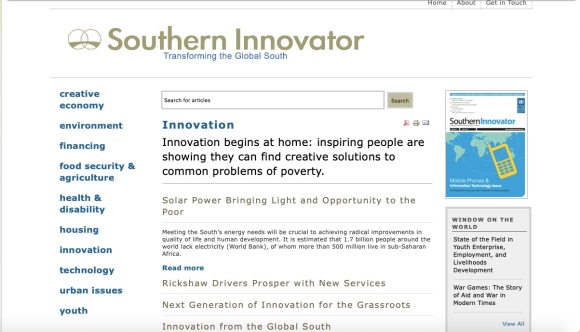
Finding Southern Innovator Magazine | 2022

An ad promoting the magazine’s fourth issue is below:

Team | Southern Innovator Phase 1 Development (2010 – 2015)

Southern Innovator can be read online here:

ISSN: 2222-9280

Website of the United Nations Office for South-South Cooperation (UNOSSC): https://unsouthsouth.org/2014/12/25/southern-innovator-magazine/

Scribd

Issue 1: http://www.scribd.com/doc/57980406/Southern-Innovator-Issue-1

Issue 2: http://www.scribd.com/doc/86451057/Southern-Innovator-Magazine-Issue-2

Issue 3: http://www.scribd.com/doc/106055665/Southern-Innovator-Magazine-Issue-3-Agribusiness-and-Food-Security

Issue 4: http://www.scribd.com/doc/128283953/Southern-Innovator-Magazine-Issue-4

Issue 5:  http://www.scribd.com/doc/207579744/Southern-Innovator-Magazine-Issue-5-Waste-and-Recycling

Google Books

Issue 1: https://books.google.co.uk/books?id=Q1O54YSE2BgC&dq=southern+innovator&source=gbs_navlinks_s

Issue 2: https://books.google.co.uk/books?id=Ty0N969dcssC&dq=southern+innovator&source=gbs_navlinks_s

Issue 3: https://books.google.co.uk/books?id=AQNt4YmhZagC&dq=southern+innovator&source=gbs_navlinks_s

Issue 4: https://books.google.co.uk/books?id=9T_n2tA7l4EC&dq=southern+innovator&source=gbs_navlinks_s

Issue 5: https://books.google.co.uk/books?id=6ILdAgAAQBAJ&dq=southern+innovator&source=gbs_navlinks_s

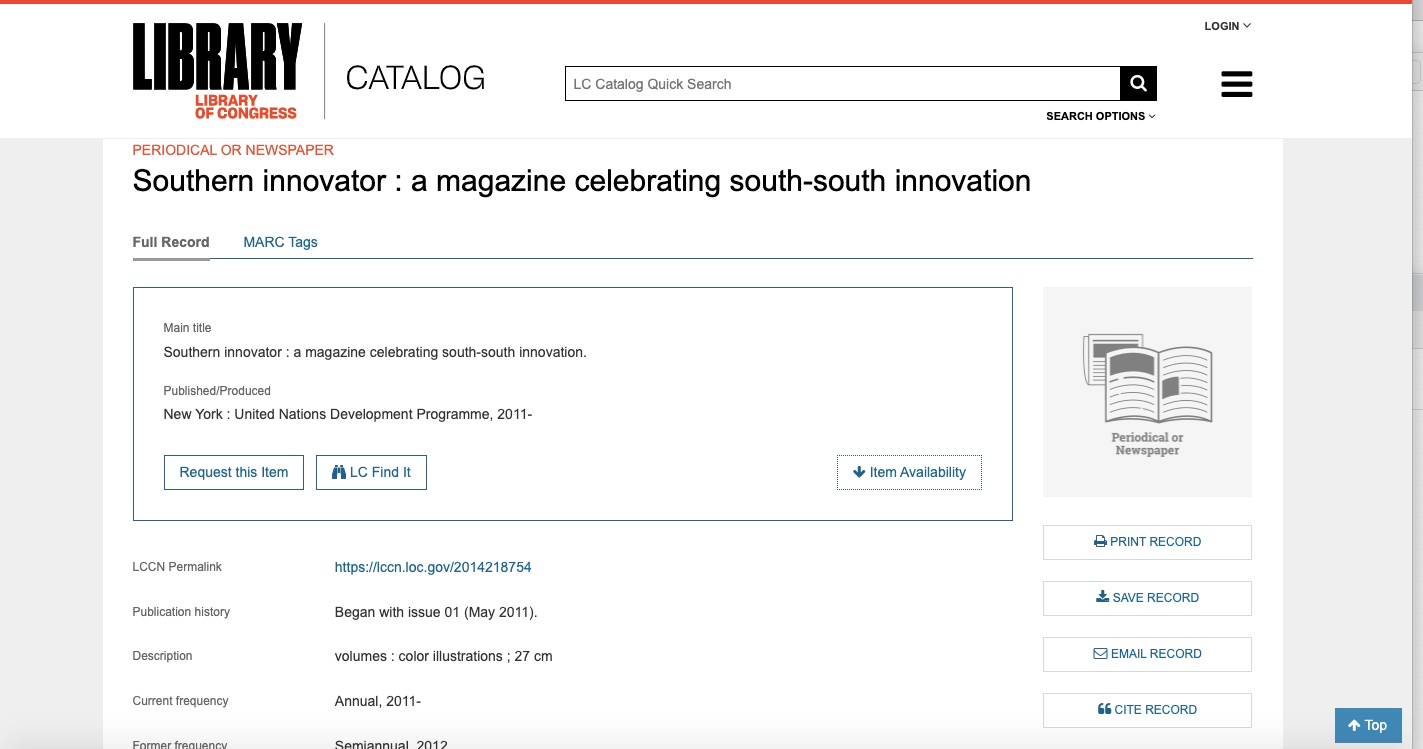
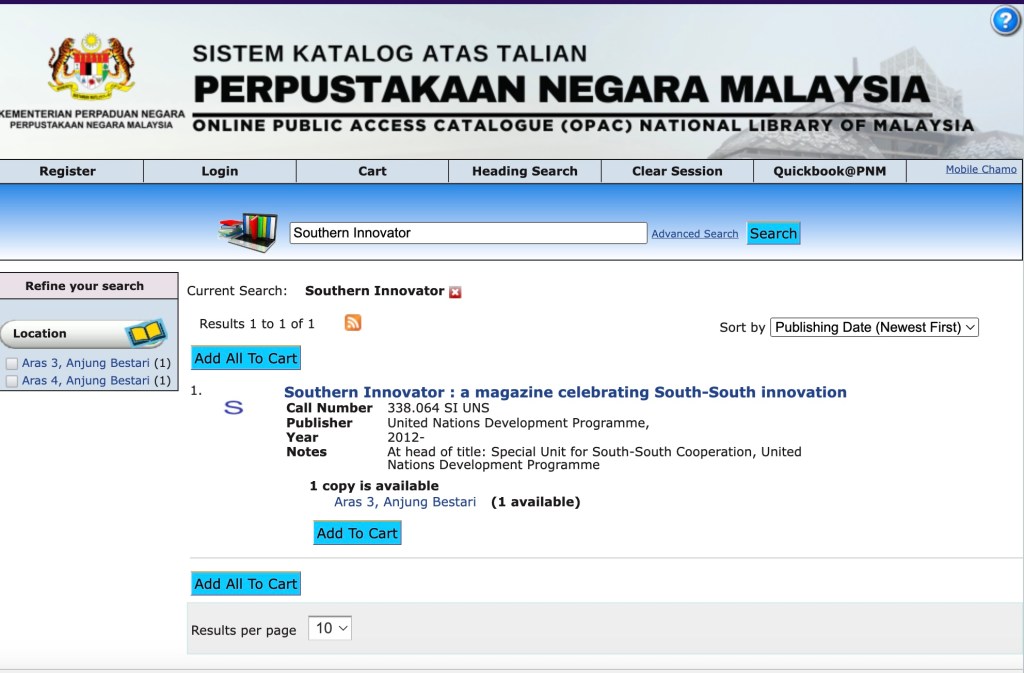
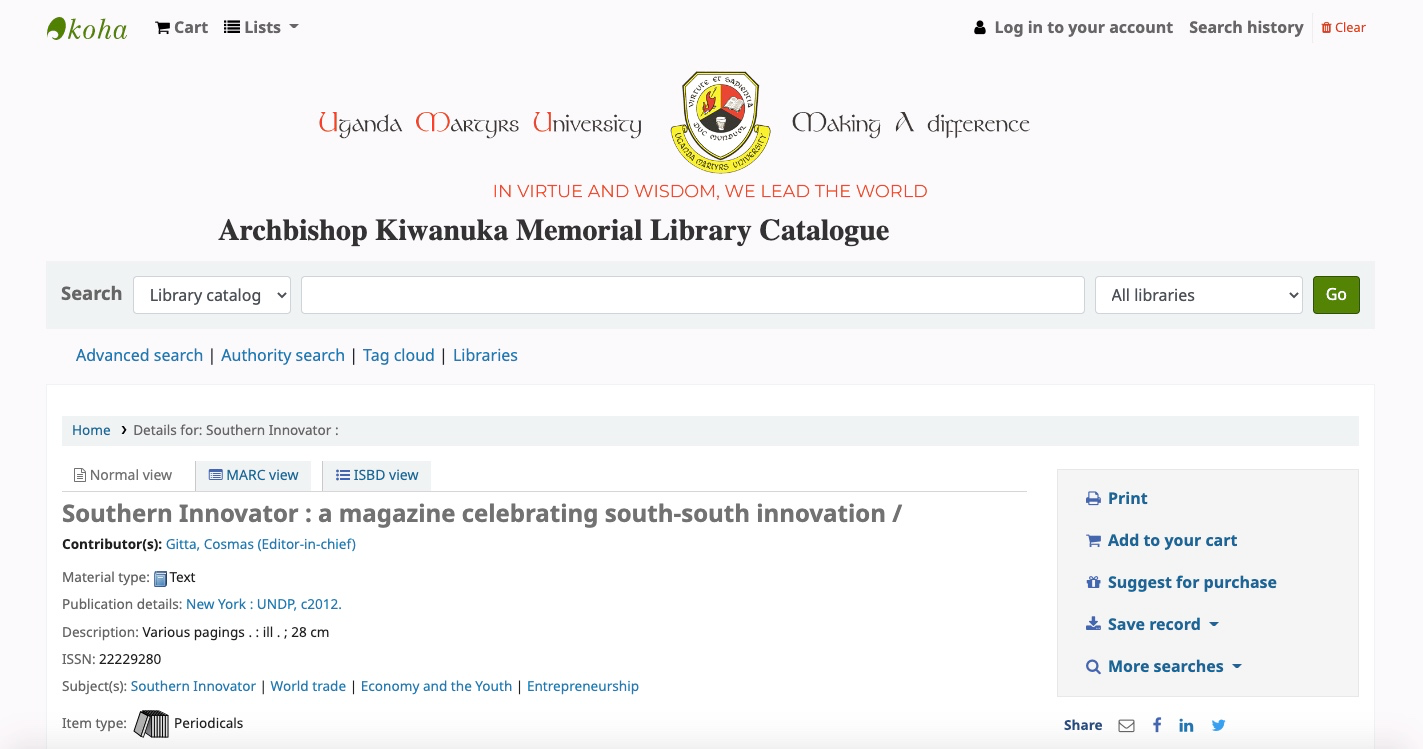
Southern Innovator is held in the library collections below:

Biblioteca de la Asamblea Legislativa de El Salvador: https://biblioteca.asamblea.gob.sv/101180_southerninnovator-a-magazine-celebrating-south-south-innovation-may-2011?q=

Biblioteca Nationala a Republicii Moldova: http://cc.sibimol.bnrm.md/opac/bibliographic_view/399949;jsessionid=C516885A73E277718AE64598E869BC70

British Library: https://bll01.primo.exlibrisgroup.com/discovery/fulldisplay?docid=alma990158672410100000&context=L&vid=44BL_INST:BLL01&lang=en&search_scope=BL_Available&adaptor=Local%20Search%20Engine&tab=BL_Available&query=any,contains,Southern%20Innovator&offset=0

Central Michigan University Libraries: https://cmich.primo.exlibrisgroup.com/discovery/fulldisplay?docid=alma991015822649303781&context=L&vid=01CMICH_INST:01CMICH&lang=en&search_scope=UNIVERSITY_CI&adaptor=Local%20Search%20Engine&tab=Everything&query=any,contains,Southern%20Innovator&offset=0

Centre multimédia sur l’environnement et le développement Dakar, Senegal: http://enda-cremed.org/bpd/opac_css/index.php?lvl=serie_see&id=674

Library of Congress: http://catalog.loc.gov/vwebv/holdingsInfo?searchId=15784&recCount=25&recPointer=0&bibId=17462965

Louisiana State University, LSU Libraries: https://lsu.ent.sirsi.net/client/en_US/lsu/search/detailnonmodal/ent:$002f$002fSD_LSU$002f0$002fSD_LSU:7935129/ada?qu=southern+innovator&d=ent%3A%2F%2FSD_LSU%2F0%2FSD_LSU%3A7935129%7ESD_LSU%7E0&te=SD_LSU

Malaysian Academic Library Union: https://malcat.uum.edu.my/kip/Record/ukm.b15483824

National Library of Malaysia: https://opac.pnm.gov.my/search/query?term_1=Southern+Innovator&theme=PNM2

Toronto Public Library: http://vc4kb8yf3q.search.serialssolutions.com/?V=1.0&N=100&L=VC4KB8YF3Q&S=AC_T_B&C=southern+innovator

Uganda Martyrs University: https://catalogue.umu.ac.ug/cgi-bin/koha/opac-detail.pl?biblionumber=33335

United Nations Library Geneva: Issues 2, 4, 5: Click ‘Get It’: 

Issue 1: https://tinyurl.com/3s22f236

University of Birmingham: https://birmingham-primo.hosted.exlibrisgroup.com/primo-explore/fulldisplay?docid=44BIR_ALMA_DS51193861790004871&context=L&vid=44BIR_VU1&lang=en_US&search_scope=CSCOP_44BIR_DEEP&adaptor=Local%20Search%20Engine&tab=local&query=any,contains,Southern%20Innovator&offset=0

The University of British Columbia: https://webcat.library.ubc.ca/vwebv/holdingsInfo?searchId=168763&recCount=100&recPointer=1&bibId=6682400

Universitat de Valencia: http://xv9lx6cm3j.search.serialssolutions.com/?V=1.0&L=XV9LX6CM3J&S=JCs&C=JC_018470248&T=marc

Universiti Teknologi Malaysia Libraries: http://ent.library.utm.my/client/en_AU/main/search/detailnonmodal/ent:$002f$002fSD_ILS$002f820$002fSD_ILS:820407/ada?qu=Youth&rw=1200&ic=true&ps=300

University of Cape Town Libraries (print copies destroyed in 2021 fire): https://tinyurl.com/2p8fnv6f

University of Liverpool: https://liverpool.primo.exlibrisgroup.com/discovery/fulldisplay?docid=alma991023308133807351&context=L&vid=44LIV_INST:44LIV_INST&lang=en&search_scope=MyInst_and_CI&adaptor=Local%20Search%20Engine&tab=Everything&query=any,contains,Southern%20Innovator&offset=0

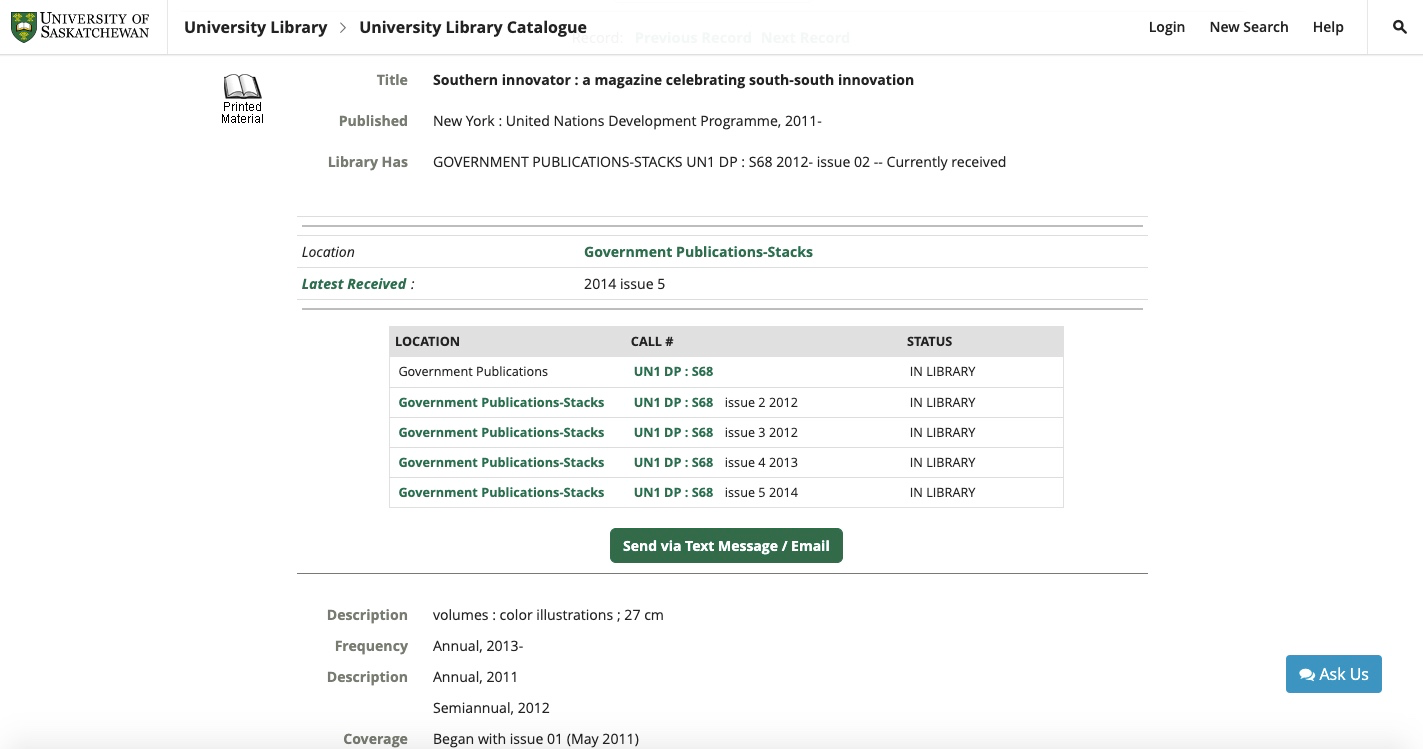
University of Saskatchewan: http://sundog.usask.ca/search/t?SEARCH=southern+innovator&sortdropdown=-&searchscope=8

University of Zambia Online Public Access Catalogue

Washington State University: https://searchit.libraries.wsu.edu/discovery/fulldisplay?docid=alma99900557958601842&context=L&vid=01ALLIANCE_WSU:WSU&lang=en&search_scope=WSU_everything&adaptor=Local%20Search%20Engine&tab=default_tab&query=any,contains,Southern%20Innovator&offset=0

If you would like hard copies of the magazine for distribution, then please contact the United Nations Office for South-South Cooperation: Website: http://ssc.undp.org/content/ssc.html. If you would like to either sponsor an issue of Southern Innovator or place an advertisement in the magazine, then please contact southerninnovator@yahoo.co.uk. This is a great opportunity to reach millions around the world and to connect with the pioneers and innovators shaping this new world. With Issue 5 tackling the timely theme of Waste and Recycling, this is the moment to get on board and help support SI. With global urbanization levels continuing to rise, fresh thinking of the kind found in Southern Innovator‘s fifth issue is urgently required.

Follow @SouthSouth1

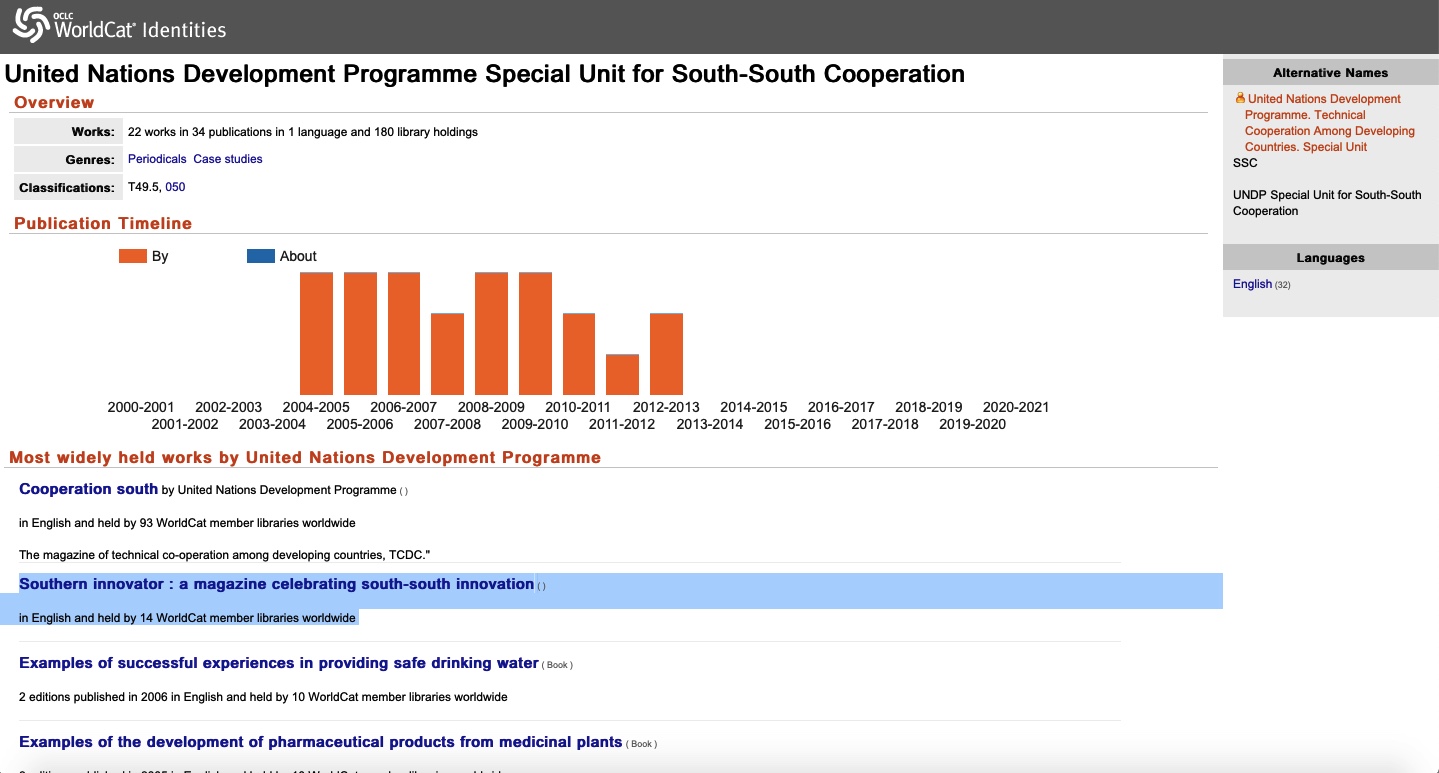
https://www.worldcat.org/title/southern-innovator-a-magazine-celebrating-south-south-innovation/oclc/1127120816?referer=list_view

https://davidsouthconsulting.org/southern-innovator-scale-up-fundraiser/

Creative Commons License

This work is licensed under a
Creative Commons Attribution-Noncommercial-No Derivative Works 3.0 License.

ORCID iD: https://orcid.org/0000-0001-5311-1052.

© David South Consulting 2024

Categories
Archive Development Challenges, South-South Solutions Newsletters Southern Innovator magazine

Solar Bottle Bulbs Light Up Dark Homes

By David SouthDevelopment Challenges, South-South Solutions

SOUTH-SOUTH CASE STUDY

Finding ways to generate low-cost or free light has captured the imagination of innovators across the global South. The desire for light is strong: Light gives an immediate boost to income-making opportunities and quality of life when the sun goes down or in dark homes with few windows.

More than 1.7 billion people around the world have no domestic electricity supply, of whom more than 500 million live in sub-Saharan Africa (World Bank). Without a source of electricity, it is difficult to use conventional technology to switch the lights on.

While it is possible to run lights using batteries or diesel generators, these are expensive options that are not possible for many poor people. The more of a slim income that is spent on light, heat or cooking fuel, the less there is left for better-quality food, clothing, transport or education and skills development.

Low-cost light is great, but free light is even better – and one Brazilian solution is offering this.

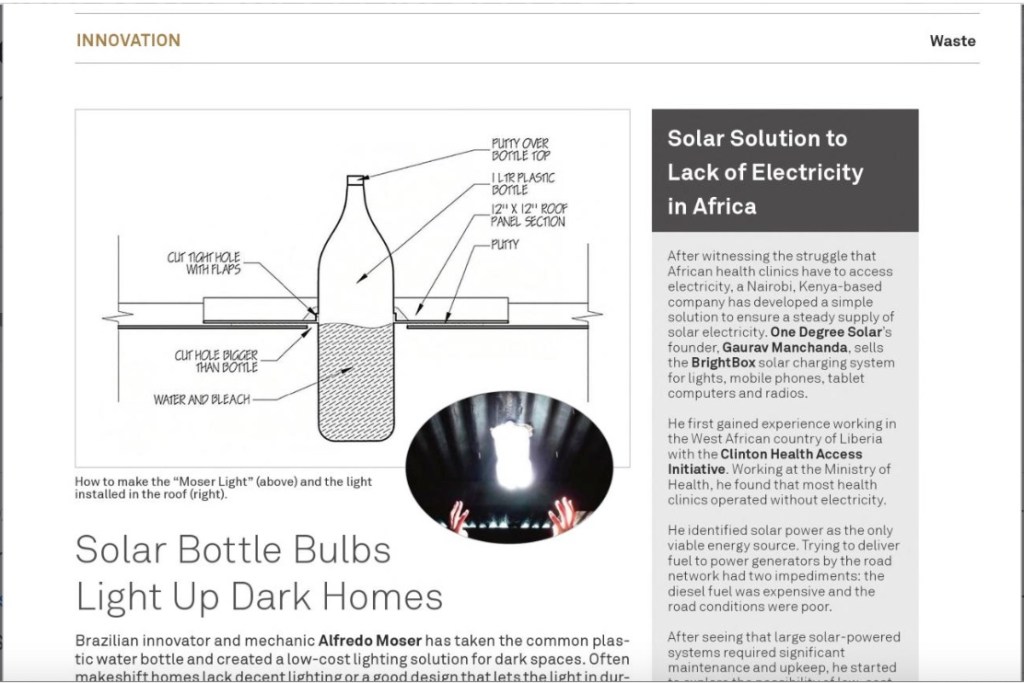
Brazilian innovator and mechanic Alfredo Moser has taken the common plastic water bottle and created a low-cost lighting solution for dark spaces. Often makeshift homes lack decent lighting or a good design that lets the light in during the day. This means it may be a bright, sunny day outside, but inside the home or workplace, it is very dark and reading or working is difficult.

Moser came upon the idea during regular blackouts in his home city of Uberaba (http://www.uberaba.mg.gov.br/portal/principal) in southern Brazil during 2002. During the blackouts, only factories were able to get electricity, leaving the rest of the population in the dark.

The “Moser Light” involves taking plastic bottles, which are usually just thrown away or recycled, and filling them with water and bleach to draw on a basic physical phenomenon: the refraction of sunlight when it passes through a water-based medium.

It is a simple idea: Holes are drilled in the ceiling of a room and the bottles placed in the holes. The liquid-filled bottle amplifies the existing sunlight (or even moonlight) and projects it into the dark room. This turns the plastic bottle into a very bright lightbulb that does not require any electricity.

Moser uses a solution of two capfuls of bleach added to the water to prevent anything growing in the water such as algae because of the exposure to sunlight.

“The cleaner the bottle, the better,” he said.

Polyester resin is used to seal the hole around the plastic bottle and make it watertight from rain.

Moser claims his bottle innovation can produce between 40 and 60 watts of light.

Moser uses recycled plastic bottles, so the carbon footprint is minimal compared to the manufacture of one incandescent bulb, which takes 0.45 kilograms of CO2 (UN). Running a 50 Watt incandescent light bulb for 14 hours a day for a year, around the same light as produced by the bottle bulb, produces a carbon footprint of nearly 200 kilograms of CO2.

“There was one man who installed the lights and within a month he had saved enough to pay for the essential things for his child, who was about to be born. Can you imagine?” Moser told the BBC.

The plan is to try and get as many as a million homes fitted with the lighting system by the end of 2013.

In many poor areas, it is common to live in makeshift or rudimentary dwellings. These are often built to crude designs and, in order to keep costs down and boost security, will have few or no windows. These dwellings will consequently be very dark inside, even on the brightest days. This leaves people having to turn to a source of artificial light if they want to do something indoors like read or work. And this costs money. Be it electricity from a mains, or battery-powered lamps or gas-powered lanterns, the cost will eat into a person’s tight income. This is where Moser’s simple solution saves the day and saves pennies: it is free light once the bottle lamp system is installed.

Placing the bottle lights in the ceiling transforms the ceiling into something akin to the night sky, with many points of light shining down into the room like stars. It also means the occupant of the room does not just have to strain to see with the use of a single light but now has many lights illuminating the room from all angles.

“It’s a divine light,” Moser told the BBC World Service. “God gave the sun to everyone, and light is for everyone. Whoever wants it saves money. You can’t get an electric shock from it, and it doesn’t cost a penny.”

It has not been a road to riches for Moser. He has made some money installing the system in a local supermarket and nearby homes, and he has inspired a charity to install the lighting system and to train people to do the installation and make an income from it.

The MyShelter Foundation in the Philippines was inspired by Moser’s invention and has installed the system in some 140,000 homes there, the BBC reported.

“We want him to know that there are a great number of people who admire what he is doing,” MyShelter Executive Director Illac Angelo Diaz said of Moser.

Using bottle bulbs instead of electricity or generators means families can save US $6 per month, according to Diaz (CNN). The Philippines is reported to have the most expensive electricity in Asia and slum homes usually do not have electricity.

It is estimated 15 other countries also have homes using the Moser system. The MyShelter Foundation believes 1 million homes worldwide have used the Moser system as of 2013.

Liter of Light (http://aliteroflight.org), run by the MyShelter Foundation, offers instructions on how to install the lighting system on its website.

Published: September 2013

Resources

1) D-Lab: MIT: Development through Dialogue, Design and Dissemination: D-Lab is building a global network of innovators to design and disseminate technologies that meaningfully improve the lives of people living in poverty. The program’s mission is pursued through interdisciplinary courses, technology development, and community initiatives, all of which emphasize experiential learning, real-world projects, community-led development, and scalability. Website: http://d-lab.mit.edu/

2) d.light Solar: d.light is a for-profit social enterprise whose purpose is to create new freedoms for customers without access to reliable power so they can enjoy a brighter future. d.light design manufacture and distribute solar light and power products throughout the developing world. Website: http://www.dlightdesign.com/

3) Liter of Light:  It brings the eco-friendly bottle light to communities living without electricity. Website: http://aliteroflight.org

4) Solar Sister: Solar Sister eradicates energy poverty by empowering women with economic opportunity.  They combine the breakthrough potential of solar technology with a deliberately woman-centered direct sales network to bring light, hope and opportunity to even the most remote communities in rural Africa. Website: http://www.solarsister.org/

Creative Commons License

This work is licensed under a
Creative Commons Attribution-Noncommercial-No Derivative Works 3.0 License.

ORCID iD: https://orcid.org/0000-0001-5311-1052.

© David South Consulting 2023

Categories
Archive Development Challenges, South-South Solutions Newsletters

Landmark Study Finds Simple Toys Key to Boosting Educational Development and Meeting MDGs

By David SouthDevelopment Challenges, South-South Solutions

SOUTH-SOUTH CASE STUDY

African youth need to play more according to a new landmark study published in the UK’s leading medical journal, The Lancet. The study tackles the high rates of illiteracy and educational under-achievement in Africa and finds that malnourishment and lack of stimulation are leaving millions unable to benefit from schooling. It found projects that encouraged learning through play led to children boosting their IQs and getting better reading skills. And it comes up with a very simple and low-cost solution – but excellent opportunity for entrepreneurs – toys and play.

“These are not high tech interventions,” said team leader for the study, Professor Sally McGregor of the Institute of Child Health of University College London. “Research over decades in Jamaica (and other countries) has shown that women with only primary school-level education and a few home made toys can be trained to make a significant difference in the education, intelligence and mental health of disadvantaged children. The Millennium Goal of universal primary education for all cannot be met unless these children’s poor development is tackled.”

The paper – Strategies to Avoid the Loss of Developmental Potential among Over 200 Million Children in the Developing World – is published in three parts in the journal.

Twenty projects around the world were evaluated for the benefits they produce for children under five who use toys. McGregor, who has set up several projects in Kenya, Tanzania and Uganda designing and constructing toys using whatever materials are available, was appalled by the widespread neglect of play throughout these countries. With play, the study found children read better, have better mental health and better self-esteem. In Africa it is ‘desperate, really desperate’ she says.

African primary school enrolments and literacy rates are among the lowest in the world, with over 42 million school children in sub-Saharan Africa not enrolled in school, and many children not able to afford to go or stay in primary school. Today a little more than half of African adults are literate and some 60 per cent of children go to school, according to UNESCO. The agency has forecasted the need for an additional 1.6 million teachers in Sub-Saharan African classrooms by 2015 – an increase of 68 percent.

The materials used to construct the toys do not need to be expensive or sophisticated. Toys can be constructed from banana trees, mud, corn on the cob, old plastic bottles, or cloth and straw dolls. It is key that the toys are safe for children under five and that anyone building such toys for sale must follow existing manuals.

McGregor continues: ‘One mother in a village was doing marvellous things with tiny scraps of material to make a doll. She received no recognition in the village for the work she was doing yet it was so important. It doesn’t take much – dolls or simple wooden blocks – they are so versatile. You see schools with nothing – it is unforgivable. The problem is how poor these people are – food just takes priority over toys – it is that stark.”

Locally produced toys are key to resolving this crisis for several reasons. Cost is the most important, with those most adversely affected also the least able to pay for toys and who are already living a precarious existence where basic survival takes precedence over play. Another factor is Africa being home to the countries who import the least number of toys: Somalia, Liberia, Togo, Rwanda and Chad. But the situation for African toymakers is often desperate as well, with many craft workers living at the economic margins. Several initiatives have emerged in the last couple of years to address this problem and ensure African toys are local and toymakers earn a living.

Initiatives like the African Toyshop based in Johannesburg, South Africa – a fair trade business – work to ensure African toymakers can make a living and get their wares to as wide a market as possible. The toymakers featured all use natural resources or recycled materials. Most work at the village level and produce toys that are culturally relevant to Africa. The organization COFTA – Cooperation For Fair Trade in Africa – is a network of Fair Trade producer Organizations in Africa involved and working with disadvantaged grassroots producers to eliminate poverty through fair trade. It is an excellent resource for grassroots organizations wanting to work with African toymakers.

Published: January 2007

Resources

The UK charity TALC – Teaching-aids At Low Cost – is planning to make available toy making manuals on a CD. Tel: (0) 1727 853869

This website also has excellent resources for budding toy and play area makers in Africa.

Online exhibition of African toys: Click here

Book: Africa on the Move: Toys from West Africa Stefan Eisenhofer, Karin Guggeis, Jacques Froidevaux Stuttgart, Germany: Arnoldsche, 2004. 216 pp., 195 color, 28 b/w illustrations. $75.00, cloth.

SDG Resource Centre: The southern origins of sustainable development goals: Ideas, actors, aspirations.

https://davidsouthconsulting.org/2021/06/02/case-study-5-gosh-ich-child-health-portal-2001-2003/

https://davidsouthconsulting.org/2021/02/05/channel-regulation-swedes-will-fight-childrens-advertising-all-the-way/

https://davidsouthconsulting.org/2021/07/29/infographics-2005-2014/

https://davidsouthconsulting.org/2021/03/04/innovation-villages-tackling-mdgs/

https://davidsouthconsulting.org/2016/04/14/interviews-for-the-gosh-child-health-portal-2001-2003-14-april-2016/

https://davidsouthconsulting.org/2020/12/10/one-world-youth-conferences-mongolia-1998-1999/

https://davidsouthconsulting.org/2021/03/05/southern-innovator-issue-2/

https://davidsouthconsulting.org/2020/12/09/study-finds-simple-toys-key-to-boosting-educational-development-january-2007/

https://davidsouthconsulting.org/2022/10/27/tapping-the-power-of-child-play/

https://davidsouthconsulting.org/2021/02/11/turning-street-children-into-entrepreneurs/

Creative Commons License

This work is licensed under a
Creative Commons Attribution-Noncommercial-No Derivative Works 3.0 License.

ORCID iD: https://orcid.org/0000-0001-5311-1052.

© David South Consulting 2023