Categories
Archive Development Challenges, South-South Solutions Newsletters Southern Innovator magazine

Mongolian Enterprises Target Healthy Urban Lifestyles

By David SouthDevelopment Challenges, South-South Solutions

SOUTH-SOUTH CASE STUDY

In the Northeast Asian nation of Mongolia – landlocked between Russia and China – the traditional diet is based on the nomadic ways of its herders. Rich in meat and milk products, it is a diet that has evolved from the need to survive in a harsh climate doing hard physical labour – winter temperatures can drop below minus 50 degrees Celsius.

Social changes brought about by Mongolia’s economic journey since embracing free markets and democracy in the early 1990s have led to a growing urban population. The capital, Ulaanbaatar, has seen its population balloon for a variety of reasons – from collapsing rural economies to environmental disasters to the need to find work and opportunities – and is estimated to be over a million, out of a national population of just 2.6 million (World Bank).

Mongolia is experiencing serious food security problems due to factors including economic inflation and weather-related disasters, and is also confronting problems common to many countries in the age of globalization. According to the World Diabetes Foundation, 10 percent of the population is at risk of the disease, which it calls a lurking catastrophe.

As the paper “Lessons from a small country about the global obesity crisis” by Kelly D. Brownell and Derek Yach notes: “Globalization changes many features of modern life, including diets. As trade changes, diets can become more secure (hunger becomes less of a problem), but the cheapening of calories, the reliance on imported food, and the influence of food marketing drive up consumption and drive down nutrient density. Obesity, diabetes, and other chronic diseases are not far behind.”

In response to these problems, increasing awareness of healthy lifestyles has led to some new business ventures in Ulaanbaatar. This past summer, saw the opening of an organic vegetarian restaurant and shop: the Organic Café Shop, reports Green Traveler Guides.

Started by business partner-sisters  Bayarmaa Jarantai and Enkhmaa Jarantai with nephew Lkhagvasuren, the modest four-table restaurant and shop is a mini-revolution for a country as meat-loving as Mongolia. It serves up organic vegetarian meals and sells certified organic products. The spark of inspiration came when Bayarmaa read three books on the macrobiotic diet translated into Mongolian. The macrobiotic diet (http://en.wikipedia.org/wiki/Macrobiotic_diet) avoids highly processed foods and uses grains, beans and vegetables as its staples.

The cafe’s menu includes: vegetable salads (shredded cabbage, bell peppers, carrots and seasoning), stir-fried vegetables with tofu and asparagus soup, 10-grain soup, eggplant, and Mongolian vegetarian fried vegetables. Prices range between 2,500 Mongolian tugrug and 4,500 tugrug (US $1.75 and US $3.00).

The vegetables are sourced locally from Mongolian farmers and gardeners and are chemical-free. While not officially certified as organic, they are effectively that.

The shop sells certified organic products from China. The products include rice, grains, sugars and jams. (Made-in-Mongolia organic produce is a business opportunity waiting to happen: so far there are no certified organic packaged-product producers in the country).

The sisters import the products from Lohao City (http://www.lohaocity.com/eshow.asp) organic food market in Beijing, China.

But despite the Organic Café Shop’s good intentions, it is not immune to the country’s food security issues: Bayarmaa admits to being puzzled about how she will be able to continue to source the fresh vegetables she needs during the harsh winter months. Ulaanbaatar is the coldest national capital in the world and fresh produce has to be imported at considerable expense.

Another enterprise promoting healthy living in Ulaanbaatar is the Ananda Café and Meditation Centre (http://www.anandacenter.org/), a vegetarian restaurant and yoga (http://en.wikipedia.org/wiki/Yoga) centre. Yoga is the traditional physical and mental discipline from ancient India used to keep physically fit. It is a form of exercise that appeals to a wide age range and can be done pretty well anywhere.

The Ananda Centre offers courses in yoga and meditation, vegetarian cooking classes and nature retreats.

Published: November 2010

Resources

Creative Commons License

This work is licensed under a
Creative Commons Attribution-Noncommercial-No Derivative Works 3.0 License.

ORCID iD: https://orcid.org/0000-0001-5311-1052.

© David South Consulting 2023

Categories
Archive Southern Innovator magazine

Press Release 1 | Southern Innovator

Press Release for General Distribution

New Magazine Targets Innovators in Global South

United Nations, New York, 20 September 2011

  • Global magazine Southern Innovator profiles innovation culture ending poverty
  • 60-page color magazine gives snapshot of fast-changing world

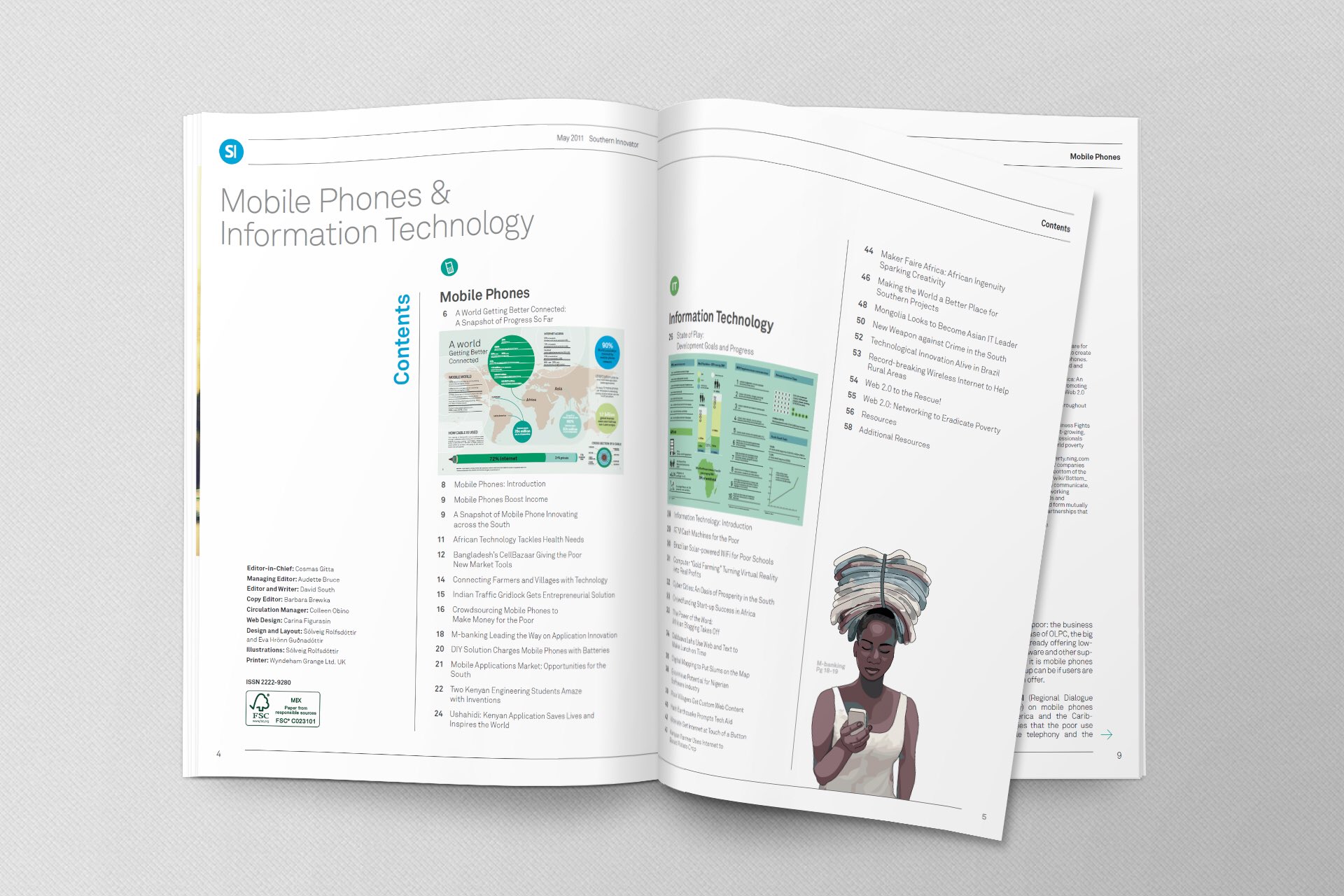
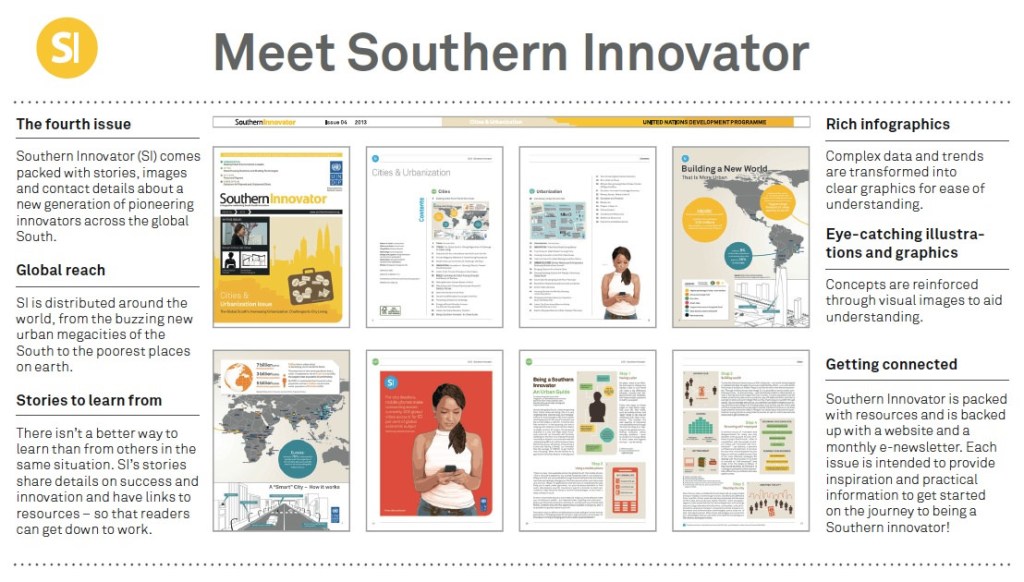
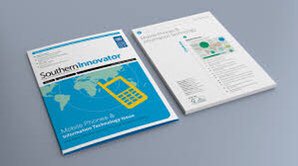
Southern Innovator (SI) is a new magazine for a fast-changing world. It profiles and celebrates the innovators across the global South finding new ways to tackle poverty, create wealth and improve human development and achieve the millennium development goals (MDGs). In its first issue, Southern Innovator features the people who are re-shaping new technologies – from mobile phone ‘apps’ to Internet technologies – to overcome poverty and to improve the quality of life in some of the poorest places on earth.

SI is based on intensive research and is produced by UNDP’s Special Unit for South-South Cooperation (www.southerninnovator.org). The Unit is the leading organisation in the world tasked with the goal of sharing knowledge across the global South. It organises events including the yearly South-South Expo (www.southsouthexpo.org), a roaming celebration and gathering of Southern innovators previously held in New York and Geneva, Switzerland. This year’s Expo will be held in Rome, Italy (5 to 9 December 2011).

SI is being distributed around the world through the United Nations network and partners and reaches some of the poorest and remotest places as well as the vibrant but stressed growing global megacities. It is hoped the magazine will inspire budding innovators with its mix of stories, essential information, facts and figures, images and graphics. The magazine will evolve based on reader responses and this first issue is very much the beginning of a journey. As became clear while researching this first issue, many things can change in a short space of time. Few could have imagined the rapid take-up of mobile phones in Africa and how these phones have become integral to development goals across the continent.

SI magazine is a quarterly publication and the next issues will launch in September and December of this year.

A summary for publication is here:

“Southern Innovator (ISSN 2222-9280) is a quarterly magazine published by the United Nations Development Programme’s Special Unit for South-South Cooperation. Launched in May 2011, SI is a new magazine celebrating creativity and innovation emerging from the global South. It explores entrepreneurial solutions to development challenges and uncovers the trends and events shaping the rise of the South in order to spur action on ending extreme poverty and toward reaching the Millennium Development Goals (MDGs).”

We hope you enjoy the magazine and find its content interesting and illuminating: a snapshot of a fast-changing world awash, as we found out, with innovators, creators and do-ers making their world a better place.

For more information on Southern Innovator contact Cosmas Gitta at cosmas.gitta@undp.org or editor David South at southerninnovator@yahoo.co.uk.

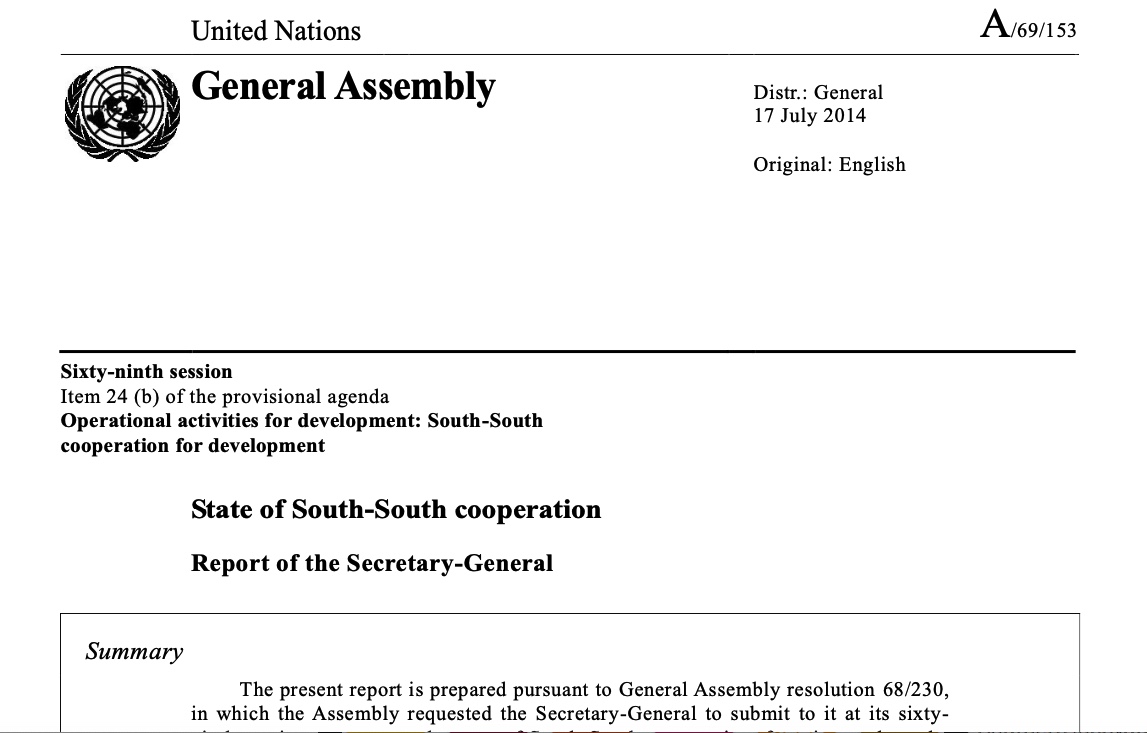
United Nations General Assembly: Sixty-ninth session, Item 24 (b) of the provisional agenda, Operational activities for development: South-South cooperation for development, 17 July 2014.
The research informing Southern Innovator Magazine played a part in the formulation of the UN’s post-2015 development agenda, including the Sustainable Development Goals (SDGs).

https://davidsouthconsulting.org/southern-innovator-scale-up-fundraiser/

ORCID iD: https://orcid.org/0000-0001-5311-1052.

© David South Consulting 2022

Categories
Archive Development Challenges, South-South Solutions Newsletters Southern Innovator magazine

Turning African Youth on to Technology

By David SouthDevelopment Challenges, South-South Solutions

SOUTH-SOUTH CASE STUDY

An African NGO believes the Internet is the single biggest key to rapid development in Africa – and it is working to connect youth, women and rural populations to the web, and in turn, switch them on to the vast resources stored across the world’s Internet sites.

After initial successes with a youth project and with farmers, Voices of Africa (VOA) (http://www.voicesofafrica.info) is now seeking to scale up its work to fan out across Africa – and take its services to the world’s largest refugee camp, the Dadaab Refugee Camp in Kenya. 

The youth and technology empowerment NGO has developed a business model to deliver low-cost Internet access and e-resources to Africa’s slums and rural farmers.

VOA argues that “the digital divide, defined by a lack of access to information for a specific population, symbolizes the largest difference between developed and developing countries: the opportunity to obtain and utilize information.”

“The digital divide runs much deeper than hardware and software,” it says. “While equipment is necessary it is not sufficient. The real heart of the digital divide is that those without access to information resources often suffer needlessly while the solutions to their problems are floating in the air.”

But why is the Internet so important?

“The internet puts the choice of content at the fingertips of the user,” explains executive director Crystal Kigoni. “Traditional media is one way communications. Internet is bi-directional.

“Our NGO is completely grassroots. We train the people who train the people. It is an each one, teach one philosophy and is highly effective. We also design our projects to be self-sustainable after one year of successful implementation.”

The philosophy behind Voices of Africa – “Sustainable Development through Information Empowerment” – is to give people the information and resources to take better control of their lives.

Access to the Internet in Africa is patchy and, for the poor, an expensive resource. The penetration of mobile phones in Africa has been spectacular in the past five years. But there are limits to the resources people can afford to access with their phones. Issues abound about data costs, mobile phone networks, and mobile phone capability.

VOA targets youth and women in sub-Saharan Africa through online educational resources offered on their e-learning website (http://elearning.voicesofafrica.info/). The resources have been certified by Nazarene University (http://www.anu.ac.ke), a private university in Nairobi, Kenya.

The e-learning resources include high quality training videos, presentations and screencasts (http://en.wikipedia.org/wiki/Screencast) – like a movie, it is a digital recording of changes on a computer screen and is used to teach software – to share on the web. The resources are also shared through compact discs (CDs) and iPods (http://en.wikipedia.org/wiki/IPod).

Project coordinator Nick Kungu coordinates the staff working on the pilot Kenyan projects: a Rural Internet Kiosk; a Youth Empowerment Center; and KiberaNet, which launched in August 2011. VOA uses a part-time and volunteer staff of more than 20 Kenyans and four international ‘virtual’ volunteers.

The group is also working with farmers in Kutus, central Kenya, to help them get a better price for their products and introduce sustainable agriculture practices. This is done through online courses so the farmers do not need to travel. It is hoped by doing this they can improve the supply of food for the country.

The Youth Empowerment Center in Webuye constituency of the Western province of Kenya involves a partnership with the government of Kenya to teach computer basics, research and data collection, social media, ICT (information communication technology) for development, social business and community health.

In rural areas, the need for information cannot be overestimated. In the remote countryside, there are few schools with adequate resources and almost no community libraries. The lifesaving knowledge the people require has to date been completely beyond their grasp. As one rural woman in the Western province of Kenya exclaimed to VOA after encountering the resources on the Internet, “It is like being brought from the darkness into the light.”

Another project in development is SlumNet, which seeks to combine the Internet with low-cost devices like tablet computers and netbooks. Its pilot scheme, KiberaNet, launched this month in the Kibera slum of Nairobi, Kenya to test the business model. VOA hopes to then expand it to Uganda, Tanzania, Ghana, Nigeria and Sierra Leone. It is using a business model to bring low-cost Internet access to Africa’s slums that is fully funded by the local communities and the users.

It has identified the key needs of youth in slums that need to be met: a way to access the vast resources available on the Internet; a way to generate income, undertake low-cost learning, and organise for social justice; ways to overcome social, economic and political isolation; a way to access affordable equipment and resources to improve their quality of life in the short-term.

To make it a sustainable business model, the community takes a 60 percent stake in the incorporated entity. Voices of Africa will select six local civil society organisations to take another 10 percent stake in the business. VOA takes 10 percent and the remaining 30 percent will be open to outside investors.

It involves setting up a closed intranet system and Internet access covering the entire Kibera slum, which has an estimated population of 2 million, a majority under the age of 30.

KiberaNet hopes to act as a community hub for socialising, education and generating content. A key part is creating an atmosphere that is welcoming to novices. The business model is about delivering the bandwidth of Internet access and simultaneously generating a sustainable source of income to keep it going. Partners in the business include Promote Africa, Plexus Group and Future Optics Networks.

VOA also has been blogging about its time in Kenya’s Dadaab Refugee Camp (http://www.unhcr.org/cgi-bin/texis/vtx/page?page=49e483a16) at their website, www.voicesofafrica.info, and has been developing plans to expand services to the camp, home to over 400,000 refugees from drought and famine in Somalia. The camp was only designed to hold 90,000 people. The chronic food insecurity has caused a massive humanitarian crisis in the Horn of Africa, leaving over 10 million people in need of help.

“There are plenty of resources going in but it is aid business as usual,” claims Kigoni. “You see lots of waste in many areas, and a lack in others that would be extremely beneficial. Hence, why Voices of Africa has come up with the youth technology and empowerment plan that accompanies a general information and communications system, DadaabNet.”

DadaabNet will be a youth-run community Internet service and education service. VOA plans to use a wireless intranet, internal communications systems and low-cost internet access in the refugee camp.

The project is the first of its kind in Dadaab and a first in Kenya, claims VOA, allowing free educational content without needing to access the Internet

The intranet will host free educational videos that can be accessed by mobile phones and computers. The topics covered in the videos include health, nutrition, sanitation and computer training and how to use technology for sustainable development.

The curriculum is also approved by Nazerene University to certificate level.

The system is supervised and would be able to offer resources to other NGOs seeking to provide services to the camp’s residents. The intention is to open up opportunities for education and employment youth who are currently unemployed.

At present the youth in the camp, many of whom have not completed secondary school, get by ‘hustling’ for work, according to VOA. By being left to their own devices, there is a risk they will fall into negative behaviour like crime and drug use or be preyed upon by terrorist organisations operating in the area like al Shabaab, they maintain.

“In our dreams, everyone everywhere in the world can have the opportunity to develop their minds. It is through this creativity that Africa will rise,” concludes Kigoni.

Published: August 2011

Resources

1) The Impact of Mobile Phones on Profits from Livestock Activities by Roxana Barrantes. Website: http://www.mendeley.com/research/impact-mobile-phones-profits-livestock-activities-evidence-puno-peru-14/

2) 2011 UNHCR Country Operations Profile – Kenya. Website: http://www.unhcr.org/cgi-bin/texis/vtx/page?page=49e483a16

3) Southern Innovator magazine: New global magazine Southern Innovator’s first issue is out now and is about Mobile Phones and Information Technology in the global South. Website: http://www.scribd.com/doc/57980406/Southern-Innovator-Issue-1

Creative Commons License

This work is licensed under a
Creative Commons Attribution-Noncommercial-No Derivative Works 3.0 License.

ORCID iD: https://orcid.org/0000-0001-5311-1052.

© David South Consulting 2023
Categories
Archive Development Challenges, South-South Solutions Newsletters Southern Innovator magazine

Ring Tones and Mobile Phone Downloads are Generating Income for Local Musicians in Africa

By David SouthDevelopment Challenges, South-South Solutions

SOUTH-SOUTH CASE STUDY

African musicians hoping to support themselves through their recordings have always had to contend with the added burden of poor copyright control over their work. While musicians in the West are supported by a highly regulated regime of copyright protection – ensuring some to become the richest people in their respective countries – most African musicians have had to stand back and watch their work being copied, sold and exchanged with little chance of seeing any royalties. Global audiences know of the success of artists like Fela Kuti, Youssou N’Dour, Manu Dibango and Miriam Makeba, but most African musicians can look forward to scant earnings from recording their music.

Anyone who has walked through the markets of Africa will know there are plenty of pirated CDs for sale, yet it is of no use to a musician who never sees the money. Poverty is endemic amongst African musicians as a result of this loss of income. While music is a global business worth US $40 billion according to the Recording Industry Association of America, pirated music in Africa is rampant – some estimates by the Recording Industry of South Africa put it at over 80 percent of available music. How much money is being lost can be judged from the estimated daily income of a pirate music vendor in Africa, ranging between Euro 762 and Euro 2,744.

But a solution to this problem is being pioneered in Botswana in southern Africa. A partnership between mobile phone provider Orange Botswana and Small House Records/Mud Hut Studios, ensures musicians get a slice of the profit pie. Managing director Solomon Monyame of Small House Records has signed a contract with Orange to share the profits from ring tone and song downloads to mobile phone subscribers. With more than 76.8 million people currently subscribing to mobile phone services in Africa, and the number growing by about 58 percent each year for the last five years, the potential royalties market for African musicians is vast if this initiative is replicated across the continent.

In the paper “Development Goes Wireless” to be published in the spring 2007 issue of the journal of the Institute of Economic Affairs, lead researcher Karol Boudreaux of George Mason University’s Mercatus Center and Enterprise Africa!, discovered mobile phones and mobile phone companies can give artists a new way to control royalties for their work. She found that in the absence of effective copyright control mechanisms – as is the case in many African countries – the mobile phone company can step in to save the day.

“When you walk through the markets there you see so much music available on the street, but there is little intellectual property rights protection,” she said.

“In other countries, like the UK, you have strong intellectual property rights protection, but this just isn’t the case in much of Africa. The mobile phones are a very good way to get around this problem as long as cell phone providers are willing to make the contracts. Botswana is very lucky in that they have a very good contract environment, but this isn’t necessarily the case in other countries. It is a win-win for music providers and mobile companies.”

The NetTel@Africa project started by USAID and the Center to Bridge the Digital Divide, in partnership with many African and US universities, is also championing copyright protection strategies.

How important creative industries are becoming to economic development is slowly being recognized. It is now seen as an important component of modern post-industrial, knowledge-based economies, but equally also a way for economically underdeveloped countries to generate wealth. Not only are they thought to account for higher than average growth and job creation, they are also vehicles of cultural identity and play an important role in fostering cultural diversity. Initiatives like UNESCO’s Global Alliance for Cultural Diversity attempt to document this phenomenon and back it up with hard numbers.

UNESCO also has a project to establish musicians’ cooperatives across Africa. As such, the musicians are able to pool their production resources, which are individually insufficient to ensure the economic viability of a small or medium-sized business. In Burkina Faso, a co-operative is working with the International Labour Organisation. Click here for more information.

Festivals like Mali’s annual Festival in the Desert in the oasis of Essakane, 65 kilometers from Timbuktu, is an example of how African musicians are finding their own way to reach audiences. Targeted above all to promote African and Malian Music inside the continent, the Festival has also boosted international tourism to the region and almost 10 percent of last year’s 6,000 visitors came from outside of Africa.

Another initiative for African musicians is the DigiArts Africa network. It was founded by UNESCO and aims to increase communication between artists, industries and educators, make musicians self-sustainable, use the ICT industries to support and contribute to cultural activities, and better promote African musicians within and outside Africa. Click here for more information.

Well-known Senegalese musician Thione Seck is blunt about the economic effect of piracy on his income.

“Were there no piracy, I could have bought an island, seeing the number of songs that I composed in more than 30 years of my career”, he told a local newspaper.

According to Abdoul Aziz Dieng, president of the Senegal Music Works Association (AMS) and Chairman of the Board of the Senegalese Copyright Office (BSDA) (www.mali-music.com), out of 10 Senegalese artists’ CDs available on the local market, “only two are legal”. For audio cassettes, the ratio is three pirate copies out of every five sold.

Opportunities to combat piracy and generate income are also not limited to just musicians. Filmmakers in Africa are starting to learn how to exploit the opportunities thrown up by the fast-expanding mobile phone networks on the continent. Already a phenomenon in South Africa (www.filmmaker.co.za), director Aryan Kaganof is in the process of releasing SMS Sugar Man, a feature length movie shot entirely with mobile devices. The movie will be beamed to cell phones in three-minute clips over 30 days.

What are the effects of Piracy?

  • Artist
    • No royalty payments, no money to live
  • Record companies
    • No return on investments. Staff retrenchments
  • Retailers
    • Cannot compete with low prices. Staff retrenchments
  • Consumers
    • Many copies are of inferior quality. If tracks are missing or the sound quality is poor, no exchange or refunds
    • May be contributing to “organized crime” syndicates which are heavily involved in international music piracy

Source: Recording Industry of South Africa

Published: January 2007

Resources

Lively website about African musicians

BBC website on African music

Further reading from UNESCO: African music: new challenges, new vocations: Click here

https://davidsouthconsulting.org/2022/10/02/african-afro-beats-leads-new-music-wave-to-europe/

https://davidsouthconsulting.org/2022/11/11/berber-hip-hop-helps-re-ignite-culture-and-economy/

https://davidsouthconsulting.org/2022/11/17/cashing-in-on-music-in-brazil/

https://davidsouthconsulting.org/2022/12/18/disabled-congolese-musicians-become-world-hit/

https://davidsouthconsulting.org/2021/11/09/mauritanian-music-shop-shares-songs-and-friendship/

https://davidsouthconsulting.org/2023/02/07/mongolian-rock-and-pop-book-mongolia-sings-its-own-song/

https://davidsouthconsulting.org/2020/12/17/mongolias-musical-entrepreneurs-led-way-out-of-crisis-2018/

https://davidsouthconsulting.org/2021/03/05/southern-innovator-issue-1/

https://davidsouthconsulting.org/2021/03/05/southern-innovator-issue-2/

https://davidsouthconsulting.org/2021/11/09/taxis-promote-african-music-beats/

Creative Commons License

This work is licensed under a
Creative Commons Attribution-Noncommercial-No Derivative Works 3.0 License.

ORCID iD: https://orcid.org/0000-0001-5311-1052.

© David South Consulting 2023