In the Northeast Asian nation of Mongolia – landlocked between Russia and China – the traditional diet is based on the nomadic ways of its herders. Rich in meat and milk products, it is a diet that has evolved from the need to survive in a harsh climate doing hard physical labour – winter temperatures can drop below minus 50 degrees Celsius.
Social changes brought about by Mongolia’s economic journey since embracing free markets and democracy in the early 1990s have led to a growing urban population. The capital, Ulaanbaatar, has seen its population balloon for a variety of reasons – from collapsing rural economies to environmental disasters to the need to find work and opportunities – and is estimated to be over a million, out of a national population of just 2.6 million (World Bank).
Mongolia is experiencing serious food security problems due to factors including economic inflation and weather-related disasters, and is also confronting problems common to many countries in the age of globalization. According to the World Diabetes Foundation, 10 percent of the population is at risk of the disease, which it calls a lurking catastrophe.
As the paper “Lessons from a small country about the global obesity crisis” by Kelly D. Brownell and Derek Yach notes: “Globalization changes many features of modern life, including diets. As trade changes, diets can become more secure (hunger becomes less of a problem), but the cheapening of calories, the reliance on imported food, and the influence of food marketing drive up consumption and drive down nutrient density. Obesity, diabetes, and other chronic diseases are not far behind.”
In response to these problems, increasing awareness of healthy lifestyles has led to some new business ventures in Ulaanbaatar. This past summer, saw the opening of an organic vegetarian restaurant and shop: the Organic Café Shop, reports Green Traveler Guides.
Started by business partner-sisters Bayarmaa Jarantai and Enkhmaa Jarantai with nephew Lkhagvasuren, the modest four-table restaurant and shop is a mini-revolution for a country as meat-loving as Mongolia. It serves up organic vegetarian meals and sells certified organic products. The spark of inspiration came when Bayarmaa read three books on the macrobiotic diet translated into Mongolian. The macrobiotic diet (http://en.wikipedia.org/wiki/Macrobiotic_diet) avoids highly processed foods and uses grains, beans and vegetables as its staples.
The cafe’s menu includes: vegetable salads (shredded cabbage, bell peppers, carrots and seasoning), stir-fried vegetables with tofu and asparagus soup, 10-grain soup, eggplant, and Mongolian vegetarian fried vegetables. Prices range between 2,500 Mongolian tugrug and 4,500 tugrug (US $1.75 and US $3.00).
The vegetables are sourced locally from Mongolian farmers and gardeners and are chemical-free. While not officially certified as organic, they are effectively that.
The shop sells certified organic products from China. The products include rice, grains, sugars and jams. (Made-in-Mongolia organic produce is a business opportunity waiting to happen: so far there are no certified organic packaged-product producers in the country).
But despite the Organic Café Shop’s good intentions, it is not immune to the country’s food security issues: Bayarmaa admits to being puzzled about how she will be able to continue to source the fresh vegetables she needs during the harsh winter months. Ulaanbaatar is the coldest national capital in the world and fresh produce has to be imported at considerable expense.
Another enterprise promoting healthy living in Ulaanbaatar is the Ananda Café and Meditation Centre (http://www.anandacenter.org/), a vegetarian restaurant and yoga (http://en.wikipedia.org/wiki/Yoga) centre. Yoga is the traditional physical and mental discipline from ancient India used to keep physically fit. It is a form of exercise that appeals to a wide age range and can be done pretty well anywhere.
The Ananda Centre offers courses in yoga and meditation, vegetarian cooking classes and nature retreats.
Global Food Security Crisis: A joint UN website with frequent updates on the global food crisis and how to respond. Website:http://www.un-foodsecurity.org/
Ananda Yoga Centre: Part of the increasing awareness of the importance of a healthy lifestyle, this yoga and meditation centre is located in Ulaanbaatar, Mongolia. Website:http://www.yogamongolia.org/
Ger: Mongolia’s First Web Magazine (And A Pioneering Web Project For The United Nations).
Global magazine Southern Innovator profiles innovation culture ending poverty
60-page color magazine gives snapshot of fast-changing world
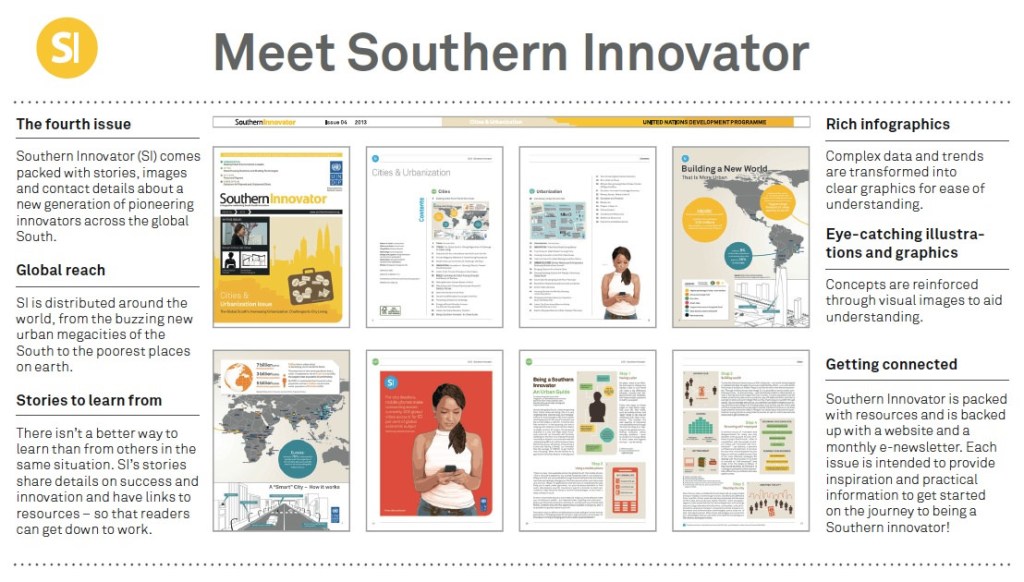
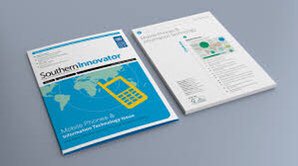
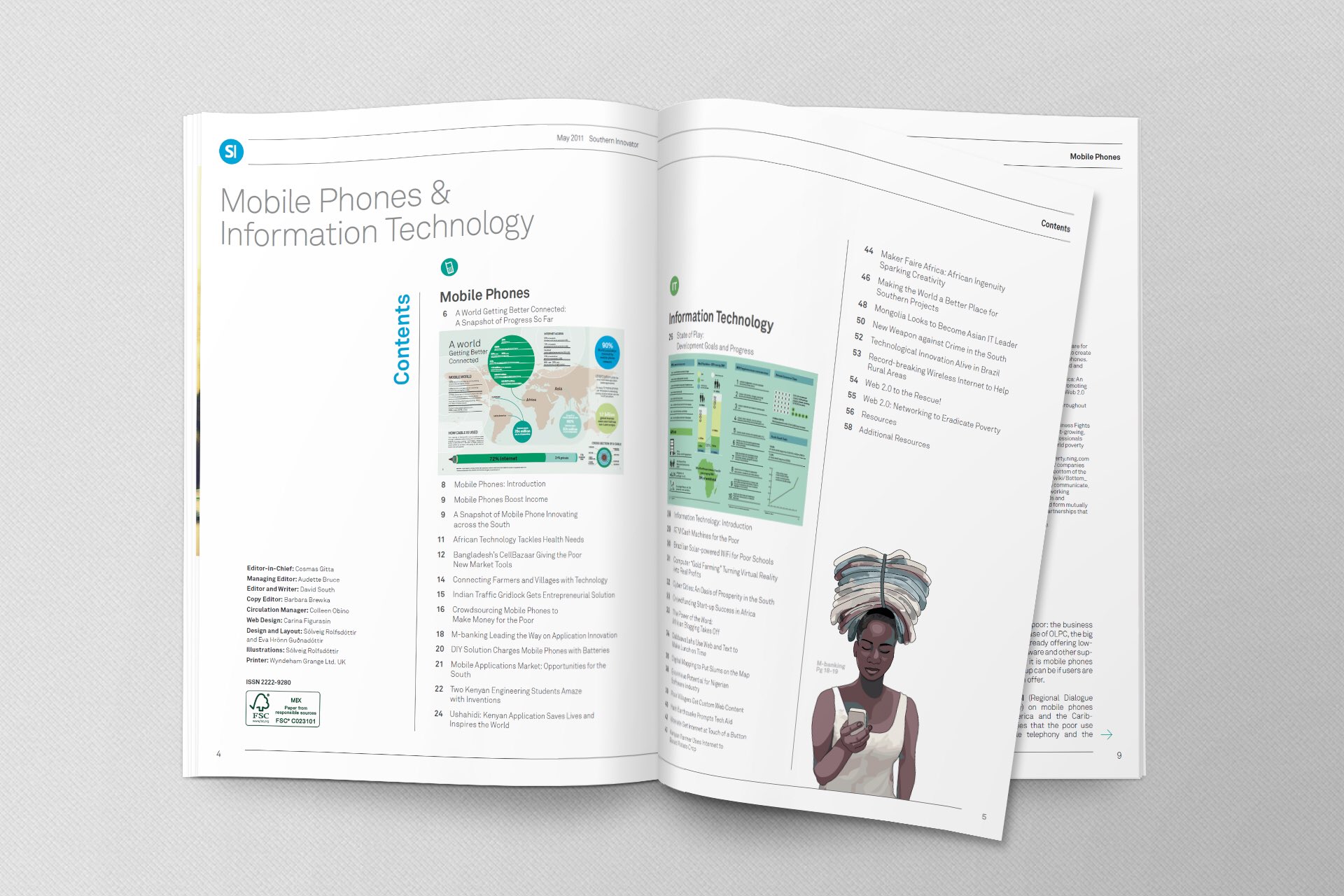
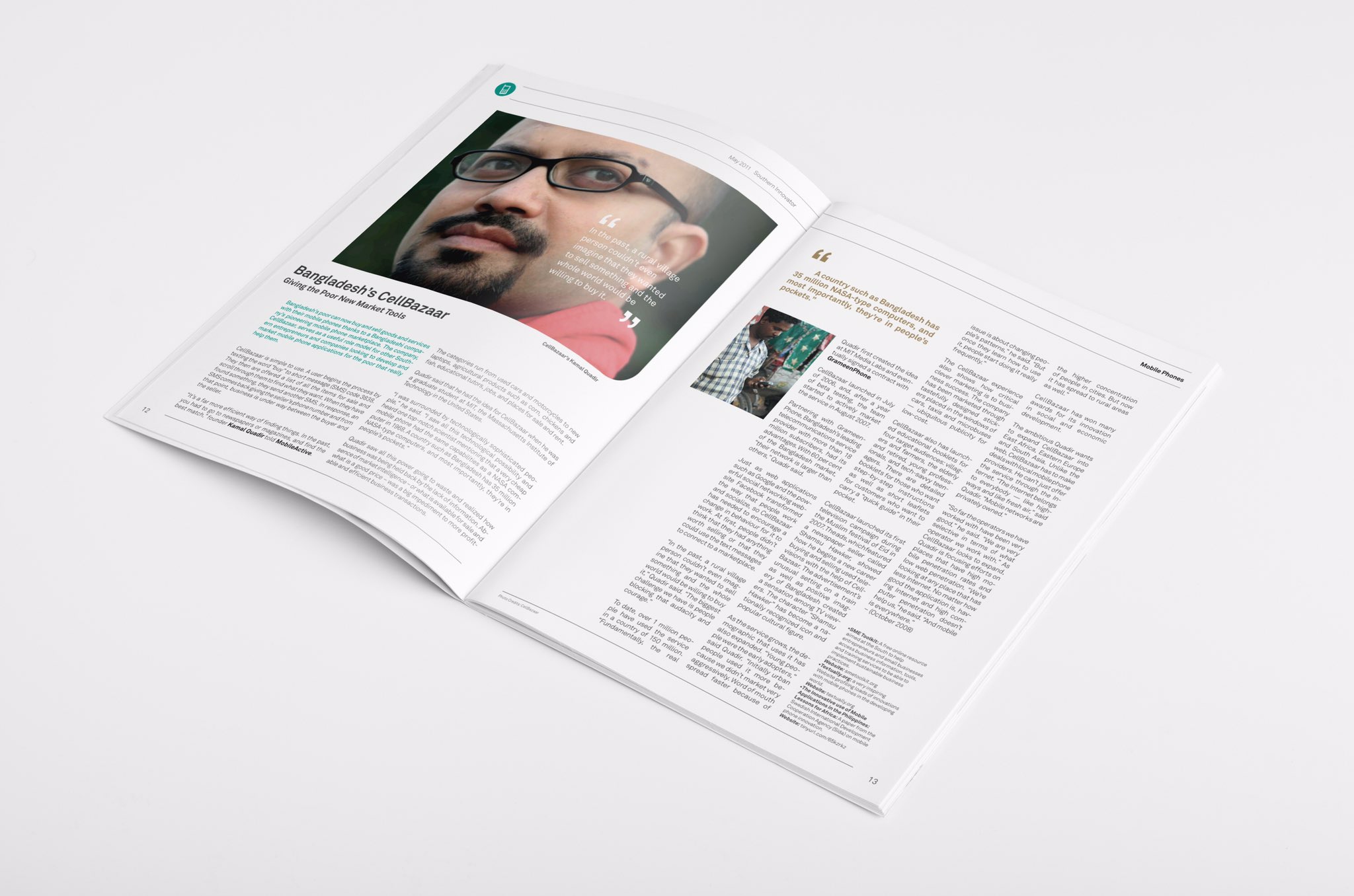
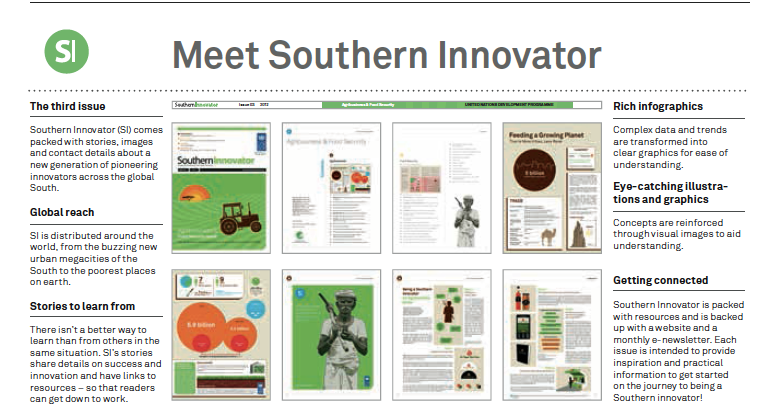
Southern Innovator (SI) is a new magazine for a fast-changing world. It profiles and celebrates the innovators across the global South finding new ways to tackle poverty, create wealth and improve human development and achieve the millennium development goals (MDGs). In its first issue, Southern Innovator features the people who are re-shaping new technologies – from mobile phone ‘apps’ to Internet technologies – to overcome poverty and to improve the quality of life in some of the poorest places on earth.
SI is based on intensive research and is produced by UNDP’s Special Unit for South-South Cooperation (www.southerninnovator.org). The Unit is the leading organisation in the world tasked with the goal of sharing knowledge across the global South. It organises events including the yearly South-South Expo (www.southsouthexpo.org), a roaming celebration and gathering of Southern innovators previously held in New York and Geneva, Switzerland. This year’s Expo will be held in Rome, Italy (5 to 9 December 2011).
SI is being distributed around the world through the United Nations network and partners and reaches some of the poorest and remotest places as well as the vibrant but stressed growing global megacities. It is hoped the magazine will inspire budding innovators with its mix of stories, essential information, facts and figures, images and graphics. The magazine will evolve based on reader responses and this first issue is very much the beginning of a journey. As became clear while researching this first issue, many things can change in a short space of time. Few could have imagined the rapid take-up of mobile phones in Africa and how these phones have become integral to development goals across the continent.
SI magazine is a quarterly publication and the next issues will launch in September and December of this year.
A summary for publication is here:
“Southern Innovator (ISSN 2222-9280) is a quarterly magazine published by the United Nations Development Programme’s Special Unit for South-South Cooperation. Launched in May 2011, SI is a new magazine celebrating creativity and innovation emerging from the global South. It explores entrepreneurial solutions to development challenges and uncovers the trends and events shaping the rise of the South in order to spur action on ending extreme poverty and toward reaching the Millennium Development Goals (MDGs).”
We hope you enjoy the magazine and find its content interesting and illuminating: a snapshot of a fast-changing world awash, as we found out, with innovators, creators and do-ers making their world a better place.
For more information on Southern Innovator contact Cosmas Gitta at cosmas.gitta@undp.org or editor David South at southerninnovator@yahoo.co.uk.
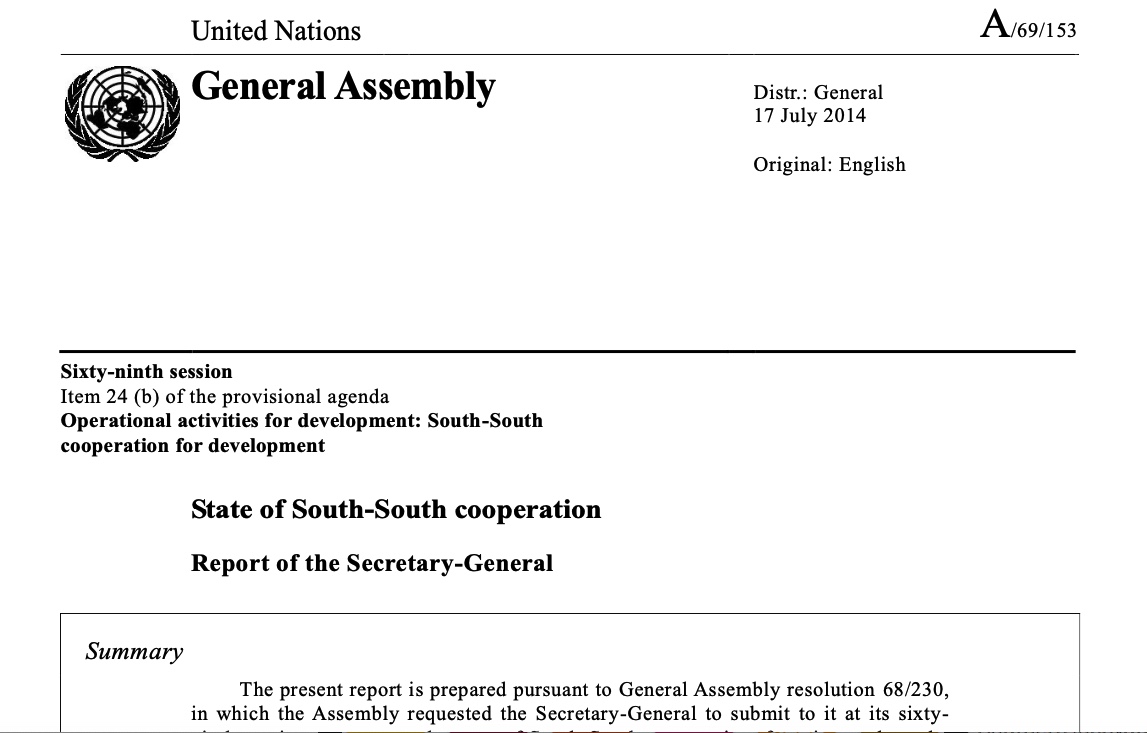
United Nations General Assembly: Sixty-ninth session, Item 24 (b) of the provisional agenda, Operational activities for development: South-South cooperation for development, 17 July 2014. The research informing Southern Innovator Magazine played a part in the formulation of the UN’s post-2015 development agenda, including the Sustainable Development Goals (SDGs).
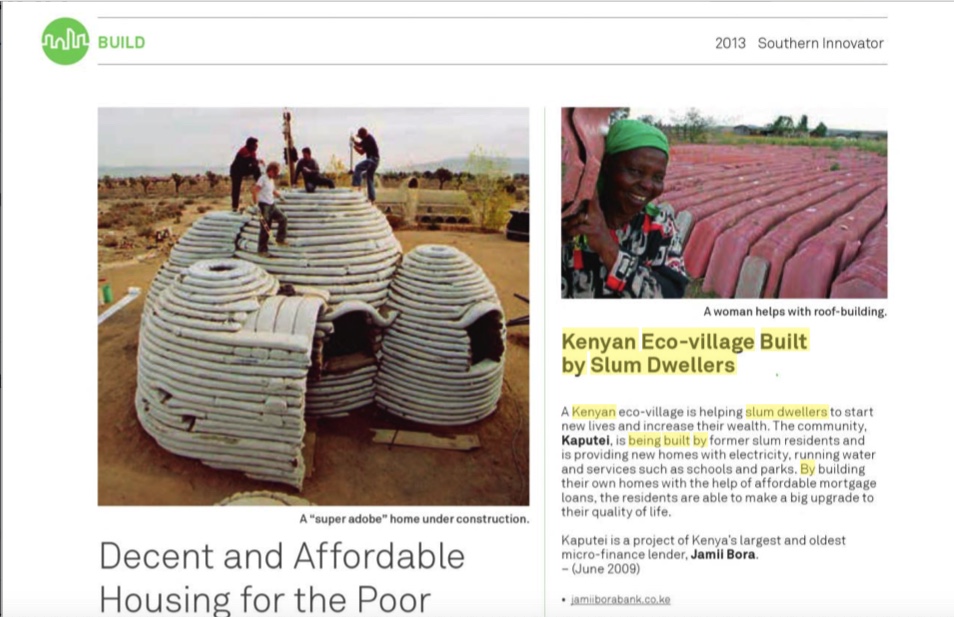
A Kenyan eco-village is helping slum dwellers to start new lives and increase their wealth. The community, Kaputei, is being built by former slum residents – some of whom used to beg to survive – and is providing new homes with electricity, running water and services like schools and parks. By building their own homes, with the help of affordable mortgage loans, the residents are able to make a big upgrade to their quality of life while acquiring real wealth.
More than 900 million people – almost a sixth of the world’s population – now live in urban slums (UN). This number will double by 2030 as a result of rapid urbanization in developing countries. Already in developing countries 43 per cent of urban dwellers live in slums, and the figure leaps to 78 per cent in the least-developed countries. The UN estimates it will take US $18 billion a year to improve living conditions for these people – and most of it will have to come from the residents themselves.
Kaputei is a project of Kenya’s largest and oldest micro-finance lender, Jamii Bora (www.jamiibora.org). Having enjoyed significant success in making loans to over 225,000 people – after starting out in 1999 with loans to just 50 beggars – it realized something on a larger scale was necessary to permanently transform the lives of poor Kenyans.
Jamii Bora’s founder, Ingrid Munro, saw the whole atmosphere of the slums as the biggest impediment to long-term life changes. “As long as you are living in the slums, you will never climb out of poverty,” she told The Independent newspaper. “Families of course need economic opportunities to rise out of poverty, but what good are they if you are still living in hell?”
Jamii Bora came up with the idea of building an entire community from scratch, and doing it in way that was affordable, ecological and sustainable, while building the wealth of the residents. Since 2007, the project has provided homes for 50 families; the target is to have homes for 2,000.
One former beggar who has built her own home is Clarice Adhiambo. An early client of Jamii Bora, she started to learn how to save, reaching her first goal of saving 1,000 Kenyan shillings (US $12.81). With Jamii Bora’s encouragement, she plowed this money back into buying some fish and selling it in the markets. Over time, she was able to grow her efforts until she was a regular market trader, and was borrowing as much as US $1,900 to fund various slum businesses.
Then came the Kaputei project. It has helped Adhiambo move from a 3 meter by 3 meter tin shack in the Nairobi slum of Soweto to her own home with running water: “So much water,” she told The Independent.
The new home is 50 square metres with two bedrooms, a sitting room and a bathroom.
Adhiambo pays US $36 a month for her mortgage — more than most people, because she wants to pay it off quickly. That compares to about US $20 a month in rent paid by many slum dwellers to live in squalor with poor services and quality of life.
Kaputei is a clever community project. Unlike attempts to build housing for the poor in isolation, Kaputei is based on neighbourhoods of 250 families each, with common community centres, playgrounds, parks and church halls. There is a town centre, and zones for commercial and industrial enterprises. The project was approved by the Kenyan government in 2004 and has planning permission for 119 hectares. Trees are being planted to provide protection from wind, add beauty, and, in time, to be a source of income or firewood. A wetland is being used to recycle waste water and is being run in partnership with Kenyan universities.
Each house costs US $1,875 to build. The homes are so cheap because the building materials are assembled in a factory on site, and the families help with the building.
Three house models are available and the families – from the Kamba, Kikuyu, Luo and Maasai peoples – choose the one they like by viewing show homes on site. Each home has access to roads, water and sewage.
It’s estimated the entire community of 2,000 families will cost US $3,750,000 for the homes, and another US $3,750,000 for infrastructure. Mortgages are offered at between 8.5 percent and 10 percent interest and are estimated to take 10 to 15 years to repay. The average mortgage is about US $32 a month.
Published: June 2009
Resources
Builders Without Borders: Is an international network of ecological builders who advocate the use of straw, earth and other local, affordable materials in construction. Website: www.builderswithoutborders.org/
World Hands Project: An NGO specialising in simple building techniques for the poor. Website:www.worldhandsproject.org
CIDEM and Ecosur specialize in building low-cost community housing using eco-materials. They have projects around the world and are based in Cuba. Website: www.ecosur.org
The Building and Social Housing Foundation: An independent research organization promoting sustainable development and innovation in housing through collaborative research and knowledge transfer. Website: www.bshf.org
Slum TV: Based deep inside Nairobi’s largest slum, Mathare, they have been seeking out the stories of hope where international media only see violence and gloom. Website: www.slum-tv.org
Interest in organic food and farming is high, and organics have become a growing global industry. The worldwide market for organic food grew by more than 25 per cent between 2008 and 2011, to US $63 billion, according to pro-organic group the Soil Association. That is an impressive accomplishment given the backdrop of the global economic crisis, and evidence that people value quality food, even in tough times.
One Kenyan company is hoping to help farmers benefit from this global surge in interest in organic food. The company is selling a healthy alternative to chemical fertilizers and is hoping it will soon be able to source its products in Kenya, too.
BioDeposit (http://biodeposit.lv/index.php?page=elixir-3) sells soil conditioner and natural fertilizer made from two ingredients: peat found in marshlands and silt dredged up from lakes, which is called sapropel (http://en.wikipedia.org/wiki/Sapropel). This naturally occurring resource is rich in all the elements required for abundant crops and has the added benefit of not poisoning the soil and water table when used on farmer’s fields.
It is sold as a solution to the multiple pressures hitting farmers, from chaotic weather patterns to soil damage and decreasing yields. It offers a way to boost farm productivity without damaging the soil in the long term.
In 2011 the amount of farmland that was organic reached 37.2 million hectares in 162 countries – but this is still just 0.86 per cent of the world’s agricultural land (Research Institute of Organic Agriculture and International Federation of Organic Agriculture Movements). If BioDeposit has its way, Kenyan farmers could help to grow the number of hectares being farmed organically.
Presenting the solution in October 2013 at the Global South-South Development Expo (southsouthexpo.org) at the headquarters of the UN’s Environment Programme (UNEP) in Nairobi, Kenya, BioDeposit communications and media chief Nelly Makokha (http://ke.linkedin.com/pub/nelly-makokha/29/a08/634), explained that the company is hoping to bring the technology behind BioDeposit to Kenya, if they can get permission.
At present, the source materials for the products are dredged from lakes in Latvia in Eastern Europe. Because of the political structures of Kenya, it means a long political process is ahead to gain permission to dredge any of the country’s lakes. BioDeposit’s Latvian scientists conducted research on the potential for Lake Naivasha (http://en.wikipedia.org/wiki/Lake_Naivasha) in the Rift Valley and claim it has enough deposits to provide Kenya’s farmers with organic fertilizer for the next 200 years.
“If the government agrees, the fertilizer is basically cheaper than any other fertilizer the farmer [will] have ever used in a long time,” said Makokha. “It will be pocket-friendly for them. As they earn more money from the more yields, they are spending less on the fertilizer.
“Our slogan is ‘smart agriculture for health and wealth’ – health in terms of you become organically grown, and if you are looking for organic certification, we will organize that for the certifiers. Right now most countries are looking for organic food and cannot find it.
“So when you become organic that means you earn more money on your products so it means you are healthy and you are wealthy!”
The fertilizer comes in 12 milliliter packets that cost 200 Kenyan shillings (US $2.30). A farmer would need two packets for each quarter acre of farmland.
Based on a Russian discovery from the early 20th century, BioDeposit draws on naturally occurring resources.
Its products include BioDeposit Agro, described as a “biologically active soil conditioner,” and BioDeposit Elixir, described as a “humic plant growth stimulator.” The Elixir is a “sustainable, water-soluble” concentrate made from peat and can be used to soak seeds prior to planting, increasing the germination cycle. For the farmer, it means more seedlings in a shorter time. It also can be poured on compost piles to boost humic content to speed compost decay. Peat is formed from above-ground marsh plants, either on the surface or under a layer of water.
BioDeposit Agro is made from sapropel from the sediment at the bottom of freshwater lakes. It is a renewable, naturally-occurring resource as it has been formed from the accumulated settling of plants such as reeds, algae, trees, grasses and animals over time as they decay.
Unlike other chemical fertilizers, using the BioDeposit product does not require special protective clothing and does not harm human health. Children are also not at risk if they accidentally ingest the product.
“Most farmers have small farms – quarter acre, half acre, at most three acres,” said Makokha. “For a quarter acre you spend five dollars and you get more yields. Two of them would be approximately five dollars – that’s enough for a whole season – so it is pocket friendly.”
And if the company is able to harvest the material in Kenya, it would be even cheaper.
“You can imagine if we dredge here – probably (get the cost down to) a dollar – so it makes more sense for the farmers.”
The dredging has another positive impact: it helps with managing flooding by making the lake deeper once the silt is dredged out, making life better and safer for people living nearby.
BioDeposit has been operating in Kenya for a year and, Makokha said, “the response is awesome.”
BioDeposit organizes workshops for farmers through cooperative societies, helping to guide farmers through the whole process of becoming organically certified.
The company believes its products will help avert problems such as what happened recently when the European Union prevented some flowers – a major source of overseas income for Kenyan farmers – from entering the EU because of banned pesticides.
Cleverly, BioDeposit does most of its business digitally through mobile phones. It conducts its business with sales representatives by phone and conducts training by phone as well. All payments and bank transfers are done by phone using the M-PESA system (http://www.safaricom.co.ke/?id=257).
“It is the easiest way to do business in Kenya,” said Makokha. “Everybody right now owns a mobile phone. When we get the M-PESA, we transfer directly to the account. You get the money and transfer to the bank account and you are done, very easy for everybody … doing wonders for us.”
5) Integrating Ethno-Ecological and Scientific Knowledge of Termites for Sustainable Termite Management and Human Welfare in Africa by Gudeta W. Sileshi et al, Ecology and Society, Volume 14, Number 1. Website: http://www.ecologyandsociety.org/vol14/iss1/art48
6) Soil Association: The Soil Association was founded in 1946 by a group of farmers, scientists and nutritionists who observed a direct connection between farming practice and plant, animal, human and environmental health. Website: http://www.soilassociation.org/marketreport
7) Research Institute of Organic Agriculture: FiBL is an independent, non-profit, research institute with the aim of advancing cutting-edge science in the field of organic agriculture. Website: http://www.fibl.org/en/fibl.html
International Federation of Organic Agriculture Movements: Since 1972, IFOAM has occupied an unchallenged position as the only international umbrella organization of the organic world, i.e. all stakeholders contributing to the organic vision. Website: http://www.ifoam.org/
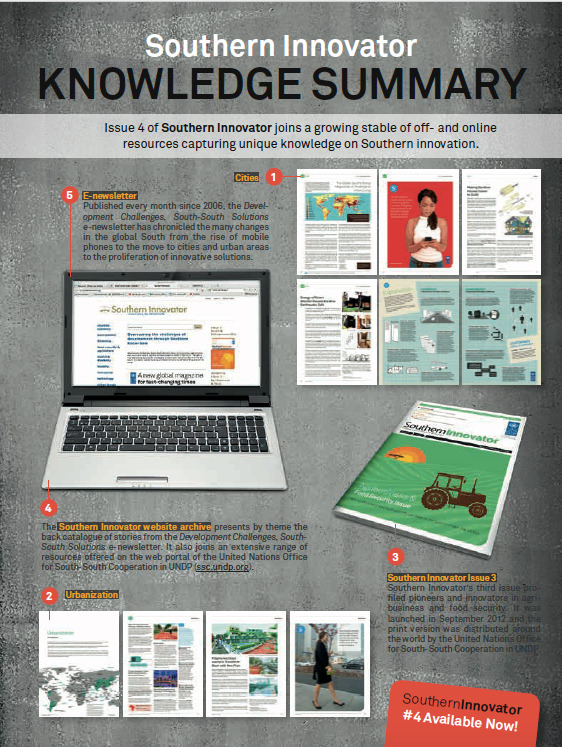
Development Challenges, South-South Solutions was launched as an e-newsletter in 2006 by UNDP’s South-South Cooperation Unit (now the United Nations Office for South-South Cooperation) based in New York, USA. It led on profiling the rise of the global South as an economic powerhouse and was one of the first regular publications to champion the global South’s innovators, entrepreneurs, and pioneers. It tracked the key trends that are now so profoundly reshaping how development is seen and done. This includes the rapid take-up of mobile phones and information technology in the global South (as profiled in the first issue of magazine Southern Innovator), the move to becoming a majority urban world, a growing global innovator culture, and the plethora of solutions being developed in the global South to tackle its problems and improve living conditions and boost human development. The success of the e-newsletter led to the launch of the magazine Southern Innovator.














 David South Consulting
You must be logged in to post a comment.