Tag: SDG8

  • Woman Wants African Farming to be Cool

    Woman Wants African Farming to be Cool

    By David SouthDevelopment Challenges, South-South Solutions

    SOUTH-SOUTH CASE STUDY

    Can farming be cool? Especially on a continent where it has long been associated with hardship and poverty, can agriculture be attractive to a young generation looking for big opportunities? A young woman in Nigeria thinks so and is on a mission to show farming is a great way to get ahead in modern Africa. And she hopes more people attracted to farming will boost the continent’s food security and reduce costly imports.

    Cynthia Mosunmola Umoru’s company, Honeysuckle PTL Ventures (http://www.tootoo.com/d-c3015227-Honeysuckles_Ptl_Ventures/), is based in Lagos , the business capital of Nigeria. The West African country has become dependent on food imports, despite many attempts to modernise its agricultural sector.

    The country’s heavy dependence on oil exports for its income has led to poor investment in its domestic economy. Over 80 percent of Nigeria’s university graduates struggle to find work. And it is these two problems – food security and high unemployment among the country’s young, educated and ambitious – that Umoru wants to change.

    Leading by example, Umoru has set up a successful and modern agribusiness focusing on high-quality food products using modern packaging and fast delivery. She produces meat products, from seafood like shrimps and prawns to snails, beef, chicken, and birds. Her niche is to deliver the product however the customer wishes: fresh, frozen or processed. Her business has its own farms and ponds but also has developed a sophisticated network with other farmers, providing them with standard contracts and benefits. This extra capacity means she can meet the demand and handle large volume orders.

    She is proudly self-taught. “I didn’t have a mentor in farming! Though I have other mentors,” Umoru told the Guardian Life Magazine. “My knowledge of agribusiness has been largely from personal education and research. The Internet has served greatly as my resource bank.”

    Umoru was initially on the path to study medicine, but had that dream upset by riots in the late 1990s. She then moved on to study zoology at Lagos State University. In her final year, she became interested in agribusiness. Her company was officially registered in 2004, but she had already begun at university providing meat products to fast-food outlets in Lagos.

    “It took five years to gain relevance,” she said. “My involvement in the agribusiness sector is really impacting people, particularly young people like me, who I always hear say ‘If you are involved with farming then it is probably not as bad as it seems’. Farming, before now in Nigeria, was termed business of low-lives and with the barrier to entry being so high for young people to actively participate.”

    “I have successfully, in my little way, impressed on my generation that farming could be glamorous and cool enough for us to trade places with the business executive in the large conglomerate and also the bank’s middle management cadre, which is the initial attraction for most young graduate(s) in Nigeria.”

    She is not shy talking about how rough it was in the beginning: “As a young entrepreneur, in my very early days, I lost a lot of the seed capital I got from financial mentors to poor and bad business decisions I took because there was no one to talk to.”

    Overall in sub-Saharan Africa, the long-term prospects for agriculture are good. The Food and Agricultural Organization (FAO) found in a 2009 paper that “the sub-Saharan agricultural sector — 80 percent of which consists of smallholder farmers — grew more than 3.5 percent in 2008, well above the 2 percent rate of population growth.”

    Sub-Saharan Africa’s population is predicted to grow from 770 million in 2005 to 1.5 to 2 billion in 2050 (FAO). Despite rapid migration from the countryside to cities and the growth in urban population, the absolute number of rural people is also likely to continue to increase.

    Agriculture is the motor for rural development, poverty and hunger reduction in sub-Saharan Africa. The FAO paper said that agricultural growth in sub-Saharan Africa is likely to be led by domestic and intra-African demand for food commodities due to urbanization and the growing population.

    African farming has been able to benefit from rising global food prices and demand. The policy environment has also become more favourable, according to the FAO. The paper found “There is a particular need for programmes and policies to increase the capacity of smallholder farmers to enter dynamic sectors of national, regional and international markets.”

    African farming can see serious productivity gains if it changes and it takes on new techniques. At the moment only 3 percent of the region’s food crops are produced using irrigation, compared to more than 20 percent globally.

    The irony is that Nigeria has already hatched one of the world’s most successful food companies, Olam (www.olamonline.com). A global food supply company in ‘agri-products’ that got its start in Nigeria, it shows Umoru is on to something – a Southern brand can grow and go global, and overcome the difficulties of cross-border trade in Africa.

    Olam currently supplies well-known global food brands including Cadbury (chocolate), Nestle, Lavazza (coffee), Mars (chocolate), Tchibo and Planters (peanuts).

    With some 218 million people in Africa — around 30 percent of the total population — estimated to be suffering from chronic hunger and malnutrition, a thriving local food sector would bring many gains.

    Turning to more sophisticated business models offers solutions to chronic problems. With 80 percent of Africa’s farms less than two hectares in size – and there are 33 million of them – cereal yields have grown little and are still around 1.2 tonnes per hectare in the region, compared to an average of some 3 tonnes per hectare in the developing world as a whole. Fertilizer consumption was only 13 kg per hectare in sub-Saharan Africa in 2002, compared to 73 kg in the Middle East and North Africa and 190 kg in East Asia and the Pacific. The FAO has estimated that the potential additional land area available for cultivation in sub-Saharan Africa amounts to more than 700 million hectares – a boon to the continent’s and the world’s food needs in coming years if handled well.

    And the demand is there: Between 2001 and 2007, annual increases in the global consumption of agricultural commodities were larger than during the 1980s and 1990s. The quantity of agri-products harvested in the world is 5.2 billion metric tonnes a year.

    “I have been able to reach out to so many people across the nation, preaching the agribusiness development and adoption gospel,” said Umoru. “I have also worked closely with other youth agencies to empower many more young people to aspire in Nigeria.”

    One such agency is the Harambe Nigeria Endeavour. Harambe Nigeria (http://www.hendeavor.org/content/bgroups/nigeria.php) is a programme designed to stimulate growth in the agricultural sector and open up opportunities for youth to become leaders and entrepreneurs in this area. And this means future young entrepreneurs going into the agricultural sector will not feel as alone as Umoru once did.

    As Obinna Ukwuani, creative director of Harambe Nigeria says: “We wish to rectify the tarnished image of agriculture in Nigeria, making it a viable investment for Nigerian youth from all walks of life.”

    Published: May 2010

    Resources

    1) World Vegetable Center: The World Vegetable Center is the world’s leading international non-profit research and development institute committed to alleviating poverty and malnutrition in developing countries through vegetable research and development. Website: http://www.avrdc.org

    2) Marketing African Leafy Vegetables: Challenges and Opportunities in the Kenyan Context by Kennedy M. Shiundu and Ruth. K. Oniang. Website: http://www.ajfand.net/Issue15/PDFs/8%20Shiundu-IPGR2_8.pdf

    3) 2050: Africa’s Food Challenge: Prospects good, resources abundant, policy must improve: A discussion paper from the Food and Agricultural Organization (FAO). Website: http://www.fao.org/wsfs/forum2050/wsfs-background-documents/issues-briefs/en/

    4) African Alliance for Capital Expansion: A management consultancy focused on private sector development and agribusiness in West Africa. Website: http://www.africanace.com/v3

    5) Branding Strategy Insider: This blog provides advice and case studies on how to build trust for your brand. Website: www.brandingstrategyinsider.com

    6) Growing Inclusive Markets, a web portal from UNDP packed with case studies, heat maps and strategies on how to use markets to help the poor. Website: www.growinginclusivemarkets.org

    7) Starting a SME (small, medium enterprise): This website is packed with advice and tips for starting a small business and how to grow it with limited resources. Website: http://www.smallbusiness.co.uk

    8) World Business Fair: The World Business Fair is an international trade platform for global entrepreneurs and professionals. Website: http://www.worldbusinessfair.com

    Development Challenges, South-South Solutions was launched as an e-newsletter in 2006 by UNDP’s South-South Cooperation Unit (now the United Nations Office for South-South Cooperation) based in New York, USA. It led on profiling the rise of the global South as an economic powerhouse and was one of the first regular publications to champion the global South’s innovators, entrepreneurs, and pioneers. It tracked the key trends that are now so profoundly reshaping how development is seen and done. This includes the rapid take-up of mobile phones and information technology in the global South (as profiled in the first issue of magazine Southern Innovator), the move to becoming a majority urban world, a growing global innovator culture, and the plethora of solutions being developed in the global South to tackle its problems and improve living conditions and boost human development. The success of the e-newsletter led to the launch of the magazine Southern Innovator. 

    Creative Commons License

    This work is licensed under a
    Creative Commons Attribution-Noncommercial-No Derivative Works 3.0 License.

    ORCID iD: https://orcid.org/0000-0001-5311-1052.

    © David South Consulting 2023

  • East Africa to get its First Dedicated Technology City

    East Africa to get its First Dedicated Technology City

    By David SouthDevelopment Challenges, South-South Solutions

    SOUTH-SOUTH CASE STUDY

    An ambitious scheme is underway to create a vast technology city on the outskirts of Nairobi, Kenya.

    With information technology proliferating across Africa after decades of stagnation and underinvestment, a host of exciting new technologies have had to exist within structures not built for the 21st century.

    One attempt to change things is Konza Technology City (konzacity.co.ke), an ambitious project that aims to build the infrastructure to host the companies of the 21st century for Kenya and East Africa. Konza Technology City joins a growing network of technology cities and parks across the global South. If the links between these centres of technological innovation and smart thinking can be strengthened, they have the potential to contribute to exceptional gains in human development.

    Konza Technology City will be built on 5,000 acres (2,023 hectares) of land 60 kilometres south of Kenya’s capital, Nairobi.

    The lead agency on the US $10 billion project is the Ministry of Information and Communication (http://www.information.go.ke/). The Kenyan government is seeking partners and investors to help with funding the project, whose components include a business process outsourcing (BPO) (http://en.wikipedia.org/wiki/Business_process_outsourcing) zone – where specific business functions are contracted to third party providers. There is also a financial district and a commercial district with office space.

    This will be combined with the other side of Konza: hotels, hospitals, a sports stadium and other support services necessary to support a city. The idea is to develop the site over a period of 20 years, with the BPO and IT Educational and Science Park taking up 23 per cent of the site.

    Kenya plans to expand its business process outsourcing sector and has been hosting conferences in Europe to gather the best advice. The sector has experienced double-digit growth in the past three years, rising on the increasing capacity brought by new undersea cables like TEAMs, Seacom and EASSy.

    The idea is to put in place the building blocks of a 21st century Kenya and to become the leading hub for the whole of East Africa. Kenya has an ambitious plan to become a middle-income country by 2030 (http://www.vision2030.go.ke/).

    There is scepticism about large projects in Kenya, with some fearing they will be abandoned before they are finished. But it does seem this project has galvanized a wide community of support. According to IT Web’s (http://www.itweb.co.za/) Ken Macharia, opponents of the project make various arguments. People in the information and communication technologies sector would like to see greater local capacity in place before such massive investment in buildings goes ahead. Others oppose the idea of having a planned city and would like to see things evolve organically. Still others question the government’s capacity to undertake such an ambitious scheme.

    According to Macharia, the ‘if you build it, they will come’ argument is winning the day. The scope and ambition of the project has both excited many players within and outside government and focused their efforts.

    Macharia even believes the public sector is way ahead of the private sector.

    “The government is light years ahead in terms of the vision and drive of developing the ICT sector in the country, while the private sector is trying to catch up,” he said.

    Kenya will become the first country in the region to build a technology city. It can look to China for some examples. One is Shenzhen City and its Science and Technology Park (http://www.ship.gov.cn/en/index.asp?bianhao=20). Or Cairo, Egypt’s Smart Village (http://www.smart-villages.com/).

    Macharia also says the focus solely on technology is missing the bigger impact Konza can have.

    “The city’s concept has financial, educational, commercial and industrial implications, which have not been sold as aggressively as the tech aspect has. Perhaps the better name for the proposed city would be Konza Special Economic Zone, where the key pillars mutually benefit from each other’s presence. Technology, after all, is a means to an end, not the end itself.”

    The timing for a place like Konza City is excellent: undersea cables are being placed around and to Africa. The continent was notorious for being the most underserved continent on the planet and is in a furious transition from this information technology wasteland to a potential oasis of prosperity.

    The undersea cable projects are promising a bandwidth explosion for the continent of Africa. The WACS cable (http://wacscable.com/index.jsp) is being put in place to link South Africa and Britain, and is due to be completed in 2012. It runs up the West Coast of Africa and will become the first direct connection to the undersea cable network for Namibia, the Congo and Togo.

    It will increase South Africa’s bandwidth by an estimated 23 per cent.

    Various technology investors, including the search engine giant Google, are also planning to build an undersea cable linking the so-called BRICS countries by 2014 – Brazil, Russia, India, China and South Africa. The cable will also link them all to the United States. The technology group i3 Africa is leading the project (http://www.i3-mea.com/africa/), which should open up 21 additional African countries to the world’s undersea cable network.

    Konza Technology City could make Kenya a significant beneficiary of all this new connectivity and bandwidth.

    Published: July 2012

    Resources

    1) Center for Innovation Testing and Evaluation: CITE will represent a 20th century American city with a population of approximately 35,000 people and be built on roughly 15 square miles. CITE’s test city will be unpopulated. CITE will be a catalyst for the acceleration of research into applied, market-ready products by providing “end to end” testing and evaluation of emerging technologies and innovations from the world’s public laboratories, universities and the private sector. Website: http://www.cite-city.com/index.php

    2) Dubai Internet City: Since its official opening in 2000, Dubai Internet City (DIC) has grown to become the Middle East and North Africa’s largest Information and Communication Technology (ICT) Business Park, hosting both global and regional companies. Website: http://www.dubaiinternetcity.com/

    3) Songdo International Business District (IBD) officially opened on August 7, 2009 as a designated Free Economic Zone and the first new sustainable city in the world designed to be an international business district. With its strategic location just 15 minutes driving time from Incheon International Airport and 3 ½ hours flying time to 1/3 of the world’s population and regional markets such as China, Russia and Japan, Songdo IBD will position South Korea as the commercial epicenter of Northeast Asia. Website: http://www.songdo.com/

    4) Nasrec Smart City: South Africa’s own ‘smart city’ is in development. Website: http://www.businessday.co.za/articles/Content.aspx?id=168466

    Development Challenges, South-South Solutions was launched as an e-newsletter in 2006 by UNDP’s South-South Cooperation Unit (now the United Nations Office for South-South Cooperation) based in New York, USA. It led on profiling the rise of the global South as an economic powerhouse and was one of the first regular publications to champion the global South’s innovators, entrepreneurs, and pioneers. It tracked the key trends that are now so profoundly reshaping how development is seen and done. This includes the rapid take-up of mobile phones and information technology in the global South (as profiled in the first issue of magazine Southern Innovator), the move to becoming a majority urban world, a growing global innovator culture, and the plethora of solutions being developed in the global South to tackle its problems and improve living conditions and boost human development. The success of the e-newsletter led to the launch of the magazine Southern Innovator. 

    Creative Commons License

    This work is licensed under a
    Creative Commons Attribution-Noncommercial-No Derivative Works 3.0 License.

    ORCID iD: https://orcid.org/0000-0001-5311-1052.

    © David South Consulting 2023

  • Ambitious Schemes Hope to Advance Economic Development

    Ambitious Schemes Hope to Advance Economic Development

    By David SouthDevelopment Challenges, South-South Solutions

    SOUTH-SOUTH CASE STUDY

    Sometimes it takes a bold, fresh start to speed up economic and human development goals. Taking a large-scale approach has been used around the world, either establishing new trade zones or even a new city.

    Two recent examples in Nigeria and Afghanistan are attempting to speed economic development in their respective countries, with both receiving help from experienced Asian practitioners of rapid economic development.

    The role models for this approach are the so-called “Asian Tigers”: they include Taiwan, Hong Kong, Singapore and South Korea. They are admired because each country rose from extreme poverty to become some of the Earth’s richest nations. Importantly, what they did stands as proof that extreme poverty can be escaped from; people can become much wealthier in just a decade or two.

    The pioneer of using trade zones to speed development is the Asian city state of Singapore (http://www.gov.sg/government/web/content/govsg/classic/home)..Fifty years ago it was one of Asia’s poorest countries. With its port (http://www.mpa.gov.sg/) it had a way to turn things around but it also realized in the early 1960s it could not just compete by having cheap labour, something that was plentiful across the developing world (http://www.mti.gov.sg/MTIInsights/Pages/Economic-History-and-Milestones.aspx). It needed unique technical skills that could not be found elsewhere.

    The country was unable to create products and services that it could export and compete in global markets because of a lack of skills, the Government determined. Authorities employed a mix of measures to make the country attractive to foreign companies to boost skills. These included fair enforcement of local laws, tax incentives and upgraded infrastructure, much of it paid for with an infrastructure tax, rather than borrowing. With the influx of new thinking and high-quality skills, new technologies and new ways of doing things, in time, a culture of innovation became hardwired into the way things were done in Singapore.

    Beginning in 1961 with the Jurong Industrial Estate (http://infopedia.nl.sg/articles/SIP_246_2004-12-16.html), the Singapore government set aside land to develop the economy by attracting international businesses and boosting its existing port facilities. It also established the Economic Development Board (EDB) in 1961 and the Singapore Tourism Promotion Board (STPB) in 1964.

    By creating favorable conditions for international businesses to come in and operate, Singapore quickly developed to become one of Asia’s wealthiest trading and manufacturing centres.

    This is a strategy China successfully implemented in the 1980s and 1990s and in turn generated the largest and quickest population shift out of poverty in human history, turning the country into an economic powerhouse.

    The secrets to making this strategy work include understanding what modern infrastructure requirements are necessary for international businesses. These days, this means speedy and generous bandwidth for the Internet, modern airports, roads, security, and quality housing and food.

    One of the biggest contemporary challenges is competition. Whereas Singapore was a pioneer in its day, now, many countries across the global South are pursuing this strategy to spur growth. An international company has many options to consider, and will more than likely gravitate towards the country that makes the best offer with the least risk.

    Trade zones are places ripe with opportunity for innovators. New places tend to be seeking the latest in information and communication technologies, the latest in transportation options, modern housing and office facilities. All of these changes require innovators with fresh thinking to make them work. It is also often easier to introduce new ways of doing things to places that are not coping with legacy infrastructure and old habits and ways.

    Billing itself as a “new model city,” the Lekki Free Zone Lagos, Nigeria (lekkizone.com) in West Africa is trying to bring a fresh start to the city and the region. It is a joint partnership between investors from China and Nigeria.

    Its goal is to better connect regional markets to the global economy. The free trade zone hopes to remove barriers to growth and to attract international investment, becoming the top destination for inward investment in Africa. The project is being run by the Lagos State Government but funded with private capital investment.

    Nigeria has been looking into Free Zones since 1982, as it sought additional ways to earn income apart from oil exports. The Export Processing Zone Act 63 was passed in 1992 and the Calabar Export Processing Zone was eventually set up in 1999 (http://www.nepza.gov.ng/index.php?option=com_content&task=view&id=18&Itemid=34). Since then, a slew of Free Zones have been set up, or are in the works.

    The Lekki Free Zone is envisioned as a high-tech zone that will eventually lead to the creation of 2 million jobs. The Zone’s investors are targeting businesses working in oil and gas, petrochemicals, electronics, light and heavy equipment, machinery and automobiles, pharmaceuticals, textiles, shopping and banking and financial services.

    Lagos State is home to 21 million people, and the current city of Lagos is on course to become the third-largest megacity in the world. Officials claim the area has an economic growth rate of 16.8 per cent per year.

    The 16,500 hectare Lekki Free Zone, to the southeast of the city, is divided into two parts: an industrial zone and a residential zone. The residential zone will include apartments and villas, shopping malls and plazas, hospitals and clinics, schools and research and development centres and a hotel, tour and recreational centres, golf courses, gyms and water sports facilities.

    Located on the southern coast of Nigeria with connections to the Atlantic Ocean and the Gulf of Guinea, the Lekki Free Zone says it will give companies access to the largest consumer market in Africa, with a potential reach of 500 million people.

    The companies will also be able to draw on Nigeria’s natural resources, including oil, natural gas, timber, rubber, cocoa, Arabic gum and sesame seeds as examples.

    Another new beginning is being sought in war-torn Afghanistan, which is working on building a new city close to the capital, Kabul.

    Kabul New City started construction in 2013 and is planned to be a city of canals, parks and villas. It will be home to 1.5 million people, cost US $33 billion and take 15 years to complete. It is being partly funded by Japan.

    It is a very ambitious scheme for a country that has been mired in conflict for decades. It is hoped the initial seed capital invested by Japan will attract other investors to fully fund the project. Japan got the project going with a commitment to contribute US $106 million between 2009 and 2015.

    The site of Kabul New City is 19 kilometres from the existing Kabul, near the Bagram airbase used by NATO forces in the country.

    Foreign military forces are looking to leave Afghanistan in 2014 and the new city offers a fresh start for the country after years of conflict.

    Located in an area surrounded by the Marko mountains, it is in “one of the safest areas of Afghanistan,” Abdul Habib Zadran, Chief Financial Officer of the Dehsabz-Barikab City Development Authority (http://www.dcda.gov.af/), the agency in charge of the project, told The Sunday Times.

    The project could be a significant leap ahead in modernization from the current conditions in Kabul, where the streets are in poor condition and buildings in disrepair. Kabul was originally built for 800,000 people, according to The Sunday Times, but now has over 4 million residents. Projections forecast the city growing to 6.5 million people by 2025. Kabul will experience extreme pressure to handle this growing population and find the resources to serve it.

    The homes would receive electricity from solar panels and renewable energy sources. Kabul New City will need to tackle the problem of access to enough water to service the growing new city’s population. Plans are afoot to provide water from rivers north of the city.

    The master plan for the new city has been designed by Zahra Breshna (breshna-consulting.com), an Afghan-German company which has also built the new Kabul Bank headquarters. The company calls the project “a new beginning for Kabul.”

    Published: May 2013

    Resources

    1) Tianjin Eco-city: The Sino-Singapore Tianjin Eco-city’s vision is to be a thriving city which is socially harmonious, environmentally-friendly and resource-efficient. Website: tianjinecocity.gov.sg/

    2) Songdo International Business District: Songdo International Business District (IBD) is home to the UN’s Green Climate Fund and is a smart city located in the Republic of Korea built to the highest green building standards. Website: songdo.com/

    3) Singapore: An island and islets in the heart of Southeast Asia, between Malaysia and Indonesia. Website: http://app.www.sg/

    4) Djibouti Free Zone: Djibouti Free Zone was created with one primary goal in mind – to bring about a sea-change in the way Africa thinks and does business. No red tape, ruthless efficiency and genuinely exhaustive services – in essence, we offer the ideal conditions for trade and commerce to flourish in. Website: djiboutifz.com/

    5) Cisco Smart + Connected Cities: Cisco Smart+Connected Communities solutions use intelligent networking capabilities to bring together people, services, community assets, and information to help community leaders address these world challenges. Website: http://www.cisco.com/web/strategy/smart_connected_communities.html

    6) IBM Smarter Cities: Smarter cities drive sustainable economic growth and prosperity for their citizens. Their leaders have the tools to analyze data for better decisions, anticipate problems to resolve them proactively and coordinate resources to operate effectively. Website:http://www.ibm.com/smarterplanet/us/en/smarter_cities/overview/

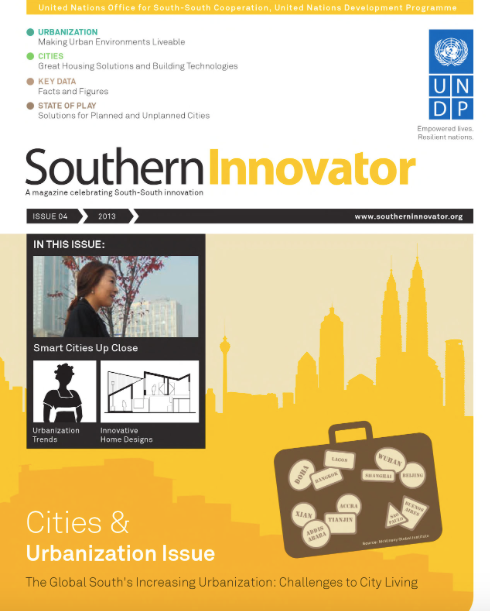
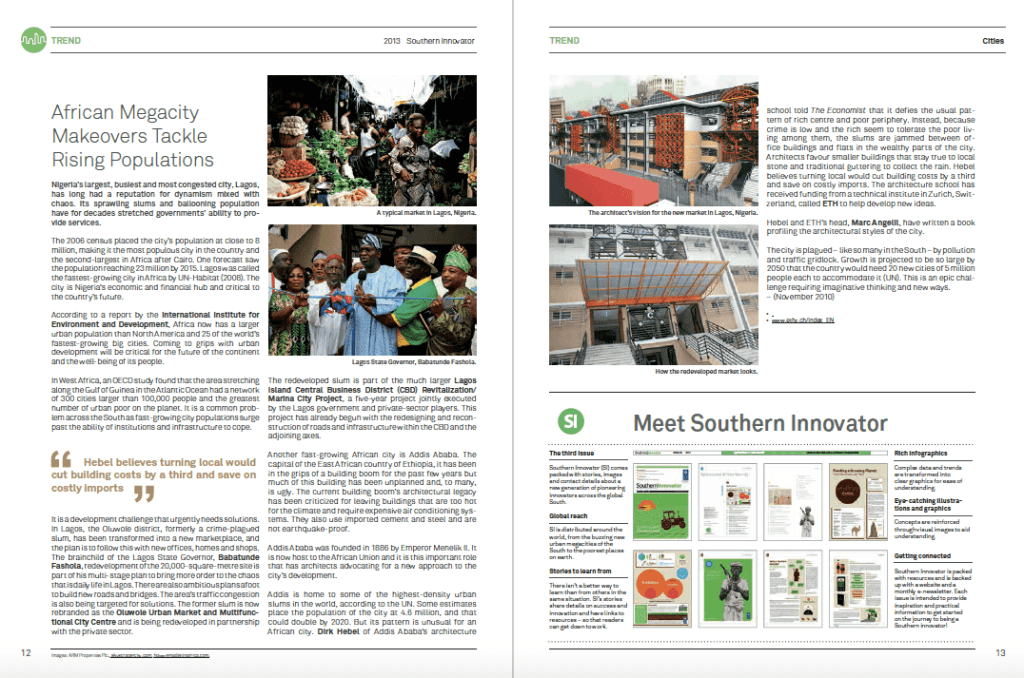
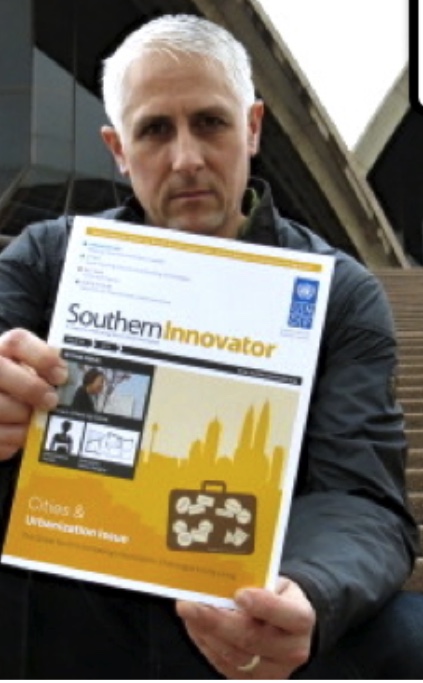
    7) Southern Innovator Magazine Issue 4: Cities and Urbanization. Website: http://www.scribd.com/doc/133622315/Southern-Innovator-Magazine-Issue-4-Cities-and-Urbanization

    Southern Innovator logo

    London Edit

    31 July 2013

    Development Challenges, South-South Solutions was launched as an e-newsletter in 2006 by UNDP’s South-South Cooperation Unit (now the United Nations Office for South-South Cooperation) based in New York, USA. It led on profiling the rise of the global South as an economic powerhouse and was one of the first regular publications to champion the global South’s innovators, entrepreneurs, and pioneers. It tracked the key trends that are now so profoundly reshaping how development is seen and done. This includes the rapid take-up of mobile phones and information technology in the global South (as profiled in the first issue of magazine Southern Innovator), the move to becoming a majority urban world, a growing global innovator culture, and the plethora of solutions being developed in the global South to tackle its problems and improve living conditions and boost human development. The success of the e-newsletter led to the launch of the magazine Southern Innovator. 

    Creative Commons License

    This work is licensed under a
    Creative Commons Attribution-Noncommercial-No Derivative Works 3.0 License.

    ORCID iD: https://orcid.org/0000-0001-5311-1052.

    © David South Consulting 2023

  • Pioneering African Airlines Help to Expand Routes

    Pioneering African Airlines Help to Expand Routes

    By David SouthDevelopment Challenges, South-South Solutions

    SOUTH-SOUTH CASE STUDY

    The last decade has seen a revolution in African air travel. The number of air routes has grown and this has paralleled the economic growth across the continent. As demand has been strong for Africa’s resources, it has also fueled a consumer boom that is benefiting an increasing number of people.

    More and more people can afford to fly and flights are taking Africans to cities across Africa and out of Africa to visit cities around the world. These flights also bring in a growing number of tourists and business people.

    As growth continues despite the many obstacles and challenges, and as urbanization rolls onwards, new routes have sprung up linking the continent’s cities to each other and to the world. National and local airlines have evolved to meet growing demand for flights, with the big global airlines moving in to compete.

    Africa’s airlines, tourism and airport authorities gathered in early 2013 to discuss how better to link the continent up by air, and the fruits of this collaboration are coming to light.

    A recent new entrant is Fastjet (http://www.fastjet.com/us/). Bringing the highly competitive budget airline model to Africa that has proven so successful in Europe, it is owned by Britain’s Easyjet and has its hub in Dar es Salaam, Tanzania. It will offer low-cost flights to South Africa, Zambia, and Rwanda in autumn 2013 and, ambitiously, hopes to become “Africa’s first pan-continental low-cost airline” (BBC). It has 10 aircraft.

    If people book early, they can snag a one-way flight between Johannesburg and Dar es Salaam for just US $100.
    Fastjet is also creating a low-cost airline in Nigeria in partnership with Nigeria’s Red 1 Airways (red1air.com).

    One airline also expanding its routes is Daallo Airlines (daallo.com) from the small nation of Djibouti (http://en.wikipedia.org/wiki/Djibouti) in the northeast Horn of Africa.

    Its website shows straight away how the airline is able to help link up cities normally left out of global air routes. Flights can be booked for journeys between Djibouti and Somalia, a country only now beginning to recover from decades of civil war and anarchy. Daallo also flies to Nairobi, Kenya, the East African hub for international agencies and corporations, to Dubai in the United Arab Emirates, to Jeddah in Saudi Arabia and Hargeisa, capital of the autonomous region of Somaliland (http://somalilandgov.com/).

    It also offers weekly cargo flights to these destinations. Daallo has a Boeing 777 and an Antanov AN-12.

    Djibouti is tiny but well positioned as a transport and shipping hub. It has invested heavily recently in its port facilities and benefits from good security, with a large U.S. base located in the country, Camp Lemonnier (http://www.cnic.navy.mil/regions/cnreurafswa/installations/camp_lemonnier_djibouti.html), home to Combined Joint Task Force – Horn of Africa.

    Further improving flight access in Africa, in August 2013, South Africa saw a new low-cost airline enter the marketplace. Safair (safair.co.za) is operating 10 daily flights between Johannesburg and Cape Town using Boeing 737-400s.

    Ethiopian Airlines (http://www.flyethiopian.com/en/default.aspx) has also started a strategic partnership with Malawi Airlines as part of its Ethiopian Vision 2025. This will make the capital of Malawi, Lilongwe, Ethiopian Airlines’ third hub on the African continent. It has its main hub in Addis Ababa, Ethiopia and its West African hub in the Togo capital Lomé.

    Published: October 2013

    LINKS:

    1) Routes Online: The Routes business is focused entirely on aviation route development and the company’s portfolio includes events, media and online businesses. The company organizes and operates world-renowned airline and airport networking events through its regional and World Route Development Forums. They are held in key markets throughout the year in Asia, Africa, Europe, the Americas and the CIS. Website: http://www.routesonline.com/

    2) IATA: The International Air Transport Association (IATA) is the trade association for the world’s airlines, representing some 240 airlines or 84 per cent of total air traffic. IATA support many areas of aviation activity and help formulate industry policy on critical aviation issues. Website: http://www.iata.org/Pages/default.aspx

    3) Airlines International magazine: Airlines International is IATA’s flagship magazine, available in print, on tablets and online. Website: http://www.iata.org/publications/airlines-international/Pages/index.aspx

    4) African Airlines Association: “To be the leader and catalyst for the growth of a globally competitive and integrated African airline industry”. Website: afraa.org

    Development Challenges, South-South Solutions was launched as an e-newsletter in 2006 by UNDP’s South-South Cooperation Unit (now the United Nations Office for South-South Cooperation) based in New York, USA. It led on profiling the rise of the global South as an economic powerhouse and was one of the first regular publications to champion the global South’s innovators, entrepreneurs, and pioneers. It tracked the key trends that are now so profoundly reshaping how development is seen and done. This includes the rapid take-up of mobile phones and information technology in the global South (as profiled in the first issue of magazine Southern Innovator), the move to becoming a majority urban world, a growing global innovator culture, and the plethora of solutions being developed in the global South to tackle its problems and improve living conditions and boost human development. The success of the e-newsletter led to the launch of the magazine Southern Innovator. 
    Creative Commons License

    This work is licensed under a
    Creative Commons Attribution-Noncommercial-No Derivative Works 3.0 License.

    ORCID iD: https://orcid.org/0000-0001-5311-1052.

    © David South Consulting 2023