Tag: SDG1

  • Indians Fighting Inflation with Technology

    Indians Fighting Inflation with Technology

    By David SouthDevelopment Challenges, South-South Solutions

    SOUTH-SOUTH CASE STUDY

    Despite the global economic downturn, many countries of the South are seeing rapid economic growth. That can have a down side: inflation (http://en.wikipedia.org/wiki/Inflation). Inflation can be caused by variety of factors – too much money chasing too few goods, deliberate government policies to increase demand for goods and services, environmental disasters creating scarcity, or poor investment in infrastructure straining against rapid economic growth. But when it gets out of control for life-essential goods like food, then people need solutions to survive.

    In India – home to more poor people than all of sub-Saharan Africa – rising inflation has prompted the Reserve Bank of India to raise interest rates, which in turn leads to more expensive loans and credit, just when funds need to be borrowed to invest in infrastructure improvements for the country.

    India’s finance minister, Pranab Mukherjee, has warned that the rising interest rates necessary to fight inflation will hurt India’s economic growth.

    India has seen inflation jump from single digits in 2008 to double digits this year. Consumer price inflation for industrial and farm workers in India rose by 14 percent, government data show – up from 5.51 percent in January 2008 (It hit 16.22 percent in January 2010, according to the Indian Ministry of Labour).

    And it is the poorest who suffer the most from inflation. Inflation in India has led to worker protests for wage increases and rising prices for essentials like food: a life-and-death issue for the poor.

    Other countries across the South are also experiencing high inflation, the worst being Venezuela. India has the highest inflation after Venezuela’s 32 percent rate, according to Bloomberg data compiled from 82 countries.

    The UN’s trade and development body, UNCTAD, has called for new measures to tackle inflation. “In the past few decades, monetary policies have been more and more gradually based on inflation targeting,” said Supachai Panitchpakdi, secretary-general of UNCTAD. “I see there should be other instruments to contain inflation rather than monetary policies.”

    Frustration with inflation has even been taken up by India’s vibrant entertainment industry, Bollywood (http://www.bollywoodworld.com).

    The song “Mehangayi Daayan” (“The Inflation Witch”) in a film produced by acting star Aamir Khan has the lyrics, “my husband’s earnings are good but his second wife — inflation — is eating them up.”

    Indian marketing consultant Suhasini Sakhare (http://www.suhasinisakhare.com/index.php?option=com_content&view=section&layout=blog&id=2&Itemid=12) from Nagpur has called for Indian consumers to be empowered, just as farmers are with the successful e-Choupal web portal.

    E-Choupal (http://www.echoupal.com) has developed a reputation for both controlling prices and increasing incomes for poor farmers. Started in 2000 by the major Indian company ITC Limited (http://www.itcportal.com), it links farmers to the latest prices for products including soybeans, wheat, coffee and prawns.

    E-Choupal works through computers set up in rural areas. It has built one of the largest internet initiatives in rural India, reaching 4 million farmers in 40,000 villages. It does this through 6,500 computer kiosks located in the homes of farmer-coordinators called Sanchalaks. The kiosks offer weather reports and the latest market prices, important scientific developments, risk management advice, and help with sales and marketing. The computer is in the Sanchalak’s house and connects to the internet by telephone. Each computer can serve around 600 farmers in the surrounding area.

    Indian agriculture suffers from being very fragmented, with poor infrastructure and an army of middlemen looking to get the best price for themselves at the expense of farmers and consumers. Indian farmers are heavily in debt and plagued by a very high suicide rate as a result (http://en.wikipedia.org/wiki/Farmers’_suicides_in_India). This agricultural crisis has a direct impact on India’s ability to meet its development goals and lift many millions more out of poverty in the future.

    E-Choupal sees itself as creating a “virtuous circle of higher productivity, higher incomes, enlarged capacity for farmer risk management, larger investments and higher quality and productivity.”

    E-Choupal has increased yields for farmers, reduced transaction costs, and raised the quality of output leading to rising farmer incomes.

    It is clear from experience in other countries that better access to price information helps control price inflation. E-Choupal has the advantage of providing both information and the means to access it: a big problem in rural India. Most poor Indian consumers do not have access to the internet and make food purchases from small vendors, whom they must trust to set the right price for products.

    Online, there are plenty of price comparison websites for Indians (http://explore.oneindia.in/internet/portal/comparisonsites): computers, electronics and household goods (http://compareindia.in.com) for example. But this is of no use to poor Indians without access to the information.

    Economic commentator Paranjoy Guha Thakurta told AFP of the political dangers: “There’s a huge amount of discontent and anger across the country and certainly among the poor. Speak to the person on the street and their biggest problem is inflation.”

    Published: August 2010

    Resources

    • Olam: A global food supply company in ‘agri-products’ that got its start in Nigeria. It shows how a Southern brand can grow and go global, and overcome the difficulties of cross-border trade. Website: www.olamonline.com
    • Model Village India: A pioneering initiative is reviving impoverished rural villages. Drawing on self-organizing methods used in India since 1200 BC, the Model Village India is based around India’s democratic system of Panchayats: a village assembly of people stemming back to pre-colonial times. Website: www.modelvillageindia.org.in
    • e-Choupal: Hope or Hype? By Neeraj Dangi and Harjit Singh, American Journal of Economics and Business Administration 2 (2): 179-184, 2010. Website: http://tinyurl.com/3682r3p
    • A book on the consequences of inflation when it gets out of control: When Money Dies: The Nightmare of the Weimar Hyper-Inflation by Adam Fergusson. Website: http://www.amazon.co.uk/When-Money-Dies-Nightmare-Hyper-Inflation/dp/1906964440
    • The American National Inflation Association: A website with educational videos and resources on inflation. Website: http://inflation.us

    https://davidsouthconsulting.org/2022/10/14/anti-bribery-website-in-india-inspires-others/

    https://davidsouthconsulting.org/2022/09/29/the-battle-for-indias-coffee-drinkers-in-buzzing-economy/

    https://davidsouthconsulting.org/2022/11/22/bio-ethanol-from-sturdy-and-once-unwanted-indian-plant/

    https://davidsouthconsulting.org/2022/02/07/boosting-tourism-in-india-with-surfing-culture/

    https://davidsouthconsulting.org/2022/09/29/cheap-indian-tablet-seeks-to-bridge-digital-divide/

    https://davidsouthconsulting.org/2021/09/01/disaster-recovery-ten-years-after-the-gujarat-india-experience/

    https://davidsouthconsulting.org/2022/10/20/the-e-reader-battle-reaches-india/

    https://davidsouthconsulting.org/2022/10/09/entrepreneurs-use-mobiles-and-it-to-tackle-indian-traffic-gridlock/

    https://davidsouthconsulting.org/2022/04/04/help-is-at-hand-for-indias-beleaguered-bus-riders/

    https://davidsouthconsulting.org/2022/09/27/india-2-0-can-the-country-make-the-move-to-the-next-level/

    https://davidsouthconsulting.org/2022/10/14/indias-modernizing-food-economy-unleashing-new-opportunities/

    https://davidsouthconsulting.org/2021/08/29/indian-business-model-makes-green-energy-affordable/

    https://davidsouthconsulting.org/2022/10/25/indian-city-slum-areas-become-newly-desirable-places-to-live/

    https://davidsouthconsulting.org/2021/08/28/indian-entrepreneur-brings-dignity-to-poor-women/

    https://davidsouthconsulting.org/2021/03/04/indian-id-project-is-foundation-for-future-economic-progress/

    https://davidsouthconsulting.org/2022/10/18/indian-initiatives-to-make-travel-safer-for-women/

    https://davidsouthconsulting.org/2022/06/15/indian-mobile-phone-application-innovators-empower-citizens/

    https://davidsouthconsulting.org/2022/11/01/indian-newspapers-thrive-with-economy/

    https://davidsouthconsulting.org/2022/10/06/indian-solar-economy-brings-new-vocation-for-women/

    https://davidsouthconsulting.org/2022/10/06/indian-solar-power-pack-powers-villages/

    https://davidsouthconsulting.org/2022/10/25/indian-toilet-pioneer-champions-good-ideas/

    https://davidsouthconsulting.org/2022/03/29/model-city-to-test-the-new-urbanism-concept-in-india/

    https://davidsouthconsulting.org/2020/12/04/model-indian-villages-to-keep-rural-relevant/

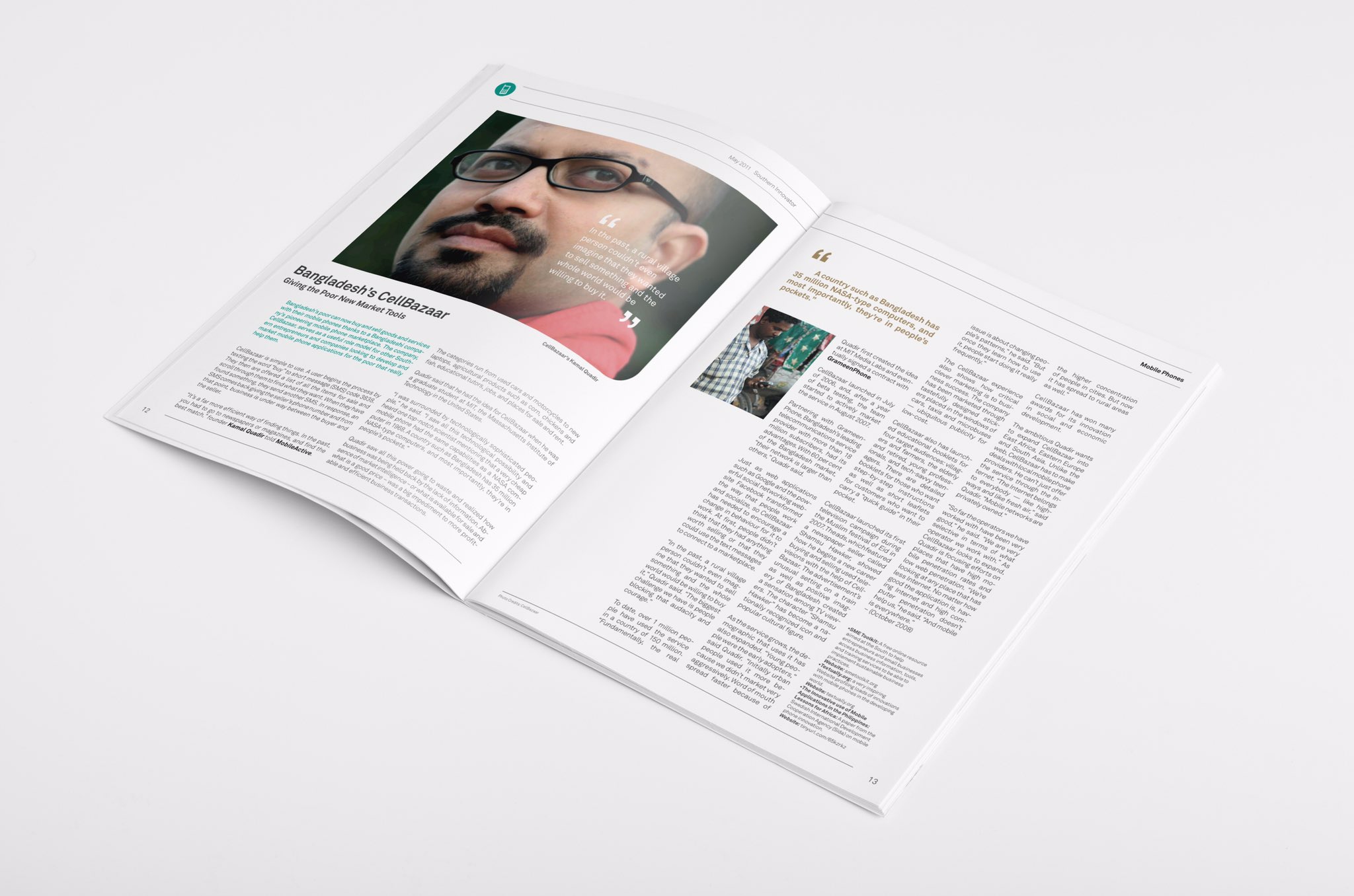
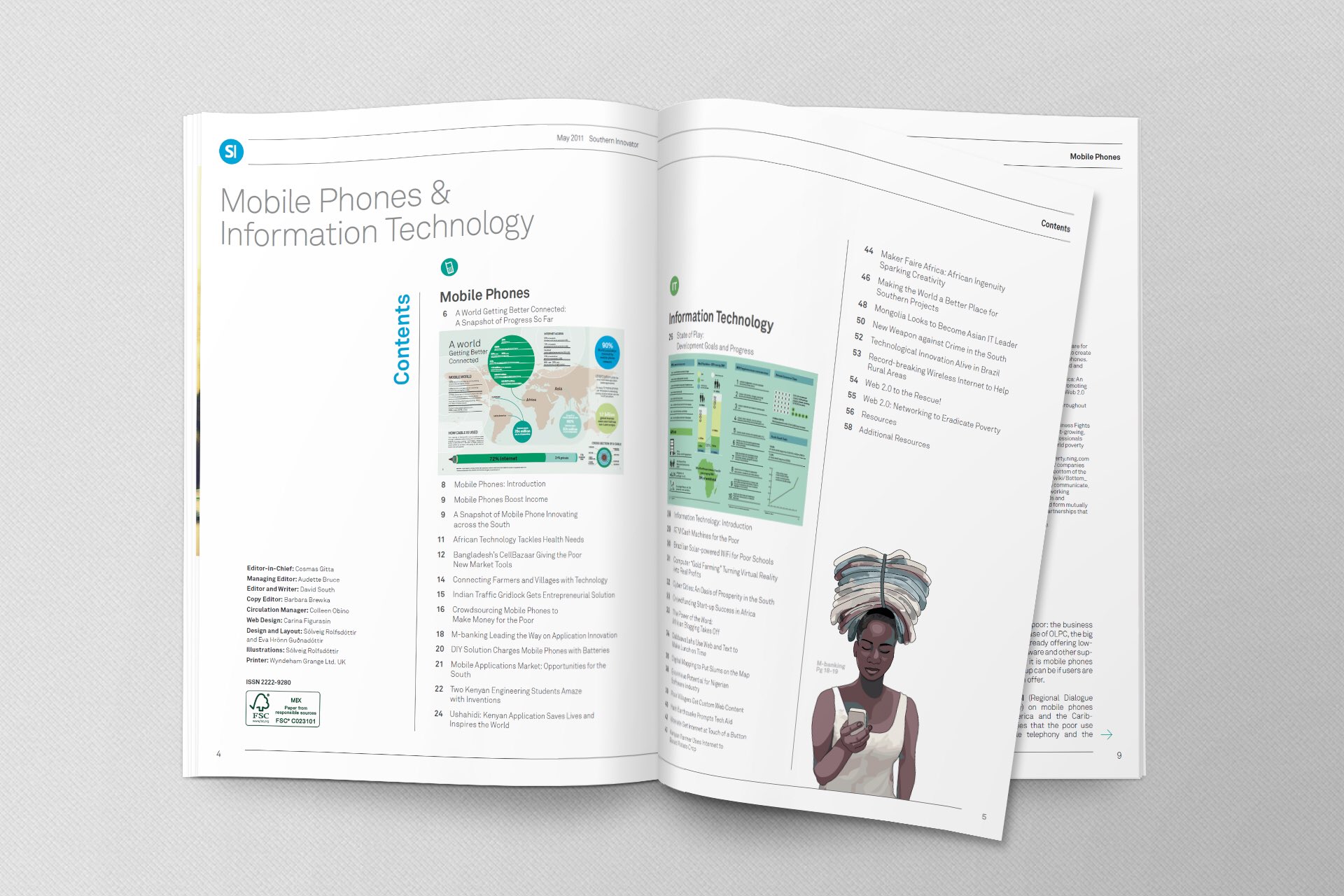
    Development Challenges, South-South Solutions was launched as an e-newsletter in 2006 by UNDP’s South-South Cooperation Unit (now the United Nations Office for South-South Cooperation) based in New York, USA. It led on profiling the rise of the global South as an economic powerhouse and was one of the first regular publications to champion the global South’s innovators, entrepreneurs, and pioneers. It tracked the key trends that are now so profoundly reshaping how development is seen and done. This includes the rapid take-up of mobile phones and information technology in the global South (as profiled in the first issue of magazine Southern Innovator), the move to becoming a majority urban world, a growing global innovator culture, and the plethora of solutions being developed in the global South to tackle its problems and improve living conditions and boost human development. The success of the e-newsletter led to the launch of the magazine Southern Innovator. 

    https://davidsouthconsulting.org/2021/03/05/southern-innovator-issue-1/

    https://davidsouthconsulting.org/2021/03/05/southern-innovator-issue-5/

    Creative Commons License

    This work is licensed under a
    Creative Commons Attribution-Noncommercial-No Derivative Works 3.0 License.

    ORCID iD: https://orcid.org/0000-0001-5311-1052.

    © David South Consulting 2023

  • Woman Wants African Farming to be Cool

    Woman Wants African Farming to be Cool

    By David SouthDevelopment Challenges, South-South Solutions

    SOUTH-SOUTH CASE STUDY

    Can farming be cool? Especially on a continent where it has long been associated with hardship and poverty, can agriculture be attractive to a young generation looking for big opportunities? A young woman in Nigeria thinks so and is on a mission to show farming is a great way to get ahead in modern Africa. And she hopes more people attracted to farming will boost the continent’s food security and reduce costly imports.

    Cynthia Mosunmola Umoru’s company, Honeysuckle PTL Ventures (http://www.tootoo.com/d-c3015227-Honeysuckles_Ptl_Ventures/), is based in Lagos , the business capital of Nigeria. The West African country has become dependent on food imports, despite many attempts to modernise its agricultural sector.

    The country’s heavy dependence on oil exports for its income has led to poor investment in its domestic economy. Over 80 percent of Nigeria’s university graduates struggle to find work. And it is these two problems – food security and high unemployment among the country’s young, educated and ambitious – that Umoru wants to change.

    Leading by example, Umoru has set up a successful and modern agribusiness focusing on high-quality food products using modern packaging and fast delivery. She produces meat products, from seafood like shrimps and prawns to snails, beef, chicken, and birds. Her niche is to deliver the product however the customer wishes: fresh, frozen or processed. Her business has its own farms and ponds but also has developed a sophisticated network with other farmers, providing them with standard contracts and benefits. This extra capacity means she can meet the demand and handle large volume orders.

    She is proudly self-taught. “I didn’t have a mentor in farming! Though I have other mentors,” Umoru told the Guardian Life Magazine. “My knowledge of agribusiness has been largely from personal education and research. The Internet has served greatly as my resource bank.”

    Umoru was initially on the path to study medicine, but had that dream upset by riots in the late 1990s. She then moved on to study zoology at Lagos State University. In her final year, she became interested in agribusiness. Her company was officially registered in 2004, but she had already begun at university providing meat products to fast-food outlets in Lagos.

    “It took five years to gain relevance,” she said. “My involvement in the agribusiness sector is really impacting people, particularly young people like me, who I always hear say ‘If you are involved with farming then it is probably not as bad as it seems’. Farming, before now in Nigeria, was termed business of low-lives and with the barrier to entry being so high for young people to actively participate.”

    “I have successfully, in my little way, impressed on my generation that farming could be glamorous and cool enough for us to trade places with the business executive in the large conglomerate and also the bank’s middle management cadre, which is the initial attraction for most young graduate(s) in Nigeria.”

    She is not shy talking about how rough it was in the beginning: “As a young entrepreneur, in my very early days, I lost a lot of the seed capital I got from financial mentors to poor and bad business decisions I took because there was no one to talk to.”

    Overall in sub-Saharan Africa, the long-term prospects for agriculture are good. The Food and Agricultural Organization (FAO) found in a 2009 paper that “the sub-Saharan agricultural sector — 80 percent of which consists of smallholder farmers — grew more than 3.5 percent in 2008, well above the 2 percent rate of population growth.”

    Sub-Saharan Africa’s population is predicted to grow from 770 million in 2005 to 1.5 to 2 billion in 2050 (FAO). Despite rapid migration from the countryside to cities and the growth in urban population, the absolute number of rural people is also likely to continue to increase.

    Agriculture is the motor for rural development, poverty and hunger reduction in sub-Saharan Africa. The FAO paper said that agricultural growth in sub-Saharan Africa is likely to be led by domestic and intra-African demand for food commodities due to urbanization and the growing population.

    African farming has been able to benefit from rising global food prices and demand. The policy environment has also become more favourable, according to the FAO. The paper found “There is a particular need for programmes and policies to increase the capacity of smallholder farmers to enter dynamic sectors of national, regional and international markets.”

    African farming can see serious productivity gains if it changes and it takes on new techniques. At the moment only 3 percent of the region’s food crops are produced using irrigation, compared to more than 20 percent globally.

    The irony is that Nigeria has already hatched one of the world’s most successful food companies, Olam (www.olamonline.com). A global food supply company in ‘agri-products’ that got its start in Nigeria, it shows Umoru is on to something – a Southern brand can grow and go global, and overcome the difficulties of cross-border trade in Africa.

    Olam currently supplies well-known global food brands including Cadbury (chocolate), Nestle, Lavazza (coffee), Mars (chocolate), Tchibo and Planters (peanuts).

    With some 218 million people in Africa — around 30 percent of the total population — estimated to be suffering from chronic hunger and malnutrition, a thriving local food sector would bring many gains.

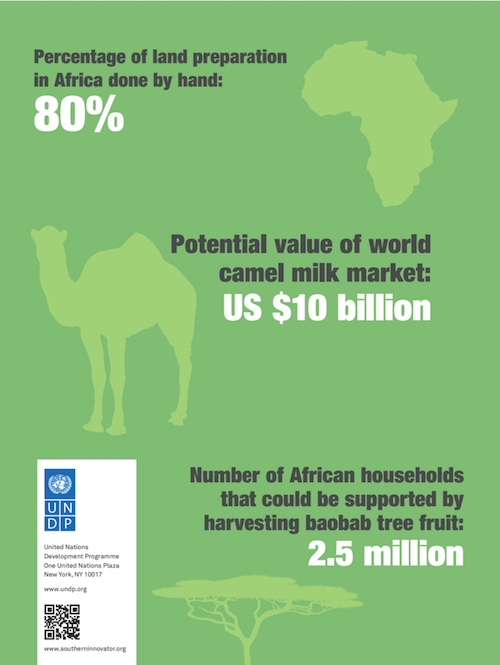
    Turning to more sophisticated business models offers solutions to chronic problems. With 80 percent of Africa’s farms less than two hectares in size – and there are 33 million of them – cereal yields have grown little and are still around 1.2 tonnes per hectare in the region, compared to an average of some 3 tonnes per hectare in the developing world as a whole. Fertilizer consumption was only 13 kg per hectare in sub-Saharan Africa in 2002, compared to 73 kg in the Middle East and North Africa and 190 kg in East Asia and the Pacific. The FAO has estimated that the potential additional land area available for cultivation in sub-Saharan Africa amounts to more than 700 million hectares – a boon to the continent’s and the world’s food needs in coming years if handled well.

    And the demand is there: Between 2001 and 2007, annual increases in the global consumption of agricultural commodities were larger than during the 1980s and 1990s. The quantity of agri-products harvested in the world is 5.2 billion metric tonnes a year.

    “I have been able to reach out to so many people across the nation, preaching the agribusiness development and adoption gospel,” said Umoru. “I have also worked closely with other youth agencies to empower many more young people to aspire in Nigeria.”

    One such agency is the Harambe Nigeria Endeavour. Harambe Nigeria (http://www.hendeavor.org/content/bgroups/nigeria.php) is a programme designed to stimulate growth in the agricultural sector and open up opportunities for youth to become leaders and entrepreneurs in this area. And this means future young entrepreneurs going into the agricultural sector will not feel as alone as Umoru once did.

    As Obinna Ukwuani, creative director of Harambe Nigeria says: “We wish to rectify the tarnished image of agriculture in Nigeria, making it a viable investment for Nigerian youth from all walks of life.”

    Published: May 2010

    Resources

    1) World Vegetable Center: The World Vegetable Center is the world’s leading international non-profit research and development institute committed to alleviating poverty and malnutrition in developing countries through vegetable research and development. Website: http://www.avrdc.org

    2) Marketing African Leafy Vegetables: Challenges and Opportunities in the Kenyan Context by Kennedy M. Shiundu and Ruth. K. Oniang. Website: http://www.ajfand.net/Issue15/PDFs/8%20Shiundu-IPGR2_8.pdf

    3) 2050: Africa’s Food Challenge: Prospects good, resources abundant, policy must improve: A discussion paper from the Food and Agricultural Organization (FAO). Website: http://www.fao.org/wsfs/forum2050/wsfs-background-documents/issues-briefs/en/

    4) African Alliance for Capital Expansion: A management consultancy focused on private sector development and agribusiness in West Africa. Website: http://www.africanace.com/v3

    5) Branding Strategy Insider: This blog provides advice and case studies on how to build trust for your brand. Website: www.brandingstrategyinsider.com

    6) Growing Inclusive Markets, a web portal from UNDP packed with case studies, heat maps and strategies on how to use markets to help the poor. Website: www.growinginclusivemarkets.org

    7) Starting a SME (small, medium enterprise): This website is packed with advice and tips for starting a small business and how to grow it with limited resources. Website: http://www.smallbusiness.co.uk

    8) World Business Fair: The World Business Fair is an international trade platform for global entrepreneurs and professionals. Website: http://www.worldbusinessfair.com

    Development Challenges, South-South Solutions was launched as an e-newsletter in 2006 by UNDP’s South-South Cooperation Unit (now the United Nations Office for South-South Cooperation) based in New York, USA. It led on profiling the rise of the global South as an economic powerhouse and was one of the first regular publications to champion the global South’s innovators, entrepreneurs, and pioneers. It tracked the key trends that are now so profoundly reshaping how development is seen and done. This includes the rapid take-up of mobile phones and information technology in the global South (as profiled in the first issue of magazine Southern Innovator), the move to becoming a majority urban world, a growing global innovator culture, and the plethora of solutions being developed in the global South to tackle its problems and improve living conditions and boost human development. The success of the e-newsletter led to the launch of the magazine Southern Innovator. 
    Creative Commons License

    This work is licensed under a
    Creative Commons Attribution-Noncommercial-No Derivative Works 3.0 License.

    ORCID iD: https://orcid.org/0000-0001-5311-1052.

    © David South Consulting 2023

  • Pioneering African Airlines Help to Expand Routes

    Pioneering African Airlines Help to Expand Routes

    By David SouthDevelopment Challenges, South-South Solutions

    SOUTH-SOUTH CASE STUDY

    The last decade has seen a revolution in African air travel. The number of air routes has grown and this has paralleled the economic growth across the continent. As demand has been strong for Africa’s resources, it has also fueled a consumer boom that is benefiting an increasing number of people.

    More and more people can afford to fly and flights are taking Africans to cities across Africa and out of Africa to visit cities around the world. These flights also bring in a growing number of tourists and business people.

    As growth continues despite the many obstacles and challenges, and as urbanization rolls onwards, new routes have sprung up linking the continent’s cities to each other and to the world. National and local airlines have evolved to meet growing demand for flights, with the big global airlines moving in to compete.

    Africa’s airlines, tourism and airport authorities gathered in early 2013 to discuss how better to link the continent up by air, and the fruits of this collaboration are coming to light.

    A recent new entrant is Fastjet (http://www.fastjet.com/us/). Bringing the highly competitive budget airline model to Africa that has proven so successful in Europe, it is owned by Britain’s Easyjet and has its hub in Dar es Salaam, Tanzania. It will offer low-cost flights to South Africa, Zambia, and Rwanda in autumn 2013 and, ambitiously, hopes to become “Africa’s first pan-continental low-cost airline” (BBC). It has 10 aircraft.

    If people book early, they can snag a one-way flight between Johannesburg and Dar es Salaam for just US $100.
    Fastjet is also creating a low-cost airline in Nigeria in partnership with Nigeria’s Red 1 Airways (red1air.com).

    One airline also expanding its routes is Daallo Airlines (daallo.com) from the small nation of Djibouti (http://en.wikipedia.org/wiki/Djibouti) in the northeast Horn of Africa.

    Its website shows straight away how the airline is able to help link up cities normally left out of global air routes. Flights can be booked for journeys between Djibouti and Somalia, a country only now beginning to recover from decades of civil war and anarchy. Daallo also flies to Nairobi, Kenya, the East African hub for international agencies and corporations, to Dubai in the United Arab Emirates, to Jeddah in Saudi Arabia and Hargeisa, capital of the autonomous region of Somaliland (http://somalilandgov.com/).

    It also offers weekly cargo flights to these destinations. Daallo has a Boeing 777 and an Antanov AN-12.

    Djibouti is tiny but well positioned as a transport and shipping hub. It has invested heavily recently in its port facilities and benefits from good security, with a large U.S. base located in the country, Camp Lemonnier (http://www.cnic.navy.mil/regions/cnreurafswa/installations/camp_lemonnier_djibouti.html), home to Combined Joint Task Force – Horn of Africa.

    Further improving flight access in Africa, in August 2013, South Africa saw a new low-cost airline enter the marketplace. Safair (safair.co.za) is operating 10 daily flights between Johannesburg and Cape Town using Boeing 737-400s.

    Ethiopian Airlines (http://www.flyethiopian.com/en/default.aspx) has also started a strategic partnership with Malawi Airlines as part of its Ethiopian Vision 2025. This will make the capital of Malawi, Lilongwe, Ethiopian Airlines’ third hub on the African continent. It has its main hub in Addis Ababa, Ethiopia and its West African hub in the Togo capital Lomé.

    Published: October 2013

    LINKS:

    1) Routes Online: The Routes business is focused entirely on aviation route development and the company’s portfolio includes events, media and online businesses. The company organizes and operates world-renowned airline and airport networking events through its regional and World Route Development Forums. They are held in key markets throughout the year in Asia, Africa, Europe, the Americas and the CIS. Website: http://www.routesonline.com/

    2) IATA: The International Air Transport Association (IATA) is the trade association for the world’s airlines, representing some 240 airlines or 84 per cent of total air traffic. IATA support many areas of aviation activity and help formulate industry policy on critical aviation issues. Website: http://www.iata.org/Pages/default.aspx

    3) Airlines International magazine: Airlines International is IATA’s flagship magazine, available in print, on tablets and online. Website: http://www.iata.org/publications/airlines-international/Pages/index.aspx

    4) African Airlines Association: “To be the leader and catalyst for the growth of a globally competitive and integrated African airline industry”. Website: afraa.org

    Development Challenges, South-South Solutions was launched as an e-newsletter in 2006 by UNDP’s South-South Cooperation Unit (now the United Nations Office for South-South Cooperation) based in New York, USA. It led on profiling the rise of the global South as an economic powerhouse and was one of the first regular publications to champion the global South’s innovators, entrepreneurs, and pioneers. It tracked the key trends that are now so profoundly reshaping how development is seen and done. This includes the rapid take-up of mobile phones and information technology in the global South (as profiled in the first issue of magazine Southern Innovator), the move to becoming a majority urban world, a growing global innovator culture, and the plethora of solutions being developed in the global South to tackle its problems and improve living conditions and boost human development. The success of the e-newsletter led to the launch of the magazine Southern Innovator. 
    Creative Commons License

    This work is licensed under a
    Creative Commons Attribution-Noncommercial-No Derivative Works 3.0 License.

    ORCID iD: https://orcid.org/0000-0001-5311-1052.

    © David South Consulting 2023

  • The Water-Free South African Bathing Solution

    The Water-Free South African Bathing Solution

    By David SouthDevelopment Challenges, South-South Solutions

    SOUTH-SOUTH CASE STUDY

    As the world’s population grows from its current 7 billion to a projected 9 billion in 2050 (UN), competition for access to the Earth’s resources will become fiercer. The most essential resource for life on the planet – and an increasingly precious resource – is water. Water is necessary for the very survival of humans, animals and plants, and is also used in vast quantities by industries and farms.

    As demand increases, water resources will need to be conserved more and more, while clever ways will have to be developed to use less water. And there is also another factor to consider for the world’s poor: many millions live in very constrained conditions in urban and rural areas. For their health and dignity, the ability to wash every day is critical. Being clean is vital to being able to economically advance in life: it is something that sounds obvious but is often not a possibility for many millions of people living in slums.

    Many will face lives where water is an uncertain resource that will be either expensive to purchase or will require lots of labour to obtain.

    Anyone who can come up with a way to help bring the dignity of being clean and healthy while also saving water is onto a winner.

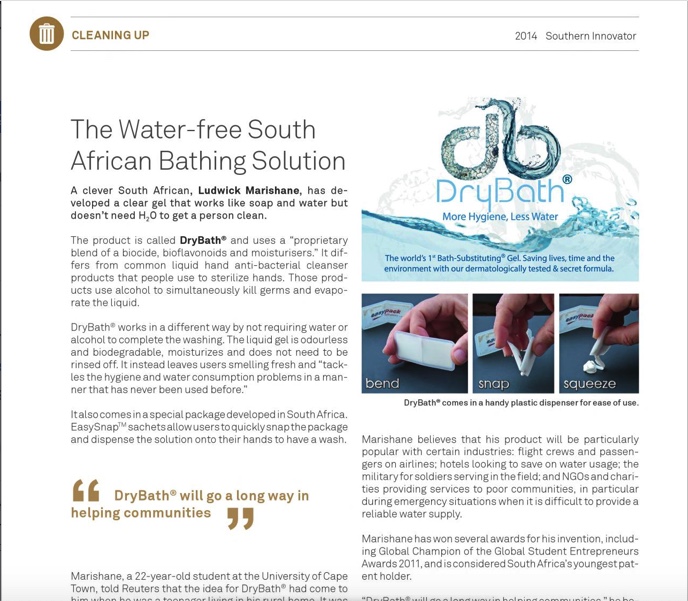
    A clever South African, Ludwick Marishane, has developed a clear gel that works like soap and water but doesn’t need H2O to get a person clean.

    The product is called DryBath (http://headboy.org/drybath/) and uses a “proprietary blend of a biocide, bioflavonoids and moisturisers.” It differs from common liquid hand anti-bacterial cleanser products that people use to sterilize hands. Those products use alcohol to simultaneously sterilize germs and evaporate the liquid.

    DryBath works in a different way by not requiring water or alcohol to complete the washing. The liquid gel is odourless, biodegradable and moisturises and does not need to be rinsed off. It instead leaves users smelling fresh and “tackles the hygiene and water consumption problems in a manner that has never been used before.”

    It also comes in a special package developed in South Africa. EasySnap™ sachets allow users to quickly snap the package and dispense the solution on to their hands to have a wash. EasySnap is a rectangular sachet that is snapped in the middle to open.

    Marishane, a 22-year-old student at the University of Cape Town, told Reuters that the idea for DryBath came to him when he was a teenager living in his rural home. It was wintertime and his friend didn’t want to bother washing because there was no hot water available.

    “He was lazy and he happened to say, ‘why doesn’t somebody invent something that you can just put on your skin and you don’t have to bathe’,” Marishane said.

    That was when the light bulb went off in his head.

    Intrigued, he started doing research on his web-enabled mobile phone. He trawled through the search engine Google and the online encyclopedia Wikipedia to find what would work as a water-free wash. After six months of research, he came up with the formula for DryBath and acquired a patent.

    Now the strategy of Headboy Industries Inc. (headboy.org) – the company set up by Marishane – is to sell DryBath to corporate clients and in turn donate a free sachet for each sale to DryBath’s global charity partners, who will distribute DryBath to poor communities either for free or at a subsidized cost.

    Marishane believes his product will be particularly popular with certain industries: flight crews and passengers on airlines; hotels looking to save on water usage; the military for soldiers serving in the field; and NGOs and charities providing services to poor communities, in particular during emergency situations when it is difficult to provide a reliable water supply.

    Marishane has won several awards for his invention, including Global Champion of the Global Student Entrepreneurs Awards 2011, and is considered South Africa’s youngest patent holder.

    “DryBath will go a long way in helping communities,” he believes.

    Published: September 2012

    Resources

    1) How to register for a patent in South Africa. Website:https://www.sabs.co.za/index.php?page=patents

    2) SABS Design Institute: The SABS Design Institute promotes the benefits of good design in order to stimulate the economic and technological development of South Africa. Website: https://www.sabs.co.za/index.php?page=designinstitute

    Development Challenges, South-South Solutions was launched as an e-newsletter in 2006 by UNDP’s South-South Cooperation Unit (now the United Nations Office for South-South Cooperation) based in New York, USA. It led on profiling the rise of the global South as an economic powerhouse and was one of the first regular publications to champion the global South’s innovators, entrepreneurs, and pioneers. It tracked the key trends that are now so profoundly reshaping how development is seen and done. This includes the rapid take-up of mobile phones and information technology in the global South (as profiled in the first issue of magazine Southern Innovator), the move to becoming a majority urban world, a growing global innovator culture, and the plethora of solutions being developed in the global South to tackle its problems and improve living conditions and boost human development. The success of the e-newsletter led to the launch of the magazine Southern Innovator. 

    Creative Commons License

    This work is licensed under a
    Creative Commons Attribution-Noncommercial-No Derivative Works 3.0 License.

    ORCID iD: https://orcid.org/0000-0001-5311-1052.

    © David South Consulting 2023