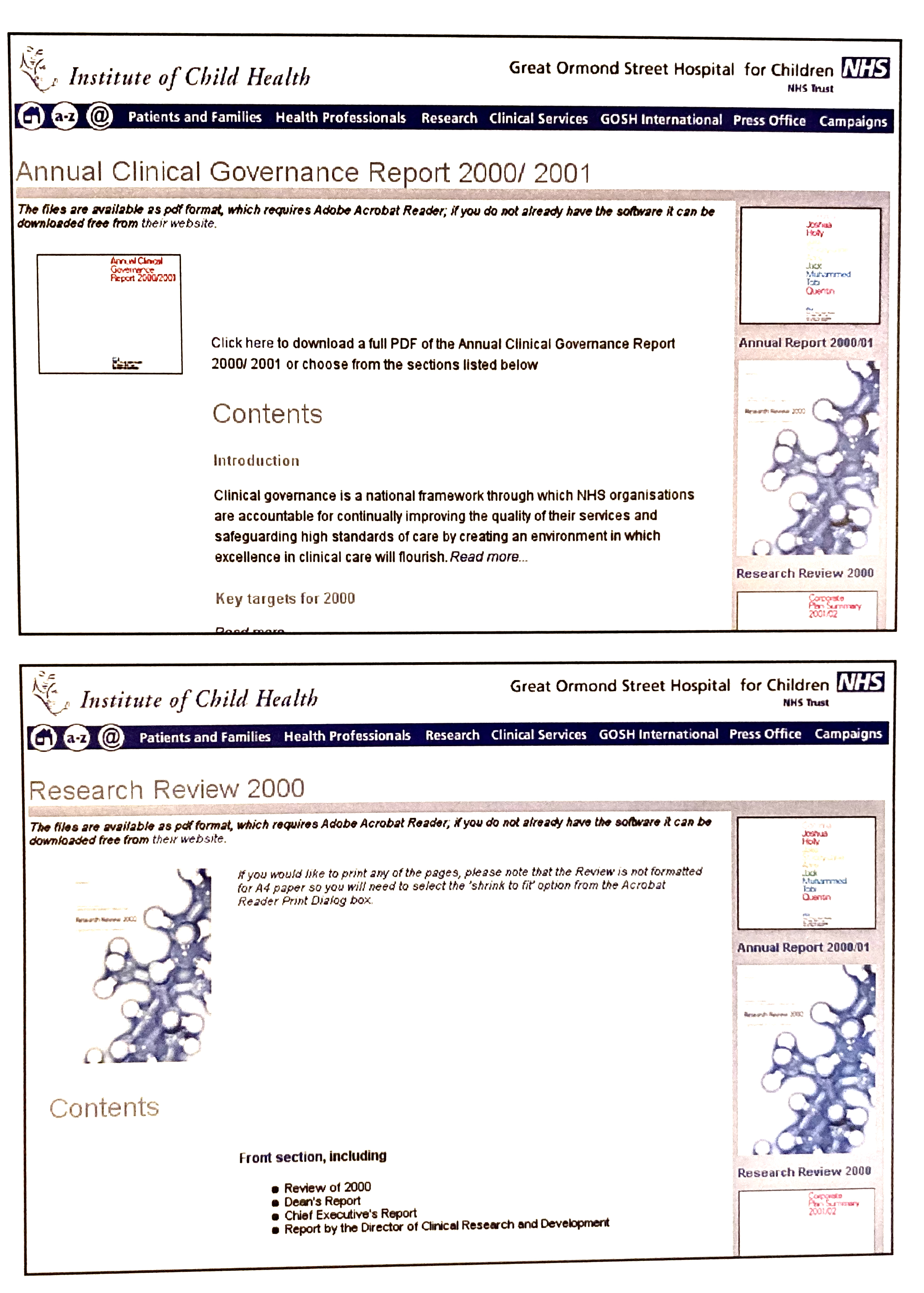
Research Review 2001: A Year of Excellence and Innovation
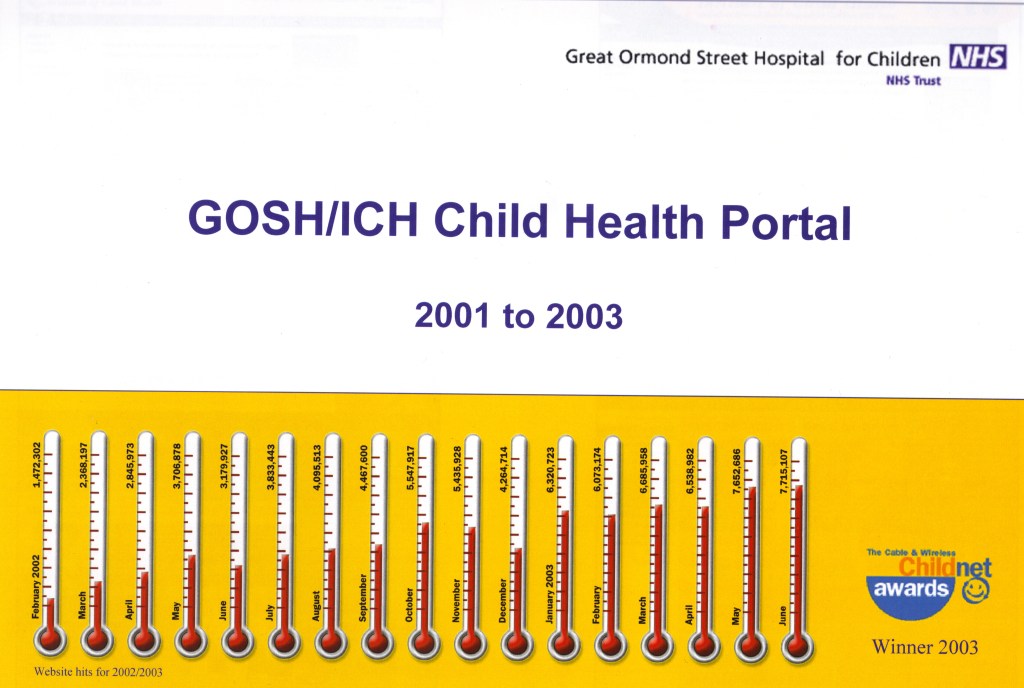
Britain’s best-loved children’s hospital and charity, Great Ormond Street Hospital for Children NHS Trust (GOSH), contracted me to lead a two-year project to modernise the hospital’s web presence and take its brand into the 21st century.
2002
Research Review 2002: Building on Success
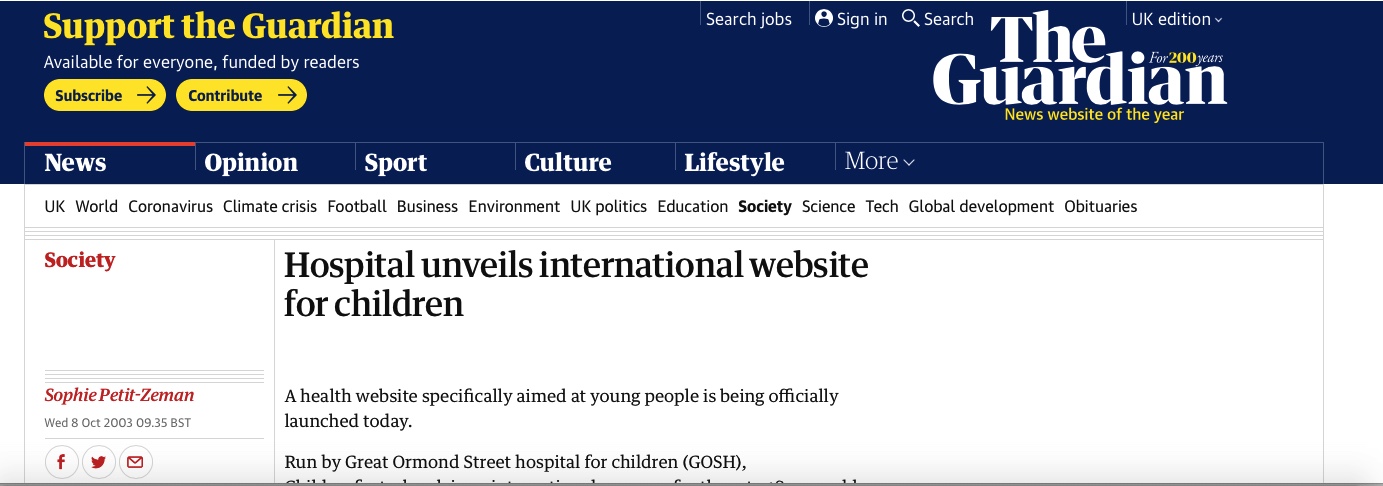
In 2003, the UK’s Guardian newspaper called the Children First website one of the “three most admired websites in the UK public and voluntary sectors,” and a UK government assessment called the overall GOSH child health web portal a role model for the NHS.Content produced for the GOSH Child Health Portal (now MyGOSH) in 2003 on the ketogenic diet and how it can help with the treatment of epilepsy.“A highly attractive website written by and with children at Britain’s biggest specialist hospital for children. The site is carefully segmented for different age groups and provides a powerful platform on which children can reach out from the confines of their hospital wards, share their experiences and learn about a range of medical issues as well as have access to fun interactive resources.”
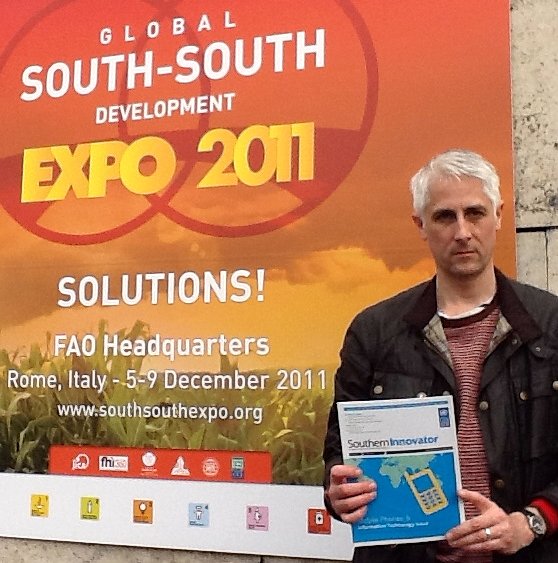
Beginning in 2011 and ending in 2014, each issue of Southern Innovator was launched at the annual Global South-South Development Expo (GSSD Expo) run by the United Nations Office for South-South Cooperation (UNOSSC). The issues (there were five) would connect with that year’s Expo theme and were intended to reinforce the solutions presented at the Expo, as well as those solutions discovered through research for the influential United Nations e-newsletter Development Challenges, South-South Solutions. An Expo was not run in 2015 for the following reason: U.S. Finds Macau Billionaire Guilty in U.N. Bribery Case.
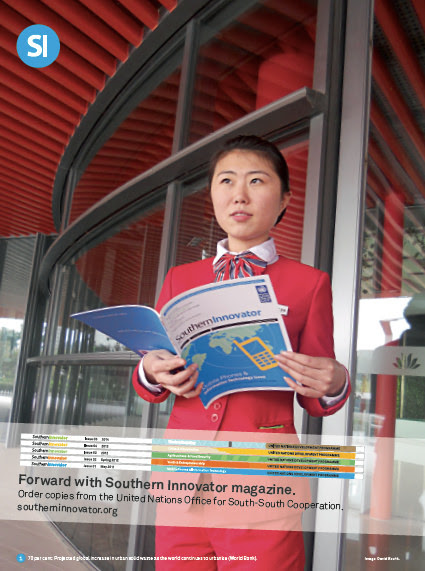
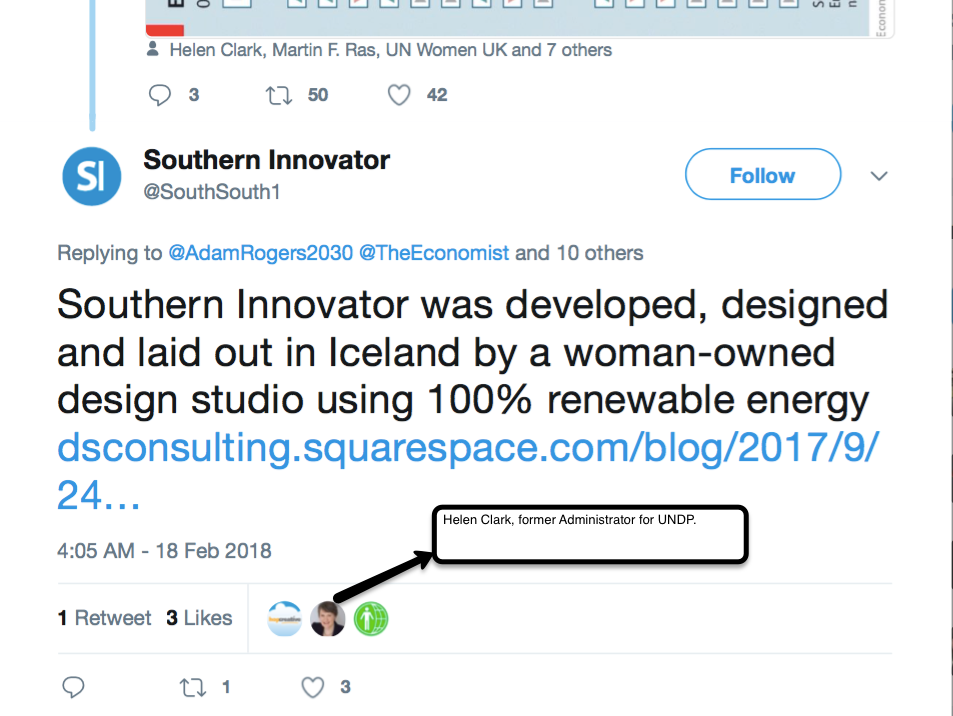
Studies have shown the importance of reading to real change. Not just online, but in paper form. The retention of information and knowledge is greater when a person reads something in a book or a magazine. Another factor is quality design (which makes the published material both attractive and effective). Trashy, gaudy or slap-dash design, while it has its place and context, is not suitable for well-funded, transparent, public organizations seeking to communicate across borders in a professional manner. Southern Innovator was designed following the UN and UNDP design guidelines at the time, while also adhering to the UN Global Compact and the UN Consultants Remuneration Guidelines. The content was also written to follow those guidelines as well as the Plain English Campaign, which seeks to reduce the presence of “gobbledygook, jargon and misleading public information”. On top of this, the magazine benefited from experience: the experience of one of Iceland’s top graphic designers and illustrators, the team based at the UNOSSC in New York who oversaw the editing and proof reading, and the researcher, editor and writer who has led many successful and award-winning publishing ventures, including during “one of the biggest peacetime economic collapses ever”.
“What a tremendous magazine your team has produced! It’s a terrific tour de force of what is interesting, cutting edge and relevant in the global mobile/ICT space… This is great, engaging, relevant and topical stuff.” Rose Shuman, Founder & CEO, Open Mind and Question Box, Santa Monica, CA, U.S.A.
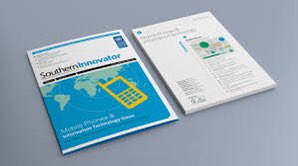
Southern Innovator Issue 1: Mobile Phones and Information Technology was published in 2011 and launched at the Expo in Rome, Italy.
Southern Innovator Issue 2: Youth and Entrepreneurship was published in 2012 and launched at the Expo in Vienna, Austria.Southern Innovator Issue 3: Agribusiness and Food Security was published in 2012 and launched at the Expo in Vienna, Austria.Southern Innovator Issue 4: Cities and Urbanization was published in 2013 and launched at the Expo in Nairobi, Kenya (the first time in Africa).
Issue 6 of Southern Innovator was to be on the theme of science, technology and innovation. Southern Innovator Issue 5: Waste and Recycling was published in 2014 and launched at the Expo in Washington, D.C.
“What a tremendous magazine your team has produced! It’s a terrific tour de force of what is interesting, cutting edge and relevant in the global mobile/ICT space… Really looking forward to what you produce in issues #2 and #3. This is great, engaging, relevant and topical stuff.”
Southern Innovator was initially launched in 2011 with the goal of inspiring others (just as we had been so inspired by the innovators we contacted and met). The magazine seeks to profile stories, trends, ideas, innovations and innovators overlooked by other media. The magazine grew from the monthly e-newsletter Development Challenges, South-South Solutions published by the United Nations Office for South-South Cooperation (UNOSSC) since 2006.
Issue 6’s theme has been decided on: it will focus on Science, Technology and Innovation. For this issue, Southern Innovator is seeking invitations from cutting-edge knowledge and science innovators in the global South to view their work. Time is tight, so don’t miss this opportunity to let the whole global South know about your work. In the past, Southern Innovator has visited green pioneers in Cuba, a smart city in South Korea and an eco-city in China.
Contact me if you wish to receive a copy/copies of the magazine for distribution. Follow @SouthSouth1.
“The e-newsletter Development Challenges, South-South Solutions proved to be a timely and prescient resource on the fast-changing global South, tracking the rise of an innovator culture driven by the rapid adoption of mobile phones and information technology …
“In 2010, work began on the development of the world’s first magazine dedicated to the 21st-century innovator culture of the global South. My goal was to create a magazine that would reach across countries and cultures, meet the UN’s standards, and inspire action. Southern Innovator was the result. Mr. [David] South played a vital role in the magazine’s development from its early conception, through its various design prototypes, to its final global launch and distribution.
“Both the e-newsletter and magazine raised the profile of South-South cooperation and have been cited by readers for inspiring innovators, academics, policy makers and development practitioners in the United Nations and beyond.
“I highly recommend Mr. [David] South as a thoughtful, insightful, analytical, creative and very amicable person who has the unique ability to not only grasp complex problems but also to formulate a vision and strategy that gets things done. … ” Cosmas Gitta, Former Assistant Director, Policy and United Nations Affairs at United Nations Office for South-South Cooperation (UNOSSC) in UNDP
“I think you [David South] and the designer [Solveig Rolfsdottir] do great work and I enjoy Southern Innovator very much!” Ines Tofalo, Programme Specialist, United Nations Office for South-South Cooperation
According to zoominfo in 2023, Southern Innovator is one of the Popular Searches online for the United Nations Office for South-South Cooperation (UNOSSC).
Like our content? Help contribute to the costs of keeping it online.
Information technology developments in Africa have long lagged behind those in other parts of the world. But the transformation being brought about by the widespread adoption and use of mobile phones – each one a mini-computer – and the expansion of undersea fibre optic cable connections to Africa are creating the conditions for an exciting new phase of computing growth on the continent.
Despite the global economic crisis, Africa is on course to see annual consumer spending reach US $1.4 trillion by 2020, nearly double the US $860 billion in 2008 (McKinsey). On top of this, by 2050, a projected 63 per cent of Africa’s population will be urban dwellers. With Africa’s middle class the fastest-growing in the world – doubling in less than 20 years – matching computing power with this consuming urban population could unleash a treasure trove of opportunity for information technology entrepreneurs.
These developments are creating the conditions for game-changing computing in the next years. And this is encouraging the creation of a new supercomputer (http://en.wikipedia.org/wiki/Supercomputer) for Africa in Kenya that will double the total number of supercomputers in Africa. Hugely powerful compared to personal or commercial computers, supercomputers use cutting-edge technology to carry out high-speed calculations involving vast quantities of data.
Expanded supercomputing power brings numerous advantages to both economic and human development. It will radically alter what can be accomplished in Africa – allowing mass data processing to be done, highly complex and data dense applications to be run, and very large research projects to be conducted on the continent rather than overseas.
Increasing computing power in Africa will bring in its wake, it is hoped, a surge in economic and research opportunities.
It will help African researchers and scientists to undertake globally competitive projects, rather than seeing this work done overseas. It will also open up a vast range of possibilities for African entrepreneurs and businesses to do complex data processing, modelling and research and will enable them to become more sophisticated operations.
The new supercomputer, the iHub Cluster, is being built in the Kenyan capital by one of Africa’s pioneering information technology hubs – iHub Nairobi (http://ihub.co.ke/pages/home.php) – in partnership with Internet products and services company Google and microchip maker Intel Corporation.
Africa’s first supercomputer is located in South Africa and is ranked 497 in terms of computing power on the list of 500 supercomputers in the world (http://www.top500.org/).
It is located in the “Tsessebe cluster” in Cape Town’s Centre for High Performance Computing (http://www.chpc.ac.za/).
“With mobile devices coming in multiple cores, it is important for developers to be exposed to higher performance computing; we are hoping to debut at a higher level than ‘Tsessebe cluster’,” Jimmy Gitonga, the project team leader for the iHub cluster, told Computer World.
Africa suffers from poor supercomputer capacity and this has had a knock-on affect on everything to do with economic development. The iHub supercomputer hopes to help universities and colleges to gain competitive edge and be able to undertake more complex research in the fields of media, pharmaceuticals and biomedical engineering.
“In Africa, we need to be on top of the mobile scene, its our widest used device,” Gitonga told Computer World.
Some of the practical applications for the iHub supercomputer in East Africa and the Horn of Africa include improving weather forecasting and drought prediction, increasing the ability to give advance warning of droughts and famines in the region.
“Most of the United Nations agencies and international agencies operating in the region have extensive field research on how to tackle natural disasters in the region. Imagine if they had affordable space where they can meet with developers and test resource-hungry applications,” Gitonga said.
The iHub also wants to offer the services of the supercomputer to researchers and organizations who have had to go abroad to have their data processed. The iHub supercomputer hopes to be used by mobile phone developers, gamers, universities and research institutions.
In the last two years, China had pushed the United States out of the number one spot for supercomputers. The Tianhe-1A located at the National Supercomputing Center in Tianjin (http://www.nscc-tj.gov.cn/en/), China, was the fastest computer in the world from October 2010 to June 2011.
For those looking to see how they can make the most of the growing supercomputer capability in Africa, examples from other countries offer a good idea. Supercomputers can be used for weather forecasting, climate research, oil and gas exploration, physical simulations like when testing aircraft, complex modelling for medical research, processing complex social data necessary for delivering effective social programmes or running modern health care systems.
























 David South Consulting
You must be logged in to post a comment.