Categories
Archive data Development Challenges, South-South Solutions Newsletters digital ID Southern Innovator magazine

New Weapon Against Crime in the South

By David SouthDevelopment Challenges, South-South Solutions

SOUTH-SOUTH CASE STUDY

Crime in the South’s fast-growing cities has a negative affect on economic development and social and community harmony. In Africa, with one fifth of the world’s population, for example, data is very poor on crime and its victims. The absence of good data means prevention and detection of crime is poor, and resources to fight it can’t be allocated effectively.

Over 900 million people – almost a sixth of the world’s population – now live in urban slums (UN) – high-tension places that offer a fertile environment for crime to flourish. In developing countries 43 per cent of urban dwellers live in slums – and in the least-developed countries the figure is 78 per cent. Keeping these areas safe is a serious challenge, especially when trust in police and local authorities is low. People are often afraid of how police will react to reporting of crime. Many rightly believe they will be asked for a bribe, or that reporting a crime somehow singles them out as a troublemaker.

Harnessing the power of people organizing together offers one way of fighting back against crime, and combating the paralysis of feeling there is nothing that can be done. An initiative in Brazil is turning to the powerful collaborative potential of Web 2.0 to track crime and help to solve it. And for the first time in history, Brazilians can now see in more or less real time what crime there is and where it is happening in their country.

Wikicrimes, the brainchild of Professor Vasco Furtado of the University of Fortaleza’s Knowledge Engineering Research Group, is inspired by the very popular user-contributed encyclopaedia Wikipedia, and germinated in his mind while on an academic sabbatical at Stanford University in California in 2006.

Victims of crime can simply map and report crimes using the website, which uses brightly coloured drawing pins to indicate where a cluster of crimes has taken place. Site users answer a series of questions on suspects and witnesses. Anyone planning a journey can then easily zoom in on the places where they will go, and see the crime profile of that area – and perhaps be more cautious and aware to avoid becoming victims themselves.

Brazil’s crime problem is huge: Films like City of God – where gangs fight deadly battles in the slums or favelas – shows how vicious it is.

Wikicrimes, whose motto is “Share crime information, Keep safe!”, began development in April 2006, and went ‘live’ with a launch at the end of 2007. Starting with just two employees, it has now grown to a team of 10.

Furtado was frustrated with police hoarding crime statistics in Brazil, and not letting people know where crimes were taking place: he also believes the police, as in many other countries, manipulate statistics for various political purposes. “The traditional mechanism of data-gathering for which police are responsible ends up giving them a monopoly over the handling of information on criminal occurrences,” Furtado said. And that “is not always in keeping with the precept of transparency and public availability of information required by a democratic system.”

Furtado believes transparent crime statistics are vital to a well-functioning democracy.

“We are still facing very big challenges,” he said. “Cultural change is one of them. We don’t have in Brazil the culture of sharing information for benefiting others. People need to realize that when they register a crime they are helping others, and that should be the reason others will act in the same fashion.”

He tried to get the police involved in the project, by contributing data, but with no luck. Brazil’s police argue their monopoly over crime statistics exists for some very serious reasons. “We are very worried about revealing police data which may restrict the work of the police,” Antenor Martins of Rio’s Civil Police Department told the BBC. “Also we don’t want a feeling of insecurity for the people – they don’t deserve that here or anywhere else in the world.”

Many also worry about a crime profile of an area dragging that area down, scaring people away. The police also worry about inaccurate information. “When people walk into a police station, you sign an incident report. If you give information which isn’t true, you have to respond to charges of giving false evidence,” said Martins.

But Furtado believes trust between citizens and the police is so low, it is hurting the fight against crime.

“The police suffer a lack of credibility among the populace which, in turn, contributes toward the low rate of reporting such occurrences: the so-called underreporting effect,” he said. “Research conducted with victims of crime in several Brazilian states has shown that underreporting may, in densely-populated areas, reach up to 50 per cent for certain types of crimes.”

Furtado believes a better picture of crime will lead to better public policies and policing: “The result of this can be disastrous in terms of formulation of public policies and especially in the planning of police actions, in view of the fact that the official criminal mapping may reflect a trend that is quite unlike what is actually occurring in real life.

“WikiCrimes intends to change the traditional logic of handling information on crimes that have already occurred, and considers that such a change is up to the citizens themselves. It is based on the principle that with adequate support, citizens will be capable of deciding how and when historical information on criminal occurrences can be publicized as well as for what purpose.”

Sao-Paulo-based NGO Sou de Paz works to reduce violence in Brazil, and is a big supporter of Wikicrimes. “If we develop Wikicrimes, we can look at things like domestic violence or information on drug trafficking – things that affect communities but that people don’t report either because of shame or fear,” the group’s Denis Mizne told the BBC. “If you can get access to this information or publicise it together with Wikicrimes, it could help in areas that suffer most from violent crime.”

Wisely, Wikicrimes is acting to address police concerns over accurate reporting of crimes.

“Technically the big challenge is to define mechanisms to identify false registering,” Furtado said. “We are creating fields in WikiCrimes for the user to provide further information that brings more reliability to the crime information registered — links to newspapers, for instance. We are also defining algorithms to compute the reputation of the informants.”

And Wikicrimes is not just for Brazil: they want people from around the world to add to the site and help build up the crime profile of all countries.

Furtado said responses from the general public have largely been positive. “The best I could ever hope,” he said. “The project is for the citizen and I feel that they realize this. Every day, I receive messages from people offering support and giving congratulations.”

“I had no idea of similar projects before doing Wikicrimes, but, recently, I have received some messages of similar initiatives even though with a local scope in Brazil, Argentina and USA,” he added.

“In terms of crime it would be nice if this would show that it’s necessary to publish the crime data that we have in law authorities and institutions,” he said. “If this is a success, I am sure that all the crime data will be available for people, because they will realize there is no way that the authorities can keep it all to themselves.”

Furtado keeps a rolling report on progress with Wikicrimes on his blog.

Published: May 2008

Resources

https://davidsouthconsulting.org/2020/12/04/big-data-can-transform-the-global-souths-growing-cities/

https://davidsouthconsulting.org/2020/12/11/cyber-cities-an-oasis-of-prosperity-in-the-south/

https://davidsouthconsulting.org/2020/12/04/data-surge-across-global-south-promises-to-re-shape-the-internet/

https://davidsouthconsulting.org/2021/03/04/indian-id-project-is-foundation-for-future-economic-progress/

Development Challenges, South-South Solutions was launched as an e-newsletter in 2006 by UNDP’s South-South Cooperation Unit (now the United Nations Office for South-South Cooperation) based in New York, USA. It led on profiling the rise of the global South as an economic powerhouse and was one of the first regular publications to champion the global South’s innovators, entrepreneurs, and pioneers. It tracked the key trends that are now so profoundly reshaping how development is seen and done. This includes the rapid take-up of mobile phones and information technology in the global South (as profiled in the first issue of magazine Southern Innovator), the move to becoming a majority urban world, a growing global innovator culture, and the plethora of solutions being developed in the global South to tackle its problems and improve living conditions and boost human development. The success of the e-newsletter led to the launch of the magazine Southern Innovator.  

Follow @SouthSouth1

Google Books: https://books.google.co.uk/books?id=p03–n51i44C&dq=development+challenges+april+2008&source=gbs_navlinks_s

Slideshare: http://www.slideshare.net/DavidSouth1/development-challengessouthsouthsolutionsapril2008issue

Southern Innovator Issue 1: https://books.google.co.uk/books?id=Q1O54YSE2BgC&dq=southern+innovator&source=gbs_navlinks_s

Southern Innovator Issue 2: https://books.google.co.uk/books?id=Ty0N969dcssC&dq=southern+innovator&source=gbs_navlinks_s

Southern Innovator Issue 3: https://books.google.co.uk/books?id=AQNt4YmhZagC&dq=southern+innovator&source=gbs_navlinks_s

Southern Innovator Issue 4: https://books.google.co.uk/books?id=9T_n2tA7l4EC&dq=southern+innovator&source=gbs_navlinks_s

Southern Innovator Issue 5: https://books.google.co.uk/books?id=6ILdAgAAQBAJ&dq=southern+innovator&source=gbs_navlinks_s
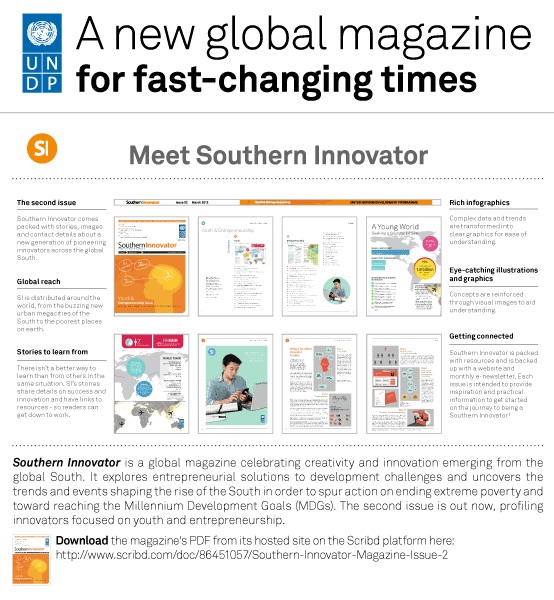
Read online: https://drive.google.com/file/d/0B-buqyoV0jpSZWcyNWQ5ZTY4OG8/view?resourcekey=0-1b7ZdQH3iBhSTAiACr7HVA.

https://davidsouthconsulting.org/2021/03/05/southern-innovator-issue-1/

Creative Commons License

This work is licensed under a
Creative Commons Attribution-Noncommercial-No Derivative Works 3.0 License.

ORCID iD: https://orcid.org/0000-0001-5311-1052.

© David South Consulting 2023
Categories
Archive Blogroll data Der Spiegel digital ID UNDP Mongolia 1997-1999 United Nations Development Programme

Kommunikation total: Der siebte Kontinent

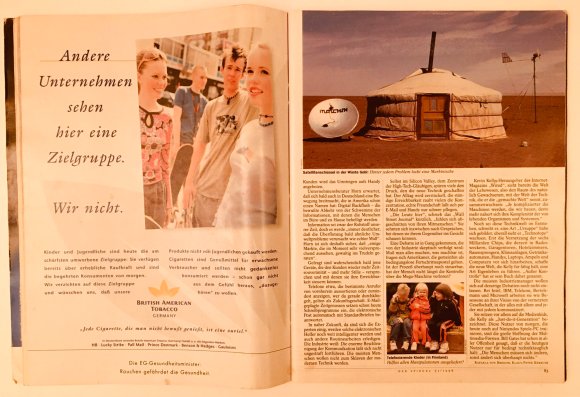
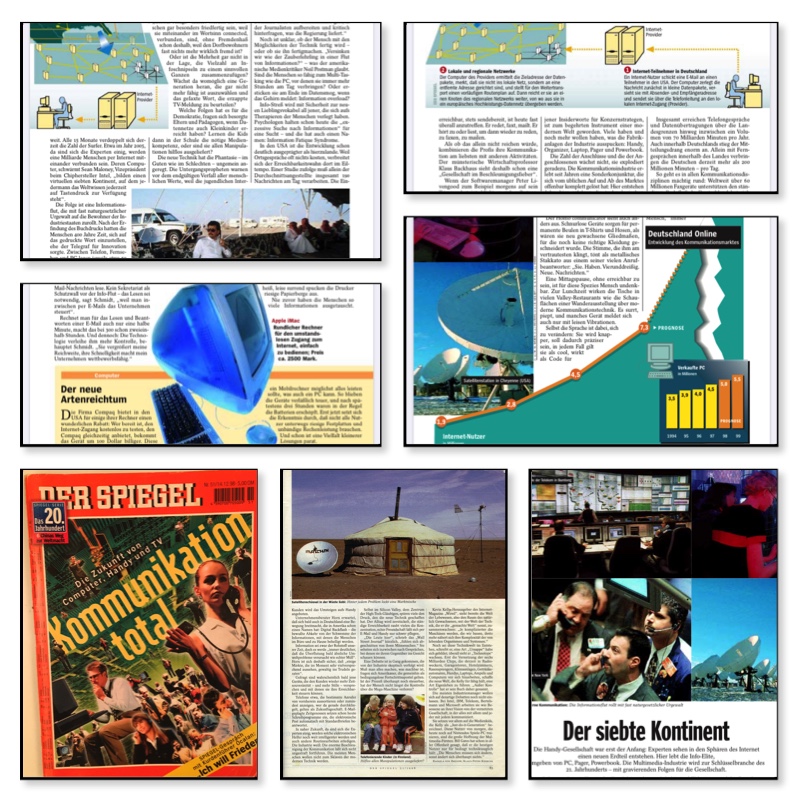
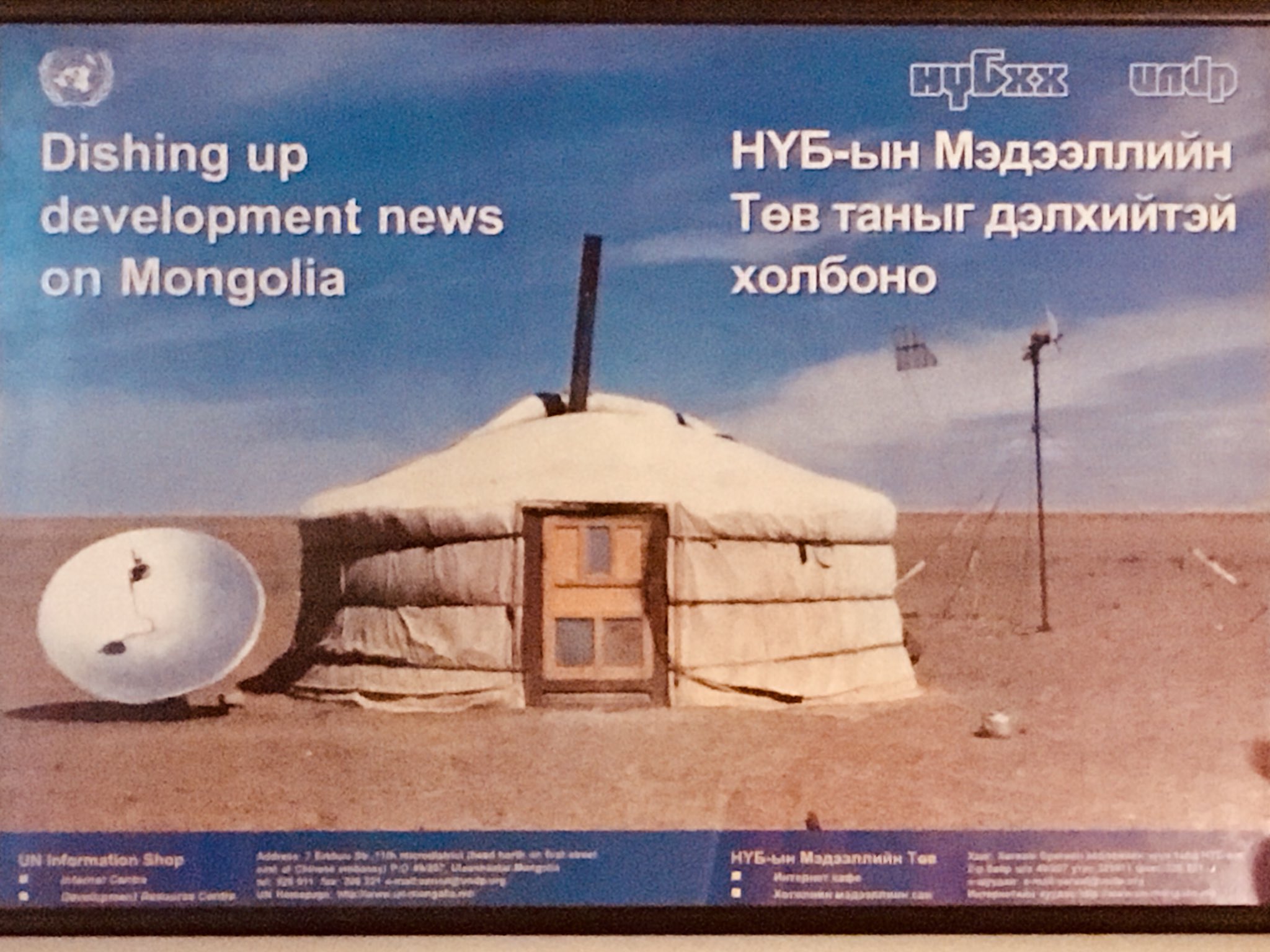
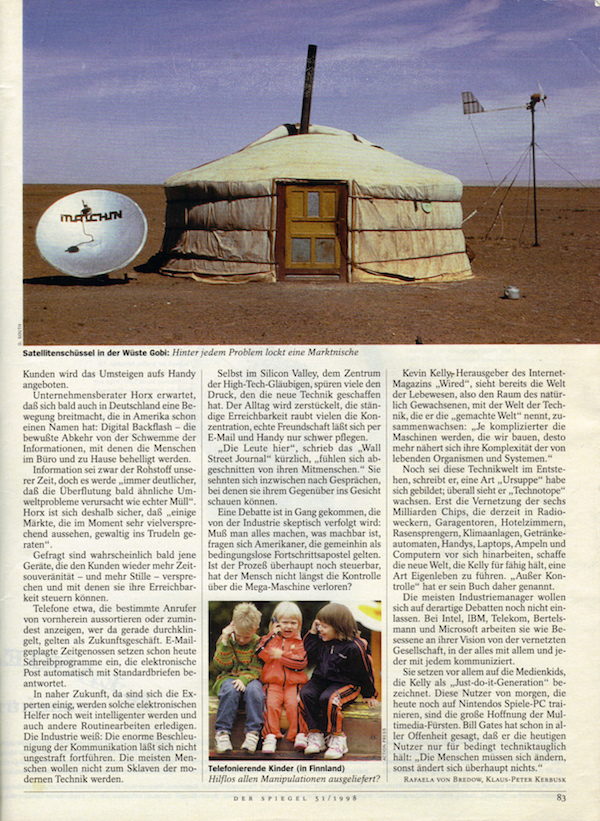
In 1998 Der Spiegel’s “Kommunikation total” issue profiled the global connectivity revolution underway and being accelerated by the Internet boom of the late 1990s. It chose my picture of a satellite dish and a ger in the Gobi Desert to symbolise this historic event.

Scroll through a PDF of the story (my photo is on the last page).


“Die Handy-Gesellschaft war erst der Anfang: Experten sehen in den Sphären des Internet einen neuen Erdteil entstehen. Hier lebt die Info-Elite, umgeben von PC, Pager, Powerbook. Die Multimedia-Industrie wird zur Schlüsselbranche des 21. Jahrhunderts – mit gravierenden Folgen für die Gesellschaft.”

English translation: “Total communication: the seventh continent –
The cell phone society was just the beginning: Experts see a new continent emerging in the spheres of the Internet. The information elite live here, surrounded by PCs, pagers and power books. The multimedia industry is becoming the key industry of the 21st century – with serious consequences for society.” (http://t-off.khd-research.net/Spiegel/10.html). Original copy of magazine (above) from 1998.
From The Turns of Translation Studies: New Paradigms Or Shifting Viewpoints? By Mary Snell-Hornby · 2006.
Der Spiegel is a German weekly news magazine and is one of Europe’s largest publications of its kind. It chose my photo taken in the Gobi Desert for its profile of the Internet revolution in 1998.

“The transformation of Mongolia from a largely rural nomadic society of herdsmen to a community dominated by the increasingly ultra-globalized city of Ulan Bator, where almost a third of the population lives, is nothing short of astounding.” The New Mongolia: From Gold Rush to Climate Change, Association for Asian Studies, Volume 18:3 (Winter 2013): Central Asia

From 1997 to 1999, I served as the Communications Coordinator (head of communications) for the United Nations (UN)/United Nations Development Programme (UNDP) mission in Mongolia, founding and directing its UNDP Mongolia Communications Office. 

Copies of Wild East: Travels in the New Mongolia by Jill Lawless are still available in various editions and languages.

Published in 2000 (ECW Press: Toronto), Wild East: Travels in the New Mongolia by Canadian author and foreign correspondent Jill Lawless also selected the ‘ger’ photo for its cover image.

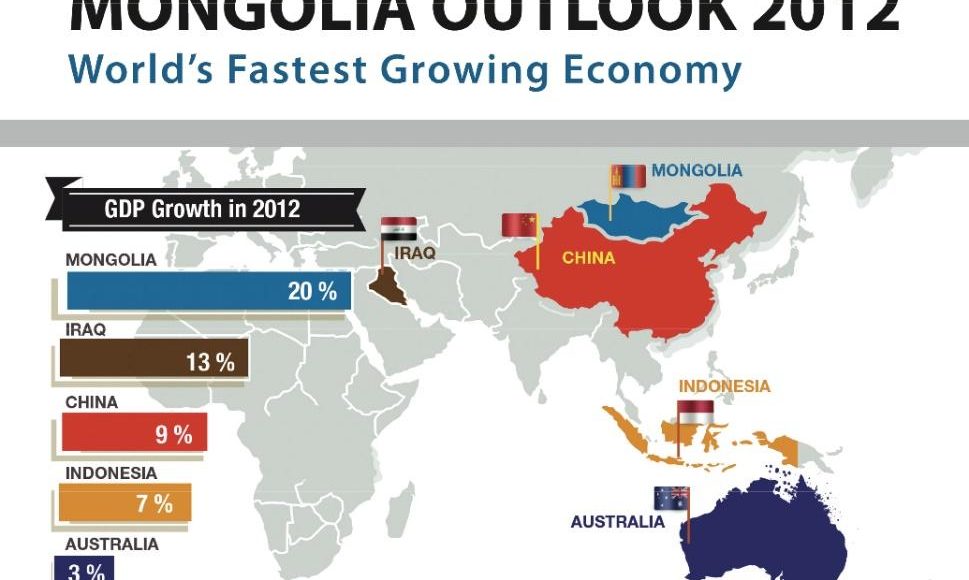
The world has changed considerably since then; and so has Mongolia. The digital revolution has rolled across the planet, the attacks of 9/11 unleashed a wave of violence and wars, and Mongolia even became the fastest-growing economy in the world a few years ago (2012). But back when this book was researched, Mongolia was just coming out of decades of isolation within the Soviet orbit under Communism, and the country experienced in the 1990s “one of the biggest peacetime economic collapses ever” (Mongolia’s Economic Reforms: Background, Content and Prospects, Richard Pomfret, University of Adelaide, 1994). 

“The years 1998 and 1999 have been volatile ones for Mongolia, with revolving door governments, the assassination of a minister, emerging corruption, a banking scandal, in-fighting within the ruling Democratic Coalition, frequent paralysis within the Parliament, and disputes over the Constitution. Economically, the period was unstable and rife with controversies.” Mongolia in 1998 and 1999: Past, Present, and Future at the New Millennium by Sheldon R. Severinghaus, Asian Survey, Vol. 40, No. 1, A Survey of Asia in 1999 (Jan. – Feb., 2000), pp. 130-139 (Publisher: University of California)

That collapse made for some crazy times, as Wild East shows. 

Read a small sample of David South’s new media journalism and reporting from the 1990s here: From Special Report: NMM (New Media Markets) Spotlight On The Emergence Of Satellite Porn Channels In The UK

Channel Regulation: Swedes Will Fight Children’s Advertising All The Way

Two trends came together at the end of the 1990s and the start of the 2000s: the digital revolution and the mapping of the human genome. Both have given birth to whole new industries. Read more here: The Dawn Of The Genetics Revolution | 2001 – 2003

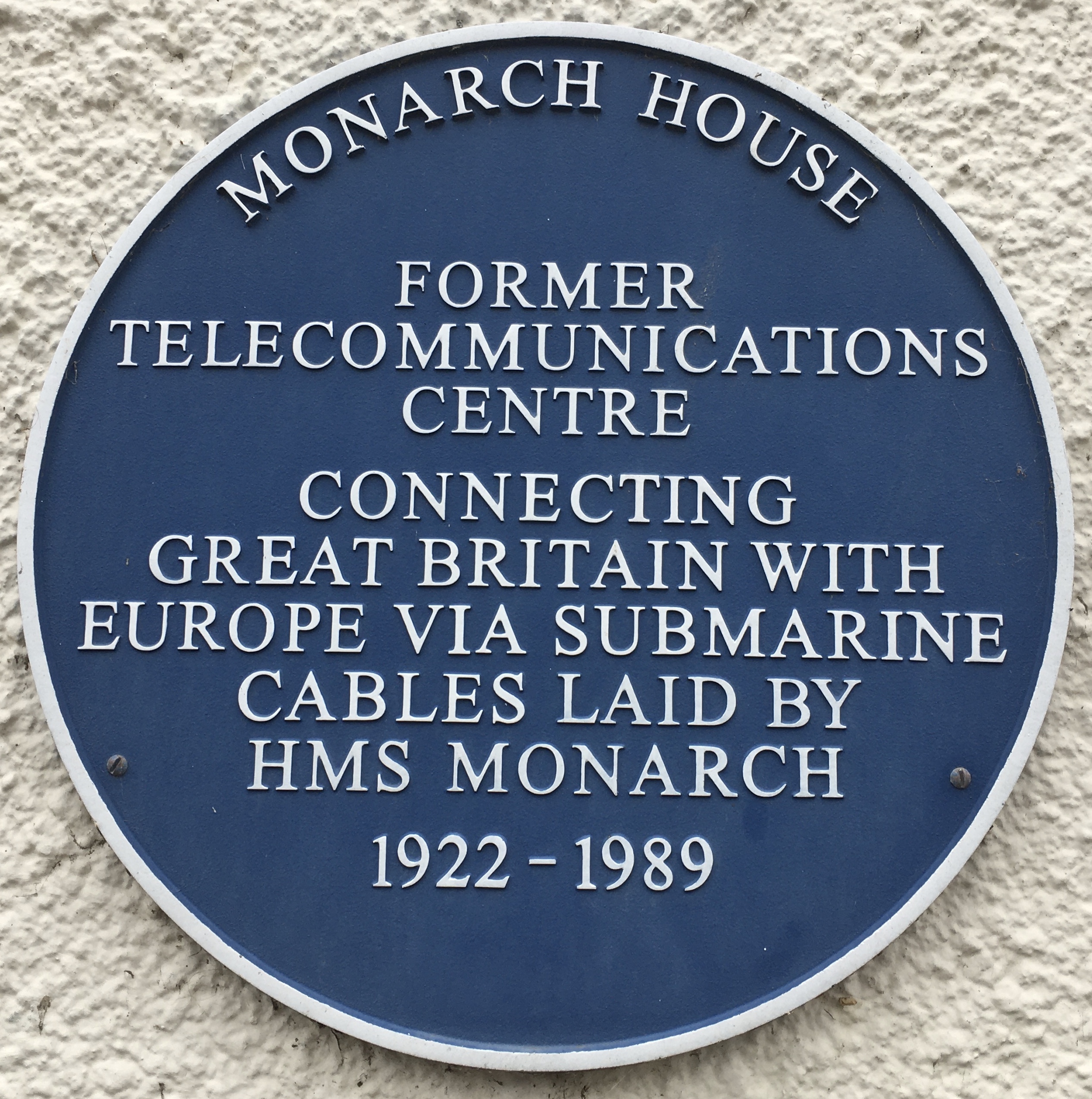
By the 1990s, cables (like above) were being joined by satellites to advance the global connectivity revolution. By the 2000s, cables (copper and fibre optic) and satellites were joined by mobile and smart phones, to deliver “kommunikation total”.

This work is licensed under a Creative Commons Attribution 4.0 International License.

ORCID iD: https://orcid.org/0000-0001-5311-1052.

© David South Consulting 2021

Categories
Archive Blogroll New Media Markets

Channel Regulation: Swedes Will Fight Children’s Advertising All The Way

By David South

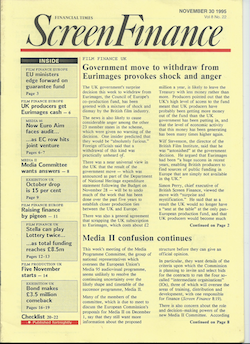
Financial Times New Media Markets (NMM) (London, UK), November 30, 1995

ISSN: 02654717

OCLC Number / Unique Identifier: 1266447669

The Swedish government is set to clamp down on satellite channels which carry advertising aimed at children and will tell channels to drop such advertising or face legal action.

The centre-left government’s threat of tough action follows Sweden’s winning extra powers last week through an amendment to the European directive on transfrontier broadcasting agreed by European culture ministers (NMM 13:42). 

The main focus of the Swedish government’s wrath is the TV3 channel, owned by Kinnevik, which uplinks to the Astra 1a and Sirius satellites from the UK. TV3 based itself in the UK in order to benefit from the Independent Television Commission’s more liberal rules on advertising. 

TV3’s main commercial television rival, TV4, has long protested to the government about what it sees as unfair competition from TV3 and other foreign-based channels. 

The government will initially go after TV3 and the Luxembourg-based cable and satellite channel Femmen. The Ministry of Cultural Affairs said that pro-European satellite channels such as TNT/Cartoon Network and the Children’s Channel were lesser priorities, but could face action in the future. 

TNT/Cartoon Network has a Swedish soundtrack and many Children’s Channel programmes are subtitled in Swedish on cable systems.

The Ministry of Cultural Affairs plans a two-pronged attack to remove the advertising it finds offensive and which is banned under Swedish broadcasting law: advertising aimed at children under 12 and carried in breaks around children’s programming. 

First, the consumer-protection agency the Konsument Ombudsmanen will take action against advertising agencies which produce children’s advertising. Monica Bengtsson, a legal adviser to the Ministry of Culture, said that agencies will be warned once and then fined if they violate the rules a second time. 

If this fails – and some observers believe that it will, because advertisers could move their accounts to non-Swedish agencies – the Ombudsmanen would then try the riskier move of taking channels to court to stop the ads. 

The Ombudsmanen is not expected to act until it hears the results of the case it has already taken to the European Court of Justice against Italian children’s magazine publishers De Agostini for allegedly placing commercials targetting children under the age of 12 on both TV4 and TV3. Judgement is expected in mid-1996. 

The Swedish government is also banking on public opinion to help pressure satellite channels to stop showing children’s advertising. The political climate in Sweden is strongly in favour of strict controls on advertising aimed at children. Swedish prime minister, Ingvar Carlsson, made cracking down on such advertising a key part of his opening speech to the present session of the Swedish parliament. 

The amended directive (which still needs the approval of the European Parliament) allows a member state to ban children’s advertisements under its own rules even if the channel satisfies the rules of the country from which it is broadcast. 

The Swedish government believes that the combination of the amended directive provisions and its ban on children’s advertising is all it needs to prevent the adverts. 

Per Bystedt, vice-president of TV3, insisted this week that the channel is UK-licensed and therefore does not fall under Swedish law: “We are following the Independent Television Commission’s rules.”

New definitions on which countries are responsible for regulating channels, adopted by the European culture ministers last week, could lead to TV3 being regulated in Sweden rather than the more liberal UK if it is deemed that the channel is really established there. However, the Swedish government has investigated the extent to which TV3 is based in the UK and, according to Bystedt, has declared that it is satisfied that the company is British. 

Creative Commons License

This work is licensed under a
Creative Commons Attribution-Noncommercial-No Derivative Works 3.0 License.

ORCID iD: https://orcid.org/0000-0001-5311-1052.

© David South Consulting 2023

Categories
Archive Blogroll New Media Markets

Do TV porn channels degrade and humiliate?

By David South

Financial Times New Media Markets (London, UK), October 26, 1995

ISSN: 02654717

OCLC Number / Unique Identifier: 1266447669

Susan Sontag, the renowned American essayist, described pornography as a “crutch for the pyschologically deformed and brutalisation of the morally innocent.” The Campaign Against Pornography in the UK believes that pornography exploits women and children “in a degrading and humiliating way, often with the message that we enjoy this and want to be abused.”

The campaign encourages its supporters to take direct action against any distributor of pornographic material as part of its wider campaign to put the industry out of business.

The porn channels dismiss arguments that they degrade women and encourage male violence against women. Playboy managing director Rita Lewis argues that “women are happy to consume erotic imagery like pin-ups. Women are not hung-up by this anymore, they are not threatened by the fantasy women we show in our programming. We hope Playboy will lead to couples’ making love together.”

Andrew Wren, financial director of the Adult Channel, also dismisses the link between pornographic programming and sexual violence. “I don’t think there is anything in programmes that would encourage men to go and rape. Women are interested in sex as men are.”

Television X’s (Deric) Botham says that porn programmes are “a bit of titilation” in the fine, upstanding tradition of the British Carry On films. None the less, he admits that “I wouldn’t want my daughter to get involved in pornography.”

He says that the women involved in the programmes, some of them housewives, are willing participants and enjoy the opportunity. “I don’t produce anything that is against the law. We speak to the individuals concerned. If you have a reluctant model, it doesn’t work – I just won’t buy the video.”

The Campaign Against Pornography sees it all rather differently. Ann Mayne, a member of the campaign’s management committee, was particularly critical of two programmes on Television X – Shag Nasty and Mutley and Fly on the Wall.

She said that Shag Nasty and Mutley, in which a presenter approaches women in the street or in supermarkets and offers them £25 to look at their knickers, or £50 to be filmed having sex with him, gave the message that women were simply objects and that it was acceptable to harass them.

“It is complete prostitution of female sexuality,” she said. “Botham wants full-on, across-the-board prostitution of women. In his view, every woman must have a price.”

Mayne said that Fly on the Wall, in which real-life couples are shown having sex, was an open invitation for men to coerce their partners into being filmed, possibly to the point of abuse.


From Special Report: NMM (New Media Markets) Spotlight On The Emergence Of Satellite Porn Channels In The UK

Read more on the 1990s sex economy here: From Special Report: Sexual Dealing: Today’s Sex Toys Are Credit Cards & Cash: A Report On The Sex-For-Money Revolution

Update: It is over 20 years since this Special Report was published. The Internet now plays a significant role in the growth of sex content and the sex industry and vice versa. Here is an interesting overview of the situation in 2020. The Internet is for Porn – It always was, it always will be.

“One of the biggest and most interesting things happening in the consumer web right now is running almost completely under the radar. It has virtually zero Silicon Valley involvement. There are no boastful VCs getting rich. It is utterly absent from tech’s plethora of twitters, fora and media (at least, as they say, “on main”). Indeed, the true extent of its incredible success has gone almost completely unnoticed, even by its many, many, many customers.

I’m talking, of course, about OnlyFans.” 

ORCID iD: https://orcid.org/0000-0001-5311-1052.

© David South Consulting 2023