Categories
Archive Development Challenges, South-South Solutions Newsletters

Hip-driven Pump Brings Water to Parched Fields

By David SouthDevelopment Challenges, South-South Solutions

SOUTH-SOUTH CASE STUDY

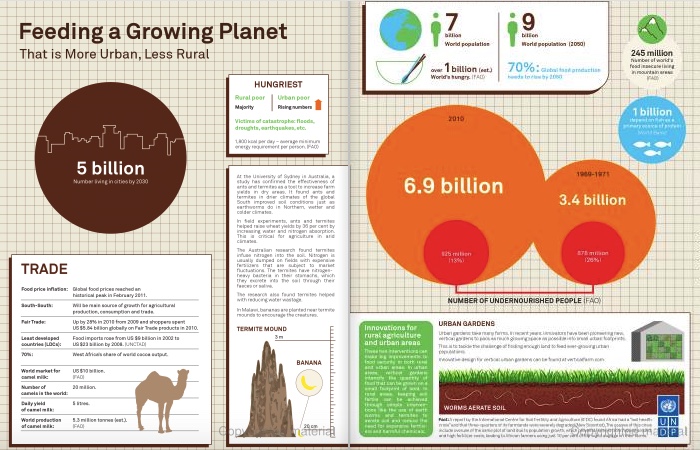
Finding ways to increase agricultural productivity is key to expanding food supplies and making farming pay. With the world’s population continuing to rise and becoming more urban, there is a pressing need to improve both the quantity and quality of food supplies.

The many small-scale farmers across the global South – and their high levels of poverty – demonstrates the urgent need to change the way farming is done.

Based on Food and Agricultural Organization (FAO) census data, it has been estimated that some 525 million farms exist worldwide, providing a livelihood for about 40 per cent of the world’s population. Nearly 90 per cent of these are small farms with less than 2 hectares of land (Nagayets, 2005). Average farm sizes around the world run from 1.6 hectares in Africa to 121 hectares in North America.

Small farms occupy about 60 per cent of the arable land worldwide and contribute substantially to global farm production. In Africa, 90 per cent of agricultural production is derived from small farms (Spencer, 2002).

One social enterprise is pioneering the development and selling of innovative farming tools for these small-scale farmers to increase their efficiency and make their lives better and more profitable. The MoneyMaker Hip Pump is a lightweight irrigation tool designed to be used by anyone, but aimed especially at women farmers. It helps to increase the amount of water that can be pumped into a field during the dry season. To date, the makers of the pump, Kickstart (kickstart.org), claim to have sold 190,000 pumps. It can irrigate up to 0.40 hectare of land.

Kickstart, which calls itself a non-profit promoting technology and entrepreneurism in Africa, develops and markets simple agricultural tools for Africa’s rural poor so they can improve their businesses. The company estimates it has helped 600,000 people since it was founded in 1991.

The MoneyMaker Hip Pump was launched in stores in 2006 and received a sales and marketing push in 2008. It sells for US $30 and weighs 4.5 kilograms. Kickstart says the pump’s most effective attribute is its simple pivot hinge. This pivot hinge allows the user to combine their body weight and strength from their legs with sheer momentum to power the pump rather than straining upper back and shoulder muscles – something that is very hard on farmers’ bodies and leads to repetitive strain injuries that shorten a farmer’s effective working life.

The pump can pull water from 7 metres and push water up a field for 14 metres.

Kickstart says that by early 2012, it had sold 32,037 pumps.

Reporting in a paper for the World Bank, Vincent Nnamdi Ozowa found smallscale farmers needed five things that will make a big difference to their productivity: better access to information on new methods, scientific advances and timely market updates; better education and improved literacy rates;access to credit; better marketing; and better technology that minimizes drudgery and improves efficiency.

In 2011, Worldwatch Institute’s State of the World report found small-scale agriculture could be key to tackling world hunger and poverty. It urged a move away from industrial agriculture and towards small-scale farming in sub-Saharan Africa, believing it could make big gains by being more efficient and reducing waste.

Kickstart has found communities are receptive to the idea of using the pumps and building agro businesses.

“These are people who are already entrepreneurs, so it is not like we are sensitizing them; they are people who are trying to find ways to make money,” Kickstart Tanzania’s Anne Atieno Otieno told AllAfrica.com.

“When we meet them in the communities we talk to them about the value of irrigation versus relying on rainfall. Most of them are used to having to wait for the rain. At the time we were working with the Super MoneyMaker pump, which is a bigger, more expensive pump. They asked if we could make a low entry pump, which we passed on to our tech deputy and that is how we came up with the MoneyMaker Hip Pump.”

It is part of a range of products Kickstart makes to aid small farmers become more productive (kickstart.org/products).

KickStart believes that self-motivated private entrepreneurs managing smallscale enterprises can play a dynamic role in the economies of developing countries.

These entrepreneurs can raise small amounts of capital (US $100 to US $1,000) to start a new enterprise. KickStart then helps them to identify viable business opportunities and access the technologies required to launch the new enterprises.

Kickstart also uses something called a Mobile Layaway service to make it easier for farmers to afford a pump. This service lets farmers pay off the cost of the pump in small instalments by mobile phone. The farmer can choose how large or small the instalment is according to their means.

“Speaking to the women, and going out into the field and speaking with farmers, we identified a major obstacle – purchasing power, the ability to buy the pump. In Africa, in the field, the pump is a capital item,” Otieno said.

“They really have to organize themselves to be able to save for it. And so when we were speaking to the farmers, many were asking us, ‘Can you come up with a credit facility?’ or some system whereby they could purchase the pumps, because many of them wanted the pump but they were not able to afford it.

“The program works through a mobile phone service, MPesa (http://www.safaricom.co.ke/index.php?id=250) … so the farmers are able to save money, and send money through that program.”

Kickstart recently received an award from the US State Department and the Rockefeller Foundation for “transforming agriculture for women by harnessing technology and spurring entrepreneurship.”

Published: April 2012

Resources

1) Information Needs of Small Scale Farmers in Africa: The Nigerian Example by Vincent Nnamdi Ozowa. Website: http://www.worldbank.org/html/cgiar/newsletter/june97/9nigeria.html

2) The New Harvest, Agricultural Innovation in Africa by Calestous Juma. The book outlines strategies for making Africa self-sufficient and argues Africa is

capable of feeding itself in one generation. Website: http://belfercenter.ksg.harvard.edu/publication/20504/new_harvest.html

https://davidsouthconsulting.org/2020/12/14/african-farming-wisdom-now-scientifically-proven/

https://davidsouthconsulting.org/2022/11/21/agribusiness-food-security/

https://davidsouthconsulting.org/2022/11/16/brazils-agricultural-success-teaches-south-how-to-grow/

https://davidsouthconsulting.org/2022/10/10/cheap-farming-kit-hopes-to-help-more-become-farmers/

https://davidsouthconsulting.org/2022/11/01/indonesian-food-company-helps-itself-by-making-farmers-more-efficient/

https://davidsouthconsulting.org/2022/10/31/new-kenyan-services-to-innovate-mobile-health-and-farming/

https://davidsouthconsulting.org/2021/09/16/small-fish-farming-opportunity-can-wipe-out-malnutrition/

https://davidsouthconsulting.org/2022/10/10/us-1-trillion-opportunity-for-africas-agribusinesses-says-report/

https://davidsouthconsulting.org/2022/10/18/woman-wants-african-farming-to-be-cool/

Development Challenges, South-South Solutions was launched as an e-newsletter in 2006 by UNDP’s South-South Cooperation Unit (now the United Nations Office for South-South Cooperation) based in New York, USA. It led on profiling the rise of the global South as an economic powerhouse and was one of the first regular publications to champion the global South’s innovators, entrepreneurs, and pioneers. It tracked the key trends that are now so profoundly reshaping how development is seen and done. This includes the rapid take-up of mobile phones and information technology in the global South (as profiled in the first issue of magazine Southern Innovator), the move to becoming a majority urban world, a growing global innovator culture, and the plethora of solutions being developed in the global South to tackle its problems and improve living conditions and boost human development. The success of the e-newsletter led to the launch of the magazine Southern Innovator.

https://davidsouthconsulting.org/2021/03/05/southern-innovator-issue-3/

Creative Commons License

This work is licensed under a
Creative Commons Attribution-Noncommercial-No Derivative Works 3.0 License.

ORCID iD: https://orcid.org/0000-0001-5311-1052.

© David South Consulting 2023

Categories
Archive data Development Challenges, South-South Solutions Newsletters digital ID

Microwork Pioneer Transforms Prospects For Poor, Vulnerable

By David SouthDevelopment Challenges, South-South Solutions

SOUTH-SOUTH CASE STUDY

A pioneering technology social enterprise has found a way to connect people around the world to the new digital economy, transforming their lives and providing long-term employment opportunities. It is closing the digital divide in a very practical way, teaching new skills and, most importantly, providing income to the poor and vulnerable.

The San Francisco, USA-based non-profit social enterprise Samasource (samasource.org) uses what it calls microwork – a virtual assembly line of small tasks broken down from a larger project so they can be completed over the Internet – to outsource work to its network of workers around the world.

The tasks in this virtual piecework range from writing to transcribing to organizing online content.

The company organizes the projects using its own online work distribution system connecting workers around the world to the SamaHub in San Francisco. Most of the workers are women, youth and refugees. When they complete their task, it is sent back to the SamaHub in San Francisco where the staff check it and assure its quality. Once approved and completed, the project is returned to the client.

The company was founded in 2008 and draws on experts in “distributed work, economic development, and outsourcing.”

The microwork is divided into three areas: content services, data enrichment and transcription.

Content services can include writing descriptions for online business listings, organizing large databases on information or creating brief descriptions of existing content to make it easier for search engines to find it. “Data enrichment” tackles the vast quantity of information on the Internet that needs to be kept up to date and reliable. It also includes ‘tagging’, where text or images on the Internet need to have appropriate ‘tags’ or labels. And finally, transcription services include digitizing paper documents like receipts or books or transcribing audio and video files for the web.

All these tasks are labour intensive and require high attention to detail. And they are critical to any online business’s success if it wants a reputation for accuracy and consistency.

Samasource is optimistic about its future potential because of the sheer size of the market for business process outsourcing: estimated to be worth over US $100 billion. What Samasource does, called ‘impact sourcing’ – outsourcing to people in the developing world living in poor or remote communities – is a market worth US $5 billion, according to Samasource’s website.

It differs from conventional business process outsourcing in a number of respects, including the educational background of the workers. Most conventional outsourcing goes to college graduates in cities in India, China and the Philippines. Impact outsourcing is done by people with at most a high school education.

The digital economy needs these workers to handle the many millions of detailed tasks required to link together information. It is easy to take this for granted because it is hidden from view, but it is what enables the Internet to function and businesses to thrive. Samasource provides outsourcing services including content moderation and data entry to clients like LinkedIn, Intuit and the US State Department.

“We bring dignified, computer-based work to women, youth, and refugees living in poverty,” said Samasource’s founder and chief executive officer, Leila Janah.

Janah has a background in development studies and formerly worked for the World Bank. This experience convinced her that much foreign aid was failing to target what poor people are really looking for: a job that pays well.

Samasource sees what it does as work, and not handouts.

It also believes it is changing perspectives, proving people from the poorest places on earth can become trustworthy, hard-working knowledge workers.

The Internet is a unique medium because it transcends borders and smooths contact between people with varying linguistic, cultural and educational capabilities.

“The Internet reduces the friction of collaboration across all of these centres and time zones, and with a highly distributed workforce,” said Janah.

Samasource claims to have paid out US $1 million in wages to more than 1,500 workers around the world. Ambitiously, it wants to expand this to reach some of the 144 million youth between 16 and 24 living on less than US $2 a day.

Youth are a particular focus for Samasource. Samasource targets young people who are literate and have received an education but still can’t get a job.

As for the many women employed by Samasource, they were either unemployed or earning poverty-level wages doing precarious work in low-level manufacturing and not building their skills.

Samasource currently has 16 partnerships in Haiti, India, Pakistan, Kenya, Uganda and South Africa. Criteria to work with Samasource includes being in a high-poverty region. Another criteria is for most of the money earned to stay within the region where the work is done and adhere to the standards laid down by Samasource.

Samasource’s success means it has attracted further funding. In December 2011, it was given a US $1.5 million grant from Google.org – the Google.com search engine’s charity. It has also raised US $5 million from non-profit investors, including the Ford Foundation, the Rockefeller Foundation and the eBay Foundation. The challenge for the Samasource model will be to prove, with this new funding, that it can scale its operations to pay out more to its workers than it is taking in to meet its operating costs.

Microwork is turning out to be big work indeed!

Published: January 2012

Development Challenges, South-South Solutions was launched as an e-newsletter in 2006 by UNDP’s South-South Cooperation Unit (now the United Nations Office for South-South Cooperation) based in New York, USA. It led on profiling the rise of the global South as an economic powerhouse and was one of the first regular publications to champion the global South’s innovators, entrepreneurs, and pioneers. It tracked the key trends that are now so profoundly reshaping how development is seen and done. This includes the rapid take-up of mobile phones and information technology in the global South (as profiled in the first issue of magazine Southern Innovator), the move to becoming a majority urban world, a growing global innovator culture, and the plethora of solutions being developed in the global South to tackle its problems and improve living conditions and boost human development. The success of the e-newsletter led to the launch of the magazine Southern Innovator.  

Follow @SouthSouth1

Like this story? Here is a dirty secret: this website is packed with stories about global South innovators. We spent 7 years researching and documenting these stories around the world. We interviewed the innovators to learn from them and we visited them to see how they did it. Why not use the Search bar at the top and tap in a topic and see what stories come up? As for my work, I have been involved with start-ups and media ventures since the early 1990s. In the years since I have learned a great deal about innovation and digital and have shared these insights in the stories on this website as well as in the 5 issues of Southern Innovator magazine. So, stick around and read some more!    

Google Books: https://books.google.co.uk/books?id=qLYTxcC8HgcC&dq=development+challenges+january+2012&source=gbs_navlinks_s

Slideshare: http://www.slideshare.net/DavidSouth1/development-challengessouthsouthsolutionsjanuary2012issue

Southern Innovator Issue 1: https://books.google.co.uk/books?id=Q1O54YSE2BgC&dq=southern+innovator&source=gbs_navlinks_s

Southern Innovator Issue 2: https://books.google.co.uk/books?id=Ty0N969dcssC&dq=southern+innovator&source=gbs_navlinks_s

Southern Innovator Issue 3: https://books.google.co.uk/books?id=AQNt4YmhZagC&dq=southern+innovator&source=gbs_navlinks_s

Southern Innovator Issue 4: https://books.google.co.uk/books?id=9T_n2tA7l4EC&dq=southern+innovator&source=gbs_navlinks_s

Southern Innovator Issue 5: https://books.google.co.uk/books?id=6ILdAgAAQBAJ&dq=southern+innovator&source=gbs_navlinks_s

Creative Commons License
This work is licensed under a
Creative Commons Attribution-Noncommercial-No Derivative Works 3.0 License.

ORCID iD: https://orcid.org/0000-0001-5311-1052.

© David South Consulting 2021