Categories
Archive Development Challenges, South-South Solutions Newsletters

Diaspora Bonds to Help Build up Infrastructure

By David SouthDevelopment Challenges, South-South Solutions

SOUTH-SOUTH CASE STUDY

Many people are aware of the significant role played in global development by remittance payments from migrant workers working in the wealthy North to the global South. But they may not be aware of the significant sums migrant workers have saved in bank accounts in these wealthy countries. Across the global South, efforts are underway to lure these sums back to home countries to boost development efforts.

As the hard-earned money migrant workers save sits in bank accounts in wealthy Western countries earning very low interest rates – a consequence of the current global economic crisis – so-called “Diaspora Bonds” seek to offer a way to earn good interest returns and help build up home countries at the same time.

The money can help developing countries build facilities they need but cannot afford: roads, bridges, railways, water supplies, power, sewerage, street lighting. It is a way to bypass dependence on foreign aid and borrowing from aid agencies or the general marketplace.

US $501 billion in remittance payments was sent in 2011, of which US $372 billion went to developing countries, involving some 192 million migrants or 3 per cent of the world’s population (World Bank). On top of this, migrants from developing countries have saved an estimated US $400 billion – and these funds are being targeted by those selling diaspora bonds (The Economist).

The idea is being promoted by the World Bank and draws on the successful experiences with bonds for Israel and India. Both countries have long histories of turning to diaspora communities to raise funds through bonds.

The bonds work by playing on patriotism and the genuine desire of migrants to want to see conditions improve back home. As the thinking goes, patriotic investors are more likely to be patient. This is critical because many countries cannot offer rapid profits and a quick pay off – something sought by short-term investors obsessed with the ups and downs of the stock market. They are also sterner investors, less likely to run away when the going gets tough. Their local knowledge means they will not panic and pull their investments when bad news hits the headlines. And probably best of all, they don’t mind if the local currency declines in value – that just means they can pick up a local house on the cheap or buy a business for even less money.

One business working in this area is Homestrings (homestrings.com): Motto “Come make a difference.” An Internet platform offering diaspora bonds, it is run by founder and chief executive officer Eric-Vincent Guichard. An American born to a Guinean father and American mother, he spent 20 years growing up in rural Guinea and knows the country well. He also heads up GRAVITAS Capital Advisors, Inc. (gravitascapital.com), founded in 1996, which advises governments on how to manage their assets. A graduate of HarvardBusinessSchool and a former World Bank scholar, he is based in Washington, D.C.

According to its website, Homestrings works like this: “It all starts with your ability to scan through a catalog of projects, funds and public-private partnership opportunities that focus on regions you come from or that you care deeply about. Each of these projects and/or funds is detailed in a Fact Sheet that is set up to help you do the due diligence needed to make an investment decision. Then, Homestrings directs your investment into the selected project or fund, with the help of our administrator.”

Investments are monitored on a monthly or quarterly basis and are selected for their socio-economic impact and investment profitability.

The website has a personal “Dashboard” that allows investors to use the site to vote for or against investments and make comments. And Homestrings will promote the investments that receive the most support and positive comments.

To make an investment, a potential investor selects a fund or project that matches their interest. They read the Fact Sheet and choose. The funds are then passed on to the investment bond and an interest percentage or dividend is paid at regular intervals. Investors can keep track of the investment through the personal Dashboard on the website.

Fact Sheets are organized by geographical region, industry focus, and development theme. Investments “cover infrastructure, health care, education, transportation, and small and medium sized enterprise finance – all critical areas of economic growth.”

The Homestrings Catalog of investments includes the governments of Kenya, Senegal, Ghana, Nigeria and also AFREN PLC, which is looking to finance oil and gas exploration off the coast of Nigeria.

Dramatic improvements in global communications in the past five years have also made it much easier for everyone involved to stay in touch and for bond promoters to identify and target potential customers.

The World Bank is currently advising countries on how to run diaspora bond schemes. Kenya, Nigeria and the Philippines have schemes in the works, according to The Economist.

Ethiopia has announced the “Renaissance Dam Bond” (http://grandmillenniumdam.net/). Proceeds will be used to fund the construction of the Grand Renaissance Dam, the largest hydroelectric power plant in Africa, able to generate 5,250 megawatts. Ethiopia tried a similar scheme before with the Millennium Corporate Bond to raise funds for the Ethiopian Electric Power Corporation (EEPCO). This did not entirely meet expectations and sales were slow. Reasons given for this included a perception that EEPCO could not meet payment expectations when the hydroelectric power plant was operating. There was also a lack of trust in the government and its financial stability and the overall political risks.

The second attempt at a bond is believed to better thought through. It comes with an aggressive marketing and awareness-raising campaign aimed at the diaspora, and it starts at US $50, making it more affordable for more people.  It can be used as collateral in Ethiopia – an advantage for those wanting to do business back in the home country.

For potential investors, it is worth remembering that bonds are debts that are rewarded with regular interest payments and paid back at the end of the bond term. They are not risk-free and the risk can lie either in the sovereign solvency of the country or in the investment.

The secret to a successful bond issue is to keep up good relations with the diaspora; countries that are too oppressive could find themselves short of people willing to take up the offer.

Published: October 2012

Resources

1) Remittance Payments Worldwide: A website by the World Bank tracking remittance prices worldwide. Website:http://remittanceprices.worldbank.org/About-Us

2) The World Bank blog on diaspora bonds. Website:http://blogs.worldbank.org/category/tags/diaspora-bond

3) A critical perspective on diaspora bonds at Africa Unchained. Website:http://africaunchained.blogspot.co.uk/2012/03/are-diaspora-bonds-worth-risk.html

Development Challenges, South-South Solutions was launched as an e-newsletter in 2006 by UNDP’s South-South Cooperation Unit (now the United Nations Office for South-South Cooperation) based in New York, USA. It led on profiling the rise of the global South as an economic powerhouse and was one of the first regular publications to champion the global South’s innovators, entrepreneurs, and pioneers. It tracked the key trends that are now so profoundly reshaping how development is seen and done. This includes the rapid take-up of mobile phones and information technology in the global South (as profiled in the first issue of magazine Southern Innovator), the move to becoming a majority urban world, a growing global innovator culture, and the plethora of solutions being developed in the global South to tackle its problems and improve living conditions and boost human development. The success of the e-newsletter led to the launch of the magazine Southern Innovator. 
Creative Commons License

This work is licensed under a
Creative Commons Attribution-Noncommercial-No Derivative Works 3.0 License.

ORCID iD: https://orcid.org/0000-0001-5311-1052.

© David South Consulting 2022

Categories
Archive Development Challenges, South-South Solutions Newsletters

Poorest Countries Being Harmed by Euro Currency Crisis

By David SouthDevelopment Challenges, South-South Solutions

SOUTH-SOUTH CASE STUDY

The ongoing economic crisis in Europe is forecast to harm the economies of the world’s poorest countries if it continues, according to a study by the United Kingdom’s Overseas Development Institute (ODI) (odi.org.uk).

As an example, Kenya’s shilling currency has weakened and increased the cost of imports, leading to a surge in inflation, while the number of European tourists has declined, according to Business Daily.

Raging since 2009 (http://www.bbc.co.uk/news/business-13856580), the eurozone crisis has seen several European countries struggling to pay debts built up during the boom years, and this has threatened the currency compact among countries that use the euro single currency (http://www.ecb.europa.eu/euro/html/index.en.html). Several countries have introduced harsh austerity measures to try and rein in the debts and stabilize economies while keeping countries within the eurozone.

This has had the consequence of dramatically raising unemployment levels, reducing consumption of goods and services and increasing poverty rates in many European countries. Some governments have responded by reducing the amount of legal labour migration allowed into their countries.

The study estimates that the euro crisis could amount to a loss of US $238 billion for poorer countries from 2012 to 2013 as aid, trade, investment and remittance payments sent home to relatives and friends are damaged by the crisis.

This would particularly harm export-dependent, emerging-market countries. The study found demand was weakening for products from low and low-to-middle income countries. This would in turn harm growth in these countries. Growth in the past decade has helped many countries lift millions of people out of poverty and enabled the growth of new middle classes, who in turn use their rising incomes to purchase consumer goods and invest.

The crisis will cause developing countries’ currencies to drop in value if they are pegged to the euro, and for countries to be economically harmed because of austerity policies in European countries, said the study’s author, Dr. Isabella Massa.

“The EU remains the largest single export market for poorer countries, although it is the emerging BRIC economies which are their main source of imports.”

The European Union (EU) (http://europa.eu/index_en.htm) is the biggest market in the world and the largest importer of goods from developing countries. The ODI report found a 1 per cent drop in global export demand has the knock-on affect of reducing growth in poor countries by 0.5 per cent. The countries most at risk from the crisis are Mozambique, Kenya, Niger, Cameroon, Cape Verde and Paraguay.

For example, 17 per cent of Ivory Coast’s exports go to the EU. Mozambique sends 14 per cent of its exports to the EU and Nigeria sends 10 per cent.

Tajikistan in Central Asia was the most highly dependent economy on remittance payments from its workers living outside the country to prop up its GDP (gross domestic product). Remittance payments from Tajik citizens outside the country made up 40 per cent of GDP.

Liberia and the Democratic Republic of Congo were both heavily dependent on foreign direct investment (FDI) from Europe in 2010.

Many countries have also grown used to strong demand for their resources in recent years as China has rapidly developed and urbanized, sucking in more and more resources from around the world, including sub-Saharan Africa.

“Poor countries are vulnerable to the euro crisis not only because of their exposure (due to dependence on trade flows, remittances, private capital flows and aid) but also because of their weaker resilience compared to 2007, before the onset of the global financial crisis,” said Massa.

“The ability of developing countries to respond to the shock waves emanating from the euro area crisis is likely to be constrained if international finance dries up and global conditions deteriorate sharply.

“The escalation of the euro crisis and the fact that growth rates in emerging BRIC economies, which have been the engine of the global recovery after the 2008-9 financial crisis, are now slowing down make the current situation really worrying for developing countries.”

Despite the gloom, there are many positive and powerful antidotes to this economic crisis, including rising South-South trade and innovation, which shows it is possible to reduce dependency on wealthy-developed countries alone for economic prosperity.

Published: September 2013

Resources

1) UNRISD: United Nations Research Institute for Social Development: The United Nations Research Institute for Social Development (UNRISD) is an autonomous research institute within the UN system that undertakes multidisciplinary research and policy analysis on the social dimensions of contemporary development issues. Website: unrisd.org/

2) The Global Urbanist: News and analysis of cities around the world: planning, governance, economy, communities, environment, international. Website: globalurbanist.com

3) OECD: The global economic crisis is entering a new phase amid signs of a return to positive growth in many countries. But unemployment is likely to remain high and much still needs to be done to underpin a durable recovery. This website will track the recovery. Website: http://www.oecd.org/general/tacklingthecrisisastrategicresponse.htm

4) African Union: This vision of a new,  forward looking, dynamic and integrated Africa will be fully realized through relentless struggle on several fronts and as a long-term endeavor. The African Union has shifted focus from supporting liberation movements in the erstwhile African territories under colonialism and apartheid, as envisaged by the OAU since 1963 and the Constitutive Act, to an organization spear-heading Africa’s development and integration. Website: http://www.au.int/en/

5) Youth-Inclusive Financial Services (YFS-Link) Program website: The first space for financial services providers (FSPs) and youth-service organizations (YSOs) to gather, learn and share about youth-inclusive financial services. Website: http://www.makingcents.com/ourWork/yfsLink.php

6) Triple Crisis Blog: Global Perspectives on Finance, Development and Environment: Website: http://triplecrisis.com/

7) African Economic Outlook: A unique online tool that puts rigorous economic data, information and research on Africa at your fingertips. A few clicks gives access to comprehensive analyses of African economies, placed in their social and political contexts. This is the only place where African countries are examined through a common analytical framework, allowing you to compare economic prospects at the regional, sub-regional and country levels. Website: africaneconomicoutlook.org/en

Creative Commons License

This work is licensed under a
Creative Commons Attribution-Noncommercial-No Derivative Works 3.0 License.

ORCID iD: https://orcid.org/0000-0001-5311-1052.

© David South Consulting 2023


Categories
Archive

UNRISD Blog

A Report from the UN Conference on the Social and Political Dimensions of the Global Crisis: Implications for Developing Countries (12-13 November 2009)

Organised by the United Nations Research Institute for Social Development (UNRISD), Geneva, Switzerland. Held at the Palais des Nations.

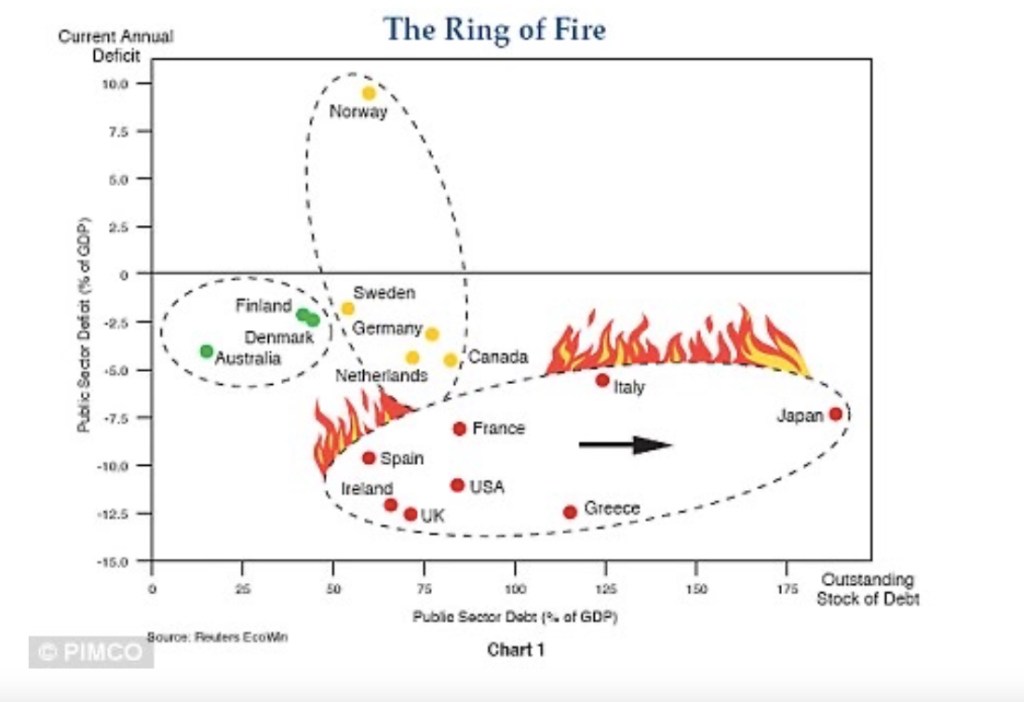
Just as this chart showed at the time of the Global Financial Crisis, the countries in “The Ring of Fire” have experienced exceptional turbulence and turmoil in the years after the crisis. For example, the UK has had austerity budgets, a no-growth economy, Brexit and the ‘shock therapy’ of the COVID-19 pandemic. The US, on the other hand, has clashed with its allies, seen a new cold war emerge with rivals China and Russia, and experienced significant domestic unrest, culminating in the storming of its seat of Government, the Capitol.
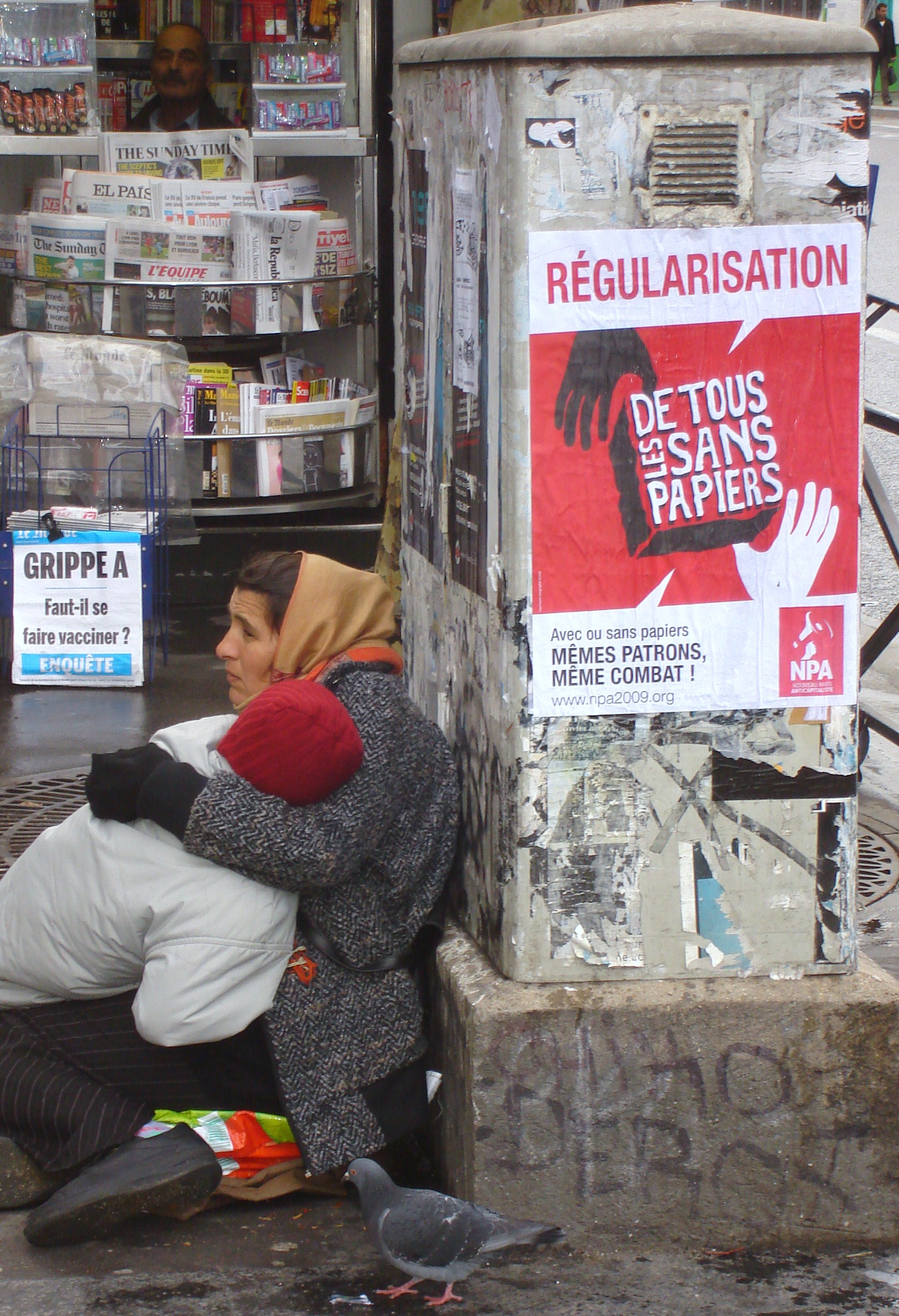
Just as now (2021) 2009 was a year in which the questions revolved around receiving a vaccine (for H1N1) and how best to affirm a person’s identity and citizenship. Photo: David South
Iceland saw its banking system collapse during the Global Financial Crisis, sparking demonstrations (October 2008-2011) and the “Pots and Pans Revolution”. Photo: David South

A conference in Geneva struck a pessimistic note on the current global financial crisis and any hope for a new social and economic order. The conference asked “whether current policy reforms are conducive to a transformative social change or if they only reproduce the status quo.”

A March 2009 IMF report on the downturn’s affect on the Global South and developing countries found that “fluctuating commodity prices, high fuel costs, the rise in food prices in addition to a decrease in remittances, foreign direct investment and aid flow could mean an increase in the financing needs of low-income countries by at least US $25 billion.”

The presenters at the conference painted a picture of a robust neo-liberal economic order that is already in the process of dusting itself off from the crisis and restoring its dominance.

Bob Jessop, from the University of Lancaster, captured the paralysis of opposition to the neo-liberal order by saying “They are busy doing it and we are busy talking about it.”

To paraphrase philosopher Friedrich Nietzsche, that which does not kill us makes us stronger. Neo-liberalism may in fact be strengthened by the crisis, according to presenters. It will evolve and take on new forms, they argued.

The world’s business elites have an enormous capacity to re-shape the rules of the economic game back in their favour. While the massive state support to the banking sector had led some to believe governments were restoring faith in public investments, in fact state support is seen as “timely, targeted and temporary.”

When asked about the future as the crisis passes and countries come out of recession, the presenters believed this was a short-term recovery, and that far worse economic crises would be coming in the next five to 10 years.

Andrew Martin Fischer, from the Institute for Social Studies at Erasmus University, believes the harmful effects of the bailouts will be pushed to the periphery over the next five to 10 years, harming the poor. He also believes a major financial crisis is brewing in China. He called ‘China the fault line in the future.’

The powerful, he pointed out, displaced the costs of their mistakes onto other people. Proponents of different approaches had missed the moment because they were not able to present off-the-shelf strategies that could be deployed in a crisis on short notice. Thus, they had left the field open to neo-liberal solutions.

The global crisis in the short-term has not been worse because of unprecedented global cooperation. Keynsian measures have been used to solve the crisis, but are also used to preserve Wall Street. Also, the enormous contribution of growth in China and India means there are other sources of wealth in the world than just the North.

Getting back to normal should not be what we are doing, the panellists concluded at the conference’s final session. Governments should look at new opportunities for social policy. The panellists were disturbed that the International Monetary Fund (IMF) is seen as part of the solution. This means deep cuts in public expenditure are coming. There will not be a trickle down of wealth and the imbalances from before the crisis will remain. In short, the system was not working before the crisis.

Some policy suggestions put forward included: rural income guarantees, managed migration to support development goals, making a gender perspective critical to development. Governments should take a preventive approach to tackle future crises. Unfortunately, it now seems no money is left to address these problems. Yet business as usual is not an option with so many inequalities and imbalances.

“This conference on the social and political consequences of crisis is a critical subject for debate at this juncture,” said UNRISD’s director, Dr. Sarah Cook. “We are now at a point where many countries, particularly in the North, are emerging out of the severe shock of immediate crisis. Discussions of alternative policies and institutional arrangements at national and global levels may become less urgent; the status quo is reasserting itself and the space for ideas and policies that offer the possibilities of more stable, sustainable and equitable development will quickly shrink.”

Session 1: Impacts, Coping Strategies and Livelihoods

Session 2: Social Policy: Country and Regional Perspectives

Session 3: Social Policy: Global Perspective

Session 4: Political Economy Dimensions of Crisis

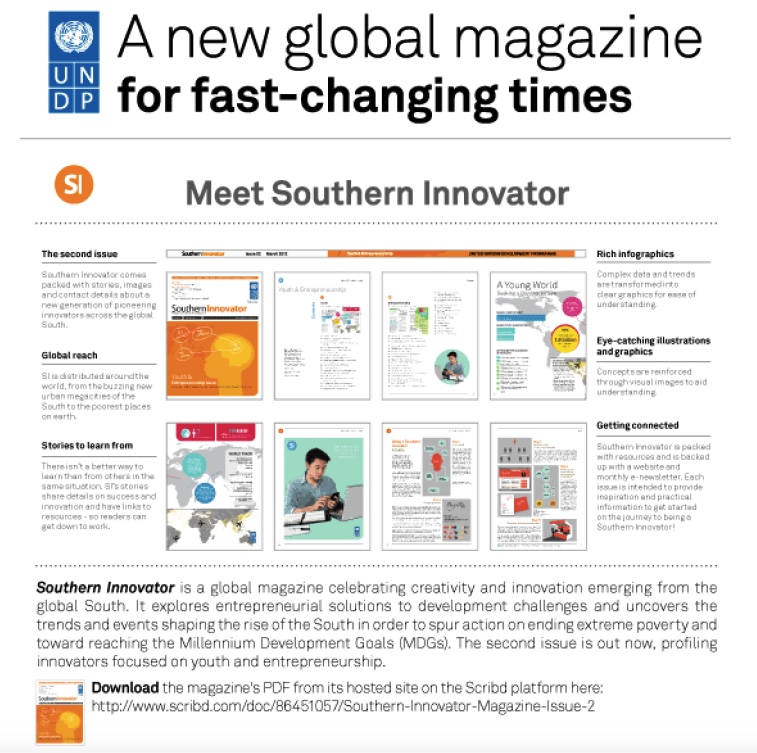
Southern Innovator Magazine was developed from 2008-2010 in London, New York and Iceland by the United Nations in response to the Global Financial Crisis and was launched in 2011.

Business Insider has reproduced a fascinating presentation about the crisis put together by the French bank, Societe Generale (SocGen). The presentation can be found here: http://www.businessinsider.com/socgen-prepare-yourself-for-the-worst-case-scenario-2009-11#first-it-starts-with-sky-high-public-debt-1

From 1997 to 1999, I worked as the head of communications for the United Nations mission in Mongolia. The country was already experiencing a severe economic crisis as a result of its transition to free markets and democracy from the Soviet economic system. The scale of the economic collapse following the fall of communism was described at the time as the worst peacetime, post-WWII economic collapse. On top of this challenge, the Asian economic crisis erupted.

You can read the Mongolia Update 1998 book I wrote here: http://www.scribd.com/doc/20864541/Mongolia-Update-1998-Book. It shows how chaotic events are in the middle of a major crisis. Some of the key lessons we learned during this time include: 1) transparency: trust was critical and all our work was done under the full glare of public and media scrutiny, 2) action: with our existing budgets we made sure to keep doing and spending to hire people, 3) strategy: to encourage the growth of businesses and innovation, in particular the take-up of new information technologies.

This work is licensed under a Creative Commons Attribution 4.0 International License.

ORCID iD: https://orcid.org/0000-0001-5311-1052.

© David South Consulting 2021