Categories
Archive Development Challenges, South-South Solutions Newsletters Southern Innovator magazine

Recycling Waste to Boost Incomes and Opportunities

By David SouthDevelopment Challenges, South-South Solutions

SOUTH-SOUTH CASE STUDY

We all know that green is good, but often the best way to encourage recycling and other environment-improving activities is to put in place economic incentives. It is one thing to admonish people and tell them something is the right thing to do; it is another to make keeping a clean environment pay.

Many initiatives across the global South have proven it is possible to develop an economy of recycling and garbage collection in poor neighbourhoods. These economies take many forms and models.

At the most basic end of the scale are the desperate, survival-driven examples of recycling. In countries likeIndia, recycling can be purely a question of survival – people are so poor they can’t allow anything that might have income potential go to waste. Other countries are very familiar with large numbers of desperately poor people picking through garbage dumps and waste to eke out a living. Or, for example in Brazil, as in many other countries, it’s common to see poor and homeless people picking through garbage on the streets.

These are examples of degrading ‘green’ economies. But there other ways to encourage waste recycling that offer real income benefits and life improvements.

Brazil, a world leader in waste recycling and green technologies, has pioneered the recycling of plastic bottles, aluminum, steel cans, solid plastic waste and glass. And now energy companies inBrazilhave created credit schemes that encourage waste recycling while giving people real economic benefits in return for doing the right thing for the environment. The first scheme went so well, it quickly inspired others to replicate its programme in other poor communities.

Coelce (http://www.coelce.com.br/default.aspx) is a power company in the Ceará State in northeastern Brazil. The company is primarily engaged in the distribution of electrical power for industrial, rural, commercial and residential consumption. In 2007 it set up Ecoelce (http://www.coelce.com.br/coelcesociedade/programas-e-projetos/ecoelce.aspx), a programme allowing people to recycle waste in return for credits towards their electricity bills. The success of the programme led to an award from the United Nations.

The programme works like this: people bring the waste to a central collection place, a blue and red building with clear and bright branding to make it easy to find. In turn they receive credits on a blue electronic card – looking like a credit card – carrying a picture of a child and arrows in the familiar international recycling circle.

These credits are then used to calculate the amount of discount they should receive on their energy bill. The scheme is flexible, and people can also use the credits for food or to pay rent. In 2008, after its first yearthe scheme had expanded to 59 communities collecting 4,522 tons of recyclable waste and earning 622,000 reais (US $349,438) in credits for 102,000 people. People were receiving an average of 5 to 6 reais (US $2.80 to US $3.37) every month towards their energy bills.  A clear success leading to an expansion of the scheme.

Now in Ceará’s state capital, Fortaleza (http://en.wikipedia.org/wiki/Fortaleza), – population 3.5 million – there are more than 300,000 people recycling a wide range of materials, from paper, glass, plastics, and metals to cooking oil to get electricity discounts, according to the Financial Times.

In Brazil’s second largest city, Rio de Janeiro, a favela clean-up programme is being run by electricity firm Light S.A. (http://www.light.com.br/web/tehome.asp), which took its inspiration from the success of the Ecoelce experience.

The number of favelas, or informal slum neighbourhoods (http://en.wikipedia.org/wiki/Favela), in Rio is debated: according to the federal government, there are 1,020 favelas, while Rio’s housing department lists 582. The government has been trying to tackle the law and order problems in these neighbourhoods – many are plagued with violent drug gangs – and endemic poverty. It calls this programme “pacification” (http://brazilportal.wordpress.com/2011/10/20/rios-top-cop-talks-public-safety-policy-favela-pacification-program/) as it tries to bring law and order and boost economic development and social gains.

Recycling programmes are helping to bring improvements to life in the favelas by simultaneously cleaning up neighbourhoods and boosting household wealth.

Light S.A. is a Brazilian energy company working in the generation, transmission, distribution and marketing of electricity. It distributes to 31 municipalities inRio de Janeiroand has around 3.8 million customers.

According to the Financial Times, the Light project pays residents 0.10 reais per kilogram of paper and plastic (US .5 cents). It also pays 2.50 reais per kilogram of aluminum and lead (US $ 1.40).

Importantly for community relations, the scheme is open not just to favela residents but to nearby middle class neighbourhoods.

“The idea is to unite the community and the people living around it,” Fernanda Mayrink, Light’s community outreach officer, told the Financial Times.

The project has helped improve theSanta Martafavela ofRio, where police have been working since 2008 to take back the neighbourhood from the control of violent drug gangs. Community police officers can now do their job of taking care of safety for the 6,000 residents.

“You don’t see drugs and guns any more but you do see lots of rubbish,” Mayrink said.

“This project encourages recycling within the company’s concession area and at the same time contributes to sustainable development and the consumer’s pocket. Light wins, the customer wins (and) the environment wins.”

In Vietnam, the NGO Anh Duong (http://www.anhduonghg.org/en/) or “Sun Ray” shows schoolchildren how to collect plastic waste to sell for recycling. In return, their schools receive improvements and the students can win scholarships. It is estimated ruralVietnam is littered with 100 million tons of waste every year. Much of it is not picked up.

The project is operating in 17 communities in Long My and Phung Hiep districts in southernVietnam, mobilising children from primary and secondary schools. School children wearing their uniforms fan out in groups and collect the plastic waste. The money made from selling the plastic waste is being used to improve school facilities and fund scholarships for poor children.

In 2010, the project reported that 10,484 kilograms of plastic waste was collected by 26,015 pupils. This provided for 16 scholarships for school children.

The Anh Duong NGO was set up by a group of social workers with the goal of community development. They target the poorest, bringing together the entire community and seek out “low cost and sustainable actions”. The NGO has a mix of specialties, from agriculture to aquaculture, health, microfinance and social work.

“Close, but no cigar” some might say, but we were genuinely flattered to be shortlisted in 2014 for inclusion in the book Visual Storytelling: Infographic Design in News published by Images Publishing in Shanghai, China. It is a lovely book to look at and the quality of infographics chosen for the book is high so it must have been a tough call. It was further proof Southern Innovator was getting known around the world and gaining respect for its content and design. The excellent work done by our graphic designer and illustrator Solveig Rolfsdottir speaks for itself.
Graphic Designer and Illustrator: Sólveig Rolfsdóttir.

Published: November 2011

Resources

1) A travelling exhibit, In The Bag: The Art and Politics of the Reusable Bag Movement, showcases bags and art produced by communities throughout the world and by individual artists. Website:http://www.unrisd.org/80256B3C005BE6B5/%28httpNews%29/D1AB353A91EC2466C125793600519C7B?OpenDocument

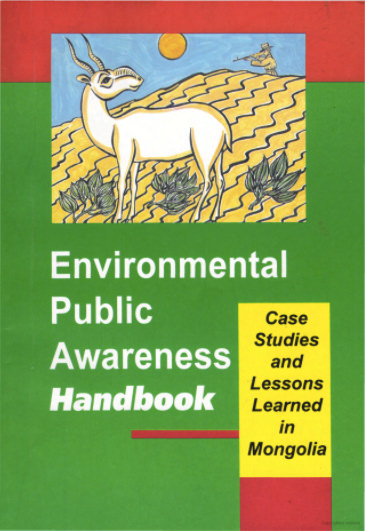
2) EPAP guide: Based on extensive research throughout Mongolia by UNDP, this guide includes the application of the Blue Bag project to Mongolia’s sprawling slum districts surrounding the capital Ulaanbaatar. Website:http://tinyurl.com/yfkn2dp
Development Challenges, South-South Solutions was launched as an e-newsletter in 2006 by UNDP’s South-South Cooperation Unit (now the United Nations Office for South-South Cooperation) based in New York, USA. It led on profiling the rise of the global South as an economic powerhouse and was one of the first regular publications to champion the global South’s innovators, entrepreneurs, and pioneers. It tracked the key trends that are now so profoundly reshaping how development is seen and done. This includes the rapid take-up of mobile phones and information technology in the global South (as profiled in the first issue of magazine Southern Innovator), the move to becoming a majority urban world, a growing global innovator culture, and the plethora of solutions being developed in the global South to tackle its problems and improve living conditions and boost human development. The success of the e-newsletter led to the launch of the magazine Southern Innovator.  

Follow @SouthSouth1

Google Books: https://books.google.co.uk/books?id=waeXBgAAQBAJ&dq=Development+Challenges+February+2008&source=gbs_navlinks_s

Slideshare: http://www.slideshare.net/DavidSouth1/development-challengessouthsouthsolutionsfebruary2008issue

Southern Innovator Issue 1: https://books.google.co.uk/books?id=Q1O54YSE2BgC&dq=southern+innovator&source=gbs_navlinks_s

Southern Innovator Issue 2: https://books.google.co.uk/books?id=Ty0N969dcssC&dq=southern+innovator&source=gbs_navlinks_s

Southern Innovator Issue 3: https://books.google.co.uk/books?id=AQNt4YmhZagC&dq=southern+innovator&source=gbs_navlinks_s

Southern Innovator Issue 4: https://books.google.co.uk/books?id=9T_n2tA7l4EC&dq=southern+innovator&source=gbs_navlinks_s

Southern Innovator Issue 5: https://books.google.co.uk/books?id=6ILdAgAAQBAJ&dq=southern+innovator&source=gbs_navlinks_s

Creative Commons License

This work is licensed under a
Creative Commons Attribution-Noncommercial-No Derivative Works 3.0 License.

ORCID iD: https://orcid.org/0000-0001-5311-1052.

© David South Consulting 2023

Categories
Archive

Egyptian Youth Turns Plastic Waste into Fuel

By David SouthDevelopment Challenges, South-South Solutions

SOUTH-SOUTH CASE STUDY

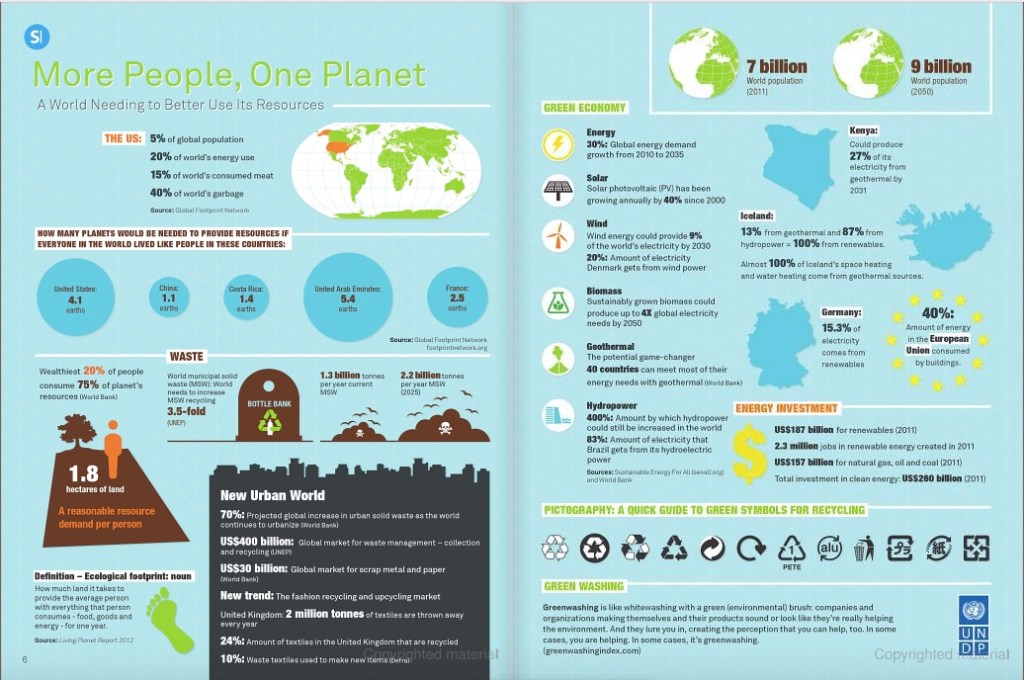
The challenge of finding alternate fuel sources is capturing the imagination of innovators across the global South. As the world’s population increases – it recently reached 7 billion (UN) – and the number of people seeking a better life grows in turn, the energy demands on the planet are pushing up competition for existing conventional fuel sources.

The modern lifestyle that many aspire to requires energy, whether it’s using electronic products which consume large quantities of electricity, driving personal vehicles or living in homes that are artificially heated and cooled.

This energy hunger has opened up a whole new market demand that needs to be met. The scale of this market is enormous, but the solutions are ultimately limited only by people’s imaginations. An award-winning Egyptian teenage scientist is capturing attention for the imaginative solution of turning waste plastic into biofuel, sparking interest in the creation of a whole new source of wealth for her country.

Sixteen-year-old Azza Abdel Hamid Faiad (http://tinyurl.com/dysemjg) has found a new way to take waste plastic and break it down into fuel. She has discovered aluminosilicate minerals (http://en.wikipedia.org/wiki/Aluminosilicate) – which contain aluminium, silicon and oxygen and are found in clays – can break down the polymers that make up plastic (http://en.wikipedia.org/wiki/Polymer) to produce the gases methane, propane and ethane, all of which can be turned into ethanol (http://en.wikipedia.org/wiki/Ethanol), which is useful as a biofuel.

According to Inhabitat (inhabitat.com), a website dedicated to “green design, innovation, and the future of clean technology,” her solution could turn the country’s annual consumption of 1 million tonnes of plastic into a year’s supply of biofuel worth US $78 million.

Clever innovators are sitting on a goldmine if they can come up with renewable energy solutions. The U.S. Army alone is looking to spend US $7 billion on renewable energy sources and is accepting bids from the private sector to meet its needs (http://www.forbes.com/sites/toddwoody/2012/08/08/u-s-army-opens-bids-to-buy-7-billionin-renewable-energy/). The army is looking to sign contracts stretching up to 30 years for buying electricity generated by solar, wind, geothermal and biomass projects.

The options are numerous for renewable energy – from solar power to wind power to algae as a source of biofuels (http://en.wikipedia.org/wiki/Biofuel). The challenge is to find a fuel source that is plentiful, renewable, and crucially, doesn’t harm other needs.

Using biofuel as a replacement for conventional petroleum-based fuels like gasoline and diesel appears to be an attractive solution, but it can lead to other problems. Some people are using used cooking oils to convert into biodiesels, but sometimes there is not enough used cooking oil to meet demand. In short, a constant supply source is required to meet ever-increasing energy demand.

A famous example of where the use of renewable plant-based fuel sources can go wrong is the case of corn. The widespread use of corn as a source for biofuels – rather than for animal feed or human food – has led to accusations this is contributing to the global food crisis. The current drought in the United States is damaging corn crops and only making this problem more acute. The U.S. is the world’s largest producer of corn (US Department of Agriculture) and much of it is used as livestock feed around the world.

Faiad’s solution is appealing because the fuel does not come from biomass – derived from plant matter – but turns waste plastic into the raw material for biofuel.

Plastic waste is a common byproduct of modern life. Plastic is used extensively in packaging, bottles, bags and electronic products. It fills up landfill sites and is a blight on the landscape in many countries. It is also a product made from petrochemicals (http://en.wikipedia.org/wiki/Plastic), the very source of conventional fuel used by most of the world’s vehicles.

Breaking down waste plastic from bottles, packaging and other products into what is called ‘biofuel feedstock’ – the substance necessary to start the creation of biofuel – requires a means to turn the plastic into fuel.

According to Green Prophet (greenprophet.com), Faiad believes her technological breakthrough “can provide an economically efficient method for production of hydrocarbon fuel namely: cracked naphtha (http://en.wikipedia.org/wiki/Petroleum_naphtha) of about 40,000 tons per year and hydrocarbon gases of about 138,000 tons per year equivalent to US $78 million.”

This could be a big economic boost to Egypt’s economy, simultaneously reducing dependence on petroleum-based fuels and creating a new source of income. Egypt’s economy has been hit hard since the start of the Arab Spring (http://en.wikipedia.org/wiki/Arab_Spring). The number of tourists fell 33 per cent in 2011 and revenue dropped by US $3.7 billion from 2010 (Egyptian Tourism Minister). In 2009 about 12.5 million tourists visited Egypt, bringing revenue of US $10.8 billion. The tourism sector is one of the country’s top sources of foreign revenue, accounting for more than 11 per cent of GDP, and offers jobs in a country beset by high unemployment – for Egypt, tourism makes up 11 per cent of its GDP (gross domestic product) (Reuters).

Faiad’s innovation has not gone unnoticed. She received the European Fusion Development Agreement award (http://www.efda.org/) at the 2011 23rd European Union Contest for Young Scientists (http://ec.europa.eu/research/youngscientists/index_en.cfm). She is also receiving interest from the Egyptian Petroleum Research Institute (http://www.epri.sci.eg/), according to Inhabitat.

Ambitious Faiad is also seeking to take ownership of her innovation by getting a patent from the Egyptian Patent Office (http://www.egypo.gov.eg/english/default.htm).

Published: August 2012

Resources

1) Biofuel: A website with a good overview of biofuel options and directions on how to make biofuel. Website: http://biofuel.org.uk/

2) Biogasmax: Biogas Highway – waste to energy concept, 18-19 September in Gothenburg, Sweden. Participate in an intensive two-day programme with complete focus on biogas at the Water and Wastewater Fair. Meet with exhibiting Swedish biogas companies and companies within the water and wastewater sectors. Participate at the “International biogas business opportunities” seminar and learn more about biogas concepts and strategies. Website: http://www.biogasmax.eu/

3) New Techniques Create Butanol, A Superior Biofuel: A story from Science Daily about new techniques to produce a biofuel superior to ethanol. Website: http://www.sciencedaily.com/releases/2008/01/080123153142.htm

4) Biofuels Digest: The Digest covers producer news, research, policy, policymakers, conferences, fleets and financial news. Website: http://www.biofuelsdigest.com/bdigest/

Follow @SouthSouth1

Slideshare: http://www.slideshare.net/DavidSouth1/development-challengessouthsouthsolutionsnovember2010issue

Southern Innovator Issue 1: https://books.google.co.uk/books?id=Q1O54YSE2BgC&dq=southern+innovator&source=gbs_navlinks_s

Southern Innovator Issue 2: https://books.google.co.uk/books?id=Ty0N969dcssC&dq=southern+innovator&source=gbs_navlinks_s

Southern Innovator Issue 3: https://books.google.co.uk/books?id=AQNt4YmhZagC&dq=southern+innovator&source=gbs_navlinks_s

Southern Innovator Issue 4: https://books.google.co.uk/books?id=9T_n2tA7l4EC&dq=southern+innovator&source=gbs_navlinks_s

Southern Innovator Issue 5: https://books.google.co.uk/books?id=6ILdAgAAQBAJ&dq=southern+innovator&source=gbs_navlinks_s

Creative Commons License

This work is licensed under a
Creative Commons Attribution-Noncommercial-No Derivative Works 3.0 License.

ORCID iD: https://orcid.org/0000-0001-5311-1052.

© David South Consulting 2023

Categories
Archive Blogroll Southern Innovator magazine United Nations Development Programme United Nations Office for South-South Cooperation

Southern Innovator Issue 5

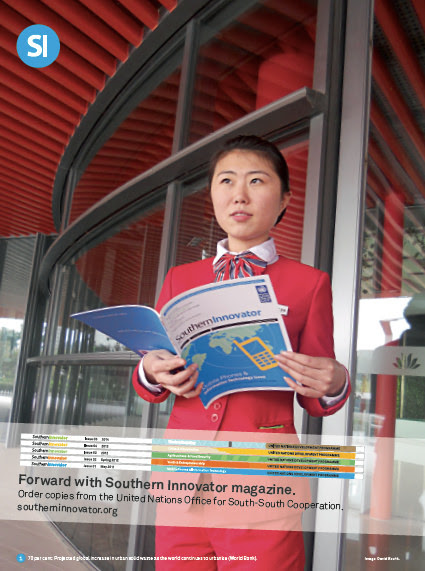
Launched in May 2011, the new global magazine Southern Innovator (ISSN 2222-9280) is about the people across the global South shaping our new world, eradicating poverty and working towards the achievement of the Millennium Development Goals (MDGs). 

Team | Southern Innovator Phase 1 Development (2010 – 2015)

They are the innovators.

Follow the magazine on Twitter @SouthSouth1. 

Southern Innovator Issue 1

Southern Innovator Issue 2

Southern Innovator Issue 3

Southern Innovator Issue 4

Southern Innovator Issue 5

If you would like hard copies of the magazine for distribution, then please contact the United Nations Office for South-South Cooperation (UNOSSC)(https://www.unsouthsouth.org/2014/12/25/southern-innovator-magazine/).

Citations

Recasting ‘truisms’ of low carbon technology cooperation through innovation systems: insights from the developing world by Alexandra Mallet, Innovation and Development, Volume 5, 2015 – Issue 2: Low-Carbon Innovation and Development

https://davidsouthconsulting.org/2021/07/30/disrupted-whatever-happened-to-southern-innovator-issue-6/

https://davidsouthconsulting.org/2021/07/30/issue-6-will-launch-in-autumn-2014-get-on-board-28-july-2014/

https://davidsouthconsulting.org/2021/12/20/press-release-1-southern-innovator/

https://davidsouthconsulting.org/2021/12/20/press-release-2-southern-innovator/

https://davidsouthconsulting.org/2021/12/20/press-release-3-southern-innovator/

https://davidsouthconsulting.org/2021/03/05/southern-innovator-issue-1/

https://davidsouthconsulting.org/2021/03/05/southern-innovator-issue-2/

https://davidsouthconsulting.org/2021/03/05/southern-innovator-issue-3/

https://davidsouthconsulting.org/2021/03/05/southern-innovator-issue-4/

https://davidsouthconsulting.org/southern-innovator-scale-up-fundraiser/

ORCID iD: https://orcid.org/0000-0001-5311-1052.

© David South Consulting 2023