Categories
Archive Blogroll Development Challenges, South-South Solutions Newsletters

Popular Chinese Social Media Chase New Markets

By David SouthDevelopment Challenges, South-South Solutions

SOUTH-SOUTH CASE STUDY

China has a vast and growing market for the Internet and mobile devices. Over the past decade that market has been largely confined to China –  most businesses have had enough domestic demand and opportunities inside the country to keep them busy.

But now companies in China’s dynamic Internet and mobile sector are seeking out new markets outside the country. Both online shopping service Alibaba (alibaba.com) and Weibo (weibo.com), the Chinese version of Twitter (twitter.com), are seeking to list on the New York Stock Exchange. The excitement this news has generated shows how many people want to get a piece of the large Chinese market for technology, social networks and online shopping. It is also sending a chill through America’s Silicon Valley – home to the country’s innovative high technology sector – that they are missing out on China’s fast-growing marketplace. Many American services are banned from operating in China. Even more worrying for Silicon Valley, these home-grown Chinese companies, with the market sewn up at home, are now set to compete globally for customers using their increasingly deep pockets.

One example is Tencent (http://www.tencent.com/en-us/index.shtml), owner of popular Chinese social messaging application (app) Weixin (weixin.qq.com), known as WeChat (wechat.com) outside China. Used on mobile phones and smartphones, Weixin has gained 300 million users in just three years, becoming the dominant social messaging service in the world’s largest smartphone market. Its has been so successful that many rivals are trying to chip away at its customer base.

Weixin, pronounced way-shin, allows smartphone users to send messages and share news, photos, videos and web links with friends. One of its selling points is its claim to not store messages on its servers.

Building on its success in social networking in China, it is looking to expand in other markets, including Southeast Asia, Europe and Latin America. It also wants to grow its offerings in online payment and e-commerce.

One factor in Weixin’s success is the ability to send messages by recording a voice message rather than just typing in characters: very useful for non-Latin script users, and especially for Chinese-language users, who use thousands of characters in everyday communication.

One ambitious forecast claims Weixin could reach 400 million users and make US $500 million revenue within a year.

Cosmetics marketer Jenny Zhao, who uses an iPhone 5, told The New York Times: “I’m probably on Weixin six hours a day. A lot of what I do revolves around it.”

“I use Weixin every day,” said Zhang Shoufeng, a food and drinks seller. “My friends are on it and my boss is on it. We are talking about where to eat, where to hang out and where to meet for company conferences. This is how we communicate.”

Analysts believe Weixin has benefitted from not having to compete with banned-in-China American company Facebook (facebook.com).

“Even if Facebook had permission, it’s probably too late,” said Wang Xiaofeng, an analyst at Forrester Research. “Weixin has all the functionality of Facebook and Twitter, and Chinese have already gotten used to it.”

Tencent is an example of a wider trend: As Chinese companies and offerings have become stronger, wealthier and more innovative, they increasingly look to build their customer base outside China.

Founded in November, 1998, Tencent, Inc. has grown into China’s largest and most used Internet service portal. Its most popular services include QQ (QQ Instant Messenger), WeChat, QQ.com, QQ Games, Qzone, 3g.QQ.com, SoSo, PaiPai and Tenpay, as well as Weixin.

The company claims to put innovation at the heart of its business, with more than half of its employees devoted to research and development. The Tencent Research Institute, established in 2007 with RMB 100 million (US $16 million), calls itself “China’s first Internet research institute, with campuses in Beijing, Shanghai, and Shenzhen.” It has patents for technologies it has developed for instant messaging, e-commerce, online payment services, search, information security, and gaming.

Tencent was driven to innovate by a fear it could quickly become irrelevant in the information technology space. Weixin is also pioneering ways to book taxis, hotels and airline flights through the service and even ways to control home appliances.

“Chinese Internet companies are no longer behind,” said William Bao Bean, a managing director at the venture capital firm SingTel Innov8 (http://innov8.singtel.com/). “Now in some areas, they’re leading the way.”

Published: April 2014

Resources

1) Weibo: Sina Weibo is a Chinese microblogging (weibo) website. Akin to a hybrid of Twitter and Facebook, it is one of the most popular sites in China, in use by well over 30 per cent of Internet users, with a market penetration similar to what Twitter has established in the USA. Website: weibo.com

2) Laiwang: A variation on the WeChat service, its biggest competitor. Website: laiwang.com

3) WhatsApp: WhatsApp Messenger is a cross-platform mobile messaging app which allows you to exchange messages without having to pay for SMS. Website: whatsapp.com

4) Southern Innovator Issue 1: Mobile Phones and Information Technology: Pioneering and innovative ways to deploy mobile phones and information technology to tackle poverty. Website: http://www.scribd.com/doc/57980406/Southern-Innovator-Magazine-Issue-1 and here: http://tinyurl.com/q6bfnpz
https://davidsouthconsulting.org/2022/10/20/china-consumer-market-asian-perspective-helps/

https://davidsouthconsulting.org/2020/12/10/china-sets-sights-on-dominating-global-smartphone-market/

https://davidsouthconsulting.org/2021/03/20/computer-gold-farming-turning-virtual-reality-into-real-profits/

https://davidsouthconsulting.org/2021/01/26/designed-in-china-to-rival-made-in-china/

https://davidsouthconsulting.org/2022/10/26/tackling-chinas-air-pollution-crisis-an-innovative-solution/

https://davidsouthconsulting.org/2020/04/17/virtual-supermarket-shopping-takes-off-in-china/

Citation

Qianyu, Ji (2014) “Exploring the Concept of QR Code and the Benefits of Using QR Code for Companies,” Lapland University of Applied Sciences, School of Business and Culture Degree Programme in Business Information Technology, 2014.

Development Challenges, South-South Solutions was launched as an e-newsletter in 2006 by UNDP’s South-South Cooperation Unit (now the United Nations Office for South-South Cooperation) based in New York, USA. It led on profiling the rise of the global South as an economic powerhouse and was one of the first regular publications to champion the global South’s innovators, entrepreneurs, and pioneers. It tracked the key trends that are now so profoundly reshaping how development is seen and done. This includes the rapid take-up of mobile phones and information technology in the global South (as profiled in the first issue of magazine Southern Innovator), the move to becoming a majority urban world, a growing global innovator culture, and the plethora of solutions being developed in the global South to tackle its problems and improve living conditions and boost human development. The success of the e-newsletter led to the launch of the magazine Southern Innovator.  

Creative Commons License

This work is licensed under a
Creative Commons Attribution-Noncommercial-No Derivative Works 3.0 License.

ORCID iD: https://orcid.org/0000-0001-5311-1052.

© David South Consulting 2025

Categories
Archive Blogroll data Development Challenges, South-South Solutions Newsletters digital ID Southern Innovator magazine

Digital Mapping to put Slums on the Map

By David SouthDevelopment Challenges, South-South Solutions

SOUTH-SOUTH CASE STUDY

Mobile phones are more and more part of daily life in the South’s slums – even for the poorest people. One result is that it has now become possible to undertake digital mapping initiatives to truly find out who is where and what is actually going on.

About one-third of the world’s urban dwellers live in slums, and the United Nations estimates that the number of people living in such conditions will double by 2030 as a result of rapid urbanization in developing countries. How to improve their living conditions and raise their standard of living is the big challenge of the 21st century.

With just over five years until the 2015 deadline to meet the Millennium Development Goals (http://www.undp.org/mdg/), and the current economic downturn reversing some gains, any tool that can make development decisions more precise has to be a benefit.

People are now turning to the growing penetration of digital technologies into slums and poor areas to find solutions. With mobile phones available across much of the global South, and plans underway to expand access to broadband internet even in poorly served Africa, it is becoming possible to develop a digital picture of a slum area and map its needs and population.

Put to the right use, this powerful development tool can fast-track the delivery of aid and also better connect people to markets and government services.

In November, an NGO called Map Kibera (www.mapkibera.org) began work on an ambitious project to digitally map Africa’s largest slum, Kibera in Nairobi, Kenya .

The partners behind Map Kibera are Humanitarian OpenStreetMap, JumpStart International, WhereCampAfrica, the Social Development Network, Pamoja Trust, Hands on Kenya and others.

Estimates place the number of residents in Kibera at one million, but nobody really knows how many live there (UN-HABITAT). The slum is typical of such deprived areas, lacking in health and water resources and plagued by chaotic traffic and housing. Few fully grasp where everything is in the sprawl.

While data does exist on the slum, it is not shared or collated into one source. The Map Kibera project uses an open-source software programme, OpenStreetMap (http://www.openstreetmap.org/), to allow users to edit and add information as it is gathered. This information is then free to use by anybody wanting to grasp what is actually happening in Kibera: residents, NGOs, private companies and government officials.

This will literally put Kibera on Kenya’s map.

The mapping team started with 12 young people recruited in Kibera to start the work in November of this year. They will be trained and also receive support from the growing Nairobi technology community.

“The project will provide open-source data that will help illustrate the living conditions in Kibera,” said Map Kibera’s Mikel Maron. “Without basic knowledge of the geography of Kibera it is impossible to have an informed discussion on how to improve the lives of residents of Kibera.”

Workshops will communicate with local residents and show them the findings available from the map. Paper maps will be distributed to residents and then updated as new information comes in. It is critical local people are kept informed to build trust and avoid conflict. As can be seen from the Google Street Views (http://www.google.co.uk/help/maps/streetview/) controversy, nobody likes to be mapped without their permission or consent.

Like Kenya, Brazil has a long history of sprawling slums sprouting around its cities. Called favelas, they are complex places, with both rudimentary dwellings and elaborate mansions. Walking into a favela can be a journey through the dreams and aspirations of generations of people, often reflected in their dwellings. Favelas have many services, including hospitals, and there are restaurants and coffee shops. In short, while they are not in the official development plans, the favelas are vibrant economic entities and home to hundreds of thousands of people.

But since they are chaotic and undocumented by official maps, the economic and social development of the favelas is hindered as even basic services like mail delivery are difficult to provide.

An NGO called Rede Jovem (http://www.redejovem.org.br/) is deploying youths armed with GPS (global positioning system)-equipped (http://en.wikipedia.org/wiki/Global_Positioning_System) mobile phones to map the favelas of Rio de Janerio. To start with, they are mapping five favelas: Complexo do Alemão, Cidade de Deus, Morro do Pavão-Pavãozinho, Morro Santa Marta and Complexo da Maré.

“The main goal was to mark public interest spots on a map and show places like schools and institutions and hospitals and restaurants,” Natalia Santos, the executive coordinator for Rede Jovem, told MobileActive (www.mobileactive.org) . “We wanted to spread the news about what slums do have, so all the people can get to know that the slum is not just a place for violence and marginality and robbery.”

The mapping process works like this: the mappers physically travel around the favela and upload information on each, individual landmark (restaurants, roads etc.) as they go. They use Nokia N95s mobile phones that are connected to Google Maps (www.maps.google.com).

According to Santos, reporters enter the information on the map displayed on the phone, and they can video or photograph to add more detail. They are using Wikimapa (www.wikimapa.org.br), and Twitter (www.twitter.com) to log the information.

As Rede Jovem recruited young mappers, they discovered an interesting fact: the male reporters (aged between 17 and 25) were frightened to enter a favela with a mobile phone for fear of either being mugged or being stopped by the police. Because of this fact, all the mappers are young women.

They are ambitious for the future despite their funds running out in December. “We want everyone who has a cell phone with GPS to be a wikireporter,” said Santos .

How important it is to the favela residents to be recognised like this can’t be overstated. “I think they are very happy because they’re seeing that they exist,” said Santos. “And the mailman says that now he can deliver the mail.”

Published: December 2009

Resources

  • Mobile Active.org: MobileActive.org is a community of people and organizations using mobile phones for social impact. They are committed to increasing the effectiveness of NGOs around the world who recognize that the over 4 billion mobile phones provide unprecedented opportunities for organizing, communications, and service and information delivery. Website: http://www.mobileactive.org
  • Google Android: Get inventing! This software enables anyone to start making applications for mobile phones. And it offers a platform for developers to then sell the applications to others. Website: http://www.android.com/
  • Ushahidi: is a website that was developed to map reports of violence in Kenya after the post-election fallout at the beginning of 2008. The new Ushahidi Engine is being created to use the lessons learned from Kenya to create a platform that allows anyone around the world to set up their own way to gather reports by mobile phone, email and the web – and map them. It is being built so that it can grow with the changing environment of the web, and to work with other websites and online tools. Website: http://blog.ushahidi.com/
  • Textually.org: is the entry point of three weblogs devoted to cell phones and mobile content, focusing on text messaging and cell phone usage around the world, tracking the latest news and social impact of these new technologies. Website: http://www.textually.org/
  • Betavine Social Exchange has launched. It’s a matching site for NGOs looking for mobile solutions, and developers who can help build them, all brought to you by Vodafone. Website: http://www.betavine.net

Citations

Resilient Urban Regeneration in Informal Settlements in the Tropics: Upgrading Strategies in Asia and Latin America, Publisher: Springer Singapore (2020)

The story first appeared in the UN e-newsletter Development Challenges, South-South Solutions in 2009. It was simultaneously published on the Vancouver, Canada-based crowd-powered news website, NowPublic. It was then published in the UN magazine Southern Innovator.

Streets as Tools for Urban Transformation in Slums: A Street-led Approach to Citywide Slum Upgrading, Publisher: United Nations Human Settlements Programme (UN-Habitat) (2012)

Other Stories on Mapping

https://davidsouthconsulting.org/2021/08/28/african-entrepreneur-wants-to-bring-order-to-urban-chaos/

https://davidsouthconsulting.org/2020/12/04/big-data-can-transform-the-global-souths-growing-cities/

https://davidsouthconsulting.org/2021/03/04/indian-id-project-is-foundation-for-future-economic-progress/

https://davidsouthconsulting.org/2022/10/31/mapping-beirut-brings-city-to-light/

https://davidsouthconsulting.org/2022/10/17/mapping-to-protect-kenyas-environment-the-emazingira-solution/

https://davidsouthconsulting.org/2021/03/31/new-weapon-against-crime-in-the-south/

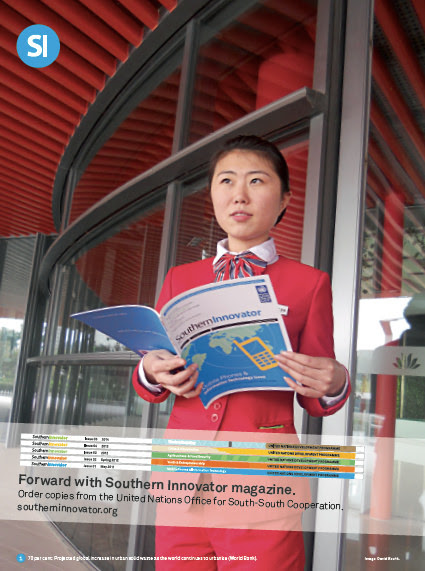
By 2014, Southern Innovator had published five issues and become a recognised global innovation brand.

https://davidsouthconsulting.org/2021/03/05/southern-innovator-issue-4/

Follow @SouthSouth1

Slideshare: http://www.slideshare.net/DavidSouth1/development-challengessouthsouthsolutionsnovember2010issue

Southern Innovator Issue 1: https://books.google.co.uk/books?id=Q1O54YSE2BgC&dq=southern+innovator&source=gbs_navlinks_s

Southern Innovator Issue 2: https://books.google.co.uk/books?id=Ty0N969dcssC&dq=southern+innovator&source=gbs_navlinks_s

Southern Innovator Issue 3: https://books.google.co.uk/books?id=AQNt4YmhZagC&dq=southern+innovator&source=gbs_navlinks_s

Southern Innovator Issue 4: https://books.google.co.uk/books?id=9T_n2tA7l4EC&dq=southern+innovator&source=gbs_navlinks_s

Southern Innovator Issue 5: https://books.google.co.uk/books?id=6ILdAgAAQBAJ&dq=southern+innovator&source=gbs_navlinks_s

Creative Commons License

This work is licensed under a
Creative Commons Attribution-Noncommercial-No Derivative Works 3.0 License.

ORCID iD: https://orcid.org/0000-0001-5311-1052.

© David South Consulting 2022

Categories
Archive data Development Challenges, South-South Solutions Newsletters digital ID

African Health Data Revolution

By David SouthDevelopment Challenges, South-South Solutions

SOUTH-SOUTH CASE STUDY

A pioneering tool for gathering health data now being used in Kenya could herald a revolution in the way diseases are tracked and defeated around the world. It uses mobile phones to better connect patients with medical and health personnel, and allows data to be gathered in real-time and used to track health and improve the delivery of services, especially to remote and under-serviced areas.

In the past couple of years, Kenya has become a hotbed of mobile phone and information technology innovation. The now-famous Ushahidi crisis-mapping platform (www.ushahidi.com) is just one example. Social enterprise Data Dyne (www.datadyne.org) – with offices in Washington DC and Nairobi, Kenya – is offering its EpiSurveyor application (www.episurveyor.org) free to all to aid health data collection. It bills itself as “the first cloud-computing application for international development and global health … Think of it as like Gmail, but for data collection!”

EpiSurveyor claims to have more than 2,600 users around the world and is currently being upgraded to a second version.

“With the touch of a button I can see what’s going on across the country in real time,” Kenyan civil servant Yusuf Ibrahim told Britain’s Daily Telegraph newspaper. “It is amazing.”

Ibrahim works in Nairobi as the Kenyan Ministry of Health liaison to Data Dyne.

He uses maps and charts on mobile phones to track deadly disease outbreaks and vulnerable pregnancies.

The EpiSurveyor application works simply: A user logs into the website and builds and creates the sort of form they want. They then download it to a phone and start collecting data straight away.

Ibrahim gathers this data from mobile phones used by health care workers across the country.

“It used to take days, weeks or even a couple of months to find out about an outbreak of polio on the other side of the country,” he said. “Now we know almost instantly. The speed with which we can now collect information has catapulted healthcare and prevention to another level. It has completely changed healthcare and saved countless lives.”

He proudly points out Kenya’s mobile phone data collection system is “probably better than what they’ve got in the West.”

“Although we are a third world country, I’m pretty sure we’ve done this before

Western countries. While they are still collecting information in hard copy on clipboards, we are getting it instantly.”

Packed with data processing power, mobile phones are capable of an immense range of tasks and applications. Some see phones as key to a revolution in how healthcare is provided: the mobile phone becomes one-part clinic, another part mobile hospital dispensing advice and transmitting vital information back to healthcare professionals and scientists in hospitals and labs.

Despite dramatic improvements to the quality of hospitals in Africa and the number of qualified doctors, the continent’s healthcare services are still a patchwork, with rural and slum dwellers poorly served and the stresses of treating patients with contagious diseases like HIV/AIDS and malaria pushing resources to the limit.

The United Nations has a number of initiatives partnering with mobile phone manufacturers, networks and software developers as part of a global campaign to reduce HIV/AIDS, malaria and deaths in childbirth.

EpiSurveyor is being used by more than 15 countries’ ministries of health and is the adopted standard for the World Health Organization (www.who.int) (WHO) for electronic health data collection.

It began as a partnership with the United Nations Foundation, The Vodafone Group Foundation, WHO and the ministries of health of Kenya and Zambia in 2006 to pilot test the software for EpiSurveyor.

At the United Nations Foundation (www.unfoundation.org), chief executive Kathy Calvin equates the impact of mobile phones on global healthcare to the discovery of the antibiotic penicillin.

“Instead of building clinics and roads to remote towns and villages so that people can access healthcare, we are bringing healthcare directly to the people via mobile phones. You get a lot more healthcare for your money,” Calvin told the Telegraph.

Published: November 2010

https://davidsouthconsulting.org/2022/10/06/african-technology-tackles-health-needs/

https://davidsouthconsulting.org/2020/12/04/big-data-can-transform-the-global-souths-growing-cities/

https://davidsouthconsulting.org/2021/01/18/cheap-paper-microscope-to-boost-fight-against-diseases/

https://davidsouthconsulting.org/2020/12/04/data-surge-across-global-south-promises-to-re-shape-the-internet/

https://davidsouthconsulting.org/2022/10/18/indians-fighting-inflation-with-technology/

https://davidsouthconsulting.org/2022/10/12/lagos-traffic-crunch-gets-a-new-solution/

https://davidsouthconsulting.org/2022/10/31/mapping-beirut-brings-city-to-light/

https://davidsouthconsulting.org/2022/10/17/mapping-to-protect-kenyas-environment-the-emazingira-solution/

https://davidsouthconsulting.org/2022/03/08/mobile-phone-microscopes-to-revolutionize-health-diagnostics/

Development Challenges, South-South Solutions was launched as an e-newsletter in 2006 by UNDP’s South-South Cooperation Unit (now the United Nations Office for South-South Cooperation) based in New York, USA. It led on profiling the rise of the global South as an economic powerhouse and was one of the first regular publications to champion the global South’s innovators, entrepreneurs, and pioneers. It tracked the key trends that are now so profoundly reshaping how development is seen and done. This includes the rapid take-up of mobile phones and information technology in the global South (as profiled in the first issue of magazine Southern Innovator), the move to becoming a majority urban world, a growing global innovator culture, and the plethora of solutions being developed in the global South to tackle its problems and improve living conditions and boost human development. The success of the e-newsletter led to the launch of the magazine Southern Innovator.  

https://davidsouthconsulting.org/2021/03/05/southern-innovator-issue-1/

Follow @SouthSouth1

Slideshare: http://www.slideshare.net/DavidSouth1/development-challengessouthsouthsolutionsnovember2010issue

Southern Innovator Issue 1: https://books.google.co.uk/books?id=Q1O54YSE2BgC&dq=southern+innovator&source=gbs_navlinks_s

Southern Innovator Issue 2: https://books.google.co.uk/books?id=Ty0N969dcssC&dq=southern+innovator&source=gbs_navlinks_s

Southern Innovator Issue 3: https://books.google.co.uk/books?id=AQNt4YmhZagC&dq=southern+innovator&source=gbs_navlinks_s

Southern Innovator Issue 4: https://books.google.co.uk/books?id=9T_n2tA7l4EC&dq=southern+innovator&source=gbs_navlinks_s

Southern Innovator Issue 5: https://books.google.co.uk/books?id=6ILdAgAAQBAJ&dq=southern+innovator&source=gbs_navlinks_s

Creative Commons License
This work is licensed under a
Creative Commons Attribution-Noncommercial-No Derivative Works 3.0 License.

ORCID iD: https://orcid.org/0000-0001-5311-1052.

© David South Consulting 2022

Categories
Archive

Southern Innovator As A Knowledge And Learning Tool | November 2017

Why even bother printing (on paper) Southern Innovator as a magazine? “What about the trees and we live in the digital age!”, some might say.

There is evidence and science supporting the need to always publish Southern Innovator in print as well as online. First, a study of the World Bank’s online publications came to a shocking conclusion: A survey in 2014 found a third of World Bank publications are never downloaded, 40 per cent were downloaded just 100 times, and only 13 per cent were downloaded more than 250 times in their lifetime (The Washington Post). As The Washington Post pointed out, these are publicly funded publications with the intention of contributing to policy debates and providing solutions to the world’s problems. So, if nobody is reading them, or just a handful are, that actually does matter if you care about positive change in the world.

Secondly, a Norwegian study in 2014 from the Stavanger University (part of Europe-wide research into the impact of digitisation on the reading experience), found “… that paper readers did report higher on measures having to do with empathy and transportation and immersion, and narrative coherence, than iPad readers,” according to lead researcher Anne Mangen (The Guardian).

An earlier study the researchers did also found “students who read texts in print scored significantly better on the reading comprehension test than students who read the texts digitally” and that “Studies with students, for instance, have shown that they often prefer to read on paper”, continued Mangen in The Guardian.   

Another issue is Internet shutdowns, outages and censorship. All of these have been on the increase, especially in Africa (africanews.com). To put it simply, you cannot electronically shutdown a piece of paper. 

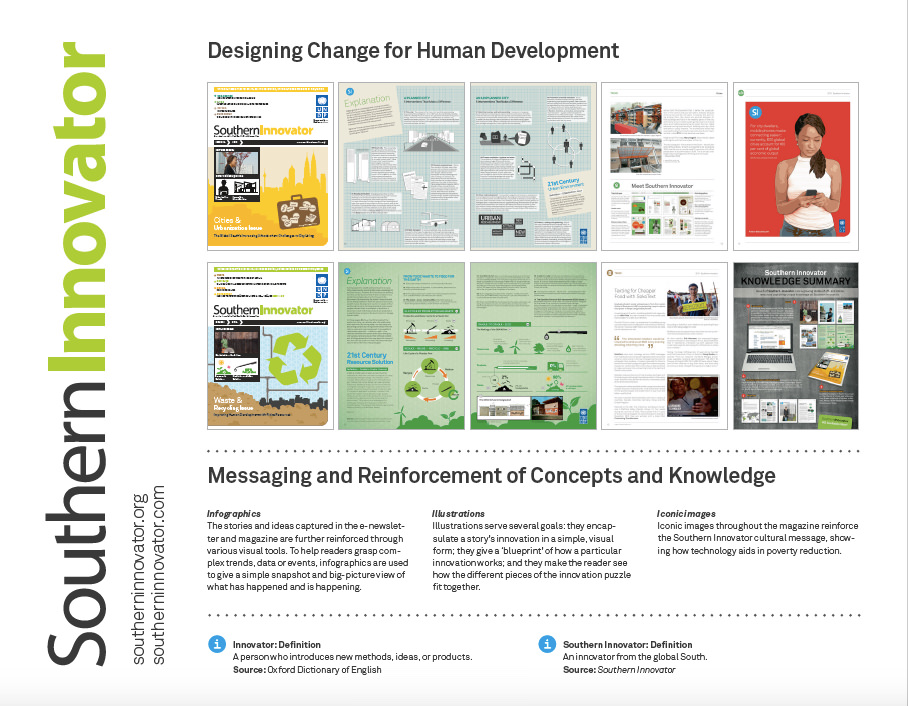
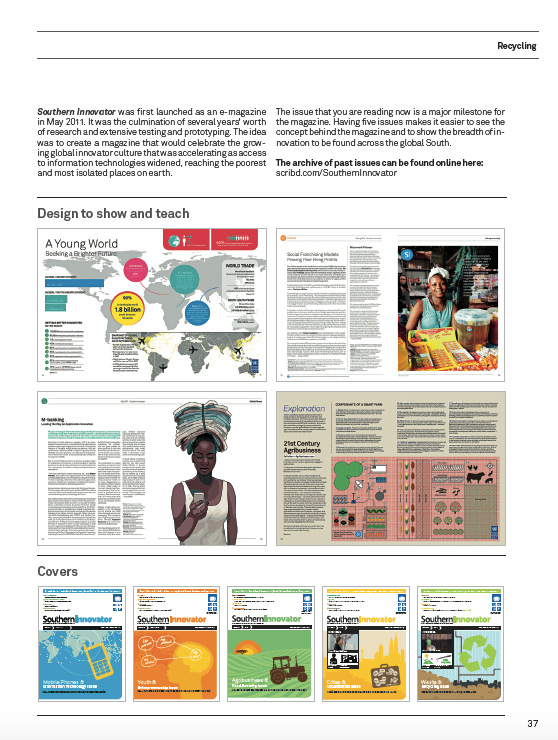
Design to show and teach.
Innovations Summary.
A fast-changing world.
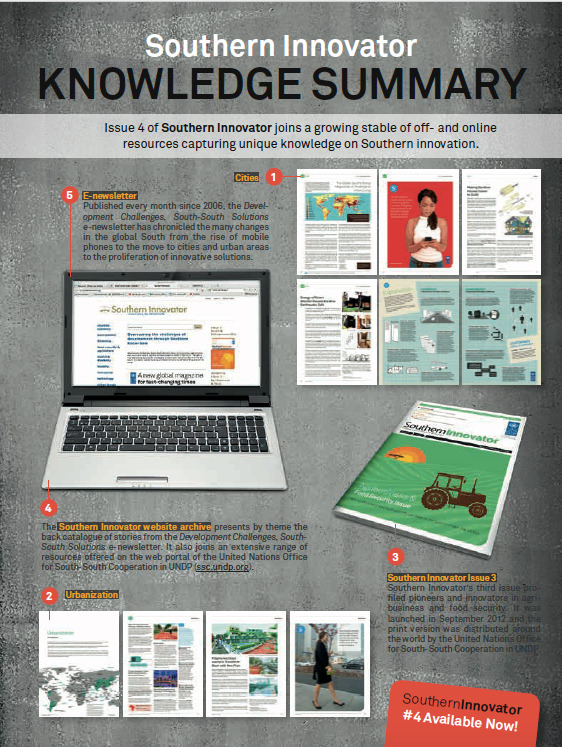
Knowledge Summary.
Knowledge Summary.
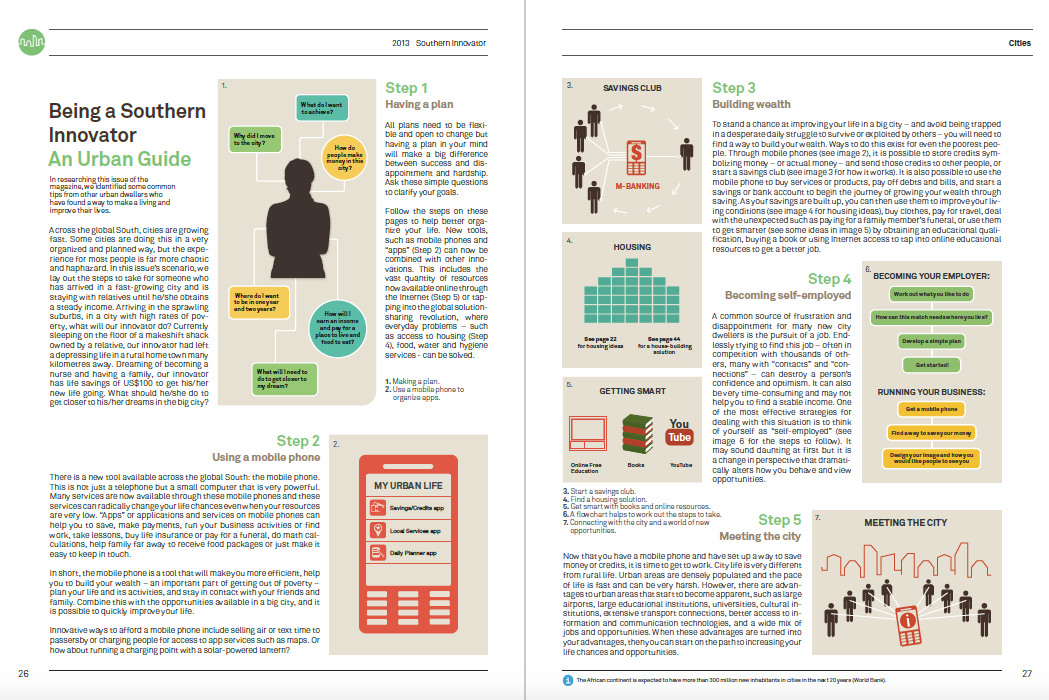
Being a Southern Innovator: An Urban Guide.
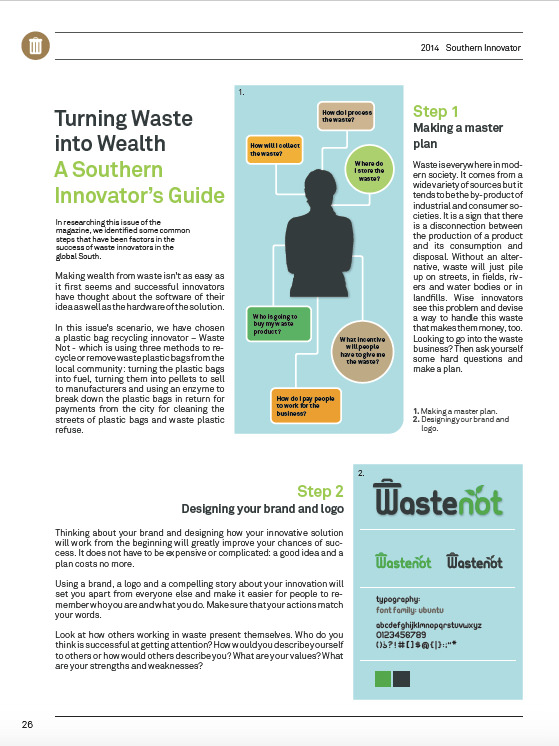
Turning Waste into Wealth: A Southern Innovator’s Guide.
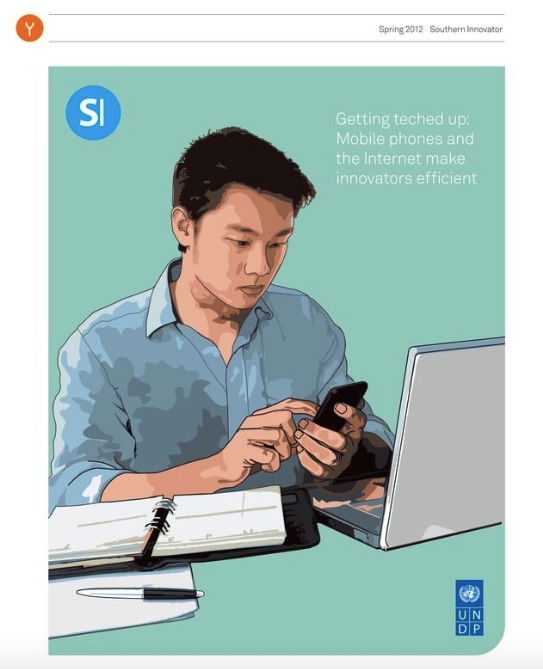
Managing the workflow: Getting things done.

This work is licensed under a Creative Commons Attribution 4.0 International License.

ORCID iD: https://orcid.org/0000-0001-5311-1052.

© David South Consulting 2017