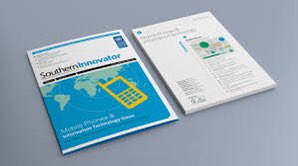
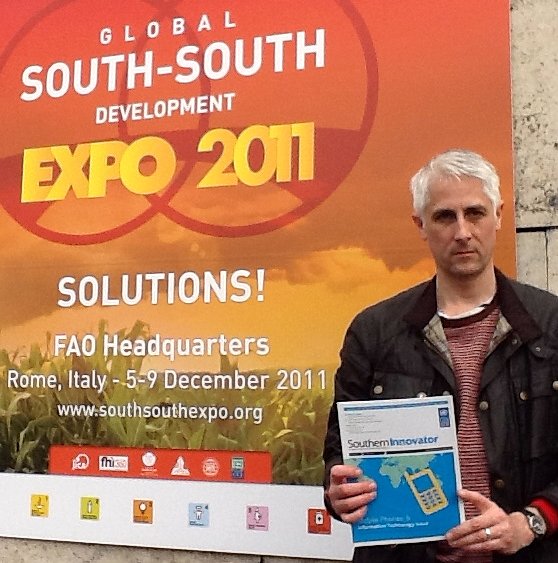
Launched in May 2011, the new global magazine Southern Innovator (ISSN 2222-9280) is about the people across the global South shaping our new world, eradicating poverty and working towards the achievement of the Millennium Development Goals (MDGs).
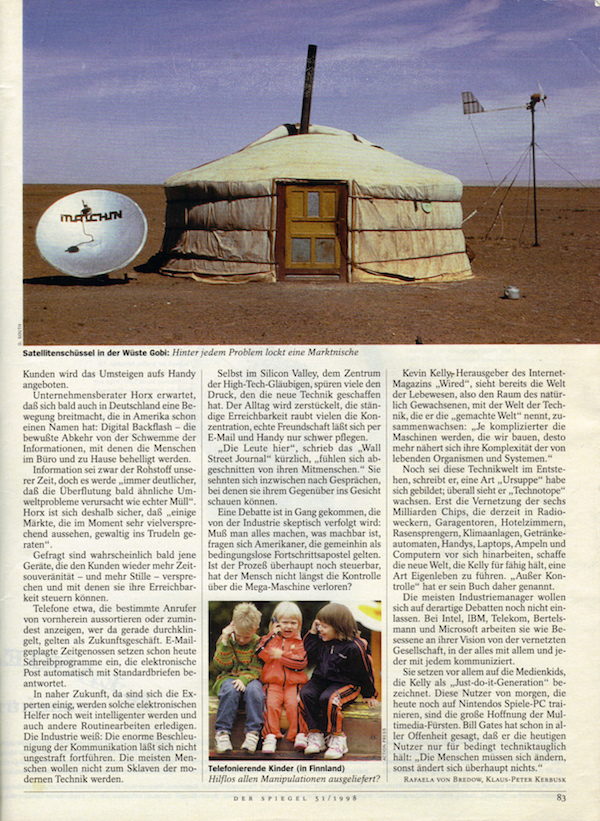
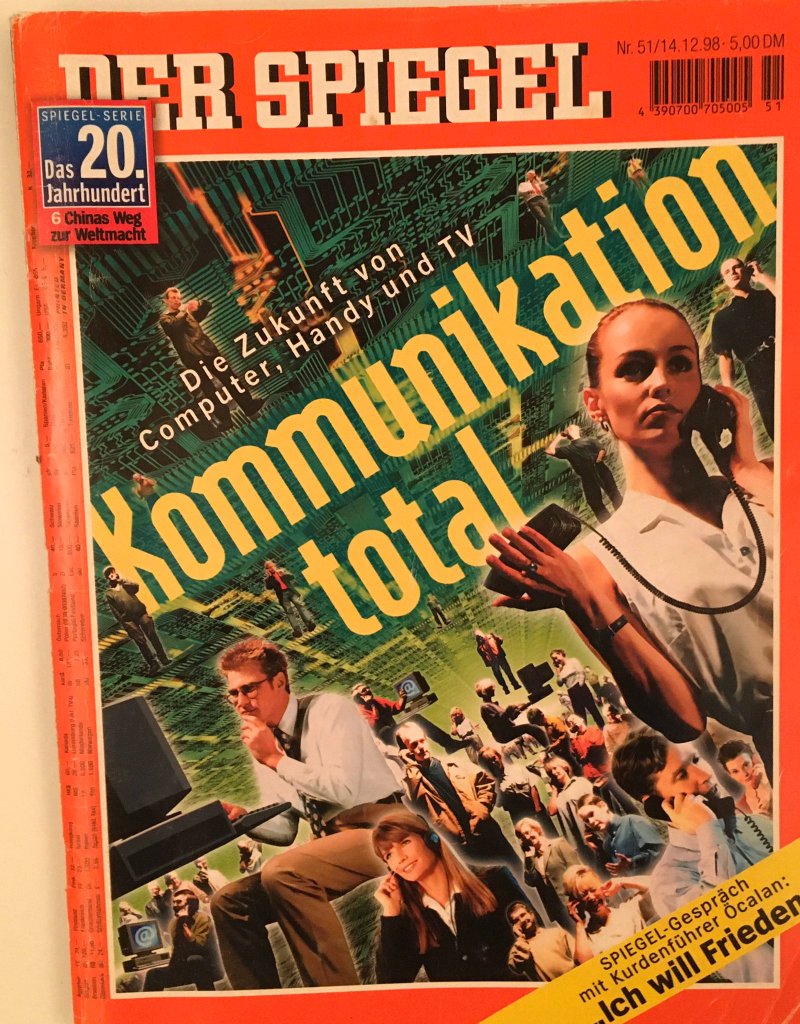
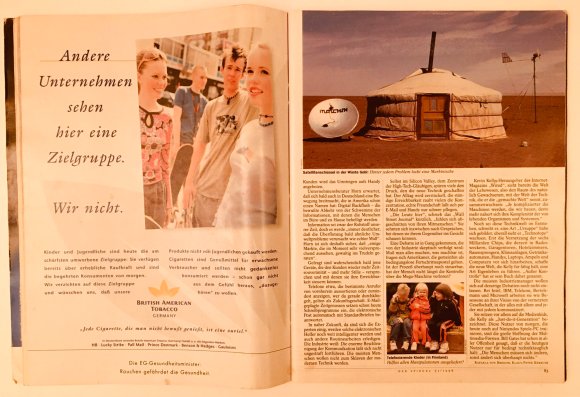
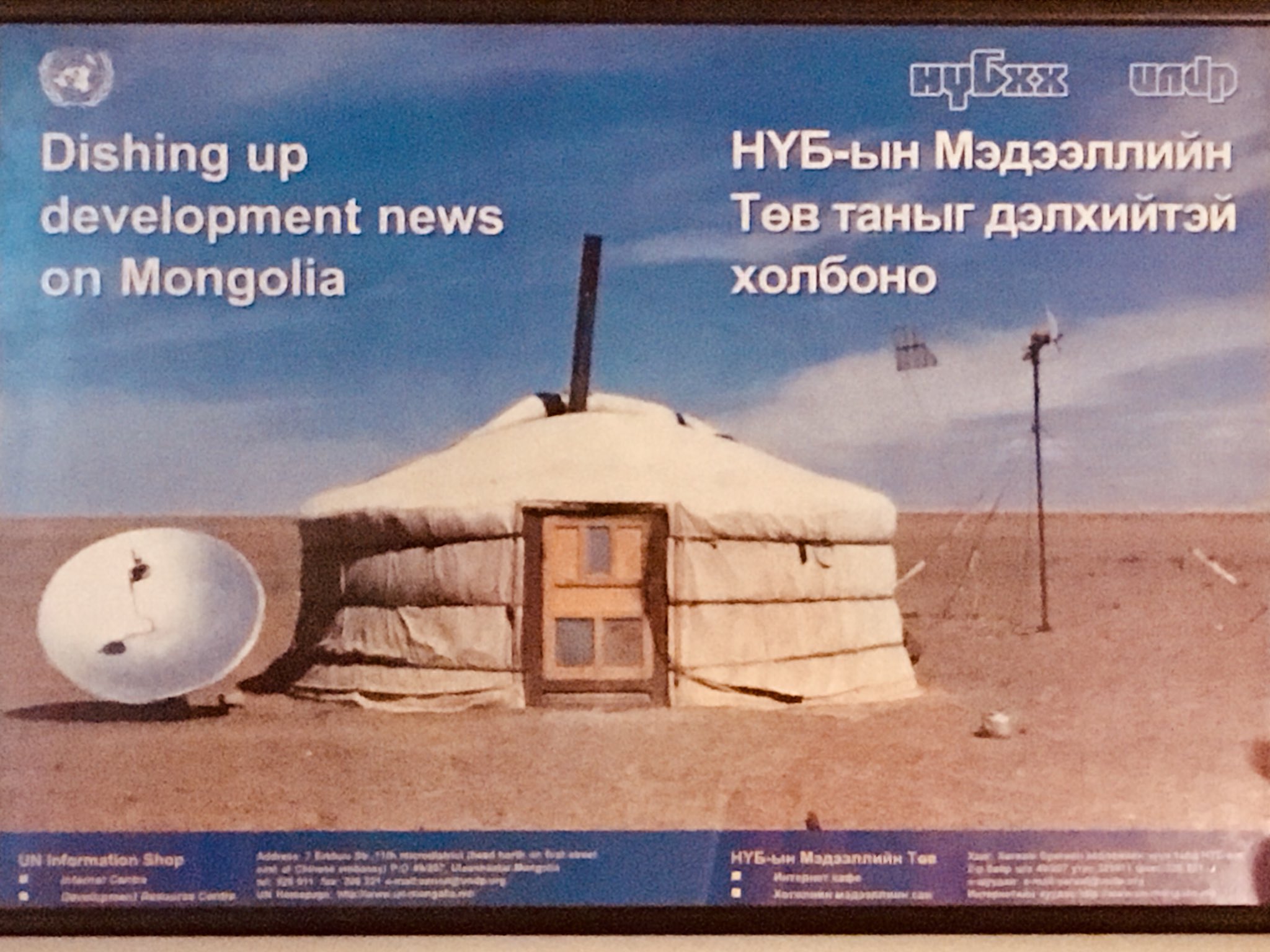
In 1998 Der Spiegel’s “Kommunikation total” issue profiled the global connectivity revolution underway and being accelerated by the Internet boom of the late 1990s. It chose my picture of a satellite dish and a ger in the Gobi Desert to symbolise this historic event.
Scroll through a PDF of the story (my photo is on the last page).
“Die Handy-Gesellschaft war erst der Anfang: Experten sehen in den Sphären des Internet einen neuen Erdteil entstehen. Hier lebt die Info-Elite, umgeben von PC, Pager, Powerbook. Die Multimedia-Industrie wird zur Schlüsselbranche des 21. Jahrhunderts – mit gravierenden Folgen für die Gesellschaft.”
English translation: “Total communication: the seventh continent – The cell phone society was just the beginning: Experts see a new continent emerging in the spheres of the Internet. The information elite live here, surrounded by PCs, pagers and power books. The multimedia industry is becoming the key industry of the 21st century – with serious consequences for society.” (http://t-off.khd-research.net/Spiegel/10.html). Original copy of magazine (above) from 1998. From The Turns of Translation Studies: New Paradigms Or Shifting Viewpoints? By Mary Snell-Hornby · 2006.
Der Spiegel is a German weekly news magazine and is one of Europe’s largest publications of its kind. It chose my photo taken in the Gobi Desert for its profile of the Internet revolution in 1998.
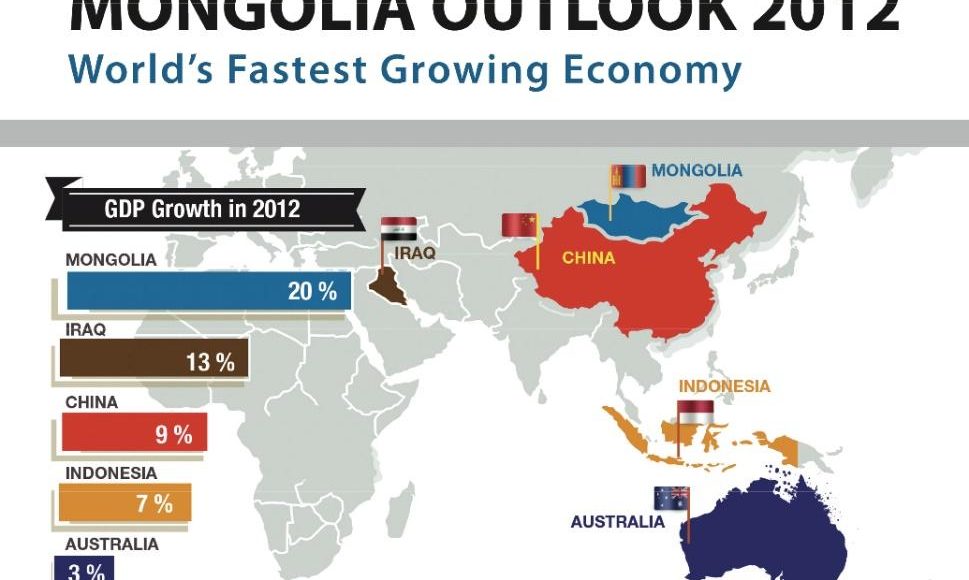
The world has changed considerably since then; and so has Mongolia. The digital revolution has rolled across the planet, the attacks of 9/11 unleashed a wave of violence and wars, and Mongolia even became the fastest-growing economy in the world a few years ago (2012). But back when this book was researched, Mongolia was just coming out of decades of isolation within the Soviet orbit under Communism, and the country experienced in the 1990s “one of the biggest peacetime economic collapses ever” (Mongolia’s Economic Reforms: Background, Content and Prospects, Richard Pomfret, University of Adelaide, 1994).
Two trends came together at the end of the 1990s and the start of the 2000s: the digital revolution and the mapping of the human genome. Both have given birth to whole new industries. Read more here: The Dawn Of The Genetics Revolution | 2001 – 2003
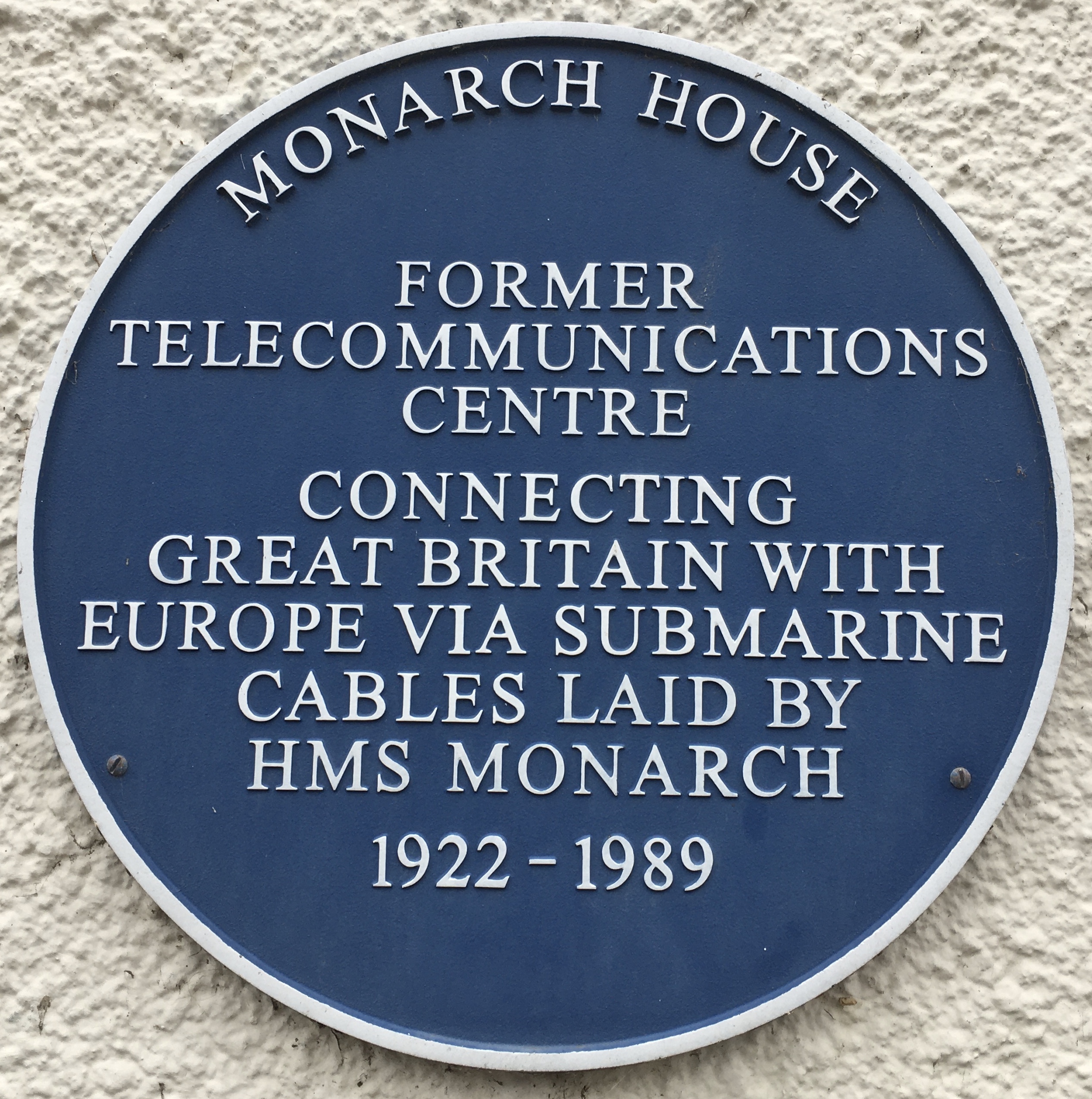
By the 1990s, cables (like above) were being joined by satellites to advance the global connectivity revolution. By the 2000s, cables (copper and fibre optic) and satellites were joined by mobile and smart phones, to deliver “kommunikation total”.











 David South Consulting
You must be logged in to post a comment.