Categories
Archive Development Challenges, South-South Solutions Newsletters

Indian Initiatives to Make Travel Safer for Women

By David SouthDevelopment Challenges, South-South Solutions

SOUTH-SOUTH CASE STUDY

Shocking assaults on women traveling in India have galvanized innovators to find solutions. One solution that is proving successful is to establish specialist taxi services for women. As a happy additional benefit, these taxi innovators are transforming the taxi experience, introducing more ethical practices such as honest fares, professional and safe driving habits and clean, hygienic and comfortable taxis.

With sexual harassment levels high and several shocking assaults and rapes of women in Indian cities grabbing global media attention, Indian women are now being offered a variety of women-driver-only taxi services to ensure they get to work and home again safely.

As well as offering their passengers security, these companies are also redefining the taxi experience with innovation. As travelers know, the taxi experience in many cities can be frustrating, fraught with scams, rip-offs, disputes over fares, unhygienic taxi interiors and poor driving skills. These pioneering women-only taxi companies are trying to show there is another way: that taxis can be clean, meters honest and driving safe and sound.

Security for women has come into the media spotlight in India after a series of high-profile attacks and sexual assaults. The country is undergoing major economic and social change as it modernizes and urbanizes. Women are seeing their incomes and their role in the economy increase.

This brings both opportunities and risks. Women who would have only lived and worked in a small geographical area, and generally associated only with their family or a small village, are now mobile and in contact with the busy urban environments of megacities awash with strangers.

One woman is raped every 20 minutes in India, according to the National Crime Records Bureau. But police estimate only four out of 10 rapes are reported, largely due to victims’ fear of being shamed by their families and communities. At the beginning of March 2013, a campaign to raise awareness on women’s safety was launched in Delhi to chime with International Women’s Day. The UN also confirmed in March 2013 a global strategy to combat violence against women (http://www.un.org/womenwatch/daw/csw/57sess.htm).

One champion of safer transport for women in India is Revathi Roy, a rally car driver and entrepreneur. She started a women-only taxi company in Mumbai called Forsche in 2007 out of raw economic need, and to solve a problem.

“I am a very fussy passenger and I would get upset that the seat was not comfortable, or the driver was driving too rashly for my liking,” Roy told BBC News.

“I would also find it irritating that some drivers would stare at me from their rear-view mirror and one day, I just decided I had had enough.”

Forsche – pronounced “for she” – a play on the German car maker Porsche’s name – was one of the pioneers in bringing all-women taxi services to India. Their drivers’ uniform came in pink and purple with a purple scarf worn around the neck.

However, Roy parted ways with her previous business partner and set up Viira Cabs (viiracabs.com/) in 2011. Viira means ‘courageous woman’ according to Roy.

Roy hopes passengers from young girls to senior citizens will feel safer and more confident knowing a woman is the driver.

“The attitude of Indian mothers is changing,” she said. “Now they know their daughters go out and drink. They realize they may as well keep them safe by putting them in the hands of a woman who at all times is playing the role of a mother or a sister.  A man can’t be a woman. And just because a woman is sitting at the wheel she doesn’t become a man.”

The company has 20 taxis and 25 drivers. It uses a fleet of Maruti Eecos (http://marutisuzukieeco.in/), a mini van made by Suzuki capable of carrying four adult passengers and their luggage. Viira also seeks to improve driving standards on Mumbai’s roads by setting a good example with safe, defensive driving techniques.

A pioneer of female taxi drivers in India, Roy is now the Mentor and Chief Driving Officer for Viira Cabs. According to the company’s website, she is looking to train thousands of women to be able to make their livelihood as a taxi driver.

“Driving is still very male dominated and in Mumbai where most people travel by public transport, there are very few women with driving licenses,” she explained.

“Viira is a very powerful platform for poor, urban women who are now able to earn up to Rs 12,000 a month (US $222),” Roy told CNN.

Viira’s drivers wear a professional uniform of a peaked cap, white short sleeved shirt with blue trim, and a plastic identification badge on a blue lanyard. This makes it clear from the start to passengers who is driving them.

The service runs 24 hours a day, seven day a week, and journeys are dispatched from the company’s call centre. To keep the service safe as can be, all vehicles are monitored by GPS (global positioning system) and a panic alert system. The drivers receive self-defence and defensive-driving training so they can elude any dangers while on the road. They also know how to handle roadside emergencies and are backed up by 24/7 support from the call centre.

The taxis follow the standard charges set down by the Mumbai region. By using mini-vans, passengers are able to enjoy a comfortable and roomy ride in air conditioned comfort – a big plus in a hot country. The vans run on CNG (compressed natural gas) (http://en.wikipedia.org/wiki/Compressed_natural_gas), reducing pollution.

To add even more value to the journey experience, the taxis feature live television and Internet web surfing using something called Tabbie TM (Tablet in a Cab), a 10-inch-wide computer tablet.

In addition to the taxi service, the Viira Motor Training School offers driver training to women with low incomes. Its 12-week program covers all the main areas of taxi-driving skills – driving theory, mechanics, customer service, health and safety and self-defence – but also goes to the next level and gives the students training on a vehicle-driving simulator donated by the Suzuki company.

Roy said she hopes to expand the business from Mumbai to smaller urban areas “where Indian women are most starved of opportunities.”

Long-term, she wants to become “India’s premier chauffeur and fleet service.”

Roy’s success with these companies led to the founding of the social enterprise Sakh Consulting Wings (http://sakhaconsultingwings.com/about-us.php) to support establishing similar services in other Indian cities.

Sakha Consulting Wings is partnered with the Azad Foundation to promote taxi driving as a viable career for women from poor backgrounds.

Super Cabz in Delhi (http://www.supercabz.com/women-friendly-cab-service-delhi-ncr.php) is another service aimed at women. It has innovations such as panic buttons in the back seats of the cabs and mobilizers to allow the central call centre to shut the cab’s engine down in an emergency. There is also a GPS monitoring and tracking system to keep tabs on the cabs as they go about the city.

Published: May 2013

Resources

1) South Africa’s Cabs for Women. Website: cabsforwomen.co.za/

2) India Taxi Auto Fare: “A unique service that calculates your taxi fare and auto fares; before you start your travel! You also get an exact, to the scale Google Map that shows your route. Further, you can also change the default route to avoid traffic, plan for some shopping on the way or just pick up your date!” Website: http://www.taxiautofare.com/Default.aspx

3) Merar: Merar was launched with the idea to create the best platform for investment providers and seekers from emerging markets. It has grown to become one of the largest online meeting places bringing together investors, entrepreneurs and investment intermediaries globally. Website: merar.com/

4) Lavasa Womens Drive: Helps champion skilled women drivers in India. Website: http://www.lavasawomensdrive.com/selectcity1.html

5) PeopleNet TABLET™: A powerful in-cab personal computer with a touch screen, stylus and screen keyboard. Website: peoplenetonline.com/tablet

Bio-ethanol From Sturdy and Once-Unwanted Indian Plant

Cheap Indian Tablet Seeks to Bridge Digital Divide

Entrepreneurs Use Mobiles and IT to Tackle Indian Traffic Gridlock

Indian Business Model Makes Green Energy Affordable

Indian City Slum Areas Become Newly Desirable Places to Live

Indian Entrepreneur Brings Dignity to Poor Women

Indian ID Project is Foundation for Future Economic Progress

Indian Mobile Phone Application Innovators Empower Citizens

Indian Newspapers Thrive with Economy

Indian Solar Economy Brings New Vocation for Women

Indian Solar Power Pack Powers Villages

Indian Toilet Pioneer Champions Good Ideas

Indians Fighting Inflation with Technology

Model Indian Villages to Keep Rural Relevant

Southern Innovator logo

London Edit

31 July 2013

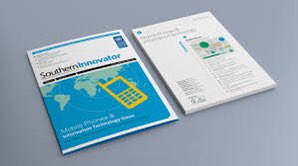
Development Challenges, South-South Solutions was launched as an e-newsletter in 2006 by UNDP’s South-South Cooperation Unit (now the United Nations Office for South-South Cooperation) based in New York, USA. It led on profiling the rise of the global South as an economic powerhouse and was one of the first regular publications to champion the global South’s innovators, entrepreneurs, and pioneers. It tracked the key trends that are now so profoundly reshaping how development is seen and done. This includes the rapid take-up of mobile phones and information technology in the global South (as profiled in the first issue of magazine Southern Innovator), the move to becoming a majority urban world, a growing global innovator culture, and the plethora of solutions being developed in the global South to tackle its problems and improve living conditions and boost human development. The success of the e-newsletter led to the launch of the magazine Southern Innovator. 

Southern Innovator Issue 1

Creative Commons License

This work is licensed under a
Creative Commons Attribution-Noncommercial-No Derivative Works 3.0 License.

ORCID iD: https://orcid.org/0000-0001-5311-1052.

© David South Consulting 2023

Categories
Archive Development Challenges, South-South Solutions Newsletters

Ambitious Schemes Hope to Advance Economic Development

By David SouthDevelopment Challenges, South-South Solutions

SOUTH-SOUTH CASE STUDY

Sometimes it takes a bold, fresh start to speed up economic and human development goals. Taking a large-scale approach has been used around the world, either establishing new trade zones or even a new city.

Two recent examples in Nigeria and Afghanistan are attempting to speed economic development in their respective countries, with both receiving help from experienced Asian practitioners of rapid economic development.

The role models for this approach are the so-called “Asian Tigers”: they include Taiwan, Hong Kong, Singapore and South Korea. They are admired because each country rose from extreme poverty to become some of the Earth’s richest nations. Importantly, what they did stands as proof that extreme poverty can be escaped from; people can become much wealthier in just a decade or two.

The pioneer of using trade zones to speed development is the Asian city state of Singapore (http://www.gov.sg/government/web/content/govsg/classic/home)..Fifty years ago it was one of Asia’s poorest countries. With its port (http://www.mpa.gov.sg/) it had a way to turn things around but it also realized in the early 1960s it could not just compete by having cheap labour, something that was plentiful across the developing world (http://www.mti.gov.sg/MTIInsights/Pages/Economic-History-and-Milestones.aspx). It needed unique technical skills that could not be found elsewhere.

The country was unable to create products and services that it could export and compete in global markets because of a lack of skills, the Government determined. Authorities employed a mix of measures to make the country attractive to foreign companies to boost skills. These included fair enforcement of local laws, tax incentives and upgraded infrastructure, much of it paid for with an infrastructure tax, rather than borrowing. With the influx of new thinking and high-quality skills, new technologies and new ways of doing things, in time, a culture of innovation became hardwired into the way things were done in Singapore.

Beginning in 1961 with the Jurong Industrial Estate (http://infopedia.nl.sg/articles/SIP_246_2004-12-16.html), the Singapore government set aside land to develop the economy by attracting international businesses and boosting its existing port facilities. It also established the Economic Development Board (EDB) in 1961 and the Singapore Tourism Promotion Board (STPB) in 1964.

By creating favorable conditions for international businesses to come in and operate, Singapore quickly developed to become one of Asia’s wealthiest trading and manufacturing centres.

This is a strategy China successfully implemented in the 1980s and 1990s and in turn generated the largest and quickest population shift out of poverty in human history, turning the country into an economic powerhouse.

The secrets to making this strategy work include understanding what modern infrastructure requirements are necessary for international businesses. These days, this means speedy and generous bandwidth for the Internet, modern airports, roads, security, and quality housing and food.

One of the biggest contemporary challenges is competition. Whereas Singapore was a pioneer in its day, now, many countries across the global South are pursuing this strategy to spur growth. An international company has many options to consider, and will more than likely gravitate towards the country that makes the best offer with the least risk.

Trade zones are places ripe with opportunity for innovators. New places tend to be seeking the latest in information and communication technologies, the latest in transportation options, modern housing and office facilities. All of these changes require innovators with fresh thinking to make them work. It is also often easier to introduce new ways of doing things to places that are not coping with legacy infrastructure and old habits and ways.

Billing itself as a “new model city,” the Lekki Free Zone Lagos, Nigeria (lekkizone.com) in West Africa is trying to bring a fresh start to the city and the region. It is a joint partnership between investors from China and Nigeria.

Its goal is to better connect regional markets to the global economy. The free trade zone hopes to remove barriers to growth and to attract international investment, becoming the top destination for inward investment in Africa. The project is being run by the Lagos State Government but funded with private capital investment.

Nigeria has been looking into Free Zones since 1982, as it sought additional ways to earn income apart from oil exports. The Export Processing Zone Act 63 was passed in 1992 and the Calabar Export Processing Zone was eventually set up in 1999 (http://www.nepza.gov.ng/index.php?option=com_content&task=view&id=18&Itemid=34). Since then, a slew of Free Zones have been set up, or are in the works.

The Lekki Free Zone is envisioned as a high-tech zone that will eventually lead to the creation of 2 million jobs. The Zone’s investors are targeting businesses working in oil and gas, petrochemicals, electronics, light and heavy equipment, machinery and automobiles, pharmaceuticals, textiles, shopping and banking and financial services.

Lagos State is home to 21 million people, and the current city of Lagos is on course to become the third-largest megacity in the world. Officials claim the area has an economic growth rate of 16.8 per cent per year.

The 16,500 hectare Lekki Free Zone, to the southeast of the city, is divided into two parts: an industrial zone and a residential zone. The residential zone will include apartments and villas, shopping malls and plazas, hospitals and clinics, schools and research and development centres and a hotel, tour and recreational centres, golf courses, gyms and water sports facilities.

Located on the southern coast of Nigeria with connections to the Atlantic Ocean and the Gulf of Guinea, the Lekki Free Zone says it will give companies access to the largest consumer market in Africa, with a potential reach of 500 million people.

The companies will also be able to draw on Nigeria’s natural resources, including oil, natural gas, timber, rubber, cocoa, Arabic gum and sesame seeds as examples.

Another new beginning is being sought in war-torn Afghanistan, which is working on building a new city close to the capital, Kabul.

Kabul New City started construction in 2013 and is planned to be a city of canals, parks and villas. It will be home to 1.5 million people, cost US $33 billion and take 15 years to complete. It is being partly funded by Japan.

It is a very ambitious scheme for a country that has been mired in conflict for decades. It is hoped the initial seed capital invested by Japan will attract other investors to fully fund the project. Japan got the project going with a commitment to contribute US $106 million between 2009 and 2015.

The site of Kabul New City is 19 kilometres from the existing Kabul, near the Bagram airbase used by NATO forces in the country.

Foreign military forces are looking to leave Afghanistan in 2014 and the new city offers a fresh start for the country after years of conflict.

Located in an area surrounded by the Marko mountains, it is in “one of the safest areas of Afghanistan,” Abdul Habib Zadran, Chief Financial Officer of the Dehsabz-Barikab City Development Authority (http://www.dcda.gov.af/), the agency in charge of the project, told The Sunday Times.

The project could be a significant leap ahead in modernization from the current conditions in Kabul, where the streets are in poor condition and buildings in disrepair. Kabul was originally built for 800,000 people, according to The Sunday Times, but now has over 4 million residents. Projections forecast the city growing to 6.5 million people by 2025. Kabul will experience extreme pressure to handle this growing population and find the resources to serve it.

The homes would receive electricity from solar panels and renewable energy sources. Kabul New City will need to tackle the problem of access to enough water to service the growing new city’s population. Plans are afoot to provide water from rivers north of the city.

The master plan for the new city has been designed by Zahra Breshna (breshna-consulting.com), an Afghan-German company which has also built the new Kabul Bank headquarters. The company calls the project “a new beginning for Kabul.”

Published: May 2013

Resources

1) Tianjin Eco-city: The Sino-Singapore Tianjin Eco-city’s vision is to be a thriving city which is socially harmonious, environmentally-friendly and resource-efficient. Website: tianjinecocity.gov.sg/

2) Songdo International Business District: Songdo International Business District (IBD) is home to the UN’s Green Climate Fund and is a smart city located in the Republic of Korea built to the highest green building standards. Website: songdo.com/

3) Singapore: An island and islets in the heart of Southeast Asia, between Malaysia and Indonesia. Website: http://app.www.sg/

4) Djibouti Free Zone: Djibouti Free Zone was created with one primary goal in mind – to bring about a sea-change in the way Africa thinks and does business. No red tape, ruthless efficiency and genuinely exhaustive services – in essence, we offer the ideal conditions for trade and commerce to flourish in. Website: djiboutifz.com/

5) Cisco Smart + Connected Cities: Cisco Smart+Connected Communities solutions use intelligent networking capabilities to bring together people, services, community assets, and information to help community leaders address these world challenges. Website: http://www.cisco.com/web/strategy/smart_connected_communities.html

6) IBM Smarter Cities: Smarter cities drive sustainable economic growth and prosperity for their citizens. Their leaders have the tools to analyze data for better decisions, anticipate problems to resolve them proactively and coordinate resources to operate effectively. Website:http://www.ibm.com/smarterplanet/us/en/smarter_cities/overview/

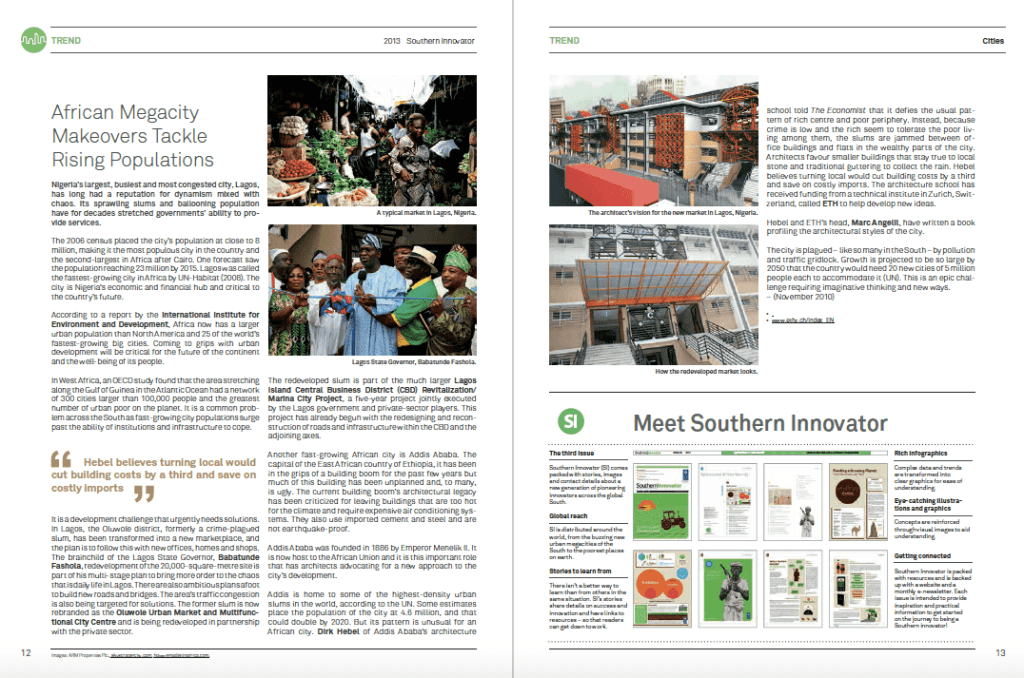
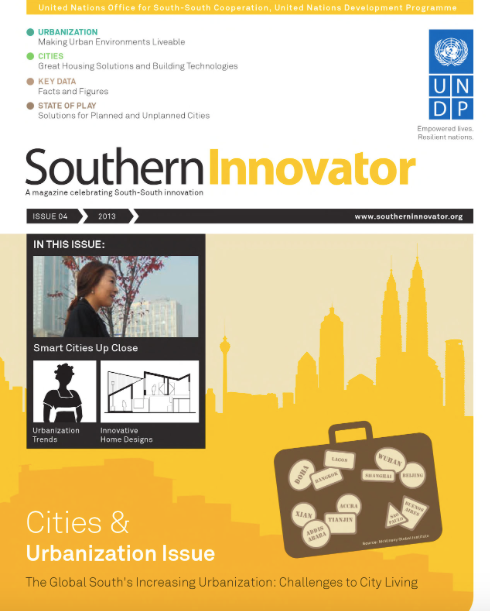
7) Southern Innovator Magazine Issue 4: Cities and Urbanization. Website: http://www.scribd.com/doc/133622315/Southern-Innovator-Magazine-Issue-4-Cities-and-Urbanization

Southern Innovator logo

London Edit

31 July 2013

Development Challenges, South-South Solutions was launched as an e-newsletter in 2006 by UNDP’s South-South Cooperation Unit (now the United Nations Office for South-South Cooperation) based in New York, USA. It led on profiling the rise of the global South as an economic powerhouse and was one of the first regular publications to champion the global South’s innovators, entrepreneurs, and pioneers. It tracked the key trends that are now so profoundly reshaping how development is seen and done. This includes the rapid take-up of mobile phones and information technology in the global South (as profiled in the first issue of magazine Southern Innovator), the move to becoming a majority urban world, a growing global innovator culture, and the plethora of solutions being developed in the global South to tackle its problems and improve living conditions and boost human development. The success of the e-newsletter led to the launch of the magazine Southern Innovator. 

Creative Commons License

This work is licensed under a
Creative Commons Attribution-Noncommercial-No Derivative Works 3.0 License.

ORCID iD: https://orcid.org/0000-0001-5311-1052.

© David South Consulting 2023

Categories
Archive Development Challenges, South-South Solutions Newsletters

African Digital Laser Breakthrough Promises Future Innovation

By David SouthDevelopment Challenges, South-South Solutions

SOUTH-SOUTH CASE STUDY

For decades many African countries have experienced low investment in research and development (R&D) and scientific innovation. One of the few nations to benefit from a sophisticated university network and research and development sector was South Africa. It still ranks top on the continent for funding R&D and its high number of scientific journals.

And it seems this support has paid off in a recent innovation. The world’s first digital laser designed and built in Africa has been developed by a team of physicists at the University of KwaZulu–Natal in South Africa (http://www.ukzn.ac.za/), as reported in the MIT Technology Review (http://www.technologyreview.com/).

This innovation joins a positive trend in Africa, where support to science, technology and R&D is rising – albeit from a very low base. In 2010 UNESCO – the United Nations Educational, Scientific and Cultural Organization – found Africa was reversing decades of neglect in research and development. African countries were increasing investment in science and technology after realizing it will accelerate their connection with the global economy and help create better-quality jobs to tackle poverty. The UNESCO Science Report found Burkina Faso, Kenya, Nigeria and South Africa had adopted laws to support biotechnology research, for example.

Since 2005, six new science academies have been established in Mauritius, Morocco, Mozambique, Sudan, Tanzania and Zimbabwe. This compares to nine established between 1902 and 2004.

The proportion of GDP (gross domestic product) devoted to R&D averages 0.3 per cent in Africa, according to UNESCO.

South Africa continues to lead in R&D spending, raising its investment from 0.73 per cent of GDP in 2001 to 0.94 per cent in 2006. The country is home to 46 per cent of Africa’s scientific publications compared to 11.4 per cent in Nigeria and 6.6 per cent in Kenya (UNESCO).

Experts say the digital laser developed in South Africa is a breakthrough that will open up ever-further innovations and business opportunities.

So, what is a digital laser and what is the innovation? A laser is short form for Light Amplification by Stimulated Emission of Radiation. It is a device that produces a concentrated light source. Unlike conventional light sources that emit a diffused, multispectral light, lasers allow for a monochromatic light beam to be concentrated on a small area. This can be used to cut an object precisely, or beamed over long distances without losing its strength.

Lasers can create immense light, heat and power at close range and are regularly used in surgery and medical diagnosis.

Conventional lasers require external devices to alter and bend the laser light beam. The digital laser allows the shape of the beam to be digitally altered internally at the touch of a computer keyboard and gives greater immediate control. This means a plethora of new shapes can be formed with the laser beam, and this can have many practical applications.

The digital laser augers in a new age of creativity with lasers and more spontaneity in how they are used. Rather than having to place a lens or mirror at the front of the casing to shape the laser beam, this innovation makes it possible to create any shape desired digitally by a computer. The research team has been able to create various complex shapes for the laser beams in experiments. One mooted use is to apply laser beams to manipulate microscopic objects – similar to the tractor beams seen in science fiction films such as “Star Trek”.

Few of us spend much time thinking about lasers, yet they are ubiquitous in the modern world and are found in many electronic products (https://en.wikipedia.org/wiki/List_of_laser_applications). They play a critical part in the modern world’s economy. Some common applications for lasers include laser light shows at music concerts, bar code readers at the grocery store, or laser pointers used during public presentations. Dentists also use them to speed the hardening of fillings.

Not to exploit lasers as a technology in the modern world is equivalent to bypassing the silicon micro-chip that sits inside personal computers, electronic devices and mobile phones.

Published: May 2013

Resources

1) Digital laser: The research paper submitted by the team explaining the innovation. Website: http://arxiv.org/abs/1301.4760

2) 3D Laser Hologram Kit: Now you can make your own holograms at home with the help of this innovative kit. Website: http://www.scientificsonline.com/hologram-kit.html

3) Hands-On Science Kits and Demos. Website: http://ice.chem.wisc.edu/Catalog/SciKits.html

4) Home kit for making a Laser Theatre. Website: http://www.scientificsonline.com/laser-theater.html

5) Little Bits: littleBits is an open source library of electronic modules that snap together with magnets for prototyping, learning and fun. Website: http://littlebits.cc/

6) Consolidated Plan of Action for Africa’s Science and Technology adopted by African Minsters of Science and Technology in 2005. Website: http://www.nepad.org/humancapitaldevelopment/news/1581/advancing-science-and-technology-africa

Southern Innovator logo

London Edit

31 July 2013

Like science and technology stories from the global South? Here are some more from the archive:

China Sets Sights on Dominating Global Smartphone Market

China Pushing Frontiers of Medical Research

China Looking to Lead on Robot Innovation

Follow @SouthSouth1

Slideshare: http://www.slideshare.net/DavidSouth1/development-challengessouthsouthsolutionsnovember2010issue

Southern Innovator Issue 1: https://books.google.co.uk/books?id=Q1O54YSE2BgC&dq=southern+innovator&source=gbs_navlinks_s

Southern Innovator Issue 2: https://books.google.co.uk/books?id=Ty0N969dcssC&dq=southern+innovator&source=gbs_navlinks_s

Southern Innovator Issue 3: https://books.google.co.uk/books?id=AQNt4YmhZagC&dq=southern+innovator&source=gbs_navlinks_s

Southern Innovator Issue 4: https://books.google.co.uk/books?id=9T_n2tA7l4EC&dq=southern+innovator&source=gbs_navlinks_s

Southern Innovator Issue 5: https://books.google.co.uk/books?id=6ILdAgAAQBAJ&dq=southern+innovator&source=gbs_navlinks_s

Creative Commons License

This work is licensed under a
Creative Commons Attribution-Noncommercial-No Derivative Works 3.0 License.

ORCID iD: https://orcid.org/0000-0001-5311-1052.

© David South Consulting 2023

Categories
Archive Blogroll Development Challenges, South-South Solutions Newsletters

Kenya Reaches Mobile Phone Banking Landmark

By David SouthDevelopment Challenges, South-South Solutions

SOUTH-SOUTH CASE STUDY

Financial transactions and banking with mobile phones have been a Kenyan success story.

Now, one service, M-Shwari, has reached a significant milestone in the history of m-banking (mobile phone banking): it was able to record a billion Kenyan shillings (US $11,926,100) in savings deposits in a month after its launch in November 2012 and reached deposits of Kenyan shillings 2.8 billion (US $33 million) by February of 2013. This outstripped the Kenyan shillings 378 million (US $4 million) in loans lent by the service, reports Daily Nation.

M-Shwari is a mobile phone banking product that allows people to save and borrow money by phone and earn some interest too. The service offers small emergency loans to customers, offering a financial lifeline to people who would have been frozen out of financial services in the past.

There is no need to have any contact with a bank or bother with paperwork. And loans are instant because they are small.

Safaricom Chief Executive Officer Bob Collymore told the Daily Nation “Trends show that it has become more of a savings service than a lending service. This is what we intended since the beginning.”

As of February 1.6 million customers had used the service.

On top of this success, the pioneering M-PESA (http://www.safaricom.co.ke/personal/m-pesa/m-pesa-services-tariffs/relax-you-have-got-m-pesa) mobile phone banking platform developed in Kenya by Safaricom is set to roll out across India and help bring banking services to the country’s 700 million “unbanked.”

Both these developments are solid proof that innovation aimed at drawing in the poor into the mainstream economy not only works, it is profitable and exportable.

M-Shwari (http://www.safaricom.co.ke/personal/m-pesa/m-shwari/m-shwari-faqs) works like this: a customer can save as little as one Kenyan shilling to receive an interest rate of up to 5 per cent. If they want a loan, then they can borrow from 100 Kenyan shillings (US $1.19) to a maximum of 20,000 Kenyan shillings (US $238) for a processing fee of 7.5 per cent which will need to be paid back after 30 days.

By offering greater access to loans, M-Shwari s increasing competition in the banking sector and giving customers a choice.

It joins an ongoing revolution in access to credit for the poor. Powerful mobile phones enable individual depositors and businesspeople to organize their financial affairs and business needs on the phone. This is a revolutionary development in many places where people previously had to contend with poor access to financial services – or no access at all.

M-Shwari and products like it allow people to borrow, save and conduct transactions with family, friends, business partners and customers over their mobile phones.

M-Shwari is a collaboration between Kenyan telecoms company Safaricom and the Commercial Bank of Africa. It is being hailed as an example of how banks and telecommunications companies can cooperate to offer innovative financial products to the country.

For the unbanked in India, the initiative between Vodafone India (https://www.vodafone.in/pages/index.aspx) and ICICI Bank, India’s largest private bank, has started to roll out the Kenyan M-PESA mobile phone banking platform in India as of April 2013. They are hoping to open up access to banking to 700 million Indians who currently do not have bank accounts or access to banking facilities. The rollout starts in the country’s eastern regions of Kolkata and West Bengal (CNN).

It looks like access to banking services for the poor in the global South will soon undergo radical change with these large-scale initiatives.

Published: May 2013

Resources

1) Southern Innovator Magazine Issue 1: Mobile Phones and Information Technology: Southern Innovator’s first issue broke new ground in its portrayal of a global South awash in innovators transforming how people use information technology and mobile phones. Website: http://www.scribd.com/doc/95410448/Southern-Innovator-Magazine-Issue-1-Mobile-Phones-and-Information-Technology

2) iHub Nairobi: Nairobi’s Innovation Hub for the technology community is an open space for the technologists, investors, tech companies and hackers in the area. This space is a tech community facility with a focus on young entrepreneurs, web and mobile phone programmers, designers and researchers. Website: ihub.co.ke/

3) Hubs in Africa: A crowdsourced map of the growing number of African information technology hubs. Website: https://africahubs.crowdmap.com/main

4) Appfrica: Founded in 2008 in Kampala, Uganda, Appfrica is an innovative global consultancy specializing in market research studies, custom technology solutions and investment in emerging markets. Website: http://appfrica.com/

Southern Innovator logo

London Edit

31 July 2013

David South Consulting first launched in Toronto, Canada in 1991. In 2010 it had a brand re-launch, with a new logo and website developed in Reykjavik, Iceland using 100% renewable energy. 

https://davidsouthconsulting.org/2022/10/04/the-brck-kenyan-developed-solution-to-boost-internet-access/

https://davidsouthconsulting.org/2022/10/10/bringing-the-invention-and-innovation-mindset-to-young-kenyans/

https://davidsouthconsulting.org/2020/04/30/crowdsourcing-mobile-phones-to-make-the-poor-money/

https://davidsouthconsulting.org/2020/05/01/diy-solution-charges-mobile-phones-with-batteries/

https://davidsouthconsulting.org/2022/11/01/innovative-mobile-phone-applications-storm-south/

https://davidsouthconsulting.org/2021/02/01/kenya-turns-to-geothermal-energy-for-electricity-and-growth/

https://davidsouthconsulting.org/2022/10/31/kenyan-bank-helps-the-poor-and-gets-rich/

https://davidsouthconsulting.org/2022/05/26/kenyan-book-company-brings-online-sales-to-east-africa/

https://davidsouthconsulting.org/2021/11/22/kenyan-eco-village-being-built-by-slum-dwellers/

https://davidsouthconsulting.org/2022/11/23/kenyan-farmer-uses-internet-to-boost-potato-farm/

https://davidsouthconsulting.org/2022/10/27/kenyan-mobile-phone-innovations/

https://davidsouthconsulting.org/2022/10/24/kenyan-products-a-global-success-story/

https://davidsouthconsulting.org/2022/11/23/kenyan-safari-begins-minutes-from-airport/

https://davidsouthconsulting.org/2022/10/17/mapping-to-protect-kenyas-environment-the-emazingira-solution/

https://davidsouthconsulting.org/2020/12/20/mobile-phones-bring-the-next-wave-of-new-ideas-from-the-south/

https://davidsouthconsulting.org/2020/12/20/mobile-phones-engineering-souths-next-generation-of-entrepreneurs/

https://davidsouthconsulting.org/2020/12/12/mobile-phones-new-market-tools-for-the-poor/

https://davidsouthconsulting.org/2022/10/31/new-kenyan-services-to-innovate-mobile-health-and-farming/

https://davidsouthconsulting.org/2022/03/30/riverwood-kenyan-super-fast-super-cheap-filmmaking/

https://davidsouthconsulting.org/2021/02/04/us-450-million-pledged-for-green-economy-investments-at-kenyan-gssd-expo/

Development Challenges, South-South Solutions was launched as an e-newsletter in 2006 by UNDP’s South-South Cooperation Unit (now the United Nations Office for South-South Cooperation) based in New York, USA. It led on profiling the rise of the global South as an economic powerhouse and was one of the first regular publications to champion the global South’s innovators, entrepreneurs, and pioneers. It tracked the key trends that are now so profoundly reshaping how development is seen and done. This includes the rapid take-up of mobile phones and information technology in the global South (as profiled in the first issue of magazine Southern Innovator), the move to becoming a majority urban world, a growing global innovator culture, and the plethora of solutions being developed in the global South to tackle its problems and improve living conditions and boost human development. The success of the e-newsletter led to the launch of the magazine Southern Innovator.

https://davidsouthconsulting.org/2021/03/05/southern-innovator-issue-1/

https://davidsouthconsulting.org/2021/03/05/southern-innovator-issue-2/

Creative Commons License

This work is licensed under a
Creative Commons Attribution-Noncommercial-No Derivative Works 3.0 License.

ORCID iD: https://orcid.org/0000-0001-5311-1052.

© David South Consulting 2023