
By David South, Development Challenges, South-South Solutions

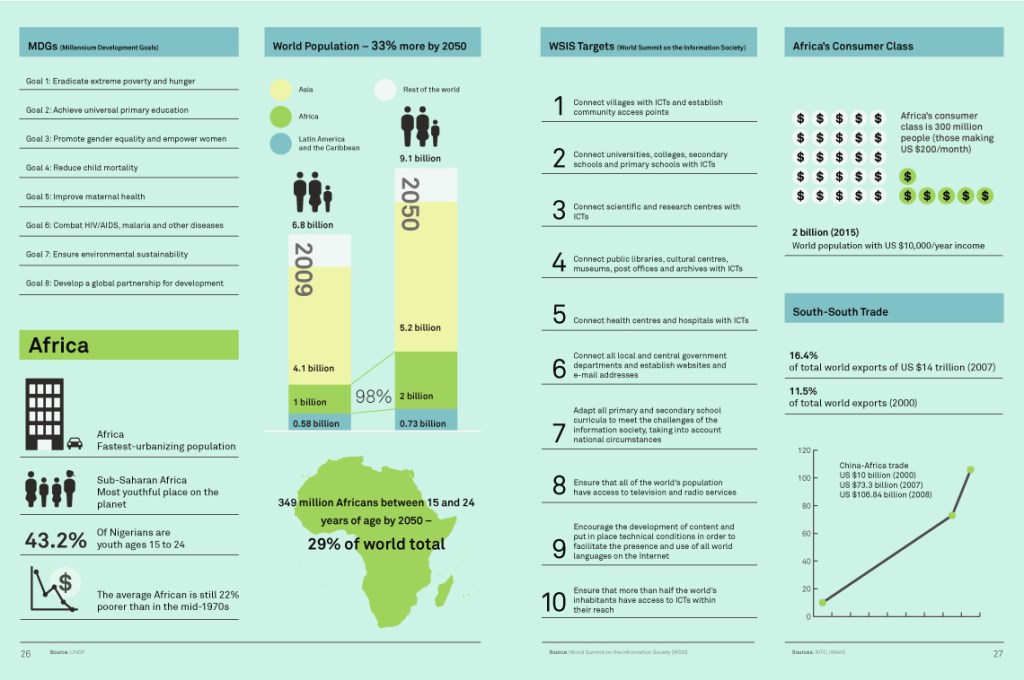
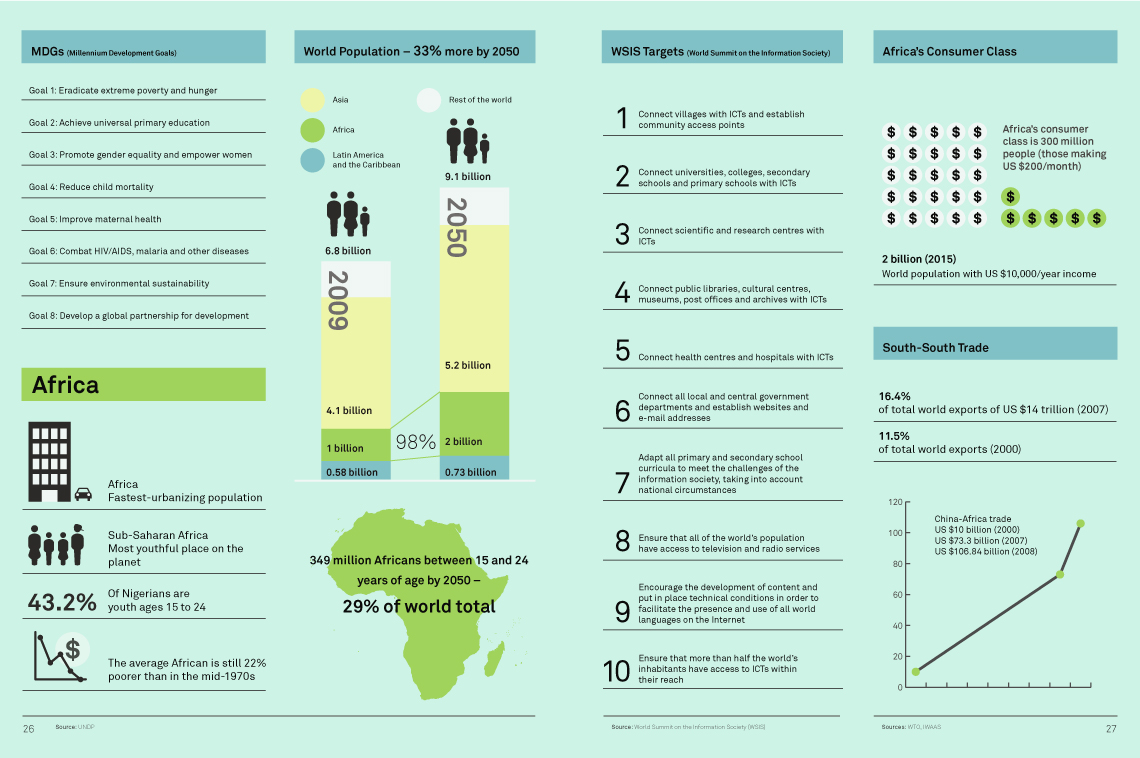
How to increase the rate of innovation in Africa? And specifically, innovation that actually improves people’s lives and reduces poverty. It is a hard question to answer, but some are putting in place the building blocks of a 21st century innovation culture by riding the information technology revolution as it rolls across Africa.
The transformative story of mobile phones in Africa has captured the attention of the world. Technologies like mobile phone payment systems developed in Africa are now being rolled out around the globe.
But there is more to come as undersea cables increase the communications links between African nations and the rest of the world. New undersea cables including TEAMs, Seacom and Eastern Africa Submarine Cable System (EASSy) (eassy.org) are vastly increasing the continent’s Internet capacity and bandwidth (http://en.wikipedia.org/wiki/Bandwidth_%28computing%29).
These communications links will revolutionize the type and scale of innovation that can happen in Africa.
As websites like AfriGadget (afrigadget.com) amply prove, there is already an entrenched do-it-yourself innovation culture hard-wired into daily life on the continent. While impressively resourceful and able to make the most of often very little, this innovation culture is often confined to a narrow geographical area. And this is the difference the new information technologies will make: They will allow this energetic and resourceful innovators’ culture to develop businesses and business models that can reach beyond narrow geographical parameters.
New technologies will also accelerate the spread of new ideas and solutions.
Across the continent, ways and means are being stitched together that enable people to transcend borders and old divisions and obstacles to connect with like-minded collaborators, seek out funding and take ideas from dreams to schemes and eventually to continent- and world-straddling levels.
According to the Deloitte 2011 East Africa Private Equity Confidence Survey: Promising 2012, “Many investors see East Africa’s strong growth potential as a driver of better investment performance than in South Africa: This is a huge shift in private equity attitudes toward Africa, which have been historically focused on South Africa. East African investment potential is seen as roughly on par with West Africa, where similar growth dynamics are at play.”
Identifying the elements that are making this innovation culture flourish came under analysis in a recent post on the Afrinnovator website (afrinnovator.com). Afrinnovator is dedicated to “telling the stories of African startups, African innovation, African made technology, African tech entrepreneurship and entrepreneurs.”
While it is well known that new infrastructure, better governance, new policies, and new services like mobile phones and mobile money have made a big difference in shifting perceptions of Africa from despair to optimism, Afrinnovator found there were other key ingredients to this innovation renaissance.
Afrinnovator argues there are four elements that have come together to change circumstances for innovators on the continent: education, mentoring and incubators, funding, and showcase events.
Afrinnovator found education was critical to the quality of emerging technological innovations. Information and communication technology (ICT) education has moved from just computer science courses to a vast array of options, from bachelors degrees to masters programmes.
For mentoring and incubators, Afrinnovator found hubs and incubators are providing places for young educated people to go to and get down to work.
Examples include iHub (http://ihub.co.ke/pages/home.php), mLab East Africa (http://mlab.co.ke/pages/home.php), ccHub (Co-Creation Hub Nigeria) (http://cchubnigeria.com/about-cchub/), Lusaka, Zambia’s Bongohive (bongohive.com), iLab Africa (http://ilabafrica.ac.ke/) NaiLab (http://nailab.co.ke/) iBid Labs (http://ibidlabs.com/) and Uganda’s HiveColab (http://hivecolab.org/), among others. These places offer like-minded fellowship and access to mentors to take them on the journey from “idea to viable profitable business.”
According to Business Daily Africa, “There are more than 3,000 software developers who have come up with both mobile and personal computer-based software applications that are changing lives across the continent.”
A transformation in funding access has seen a renaissance in new thinking that is transforming tech start-ups into viable businesses. Kenya has the Kenya ICT Board (http://www.ict.go.ke/) and it awards US $50,000 through its Tandaa grant programme (https://sites.google.com/a/ict.go.ke/tandaa/).
Because of this enthusiastic local support, the World Bank is now committing a US $55 million grant targeting Kenya’s technology innovators to be distributed through the Kenya ICT Board.
East Africa also saw 16 new investor funds launch in 2011 alone. They include early-stage investor funds like eVentures Fund Africa (eVA) (http://www.eva-fund.com/), which calls itself “the first venture capital firm investing in African SME’s active in digital media.” Another is Kenya-based 88mph (http://www.humanipo.com/88mph), with its “focus on startups targeting the East African mobile and web market.”
In Kenya, the World Bank money will be used to help technology developers bring to market simple solutions in health and education.
According to the World Bank (http://tinyurl.com/cm3g2rf), “Kenya has put in place the second-fastest broadband on the continent (after Ghana), which has reduced the wholesale internet capacity prices by over 90% and increased internet penetration from 3% to 37% of the population in the past decade. Today, about 90% of Kenyan adults have or have the use of a mobile phone.”
And the final game-changer, according to Afrinnovator, is “showcase events.”
These events give investors and potential partners the opportunity to meet start-ups and explore their new ideas.
Examples include DEMO (http://www.demo.com/ehome/index.php?eventid=29414&😉 – which connects the idea people with the money people – and Pivot East in East Africa (http://pivoteast.com/). Pivot East provides 25 technology entrepreneurs with the opportunity to make a pitch in front of investors. DEMO is working with USAID, Microsoft, Nokia and others to launch DEMO Africa in Nairobi, Kenya from 21 to 22 October 2012.
Afrinnovator concludes: “This is the last virgin tech landscape left on the planet. The best time to become a player in the African technology innovation ecosystem is now.”
Published: July 2012
Resources
1) Read more about Africa’s evolving innovation system. Website: http://afrinnovator.com/blog/2012/06/13/the-innovation-ecosystem-in-eastafrica/
2) Southern Innovator: Youth and Entrepreneurship Issue. Website: http://www.scribd.com/doc/86451057/Southern-Innovator-Magazine-Issue-2
3) Southern Innovator: Mobile Phones and Information Technology Issue. Website: http://www.scribd.com/doc/57980406/Southern-Innovator-
Magazine-Issue-1
4) Notes from ‘Understanding Broadband Demand in Africa: Internet Going Mobile’. Website: http://www.oafrica.com/mobile/notes-from-understanding-broadband-demandin-africa-internet-going-mobile/
5) Deloitte Private Equity Survey 2012. Website: deloitte.com

Development Challenges, South-South Solutions was launched as an e-newsletter in 2006 by UNDP’s South-South Cooperation Unit (now the United Nations Office for South-South Cooperation) based in New York, USA. It led on profiling the rise of the global South as an economic powerhouse and was one of the first regular publications to champion the global South’s innovators, entrepreneurs, and pioneers. It tracked the key trends that are now so profoundly reshaping how development is seen and done. This includes the rapid take-up of mobile phones and information technology in the global South (as profiled in the first issue of magazine Southern Innovator), the move to becoming a majority urban world, a growing global innovator culture, and the plethora of solutions being developed in the global South to tackle its problems and improve living conditions and boost human development. The success of the e-newsletter led to the launch of the magazine Southern Innovator.

This work is licensed under a
Creative Commons Attribution-Noncommercial-No Derivative Works 3.0 License.
ORCID iD: https://orcid.org/0000-0001-5311-1052.
© David South Consulting 2023


 David South Consulting
You must be logged in to post a comment.