Tag: Published: January 2012

  • Vietnam Launches Low-cost, High-Quality Video Game

    Vietnam Launches Low-cost, High-Quality Video Game

    By David SouthDevelopment Challenges, South-South Solutions

    SOUTH-SOUTH CASE STUDY

    The creative economy offers huge opportunities to the countries of the global South. With the proliferation of new technologies – mobile phones, digital devices, personal computers with cheap or free software, the Internet – the tools to hand for creative people are immense. This begins to level the playing field and allows hardworking and talented people in poor countries to start to compete directly with those in wealthy countries.

    One case of this dynamic at work is the computer and video games industry. Once, they were only created by ‘first world’ nations like Japan, the United States and the United Kingdom. And then came South Korea, as its prosperity increased through the 1980s and 1990s. And then China got in on the game. And India.

    And now innovators in Vietnam are using the medium to make money, and tell a story from a distinctly Vietnamese perspective. And that story is the long-running Vietnam wars that engulfed the country, from the 1950s through the 1960s until 1975 when the last of the United States’ helicopters left Saigon, then the capital of South Vietnam.

    Emobi Games (http://emobigames.vn) from Hanoi, unified Vietnam’s current capital, uses the motto “Enjoy challenges.” Launched in 2011 by founder and director Nguyen Tuan Huy, it has created 7554, a game that places players in the shoes of a Vietnamese soldier during the independence war against the French. Cleverly, it also comes at a competitive price: US $12.

    The game’s name refers to May 7, 1954, the day the French army in Dien Bien Phu surrendered to the Vietnamese People’s Army. This led to the end of the European colonial power’s occupation of its Indochinese colonies. The high death toll and sacrifice from the wars with France and the United States still resonate in the country, and the game reflects this.

    A young team of 20 developers worked on the project for three years. It cost the company an estimated US $802,748 to complete. It was extensively researched to ensure historical accuracy.

    “Dien Bien Phu is a great victory that we are proud of. That day, 7th of May 1954, is a symbol of our strength,” Huy told Ars Technica (http://arstechnica.com).

    “I think it is similar to what Americans feel when they celebrate July 4th. Independence is very important and something worth fighting for. It is also something worth honouring.”

    The game is the end product of an intense struggle to prove critics and sceptics wrong. Many doubted the company could deliver a product that could compete with the more established players. The video game market for firstperson shooters – where the player uses a weapon to engage in first-person combat – has been transformed in the last decade. Many games are highly sophisticated products akin to major films. The Call of Duty (callofduty.com) franchise is a good example. These games have elaborate graphics and story concepts, often use professional actors and come with high-cost, high-publicity marketing campaigns to back up game launches.

    The money at stake is significant: the global video games market is estimated to be worth US $65 billion in 2011 (Reuters). Game makers Activision Blizzard, makers of Call of Duty, had an annual revenue of US $4.8 billion.

    On its website, Emobi proudly takes on the doubters: “We are a very young company in Vietnam, currently we focus on one task: Building a successful PC Video Game for the Vietnamese. Most Vietnamese don’t believe that Vietnam can produce (a) PC Video Game.

    “We, the young people, think about this as a challenge, and want to overcome that. Maybe we will fail, maybe we will succeed. But that’s not important. (It is) Important that it must be time for the Vietnamese Game.”

    Huy admits it was a struggle to make the game.

    “Video games, films or any kind of entertainment in our country must adhere to certain standards,” explains Huy. “Entertainment must not be too violent or too sexy. Our government policy is stricter than other countries, especially when compared to Western countries.”

    Vietnam regulates gaming in various ways including limiting how long people can play online and the opening hours for Internet cafes.

    Out of a population of over 86 million people (World Bank) it is believed Vietnam has 12 million video gamers: a substantial market in the country alone. They play games from around the world and increasingly are willing to pay for legal licenses. This is a key development, since getting gamers to pay represents a revenue stream. With revenue, players in the global South can contribute to the building of their home-grown businesses to become big players.

    “The video game industry is just in its infancy,” said Huy. “We only have four studios that develop major games. Most work on online games. There are not many people who work in game development. Those that do are self-taught. There are no universities that provide education in games development. We learn by doing, failing and doing it again until we get it right.”

    Viewing warfare through non-Western eyes is part of the game’s unique selling point, Huy says.

    “American gamers have not been exposed to many war games where they play as a soldier who is not of American or British background. I think some may find this perspective refreshing.”

    Huy said that “7554 may give some gamers a new perspective. But what is most important is that we create a game that is fun to play.

    “We think we have created a game that FPS (first person shooter) shooter fans will enjoy. The price point is low so that will hopefully allow more people to play the game. I think gamers understand that a good game can come from anywhere in the world. I think gamers are willing to experience different cultures through games, so long as the experience is enjoyable.”

    The 7554 game is scheduled to be launched in the United States and France in February 2012 for personal computers.

    In the future, the company hopes to raid history for more battle scenarios to create new games.

    “Unfortunately there have been many battles fought, so we have a full history to pull from in order to create games,” Huy said.

    Published: January 2012

    Resources

    1) Animation Xpress Asia Pacific: A website packed with interviews and resources for the animation community.Website: http://www.axapac.com

    2) How to make video games: An online website with step-by-step resources to get started. Website:http://www.make-video-games.com

    3) Changing Dynamics of Global Computer Software and Services Industry: Implications for Developing Countries:A report from UNCTAD on how computer software can become the most internationally dispersed high-tech industry. Website:http://www.unctad.org/templates/webflyer.asp?docid=1913&intitemid=2529&lang=1

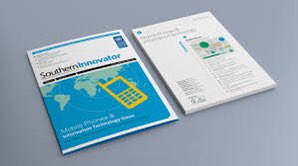
    4) Southern Innovator: A new magazine launched by UNDP’s Special Unit for South-South Cooperation. The first issue’s theme is mobile phones and information technology. Website: http://www.southerninnovator.org

    Development Challenges, South-South Solutions was launched as an e-newsletter in 2006 by UNDP’s South-South Cooperation Unit (now the United Nations Office for South-South Cooperation) based in New York, USA. It led on profiling the rise of the global South as an economic powerhouse and was one of the first regular publications to champion the global South’s innovators, entrepreneurs, and pioneers. It tracked the key trends that are now so profoundly reshaping how development is seen and done. This includes the rapid take-up of mobile phones and information technology in the global South (as profiled in the first issue of magazine Southern Innovator), the move to becoming a majority urban world, a growing global innovator culture, and the plethora of solutions being developed in the global South to tackle its problems and improve living conditions and boost human development. The success of the e-newsletter led to the launch of the magazine Southern Innovator. 

    Creative Commons License

    This work is licensed under a
    Creative Commons Attribution-Noncommercial-No Derivative Works 3.0 License.

    ORCID iD: https://orcid.org/0000-0001-5311-1052.

    © David South Consulting 2023

  • Lagos Traffic Crunch Gets a New Solution

    Lagos Traffic Crunch Gets a New Solution

    By David SouthDevelopment Challenges, South-South Solutions

    SOUTH-SOUTH CASE STUDY

    Around the world, traffic congestion is often accepted as the price paid for rapid development and a dynamic economy. But as anyone who lives in a large city knows, there comes a tipping point where the congestion begins to harm economic activity by wasting people’s time in lengthy and aggravating commuting, and leaving commuters frazzled and burned out by the whole experience.

    According to the World Business Council for Sustainable Development, 95 per cent of congestion growth in the coming years will be in developing countries. Even in developed countries like the United States, in 2000, the average driver experienced 27 hours of delays (up seven hours from 1980) (MIT Press). This balloons to 136 hours in Los Angeles.

    Developing countries are seeing vehicle numbers rise by between 10 and 30 per cent per year (World Bank). In economic hotspots, growth is even faster.

    Lagos, Nigeria, the throbbing business hub of West Africa’s most populous nation, has a network of over 2,700 km of roads with a vehicle density of 740 vehicles per kilometre (E.I. Bello). All those cars consume over 85 per cent of the petroleum products imported into the country – a costly expense for a country that actually imports oil. All this driving is necessary because the city has no rail or sea mass transit system and all movements of people and goods are by road.

    Nigeria suffers from the irony of being a country that makes 95 per cent of its export earnings and 80 per cent of its revenue from oil, yet has to import most of its fuel because its refineries are constantly breaking down.

    The overwhelming majority of mega-cities are now located in developing countries, including sprawling conurbations such as São Paulo, Brazil (18.8 million inhabitants in 2007), Delhi, India (15.9 million), and Manila, Philippines (11.1 million). By 2015 Lagos will have 12.8 million inhabitants and by 2025, it is estimated it will have 16.8 million citizens.

    That will be a lot of cars and frustrated people trying to get around.

    One project trying to alleviate the pain of a daily commute in the city is called Traffic (Traffic.com.ng). The computer application, or ‘app’, has a live feed of traffic on its homepage, collecting information from a wide variety of sources: the web, mobile phones and SMS (short message service) text messages sent in by mobile telephone. The service is also looking to extract information from microblogging site Twitter (twitter.com).

    The service says it aims to “reduce stress on Lagos road by providing up-to-the-minute traffic status in the state.”

    It uses the powerful concept of ‘crowdsourcing’, in which a large group of people contributes to solve a problem by combining the technological power of mobile phones and the Internet. These two technologies mean it is possible to solve problems in real time and draw on a very large group of people spread out over a wide geographical area.

    So, how does it work? A user can go to the homepage and click “View Traffic Report From” and see live data streaming in. If the user wants to see traffic conditions in a particular area, they type in the road and area in a box on the page and click to see the report.

    Those who are stuck in a traffic jam and want to alert others can send an SMS message with the keywords to 07026702053.

    The Traffic app came under scrutiny by the anonymous blogger Cherchez la Curl, whose blog is about “celebrating African women and natural hair”: “It’s no Einstein-worthy revelation to say that solving Lagos’ traffic problem (and, more generally, improving Nigeria’s poor transportation network) is one of the keys to sustaining growth and economic development in Nigeria,” the blog said.

    The blog’s author found the service was still in its early days: “While the idea is a fantastic application of modern technology to developing Africa, the only problem I see is that it seems like no-one is sending through traffic alerts! On a recent visit to the site, the alert stream was empty of alerts save for a few tweets. It’s a shame as this service would be extremely handy as a counterpoint/band-aid whilst government sorts out the root cause of the traffic.”

    It sounds like it is still early days for the Traffic app and Lagos residents will be its harshest critics.

    Published: January 2012

    Resources

    1) LagosMet.com: An Internet bulletin board offering rolling updates on Lagos traffic and security reports. Users can also post their reports. Website: http://lagosmet.com

    2) eNowNow: A website offering live updates on Lagos traffic congestion. Website: http://traffic.enownow.com

    3) SENSEable City: A project at the Massachusetts Institute of Technology’s SENSEable City Laboratory to use the new generation of sensors and hand-held electronics to change how cities are understood and navigated. This includes creating real-time maps of cities that can then be used to help with avoiding traffic congestion and other problems. Website: http://senseable.mit.edu

    4) Mobility 2001: World Mobility at the End of the Twentieth Century and its Sustainability published by the World Business Council for Sustainable Development. Website: http://www.wbcsd.org

    5) Lagos Traffic Crowdmap: A mix of user-contributed reports on the traffic conditions in Lagos. Website: https://lagostraffic.crowdmap.com/main

    6) A study of Urban Traffic Management – A Case Study of Lagos State Traffic Management Authority by E. I, Bello et al., 2009. Website: http://www.scientific.net/AMR.62-64.599

    7) Cities for All: An interview on book seeking to find solutions to the congested cities of the South. Website: http://globalurbanist.com/2010/08/24/cities-for-all-shows-how-the-worlds-poor-are-building-tiesacross-the-global-south

    Development Challenges, South-South Solutions was launched as an e-newsletter in 2006 by UNDP’s South-South Cooperation Unit (now the United Nations Office for South-South Cooperation) based in New York, USA. It led on profiling the rise of the global South as an economic powerhouse and was one of the first regular publications to champion the global South’s innovators, entrepreneurs, and pioneers. It tracked the key trends that are now so profoundly reshaping how development is seen and done. This includes the rapid take-up of mobile phones and information technology in the global South (as profiled in the first issue of magazine Southern Innovator), the move to becoming a majority urban world, a growing global innovator culture, and the plethora of solutions being developed in the global South to tackle its problems and improve living conditions and boost human development. The success of the e-newsletter led to the launch of the magazine Southern Innovator. 
    Creative Commons License

    This work is licensed under a
    Creative Commons Attribution-Noncommercial-No Derivative Works 3.0 License.

    ORCID iD: https://orcid.org/0000-0001-5311-1052.

    © David South Consulting 2023

  • Microwork Pioneer Transforms Prospects For Poor, Vulnerable

    Microwork Pioneer Transforms Prospects For Poor, Vulnerable

    By David SouthDevelopment Challenges, South-South Solutions

    SOUTH-SOUTH CASE STUDY

    A pioneering technology social enterprise has found a way to connect people around the world to the new digital economy, transforming their lives and providing long-term employment opportunities. It is closing the digital divide in a very practical way, teaching new skills and, most importantly, providing income to the poor and vulnerable.

    The San Francisco, USA-based non-profit social enterprise Samasource (samasource.org) uses what it calls microwork – a virtual assembly line of small tasks broken down from a larger project so they can be completed over the Internet – to outsource work to its network of workers around the world.

    The tasks in this virtual piecework range from writing to transcribing to organizing online content.

    The company organizes the projects using its own online work distribution system connecting workers around the world to the SamaHub in San Francisco. Most of the workers are women, youth and refugees. When they complete their task, it is sent back to the SamaHub in San Francisco where the staff check it and assure its quality. Once approved and completed, the project is returned to the client.

    The company was founded in 2008 and draws on experts in “distributed work, economic development, and outsourcing.”

    The microwork is divided into three areas: content services, data enrichment and transcription.

    Content services can include writing descriptions for online business listings, organizing large databases on information or creating brief descriptions of existing content to make it easier for search engines to find it. “Data enrichment” tackles the vast quantity of information on the Internet that needs to be kept up to date and reliable. It also includes ‘tagging’, where text or images on the Internet need to have appropriate ‘tags’ or labels. And finally, transcription services include digitizing paper documents like receipts or books or transcribing audio and video files for the web.

    All these tasks are labour intensive and require high attention to detail. And they are critical to any online business’s success if it wants a reputation for accuracy and consistency.

    Samasource is optimistic about its future potential because of the sheer size of the market for business process outsourcing: estimated to be worth over US $100 billion. What Samasource does, called ‘impact sourcing’ – outsourcing to people in the developing world living in poor or remote communities – is a market worth US $5 billion, according to Samasource’s website.

    It differs from conventional business process outsourcing in a number of respects, including the educational background of the workers. Most conventional outsourcing goes to college graduates in cities in India, China and the Philippines. Impact outsourcing is done by people with at most a high school education.

    The digital economy needs these workers to handle the many millions of detailed tasks required to link together information. It is easy to take this for granted because it is hidden from view, but it is what enables the Internet to function and businesses to thrive. Samasource provides outsourcing services including content moderation and data entry to clients like LinkedIn, Intuit and the US State Department.

    “We bring dignified, computer-based work to women, youth, and refugees living in poverty,” said Samasource’s founder and chief executive officer, Leila Janah.

    Janah has a background in development studies and formerly worked for the World Bank. This experience convinced her that much foreign aid was failing to target what poor people are really looking for: a job that pays well.

    Samasource sees what it does as work, and not handouts.

    It also believes it is changing perspectives, proving people from the poorest places on earth can become trustworthy, hard-working knowledge workers.

    The Internet is a unique medium because it transcends borders and smooths contact between people with varying linguistic, cultural and educational capabilities.

    “The Internet reduces the friction of collaboration across all of these centres and time zones, and with a highly distributed workforce,” said Janah.

    Samasource claims to have paid out US $1 million in wages to more than 1,500 workers around the world. Ambitiously, it wants to expand this to reach some of the 144 million youth between 16 and 24 living on less than US $2 a day.

    Youth are a particular focus for Samasource. Samasource targets young people who are literate and have received an education but still can’t get a job.

    As for the many women employed by Samasource, they were either unemployed or earning poverty-level wages doing precarious work in low-level manufacturing and not building their skills.

    Samasource currently has 16 partnerships in Haiti, India, Pakistan, Kenya, Uganda and South Africa. Criteria to work with Samasource includes being in a high-poverty region. Another criteria is for most of the money earned to stay within the region where the work is done and adhere to the standards laid down by Samasource.

    Samasource’s success means it has attracted further funding. In December 2011, it was given a US $1.5 million grant from Google.org – the Google.com search engine’s charity. It has also raised US $5 million from non-profit investors, including the Ford Foundation, the Rockefeller Foundation and the eBay Foundation. The challenge for the Samasource model will be to prove, with this new funding, that it can scale its operations to pay out more to its workers than it is taking in to meet its operating costs.

    Microwork is turning out to be big work indeed!

    Published: January 2012

    Development Challenges, South-South Solutions was launched as an e-newsletter in 2006 by UNDP’s South-South Cooperation Unit (now the United Nations Office for South-South Cooperation) based in New York, USA. It led on profiling the rise of the global South as an economic powerhouse and was one of the first regular publications to champion the global South’s innovators, entrepreneurs, and pioneers. It tracked the key trends that are now so profoundly reshaping how development is seen and done. This includes the rapid take-up of mobile phones and information technology in the global South (as profiled in the first issue of magazine Southern Innovator), the move to becoming a majority urban world, a growing global innovator culture, and the plethora of solutions being developed in the global South to tackle its problems and improve living conditions and boost human development. The success of the e-newsletter led to the launch of the magazine Southern Innovator.  

    Follow @SouthSouth1

    Like this story? Here is a dirty secret: this website is packed with stories about global South innovators. We spent 7 years researching and documenting these stories around the world. We interviewed the innovators to learn from them and we visited them to see how they did it. Why not use the Search bar at the top and tap in a topic and see what stories come up? As for my work, I have been involved with start-ups and media ventures since the early 1990s. In the years since I have learned a great deal about innovation and digital and have shared these insights in the stories on this website as well as in the 5 issues of Southern Innovator magazine. So, stick around and read some more!    

    Google Books: https://books.google.co.uk/books?id=qLYTxcC8HgcC&dq=development+challenges+january+2012&source=gbs_navlinks_s

    Slideshare: http://www.slideshare.net/DavidSouth1/development-challengessouthsouthsolutionsjanuary2012issue

    Southern Innovator Issue 1: https://books.google.co.uk/books?id=Q1O54YSE2BgC&dq=southern+innovator&source=gbs_navlinks_s

    Southern Innovator Issue 2: https://books.google.co.uk/books?id=Ty0N969dcssC&dq=southern+innovator&source=gbs_navlinks_s

    Southern Innovator Issue 3: https://books.google.co.uk/books?id=AQNt4YmhZagC&dq=southern+innovator&source=gbs_navlinks_s

    Southern Innovator Issue 4: https://books.google.co.uk/books?id=9T_n2tA7l4EC&dq=southern+innovator&source=gbs_navlinks_s

    Southern Innovator Issue 5: https://books.google.co.uk/books?id=6ILdAgAAQBAJ&dq=southern+innovator&source=gbs_navlinks_s

    Creative Commons License
    This work is licensed under a
    Creative Commons Attribution-Noncommercial-No Derivative Works 3.0 License.

    ORCID iD: https://orcid.org/0000-0001-5311-1052.

    © David South Consulting 2021