Categories
Archive Development Challenges, South-South Solutions Newsletters

Africa’s Consumer Market in Spotlight for 2011

By David SouthDevelopment Challenges, South-South Solutions

SOUTH-SOUTH CASE STUDY

While other parts of the world will spend 2011 worrying about their debt levels and how to spur economic growth, many factors are pointing to Africa potentially following a different story. A frenzy of activity has been building around Africa’s market opportunities and its growing middle class consumer population. Years of steady growth rates up to 2008 and the vast, untapped opportunities on the continent have sparked interest from investors and businesses alike.

Foreign direct investment (FDI) to developing economies rose by 10 percent in 2010 due to fast economic recovery and increasing South-South flows. Africa peaked in 2008 because of the resource boom and fell by 14 percent to US $50 billion in 2010 (UNCTAD). Rising FDI from Asia and Latin America has still yet to match the decline from developed countries – still the majority of FDI to Africa.

However, foreign direct investment to Africa had risen sixfold to US $58.56 billion between 2000 and 2009 (UNCTAD). The amount going to manufacturing and services has been growing, despite the slow down in 2009 because of the global economic downturn. Africa’s 11 largest economies are now being seen as the next to match Brazil and Russia, economic stars of the last few years.

The continent as a whole forms the 10th largest economy in the world. Of Africa’s more than 1 billion people, 900 million can be classified as part of the consumer economy. Out of this group, there is a third – approximately 300 million people – who make modest sums by Western standards, about US $200 a month, but have spare cash to buy things like mobile phones, DVDs and new clothes, or pay for better schools. They are the population that is overlooked when attention is focused only on the very poor living on less than US $2 a day.

This vast group is captured in the book Africa Rising by University of Texas professor Vijay Mahajan, which details the phenomenon of Africa’s middle class consumer society. He calls this group of middle class consumers “Africa 2,” with the desperately poor called Africa 3s, and the extremely rich Africa 1s.

This new group has expanded far beyond ruling elites and government workers. Many of its members work in the private sector, as secretaries, computer entrepreneurs, merchants and others who have benefited from consistent growth rates in many African countries.

The portion of African households with discretionary spending power rose from 35 percent in 2000 to 43 percent in 2008. The challenge will be to turn this wealth to the benefit of made-in-Africa businesses and to create stable, high-quality jobs to ensure this wealth effect lasts.

The new wealth effect can give Africa the tools needed to tackle its long-standing development challenges and lift more and more people out of poverty and misery while reducing dependence on foreign aid. And this can add rocket fuel to the surge toward meeting the Millennium Development Goals deadline in 2015 (http://mdgs.un.org/unsd/mdg/Default.aspx).

The rapidly rising profile of Africa is reflected by the prestigious business newspaper the Wall Street Journal recently running a series titled “Africa’s Growing Consumer Class Lures Multinationals” (http://online.wsj.com/article/SB10001424052748704720804576009672053184168.html).

Consulting firm McKinsey (http://www.mckinsey.com/) believes Africa’s billion citizens should be seen as consumers and says the continent’s growing number of middle-income consumers now outstrips India’s. It boldly claims consumer spending will reach US $1.4 trillion in Africa by 2020, up from US $860 billion in 2008. Consumer spending rose by 16 percent a year from 2005 to 2008 before the global economic crisis.

It is forecast that 220 million Africans now frozen out of this consumer wave will become consumers by 2015 if current trends continue.

The IMF believes the steady growth will continue, with 5.5 percent growth for the 47 sub-Saharan countries this year.

That’s the good news. But many African countries still rank at the bottom in the World Bank’s Ease of Doing Business survey (http://www.doingbusiness.org/rankings). Africa remains a logistical nightmare for companies. Poor quality roads, inadequate harbours and inefficient rail systems, all make it difficult to move goods around the continent and across borders.

This makes distribution in Africa costly. Companies also often have to import building supplies and equipment to construct factories and plants. Then there is the unreliable electricity supply. Unable to trust local power supplies, many companies use their own electricity generators.

If handled right, new brands and companies are set to join African global success stories like Mo Ibrahim (http://en.wikipedia.org/wiki/Mo_Ibrahim), who founded the mobile telecommunications company Celtel.

Some of the new success stories include African companies pairing up with global firms as they seek local knowledge and experience. This will be a substantial opportunity for companies wise enough to organise themselves for global competition. In 2010, Sweden’s Electrolux – one of the world’s largest makers of home appliances – bought Egypt’s Olympic Group (http://www.ameinfo.com/145039.html), a North African powerhouse for household goods.

In the Ivory Coast, Nouvelle Parfumerie Gandour (http://www.npgandour.com/english/index.html) – makers of perfume, cologne, cosmetics and talcs – is an African cross-border success story. It has factories in Ivory Coast, Senegal, Morocco and Cameroon. Thirty percent of its profits come from exports, some of which are to the United States and Europe.

Sonatrach (http://www.sonatrach-dz.com/NEW/) in Algeria is the largest oil and gas company in Algeria and Africa. Is using its base in oil and gas exploration, production, pipeline transportation and marketing of hydrocarbons and by products, to move into other areas. It is increasing its investments in power generation, new and renewable energies, water desalination, and mining exploration and exploitation. Looking to grow its business with 30 percent coming from exports by 2015, it has spread across Africa ( Mali , Niger , Libya , Egypt ), to Spain , Italy , Portugal , United Kingdom , Peru and the United States.

Marwa (http://www.marwa.es/) from Casablanca, Morocco, is an African fashion success story. The brand started by Karim Tazi in 2003 began with just two stores in Casablanca and Rabat. It identified the niche of very fashionable but good quality and inexpensive clothing. It blends international trends with subtle influences from Moroccan tradition. Its prices hover between six euros for a t-shirt and 100 euros for a coat. It has successfully created a Moroccan high-street fashion look that can be exported. It has opened a branch in Zaragoza, Spain and is expanding to Riyadh, Saudi Arabia, Paris, France, Beirut, Lebanon and Istanbul, Turkey.

A survey by consultants AT Kearney (http://www.atkearney.com) found eight out of nine West African subsidiaries of global consumer goods companies discovered quicker revenue growth than their parent companies.

All this new wealth and growth provides substantial opportunities to African brands to build their businesses and markets. The big issue will be who will rise to the occasion and who will be clever enough to learn from existing African brands that are already thriving and have shown the way.

Two trends will also power this growth: urbanization and large youth populations. Africa’s youthful, urban population has already been reached by the telecoms sector through the rapid growth of mobile phones. More than 500 million subscribers have been signed up since 2000 (Informa Telecom and Media), a user base greater than the entire US population.

“By 2040, the continent will be home to one in five of the planet’s young people and will have the world’s largest working-age population,” according to Charles Roxburgh and Susan Lund, authors of a study for the McKinsey Global Institute.

“If Africa can give its young people sufficient education and skills, they could be a substantial source of consumption and production in years ahead.”

Published: January 2011

LINKS:

1) Afrique Avenir: Inspiring blog tracking Africa’s rising middle class and their global economic impact. Also great photo gallery The Other Africa, a photographic journey through all 54 African countries featuring the rising middle class. Website: http://www.afriqueavenir.org/en/

2) Afrocoffee: A design-savvy South African coffee shop chain that has expanded to Europe. It uses a modern African-themed design in its shops and product range. Website: https://www.afrocoffee.com/index.php?id=4&menustate=&L=1

3) Africa Rising: A book by Professor Vijay Mahajan on how Africa’s consumer economy is growing and growing. Website: http://tinyurl.com/2vk3m9n

4) Arise Magazine: Arise is a Nigerian style monthly started by Nigerian media mogul Nduka Obaigbena, who also publishes Nigeria’s leading newspaper, This Day. Website: http://www.arisemagazine.net/

5) A video on the rising African consumer market. Website:http://annansi.com/blog/2010/12/growth-and-spending-of-african-consumer-video/

6) Annansi Chronicles: A blog packed with the latest news and media on African business and culture trends. Website: http://annansi.com/blog/

7) An interactive map of Africa’s new wealth and where to find it. Website:http://online.wsj.com/article/SB10001424052748704720804576009672053184168.html#project%3DAFRICAMAP0111%26articleTabs%3Dinteractive

https://davidsouthconsulting.org/2021/10/30/2011-development-challenges-south-south-solutions/

https://davidsouthconsulting.org/2022/10/25/2011-trends-for-the-south/

https://davidsouthconsulting.org/2020/12/15/development-challenges-south-south-solutions-newsletter-2011-2014-2/

https://davidsouthconsulting.org/2021/09/20/southern-innovator-and-the-gssd-expo-2011-2014/

https://davidsouthconsulting.org/2022/12/01/southern-innovator-goes-to-south-south-expo-13-december-2011/

https://davidsouthconsulting.org/2022/12/01/southern-innovator-magazine-is-printed-and-readied-for-distribution-31-may-2011/

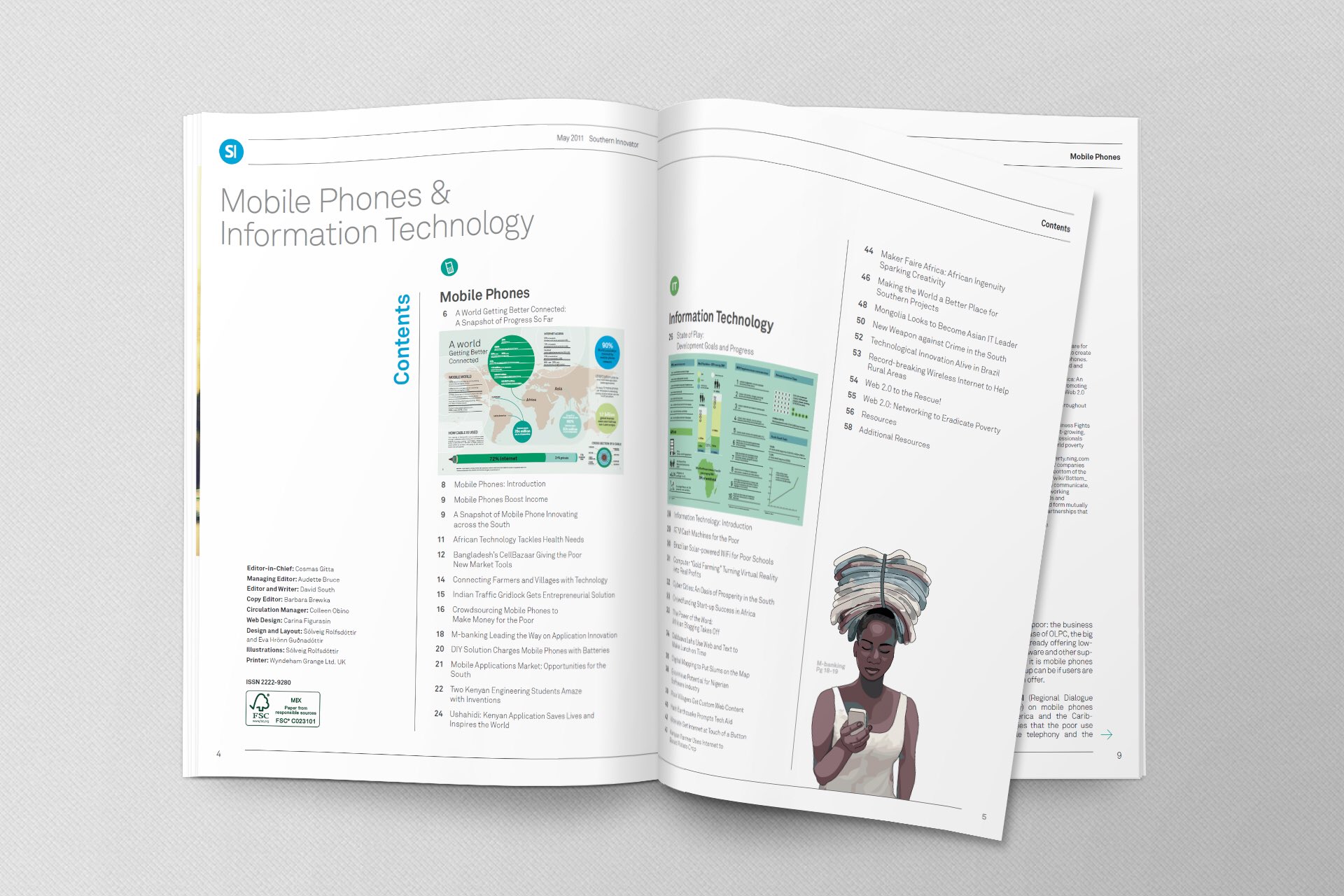
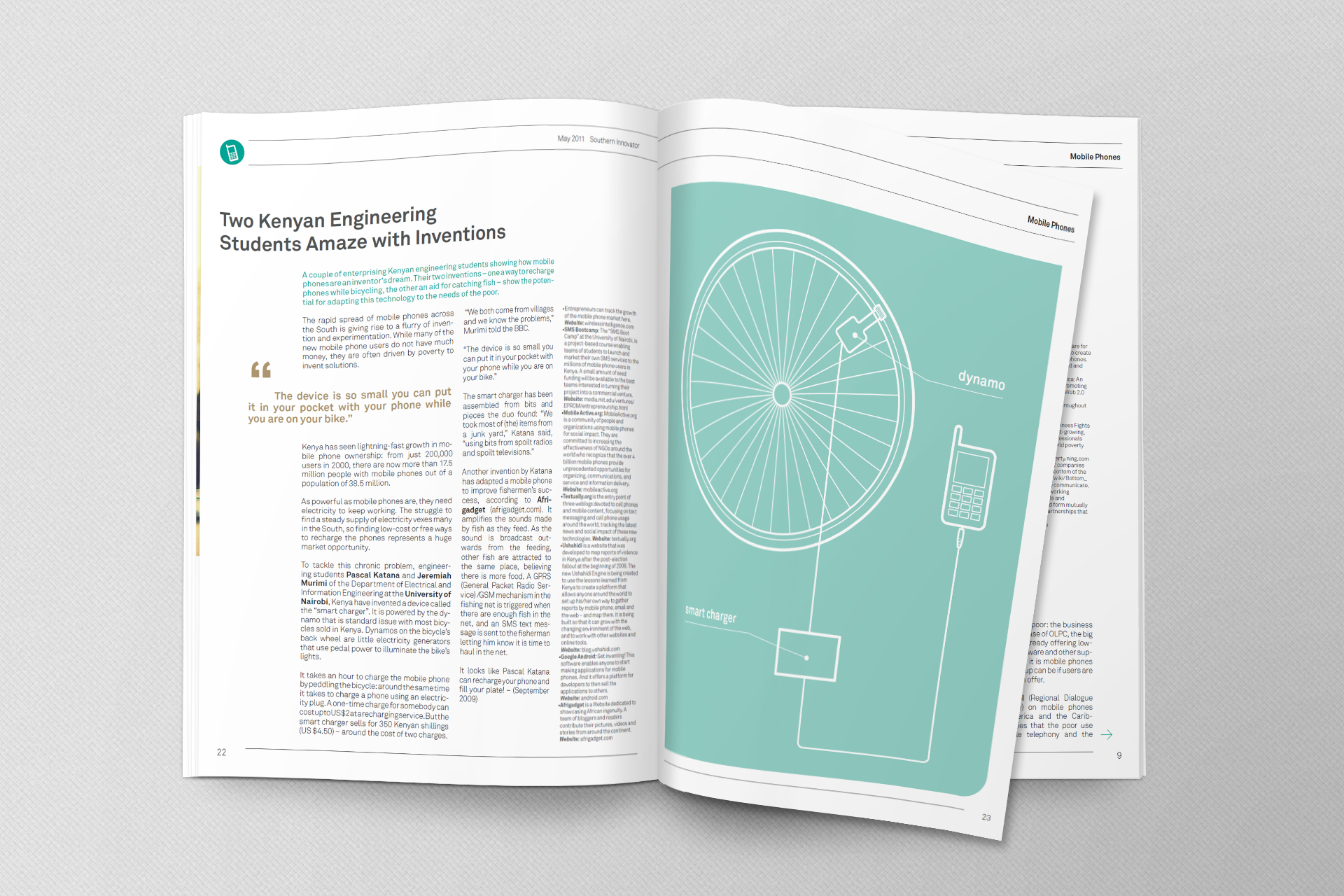
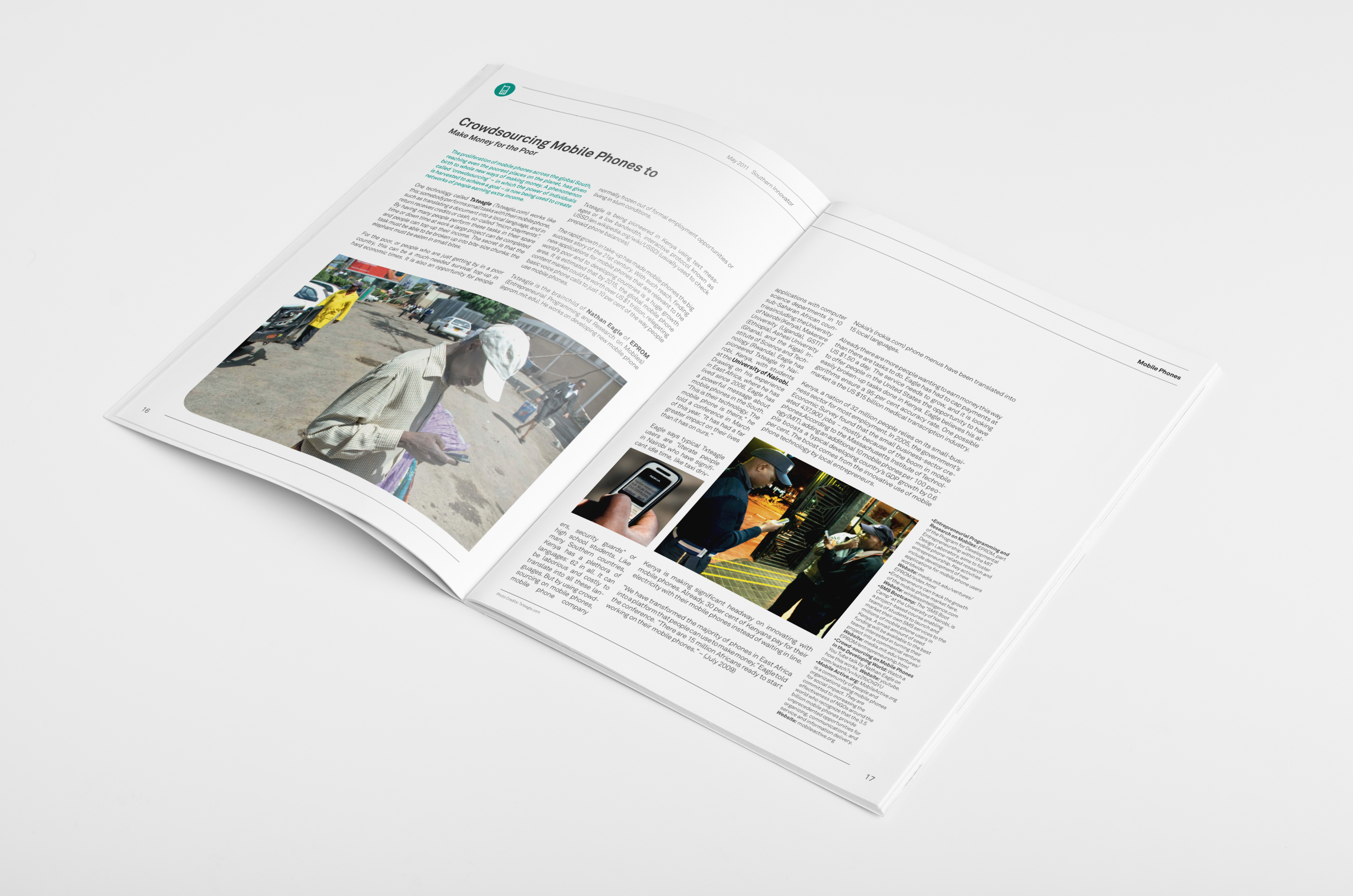
Development Challenges, South-South Solutions was launched as an e-newsletter in 2006 by UNDP’s South-South Cooperation Unit (now the United Nations Office for South-South Cooperation) based in New York, USA. It led on profiling the rise of the global South as an economic powerhouse and was one of the first regular publications to champion the global South’s innovators, entrepreneurs, and pioneers. It tracked the key trends that are now so profoundly reshaping how development is seen and done. This includes the rapid take-up of mobile phones and information technology in the global South (as profiled in the first issue of magazine Southern Innovator), the move to becoming a majority urban world, a growing global innovator culture, and the plethora of solutions being developed in the global South to tackle its problems and improve living conditions and boost human development. The success of the e-newsletter led to the launch of the magazine Southern Innovator. 

https://davidsouthconsulting.org/2021/03/05/southern-innovator-issue-1/

Creative Commons License

This work is licensed under a
Creative Commons Attribution-Noncommercial-No Derivative Works 3.0 License.

ORCID iD: https://orcid.org/0000-0001-5311-1052.

© David South Consulting 2023

Categories
Archive Development Challenges, South-South Solutions Newsletters

China’s Booming Wine Market Can Boost South

By David SouthDevelopment Challenges, South-South Solutions

SOUTH-SOUTH CASE STUDY

A great South-South opportunity has emerged with the recent boom in wine drinking in China and the pursuit of quality tastes. Matching high-quality wine producers from the global South – including South Africa, Chile, Morocco, and Lebanon – with China’s thirsty wine drinkers could deliver a major income boost.

In the past year China has become the world’s fastest-growing wine market with newly wealthy seeking sophisticated tastes and young working women seeking the health benefits of wine (http://www.healthtree.com/articles/red-wine/). Yearly wine consumption in China is expected to increase by 20 percent to 126.4 million cases by 2014, a fact that is grabbing the attention of old and new-world wine producers.

Women are driving China’s growing market for wine, which is perceived as a symbol of affluence, a benefit to health – in moderation – and good for the skin. A new report from the International Wine and Spirit Research (IWSR) group says wine consumption in China and Hong Kong jumped 100 per cent between 2005 and 2009, from 46.9 million to 95.9 million cases.

Import taxes have been reduced as China entered the World Trade Organization (WTO), and this has prompted foreign wine brands to lunge into the market.

The government is trying to get people to switch away from high-strength alcoholic drinks by increasing the tax on them.

Awareness and experience varies widely amongst the winemakers of the global South. Some countries, such as South Africa, Chile and Argentina, have long-standing international reputations for producing quality wine, and use sophisticated branding and marketing campaigns to connect with their customers. But other countries, including Lebanon, Tunisia and Zimbabwe, have lower profiles and do not pack the same brand punch. But all these countries help show the role viticulture can play in economic development. By tapping into this Chinese wine drinking boom, they could reap rich rewards.

In Lebanon, viticulture – the harvesting of grapes for wine (http://en.wikipedia.org/wiki/Viticulture) – has prospered despite the country’s wars and instability.

Lebanon has a long and illustrious history of winemaking stretching back 5,000 years. The modern Lebanese wine industry dates itself from 1857, when Jesuit monks at Ksara in the Bekaa Valley began importing vines from Algeria. After World War I, when the French took control of Lebanon, its vineyards expanded to satisfy France’s thirsty imperial troops.

Then Lebanon was hit by the brutal civil war of the 70s and 80s. And things have remained unstable and uncertain since.

But despite this, well established businesses like Ksara (http://www.ksara.com.lb/), Kefraya (http://www.chateaukefraya.com/) and Musar (http://www.chateaumusar.com.lb/english/cave.aspx), and small boutique producers, thrive.

Massaya (http://www.massaya.com/old/wine.htm) is one of Lebanon’s most dynamic and successful wineries, owned by brothers Sami and Ramzi Ghosn. Both are Christians like many of the Lebanese winemakers. They have been able to succeed in an area fraught with tension from past conflicts.

Another winery is using the business to revive a community and restore old skills. In the hills east of Beirut, the BBC found Naji Boutros – who used to be an investment banker in London – and his wife Jill. Boutros started Chateau Belle-Vue in Bhamdoun (http://www.chateaubelle-vue.com/), in the village where he grew up. As well as producing wine, the Chateau finances community projects and a library.

The two kings in the global South of wine exports are South Africa and Chile. Both countries have very strong brand awareness in export markets and both have triumphed after years of boycotts due to the political situations in the respective countries (Chile’s military dictatorship and South Africa’s Apartheid regime).

Wine-making is one of South Africa’s oldest industries and plays a key part in the economy (http://www.wine.co.za/), with exports growing from less than 50 million litres in 1994 to more than 400 million litres in 2008 – year-on-year growth of 17 percent.

Since the end of the racist Apartheid regime (http://en.wikipedia.org/wiki/South_Africa_under_apartheid) in the mid-1990s, various government and industry initiatives have begun to reverse the iniquities of the country’s wine-making industry. South Africa has been pioneering switching black Africans on to the pleasures and profits of wine making and drinking.

Like Argentina, Chile (http://www.winesofchile.org/) has a strategic plan for its wine industry by 2020. It hopes to be “the Number One producer of sustainable and diverse premium wines from the New World by the year 2020.”

Chile – recovering from the severe earthquake on February 27, 2010 – uses a sophisticated marketing strategy to promote its wines, including websites, social networking media and events and tastings. Since 2007, it has unified its marketing efforts under one umbrella organization, the Vinos de Chile, and it also offers wine tourism to further develop a close relationship with drinkers, The Wines of Chile Experience (http://www.chilewinetourism.com/), launched in 2010.

Chile’s neighbour Argentina (http://www.winesofargentina.org/) is the world’s fifth largest producer of wine,

The country has seen its domestic consumption of wine shrink as tastes changed, and has also experienced very extreme economic fluctuations. It has had to raise its game in order to earn income from exporting. This has been a spur to the wine industry and it has seen growth since 1996.

Wine growing has a long history in Argentina, going back to its Spanish colonial foundations in the 1500s. Argentineans drank large quantities of wine domestically in the 1970s but this tailed off in the later decades.

That had been balanced by a great export success with wines from the malbec grape. The flavour of this wine and its brand image has proven to be a weighty ambassador for Argentinean wines in general. By keeping a competitive price, Argentinean wine has flourished during the global economic crisis as people have moved to less expensive brands. The country cleverly has a wine marketing strategy based on Australia’s experience. This is an ambitious plan with the goal of capturing 10 percent of the global wine market share by 2020.

Argentina also aggressively pursues new markets by visiting them regularly and doing wine promotions and tastings with potential customers. It also brings people to the country to visit the wineries and experience Argentinean culture and food.

In North Africa, Algeria, Tunisia and Morocco have a long history cultivating wine and have been winning awards since the 1859 Fall Exposition in Paris. Over the years quality control was an issue as political and economic factors disrupted access to global markets. But in the last few years governments have been working to support the industry and regain its past reputation.

Winemaking in North Africa goes back to the Romans and the Phoenicians. Despite Islam prohibiting the consumption of alcohol, the industry has survived. The industry is currently being re-organized to make the most of a free trade agreement with the European Union.

Tunisia has a long, rich winemaking heritage known the world over. About half of Tunisia’s vineyards are dedicated to producing grapes for wine production rather than for sale as table grapes.

Over the last 20 years, Les Vignerons de Carthage, a cooperative of 10 cellars located in the Cap Bon region of Northern Tunisia, have been working under the leadership of Belgacem D’Khili, a Bordeaux trained oenologist to improve and maintain wine quality.

They have kept the old vines, persevered with hand-harvesting and traditional techniques, but have modernised the cellar equipment, the storage and overall approach to hygiene.

North African wines are being collectively marketed by resellers like Cotes d’Afrique (http://www.cotes-d-afrique.co.uk/tunisianwine/history.aspx).

Morocco, too, has become a respected wine maker and has a robust domestic wine-drinking market. Morocco’s oldest winery, Celliers de Meknes (http://www.lescelliersdemeknes.net/), told the Global Post how it handles the delicacies of wine-making in a majority Muslim country.

“We are tolerated,” said Jean-Pierre Dehut, the export manager for Celliers de Meknes. “But the tolerance requires that we stay within certain boundaries.”

Celliers de Meknes sells some 30 million bottles of wine per year — 25 million in Morocco.

A little-known wine producer, Zimbabwe has been producing wines since the early 1950s and commercially since 1965, according to Zimbabwe Tourism. Production peaked in the 1980s and later suffered from an export ban. Despite the country’s economic and political problems, the wine industry has grown. New techniques, equipment and grape varietals have been introduced and winemakers have been trained in Germany, Australia and South Africa. Regular visits from outside consultants have helped with raising standards.

Apart from economic problems the industry struggled with viruses and climate. But since the 1990s the industry has started to win international wine competitions

One of the successful wineries is Mukuyu Winery (http://www.africanbeersandwine.com/pages/wine.html), which produces an average of 1.5 million litres per year from 100 hectares under vines. Over the past 13 years, Mukuyu wines have won Silver and Bronze medals at the International Wine and Spirit Competition in London, and regional wine tasting competitions in South Africa.

Published: January 2011

Resources

1) China Wines Information Website: A website with the latest news and events on China’s fast-growing wine market. Website: http://www.wines-info.com/en/index.aspx

2) Interwine China 2011: The 6th China (Guangzhou) International Wine and Spirits Exhibition and World Famous Wine Expo, May 25th to 27th, 2011. Website: http://www.interwine.org/interwine/pages/2010/index.interwine

3) Shenzhen International Wine Hub: Shenzhen International Wine Hub is located in downtown Longgang, and is designed to provide an unprecedented one-stop platform for all wine-related business, integrating product exhibition, wine trading, wine information and statistics publishing, wine knowledge training, quality examination and evaluation, wine culture showcasing as well as food and recreation. Website: http://www.szwinehub.com/en/

4) Zimbabwe Tourism: Website: http://www.zimbabwetourism.net/index.php?option=com_content&view=article&id=119&Itemid=144

5) Soweto Wine Festival: Website: http://www.sowetowinefestival.co.za/About.htm

Development Challenges, South-South Solutions was launched as an e-newsletter in 2006 by UNDP’s South-South Cooperation Unit (now the United Nations Office for South-South Cooperation) based in New York, USA. It led on profiling the rise of the global South as an economic powerhouse and was one of the first regular publications to champion the global South’s innovators, entrepreneurs, and pioneers. It tracked the key trends that are now so profoundly reshaping how development is seen and done. This includes the rapid take-up of mobile phones and information technology in the global South (as profiled in the first issue of magazine Southern Innovator), the move to becoming a majority urban world, a growing global innovator culture, and the plethora of solutions being developed in the global South to tackle its problems and improve living conditions and boost human development. The success of the e-newsletter led to the launch of the magazine Southern Innovator.  
Creative Commons License

This work is licensed under a
Creative Commons Attribution-Noncommercial-No Derivative Works 3.0 License.

ORCID iD: https://orcid.org/0000-0001-5311-1052.

© David South Consulting 2023