Categories
Archive Development Challenges, South-South Solutions Newsletters Southern Innovator magazine

Housing Solution for World’s Growing Urban Population

By David SouthDevelopment Challenges, South-South Solutions

SOUTH-SOUTH CASE STUDY

Across the South, cities are expanding and urban populations growing at a phenomenal rate — the cities of Africa and Asia are growing by a million people a week. Megacities and sprawling slums will be the hallmarks of this majority urban world. In sub-Saharan Africa, 72 percent of the population already lives in slum conditions.

How people will be housed is an urgent problem. There are many ways to build a dwelling, from scavenged materials, to labour-intensive and expensive custom-built construction, yet affordable and safe construction techniques for the poor are sorely needed.

The danger of building unsafe housing can be seen in the recent devastating earthquake in Haiti, where many buildings collapsed, killing an estimated 212,000 people. If the rapid growth in urban populations is to be safe and sustainable, then new dwellings will need to be built that meet high standards of durability.

In South Africa, one company believes it has the right technology for an age of rapid urban population growth and the need for quick and safe housing construction.

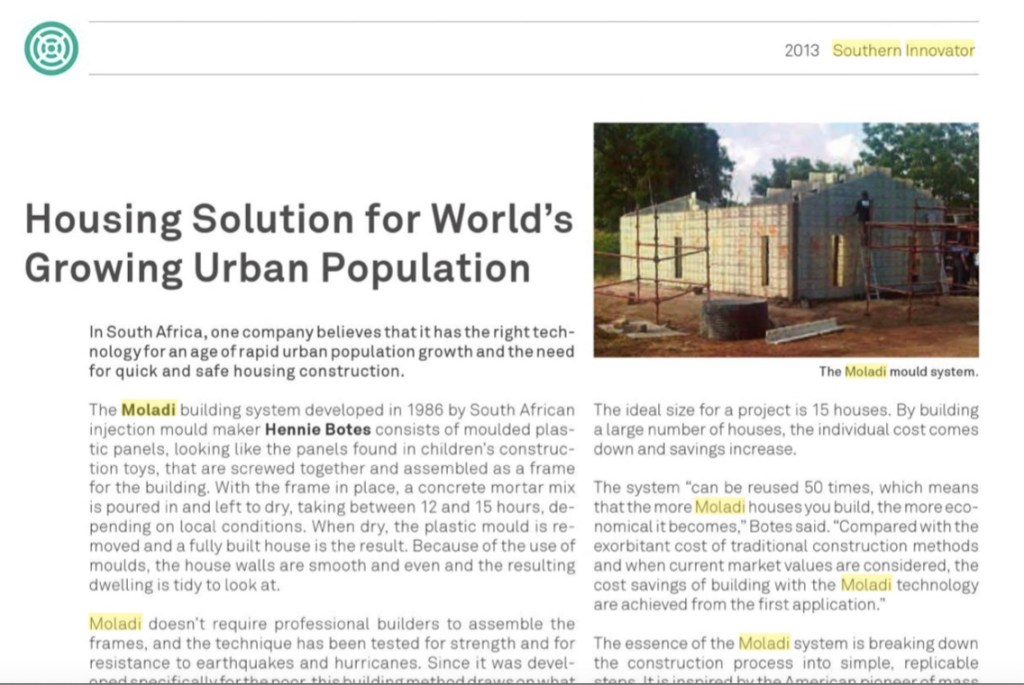
The Moladi building system (http://moladi.com/) (http://www.moladi.net/default.aspx?AspxAutoDetectCookieSupport=1) developed in 1986 by South African injection mold maker Hennie Botes consists of molded plastic panels, looking like the panels found in children’s construction toys that are screwed together and assembled as a frame for the building. With the frame in place, a concrete mortar mix is poured in and left to dry: depending on local conditions, taking between 12 and 15 hours. When dry, the plastic mold is removed and a fully built house is the result. Because of the use of molds, the home’s walls are smooth and even and the resulting home is tidy to look at.

Moladi doesn’t require professional builders to assemble the frames, and the technique has been tested for strength and for resistance to earthquakes and hurricanes. Since it was developed specifically for the poor, this building method draws on what is called ‘sweat equity’: often the only asset a poor person has to contribute to the cost of building a home is their free labour.

Because the dimensions of the home have already been established when the plastic frames were molded, common on-site mistakes are avoided.

Moladi benefits from South Africa’s Black Economic Empowerment programme (http://www.southafrica.info/business/trends/empowerment/bee.htm) and is certified for its quality with the South African Bureau of Standards (SABS) (https://www.sabs.co.za/). Moladi contractors and developers are working in 15 countries and the technique is distributed in a further seven countries.

The Moladi construction technique was born of frustration with the traditional approach of laying one brick on top of another. This traditional construction method, dating back thousands of years, just doesn’t match the needs of our times. It is slow and requires highly skilled bricklayers to be done right. Across the developing world, it is possible to see poorly constructed brick dwellings – often built unevenly with poor quality mortar holding the bricks together – that are unsafe in an earthquake.

Training in the Moladi technique takes from one to two weeks for unskilled workers depending on the size of the home. Moladi provides handbooks and all the necessary resources to complete the project. Each project has its own custom-built plastic frames made based on the home’s design.

“There is no flat fee for on-site training; the client is only responsible for covering the travel and living expenses for the Moladi representative or training foreman,” said Hennie Botes.

The ideal size for a project is 15 homes. By building a large number of homes, the individual cost comes down and savings increase.

The system “can be reused 50 times, which means that the more Moladi houses you build, the more economical it becomes,” Botes said. “Compared with the exorbitant cost of traditional construction methods and when current market values are considered, the cost savings of building with the Moladi technology are achieved from the first application.”

As the world’s cities grow, and slums become larger and more prevalent, the urgent need for affordable and decent housing will go hand-in-hand with a need for jobs — particularly jobs for unskilled workers. There just won’t be enough skilled workers to go around to build the homes. Even in developed countries, this has become a problem.

“The recent earthquake disaster in Haiti could benefit from the Moladi system,” Botes said. “Job creation for Haitians is desperately needed and Moladi can immediately facilitate an income for family groups, as over 95 percent of the construction team consists of unskilled labourers. There is no requirement for heavy machinery, or even electricity, and remote areas can be easily accessed; Moladi also allows for the utilisation of building rubble resulting from the earthquake in the construction of new buildings.”

The essence of the Moladi system is breaking down the construction process into simple, replicable steps. It is inspired by the American pioneer of mass production, car maker Henry Ford (http://en.wikipedia.org/wiki/Henry_Ford), who achieved efficiency and low costs in production by simplifying production into standardized and modulated steps.

“The Moladi construction process should be viewed as a workflow process similar to that of a vehicle assembly line,” Botes said. “Through the simplification, standardization, modularization, and industrialization of the construction process, efficiency and cost savings are achieved and maintained by managing the continuous flow process on site.

“Contractors must make sure that they have planned their project roll-out and budget well and have clearly defined goals as to what they want to achieve. It is very important to have all team players and professionals on the same page with regards to their roles and responsibilities.”

In the beginning, Botes encountered resistance to his innovative production methods. “I was highly motivated and really believed in my idea, but when I presented it to investors, they’d shoot holes in it. … It’s been a 22-year journey, but I always kept the goal in mind. Moses spent 40 years in the desert … I’m quite happy my desert experience was only 20-odd years, though,” he told Men’s Health magazine.

South Africa is facing a population growth rate of 1.73 percent a year (UNICEF). It also has 61 percent of the urban population trying to live on four percent of the land, according to Botes. This urban population grows at 2.7 percent a year, yet existing housing needs are not being met. There is already a backlog of 2.2 million homes needed to be built, and this grows by 180,000 every year, according to the Banking Association of South Africa (http://www.banking.org.za/default.aspx).

“Even though the need for housing has always been a fundamental requirement to sustain one’s health and welfare, the advances in this area have been seriously lacking,” said Botes. “The brick and mortar method of construction was recorded as early as 1458 B.C, which means that very little has changed in terms of building structures over a period of almost 3.5 millennia.

“We cannot expect to resolve the housing crisis in our age with a technique developed for the requirements of society 3468 years ago.”

With the success of the Moladi building system, Hennie is working on “producing windows, doors, toilet seats, window frames, sinks and washbasins. If I can include these as part of my product, I’ll reduce the total unit cost of the house.”

Published: February 2010

Resources

1) Cradle to Cradle: Remaking the Way We Make Things: This radical concept is about how products, can be used, recycled, and used again without losing any material quality—in cradle to cradle cycles. Website:http://www.mcdonough.com/cradle_to_cradle.htm

2) Builders Without Borders: Is an international network of ecological builders who advocate the use of straw, earth and other local, affordable materials in construction. Website:http://builderswithoutborders.org/

3) World Hands Project: An NGO specialising in simple building techniques for the poor. Website:http://www.worldhandsproject.org

4) CIDEM and Ecosur specialise in building low-cost community housing using eco-materials. They have projects around the world and are based in Cuba. Website:http://www.ecosur.org

5) The Rural Development Institute focuses on land rights for the poor and has a series of articles on China’s land reforms. Website: http://www.rdiland.org

6) More Urban, Less Poor: The first textbook to explore urban development and management and challenge the notion unplanned shanty towns without basic services are the inevitable consequence of urbanization. Website:http://www.earthscan.co.uk/

7) Building and Social Housing Foundation: The Building and Social Housing Foundation (BSHF) is an independent research organisation that promotes sustainable development and innovation in housing through collaborative research and knowledge transfer. Website: http://www.bshf.org/

https://davidsouthconsulting.org/2022/05/23/debt-free-homes-for-the-poor/

https://davidsouthconsulting.org/2021/11/11/decent-and-affordable-housing-for-the-poor/

https://davidsouthconsulting.org/2022/11/16/housing-innovation-in-souths-urban-areas/

https://davidsouthconsulting.org/2021/02/12/rammed-earth-houses-china-shows-how-to-improve-and-respect-traditional-homes/

https://davidsouthconsulting.org/2021/02/12/rebuilding-after-chinese-earthquake-beautiful-bamboo-homes/

https://davidsouthconsulting.org/2022/11/19/securing-land-rights-for-the-poor-now-reaping-rewards/

https://davidsouthconsulting.org/2022/05/23/solar-bottle-bulbs-light-up-dark-homes/

https://davidsouthconsulting.org/2022/11/17/tiny-homes-to-meet-global-housing-crisis/

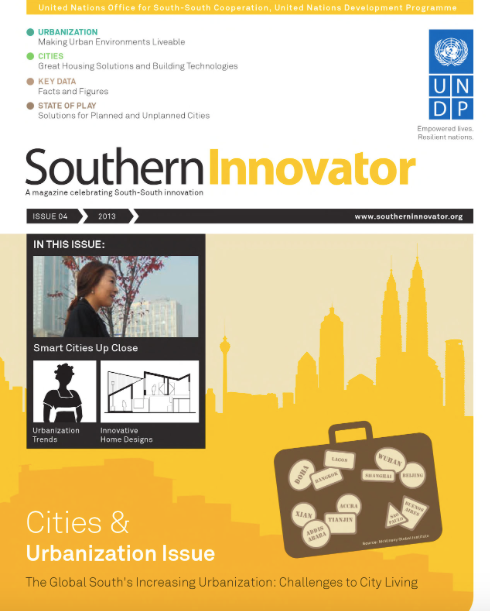
https://davidsouthconsulting.org/2021/03/05/southern-innovator-issue-4/

Creative Commons License

This work is licensed under a
Creative Commons Attribution-Noncommercial-No Derivative Works 3.0 License.

ORCID iD: https://orcid.org/0000-0001-5311-1052.

© David South Consulting 2023

Categories
Archive Development Challenges, South-South Solutions Newsletters Southern Innovator magazine

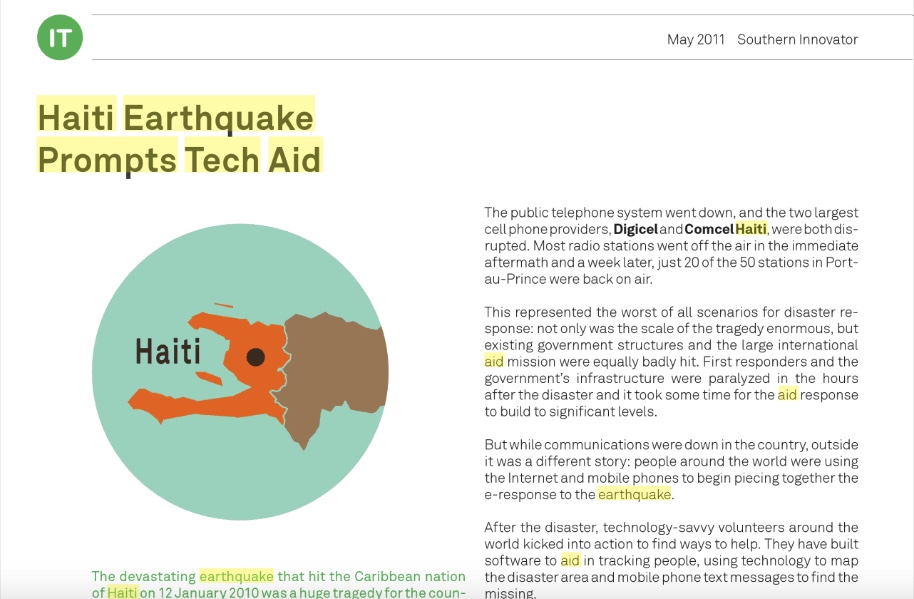
Haiti Earthquake Prompts Tech Aid

By David SouthDevelopment Challenges, South-South Solutions

SOUTH-SOUTH CASE STUDY

The devastating earthquake that hit the Caribbean nation of Haiti on January 12 was a huge tragedy for the country’s people and for the large international aid community, including the United Nations. But the disaster has seen the use of new information technologies – often assembled by volunteers – to bridge the gaps in critical information and bring a semblance of order to the chaos of a large disaster. And many of the technologies being used in Haiti now arose from past disasters and crises in the South.

Remarkable stories from the disaster include a woman who used her mobile phone to text message Canadian officials she was trapped and needed rescue, to a filmmaker who used an application on his iPhone (http://www.apple.com/iphone/) to treat his wounds: “I was able to look up treatment of excessive bleeding and compound fracture, so I used my shirt to tie my leg and a sock on the back of my head and later used it for other things like to diagnose shock,” claimed Dan Woolley to NBC Miami.

Measuring 7.0 in magnitude (http://en.wikipedia.org/wiki/2010_Haiti_earthquake), the quake killed over 212,000 people, injured 300,000 and affected more than 3 million out of Haiti’s population of 9 million. Hundreds of thousands have lost their homes and are now dependent on food aid to survive. Haiti is the poorest country in the western hemisphere, and is ranked 149th of 182 countries on the Human Development Index.

In the aftermath of the earthquake, communications were knocked out and it was difficult to grasp the scale of the disaster. Major infrastructure was either severely damaged or completely destroyed.

The public telephone system went down, and the two largest cell phone providers, Digicel and Comcel Haiti, were both disrupted. Most radio stations went off the air in the immediate aftermath and a week later, just 20 of the 50 stations in Port-au-Prince were back on air.

This represented the worst of all scenarios for disaster response: not only was the scale of the tragedy enormous, but existing government structures and the large international aid mission were equally badly hit. First responders and the government’s infrastructure were paralyzed in the hours after the disaster and it took some time for the aid response to build to significant levels.

But while communications were down in the country, outside it was a different story: people around the world were using the internet and mobile phones to begin piecing together the e-response to the earthquake.

After the disaster, technology-savvy volunteers around the world kicked into action to find ways to help. They have built software to aid in tracking people, using technology to map the disaster area and ways to use mobile phone text messages to find the missing.

Kenya’s Ushahidi (www.ushahidi.com) is a free software mashup (http://en.wikipedia.org/wiki/Mashup_%28web_application_hybrid%29) born after the post-election violence in Kenya in 2007 and 2008. It gathers citizen-generated crisis information – SMS (text messages), email or web resources – and then places the information on a map or timeline. It is put together by volunteers from Kenya, Ghana, South Africa, Malawi, the Netherlands and the United States.

Ushahidi’s founder is Kenyan Ory Okolloh, and the first version of the software for download is called “Mogadishu,” after the capital of Somalia.

It was put to use in Haiti (http://haiti.ushahidi.com/reports/submit) as users populated its online maps and timelines with information on the location of people in need of food and water, those trapped in rubble or those in need of medical attention. It is a real-time reporting system for people in a disaster, offering a way for people in need to broadcast to the outside world.

Sample reports on the timeline look like this (http://haiti.ushahidi.com/reports): ” SOS food, water and care needed in the Bertin Zone of Carrefour S.O.S. for the people of Carefour in the Bertin area, Titus Road, Froide River, these people haven’t recieved anything yet like water, food, care.”

“Alive under the Rubble of Bar Lakay Restaurant, Ave. Christophe 6633. Carole Joseph is alive under the rubble of the Bar Lakay restaurant on Avenue Christophe.”

The UN estimates there are more than 900 non-governmental organizations operating in Haiti. One of the best ways to try and coordinate this large aid response is through innovative information technology.

The Ushahidi software has spawned many creative variations to track a wide range of problems. In the Philippines, TXTpower (http://www.cp-union.com/ushahidi/) is put together by the Computer Professionals’ Union to keep an eye on mobile phone companies and their business practices. In Mexico, a mashup (http://www.cuidemoselvoto.org/) was put together for the 2009 federal elections. Stop Stockouts (http://stopstockouts.org/) keeps track of near real-time pharmacy and medical supplies in health facilities and pharmacies in Kenya, Uganda, Malawi and Zambia.

In San Diego, California, computer programmer Tim Schwartz quickly contacted his network of fellow programmers to address the problem of information being spread too widely across many web sources. In a few hours they put together http://www.haitianquake.com, a way for people to post and locate missing relatives.

It was online in less than 24 hours. It was followed by many other similar services and they were merged into a service eventually put together by Google called PersonFinder two days later. Google’s PersonFinder grew to have more than 32,000 missing people listed.

Another response has been Crisis Camps (http://crisiscampmiami.org/) in London England and cities across the United States. Technology workers got together to brainstorm relevant solutions to help the aid effort, and developed tools including Tweak the Tweet, Port Au Prince Basemap (up-to-date data on what his happening on the ground), The Haiti Timeline (developing a real-time history of events as they unfold), Family Reunification Systems, crisis wikis (http://crisiscommons.org/wiki/index.php?title=Crisis_Wiki), Mobile Applications 4 Crisis Response, translation (Creole to English for example), Mapping NGOs in Action (in the chaos of a crisis, this seeks to track what NGOs are working where), We Need, We Have Exchange (a way to post requests for resources or help).

“It really is amazing the change in the way crisis response can be done now,” Noel Dickover, a Washington, DC-based organiser of the Crisis Camp tech volunteer movement, told The Independent newspaper.

“Developers, crisis mappers and even internet-savvy folks can actually make a difference.”

Josh Nesbit is a co-creator of a text message service for mobile phones that is being used by international organizations like the United Nations and the Red Cross. Haitians are able to send free text messages from mobile phones on the country’s Digicel service. The messages include requests for water and food. The messages are organized and tagged with key words by volunteers in the Haitian community in New York City, and Haitian radio stations promote the service. It was developed based on similar systems already running in hospitals in Malawi.

In Haiti, mobile phone networks were back up and running within a few days – many within 24 hours. Haiti is poor, but it nonetheless has impressive mobile phone ownership rates: one-in-three people has one.

OpenStreetMap (http://www.openstreetmap.org/) is another excellent resource in a disaster and represents a significant step forward in helping people to respond. Real time data is uploaded to satellite photographs of the disaster area and people then can add updates on the location of working hospitals or where infrastructure has been damaged. The information comes in by many forms, from the micro-blogging service Twitter (www.twitter.com) to eyewitness reports.

Reports from Haiti have talked of rescue teams uploading the maps to their GPS (global positioning system) devices for easy access, or printing then in A4 form to carry around.

The utility of this service has been confirmed by many working on helping Haiti. “We have already been using their data in our initial post-disaster needs assessment,” Stuart Gill of the World Bank told The Independent.

Dutch mobile phone maker Intivation (http://www.intivation.nl/) is distributing for free solar-powered mobile phones in Haiti to help with aid efforts and is launching the phones for sale around the world as well.

Published: February 2010

Resources

1) SMS activism: A blog report on how people are using SMS text messaging in the developing world. Website: http://www.guardian.co.uk/katine/katine-chronicles-blog/2010/feb/02/mobile-phone-sms-uprising

2) The Magazine Popular Mechanics has excellent resources on how anyone can prepare their family and community for disasters. Website:http://www.popularmechanics.com/survival/

3) The US Government has extensive resources online on how to prepare for a wide variety of natural and man-made disasters. Website: http://www.fema.gov/areyouready/

4) UNICEF: Community-Based Disaster Preparedness Projects (CBDPs) in India have been helping communities restructure to survive when disaster strikes. Website:http://www.unicef.org.uk/campaigns

5) How to activate support from the global technology community in a disaster. Website: http://crisiscommons.org/

6) International Community on Information Systems for Crisis Response and Management: They will be having their conference on Defining Crisis Management 3.0 from May 2-5, 2010 in Seattle Washington USA. Website:http://www.iscram.org/

7) Telecoms Sans Frontiers: Focuses on providing communications in the first days after an emergency. Website: http://www.tsfi.org/

8) InSTEDD NGO: InSTEDD’s mission is to harness the power of technology to improve collaboration for global health and humanitarian action. An innovation lab for tools designed to strengthen networks, build community resilience and improve early detection and response to major health-related events and natural or human-caused disasters. Website: http://instedd.org/

9) Web mash-ups: Programmable Web website offers all the resources required to get started. Website: www.programmableweb.com/

https://davidsouthconsulting.org/2021/10/28/ending-gang-violence-while-cleaning-the-streets-in-haiti/

https://davidsouthconsulting.org/2021/01/08/haitian-coffee-becoming-a-hit-with-american-connoisseurs/

https://davidsouthconsulting.org/2021/10/28/milk-co-operatives-help-hungry-haiti/

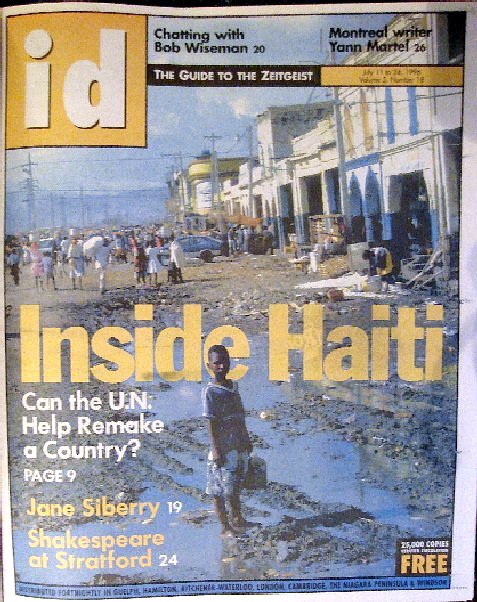
https://davidsouthconsulting.org/2020/04/22/state-of-decay-haiti-turns-to-free-market-economics-and-the-un-to-save-itself/

Development Challenges, South-South Solutions was launched as an e-newsletter in 2006 by UNDP’s South-South Cooperation Unit (now the United Nations Office for South-South Cooperation) based in New York, USA. It led on profiling the rise of the global South as an economic powerhouse and was one of the first regular publications to champion the global South’s innovators, entrepreneurs, and pioneers. It tracked the key trends that are now so profoundly reshaping how development is seen and done. This includes the rapid take-up of mobile phones and information technology in the global South (as profiled in the first issue of magazine Southern Innovator), the move to becoming a majority urban world, a growing global innovator culture, and the plethora of solutions being developed in the global South to tackle its problems and improve living conditions and boost human development. The success of the e-newsletter led to the launch of the magazine Southern Innovator.  

Follow @SouthSouth1

Google Books: https://books.google.co.uk/books?id=p03–n51i44C&dq=development+challenges+april+2008&source=gbs_navlinks_s

Slideshare: http://www.slideshare.net/DavidSouth1/development-challengessouthsouthsolutionsapril2008issue

Southern Innovator Issue 1: https://books.google.co.uk/books?id=Q1O54YSE2BgC&dq=southern+innovator&source=gbs_navlinks_s

Southern Innovator Issue 2: https://books.google.co.uk/books?id=Ty0N969dcssC&dq=southern+innovator&source=gbs_navlinks_s

Southern Innovator Issue 3: https://books.google.co.uk/books?id=AQNt4YmhZagC&dq=southern+innovator&source=gbs_navlinks_s

Southern Innovator Issue 4: https://books.google.co.uk/books?id=9T_n2tA7l4EC&dq=southern+innovator&source=gbs_navlinks_s

Southern Innovator Issue 5: https://books.google.co.uk/books?id=6ILdAgAAQBAJ&dq=southern+innovator&source=gbs_navlinks_s

More on Haiti here: State Of Decay: Haiti Turns To Free-Market Economics And The UN To Save Itself

https://davidsouthconsulting.org/2022/11/01/southern-innovator-magazine-2010-2014/

Creative Commons License

This work is licensed under a
Creative Commons Attribution-Noncommercial-No Derivative Works 3.0 License.

ORCID iD: https://orcid.org/0000-0001-5311-1052.

© David South Consulting 2023
Categories
Archive data Development Challenges, South-South Solutions Newsletters Southern Innovator magazine

Enormous Potential for Nigerian Software Industry

By David SouthDevelopment Challenges, South-South Solutions

SOUTH-SOUTH CASE STUDY

Nigeria has an unfortunate global reputation as the home of 419 scams (http://en..wikipedia.org/wiki/Advance-fee_fraud). A typical 419 scam involves sending emails to people around the world in order to extort money from them. Online scams may show an unexpected technical sophistication for a country associated with poverty, but are a sign that some of Nigeria’s plentiful talents are being turned to illegal activities rather than building legitimate businesses.

Many argue that Nigeria is missing its potential to become an African legal software powerhouse. The Institute of Software Practitioners of Nigeria said the country’s annual consumption of software reached US $900 million in 2006, making it possibly Africa’s biggest market.

“Nigeria stands a good chance of dominating both the local and West African diaspora in a thriving global software market,” it argues.

Production of computer software is a major income earner for countries like the United States and India.

Many argue that Nigeria has enormous potential, if it can address some common problems: an absence of software quality assurance, poor investment in software development, poor product standards and a lack of proper documentation. In short: if Nigeria’s software industry takes on board global best practice, then it is sitting on a goldmine of legitimate business opportunities.

Chris Uwaje, president of the Institute of Software Practitioners of Nigeria (ISPON), told Business Day that the country’s software technology, if well retooled and strategically positioned for global competitiveness, could earn about US $10 billion annually from foreign software exchange.

He argued that developing the software industry would have many benefits for the population as a whole.

“Software has … become and will remain one of the fastest growing industries with power to enrich, and sustain national economies,” Uwaje said.

Some estimates put the world software industry and associated markets at US $1,300 billion, with 90 percent of the world’s software exports coming from the United States and Europe. Outside the U.S., U.K., Germany and Japan, the new and emerging countries within the software industry are India and China, and to a lesser extent Singapore and Malaysia.

According to market researcher DataMonitor, the worldwide software industry grew by 6.5 percent between 2007 and 2008.

DataMonitor forecasts that in 2013, the global software market alone will have a value of US $ 457 billion, an increase of 50.5 percent since 2008 (Datamonitor’s Software: Global Industry Guide).

Africa has a high proportion of entrepreneurs because people have next to no social supports to fall back on and need to do business to survive. Nigeria’s large youth population – 43.2 percent of the total – could be the driver of this new economy if used right.

Nigeria mostly imports software solutions despite having an extensive capacity in software development. If developed well, software could surpass oil as a revenue generator for the country.

According to A Profile of Nigeria’s Software Industry by H. Abimbola Soriyan and Richard Heeks, “A typical software company (in Nigeria) had between 11 and 50 customers (the average was 36 though a few firms involved with package installation had several thousand). There was a strong concentration among these customers. Almost all were private sector … There was a surprising lack of government/public sector organizations as customers (reflected above in the limited number of firms found in Abuja).”

Jimson Olufuye, president of the Information Technology Association of Nigeria (ITAN), believes that more needs to be done to support the software developers. And while on paper there is strong support for this sector in information technology policy, “In addition, we need to establish more IT parks with appropriate policies on infrastructure, human resources, incentives and business plan.”

Wahab Sarumi, chief executive officer of Wadof Software Consulting, explains the problem: “Indigenous software developers are an endangered species, abandoned by the government, neglected by its own people and bullied by the poachers from India, to whom Nigerian businesses rush to buy software applications to solve local business problems.”

Already, Nigerian software firms are offering existing off-the-shelf software that they custom package with local services. This recognizes software made in advanced countries isn’t entirely right for developing countries: and this is where business opportunities await for software developers.

But the key to success, at the end of the day, is to be the best solution on offer for the right price. James Agada, managing director of ExpertEdge Limited, believes people buy the best software for the task and don’t care where it comes from.

“If you want to sell software, the buyer does not buy the software alone, he buys the software, buys capacity to support the software, buys your capacity to improve on the software, he buys what he assumes is your mastery of the domain the software … the software must be able to compete favourably with its competitors.”

Published: February 2010

Resources

1) West Africa Trade Hub: A great resource for doing business in West Africa . Website:http://www.watradehub.com/index.php?option=com_content&task=view&id=1439

2) Rogue Economics: A website accompanying the book by Loretta Napoleoni on the illegal economic activities unleashed after the fall of communism. Website: http://www.lorettanapoleoni.com/

3) Towards an African E-Index: SMS e-Access and Usage Across 14 African Countries: A report from 2006 showing how small and medium African businesses increase income with ICTs. Website:http://mobileactive.org/research/towards-african-e-index-sms-e-access-and-usage-across-14-african-countries

4) Changing Dynamics of Global Computer Software and Services Industry: Implications for Developing Countries: A report from UNCTAD on how computer software can become the most internationally dispersed high-tech industry. Website:http://www.unctad.org/templates/webflyer.asp?docid=1913&intitemid=2529&lang=1

5) A Profile of Nigeria’s Software Industry by H. Abimbola Soriyan and Richard Heeks, Paper No 21, 2004, Development Informatics: Working Paper Series. Website: http://tinyurl.com/yh25dpa

6) Institute of Software Practitioners of Nigeria: A great contact point for finding legitimate software developers in Nigeria. Website: http://www.ispon.org/

7) Tech Soup: A great place to meet legitimate software developers and learn more. Website:http://home.techsoup.org/pages/default.aspx

https://davidsouthconsulting.org/2022/10/26/africa-to-get-own-internet-domain/

https://davidsouthconsulting.org/2021/03/20/computer-gold-farming-turning-virtual-reality-into-real-profits/

https://davidsouthconsulting.org/2020/12/11/cyber-cities-an-oasis-of-prosperity-in-the-south/

https://davidsouthconsulting.org/2020/12/04/data-surge-across-global-south-promises-to-re-shape-the-internet/

https://davidsouthconsulting.org/2020/12/11/false-data-makes-border-screening-corruptible/

https://davidsouthconsulting.org/2022/06/10/illiterate-get-internet-at-touch-of-a-button/

https://davidsouthconsulting.org/2022/10/04/popular-chinese-social-media-chase-new-markets/

Development Challenges, South-South Solutions was launched as an e-newsletter in 2006 by UNDP’s South-South Cooperation Unit (now the United Nations Office for South-South Cooperation) based in New York, USA. It led on profiling the rise of the global South as an economic powerhouse and was one of the first regular publications to champion the global South’s innovators, entrepreneurs, and pioneers. It tracked the key trends that are now so profoundly reshaping how development is seen and done. This includes the rapid take-up of mobile phones and information technology in the global South (as profiled in the first issue of magazine Southern Innovator), the move to becoming a majority urban world, a growing global innovator culture, and the plethora of solutions being developed in the global South to tackle its problems and improve living conditions and boost human development. The success of the e-newsletter led to the launch of the magazine Southern Innovator.  

Other stories from Development Challenges, South-South Solutions:

African Digital Laser Breakthrough Promises Future Innovation 

China Looking to Lead on Robot Innovation

Digital Mapping to put Slums on the Map

New Weapon Against Crime in the South

Follow @SouthSouth1

Google Books: https://books.google.co.uk/books?id=I_hcAwAAQBAJ&dq=development+challenges+october+2013&source=gbs_navlinks_s

Slideshare: http://www.slideshare.net/DavidSouth1/development-challenges-october-2013-issue

Southern Innovator Issue 1: https://books.google.co.uk/books?id=Q1O54YSE2BgC&dq=southern+innovator&source=gbs_navlinks_s

Southern Innovator Issue 2: https://books.google.co.uk/books?id=Ty0N969dcssC&dq=southern+innovator&source=gbs_navlinks_s

Southern Innovator Issue 3: https://books.google.co.uk/books?id=AQNt4YmhZagC&dq=southern+innovator&source=gbs_navlinks_s

Southern Innovator Issue 4: https://books.google.co.uk/books?id=9T_n2tA7l4EC&dq=southern+innovator&source=gbs_navlinks_s

Southern Innovator Issue 5: https://books.google.co.uk/books?id=6ILdAgAAQBAJ&dq=southern+innovator&source=gbs_navlinks_s

https://davidsouthconsulting.org/2021/03/05/southern-innovator-issue-1/

https://davidsouthconsulting.org/2021/03/05/southern-innovator-issue-2/

Creative Commons License

This work is licensed under a
Creative Commons Attribution-Noncommercial-No Derivative Works 3.0 License.

ORCID iD: https://orcid.org/0000-0001-5311-1052.

© David South Consulting 2023