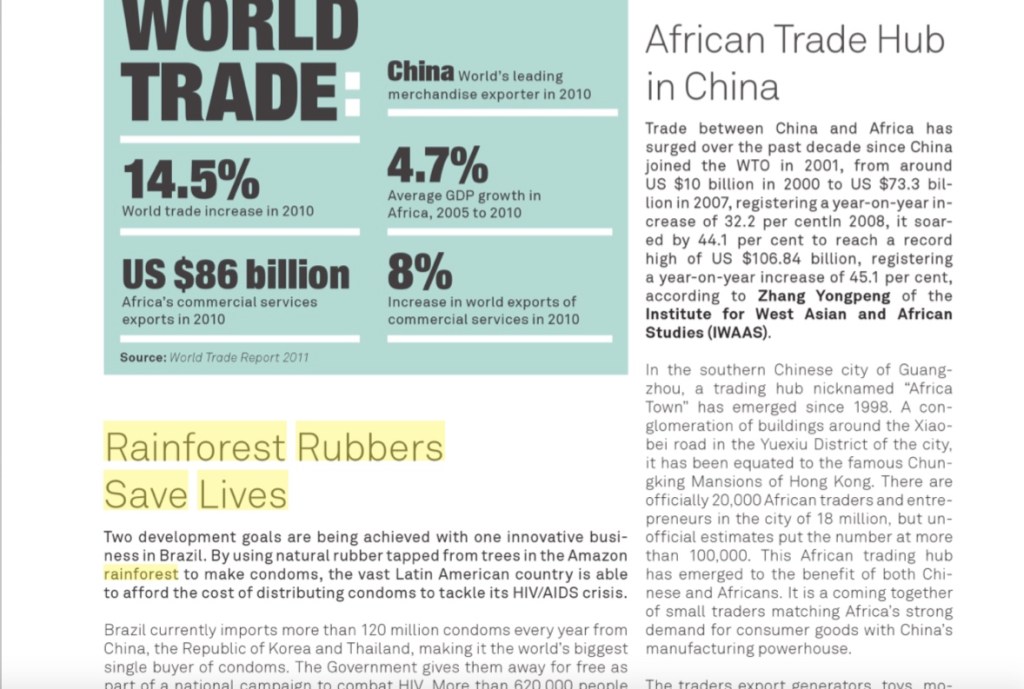
Two development goals are being achieved with one innovative business in Brazil. By using natural rubber tapped from trees in the Amazon rainforest to make condoms, Brazil is able to afford the cost of distributing condoms to tackle its HIV/AIDS crisis. Brazil currently imports more than 120 million condoms every year from China, Republic of Korea and Thailand, making it the world’s biggest single buyer of condoms. The government gives them away for free as part of a national campaign to combat HIV. More than 620,000 people in Brazil are living with HIV out of a population of more than 186 million (UNAIDS, 2005).
The Natex company, co-owned by the public health ministry and the north-western state government of Acre, has established a factory to turn rubber from the world’s biggest rainforest into condoms. The business has created 500 jobs at the factory and 150 jobs for the local indigenous population – the Xapuri – who are traditional rubber tappers.
The factory hopes to produce 100 million condoms a year from local rubber – just 20 million shy of all the condoms the country currently has to import – and could even reach 270 million at full capacity.
“This product will allow people to make love with security and to better plan their futures,” said Raimundo Barros, vice president of the local agricultural association.
The 15,000 Xapuri people who live on the Chico Mendes reserve – named after a conservationist and rubber tapper murdered by ranchers in 1988 – tap seringai trees, which produce rubber that is said to be a more effective barrier to the transmission of sexually transmitted diseases (STDs), than synthetic rubber condoms.
The factory’s 500 employees will earn a total of Reais $2.2 million (US $1.3 million) while the tappers will see their income increase by 250 per cent as demand goes up for the rubber, according to Natex.
“Because of this I’ve managed to buy a few cows and give my family a better life,” rubber tapper Hugo Paz de Souza, 43, told local newspaper Pagina 20. Paz de Souza said the factory will double his income to US $394 a month.
The fact the trees will be saved because of their value as sources of rubber is a great boon to the world’s environment. The trees in the Amazon rainforest – the “world’s lungs” as some call it – face the threat of being chopped down to make way for Brazil’s booming agricultural economy. Official figures released in January 2008 showed that between August and December 2007, about 2,700 square miles were chopped down illegally in the Amazon rainforest. It was the first increase in deforestation after three years of declines and coincided with a rise in global food prices.
Marina Silva, Brazil’s environment minister, told the Guardian newspaper the Natex condom would help create “a new pattern of production and a new process of inclusion that would value the forest being left standing”.
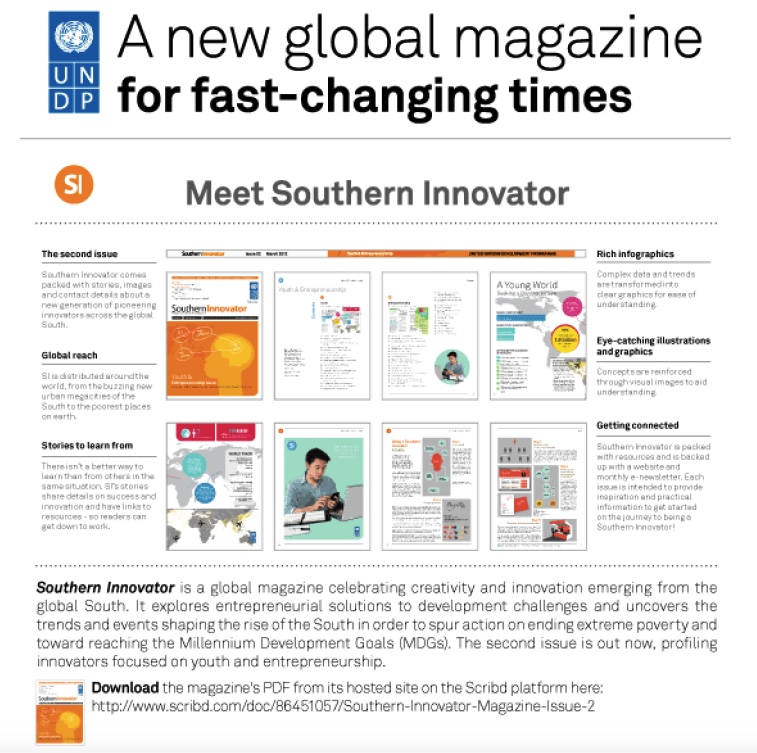
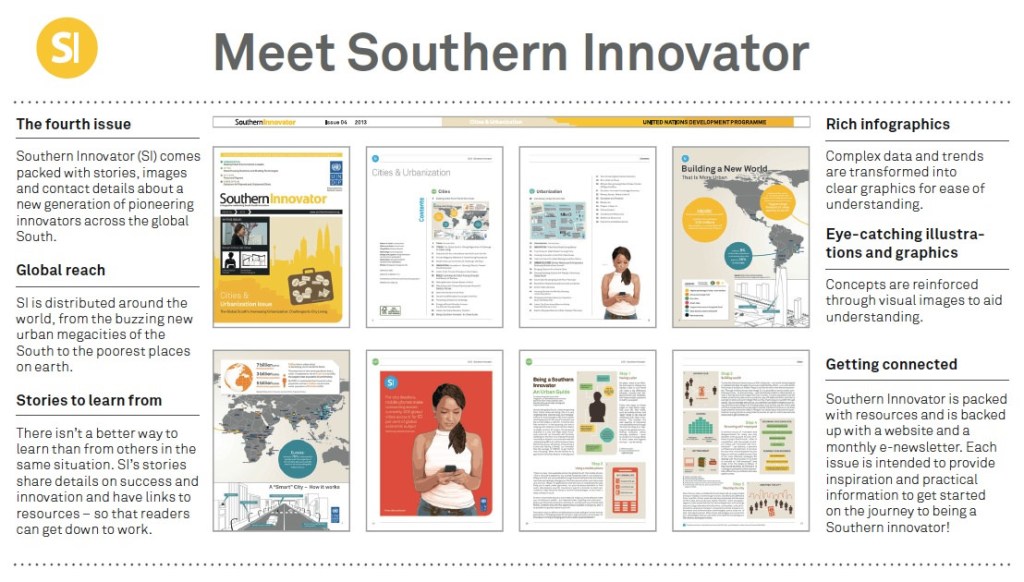
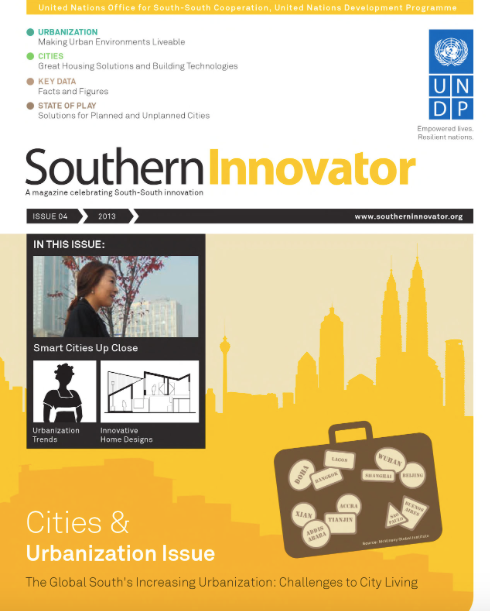
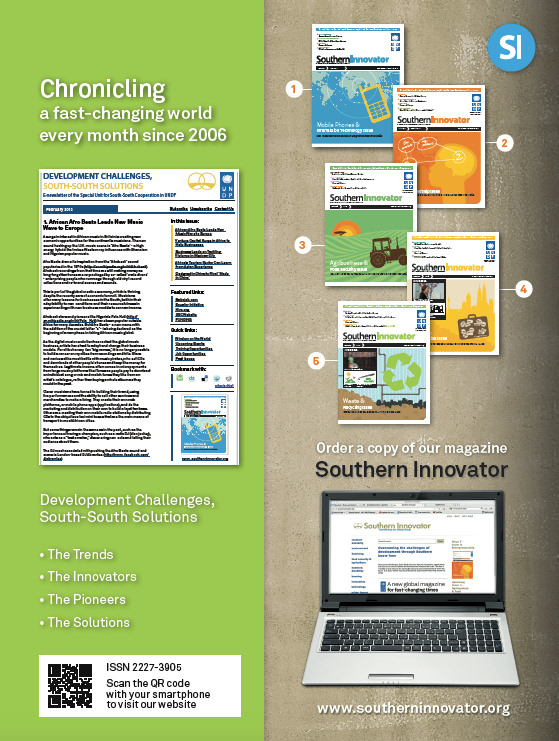
Development Challenges, South-South Solutions was launched as an e-newsletter in 2006 by UNDP’s South-South Cooperation Unit (now the United Nations Office for South-South Cooperation) based in New York, USA. It led on profiling the rise of the global South as an economic powerhouse and was one of the first regular publications to champion the global South’s innovators, entrepreneurs, and pioneers. It tracked the key trends that are now so profoundly reshaping how development is seen and done. This includes the rapid take-up of mobile phones and information technology in the global South (as profiled in the first issue of magazine Southern Innovator), the move to becoming a majority urban world, a growing global innovator culture, and the plethora of solutions being developed in the global South to tackle its problems and improve living conditions and boost human development. The success of the e-newsletter led to the launch of the magazine Southern Innovator.
How to balance fragile ecosystems with rapid urbanization will be the challenge for planners and governments across the global South in the coming years. The urbanization trend is clear: the world’s total urban area is expected to triple between 2000 and 2030, with urban populations set to double to around 4.9 billion in the same period (UNEP). This urban expansion will draw heavily on water and other natural resources and will consume prime agricultural land.
Global urbanization will have significant implications for biodiversity and ecosystems if current trends continue, with knock-on effects for human health and development, according to a new assessment by the United Nations Convention on Biological Diversity (CBD).
Cities and Biodiversity Outlook – the first global analysis of how projected patterns of urban land expansion will affect biodiversity and crucial ecosystems – argues that promoting low-carbon, resource-efficient urban development can counter urbanization’s adverse effects on biodiversity while improving quality of life.
“The way our cities are designed, the way people live in them and the policy decisions of local authorities, will define, to a large extent, future global sustainability,” said Braulio Dias, Executive Secretary of the CBD.
“The innovation lies not so much in developing new infrastructural technologies and approaches but to work with what we already have. The results often require fewer economic resources and are more sustainable,” he added.
The report says urban expansion is occurring fast in areas close to biodiversity ‘hotspots’ and coastal zones. And rapidly urbanizing regions, such as large and mid-size settlements in sub-Saharan Africa, India and China, often lack resources to implement sustainable urban planning.
But the study found that cities do not need to be in conflict with plant and animal species and ecosystems. They can, in fact, protect species, as is the case with Belgium, where 50 per cent of the country’s floral species are found in Brussels, or Poland, where 65 per cent of the country’s bird species occur in Warsaw.
At the Alexander von Humboldt Research Institutein Bogota, Colombia (humboldt.org.co) researchers have been thinking about how to get this balance right and make sure the growing cities of the future are not ecological disasters.
According to Juana Marino and Maria Angélica Mejia at the Institute’sBiological Resources Policy Program – which investigates “Biodiversity, Ecosystem Services and Urban-Regional Environments” –how cities grow and develop must change.
They believe cities need to take into account the resources they require to function and the impact this has on biodiversity and ecosystems.
“The more people who arrive in cities, the more they demand goods and services (in a massive way!): roads, housing, infrastructure, food, water – (creating) an impressive amount of waste, challenging traditional waste management and sanitation policies,” said Marino.
In short, “Cities enhance consumption.”
The Humboldt researchers believe common patterns can be seen across the global South, where ecosystems “surrounding urban areas are deforested and have significant levels of water and air pollution; they also become deeply transformed by informal settlements.”
This process means cities “lose their ability to be resilient, they become highly vulnerable to global change and they decrease their production of ecosystem services to maintain human well-being in cities.”
They argue that human settlements must be sustainably planned for, with ecological resilience and human well-being. If this is not done, areas suitable for agricultural production and biodiversity preservation will be harmed.
While better planning is needed there also needs to be long-term thinking.
But planning and managing are not the only things required: “it is a matter of design” if new “resilient” urban-rural landscapes are to be created.
And what can be done? They believe better analysis is required and it needs to take on social and cultural knowledge, and take in the border regions around cities, the “suburban, peri-urban and other ‘transition’ landscapes should become main actors in these relationships, not mere by-products; (they are) compromise territories between a lack of definition and low governance.”
These complex relationships with the border ecosystems of cities need to be communicated to the general public in simple, user-friendly ways so they can understand how important these areas are to the overall health of the city.
In Latin America, the cities of Curitiba (Brazil) and Bogotá and Medellin (Colombia) have made great strides in managing and planning for biodiversity and ecosystem services, they say. But it is not just as simple as recording the number of native species and the percentage of protected areas in urban places. Links need to be created between “social, scientific and political” elements to create “socio-ecological indicators” that can be developed and turned into “easy-to-adopt mechanisms” for people to use.
And they see innovation as the way to do this. Innovation is critical if cities and urban areas are to avoid widespread destruction of biodiversity as urbanization increases.
“Innovation is not just an option – it is a ‘must’,” said Marino. “Not just the technical innovation already being carried on by infrastructure, transport and building sectors that are rapidly changing their patterns based on mitigation technologies.
“Innovation is also needed in terms of biodiversity, biotechnology, information and knowledge production; appropriation, use and management. Knowledge turns into innovation when appropriated by social spheres; when it enters the social and political arenas.”
Environmental governance can be strengthened “when promoting top-down and bottom-up innovations.”
Published: December 2012
Resources
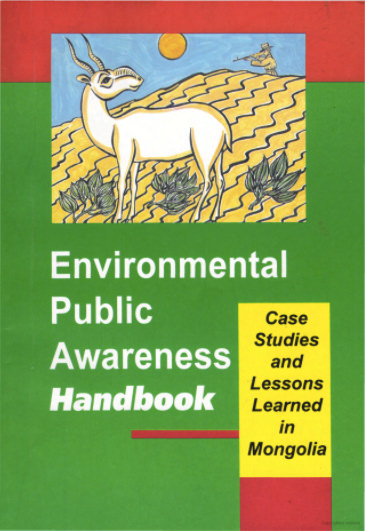
1) Environmental Public Awareness Handbook: Case Studies and Lessons Learned in Mongolia. Website: http://tinyurl.com/yhjyd7h
2) Hyderabad Case Study: During the recent UN biodiversity talks in Hyderabad, the International Union for Conservation of Nature gave journalists the opportunity to see how biodiversity can thrive in the middle of a bustling metropolis. Website: http://www.rtcc.org/hyderabad-a-showcase-of-urban-biodiversity/
3) UNEP: A Global Partnership on Cities and Biodiversity was launched by UNEP, the Secretariat of the Convention on Biological Diversity (CBD), UN-HABITAT, ICLEI, IUCN Countdown 2010, UNITAR, UNESCO and a Steering Group of Mayors from Curitiba, Montreal, Bonn, Nagoya and Johannesburg to bring together existing initiatives on cities and biodiversity. Website: http://www.unep.org/urban_environment/issues/biodiversity.asp
4) Nature in the City: Nature in the City, a project of Earth Island Institute, is San Francisco’s first organization wholly dedicated to ecological conservation, restoration and stewardship of the Franciscan bioregion. Website: http://natureinthecity.org/urbanbiodiversity.php
Development Challenges, South-South Solutions was launched as an e-newsletter in 2006 by UNDP’s South-South Cooperation Unit (now the United Nations Office for South-South Cooperation) based in New York, USA. It led on profiling the rise of the global South as an economic powerhouse and was one of the first regular publications to champion the global South’s innovators, entrepreneurs, and pioneers. It tracked the key trends that are now so profoundly reshaping how development is seen and done. This includes the rapid take-up of mobile phones and information technology in the global South (as profiled in the first issue of magazine Southern Innovator), the move to becoming a majority urban world, a growing global innovator culture, and the plethora of solutions being developed in the global South to tackle its problems and improve living conditions and boost human development. The success of the e-newsletter led to the launch of the magazine Southern Innovator.
I had read the other day the following headline from Bloomberg: World’s Worst Air Has Mongolians Seeing Red, Planning Action. As far back as 1999, such a health and environmental tragedy was foreseen by a highly successful UNDP environment project. As its Canadian adviser Robert Ferguson said to UNDP News at the time, “Mongolia’s environment is endangered by a range of problems that are on the brink of exploding.”
He knew what he was talking about: Ferguson and his Mongolian colleagues had spent two years mobilizing Mongolians across the country to take practical steps to address the country’s environmental problems as part of the Environmental Public Awareness Programme (EPAP). Few people had as much first-hand knowledge of the country and its environmental challenges as they did.
In its 2007 Needs Assessment, the Government of Mongolia found the EPAP projects “had a wide impact on limiting many environmental problems. Successful projects such as the Dutch/UNDP funded Environmental Awareness Project (EPAP), which was actually a multitude of small pilot projects (most costing less than [US] $5,000 each) which taught local populations easily and efficiently different ways of living and working that are low-impact on the environment.”
UNDP News: Networking Publication of UNDP Staff Worldwide April/May 1999
A UNDP Success Story
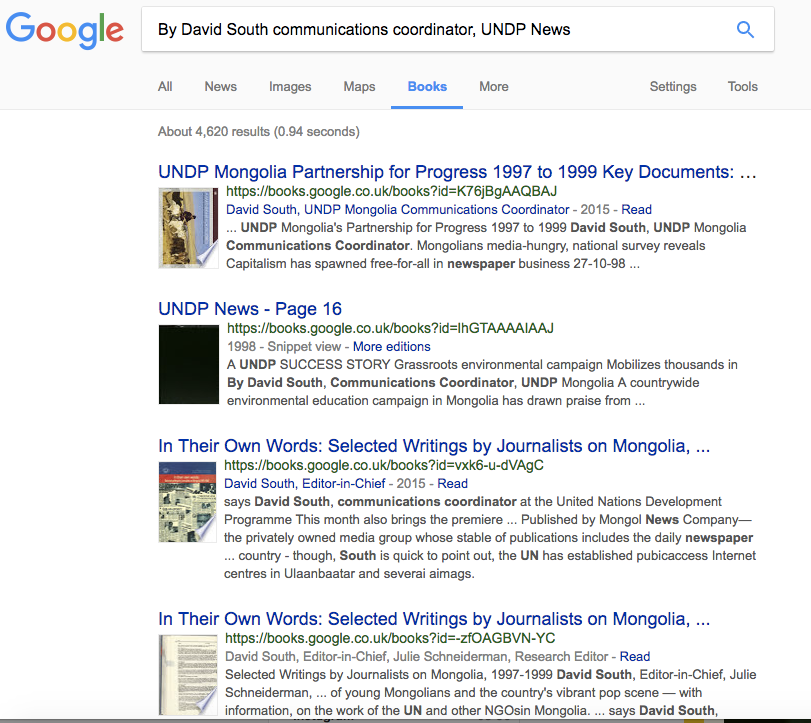
By David South, Communications Coordinator, UNDP Mongolia
Grassroots environmental campaign mobilizes thousands in Mongolia
A countrywide environmental education campaign in Mongolia has drawn praise from around the world, most especially for its ability to mobilize thousands of people and produce hundreds of advocacy materials.
Robert Ferguson, a UNV Information Specialist from Canada, has just finished a two-year assignment advising on the Environmental Public Awareness Programme. The project, implemented by UNDP, proved that civil society is alive and very well in Mongolia, despite 70 years of Communism and the hardships of transition to a free-market economy.
For the first-time visitor to Mongolia, it is easy to be dazzled by the view: the expansive steppe, the sparse population with a sprinkling of nomadic tents, the enormous herds of sheep, goats and cows. First impressions tend toward the belief that Mongolia is an unspoiled paradise where nomads have roamed for thousands of years. The reality is considerably different. The 600,000-plus capital of Ulaanbaatar, or Red Hero, is densely populated, urban and home to the country’s remaining factories and electrical power plants. In winter, pollution from power plants and coal stoves in the traditional tents, or gers, where half of the city’s population still lives, chokes the population and causes numerous respiratory problems.
While Mongolia has space to spare – the population is 2.4 million, plus 32 million head of livestock, in a territory the size of Western Europe – a long list of threats are taking their toll on this harsh but beautiful country.
“Mongolia’s environment is endangered by a range of problems that are on the brink of exploding,” says Robert Ferguson. “As these problems are not yet out of control, this country is in a very good position for grassroots initiatives that can help communities to realize their environmental problems and understand possible ways to keep them under control …
… On one cold autumn day, Ferguson and his colleagues are visiting a project in the shantytown of Chingeltei in the north of the capital. A majority of Ulannbaatar’s population live in neighbourhoods like this, where the mix of traditional gers, wooden cottages and newly built Mongolian monster homes gives a vivid example of the transition years. The population has exploded as more and more Mongolians seek out their dreams in the capital.
The Environmental Public Awareness Programme, or EPAP, uses small grants of between $1,000 and $2,000 to start awareness projects with local NGOs. After two years, nearly 100 small projects have been implemented – yet the original project document had only proposed 15 projects. According to Ferguson, the project team, which includes Sumiya and Davaasuren, were struck by the wellspring of enthusiasm they were tapping.
… Garbage is strewn liberally on the dusty streets. Inspired by recycling campaigns in his native Canada, Ferguson encouraged local women to start the Blue Bag Project. Local women proudly show off their streets – garbage-free – as they collect pop and beer bottles and animal bones to turn in for cash at the local recycler. This is just one EPAP project that has galvanized grassroots action. Back in the EPAP at the Stalinesque Ministry of Nature and Environment, Ferguson continues …
…. were all weak. What was needed was a means to take the right to public participation and an understanding of these laws to community organizations and let them develop public awareness campaigns that get the information out.”
The Programme has exceeded expectations …
…. “The response we got to our initial call for interested environmental groups was unexpected,” says Ferguson. “NGOs came from nowhere. And they embraced the idea …
… In October last year, EPAP launched the Mongolian Green Book, a pocket-sized environmental awareness handbook for NGOs. More recently Ferguson completed a Handbook on Environmental Public Awareness to share Mongolia’s experiences with others who care about the environment…
… The workshop is an immediate follow-up to the launching of the network through a workshop attended by 12 members in December 1998…
… with such enthusiasm that we pursued more money and nearly doubled the funding for small public awareness problems.”
Note: This is just an excerpt from the story. This issue of UNDP News featured contributions from UN Secretary-General Kofi Annan, Danny Glover, Nadine Gordimer and Amartya Sen.
The highly successful EPAP project was profiled in UNDP News in April/May 1999. This issue of UNDP News featured contributions from then UN Secretary-General Kofi Annan, Danny Glover, Nadine Gordimer and Amartya Sen.
The highly successful EPAP project was profiled in UNDP News in April/May 1999. This issue of UNDP News featured contributions from then UN Secretary-General Kofi Annan, Danny Glover, Nadine Gordimer and Amartya Sen.Many resources are available online to explore Mongolia’s 1990s transition experience.The Environmental Public Awareness Handbook: Case Studies and Lessons Learned in Mongolia, published in 1999 by the UNDP Mongolia Communications Office.The Mongolian Green Book was published in 1999 by the UNDP Mongolia Communications Office.The EPAP Handbook and the Mongolian Green Book were published by the UNDP Mongolia Communications Office and funded by the European Union’s TACIS programme. European Union. europa.eu
Robert Ferguson’s The Devil and the Disappearing Sea: Or, How I Tried to Stop the World’s Worst Ecological Catastrophe (Publisher: Raincoast Books, 2004).
“The former head of the Communist Party in Inner Mongolia has been sentenced to life imprisonment for taking bribes that have led to pollution of the Mongolian steppe and the oppression of Mongolian herders. According to the judgment, published yesterday, by Beijing News, Liu Zhozhi, who had been expelled from the party before trial, used his eight years in power to pocket up to 8.17 million Yuan (over one million euros).”
Read more on the connection between corruption and air pollution levels here:
The story reports on a child health crisis in the country’s capital, Ulaanbaatar, because “Many ger households burn coal or even trash to keep warm and the smog they produce has led to a surge in respiratory and heart disease and stoked anger and protests.”
And “Pollution levels in Ulaanbaatar” have “become worse than that in cities such as Beijing and New Delhi”, according to the UNICEF report.
In 2018, Time published a story titled “Life in the Most Polluted Capital in the World”. This consequence of poor development policy stands in stark contrast to just a few years earlier, when the Mongolian President was awarded the 2012 Champions of the Earth award for “leadership that had a positive impact on the environment” and in 2013 was named as Global Host for World Environment Day 2013 because Mongolia “is prioritizing a Green Economy shift across its big economic sectors such as mining and promoting environmental awareness among youth”. Awards and meetings are clearly not enough. Update on Tuesday, August 28, 2018 at 3:35AM by David South
The importance of reducing exposure to urban air pollution is being backed up with more studies and evidence. What we have seen in the past 20 years of globalization has been a big push to encourage urbanization and denser urban living conditions. But, unfortunately for human health and well-being, this has not been connected to a strategy to reduce urban air pollution. In fact the opposite has been happening in many cities.
Urban air pollution has increased from various sources, in developed countries from vehicles, in particular those burning diesel fuel, and in developing countries, from not only vehicles but also households burning fuel for heating and cooking.
A new book to be launched in April 2019 by journalist Beth Gardiner (@Gardiner_Beth), “Choked: The Age of Air Pollution and the Fight for a Cleaner Future” (Granta) (University of Chicago Press), explores today’s global air pollution crisis in the world’s cities. Gardiner is an environmental journalist who writes for The New York Times, The Guardian and other publications (bethgardiner.com).
The UK cover for Choked: The Age of Air Pollution and the Fight for a Cleaner Future (Granta, 2019).
Listed in the Financial Times’ “What we’ll be reading in 2019”
“A compelling book about a critical subject” Elizabeth Kolbert, Pulitzer Prize-winning author of The Sixth Extinction
“Air pollution kills seven million people every year, causing heart attacks, strokes, cancer, dementia and more. In Choked, Beth Gardiner travels the world to tell the story of this modern-day plague, exposing the political decisions and economic forces that have kept so many of us breathing dirty air.”










 David South Consulting
You must be logged in to post a comment.