Tag: population health

  • UNDP In Mongolia: The Guide | 1997 – 1999

    UNDP In Mongolia: The Guide | 1997 – 1999

    Editor: David South

    Researcher and Writer: Jill Lawless

    Publisher: UNDP Mongolia Communications Office

    Published: Between 1997 and 1999

    Background: This is the original text from the brochure UNDP in Mongolia: The Guide first published in 1997. It, for the first time, provided a rolling update on what the United Nations was doing in Mongolia, offering key contacts and data to help advance human development in the country. It introduced transparency to the UN’s work in the country and made it easier to hold programme and project staff to account.

    Mongolia – Population

    With an area of more than 1.5 million square kilometres and a population of 2.38 million as of October 1997, Mongolia has a population density of only 1.5 people per square kilometre, one of the lowest in the world. The country has a relatively low growth rate of 1.6 per cent (1995), down from 2.5 per cent in 1989. At this rate, Mongolia’s population will reach 2.5 million by the year 2000.

    Despite the popular image of Mongolians as nomadic herders, it is an increasingly urbanized country – 51.9 per cent of the population is urban, 48.1 per cent rural. More than one quarter of Mongolians live in the capital city, Ulaanbaatar. The other major urban centres are Darhan (pop. 90,000) and Erdenet (pop. 65,000 ).

    The country is divided into 21 aimags (provinces), plus the autonomous capital region. The aimags are:

    In the centre: Tuv, Uvurhangai, Arhangai

    In the north: Bulgan, Selenge, Hovsgul, Zavhan, Darhan-Uul, Orhon

    In the east: Hentii, Dornod, Suhbaatar

    In the west: Hovd, Uvs, Bayan-Olgii, Gov-Altai

    In the south: Dundgov, Dornogov, Omnogov, Bayanhongor, Gobisumber

    The People:

    About 86 per cent of the country’s population are Kalkh Mongols. Another 7 per cent are Turkic in origin, mostly Kazakhs living in the western aimags of Bayan-Olgii and Hovd. The rest belong to a wide variety of ethnic groups, including the Buryat, Dariganga, Bayad, Zakchin and Uriankhai. Mongolia’s smallest ethnic group is the Tsaatan, about 200 of whom live as reindeer herders in the far north of the country. 

    During the communist period, Mongolia was home to tens of thousands of Russians. Few remain. 

    More than 4 million Mongols live outside Mongolia, in Russia and the Chinese province of Inner Mongolia.

    Human Development:

    – Mongolia’s per capita GDP is U.S. $359 (1995). But this fails to take into account the cashless subsistence and barter economy widespread in rural areas.

    – Poverty, though widespread, is difficult to tabulate. 1996 government figures put the poverty rate at 19.2 per cent – 19.8 per cent for rural areas, 18.7 for urban areas. But State Statistical Office figures for October 1997 indicate 36.8 per cent of urban residents and 27.5 per cent of rural Mongolians live below the poverty line. 

    – Omnogov, Gobisumber, Hovsgol, Ovorhangai and Bayanhongor are the aimags with the highest poverty rates.

    – The average monthly household income in September 1997 was 58,516.7 tugrugs (U.S. $73). Average expenditure was 58,124.8 tugrugs. In 1995, 48 per cent of household expenditure went on food. In poor households, the figure was 64 per cent.

    Social Data:

    Life expectancy: 63.8 years (1995)

    Infant mortality rate: 40 per 1000 

    Under five mortality rate: 56.4 per 1000 

    Maternal mortality rate: 185.2 per 100,000 (1995)

    One-year-old immunization rate: tuberculosis 94.4 per cent, measles 85.2 per cent (1995)

    Access to safe drinking water: rural 89.9 per cent, urban 46.1 per cent (1995)

    Access to sanitation: 74 per cent (1995)

    Adult literacy rate:

     men 97.5 per cent,

     women 96.3 per cent 

    Primary school net enrollment: 93.4 per cent

    Secondary school net enrollment: 56.9 per cent 

    Physicians: 26 per 10,000

    Hospital beds: 9.9 per 1000

    Daily calorie intake: 2278.2

    Data 1996 unless otherwise indicated. Sources: State Statistical Office, Human Development Report Mongolia 1997

    Mongolia – Economy

    An Economy in Transition:

    After 70 years of centrally planned economy, Mongolia is embracing free-market principles with a vengeance. Economic liberalization began under the Mongolian People’s Revolutionary Party government in the early 1990s. The Democratic Coalition government, elected in June 1996, has vowed sweeping economic changes, including  privatization of state assets, liberalization of trade and promotion of foreign investment.

    The foreign investment law now encourages foreign investment in the form of share purchases, joint ventures and wholly foreign-owned concerns. Mining companies are given significant tax holidays. In May, 1997 parliament abolished customs duties expect on alcohol, tobacco and oil products.

    All of this has been a shock to Mongolia and Mongolians. The country’s GDP shrank by a third in the early 1990s, though it has slowly recovered since. Inflation topped 300 per cent in 1993, but was brought down to below 50 per cent by 1997. The tugrug fell from 40 to U.S. $1 in 1991 to 800 to the dollar in 1997. Unemployment officially stands at 6.5 per cent – unofficial estimates are much higher.

    The government’s ambitious privatization scheme has stalled; manufacturing and exports are down; imports are up. Adding to the problems is the fact that world prices for Mongolia’s major export items – copper and cashmere – have fallen.

    The state retains at least 50 per cent ownership of the nation’s flagship enterprises, including the national airline, MIAT, the Gobi cashmere company and the power stations.

    Mongolia has a resource-based economy, exporting mostly raw materials and importing mostly processed goods. The top exports are mineral products, textiles, base minerals, hides, skins and furs and animals and animal products. The major imports include petroleum products, industrial equipment and consumer goods.

    Mongolia’s major trading partners are its two neighbours, China and Russia, though Korea and Japan are becoming more important – and the number-one export destination is Switzerland. 

    Sidebar: The rural economy

    Half of Mongolia’s population is rural, and herding remains the backbone of the Mongolian economy. Agriculture accounts for 30 per cent of the nation’s GDP. The number of herding households grew during the economic turmoil of the early 1990s, and now stands at more than 170,000; there are 30 million head of livestock in Mongolia. Herders produce meat, skins and furs; more and more herders are investing in cashmere goats, a substantial money-earner. 

    Cultivation of crops, on the other hand, is limited. Before 1990, Mongolia was self-sufficient in cereals and even exported to the Soviet Union. But the sector suffered badly in the early 1990s. The 1997 harvest was 239,000 tonnes, 56 per cent of 1991-95 levels and only 40 per cent of pre-1990 harvests. Mongolia must now import 40 per cent of its cereal needs, a factor that contributes to a vulnerable food-security situation. Cultivation of vegetables is up, but remains minor – only 31,000 tonnes in 1997.

    Sidebar: Rich in resources

    Mongolia is resource-rich. This vast territory contains 15 per cent of the world’s supply of fluorspar and significant deposits of copper, molybdenum, iron, phosphates, tin, nickel, zinc, tungsten and gold, as well as at least 100 billion tonnes of coal.

    Copper is the nation’s number one export. 

    Minerals account for more than a third of Mongolia’s GDP and earn half of its hard currency. Gold production is increasing.

    Mongolia also contains significant reserves of oil, which could transform the economy. But infrastructure and transportation limitations mean that commercial extraction is limited. The completion of a pipeline to China could change all this.

    Economic Data:

    Exchange rate: $1 = Tg 808 (Nov 1997)

    GDP: Tg 185.5 billion (1996)

    GDP per capita: Tg 228,605 (1996)

    Inflation: 325 per cent (1992), 53 per cent (1996)

    State budget expenditure: Tg 203.6 billion (Jan-Oct 1997)

    State budget revenue: Tg 176 billion (Jan-Oct 1997)

    Foreign aid (1991-97): U.S. 478 million

    Official external debt: Tg 522 billion (Oct 97)

    Industrial output: Tg 270.6 billion (Jan-Oct 97)

    Exports: $334.2 million (Jan-Oct 97)

    Imports: $343.3 million (Jan-Oct 97)

    Workforce: employed: 791,800, unemployed 65,700 (Oct 97)

    Source: State Statistical Office 

    Mongolia – Politics

    Seven decades of communist rule in Mongolia began to crumble in 1990, when the collapse of the old Eastern Bloc brought the first pro-democracy demonstrations. The ruling Mongolian People’s Revolutionary Party, which had already initiated a Mongolian version of glasnost, permitted the nation’s first multiparty elections in July, 1990. 

    Superior organization helped the MPRP win both the 1990 and 1992 elections (taking 71 of 76 parliamentary seats in the latter), but reform picked up speed. In 1992, the country adopted a new Constitution that enshrined human rights, private ownership and a state structure based on separation of power between legislative and judicial branches.

    In the June 1996 election, major opposition groups united to form the Democratic Coalition, made up of the National Democratic Party, the Social Democratic Party, the Believers’ Party and the Green Party. Somewhat to its own surprise, the Coalition won a healthy 50 of 76 seats in the State Ikh Hural, or parliament. The composition of the Hural is now: National Democrats 35, Social Democrats 15, MPRP 25, Mongolian Traditional United Party 1.

    In addition to their economic reforms, the Democrats have carried out radical restructuring of government, slashing the number of Ministries from 14 to 9.

    The government has a healthy majority, but tensions sometimes emerge between the coalition partners. Mongolia’s transition to democracy has been remarkably peaceful, and the young democracy is robust – there are now more than 20 political parties in the country. 

    But economic hardship has caused resentments. In the 1997 Presidential election, voters elected N. Bagabandi, the candidate of the MPRP. In the fall of 1997, the government had to face demonstrations from students and pensioners and an opposition campaign that led to a confidence vote in parliament — a vote the government easily survived. 

    Political structure:

    Mongolia has a parliamentary system of government, with a 76-seat legislature called the State Ikh Hural. The President, directly elected for a four-year term, is second in authority to the legislature, but he appoints judges and has the power of veto (which can be overturned by a 2/3 vote in parliament).

    Chronology:

    1911 collapse of Manchu Qing Dynasty; Mongolia declares its independence

    1919 China invades Mongolia

    1921 with Soviet help, Mongolia gains final independence from China

    1924 Mongolian People’s Republic declared

    1990 pro-democracy protests; Constitution amended; first multiparty elections

    1992 second multiparty elections; new Constitution adopted

    1996 Democratic Coalition elected as Mongolia’s first non-communist government, headed by Prime Minister Enkhsaikhan

    1997 N. Bagabandi from the MPRP elected President

    Voter turnout: 

    1996 elections: 92.2 per cent

    1996 local Hural: 64.0 per cent

    1997 presidential: 85.1 per cent

    Mongolia – Society and Culture

    Mongolia has a unique and durable traditional culture, centred around the herding lifestyle. Herders remain semi-nomadic, moving their animals with the seasons as they have for centuries

    Many urban Mongolians retain strong links to the land, both literal and sentimental, and the country’s performing and visual arts often celebrate the landscape and the animals — especially horses — that are central to Mongolian life. Mongolia has several distinctive musical instruments and styles, including the morin khuur (horsehead fiddle), the long song (urtyn duu) and the throat-singing style known as khoomi.

    After seven decades of communism, Mongolians are once again celebrating their traditional culture, and embracing the image and legacy of the most famous Mongolian of all time – Chinggis Khan, who in the 13th century initiated the Mongol Empire, the greatest land empire the world has ever known. He gives his name to everything from a brand of vodka to a luxury hotel, and centres for academic Chinggis research have been set up.

    In sports, Mongolians favour the “three manly sports” — wrestling, archery and horse racing — that form the core of the annual festival known as Naadam. Mongolian wrestlers have won a number of medals at international competitions and are even entering the field of Japanese Sumo.

    The 1990s have seen a flowering of freedom of expression. Mongolia has an extraordinary 525 newspapers and a wide range of magazines, while the first private radio and television stations have been established. 

    Religion:

    Mongolians have been Buddhists since the 16th century, when the Mongolian king, Altan Khan, was converted by Tibetan lamas. In the pre-revolutionary period, Mongolia was ruled by a series of Living Buddhas, or Jebtzun Damba. The eighth, and last, Jebtzun Damba was removed after the communist takeover.

    Traditionally, monasteries were centres both of learning and of power. It’s estimated Mongolia had 100,000 monks, or lamas, in 1921 — one third of the male population. In the 1930s, this power became the focus of a ruthless series of purges that reached a climax in 1937. Most of the country’s monasteries were destroyed, and as many as 17,000 monks were killed.

    Today, Mongolia is once again embracing its Buddhist heritage. Monasteries are being restored, and are once again crowded with worshippers. The Dalai Lama is an enormously popular figure and has visited the country several times.

    For many Mongolians, Buddhism is flavoured with traces of Shamanism, an even more ancient spirituality.

    Mongolia also has a significant Muslim community — about 6 per cent of the population. These are mostly ethnic Kazakhs living in the far west of the country. The opening-up of the country has led to an influx of Christian missionaries, and this remains a source of some tension and debate.

    A Young Country:

    Mongolia is a remarkably young country — more than 60 per cent of the population is below the age of 30, and 40 per cent of Mongolians are younger than 16. This young generation, with its embrace of Western styles and ideas, is changing the complexion of the country. Western pop music and North American sports like basketball have a huge following among Mongolia’s youth. So, too, do homegrown artists like the pop groups Nikiton and Spike and the singer Saraa. 

    Social Data:

    Television sets: 6.2 per 100 (1995)

    Newspapers: 2 per 100 (1995)

    Number of telephones: 82,800

    Marriage: 10.9 per 1000 over 18

    Divorce: 0.7 per 1000 over 18

    Number of pensioners: 287,200

    Crimes reported: 20,454 (Jan-Oct 97)

    As percentage of same period in 1996: 114.4 per cent

    Data 1996 unless indicated. Sources: State Statistical Office, Human Development Report Mongolia 1997

    More from Jill Lawless:

    Read a story by Jill in The Guardian (9 June 1999): Letter from Mongolia | Herding instinct 

    Read a World Health Organization (WHO) report on substance abuse and alcohol consumption (WHO Global Status Report on Alcohol 2004) citing Jill here: https://www.who.int/substance_abuse/publications/en/mongolia.pdf?ua=1 

    Further Reading:

    Modern Mongolia: From Khans to Commissars to Capitalists

    The Mongolian Economy: A Manual of Applied Economics for a Country in Transition

    The transition to a market economy: Mongolia 1990-1998

    Wild East: Travels in the New Mongolia

    This work is licensed under a Creative Commons Attribution 4.0 International License.

    ORCID iD: https://orcid.org/0000-0001-5311-1052.

    © David South Consulting 2018  

  • New Cities Offering Solutions for Growing Urban Populations

    New Cities Offering Solutions for Growing Urban Populations

    By David SouthDevelopment Challenges, South-South Solutions

    SOUTH-SOUTH CASE STUDY

    Across the global South, new cities are being dreamed up by architects, city planners and governments, or are already under construction. Two new urban areas being built offer lessons for others in the global South. They both deploy intelligent solutions to the combined demands of urbanization, growing populations and rising expectations.

    An eco city in China and a smart city in the Republic of Korea are tackling today’s – and tomorrow’s – challenges.

    A joint initiative between China and Singapore, the Sino-Singapore Tianjin Eco-City project (tianjinecocity.gov.sg) – located on reclaimed land some 45 kilometres from the booming Chinese city of Tianjin and 150 kilometres from Beijing – is an attempt to create a replicable model for other cities in China and the global South. Already well underway, with the first phase of construction nearly complete, the Eco-City’s hallmarks include encouraging walking, reducing reliance on private vehicles and aiming to generate 20 per cent of the city’s energy from renewable sources. It is run from the Chinese end by Tianjin TEDA Investment Holding Co., Ltd and in Singapore by the Keppel Group.

    It is located 10 kilometres from the Tianjin Economic Technological Development Area (TEDA), a fast-growing high-tech business hub in its own right.

    Called an “integrated work, live, play and learn environment,” it is a mix of public and private housing based on the highly successful model developed in Singapore.

    The concept of an “eco city” was first raised by Richard Register in his 1987 book Ecocity Berkeley: Building Cities for a Healthy Future. It was to be a place that minimizes inputs of energy, water, and food and outputs of waste heat, air pollution, carbon dioxide, methane and water pollution. Like smart cities, eco cities are taking shape in various forms around the world. Some are applying the concept and principles of an eco city to an existing place, while others are being built from scratch.

    The Tianjin Eco-City is a mix of elements designed to make it sustainable in the long-term. It includes an “EcoValley” running through the development as its centrepiece green space to encourage walking and cycling between the major centres of the city. It has the usual urban services – from schools to shops and restaurants – but also, critically, a growing range of business parks to support employment.

    Unlike green initiatives in wealthy, developed countries, it is hoped the Tianjin Eco-City will prove a more relevant model for the global South. It has factored in the need to make an eco city pay its way and generate new business and innovations. It is trying to address the pressing urgency of China’s growing population and rapid urbanization, while balancing people’s expectations of rising living standards. As in other countries in the global South, people aspire to a higher standard of living and this needs to be taken into consideration when planning eco cities.

    Ho Tong Yen, Chief Executive Officer of Sino-Singapore Tianjin Eco-City, says its aim is “sustainable development packaged in a way that is uniquely Asian.”

    He says the project is intended to be “practical, replicable and scalable.”

    “Practical at its core is building something that the market can support, something that is affordable given the economic development of the region,” he said. “The idea is that this model must be one that is replicable and scalable in other parts of China. Now, strictly speaking, there is no reason it needs to be just for China – it really might be replicable in other developing countries as well. Our starting point, however, is to find a model that might work for China.

    “I think it is still a work in progress – a bold experiment – and it is a long-term experiment. The idea is to create an eco city that can support a population of 350,000 over a 10 to 15 year horizon.

    “In some ways it is a city that does not look all that much different from other Chinese cities. But if you look at the subtleties – the building orientation, the renewable energy, the transit oriented developments, the walkability concepts – these are all the elements we built into this project.

    “An eco city is not necessarily a science-fiction-like concept; it is something that is very real, very do-able. It looks a lot like a normal city – it is not a special city in a glass dome.”

    The explosion in information technologies in the past decade has re-shaped the way cities can be planned, run and developed. The connectivity brought about by now-ubiquitous electronic devices such as mobile phones and the ever-expanding information networks connected by fibre optic cables is giving rise to so-called “smart cities.” These urban areas draw on information technologies to use resources more efficiently and reduce waste, while – it is hoped – better serving the needs of residents. Real-time information can be gleaned to monitor energy use, or traffic congestion, or crime, while constant online connectivity enables the efficient delivery of a multitude of services to residents.

    Smart cities vary in their scope and ambition. Some are existing urban areas given a modern upgrade, while others, such as the Songdo International Business District (IBD) (songdoibd.com) smart city in the Republic of Korea, are planned and built from scratch.

    Built on 1,500 acres (607 hectares) of reclaimed land from the Yellow Sea in Incheon, Songdo International Business District is being built by Gale International and POSCO E&C of Korea. It is considered one of the largest public/private real estate ventures in the world. Due to be completed in 2017, it will be home to 65,000 people (22,000 currently live there), while 300,000 people will commute in daily to work. Fifteen years in the making and costing over US $35 billion, it is called a “synergistic city” because it contains all the elements necessary for people to live a high-quality life.

    Currently 50 percent complete, Songdo IBD is considered one of Asia’s largest green developments and a world leader in meeting LEED (Leadership in Energy and Environmental Design) (https://new.usgbc.org/leed) standards for green buildings. For example, it has the first LEED-certified hotel in Korea, the Sheraton Incheon. These high green standards have led to the United Nations Green Climate Fund Secretariat establishing its headquarters in Songdo, with a slated opening in 2013.

    Songdo is “smart” because information technology connects all its systems – residences, buildings, offices, schools, hospitals, hospitality and retail outlets. This includes more than 10,000 Cisco TelePresence units (http://www.cisco.com/en/US/products/ps7060/index.html)– menu-driven video screens – being installed in the residences to connect them to all the services available in Songdo.

    It also benefits from proximity to Incheon International Airport – consistently voted one of the best in the world – giving residents quick access to other Asian cities such as Shanghai, Tokyo and Hong Kong. This connection between urban development and a highly connected airport is being called an “aerotropolis.”

    Songdo smart city is just one part of a massive regional development plan, using reclaimed land from the sea and marshlands. The residential and business developments are all being linked to IncheonInternationalAirport, which is being positioned as a transport hub and gateway to Northeast Asia – it boasts of being a three-and-a-half hour flight to one-third of the world’s population. The idea is to create a thriving international business hub that is a short flight away from Asia’s booming and fast-growing economic centres.

    “The beauty is you are doing everything from scratch – you are using newer building technology, newer systems,” said Scott Summers, Vice President of Foreign Investment for developers Gale International Korea LLC.

    “You are not going into a city and ripping up old things and then put in new systems. You have a greater opportunity to install this technology, the backbone (information technology from Cisco), to allow these services and connectivity to work properly because you are laying wires in buildings from the get-go rather than going in afterwards.”

    Summers believes it is the high-tech component of Songdo that will set it apart from other cities in the future. Songdo is being built with a combination of innovative sustainable development technologies and the latest in information technologies provided by Cisco.

    “That is one of the reasons we are pushing this technology, because it is how a city operates that is important,” Summers said.

    “The operation of a city, to do it well, is going to improve the success of it. (To) embed into the development of the city some of the technologies of sustainable development – to put in the pneumatic waste system, grey water system, the co-generation – all of those things are much easier to do on raw land.”

    Sojeong Sylvia Sohn, owner of Songdo’s Kyu, a Korean fusion cuisine restaurant, was attracted to Songdo and is banking on its future growth.

    Sohn said Seoul’s “existing commercial area was just saturated.”

    “Songdo International City in Incheon is the future for the region and early business tenants are coming here for investment purposes. It has uncluttered streets and modern buildings, being an international city – this makes it attractive.”

    Published: December 2012

    Resources

    1) Eco Cities World Summit: The International Ecocity Conference Series brings together the key innovators, decision makers, technologists, businesses and organizations shaping the conversation around ecological and sustainable city, town and village design, planning and development. Website: http://www.ecocityworldsummit.org/

    2) Richard Florida: The Creative Class Group is a boutique advisory services firm composed of leading next-generation researchers, academics, and strategists. Website:http://www.creativeclass.com/richard_florida

    3) Global Urbanist: The Global Urbanist is an online magazine reviewing urban affairs and urban development issues in cities throughout the developed and developing world. Website: http://globalurbanist.com/

    4) UN-Habitat: The United Nations Human Settlements Programme, UN-HABITAT, is the United Nations agency for human settlements. It is mandated by the UN General Assembly to promote socially and environmentally sustainable towns and cities with the goal of providing adequate shelter for all. Website: http://www.unhabitat.org

    5) Eco-Cities: A Planning Guide by Zhifeng Yang. Website: http://tinyurl.com/d26rxdx

    https://davidsouthconsulting.org/2022/10/06/africas-fast-growing-cities-a-new-frontier-of-opportunities/

    https://davidsouthconsulting.org/2020/12/04/big-data-can-transform-the-global-souths-growing-cities/

    https://davidsouthconsulting.org/2022/11/17/book-boom-rides-growing-economies-and-cities/

    https://davidsouthconsulting.org/2022/10/19/chinese-building-solution-for-rapidly-urbanizing-global-south/

    https://davidsouthconsulting.org/2021/10/21/cities-for-all-shows-how-the-worlds-poor-are-building-ties-across-the-global-south/

    https://davidsouthconsulting.org/2020/12/11/cyber-cities-an-oasis-of-prosperity-in-the-south/

    https://davidsouthconsulting.org/2017/11/08/eco-cities-up-close-2013/

    https://davidsouthconsulting.org/2022/03/20/global-south-eco-cities-show-how-the-future-can-be/

    https://davidsouthconsulting.org/2021/11/12/global-souths-rising-megacities-challenge-idea-of-urban-living/

    https://davidsouthconsulting.org/2022/11/16/housing-innovation-in-souths-urban-areas/

    https://davidsouthconsulting.org/2020/12/14/innovation-in-growing-cities-to-prevent-social-exclusion/

    https://davidsouthconsulting.org/2022/09/28/model-cities-across-the-south-challenge-old-ways/

    https://davidsouthconsulting.org/2022/03/29/model-city-to-test-the-new-urbanism-concept-in-india/

    https://davidsouthconsulting.org/2022/10/10/more-futuristic-african-cities-in-the-works/

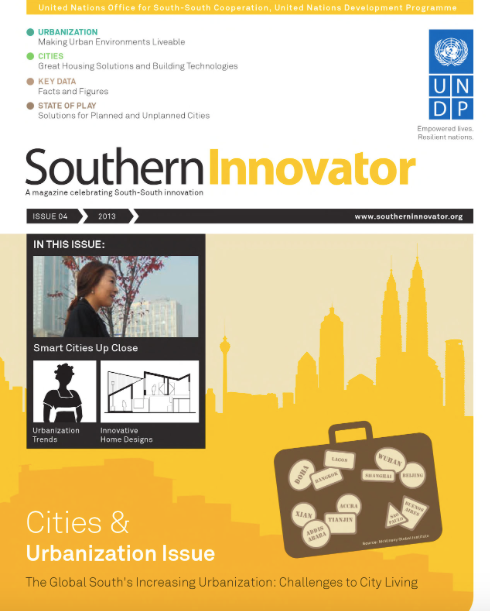
    https://davidsouthconsulting.org/2017/11/08/smart-cities-up-close-2013/

    https://davidsouthconsulting.org/2021/10/22/south-south-cooperation-for-cities-in-asia/

    https://davidsouthconsulting.org/2021/03/05/southern-innovator-issue-4/

    Creative Commons License

    This work is licensed under a
    Creative Commons Attribution-Noncommercial-No Derivative Works 3.0 License.

    ORCID iD: https://orcid.org/0000-0001-5311-1052.

    © David South Consulting 2023

  • Changing Health Care Careers A Sign Of The Times

    Changing Health Care Careers A Sign Of The Times

    By David South

    Hospital News (Canada), June 1992

    Ontario’s health care system is in the midst of a big change. But where are the new jobs going to be and how can health care workers prepare for the coming crunch?

    “Anybody who thought they could progress through the health care system until retirement is in for a shock,” said Ruth Robinson, a national health care consultant for Peat Marwick Stevenson and Kellogg management consultants. 

    Radical changes are taking place in the health care system and it looks like traditionally safe occupations are in for a shake-up. 

    “Hospitals are being pressured to change fundamentally,” said Ms. Robinson. “The net effect is fewer jobs. A lot of people will have to think about new careers.”

    In the Ministry of Health working document entitled Goals and Strategic Priorities, released in January, the fundamental shift from treatment to disease prevention and health promotion is laid out in generalities. 

    The goals range from health equity for aboriginals, women, children and AIDS patients to better management of costs to development of a stronger health care industry that will jump start the economy. And they range from the reorganization of professional responsibilities to promotion of services outside institutions with the goal of keeping people out of hospitals. 

    One thing is clear, the talk is about big changes. But talk is cheap to laid-off health care workers looking for new jobs. 

    The provincial government’s recently passed, but yet to be proclaimed, Regulated Health Professions Act will have serious repercusions for all health care providers. 

    “Traditionally, doctors have an exclusive domain over a wide area,” said Charlie Bigenwald, executive director of health human resources planning at the Ministry of Health. “Even though other people could do things, they had to be delegated by a doctor. With the legislation, we have pushed back what doctors can do. This means there will be more opportunity for a wider variety of health care workers to get into those areas.”

    Midwifery is one of the benefactors of changes in regulations. The Ministry of Health is looking into having a university-based program for midwives. 

    Ms. Robinson predicted nurses and middle management will suffer the most in the change to community-based health care. 

    “Nurses will need to get a bachelor degree if they hope to compete for jobs,” she said. 

    As for middle managers, who often have clinical skills, they will have to reconsider staying in health care, she said. “They will disappear significantly. They can advance themselves by getting back to clinical skills or consider management positions in non-health care areas.

    “There is nothing to be ashamed of about career changes these days,” she added. 

    In the shift towards community-based care, opportunities will arise for health care workers who can offer creative solutions to improve service delivery. 

    “For nurses, we currently have something called the Nursing Innovation Fund where individuals can apply for a wide variety of developmental things like attending workshops, conferences and training programs. We process 2,500 applications a year,” said Mr. Bigenwald. 

    The Ministry of Health hopes the future sees a health care system that adds to the province’s economy rather than drains it. 

    “We spend $17 billion a year on health care. We never looked at the health care system as an economic motor in the past. The question we are asking right now is ‘why can’t an Ontario firm make the carpets, beds, sutures etc?’, said Mr. Bigenwald. 

    Ms. Robinson said “Governments are running out of money and can’t increase funding. They will be looking for more partnerships in the private sector. In this climate, creative solutions to health care delivery have a great opportunity.” 

    Creative Commons License

    This work is licensed under a
    Creative Commons Attribution-Noncommercial-No Derivative Works 3.0 License.

    ORCID iD: https://orcid.org/0000-0001-5311-1052.

    © David South Consulting 2023

  • Critics Blast Government Long-Term Care Reforms

    Critics Blast Government Long-Term Care Reforms

    “They cut hospital beds and lay off staff without having community health care services ready…”

    “When the elderly… decide that facility-based care is the best option, they can’t get it…”

    By David South

    Today’s Seniors (Canada), October 1992

    Seniors should keep a close eye on the Ontario government’s proposed long-term care reforms. According to critics, the plan has more than a few bugs. 

    The term long-term care encompasses an often confusing web of services, from home-provided community services like meals on wheels to institutional care including homes for the aged, seniors’ apartments and chronic care hospitals. 

    Like other provincial governments, the Rae government is trying to rein in escalating health care costs – and long-term care services aren’t immune. They hope that emphasizing prevention and healthy lifestyles, plus providing more services in the home and community, will reduce reliance and expensive health care services like high-cost drugs, surgery and high-tech equipment. According to health minister Frances Lankin, this will preserve medicare in the age of fiscal restraint. 

    The government has outlined seven goals for its long-term care reforms: prepare for the coming surge in the over-65 population; cater services to better reflect the cultural, racial and linguistic make-up of Ontario; eliminate confusion over what services are available; involve the community in planning so that services reflect community needs; lessen reliance on institutions; provide support to family caregivers; tighten regulations governing government-run and private facilities; and improve working conditions for the largely female caregiving workforce. 

    But many people are wary of the proposed reforms and worry that if they aren’t managed properly, some seniors will fall through the cracks. 

    A report released in July by the Senior Citizens’ Consumer Alliance for Long-Term Care Reform blasts the government for being simplistic in its plans. The report compares the present reforms to the failed attempt in the 1970s to move psychiatric care out of the institutions and into communities by closing 1,000 beds. The tragic result in that case was homelessness for many psychiatric patients who found community services unable to help, or, more often than not, non-existent. The Alliance fears seniors – the biggest users of health services – could fall victim to reforms in a similar way. 

    Emily Phillips, president of the Registered Nurses’ Association of Ontario, is blunt: “The NDP’s plans sound good on paper, but they can’t give a budget or direct plan on how they hope to carry out reforms. They are going about things backwards. They cut hospital beds and lay off staff without having community health care services ready.”

    The Ontario Association of Non-Profit Homes and Services for Seniors (OANHSS) – which operates charitable and municipal homes for the aged, non-profit seniors’ apartments. chronic care hospitals and community services serving over 100,000 seniors – says 4,300 seniors are on waiting lists for their member facilities right now, and things won’t improve if the government continues to reduce the number of long-term care beds. 

    But Lankin insists that beds are available in homes and hospitals and it is funding formulas that prevent them from being filled. 

    To help carry out its reforms, the NDP will reallocate $647 million by 1996-97. In bureaucratese, this funding is said to be “back-end loaded”, or mostly spent close to 1996-97. 

    The problem with this, according to the Alliance, is that the government has already embarked on a radical “downsizing” of hospitals, closing beds and laying off health care workers. Lankin claims the worst case scenario for layoffs this year won’t exceed 2,000, but the Ontario Hospital Association claims 14,000 jobs are in jeopardy. Because of this, the Alliance wants money to be spent earlier to avoid gaps in services. 

    Phillips believes it will be hard to pin down the extent of job losses. “For every full-time job cut many part-time and relief positions go with it,” she says. 

    Dr. Rosana Pellizzari, a member of the Medical Reform Group and chair of the Ontario Association of Health Centres, wants better community accountability for hospitals before they lay off staff and cut services. “Sometimes it makes sense to bring people to hospitals,” she says. “Planning must be at the community level, open and democractic. Health care workers, who are mostly women, should not be scapegoated for financial problems. Doctors and management should go first. Physicians experience very little unemployment.” 

    Many nursing and charitable homes for the aged are facing financial crisis. According to OANHSS, six charitable homes for the aged have closed since 1987 due to deficits. In 30 homes, the total annual deficit has increased 125 per cent since 1987. The Ministry of Health recently allocated special funds of $8.1 million to ensure these facilities survive until January, when a new, needs-based funding formula will be introduced. It is intended to better match the actual care requirements of the 59,000 consumers living in long-term care facilities. 

    Michael Klejman, executive director of OANHSS, agrees with helping seniors to stay in their homes. “But when the elderly and their care-givers in Ontario decide that facility-based care is the best option, they simply can’t get it,” he notes. “We know from experience that many of them remain in acute care hospital beds with a cost to the province of about four times what it would cost them to fund a long-term care bed. And many, unfortunately, remain in their own flats or apartments at considerable risk to themselves, isolated and dependent on a patchwork of services.” 

    Beatrix Robinow, who worked on the Alliance’s report, was not impressed with the government’s initial plans, especially the proposed creation of 40 service coordination agencies whose mandate would be to control the delivery of home care services to seniors. Robinow thinks this would add to the confusion and just be another layer of bureaucracy. Many people who appeared at the Alliance’s public hearings expressed confusion over how the long-term care system worked. 

    Robinow says that the government could save money by trimming the bureaucracy and using present organizations like the little-known District Health Councils. 

    “District Health Councils have nothing to do with social services,” says Robinow. “But we want them to be expanded to include long-term care and general supervision of community services. We are waiting to hear if they are interested. I would urge the government to make sure that services are in place before pushing people out of institutions.” 

    The health minister is cautious about the government’s next steps. “The Alliance’s report has been very helpful,” she says. “We are in the process of developing options. Two other ministers are involved and we also need to take this through Cabinet.

    “Ontario is much larger and more complex (than other provinces). The range of services is more developed. We also have a mess in jurisdictions between municipalities and the province. And in Ontario there isn’t a concensus that this is the way to go. 

    “We have been doing a lot of rationalization and streamlining for longer than other provinces. Most thinking people looking at the situation agree that doing nothing would hurt the system. It is not sustainable at present. You hear a lot of things about user fees. That would be the slippery slope for medicare. That would make people think they could buy better services.”

    Ironically, user fees were recently endorsed by the Canadian Medical Association, suggesting the minister will have a fight on her hands with angry doctors. 

    Amidst all the confusion, Dr. Perry Kendall was appointed on Aug. 24 as the provincial government’s special advisor on long-term care and population health. This veteran of both the City of Toronto as Medical Officer of Health – and the groundbreaking Victoria Health Project in British Columbia (often seen as the model for community services to seniors) seems well qualified. “One problem in the past has been the creation of smaller and smaller organizations every time somebody felt the system was not responsive to their needs,” he says. “This created organizational chaos. The challenge  now is to get all the organizations back together to share their expertise.”

    Lankin says she hopes to have a conference on the reforms in the fall. 

    ORCID iD: https://orcid.org/0000-0001-5311-1052.

    © David South Consulting 2021