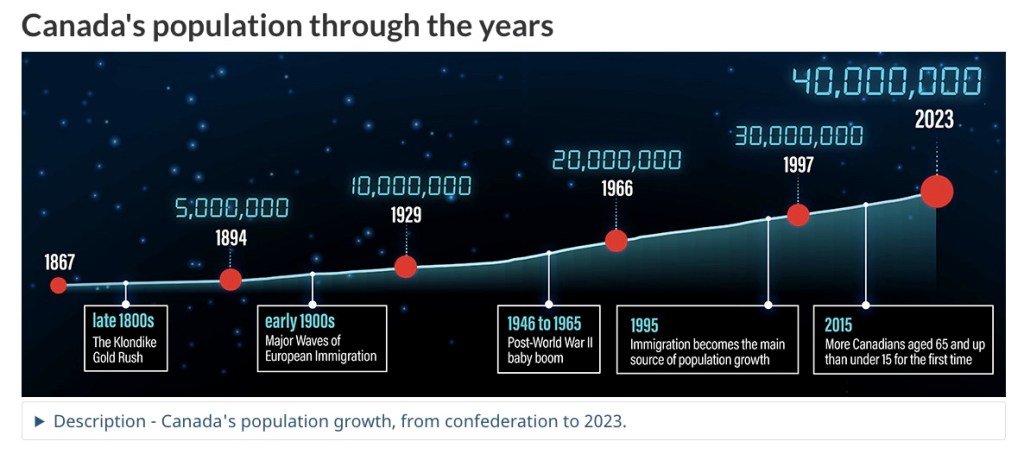
When I first emerged as a Canadian (I was born in 1966), the country’s population was 20 million. So the population has doubled in my lifetime.
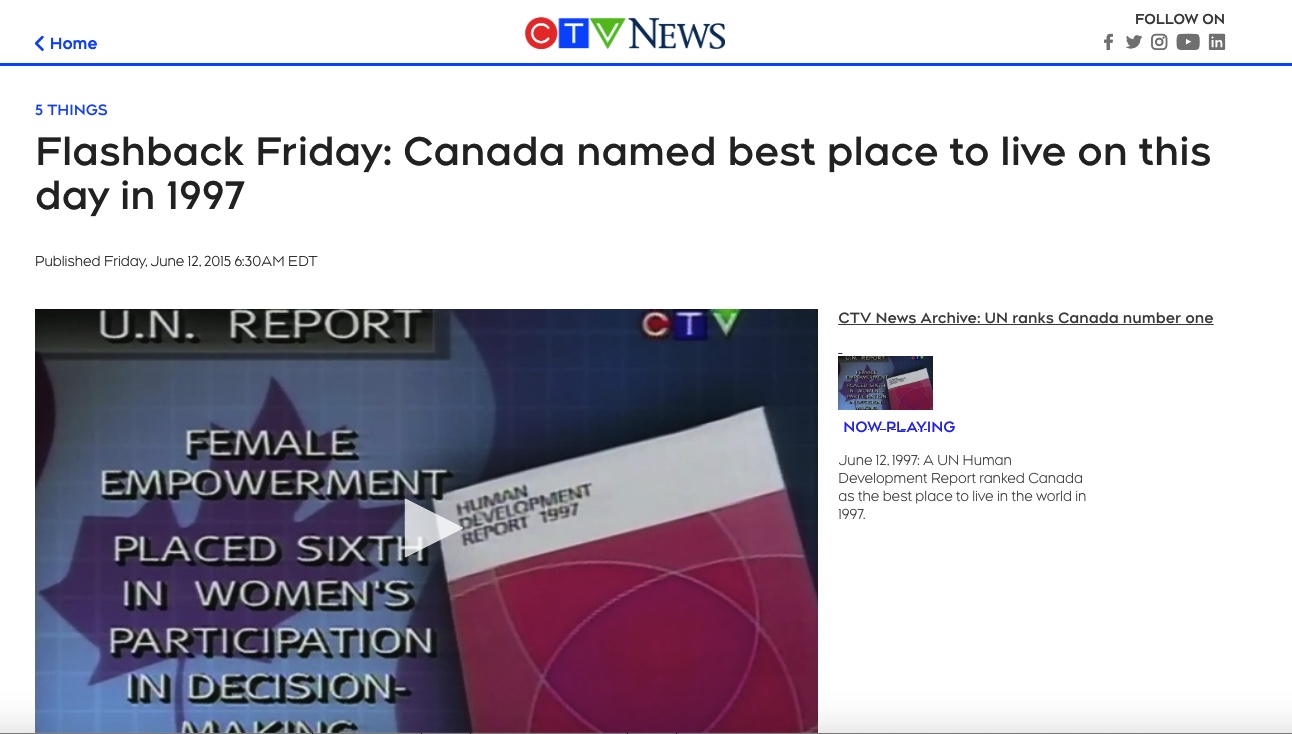
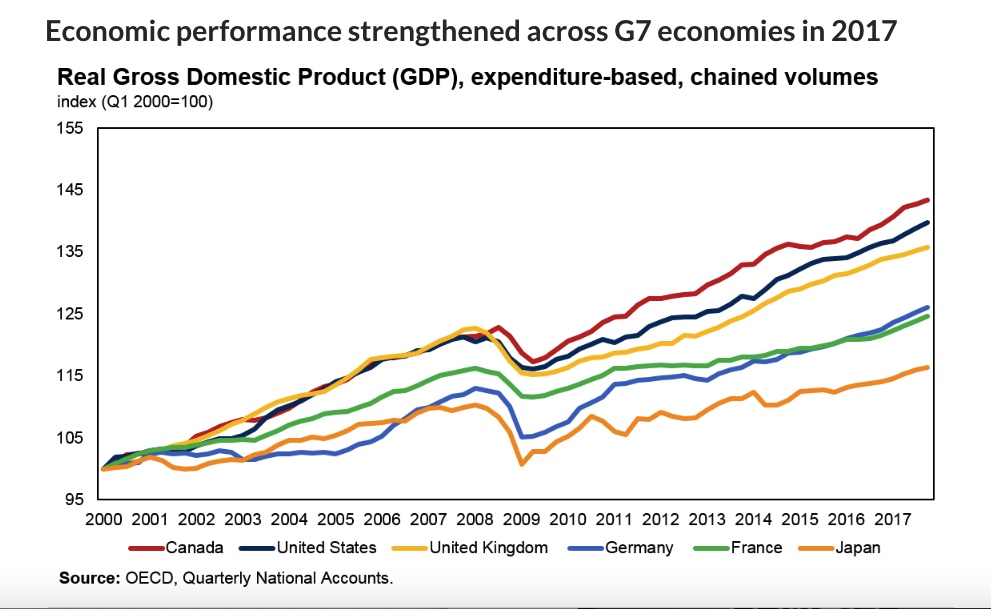
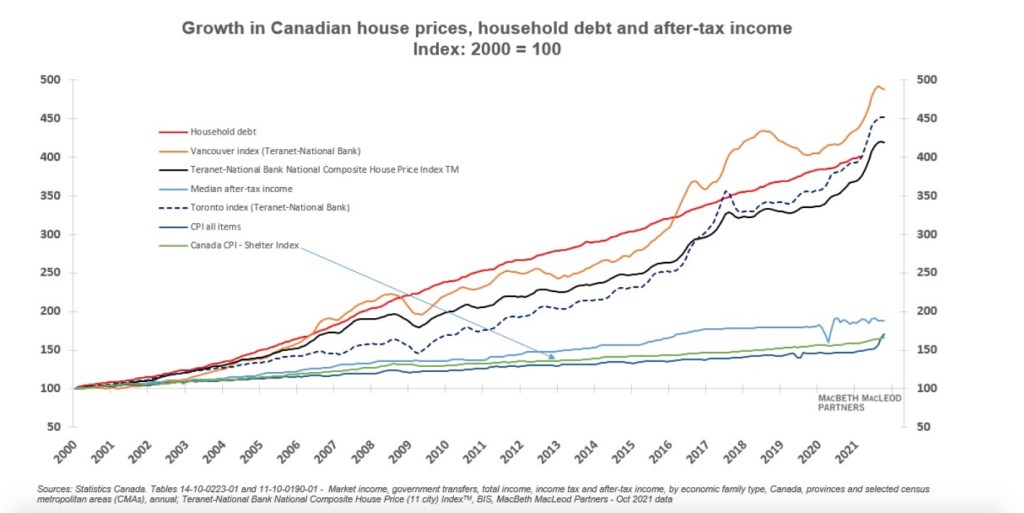
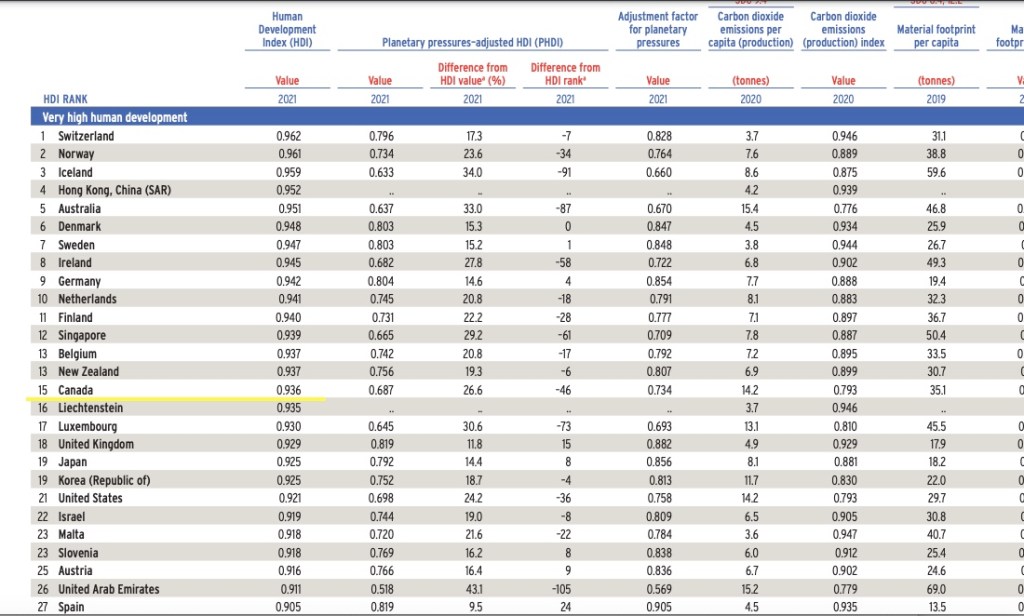
Since Canada topped the HDI rankings in the late 1990s, however, the population has grown, house prices have surged and GDP (Gross Domestic Product) has exploded, yet the country has also slipped down the rankings, hitting 15th place in 2021. Does this mean there are more people, but fewer living as well as they did in the 1990s?
Source: Statistics Canada. Source: Macleans.ca.
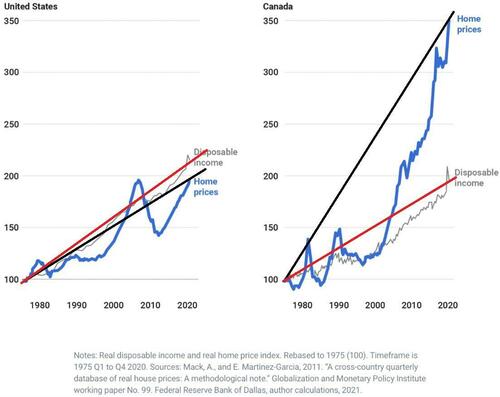
Since 2000 house prices in Canada have surged far past growth in Canadian household disposable income, as compared to US households.
The world’s water supplies are running low, and according to the World Health Organisation (WHO), four out of every 10 people are already affected. But despite the gloomy reality of this problem, entrepreneurs in the South are rising to the challenge to save water.
“The situation is getting worse due to population growth, urbanisation and increased domestic and industrial water use,” said WHO’s Director-General, Dr Margaret Chan. While the WHO has adopted the theme ‘Coping with Water Scarcity’ for this year, every year more than 1.6 million people die from lack of access to safe water and sanitation. Ninety percent of these deaths are children under the age of five.
The health consequences of water scarcity include diarrhoeal diseases such as cholera, typhoid fever, salmonellosis, other gastrointestinal viruses, and dysentery.
One unnecessary waste of water is car washing. The number of cars in developing countries is growing fast, with a 27 per cent increase in sales in China this year, and South America overtaking Asia as the world’s fastest-growing regional vehicle market (Global Auto Report). And all these cars will be washed, wasting this precious resource.
The large informal car washing market in Brazil has long been known for paying low wages and avoiding taxes. On top of this they also waste water. Lots and lots of water. In Brazil, 28.5 per cent of the population (41.8 million people) do not have access to public water or wastewater services. And 60 per cent do not have adequate sanitation (Brazilian Institute of Applied Economic Research).
Started in 1994, Drywash uses a locally available Brazilian organic carnauba wax to clean cars without using water. Drywash has also developed a line of cleaning products that cleans every part of a car without the need for water. They estimate they have saved 450 million litres of water in their first 10 years of operation. From the start, they set out to change the status quo and run a business that “thinks like a big corporation,” said its international partner, Tiago Aguiar.
To do this, Drywash’s management team focused on operating an efficient and professional business. When Brazil’s government passed strict laws against informal selling of products, Drywash was well positioned to benefit, with companies preferring to work with a legal business. Customers have also been attracted to Drywash because they know the service is consistent and to a high standard. Drywash made US $2.7 million in 2005.
Drywash prides itself on operating “on the books”, and paying taxes. They are also ambitious, and have expanded outside Brazil and into other services.
And they don’t just do private cars: they also clean private jets, with Drywash Air. They have also expanded into Mexico, Portugal and Australia, on top of 50 Brazilian franchises. They also want to enter the US market.
In China, Landwasher toilets is tackling the growing problem of providing flush toilets to the country’s 1.32 billion people. As its founder Wu Hao told the World Resources Institute (www.nextbillion.net), “Assuming all of our country uses water-flushing toilets, not even the Changjiang and the Yellow Rive will be enough.”
Formed six years ago, it has patented a process using a special agent and sterilisation to dispose of human waste without using water, and very little electricity.
Hao graduated from Beijing University’s Physics Department and developed management experience working in manufacturing, securities investment and corporate management.
“On a personal level, I love the natural environment… I can’t endure the large scale waste and damage to the environment caused by the process of construction in China.”
Landwasher has seen its sales grow to 40 million Yuan (US $5.2 million), and has six sales offices covering 27 provinces.
Landwasher has just been awarded a contract to provide portable toilets to the 2008 Olympics in Beijing.
Published: September 2007
Resources
World Water Council: Established in 1996, the World Water Council promotes awareness and builds political commitment to trigger action on critical water issues.
The Stratus Group is a Brazilian fund looking for sustainable SMEs in Brazil’s high-growth green sectors.
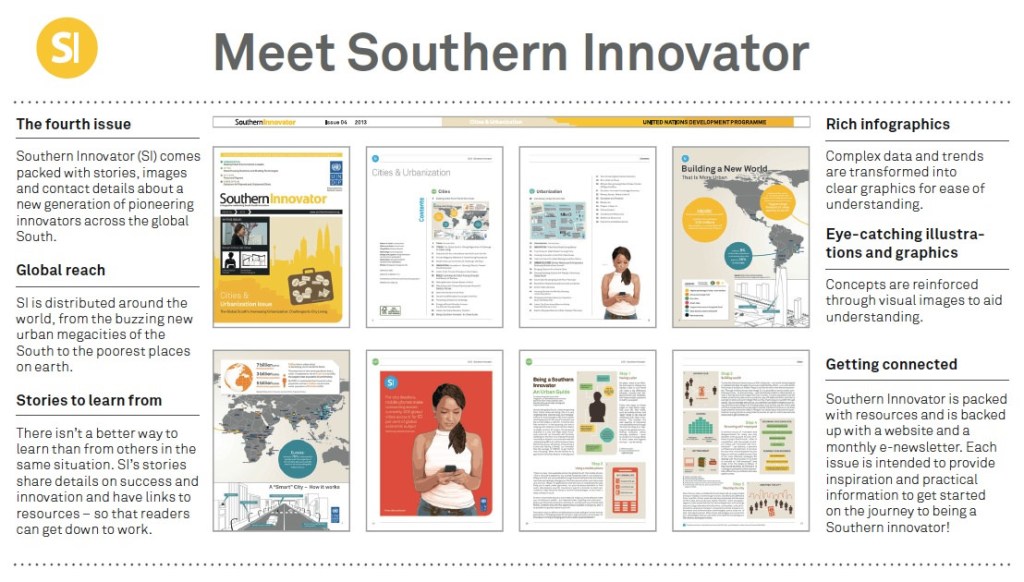
Development Challenges, South-South Solutions was launched as an e-newsletter in 2006 by UNDP’s South-South Cooperation Unit (now the United Nations Office for South-South Cooperation) based in New York, USA. It led on profiling the rise of the global South as an economic powerhouse and was one of the first regular publications to champion the global South’s innovators, entrepreneurs, and pioneers. It tracked the key trends that are now so profoundly reshaping how development is seen and done. This includes the rapid take-up of mobile phones and information technology in the global South (as profiled in the first issue of magazine Southern Innovator), the move to becoming a majority urban world, a growing global innovator culture, and the plethora of solutions being developed in the global South to tackle its problems and improve living conditions and boost human development. The success of the e-newsletter led to the launch of the magazine Southern Innovator.
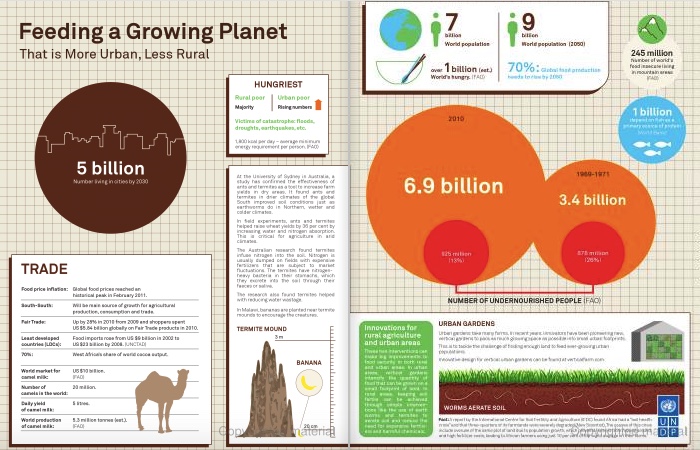
The world’s population is becoming more urban by the day. By 2030, some five billion people around the world will live in cities. This year is the tipping point: urban dwellers (3.3 billion people) now outnumber rural residents for the first time (UNFPA’s State of the World Population 2007 Report).
But with rising food prices across the globe, many city-dwellers are experiencing hunger and real hardship. On international commodity markets, food prices have gone up 54 percent over the last year, with cereal prices soaring 92 percent (FAO – World Food Situation). While living in an urban environment means living cheek-by-jowl with other people, it doesn’t mean there aren’t ways to grow food and supplement urban dwellers’ tight budgets and boost diets.
U.N. Secretary General Ban Ki-moon has called for food production to increase 50 percent by 2030 just to meet rising demand – and right now there are 862 million people undernourished (FAO). But one solution, urban farming, can make a huge difference, as the Caribbean island of Cuba has shown.
Today, Cuba imports about 50 percent of its minimum fuel and food requirements – a cost that reached US $1.6 billion last year for food. (Reuters). The island has been buffeted by one food crisis after another in the past two decades, first by the collapse of its aid from the Soviet Union, and then by a fuel crisis. But now, urban farming in Cuba provides most of the country’s vegetables, thanks to urban gardens that have sprung up on abandoned land in the country’s cities and towns. And the food is pesticide-free: 70 percent of the vegetables and herbs on the island are organic (http://www.soilassociation.org/web/sa/saweb.nsf/Living/ whatisorganic.html).
These urban farms mean fresh food is just a short walk away from the people who eat it. And in a world of rising fuel prices, Cuba has reduced the use of fossil fuels in the production and transportation of food.
The urban farms have created 350,000 jobs that pay better than most government jobs. It has also improved Cuban’s health: many have moved from diets dominated by rice and beans and imported canned goods from Eastern Europe, to fresh vegetables and fruits.
While Cubans receive at least a basic state ration of rice, beans and cooking oil, the rations do not include fresh fruit and vegetables. After the withdrawal of Soviet subsidies, the average Cuban’s daily calorie intake fell sharply. Between 1989 and 1993, daily calorie intake dropped from 3,004 to 2,323 (UN). But with the growth of urban farms, this has moved up to 3,547 calories a day – even higher than the amount recommended for Americans by the US government.
The secret to this success has been the rise of entrepreneurs like Miladis Bouza, a 48-year-old former research biologist who had to abandon a comfortable middle class life after the collapse of the Soviet Union. Her government salary dropped to US $3 a month. Unable to make ends meet and provide food for her family, she quit her job.
The Cuban government allowed people to turn unused urban land into mini farms. The cities have many vacant lots because the state owns most land and there isn’t competition from private developers, as in many other countries. Unusually for communist Cuba, 80 percent of the profits are kept by the farmers. This can be an average wage of US $71 per month.
“Those salaries are higher than doctors, than lawyers,” Roberto Perez, an agronomist who runs the country’s first urban farm, told The Associated Press. “The more they produce, the more they make. That’s fundamental to get high productivity.”
Miladis grabbed this opportunity to farm a half-acre plot near her home in Havana. Along with her husband, she grows tomatoes, sweet potatoes and spinach, and sells the vegetables at a stall on nearby busy street. This has enabled her monthly income to rise to between US $100 per month and US $250 per month, far more than the average government salary of US $19 per month.
All this urban farming is also all-natural farming. Farms have had to turn to natural compost as fertilizer, and natural pesticides like strong-smelling celery to ward off insects.
So-called organoponicos (http://academicos.cualtos.udg.mx/Pecuarios/ PagWebEP/Lecturas/ORGANOPONICOS.htm ) gather together a wide variety of vegetables, fruits and herbs, as well as ornamental plants. Customers are offered mangos, plantains, basil, parsley, lettuce, garlic, celery, scallions, collard greens, black beans, watermelon, tomatoes, malanga, spinach and sweet potatoes.
“Nobody used to eat vegetables,” said David Leon, 50, buying two pounds of Swiss chard at a Havana organoponico. “People’s nutrition has improved a lot. It’s a lot healthier. And it tastes good.”
Published: June 2008
Resources
Square Foot Gardening: a book with all the details on how to grow food in tight, urban spaces.
Development Challenges, South-South Solutions was launched as an e-newsletter in 2006 by UNDP’s South-South Cooperation Unit (now the United Nations Office for South-South Cooperation) based in New York, USA. It led on profiling the rise of the global South as an economic powerhouse and was one of the first regular publications to champion the global South’s innovators, entrepreneurs, and pioneers. It tracked the key trends that are now so profoundly reshaping how development is seen and done. This includes the rapid take-up of mobile phones and information technology in the global South (as profiled in the first issue of magazine Southern Innovator), the move to becoming a majority urban world, a growing global innovator culture, and the plethora of solutions being developed in the global South to tackle its problems and improve living conditions and boost human development. The success of the e-newsletter led to the launch of the magazine Southern Innovator.
As the population around the world’s cities grows, and slums grow larger and more prevalent, the urgent need for affordable and decent housing becomes more pressing. The world’s megacities – like Buenos Aires, Argentina, where more than 13 million live in the metropolitan region – have to find a way to provide housing that is both cheap and does the minimum possible amount of harm to the environment.
About one-third of the world’s urban dwellers live in slums, and the United Nations estimates that the number of people living in such conditions will double by 2030 as a result of rapid urbanization in developing countries. Latin America is already the most urbanized region in the developing world.
“Throughout Latin America you have economies that are growing and doing well, but the way the economies are growing is actually generating more shanty towns,” said Erik Vittrup, senior adviser on Latin America and the Caribbean for the U.N. Human Settlements Program. “It’s a growth that is just generating wealth for those who (already) have it.”
How well people dwell is integral to their mental and physical health. Most squatters and slum dwellers live in makeshift homes made from whatever they can get their hands on. These dwellings are usually unsafe and vulnerable to fire, floods, and earthquakes.
But across the South, initiatives are proving it is possible to build good quality homes for the poor while avoiding burdening them with debt. Pioneering ways are being developed for the poor to build their own high-quality houses using recycled materials and environmentally friendly products.
In Colombia , Alejandro Salazar, a chemical engineer, professor at the Universidad del Valle (http://www.univalle.edu.co/english/) and innovator running several companies pioneering new building technologies using recycled waste, is building high-quality, inexpensive houses for the poor. By combining free building materials recovered from waste, a government grant and the voluntary labour of the homeowners, Salazar’s company is able to build homes for the poor that don’t leave them with ongoing bank debt from mortgages.
Based in Cali, Colombia (http://gosouthamerica.about.com/od/cali/p/Cali.htm), his companies Ecoingenieria (product and material research and development), Ecomat SA (production of eco-materials using industrial waste and construction rubble), Constructora Paez, (social housing construction using eco-products) and Wassh SA (environmental management and transformation of dangerous solid waste into non-dangerous materials), are focused on pioneering new technologies for housing.
“Our company uses two basic technologies,” said Salazar. “The production of eco-materials from solid waste and demolition waste, and the implementation of an agile building system, which does not require skilled labour and is hand-transportable. All the pieces are produced in a prefabrication plant that uses the eco-materials.”
Salazar has found a way to provide homes quicker than existing NGOs – Popular Housing Organizations (OPV), as they are called – established to address homelessness in Colombia. The homeless poor are caught in a Catch-22: they need to have a formal job to receive homebuilding assistance from the government, and they usually can not save up enough money for a down payment on the home.
Salazar’s solution is to take the maximum grant given by the central government, which is US $4,730, and combine it with the recycled building materials and homeowners’ own labour. He says this allows a house to be built for roughly half the price of a similarly sized one that uses conventional materials: the eco-materials house costs around US $ 6,590, compared to US $12,000 using conventional materials. Land is often either donated by the municipality or the family already owns it. And in Salazar’s experience, the whole family chips in with the building: husbands, sons, brothers, fathers, wives.
The training takes just three days on eco-materials and a day in construction techniques for house building.
“To date, we have built with this method 306 houses,” said Salazar. “For the coming year, we expect to deliver around 500 houses or more. To build a house, after acquiring the land, we need three people working eight hours a day to build it in four weeks – all under the supervision of a workforce teacher and the supervision of an engineer or architect.
“The houses are designed by architects with the participation of the community or families. They do some workshops and the design conforms to their vision and expectation. In Colombia, there is an earthquake resistance code which is binding in law and provides detailed specifications of the materials, foundations, structure and roof.”
The pre-fabricated building materials are made from recovered waste from a wide variety of sources: ceramic red brick, coarse ash and fly ash, slag from steel, copper slag, porcelain insulators used for electrical power lines, nickel slag, sludge from sugar and alcohol plants and water treatment plants.
“The raw materials we use are industrial solid waste and demolition waste. It costs the industry a lot to throw away this waste,” Salazar said.
He said the biggest obstacle to the new homes is psychological: many people initially “tend to reject at first-hand the technology.”
“When visiting the factory and then visiting the homes – or model homes – they then compare it with a traditional house, and realize that the best eco-homes when finished meet the standards of Colombian earthquake resistance and are also cheaper,” he said.
Compared to using conventional building materials, the eco-materials reduce the cost of a new home. And the company still makes a profit from it!
In Paraguay, Elsa Zaldivaris using recycled plastic, cotton netting, corn husks, and loofah sponges (http://en.wikipedia.org/wiki/Luffa) to make cheap, lightweight construction panels for housing. This has a double benefit: it makes for cheap housing and it is good for the environment.
“That’s very important in Paraguay,” said Zaldivar, “because we’ve already reduced our original forest to less than 10 percent of the national territory.”
Zaldivar got her experience working with people in the impoverished area of Caaguazú, where in the past she helped with the building of toilets and making stoves. She found that involving local people in this work made a huge difference: “They told me: ‘Now we feel like we’re people with dignity.’”
She encourages local women to grow loofah – a plant that once flourished but was being ignored. While the fruit is edible she was more interested in the crusty sponge that is left over when the plant is dried. The women started a cooperative selling loofah sponges, mats and slippers. But there was a lot of waste in the process, with a third not suitable for export. She then came up with the idea to use the loofahs for wall and roof panels for cheap housing.
Along with industrial engineer Pedro Padros, she developed a way to combine loofah with plastic waste. Padros invented a machine to melt the recycled plastic and mix the molten plastic with loofah, vegetable fibres and chopped corn husks. It has produced a building panel that is lighter and easier to move around than lumber or brick. With a grant from the Inter-American Development Bank, design improvements have been made and the cost-per-panel brought down from US $6 per square meter. It is now competitive with the cost of wood panels. The great thing about the panels is that they can be recycled again when they wear out, completing the cycle.
“To have a decent home liberates people,” said Zaldivar.
Published: January 2009
Resources
Cradle to Cradle: Remaking the Way We Make Things: This radical concept is about how products, can be used, recycled, and used again without losing any material quality—in cradle to cradle cycles. Website:http://www.mcdonough.com/cradle_to_cradle.htm
Builders Without Borders: Is an international network of ecological builders who advocate the use of straw, earth and other local, affordable materials in construction. Website:http://builderswithoutborders.org/
World Hands Project: An NGO specialising in simple building techniques for the poor. Website:www.worldhandsproject.org
CIDEM and Ecosur specialise in building low-cost community housing using eco-materials. They have projects around the world and are based in Cuba. Website:http://www.ecosur.org









 David South Consulting

You must be logged in to post a comment.