Categories
Archive Development Challenges, South-South Solutions Newsletters

African Online Supermarket Set to Boost Trade

By David SouthDevelopment Challenges, South-South Solutions

SOUTH-SOUTH CASE STUDY

Online retailing and marketing strategies are revolutionizing how people around the world buy products and services – but so far they have not benefited most of Africa’s small businesses and traders. On a continent where trading for survival is the norm, very few people are reaping the benefits of selling on the Internet.

Not only has limited access to the Internet and the lack of high bandwidth in Africa impeded communication within the continent, it has restricted African businesses from taking advantage of the most profound change in global business for decades: e-retailing (also known as e-tailing or e-commerce).

But the African information technology pioneers of Ghana – a country that has already gained a reputation as an IT leader in West Africa (www.ghanaictawards.com) – are setting out to change this situation, and in turn to change the way people access African goods and services.

Pledging in its motto to reach “every African nook and cranny,” ShopAfrica53 is an online shopping portal similar to famous brands like Amazon or eBay, but focused entirely on giving African traders the ability to sell across the continent and to the world online.

The one-stop shopping site – taking its name from the 53 countries on the continent – can be accessed by Internet users, or better still, by the enormous number of mobile phone users not only in Africa but around the world.

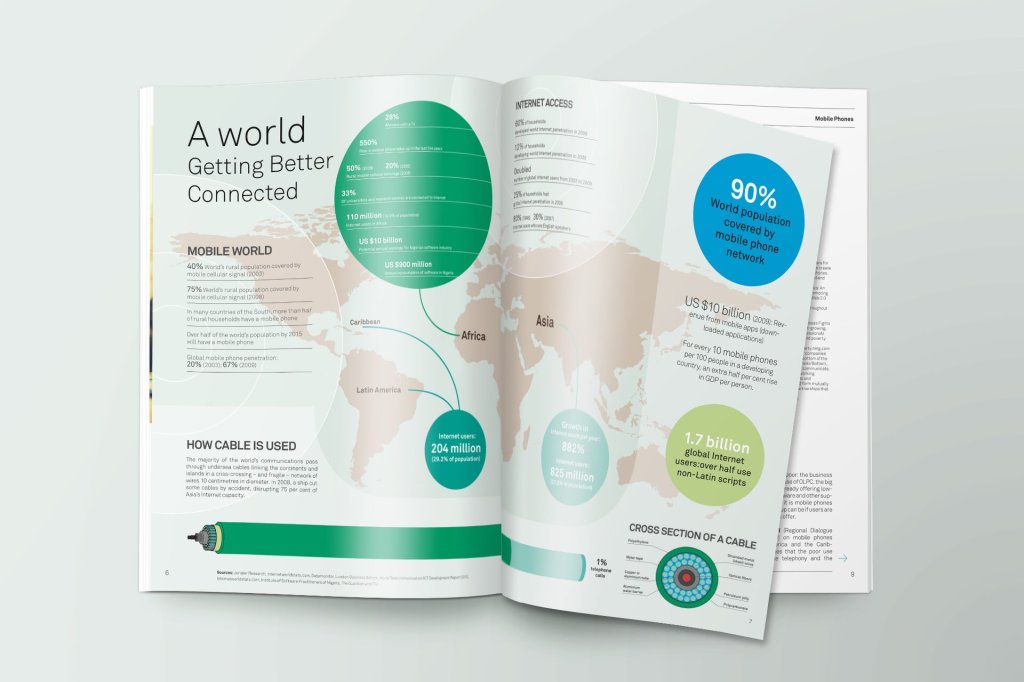
The number of mobile phone subscribers in Africa surpassed 300 million in 2008 (ITU), representing a significant market in their own right. Research group Informa Telecoms and Media estimates mobile networks now cover 90 per cent of the world’s population – 40 per cent of whom are covered but not connected.

ShopAfrica53 works like this: merchants first fill out an online form on the ShopAfrica53 website. They are then contacted by ShopAfrica, and an account is set up.

People wanting to buy goods and services on the website use the African Liberty Card to ensure the transactions are safe and not at risk from hackers and fraudsters. The disposable pre-paid scratch card can be used on mobile phones and the Internet and is purchased from store outlets.

ShopAfrica handles the logistical hassles of shipping to customers around the world, facilitates payment transfers, and helps with record keeping for merchants.

ShopAfrica offers an eclectic selection of goods: apparel and accessories, books and stationery, groceries, handicraft, health and personal care, home and garden, machinery and tools, technology and entertainment. It promises to offer the “best selection of African products, anywhere, worldwide” – everything from building supplies, household items and electronics to processed foods and fabrics.

One Ghanaian merchant, Mohammed Salifu, promises to deliver in two days a “large brown cow for delivery or collection. The size, colour and weight of animal will vary. This merchant provides live goats, sheep, cattle for special occasions and festivities and can also provide a slaughtering service for clients.”

Then there is Vera Ami Kpogli, who is selling a ‘Beyonce’ Electric Blue necklace. Tse-Lee Fashions offers Batik/Tie and Dye Print Shirt in aqua and navy. And for the ‘king’ of the house, Ama Afrique Designs is selling Men’s Royal Rulers, sandals “worn many centuries ago by African kings.”

The potential of this service to boost incomes is considerable: in the United Kingdom, online sales now make up 15 percent of all retail spending, reaching £43.8 billion (US $66.12 billion) in 2008 (IMRG).

As has been seen with other countries of the Global South, trade in high quality goods boosts incomes. South-South trade grew by an average of 13 percent per year between 1995 and 2007. By 2007, South-South trade made up 20 percent of world trade. And over a third of South-South commerce is in high-skill manufacturing. Making finished goods, rather than just selling raw materials, improves workers’ skill levels and increases the return on trade.

The rapid changes to African countries – the tilt to being more urban than rural, and being home to a larger urban population than North America, with 25 of the world’s fastest growing cities (International Institute for Environment and Development) – means there is an urgent need to boost incomes and better connect traders and manufacturers to the global economy.

ShopAfrica53 could be the start of a very big thing for African trade.

Published: May 2009

Resources

  • The red dot logo stands for belonging to the best in design and business. The red dot is an internationally recognised quality label for excellent design that is aimed at all those who would like to improve their business activities with the help of design.
    Website: www.red-dot.de
  • BOP Source is a platform for companies and individuals at the BOP (bottom of the pyramid) to directly communicate, ultimately fostering close working relationships, and for NGOs and companies to dialogue and form mutually valuable public-private partnerships that serve the BOP.
    Website: http://bopsource.ning.com/
  • Business Fights Poverty: Business Fights Poverty is the free-to-join, fast-growing, international network for professionals passionate about fighting world poverty through good business.
    Website: businessfightspoverty.ning.com
  • Dutch Design in Development: As a matchmaker, DDiD puts together European clients, Dutch designers and small and medium-sized enterprises in developing countries. The designers share their knowledge of European consumer tastes, product development, design and quality standards
    Website: www.ddid.nl
  • Afriville is a Web 2.0 service and an African Caribbean social network. Afriville is a community website along the lines of the famous MySpace. Users are free to message and post profiles. The difference is that the user is able to choose how closed or open the networks are. The site features a state of the art music management system which allows African and Caribbean artists to get straight in touch with their fans.
    Website: www.afriville.com
  • Business Action for Africa: Business Action for Africa is an international network of businesses and business organisations from Africa and elsewhere, coming together in support of three objectives: to positively influence policies for growth and poverty reduction, to promote a more balanced view of Africa, and to develop and showcase good business practice in Africa
    Website: www.businessactionforafrica.org
  • Interactive Media in Retail Group (IMRG) is a membership community for the e-retail industry, whose vision is to maximise the commercial potential of online shopping
    Website: www.imrg.org

https://davidsouthconsulting.org/2021/03/20/accessing-global-markets-via-design-solutions/

https://davidsouthconsulting.org/2022/06/02/afghanistans-juicy-solution-to-drug-trade/

https://davidsouthconsulting.org/2022/10/26/african-trade-hub-in-china-brings-mutual-profits-2/

https://davidsouthconsulting.org/2021/03/20/carbon-markets-need-to-help-the-poor/

https://davidsouthconsulting.org/2022/11/21/chinese-trade-in-angola-helps-recovery/

https://davidsouthconsulting.org/2021/03/20/computer-gold-farming-turning-virtual-reality-into-real-profits/

https://davidsouthconsulting.org/2022/04/12/djibouti-re-shapes-itself-as-african-trade-hub/

https://davidsouthconsulting.org/2021/07/19/global-south-trade-boosted-with-increasing-china-africa-trade-in-2013/

https://davidsouthconsulting.org/2020/12/12/mobile-phone-shopping-to-create-efficient-markets-across-borders/

https://davidsouthconsulting.org/2021/12/08/new-media-markets-and-screen-finance/

https://davidsouthconsulting.org/2022/10/26/perfume-of-peace-helps-farmers-switch-from-drug-trade/

https://davidsouthconsulting.org/2022/10/04/popular-chinese-social-media-chase-new-markets/

https://davidsouthconsulting.org/2021/07/19/south-south-trade-helping-countries-during-economic-crisis/

https://davidsouthconsulting.org/2022/11/17/sos-shops-keep-food-affordable-for-poor-unemployed/

https://davidsouthconsulting.org/2022/11/16/thai-organic-supermarkets-seek-to-improve-health/

https://davidsouthconsulting.org/2022/10/20/trade-to-benefit-the-poor-up-in-2006-and-to-grow-in-2007/

https://davidsouthconsulting.org/2020/04/17/virtual-supermarket-shopping-takes-off-in-china/

https://davidsouthconsulting.org/2022/10/05/women-empowered-by-fair-trade-manufacturer/

https://davidsouthconsulting.org/2022/06/16/women-mastering-trade-rules/

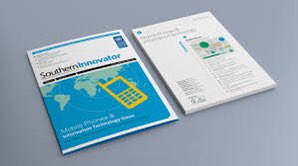
Development Challenges, South-South Solutions was launched as an e-newsletter in 2006 by UNDP’s South-South Cooperation Unit (now the United Nations Office for South-South Cooperation) based in New York, USA. It led on profiling the rise of the global South as an economic powerhouse and was one of the first regular publications to champion the global South’s innovators, entrepreneurs, and pioneers. It tracked the key trends that are now so profoundly reshaping how development is seen and done. This includes the rapid take-up of mobile phones and information technology in the global South (as profiled in the first issue of magazine Southern Innovator), the move to becoming a majority urban world, a growing global innovator culture, and the plethora of solutions being developed in the global South to tackle its problems and improve living conditions and boost human development. The success of the e-newsletter led to the launch of the magazine Southern Innovator. 

https://davidsouthconsulting.org/2021/03/05/southern-innovator-issue-2/

Creative Commons License

This work is licensed under a
Creative Commons Attribution-Noncommercial-No Derivative Works 3.0 License.

ORCID iD: https://orcid.org/0000-0001-5311-1052.

© David South Consulting 2023

Categories
Archive Development Challenges, South-South Solutions Newsletters

Shopping and Flying in Africa’s Boom Towns

By David SouthDevelopment Challenges, South-South Solutions

SOUTH-SOUTH CASE STUDY

As economies across Africa grow, the continent still has a long way to go to create infrastructure to match people’s rising expectations of what a modern, prosperous life looks like.

Africa’s current economic growth has mainly been driven by commodities and oil and gas exports. Critics say this boom has failed to bring tangible benefits to many of Africa’s poor, who feel left out of the prosperity.

Trade has been flourishing not only because of exports to traditional markets in Europe and North America but also because of explosive growth in trade and investment between China and Africa.

Two trends now underway are set to transform people’s wealth and living standards despite the many obstacles caused by the inequalities of current economic growth. The first is the rise and rise of retail shopping options

looking to meet a strong appetite for consumer goods. And the second is the expansion of flying options on a continent notorious for its poor air links. Increasing investment in retail and flight networks will be a source of jobs, careers and wealth for the coming decade.

The aviation sector supports 6.7 million jobs on the continent, according to TradeMark Southern Africa (http://www.trademarksa.org), and makes a US $67.8 billion contribution to Africa’s gross domestic product (GDP).

But the woeful state of Africa’s air networks means that it is often cheaper for people to fly to other parts of Africa via European airports. And Africa has a long way to go to match air safety standards found elsewhere: there was one accident for every 305,000 flights involving Western-built jets in Africa last year (IATA) – nine times the global average.

But Africa is now receiving the attention of the global airline industry. The Abuja Declaration (http://nigerianaviationnews.blogspot.co.uk/2012/07/aviation-safety-in-africa-abuja.html) aims to bring the African accident rate in line with the global average by 2015. And it is hoped the added competition and introduction of more global players will also raise standards and make flying in Africa safer, more convenient and cheaper.

The experience of Europe and North America shows that increased air traffic brings a boost to economic growth.

With more frequent, safer and more reliable air routes, business people will be able to move around and strike deals, tourists can get around and traders can cross borders without the hassle of navigating poor road networks.

Airlines are lining up to compete on improving air links in Africa to capitalize on rising incomes and economic dynamism.

The competition to serve the air passengers has heated up with the announcement of numerous new airlines, as well as well-established global carriers making plans to expand routes across Africa. Kenya Airways (http://www.kenya-airways.com/) has pledged to reach all of Africa’s countries by 2017 while also launching its own budget airline called Jambo Jet (http://www.ventures-africa.com/2012/06/kenya-airways-tolaunch-low-cost-airline-as-it-prepares-for-competition/).

State-owned South African Airways (SAA) (http://www.flysaa.com/gb/en/) is also starting to expand its network to include every capital city in Africa. SAA will start by adding flights to Ivory Coast and the Democratic Republic of Congo, making it able to serve 26 African destinations. In the short term, it is doing this by halting flights between Cape Town and London, leaving that route to Virgin Atlantic and British Airways.

Operating out of bases in Kenya, Tanzania, Ghana and Angola, a new African discount airline, FastJet (http://www.fastjet.com/) – with EasyJet (http://www.easyjet.com/en) founder Stelios Haji-Ioannou as its backer – is taking over Fly540 (http://www.fly540.com/) and adding 15 leased Airbus aircraft. It will launch flights to Ghana, Kenya, Tanzania and Angola. According to Kenya’s Nation newspaper, the plan is to replicate the success of EasyJet connecting Europe and North Africa with cheap flights in sub-Saharan Africa.

Analysts believe the entry of an aggressive and experienced player like Haji-Ioannou will shake up competition within African aviation.

Other global players lining up to expand in Africa include Emirates, Etihad, Qatar Airways, Turkish Airlines and Korea Air, which has already started flying between South Korea and Kenya’s capital, Nairobi. This is being seen as a boost to the trade in electronics goods between the two countries.

The added excitement in the African air industry has also prompted Air Uganda (http://www.air-uganda.com/) and RwandaAir (http://www.rwandair.com/) to increase their destinations. Qatar Airways (http://www.qatarairways.com/uk/en/homepage.page) will start flying in November 2012 to Maputo, Mozambique three times a week, increasing to 20 the number of destinations the airline serves, according to the Nation.

And while Emirates has a 41 per cent share of the African market, African player Ethiopian Airlines (http://www.flyethiopian.com/en/default.aspx) ambitiously wants to become Africa’s largest airline by 2025.

For shoppers, West Africa is experiencing a boom in new retail spaces being developed, according to a report from Euromonitor International (http://www.euromonitor.com) (http://www.howwemadeitinafrica.com/ghana-%E2%80%93-africas-new-retail-hotspot/18544/). The advantages of creating and developing modern retail spaces are numerous: hygienic shopping environments with greater safety and security attract multinational and global brands, which tend to create lots of long-term jobs.

Euromonitor International has identified Ghana as the next hotspot for retailers. The country is seen to have the right business environment in place that is attractive to foreign investors. It also has the right mix of political stability, cultural tolerance and rising prosperity.

The country is now being seen as the gateway to West Africa’s market of 250 million consumers. Ghana is able to leverage its position as a gateway into landlocked nations and on its strong ties with English-speaking powerhouses like Britain and the United States.

On top of these strategic advantages, the country has focused on upgrading retail spaces in the capital, Accra. The Accra Mall (http://www.accramall.com/), opened in 2007, is considered the most modern shopping mall in Ghana.

Euromonitor found Ghana’s retail industry grew by 14 per cent between 2006 and 2011.

Euromonitor found companies like multinational Unilever and PZ Cussons believed basing their operations in Ghana was a big advantage.

“The presence of such manufacturers provides a good opportunity for retailers as they can source these manufacturers’ products cheaper locally rather than importing them,” it said.

Euromonitor identified three other African countries as potential retail marketplaces. This includes Zambia, a potential agribusiness powerhouse. It is already developing a strong reputation in beef through its Zambeef (http://www.zambeefplc.com/) operation. South African companies have done well in Zambia, including Shoprite, Pick n Pay, Mr Price and the Foschini Group. Much of the action is around the capital, Lusaka.

Rwanda is known for its ease of doing business and there is activity going on in residential areas, roads, hotels, offices and retail spaces. The capital, Kigali, has a new modern, shopping mall, The Union Trade Centre, with a 24-hour store.

Angola has been benefiting from peace since the end of its civil war in 2002. Foreign companies have been attracted to Angola from South Africa, Portugal and Brazil. The Belas Shopping Mall (http://belasshopping.com/website/) opened in 2007 in the capital, Luanda, followed by the Ginga Shopping Mall on the city’s outskirts in 2011.

Published: August 2012

Resources

1) How we made it in Africa: A great website packed with inspirational people and stories on business success in Africa. Website: http://www.howwemadeitinafrica.com/

Development Challenges, South-South Solutions was launched as an e-newsletter in 2006 by UNDP’s South-South Cooperation Unit (now the United Nations Office for South-South Cooperation) based in New York, USA. It led on profiling the rise of the global South as an economic powerhouse and was one of the first regular publications to champion the global South’s innovators, entrepreneurs, and pioneers. It tracked the key trends that are now so profoundly reshaping how development is seen and done. This includes the rapid take-up of mobile phones and information technology in the global South (as profiled in the first issue of magazine Southern Innovator), the move to becoming a majority urban world, a growing global innovator culture, and the plethora of solutions being developed in the global South to tackle its problems and improve living conditions and boost human development. The success of the e-newsletter led to the launch of the magazine Southern Innovator. 

Creative Commons License

This work is licensed under a
Creative Commons Attribution-Noncommercial-No Derivative Works 3.0 License.

ORCID iD: https://orcid.org/0000-0001-5311-1052.

© David South Consulting 2023

Categories
Archive Blogroll Development Challenges, South-South Solutions Newsletters

African Fashion’s Growing Global Marketplace Profile

By David SouthDevelopment Challenges, South-South Solutions

SOUTH-SOUTH CASE STUDY

Tales of African global fashion successes have multiplied in the last few years. African fashion is seeing its profile rise as more and more shows and festivals boost awareness of the continent’s designs, designers and models. In turn, African fashion and design is being taken more seriously as an income and job generator, and as a sector able to weather the ups and downs of the global economy: people always need to wear clothes.

If the global fashion industry were a country, it would rank 7th in global GDP (gross domestic product) (Fashion Performance Network).

In 2011, the apparel retail industry was worth an estimated US $1.1 trillion, and that could grow to US $1.3 trillion by 2016. And the sector is expanding in the global South. It is forecast that India and China combined will be as big a fashion market as the United States by 2015.

One visible aspect of this is the plethora of African fashion weeks that have sprung up.

Launched in 2011, African Fashion Week in London (africafashionweeklondon.com), or AFWL, is a reflection of how far things have come and how much higher the profile of African fashion now is.

The mission behind AFWL is “to promote emerging and established African designers and African-inspired designers from across the globe.” The number of attendees grew from 4,700 in the first year to 20,000 in 2012.

In 2012 it partnered with Côte d’Ivoire Fashion Week (https://www.facebook.com/pages/Cote-dIvoire-Fashion-Week/364950310210789), which will hold its third annual event in December 2013. This partnership has meant fashion designers from Côte d’Ivoire can benefit from the higher international profile of appearing at African Fashion Week in London. The theme in 2012 was “Ivorian Textile Products on the American Market.”

“London is one of the most important fashion capitals around the world,” said Côte d’Ivoire Fashion Week’s founder and CEO, Coulibaly Severin on the AFWL website. “It is a great honour for us and the African continent to have a professional international platform to promote African Fashion industry actors, African heritage, African values, African textiles through Africa Fashion Week London.”

The idea is to use the fashion week as a bridge to access the European market.

With the right support, African fashion businesses have huge potential for growth.

A distinctive “Afropolitan” aesthetic (http://afropolitanaesthetic.tumblr.com/) has grown as a phenomenon since 2005, influencing global urban design trends. It can be characterized as urban, sophisticated, tailored and boldly African in its use of colours and patterns. British designer Paul Smith (http://www.paulsmith.co.uk/uk-en/shop/) has been one of many designers to be inspired by the afropolitan look.

While African fashion trends have always influenced the global fashion business, the challenge has been to create viable global African fashion brands that can compete in the global marketplace and in turn create sustainable jobs in Africa.

Pioneers are showing that it can be done.

Featured at Africa Fashion Week in London in 2011, the Nigerian fashion brand Mmabon (mmabon.com) is now looking to pioneer new ways to buy and sell clothing in Africa. The company, which sells affordable casual and custom apparel, is launching a mobile phone app for all devices and is building its own Internet e-commerce website as well. Mmabon had been engaging with customers through Facebook and the BlackBerry smartphone, but realized it could offer a much better experience for customers through an app and an e-commerce website. This shows the future for fashion in Africa is going mobile and going online.

Founded by Elizabeth Idem-Ido, Mmabon is capitalizing on the fact Internet access is improving in Nigeria and is turning to online advertising to drum up customers. The fashion brand is trying to reach 16 to 34 year olds, of which 8 million are believed to be currently on Facebook in Nigeria, according to Idem-Ido.

There is a cultural change underway in the country: people are increasingly feeling comfortable doing commerce online and on mobile phones.

“Nigerian youths are now more willing to buy products over the Internet, unlike five years ago, with the likes of konga.com and jumia.com revolutionizing the online retail scene in Nigeria,” Idem-Ido, who is also a trained lawyer, told VC4Africa (https://vc4africa.biz/).

Konga (Konga.com) is Nigeria’s largest online mall. Opened in 2012, it offers a wide range of products for order across Nigeria. Jumia.com calls itself the “the biggest online shopping mall in Africa”, operating in Morocco, Egypt, Ivory Coast, Nigeria and Kenya. Another player is Ecwid (ecwid.com), which bills itself as an e-commerce solution for small businesses that “is a revolutionary shopping cart that seamlessly integrates with your existing website. It can also be added to your page on social media networks, such as Facebook or mySpace”.

Idem-Ido’s experience with Mmabon over the past two years shows how online marketing can be an effective – and cost-effective – way to broaden a company’s customer base.

“As a business, we have not physically met with 80 per cent of our current customers,” she said. “Orders have been achieved from referrals, BlackBerry Messenger contacts and our official Facebook page. Online marketing improves our visibility without owning a prime-location store and reminds, assures our already existing customers on why we are their preferred brand.”

Her fashion business began humbly as a part-time t-shirt printing hobby for her friends. Then people started ordering custom-designed t-shirts, and so she began a journey exploring fabrics in local and foreign markets.

Mmabon is now the official merchandiser for the Calabar Festival 2013-2015 (calabarfestival.com), the biggest street carnival in West Africa. Taking place in Calabar, Cross River State, Nigeria, it attracts a million people.

Mmabon is receiving help from Venture Capital for Africa, or VC4Africa (https://vc4africa.biz/), a community of entrepreneurs and investors helping to build companies in Africa, to raise further investment to grow the brand and the business.

Another success benefiting from international exposure is Malian designer Boubacar Doumbia (http://www.ndomo.net/english/index.html), who is currently making fabrics for design-savvy British furniture and home furnishings store Habitat. The prints with African themes have proven a hit with Habitat customers.

Working from a new studio in Burkina Faso’s capital, Ouagadougou, Doumbia (https://www.ashoka.org/fellow/boubacar-doumbia) is a leading advocate of bogolan (http://www.malimali.org/what-is-bogolan/), a Malian traditional textile dyeing process using mud.

He uses locally grown cotton, which is first dyed using plant-based dyes. A chemical reaction occurs when the iron in the mud is applied to the fabric and turns the existing plant dye black after three applications, or grey after two applications. The mud is washed off and the fabrics are placed in the sun to dry. It is a sustainable and chemical-free approach to dyeing fabrics and also creates vibrant patterns that have caught the attention of people in Europe and elsewhere.

Other outlets who have become enamored with African patterns and themes in Britain include Darkroom Boutique, House of Fraser and the V&A Museum, The Guardian newspaper reported.

As an Ashoka fellow (ashoka.org) – Ashoka is the largest network of social entrepreneurs worldwide – Boubacar is using the craft as a way to boost skills and opportunities for youth in Mali. He has “overhauled the traditional model of youth apprenticeship in Mali by putting young people in a central, entrepreneurial role from the outset. Rather than simply train students in the methods of textile production, he teaches professional, people and life skills, and encourages his apprentices to become self-sufficient, creative, and innovative”, according to the Ashoka website.

Elsewhere, African fashion style pioneer Gilles Belinga (https://www.facebook.com/GillesBelinga) has become a fashion phenomenon in China. The former communications engineering student had a deeply personal conversion to fashion and style upon arriving in Beijing; the buzzing and vibrant Chinese capital captured his heart.

“I discovered my talent and passion for fashion in China,” he told China Daily.

“I’ve also been given many opportunities here, so I want to pursue my fashion dream in China.”

The Cameroon native has a distinctly afropolitan take on fashion – elegant, tailored suits, strong colours, and a gentleman’s manner – and this fashionable posture landed him modeling work in fashion shows.

He arrived in China in 2008 after his parents divorced and he went from being in a wealthy family back home to having to do any job he could get to survive. He started out in Tianjin, China – an industrial city with a large high-technology sector – and then moved to Beijing to study.

It was there that he fell in love with the city’s fashion scene and hasn’t looked back.

“I never attended fashion school in Africa, but in Beijing, in this fashionable environment I realized that I like drawing clothes, matching colors and mixing fabrics,” he said.

“There are so many fabrics here, which has given me the chance to try out different things. Sometimes you might have a talent in you, but you might not discover that talent if you’re not in a place where it can come out.”

He now designs clothes and has them made by local tailors.

“When I design clothes for clients, I look at the whole person and what kind of message they want to deliver to people,” he said. “Then I check their skin color and think about style and fabric.”

He defies the elitist take on fashion that can be promulgated by fashion magazines and thinks good fashion is for everyone.

“I believe the way you dress sends a message to people about how you want them to think about you.”

He finds Beijing is full of opportunities and he is regularly stopped in the city’s trendy Sanlitun (http://en.wikipedia.org/wiki/Sanlitun) neighbourhood and asked to be in fashion shows.

“In China, you don’t know who you are going to meet. You could be anywhere and meet someone who can change your life.”

And he plans to perfect his skills and designs in China and then take them back to Cameroon one day.

And maybe, in time, Belinga will be the next big fashion thing.

Published: October 2013

Resources

1) African Fashion Week London: AFWL celebrates London’s unique and diverse cultural heritage, topped with the flamboyant mixing of Western and African culture through fashion at the same time promoting Africa’s rich ethnic culture and interpreting it into contemporary designs. Website: africafashionweeklondon.com

2) Gentlemen of Bacongo by Daniele Tamagni, Paul Smith and Paul Goodwin, Publisher: Trolley. Website: amazon.com

The Afropolitan: A magazine and website from South Africa packed with content from an afropolitan perspective. Website: afropolitan.co.za/

Association of African Designers in Diaspora: The Association of African Designers in the Diaspora is the non-profit social enterprise arm of Africa Fashion Week London that supports emerging designers with the aim to make a positive contribution to society through fashion and creativity. Website: http://africafashionweeklondon.com/africafashionweek/association-of-african-designers-in-diaspora/

The Creative Economy: How People Make Money From Ideas by John Howkins, Publisher: Penguin. Website: creativeeconomy.com/book.htm

Creative Economy Report Website: This annual report offers a snapshot of the state of the global creative economy and its key trends. Website: http://unctad.org/en/Pages/Publications/Creative-Economy-Report-%28Series%29.aspx

7) Copyright + Creativity = Jobs and Economic Growth: WIPO Studies on the Economic Contribution of the Copyright Industries (WIPO 2012). Website: http://www.ip-watch.org/weblog/wp-content/uploads/2012/02/WIPO-Copyright-Economic-Contribution-Analysis-2012-FINAL-230-2.pdf

8) The Afropolitan Shop: The Afropolitan Shop is an online boutique founded by Beverly Lwenya, that desires to tell an African Design Story. It began as a blog in 2007 called The Afropolitan Network, which highlighted stories and images of the African Diaspora. The Afropolitan Shop is now a growing global brand, specializing in handmade and designer accessories such as jewelry, bags and shoes. Website: theafropolitanshop.com/

Creative Commons License

This work is licensed under a
Creative Commons Attribution-Noncommercial-No Derivative Works 3.0 License.

ORCID iD: https://orcid.org/0000-0001-5311-1052.

© David South Consulting 2023

Categories
Archive Blogroll Development Challenges, South-South Solutions Newsletters

Virtual Supermarket Shopping Takes off in China

By David SouthDevelopment Challenges, South-South Solutions

SOUTH-SOUTH CASE STUDY

An ingenious use of technological innovation and savvy trend-spottingis radically transforming the way people do their grocery shopping in China. Busy urban dwellers with time-poor lifestyles can now do their grocery shopping as they pass through Shanghai’s subway system and have their weekly shopping delivered to their home.

The country has experienced breakneck economic growth in the past 15 years, heading towards becoming the world’s largest economy. Much of this growth and new wealth has come from the transformation of China into the world’s manufacturing and exporting hub. But this also leaves an urban population of very busy people who need time-saving solutions to improve their quality of life.

China’s premier Wen Jiabao has now pledged to aid the world economy during the current economic crisis by boosting domestic Chinese consumption. And this new focus on consumption will open up opportunities for entrepreneurs.

“I believeChina’s economy can achieve longer-term, better-quality growth. This will be our new contribution to strong, sustainable global growth,” he told the Wall Street Journal.

And a big part of the boost in domestic consumption will come from modern retailers and supermarkets. Supermarkets were almost non-existent in China before the 1990s. The country sold food in a mix of small shops, open-air markets and through wholesale networks. It was a complex system overlaid with government bodies, marketing boards, brokers, wholesalers, distributors and government-licensed and government-run shops and vendors.

But this has radically changed as the country has moved to a modern retail system. Chinese cities now boast modern supermarkets, convenience stores, hypermarkets and warehouse clubs. There was just one modern supermarket in the country in 1990; by 2003, there were 60,000 (Chinese Chain Store and Franchise Association).

The supermarket model offers many benefits to anyone looking to sell products in the Chinese marketplace. Supermarkets are very competitive with each other and are always looking for new angles and new products to get the edge and win over new consumers. If they offer new tastes and variety, the chances are high they will attract more customers.

Supermarkets tend to offer a greater variety of food products than traditional markets. They are also cleaner, the quality control is better and more standardised, there is no need to haggle over prices and measurements and units for products are clearly labelled and controlled.

But supermarkets can also be criticized for monopolizing distribution networks, hurting small farmers by driving down prices and destroying independent retailers unable to compete with the economies of scale supermarkets can bring to bear.

In Shanghai- a city that has long been a retail pioneer in China- the Yihaodian online grocery company (http://www.yihaodian.com/product/index.do?merchant=1) is radically altering how people buy food by using “virtual supermarkets” in subway stations.

It is a convergence of several technological innovations to make something even better.

Shoppers download an app – or application – on to their mobile phones. This allows them to interact with large LED screens (http://en.wikipedia.org/wiki/LED_display) in subway stations which display images of products – from soap to noodle soup to nuts– just like in a catalogue. The shopper scrolls through the products and finds what they want to buy. Beside the images are barcodes. The shopper scans the product barcode with the phone and Yihaodian then delivers the products straight to their home within hours.

It is a very convenient service for busy workers trying to juggle the many demands of daily life.

The Yihaodian system is based on a similar technology pioneered inSouth Korea.

Yihaodian is riding a wave of growth for the company because of its innovative approach. It has seen sales rise by 28 percent each month and it hopes to make Euro 325 million (US $443 million) in 2011, four times its 2010 revenues. Proof of the value of investing in innovation.

Yihaodian is also showing how clever it is to offer a new way of doing things. It is pioneering a new business model while also recognising the reality of people’s busy lives in modern urban environments. Lily Yu, director of the company’s wireless application department, says it is about something bigger than just profits. “Changing people’s lifestyles is what we are striving for,” she told Monocle magazine.

Yu, founder of the Wireless Application Department at Yihaodian, joined the company in 2010 and leads the team to develop and introduce this technology and new way of buying products.

The only question remaining is this: how long before all retail will follow Yu’s lead?

Published: November 2011

Resources

1) Mobile Active: MobileActive.org connects people, organizations, and resources using mobile technology for social change. Website: http://mobileactive.org

2) How QR Codes Can Grow Your Business: A story on how to use these scannable codes. Website: http://www.socialmediaexaminer.com/how-qr-codes-can-grow-your-business/

3) Southern Innovator magazine: New global magazine’s first issue tackles the boom in mobile phone and information technologies across the global South. Website: www.scribd.com/doc/57980406/Southern-Innovator-Issue-1

https://davidsouthconsulting.org/2022/11/02/african-online-supermarket-set-to-boost-trade/

https://davidsouthconsulting.org/2022/10/26/african-trade-hub-in-china-brings-mutual-profits-2/

https://davidsouthconsulting.org/2021/12/20/better-by-design-in-china/

https://davidsouthconsulting.org/2022/10/20/china-consumer-market-asian-perspective-helps/

https://davidsouthconsulting.org/2020/12/10/china-sets-sights-on-dominating-global-smartphone-market/

https://davidsouthconsulting.org/2022/10/04/chinas-booming-wine-market-can-boost-south/

https://davidsouthconsulting.org/2021/01/25/creating-green-fashion-in-china/

https://davidsouthconsulting.org/2021/01/26/designed-in-china-to-rival-made-in-china/

https://davidsouthconsulting.org/2021/05/14/the-ethics-of-soup-grading-supermarket-shelves-for-profit/

https://davidsouthconsulting.org/2022/10/24/kenyan-products-a-global-success-story/

https://davidsouthconsulting.org/2020/12/12/mobile-phone-shopping-to-create-efficient-markets-across-borders/

https://davidsouthconsulting.org/2022/10/31/rainforest-gum-gets-global-market/

https://davidsouthconsulting.org/2022/11/17/sos-shops-keep-food-affordable-for-poor-unemployed/

https://davidsouthconsulting.org/2022/11/16/thai-organic-supermarkets-seek-to-improve-health/

Development Challenges, South-South Solutions was launched as an e-newsletter in 2006 by UNDP’s South-South Cooperation Unit (now the United Nations Office for South-South Cooperation) based in New York, USA. It led on profiling the rise of the global South as an economic powerhouse and was one of the first regular publications to champion the global South’s innovators, entrepreneurs, and pioneers. It tracked the key trends that are now so profoundly reshaping how development is seen and done. This includes the rapid take-up of mobile phones and information technology in the global South (as profiled in the first issue of magazine Southern Innovator), the move to becoming a majority urban world, a growing global innovator culture, and the plethora of solutions being developed in the global South to tackle its problems and improve living conditions and boost human development. The success of the e-newsletter led to the launch of the magazine Southern Innovator.
https://davidsouthconsulting.org/2021/03/05/southern-innovator-issue-2/

Creative Commons License

This work is licensed under a
Creative Commons Attribution-Noncommercial-No Derivative Works 3.0 License.

ORCID iD: https://orcid.org/0000-0001-5311-1052.

© David South Consulting 2023