
By David South, Development Challenges, South-South Solutions

Online retailing and marketing strategies are revolutionizing how people around the world buy products and services – but so far they have not benefited most of Africa’s small businesses and traders. On a continent where trading for survival is the norm, very few people are reaping the benefits of selling on the Internet.
Not only has limited access to the Internet and the lack of high bandwidth in Africa impeded communication within the continent, it has restricted African businesses from taking advantage of the most profound change in global business for decades: e-retailing (also known as e-tailing or e-commerce).
But the African information technology pioneers of Ghana – a country that has already gained a reputation as an IT leader in West Africa (www.ghanaictawards.com) – are setting out to change this situation, and in turn to change the way people access African goods and services.
Pledging in its motto to reach “every African nook and cranny,” ShopAfrica53 is an online shopping portal similar to famous brands like Amazon or eBay, but focused entirely on giving African traders the ability to sell across the continent and to the world online.
The one-stop shopping site – taking its name from the 53 countries on the continent – can be accessed by Internet users, or better still, by the enormous number of mobile phone users not only in Africa but around the world.
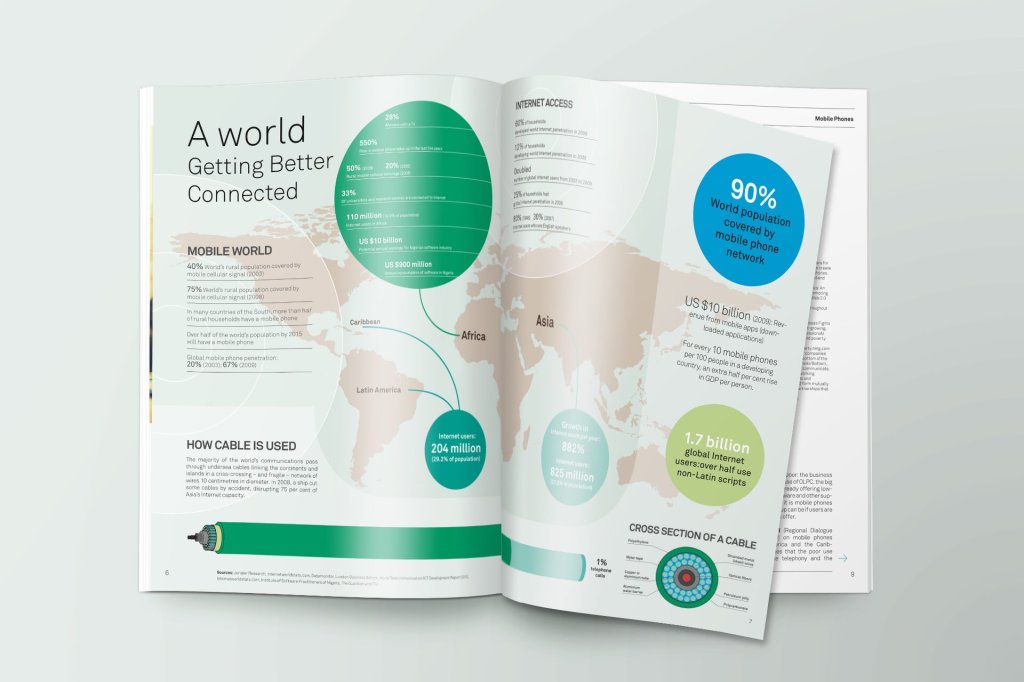
The number of mobile phone subscribers in Africa surpassed 300 million in 2008 (ITU), representing a significant market in their own right. Research group Informa Telecoms and Media estimates mobile networks now cover 90 per cent of the world’s population – 40 per cent of whom are covered but not connected.
ShopAfrica53 works like this: merchants first fill out an online form on the ShopAfrica53 website. They are then contacted by ShopAfrica, and an account is set up.
People wanting to buy goods and services on the website use the African Liberty Card to ensure the transactions are safe and not at risk from hackers and fraudsters. The disposable pre-paid scratch card can be used on mobile phones and the Internet and is purchased from store outlets.
ShopAfrica handles the logistical hassles of shipping to customers around the world, facilitates payment transfers, and helps with record keeping for merchants.
ShopAfrica offers an eclectic selection of goods: apparel and accessories, books and stationery, groceries, handicraft, health and personal care, home and garden, machinery and tools, technology and entertainment. It promises to offer the “best selection of African products, anywhere, worldwide” – everything from building supplies, household items and electronics to processed foods and fabrics.
One Ghanaian merchant, Mohammed Salifu, promises to deliver in two days a “large brown cow for delivery or collection. The size, colour and weight of animal will vary. This merchant provides live goats, sheep, cattle for special occasions and festivities and can also provide a slaughtering service for clients.”
Then there is Vera Ami Kpogli, who is selling a ‘Beyonce’ Electric Blue necklace. Tse-Lee Fashions offers Batik/Tie and Dye Print Shirt in aqua and navy. And for the ‘king’ of the house, Ama Afrique Designs is selling Men’s Royal Rulers, sandals “worn many centuries ago by African kings.”
The potential of this service to boost incomes is considerable: in the United Kingdom, online sales now make up 15 percent of all retail spending, reaching £43.8 billion (US $66.12 billion) in 2008 (IMRG).
As has been seen with other countries of the Global South, trade in high quality goods boosts incomes. South-South trade grew by an average of 13 percent per year between 1995 and 2007. By 2007, South-South trade made up 20 percent of world trade. And over a third of South-South commerce is in high-skill manufacturing. Making finished goods, rather than just selling raw materials, improves workers’ skill levels and increases the return on trade.
The rapid changes to African countries – the tilt to being more urban than rural, and being home to a larger urban population than North America, with 25 of the world’s fastest growing cities (International Institute for Environment and Development) – means there is an urgent need to boost incomes and better connect traders and manufacturers to the global economy.
ShopAfrica53 could be the start of a very big thing for African trade.
Published: May 2009
Resources
- The red dot logo stands for belonging to the best in design and business. The red dot is an internationally recognised quality label for excellent design that is aimed at all those who would like to improve their business activities with the help of design.
Website: www.red-dot.de - BOP Source is a platform for companies and individuals at the BOP (bottom of the pyramid) to directly communicate, ultimately fostering close working relationships, and for NGOs and companies to dialogue and form mutually valuable public-private partnerships that serve the BOP.
Website: http://bopsource.ning.com/ - Business Fights Poverty: Business Fights Poverty is the free-to-join, fast-growing, international network for professionals passionate about fighting world poverty through good business.
Website: businessfightspoverty.ning.com - Dutch Design in Development: As a matchmaker, DDiD puts together European clients, Dutch designers and small and medium-sized enterprises in developing countries. The designers share their knowledge of European consumer tastes, product development, design and quality standards
Website: www.ddid.nl - Afriville is a Web 2.0 service and an African Caribbean social network. Afriville is a community website along the lines of the famous MySpace. Users are free to message and post profiles. The difference is that the user is able to choose how closed or open the networks are. The site features a state of the art music management system which allows African and Caribbean artists to get straight in touch with their fans.
Website: www.afriville.com - Business Action for Africa: Business Action for Africa is an international network of businesses and business organisations from Africa and elsewhere, coming together in support of three objectives: to positively influence policies for growth and poverty reduction, to promote a more balanced view of Africa, and to develop and showcase good business practice in Africa
Website: www.businessactionforafrica.org - Interactive Media in Retail Group (IMRG) is a membership community for the e-retail industry, whose vision is to maximise the commercial potential of online shopping
Website: www.imrg.org
https://davidsouthconsulting.org/2021/03/20/accessing-global-markets-via-design-solutions/
https://davidsouthconsulting.org/2022/06/02/afghanistans-juicy-solution-to-drug-trade/
https://davidsouthconsulting.org/2022/10/26/african-trade-hub-in-china-brings-mutual-profits-2/
https://davidsouthconsulting.org/2021/03/20/carbon-markets-need-to-help-the-poor/
https://davidsouthconsulting.org/2022/11/21/chinese-trade-in-angola-helps-recovery/
https://davidsouthconsulting.org/2022/04/12/djibouti-re-shapes-itself-as-african-trade-hub/
https://davidsouthconsulting.org/2021/12/08/new-media-markets-and-screen-finance/
https://davidsouthconsulting.org/2022/10/26/perfume-of-peace-helps-farmers-switch-from-drug-trade/
https://davidsouthconsulting.org/2022/10/04/popular-chinese-social-media-chase-new-markets/
https://davidsouthconsulting.org/2022/11/17/sos-shops-keep-food-affordable-for-poor-unemployed/
https://davidsouthconsulting.org/2022/11/16/thai-organic-supermarkets-seek-to-improve-health/
https://davidsouthconsulting.org/2020/04/17/virtual-supermarket-shopping-takes-off-in-china/
https://davidsouthconsulting.org/2022/10/05/women-empowered-by-fair-trade-manufacturer/
https://davidsouthconsulting.org/2022/06/16/women-mastering-trade-rules/

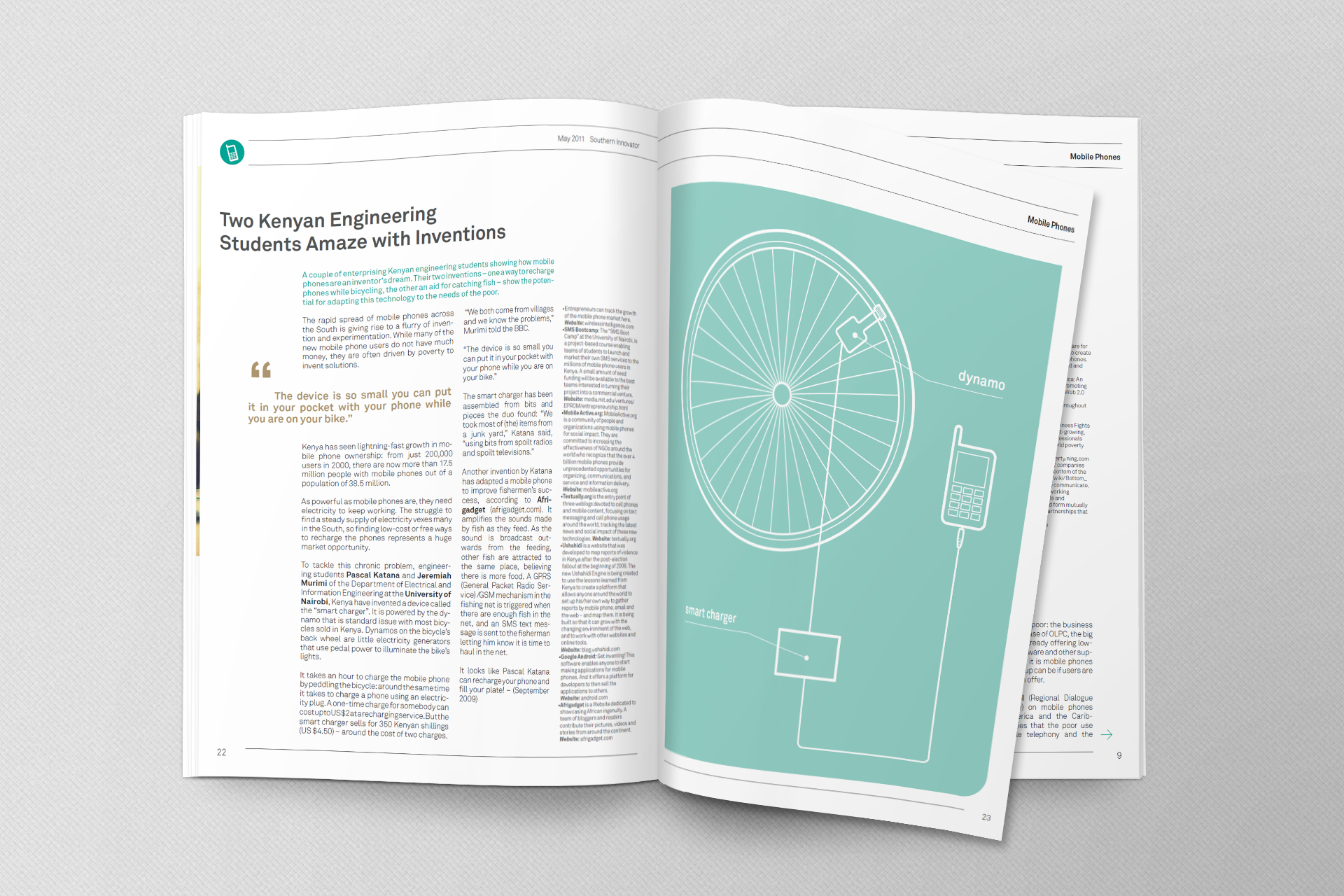
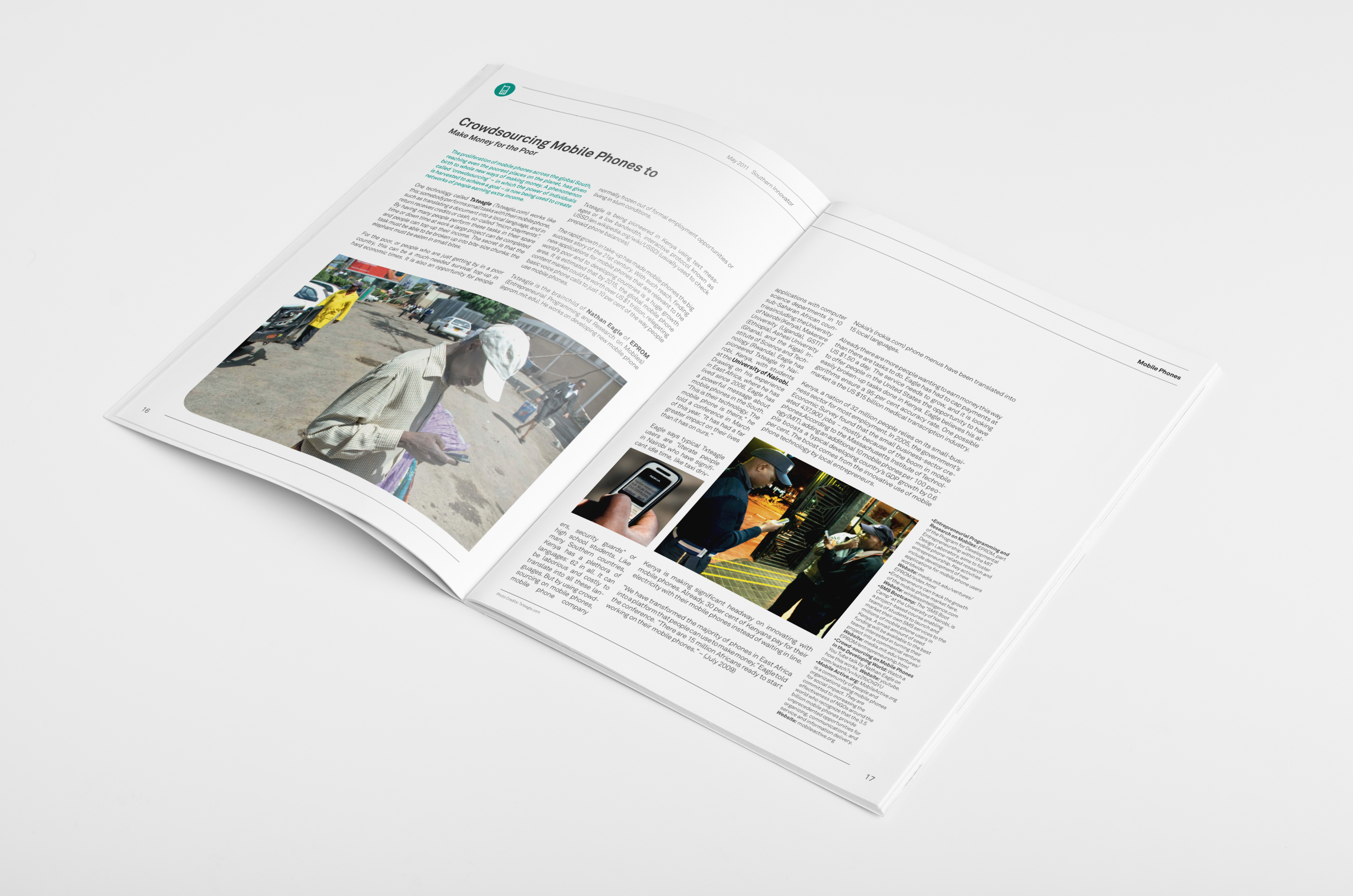
Development Challenges, South-South Solutions was launched as an e-newsletter in 2006 by UNDP’s South-South Cooperation Unit (now the United Nations Office for South-South Cooperation) based in New York, USA. It led on profiling the rise of the global South as an economic powerhouse and was one of the first regular publications to champion the global South’s innovators, entrepreneurs, and pioneers. It tracked the key trends that are now so profoundly reshaping how development is seen and done. This includes the rapid take-up of mobile phones and information technology in the global South (as profiled in the first issue of magazine Southern Innovator), the move to becoming a majority urban world, a growing global innovator culture, and the plethora of solutions being developed in the global South to tackle its problems and improve living conditions and boost human development. The success of the e-newsletter led to the launch of the magazine Southern Innovator.



https://davidsouthconsulting.org/2021/03/05/southern-innovator-issue-2/

This work is licensed under a
Creative Commons Attribution-Noncommercial-No Derivative Works 3.0 License.
ORCID iD: https://orcid.org/0000-0001-5311-1052.
© David South Consulting 2023


 David South Consulting
You must be logged in to post a comment.