Categories
Archive Development Challenges, South-South Solutions Newsletters

African Culture as Big Business

By David SouthDevelopment Challenges, South-South Solutions

SOUTH-SOUTH CASE STUDY

In the last decade the world’s creative industries (including crafts, fashion and design) have gained greater respect for being the spark that drives economic development and entrepreneurship. They are seen as fast growers and good job creators, and importantly, the lynch pin in cultural identity and cultural diversity. UNESCO, through its Global Alliance for Cultural Diversity, has been in the forefront of helping African countries re-shape their policies to take this into consideration. The promotion of cultural industries also has been incorporated into the New Partnership for Africa’s Development (NEPAD).

The global clothing industry is estimated to be worth US $900 billion a year. Culture and creativity are big businesses: according to UNESCO, in 2002 the UK exported US $8.5 billion in cultural goods, the United States US $7.6 billion, and China US $5.2 billion. The UK’s Burberry fashion label alone made £157 million in 2006.

This is good news for Africa’s growing fashion industry, which is finally getting the attention and respect it deserves. Entrepreneurs are tapping into this awareness as a great way to make money. Well-known Nigerian fashion designer Alphadi says the continent’s fashion industry is “giving Africa a chance to show its true self, its solidarity, its huge generosity and its greatness.”

Africa’s fashion entrepreneurs are showing more and more confidence and striding with pride across catwalks around the world. And despite the problems faced by black models – as highlighted by supermodel Naomi Campbell in her recent press conference in Kenya – some African models have a growing international profile: these include Alek Wek from southern Sudan, and Waris Dirie from Somalia. Campbell has said she plans to set up a modelling agency in Kenya to increase opportunities.

Just as African music has fans around the world, the continent’s growing fashion scene is gaining fans and more attention. From Hollywood stars to European catwalks, African fashion designers and apparel makers are feeding the industry’s hunger for novelty and new ideas.

African entrepreneurs, from village craftsmen to ambitious and creative urbanites, are finding ways to cash in on this rising awareness.

The rising stars of South Africa were on full display at this August’s Cape Town Fashion Week. David Tlale, who produces glamorous haute couture creations, places community empowerment in his hometown of Johannesburg at the centre of his business. Tlale was joined by rising stars Thabani Mavundla, Thula Sindi, and Craig Jacobs.

Creator and founder of the Fundudzi label of Johannesburg, Jacobs presented a couture collection at Paris Fashion Week in July. A former TV presenter-turned-fashion designer, Jacobs sees a renewed pride in African creativity and a new dialogue about Africa’s place in the world. His motto is: “Africa reworked…Africa re-inspired… Africa renewed”.

Established in 2004, his clothing company for women strives to be socially and environmentally responsible: “Fundudzi is also an eco-conscious label, utilizing materials such as organic cottons, soy and bamboo as well as cashmere produced in Africa which is not harmful to the environment,” he said. “The message which we want to resonate with the rest of the world is that Africa has always been organic.”

“Our label has grown out of the desire to help change the perception of our home, Africa, by presenting clothing designed and created here which can compete on the world stage.”

Jacob benefited from support from various organizations in South Africa to get his business plans sorted out. The country’s tourism body has focused on fashion with its C’est Couture campaign. But he has also struggled with the complexities of exporting his designs and navigating global customs regulations.

“There has been a lot of interest internationally in our collection, but I am not sure what the rules and regulations are … We need an over-riding body to help assist us young entrepreneurs. My experience in Paris, in July, has been that we do have something new and fresh to say in fashion, and we can produce at the same standard as the rest of the world.

There was validation of that. But we as Africans need to follow our own signature, look internally to come up with inspiration, and show that to the rest of the world. “The global village environment, and the access that technologies such as the Internet have provided, means that we can tune into the same stimuli in terms of trends and fashion directions to ensure that we are on par with the rest of the planet. I do believe that the world, bored with the same trends they have been exposed to for so long, are looking for a new guard of inspiration – and we need to empower ourselves with the right tools to answer that call.

“Our positioning is quite simple – our label is dedicated to creating jobs in Africa, thereby reducing our dependency on aid in securing our future …I wanted to create a label which is rooted in Africa, which tells African stories, but which is not tradition or museum curio – rather, intelligent pieces which can fit seamlessly into the global firmament of fashion. The label is focused on redressing the prejudices about the “dark continent” – each collection is designed as a travelogue, informing the world about the rich tapestry of life in Africa.”

Another hub of dynamism in the African fashion scene is Nairobi, Kenya. Kikoromeo connects its catwalk fashion designs with the principle of community development. The label uses mostly Kenyan materials – cotton, silk and wool – and works with local artisans, including women’s groups. Its bags are woven with Kenyan Sisal by Machakos women’s groups, and the beadwork is done by Maasai women’s groups.

Anna Trezbinski of Nairobi, who is popular in Hollywood and has contracts to provide items to top designers like Paul Smith, employs 800 people – mostly Masai women in her workshop in the Great Rift Valley.

This new wave of African fashion designers is proving that anyone with talent, a website and a fan base can puncture the bubble of the European and New York catwalks and make a splash.

“Africa is a haven of inspiration,” says the Tanzanian-born, Nairobi-based designer and collector Lisa Christofferson, who has clothed Ralph Fiennes, Rachel Weiss and Jane Seymour. “Africa for many years now has been the flavour of fashion,” she says. “It has really opened the door for us.”

She believes the internet has expanded her business and her brand. It gives clients and boutiques around the world the ability to import her hand-painted, African-inspired cashmere sweaters, bedspreads and throws. Many are ceremonial cloths of the Kuba Kingdom in Congo.

Another designer based in Kenya, Annabelle Thom, believes changes in the last seven years are responsible: access to TV and film, music channels and a burgeoning middle class with money. “People care more about fashion and if you look around in Nairobi, the average person is beautifully dressed – people are spending money on themselves,” she said.

Ethiopia has also been identified as a bubbling fashion hot spot for its indigenous raw cotton and potential to produce other natural fibres. Ethiopian designer Guenet Fresenbet launched Ethiopia’s first fashion magazine, Gigi, to help take the lead.

Published: October 2007
Resources

  • Afromix: Great links to African fashion designers and fashion events and media.
  • Kikoromeo: Based in Nairobi, Kenya Kikoromeo’s founder and principal apparel designer trained in Rome and Milan and has been in production in Kenya since 1997.
  • South Africa’s leading fashion weeks: Johannesburg Fashion Week or Capetown Fashion Week
  • A video about Kenya’s fashion boom: Click here to view.
  • Uzuri: Premier International African Inspired Fashion Magazine: A quarterly magazine founded in 2005 and based in Texas, it is dedicated to highlighting high fashion in Africa.
  • Dobizo: An excellent website with all the resources necessary for a budding entrepreneur to get started in the fashion business, from step-by-step guides to common mistakes and how to choose a logo.
  • Fashion Nigeria: Newly launched Nigerian fashion magazine.

Development Challenges, South-South Solutions was launched as an e-newsletter in 2006 by UNDP’s South-South Cooperation Unit (now the United Nations Office for South-South Cooperation) based in New York, USA. It led on profiling the rise of the global South as an economic powerhouse and was one of the first regular publications to champion the global South’s innovators, entrepreneurs, and pioneers. It tracked the key trends that are now so profoundly reshaping how development is seen and done. This includes the rapid take-up of mobile phones and information technology in the global South (as profiled in the first issue of magazine Southern Innovator), the move to becoming a majority urban world, a growing global innovator culture, and the plethora of solutions being developed in the global South to tackle its problems and improve living conditions and boost human development. The success of the e-newsletter led to the launch of the magazine Southern Innovator.

Creative Commons License

This work is licensed under a
Creative Commons Attribution-Noncommercial-No Derivative Works 3.0 License.

ORCID iD: https://orcid.org/0000-0001-5311-1052.

© David South Consulting 2022
Categories
Archive Blogroll Development Challenges, South-South Solutions Newsletters

Nollywood: Booming Nigerian Film Industry

By David SouthDevelopment Challenges, South-South Solutions

SOUTH-SOUTH CASE STUDY

The digital revolution in filmmaking over the last decade has given birth to an African success story: Nollywood – Nigeria’s answer to Hollywood, uses low-cost digital filmmaking and editing to tell local stories — in the process making money and creating thousands of jobs.

This do-it-yourself (DIY), straight-to-DVD and video market has in just 13 years ballooned into a US $250 million-a-year industry employing thousands of people. In terms of the number of films produced each year, Nollywood is now in third place behind India’s Bollywood and America’s Hollywood. Despite rampant pirating of DVDs and poor copyright controls, directors, producers, actors, stars, vendors and technicians are all making a living in this fast-growing industry.

The power of creative industries to create jobs and wealth has been a focus of UNESCO, through its Global Alliance for Cultural Diversity. UNESCO has been in the forefront in helping African countries re-shape their policies to take cultural industries into consideration. The promotion of cultural industries also has been incorporated into the New Partnership for Africa’s Development (NEPAD).

What is particularly attractive about Nollywood to the poor in the South is its rough-and-ready approach to filmmaking: combining low-cost digital cameras and film editing software on personal computers, with small budgets and fast turn-around times. Films are made on location using local people. These factors make getting into filmmaking accessible and within reach of more people.

Nollywood grew out of frustration, necessity and crisis: in the late 1980s and early 1990s, Nigerian cities became crime hotbeds. People were terrified to go out on the streets, and this led to the closing down of many movie theatres. Desperate for entertainment at home – and unsatisfied with foreign imports from India and the West – Nigerians turned to telling their own stories to stave off the boredom of staying in.

The film credited with sparking off the industry is 1992’s Living in Bondage – a huge financial hit credited with raising the level of professionalism and production values in Nigerian cinema.

Now, between 500 and 1,000 feature-length movies are made each year, selling well across the continent of Africa. Average productions take 10 days and cost around US $15,000 (www.thisisnollywood.com). Nollywood stars are famous throughout Africa – and Nigeria culturally dominates West Africa just as the US does the world. It is estimated there are 300 producers and that 30 titles go to shops and market stalls every week. On average, a film sells 50,000 copies: a hit will sell several hundred thousand. With each DVD costing around US $2, it is affordable to most Nigerians and very profitable for the producers.

“These are stories about Africa, not someone else’s,” well-known actor Joke Silva told the Christian Science Monitor.

Focused on Africa, the films’ themes revolve around AIDS, corruption, women’s rights, the occult, crooked cops and prostitution. They do so well because they speak directly to the lives of slum-dwellers and rural villagers.

“We are telling our own stories in our way, our Nigerian way, African way,” said director Bond Emeruwa. “I cannot tell the white man’s story. I don’t know what his story is all about. He tells his story in his movies. I want him to see my stories too.”

The big brands – Sony, Panasonic, JVC and Canon – all produce cameras capable of high-definition digital filmmaking and these have become the staple tools of this filmmaking revolution.

More and more, the films are capitalising on the large African diaspora around the world, on top of Africa’s large internal market. And this is offering a step-up into the global marketplace for Nigerian directors and producers.

The Nollywood phenomemon has been documented in the documentary This is Nollywood, directed by Franco Sacchi, a teacher from the Center of Digital Imaging Arts at Boston University.

The prospects for the industry are only looking up: the Nigeria in the Movies project has been launched to help grow the industry, establish standards, improve distribution and broaden its international appeal and awareness. It also offers filmmaking grants for neophyte filmmakers.

Of course, filmmaking can be a tricky business: authorities in largely Muslim northern Nigeria have imposed 32 restrictions on the local film industry — nicknamed “Kannywood” after the city of Kano. A six-month ban lost the industry US $29 million and put thousands out of work: a sign of the economic importance of this DIY filmmaking business. The message is clear: filmmakers need to be sensitive to the cultural norms of the communities in which they work.

Kannywood, started in 1992, has 268 production companies and 40 editing studios, employing over 14,000 people.

Adim Williams is one Nigerian director who is getting an international audience. He spends about US $40,000 on films that take two weeks to shoot. He has already secured an American release of a comedy, Joshua. Another director, Tunde Kelani, is regularly featured at international film festivals, where Nollywood screenings are more common.

And some, like young director Jeta Amata, believe Nollywood’s cheap, fast-production, DIY approach has a lot to teach Hollywood, with its expensive filmmaking and ponderous production cycles.

Published: March 2008

Resources

  • This is Nollywood: A documentary about Nigeria’s booming movie industry.
    Website: http://www.thisisnollywood.com
    There is also an inspiring trailer to the film here.
    Website: http://www.thisisnollywood.com
  • The global charity Camfed (dedicated to eradicating poverty in Africa through the education of girls and empowerment of women) has projects to teach women filmmaking skills.
    Website: http://uk.camfed.org
  • Festival Panafricain du Cinema et de la Television de Ouagadoogou 2009: Africa’s biggest film festival.
    Website: http://www.fespaco.bf/
  • Naijarules: Billing itself as the “largest online community of lovers and critics of Nollywood”, an excellent way to connect with all the players in the business.
    Website: http://www.naijarules.com/vb/index.php
  • Nollywood Foundation: Based in the US, aims to bring Nigerian films and culture to an international audience and to promote new films and new media.
    Website:http://www.nollywoodfoundation.org/home.php

https://davidsouthconsulting.org/2022/03/30/angolan-film-grabs-attention-at-film-festival/

https://davidsouthconsulting.org/2022/04/01/bolivian-film-schools-film-scene-paying-off/

https://davidsouthconsulting.org/2022/04/01/new-african-film-proving-power-of-creative-economy/

https://davidsouthconsulting.org/2021/02/04/new-cuban-film-seeks-to-revive-sector/

https://davidsouthconsulting.org/2022/03/30/riverwood-kenyan-super-fast-super-cheap-filmmaking/

Development Challenges, South-South Solutions was launched as an e-newsletter in 2006 by UNDP’s South-South Cooperation Unit (now the United Nations Office for South-South Cooperation) based in New York, USA. It led on profiling the rise of the global South as an economic powerhouse and was one of the first regular publications to champion the global South’s innovators, entrepreneurs, and pioneers. It tracked the key trends that are now so profoundly reshaping how development is seen and done. This includes the rapid take-up of mobile phones and information technology in the global South (as profiled in the first issue of magazine Southern Innovator), the move to becoming a majority urban world, a growing global innovator culture, and the plethora of solutions being developed in the global South to tackle its problems and improve living conditions and boost human development. The success of the e-newsletter led to the launch of the magazine Southern Innovator.  

Follow @SouthSouth1

Google Books: https://books.google.co.uk/books?id=DqmXBgAAQBAJ&dq=development+challenges+march+2008&source=gbs_navlinks_s

Slideshare: http://www.slideshare.net/DavidSouth1/development-challengessouthsouthsolutionsmarch2008issue-44443163

Southern Innovator Issue 1: https://books.google.co.uk/books?id=Q1O54YSE2BgC&dq=southern+innovator&source=gbs_navlinks_s

Southern Innovator Issue 2:https://books.google.co.uk/books?id=Ty0N969dcssC&dq=southern+innovator&source=gbs_navlinks_s

Southern Innovator Issue 3:https://books.google.co.uk/books?id=AQNt4YmhZagC&dq=southern+innovator&source=gbs_navlinks_s

Southern Innovator Issue 4: https://books.google.co.uk/books?id=9T_n2tA7l4EC&dq=southern+innovator&source=gbs_navlinks_s

Southern Innovator Issue 5:https://books.google.co.uk/books?id=6ILdAgAAQBAJ&dq=southern+innovator&source=gbs_navlinks_s

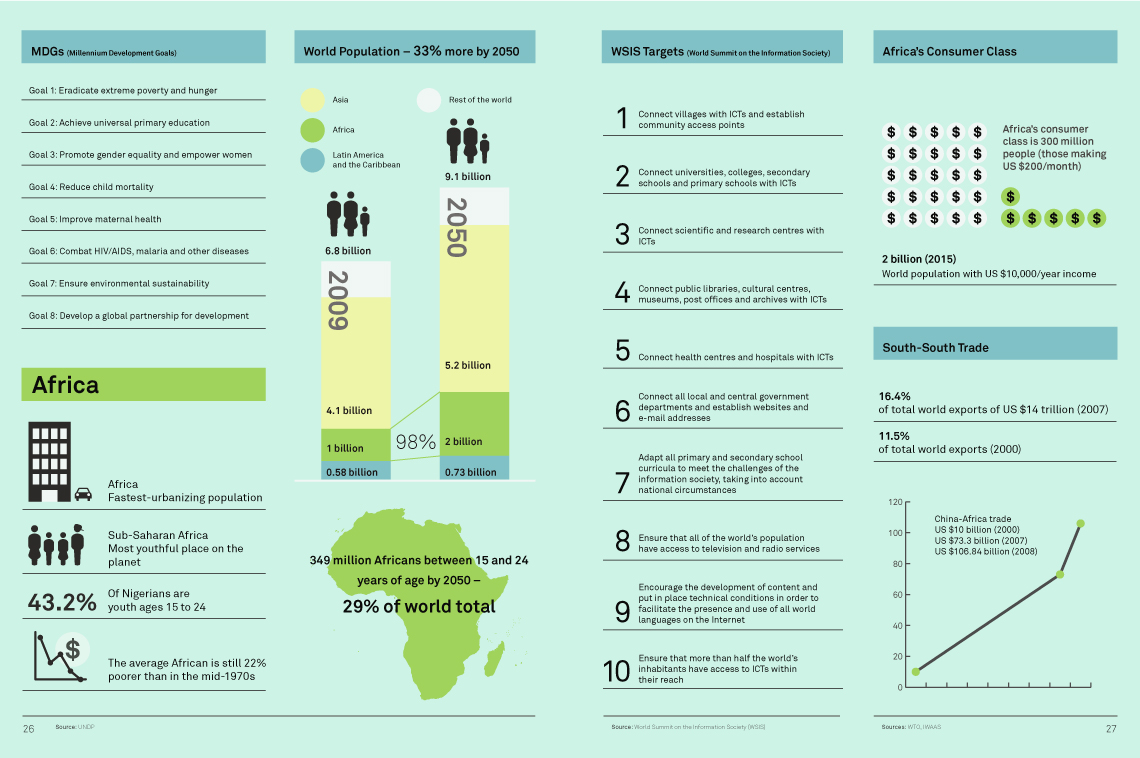
One of the many stories we covered on Africa’s fast-growing cities from 2007. It was witnessing first-hand Africa’s innovators and their adaptive use of mobile and information technologies that inspired us to give birth to Southern Innovator’s first issue.

Citations

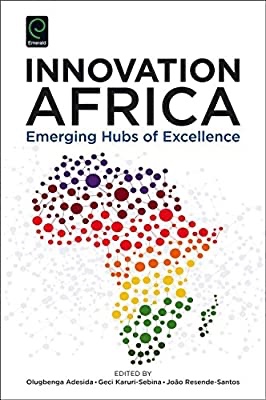
Cited in Innovation Africa: Emerging Hubs of Excellence edited by Olugbenga Adesida, Geci Karuri-Sebina, Joao Resende-Santos (Emerald Group Publishing, 2016).

https://davidsouthconsulting.org/2021/03/05/southern-innovator-issue-2/

Creative Commons License

This work is licensed under a
Creative Commons Attribution-Noncommercial-No Derivative Works 3.0 License.

ORCID iD: https://orcid.org/0000-0001-5311-1052.

© David South Consulting 2023