Why even bother printing (on paper) Southern Innovator as a magazine? “What about the trees and we live in the digital age!”, some might say.
There is evidence and science supporting the need to always publish Southern Innovator in print as well as online. First, a study of the World Bank’s online publications came to a shocking conclusion: A survey in 2014 found a third of World Bank publications are never downloaded, 40 per cent were downloaded just 100 times, and only 13 per cent were downloaded more than 250 times in their lifetime (The Washington Post). As The Washington Post pointed out, these are publicly funded publications with the intention of contributing to policy debates and providing solutions to the world’s problems. So, if nobody is reading them, or just a handful are, that actually does matter if you care about positive change in the world.
Secondly, a Norwegian study in 2014 from the Stavanger University (part of Europe-wide research into the impact of digitisation on the reading experience), found “… that paper readers did report higher on measures having to do with empathy and transportation and immersion, and narrative coherence, than iPad readers,” according to lead researcher Anne Mangen (The Guardian).
An earlier study the researchers did also found “students who read texts in print scored significantly better on the reading comprehension test than students who read the texts digitally” and that “Studies with students, for instance, have shown that they often prefer to read on paper”, continued Mangen in The Guardian.
Another issue is Internet shutdowns, outages and censorship. All of these have been on the increase, especially in Africa (africanews.com). To put it simply, you cannot electronically shutdown a piece of paper.
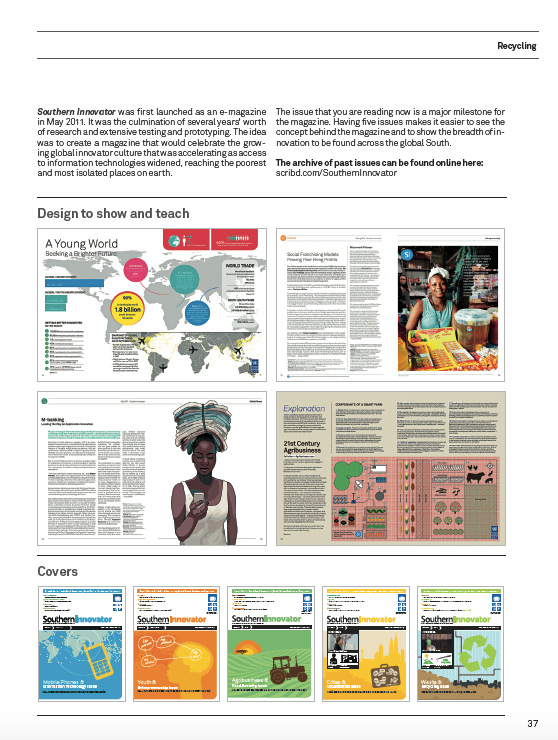
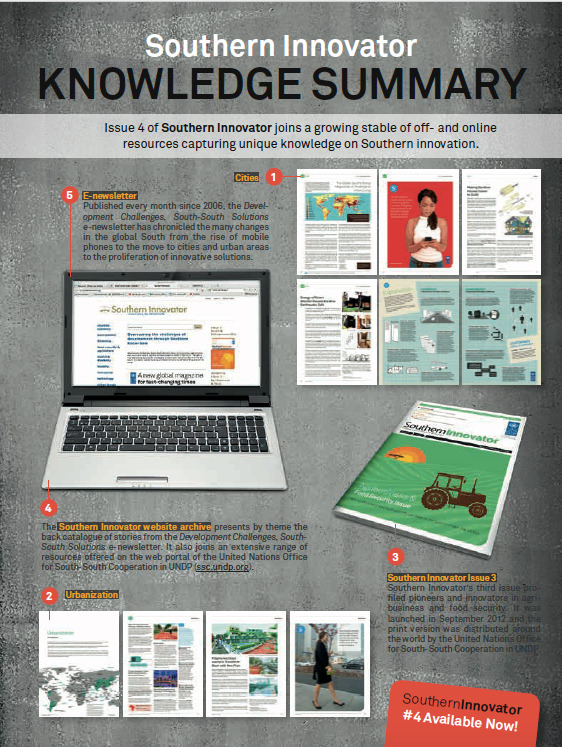
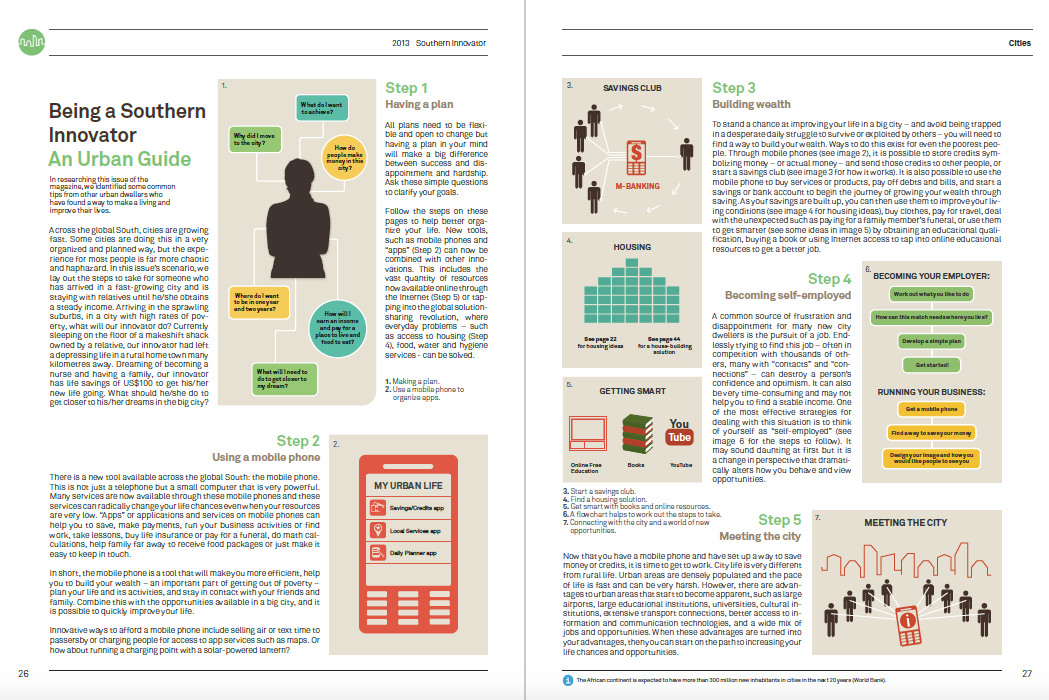
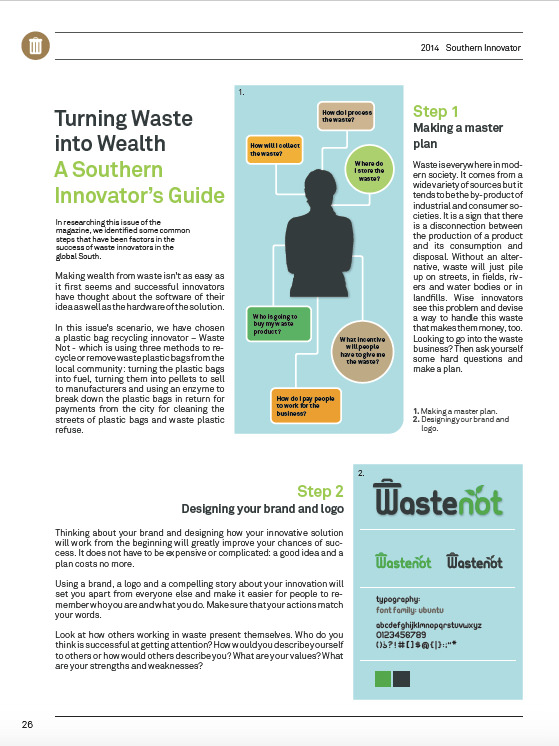
Design to show and teach.Innovations Summary.Innovations Summary.A fast-changing world.Knowledge Summary.Knowledge Summary.Being a Southern Innovator: An Urban Guide.Turning Waste into Wealth: A Southern Innovator’s Guide.Managing the workflow: Getting things done.
Bonn, Germany: “The training allows us to learn about western theories of journalism,” says Mr. Nyamjav, editor of the Erkh Choloo (Freedom) newspaper. A UNDP project in Mongolia has brought journalists from Ulaanbaatar, Mongolia’s capital, to run an investigative journalist training programme for their colleagues in the rural community of Moron. The programme introducing investigative journalism to students consists of a workshop and various field assignments. Here, I report on day two of the training.
9:00 a.m.
Eleven student journalists and the two trainers, Ms Oyunsetseg and Mr. Batbold from the Press Institute of Mongolia, quickly run through the day’s schedule. The journalists will spend the next two hours interviewing subjects for their stories. All the journalists say this is the first time they’ve explored in detail this sub-category of journalism. Not all the students are experienced journalists, but this is made up for by the quality of the two facilitators, both of whom keep the workshop lively.
11:30 a.m.
The debate begins over the choice of stories. One team has chosen to look at poverty alleviation projects at the Bak (local government) level. They want to write a story looking at poor accountability for loans, the practice of nepotism and the ability of recipients to start small businesses. The team investigating power black-outs wants to conduct further interviews with the poorest people affected by such interruptions.
4:00 p.m.
Back at the offices of the Erkh Choloo newspaper, editor Nyamjav discusses the week’s news with his graphic designer. The skills of the staff impress me. While they have only one computer and barren offices, the paper won an award from the Press Institute for being the best local paper in 1997. The newspaper will be cut off from local government subsidies for printing at the end of this year and is already making plans to find other sources of revenue. Nyamjav is pleased with the results of the UNDP project, saying: “It has noticeably changed our stories – I know how to criticise reporters and push them to be more investigative.”
8:30 p.m.
Outside Ulaanbaatar a petrol shortage has hit hard. At a Moron filling station drivers patiently wait for new supplies to arrive or to receive their ration. Not only is there no fuel, there is also no electricity. On a field assignment the journalists investigating the power black-outs interview Mr. Sukhbaatar the power station director who says 3,500 households owe the utility Tug 27 million (US$27,411). It is the poorest households that are unable to pay in the Ger districts. A Ger is a Mongolian felt tent. Without payment, their power is cut off.
9:00 p.m.
I am asked to conduct a one-hour discussion of my experiences as an investigative journalist in Canada and England. The debate afterwards is lively. A common question is how to deal with pressure from government and corporations to alter the content of stories. The difficulty the regional journalists have in distributing newspapers to remote communities is a common complaint. They ask how international donors could help in this matter, pointing out that in the past the government subsidised newspaper distribution to a greater extent. They would like to be linked with international journalists in some way, preferably through an association.
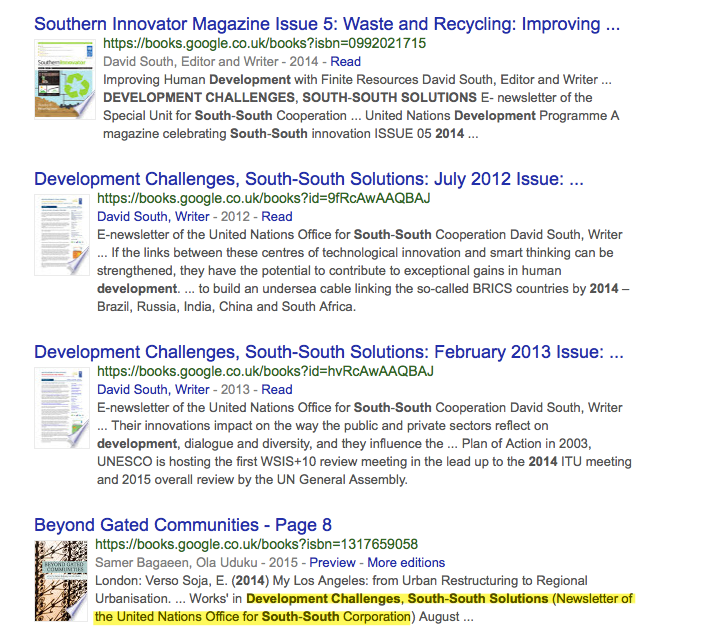
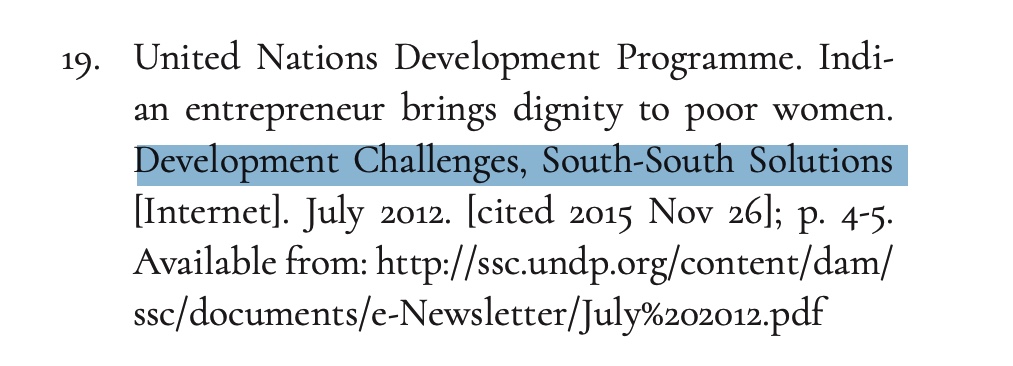
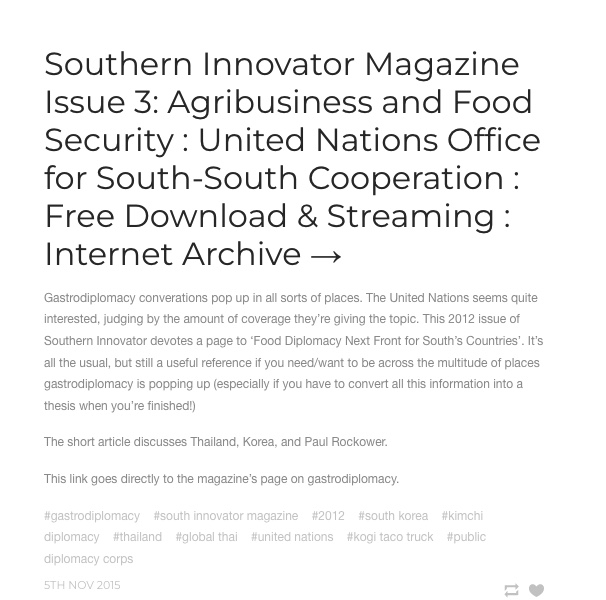
Southern Innovator was initially launched in 2011 with the goal of – hopefully – inspiring others (just as we had been so inspired by the innovators we contacted and met). The magazine seeks to profile stories, trends, ideas, innovations and innovators overlooked by other media. The magazine grew from the monthly e-newsletter Development Challenges, South-South Solutions published by the United Nations Office for South-South Cooperation (UNOSSC) since 2006. A selection of books and papers citing stories from the magazine are featured below to aid researchers, in particular those interested in health and human development and the role of innovators in international development.
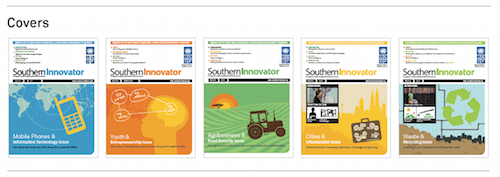
The first five issues of Southern Innovator from 2011 to 2014. Called a “Beautiful, inspiring magazine from UNDP on South-South innovation.”
“Innovation is critical to growth and development in Africa. In the context of a continent characterized by fast growing economies as well as an array of socioeconomic challenges, such as high levels of poverty and inequality, innovation in Africa must be understood in an encompassing manner. Africa needs to support the emergence of its own Silicon Valleys, but it must also foster the invention and adoption of cleaner technologies that limit respiratory illnesses, deforestation and combat climate change. This book contains a number of analytical case studies that examine the nature and origins of emerging high-end innovation hubs in Africa. These “hubs” or ecosystems are both understudied and little known inside and outside the continent. With this analysis, the book highlights and draws lessons from some of the most promising and successful innovation cases in Africa today, exploring the key factors driving their successful emergence, growth and future prospects. Relevant for scholars, policymakers, and business leaders, the book provides both inspiration and useful policy advice that can inform strategies and concrete measures to speed up the pace of innovation in Africa today.”
“Research on gated communities is moving away from the hard concept of a ‘gated community’ to the more fluid one of urban gating. The latter allows communities to be viewed through a new lens of soft boundaries, modern communication and networks of influence.
The book, written by an international team of experts, builds on the research of Bagaeen and Uduku’s previous edited publication, Gated Communities (Routledge 2010) and relates recent events to trends in urban research, showing how the discussion has moved from privatised to newly collectivised spaces, which have been the focal point for events such as the Occupy London movement and the Arab Spring.
Communities are now more mobilised and connected than ever, and Beyond Gated Communities shows how neighbourhoods can become part of a global network beyond their own gates. With chapters on Australia, Canada, Europe, South America, Asia, Africa and the Middle East, this is a truly international resource for scholars and students of urban studies interested in this dynamic, growing area of research.”
“The economic, political and social situation in Chile shows a country in transition. Some observers anticipate a broad “reboot” of the nation. While Chile is still seen by many as an example of progress in South America and of developmental potential in the global South, it faces a complex political constellation, particularly in the aftermath of the re-election of Michelle Bachelet. Many wonder how social and institutional innovations can be incepted without interrupting the country’s remarkable success over the past decades.
This book provides an interdisciplinary analysis of Chile’s situation and perspectives. In particular, it addresses the questions:
What is Chile’s real socio-political situation behind the curtains, irrespective of simplifications?
What are the nation’s main opportunities and problems?
What future strategies will be concretely applicable to improve social balance and mitigate ideological divisions?
The result is a provocative examination of a nation in search of identity and its role on the global stage.
Roland Benedikter, Dr., is Research Scholar at the Orfalea Center for Global and International Studies, University of California, Santa Barbara, Senior Research Scholar of the Council on Hemispheric Affairs Washington D.C., Trustee of the Toynbee Prize Foundation Boston and Full Member of the Club of Rome.
Katja Siepmann, MA, is Senior Research Fellow of the Council on Hemispheric Affairs Washington D.C., Member of the German Council on Foreign Relations, and Lecturer at the Faculty of Interdisciplinary Cultural Sciences of the European University Frankfurt/Oder.
The volume features a Foreword by Ned Strong, Executive Director of the David Rockefeller Center for Latin American Studies, Harvard University, and a Preface by Larry Birns, Director of the Council on Hemispheric Affairs, Washington D.C., and Former Senior Public Affairs Officer of the United Nations’ Economic Commission for Latin America (Santiago, Chile).”
“A Sociological Approach to Health Determinants investigates how the social works in determining health and health inequity. Taking a global perspective, the book shines a light on how experiences of health, illness and health care are shaped by a variety of complex social dynamics. Informed primarily by sociology, the book engages with the WHO’s social determinants of health approach and draws on contributions from history, political economy and policy analysis to examine issues such as class, gender, ethnicity and indigeneity, and the impact they have on health. A Sociological Approach to Health Determinants is a comprehensive resource that provides a new perspective on the influence of social structures on health, and how our understanding of the social can ensure improved health outcomes for people all over the globe. Toni Schofield is Associate Professor at the University of Sydney. She specialises in research and teaching in sociology, and public policy and administration.”
New Directions in Children’s and Adolescents’ Information Behavior Research edited by Dania Bilal and Jamshid Beheshti (Emerald Group Publishing: 2014)”This book comprises innovative research on the information behavior of various age groups. It also looks at special populations such as ethnic minorities, indigenous peoples, and users with disabilities. The book presents research and reflections on designing systems that help the new generation cope with a complex knowledge society.
Economy Reports for APEC Economies on demographics, policies & ICT applications for people with Special Needs (Seniors and People with Disabilities), Asia-Pacific Economic Cooperation, APEC Telecommunications and Information Working Group, January 2013
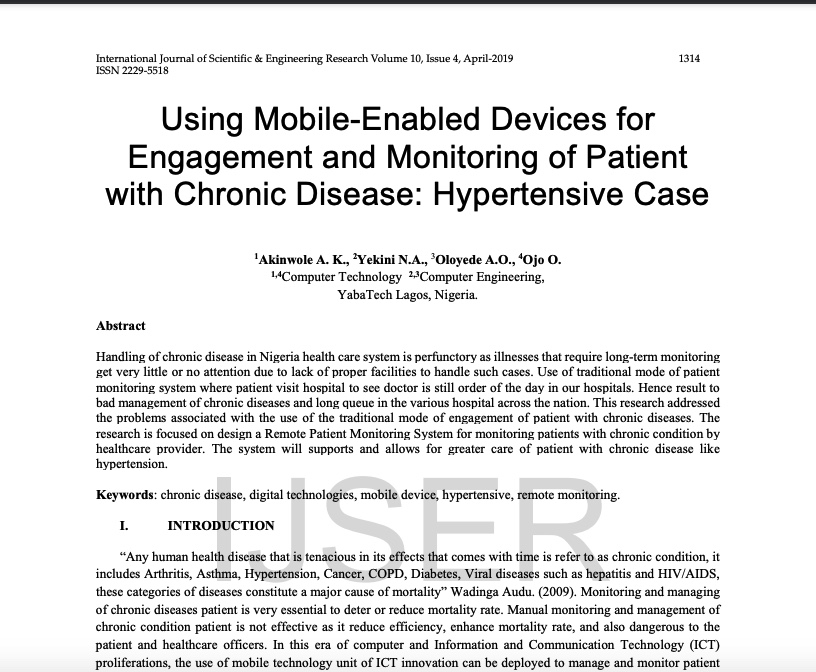
Taming the Tide: Stories from India by Claire Bentley, Vanessa Brombosz, Sofianne Gabrielli, Ga Eun Lee, Vaidehi Nafade, Lindsay Steele and Muhammad Wali, Global Health Case Studies: A Compilation from PPHS 511 Fundamentals of Global Health, McGill Global Health Programs, Case studies – Fall 2015, pages 23 to 32
If you would like to either sponsor an issue of Southern Innovator or place an advertisement in the magazine, then please contact southerninnovator@yahoo.co.uk.
“What a tremendous magazine your team has produced! It’s a terrific tour de force of what is interesting, cutting edge and relevant in the global mobile/ICT space… Really looking forward to what you produce in issues #2 and #3. This is great, engaging, relevant and topical stuff.”
Southern Innovator was initially launched in 2011 with the goal of inspiring others (just as we had been so inspired by the innovators we contacted and met). The magazine seeks to profile stories, trends, ideas, innovations and innovators overlooked by other media. The magazine grew from the monthly e-newsletter Development Challenges, South-South Solutions published by the United Nations Office for South-South Cooperation (UNOSSC) since 2006.
Issue 6’s theme has been decided on: it will focus on Science, Technology and Innovation. For this issue, Southern Innovator is seeking invitations from cutting-edge knowledge and science innovators in the global South to view their work. Time is tight, so don’t miss this opportunity to let the whole global South know about your work. In the past, Southern Innovator has visited green pioneers in Cuba, a smart city in South Korea and an eco-city in China.
Contact me if you wish to receive a copy/copies of the magazine for distribution. Follow @SouthSouth1.
“The e-newsletter Development Challenges, South-South Solutions proved to be a timely and prescient resource on the fast-changing global South, tracking the rise of an innovator culture driven by the rapid adoption of mobile phones and information technology …
“In 2010, work began on the development of the world’s first magazine dedicated to the 21st-century innovator culture of the global South. My goal was to create a magazine that would reach across countries and cultures, meet the UN’s standards, and inspire action. Southern Innovator was the result. Mr. [David] South played a vital role in the magazine’s development from its early conception, through its various design prototypes, to its final global launch and distribution.
“Both the e-newsletter and magazine raised the profile of South-South cooperation and have been cited by readers for inspiring innovators, academics, policy makers and development practitioners in the United Nations and beyond.
“I highly recommend Mr. [David] South as a thoughtful, insightful, analytical, creative and very amicable person who has the unique ability to not only grasp complex problems but also to formulate a vision and strategy that gets things done. … ” Cosmas Gitta, Former Assistant Director, Policy and United Nations Affairs at United Nations Office for South-South Cooperation (UNOSSC) in UNDP
“I think you [David South] and the designer [Solveig Rolfsdottir] do great work and I enjoy Southern Innovator very much!” Ines Tofalo, Programme Specialist, United Nations Office for South-South Cooperation
According to zoominfo in 2023, Southern Innovator is one of the Popular Searches online for the United Nations Office for South-South Cooperation (UNOSSC).
Like our content? Help contribute to the costs of keeping it online.

































 David South Consulting
You must be logged in to post a comment.