Categories
Archive Blogroll Development Challenges, South-South Solutions Newsletters Southern Innovator magazine

New 3D Technology Makes Innovation Breakthrough and Puts Mind over Matter

By David SouthDevelopment Challenges, South-South Solutions

SOUTH-SOUTH CASE STUDY

Revolutions in technology are placing more and more power into the hands of the individual, and 3D printing and fabrication machines are opening a whole new chapter.

These devices come in many forms, but they all do one thing: they can manufacture pretty well any three-dimensional object on the spot, from digital plans. These machines come in many sizes, from factory scale to smaller, home versions which are no bigger than personal computer printers, such as the well-known MakerBot Replicator 2 (makerbot.com).

3D printers introduce sophisticated precision manufacturing to the individual much in the same way the personal computer and the Internet have empowered people to make their own software, build websites and start online businesses.

A pioneering educational innovation in Chile is taking the technology even further, in a way that is truly mind-blowing. Thinker Thing (thinkerthing.com) promises to transform the way people interact with this new technology. “We have built a machine that will allow you to make real objects with your mind,” its website states.

And, it wants to do more: “We want to use our invention to light a fire of inspiration throughout the remote and often disadvantaged schools of South America and we can do this with your help.”

Thinker Thing allows the user to wear a headset and communicate through brain waves to the 3D printer. The printer then manufactures a three-dimensional model of the thoughts. These can be squiggly shapes or even, it is hoped, more sophisticated forms.

Thinker Thing’s Chilean Chief Technology Officer is George Laskowsky. Laskowsky has a games console engineering background and was a research assistant in charge of high-energy particle experiments.

The Chilean government is funding this experiment to help children to improve their creative skills. The idea is to use the technology to eliminate the technical side of creating objects and focus the effort on the creative thought process. Thinker Thing was selected from more than 1,400 applicants to participate in the prestigious global accelerator program, “Start Up Chile” (http://startupchile.org). Start-Up Chile is a program created by the Chilean government that seeks to attract early-stage high potential entrepreneurs to develop startups using Chile as a platform to go global, in line with the national goal of converting Chile into the innovation and entrepreneurship hub of Latin America.

Based in Santiago, Chile, Laskowsky is seeking support for further development on IndieGoGo (http://www.indiegogo.com/projects/children-creating-real-objects-with-their-mind), an international crowdfunding platform for projects.

The plan is to tour Thinker Thing all around Chile and use the science, art and engineering principles behind the invention to help very young children in remote rural regions to learn through understanding the project. Its creators also hope to take the exhibition – called the Monster Dreamer School Outreach Program and the Fantastical Mind Creatures of Chile Exhibition – on the road and show it in major global cities.

The children are being asked to imagine fantastical creatures that will then be made into 3D forms with the machine. The idea is to then sell these 3D creatures to supporters of the project to help fund the initiative. As well, these creatures will go on display in an exhibition to help educate visitors about Chile’s children and their communities.

To increase interest, exclusive photographic prints and limited edition figurines are available of the creatures the children create.

The prototype uses what is called an EmotivEPOC, basically a wireless neuroheadset collecting signals from the user’s brain. In operation, the software allows users to make 3D models with the power of thought which are then made into a plastic model using a MakerBot Industries Replicator.

This is experimental stuff and neurotechnology is in its early stages. It can detect simple emotions such as excitement or boredom and cognitive thoughts such as push and pull. Despite being in its early stages, the technology can evolve a 3D object over a number of steps by detecting the user’s emotional response to design changes.

Thinker Thing has been working alongside neuroscientists to understand the workings of the brain. Amazingly, in one experiment they were able to get a person to control the leg of a cockroach using their own thoughts. Called the Salt Shaker (http://www.thinkerthing.com/about-2/salt-shaker/), it is an experimental kit for young students and hobbyists that allows them to take control of a biological limb quickly and simply.

The 3D printing revolution is energizing for large and small-scale manufacturers alike. It means a business can now engage in precision manufacturing of products and spare parts quickly. It means it is possible to download from the Internet plans for new innovations and manufacture them within minutes. It also means communities off the mainstream supply line can make what they need and repair machinery without needing to wait weeks or months for items to be shipped from afar or spend vast sums on shipping costs.

The Fab Labs project based at the Massachusetts Institute of Technology (MIT) has been at the forefront of pioneering and prototyping this technology, including running testing labs across the global South to prove the relevance of the technology to the world’s poorest communities.

As of 2012, these include Fab Lab Afghanistan (http://www.fablab.af/), in Chile the FabLab Santiago (www.designlab.uai/fablab), Fab Lab Egypt (www.fablab-egypt.com), in Colombia the FabLab Medellin (http://www.fablabcolombia.com), in Ghana the Takoradi Technical Institute (http://ttifab.wikispaces.com/How+to+Use+the+TTI+Fab+Lab+Wiki), in India at various locations, Indonesia’s HONFablab (http://honfablab.org), ARO FabLab Kenya West (http://www.fablab.co.ke), and in Peru, South Africa, Suriname and many more are in the works (http://fab.cba.mit.edu/about/labs/).

If Thinker Thing has its way, maybe people in the future will say “I think, therefore I print!”

Published: August 2013

Resources

1) Stratasys: The company manufactures 3D printers and materials that create prototypes and manufactured goods directly from 3D CAD files or other 3D content. Stratasys systems are used by manufacturers to create models and prototypes to aid in the new product design process. And they are becoming widely used for production of finished goods in low-volume manufacturing. Systems range from affordable desktop 3D printers to large production systems for direct digital manufacturing. Website: http://www.stratasys.com/

2) 3D Systems: 3D Systems is a leading provider of 3D content-to-print solutions including 3D printers, print materials and on-demand custom parts services for professionals and consumers alike. Website: http://www.3dsystems.com/

ExOne: With decades of manufacturing experience and significant investment in research and product development, ExOne has pioneered the evolution of nontraditional manufacturing. This investment has yielded a new generation of rapid production technology in the field of additive manufacturing as well as advanced micromachining processes. Website: http://www.exone.com/

FabCentral: This site supports a digital fabrication facility and global network of field fab labs managed by MIT’s Center for Bits and Atoms. Website: http://fab.cba.mit.edu

Maker Shed: 3D Printing and Fabrication:  An outstanding resource for getting all you need to understand 3D printing and manufacturing, with 3D printers, supplies, Whether you want to print out physical objects or machine something from plastic, wood, or other materials, we have the tools and accessories you need. Website: http://www.makershed.com/3D_Printing_Fabrication_s/220.htm

EMachineShop: The first and leading machine shop designed from the start for the Internet, eMachineShop’s mission is to provide easy, convenient and low-cost fabrication of custom parts via the web. Website: emachineshop.com/

Development Challenges, South-South Solutions was launched as an e-newsletter in 2006 by UNDP’s South-South Cooperation Unit (now the United Nations Office for South-South Cooperation) based in New York, USA. It led on profiling the rise of the global South as an economic powerhouse and was one of the first regular publications to champion the global South’s innovators, entrepreneurs, and pioneers. It tracked the key trends that are now so profoundly reshaping how development is seen and done. This includes the rapid take-up of mobile phones and information technology in the global South (as profiled in the first issue of magazine Southern Innovator), the move to becoming a majority urban world, a growing global innovator culture, and the plethora of solutions being developed in the global South to tackle its problems and improve living conditions and boost human development. The success of the e-newsletter led to the launch of the magazine Southern Innovator.  

Follow @SouthSouth1

Google Books: https://books.google.co.uk/books?id=YfRcAwAAQBAJ&dq=development+challenges+august+2013&source=gbs_navlinks_s

Slideshare: http://www.slideshare.net/DavidSouth1/development-challenges-august-2013-issue

Southern Innovator Issue 1: https://books.google.co.uk/books?id=Q1O54YSE2BgC&dq=southern+innovator&source=gbs_navlinks_s

Southern Innovator Issue 2: https://books.google.co.uk/books?id=Ty0N969dcssC&dq=southern+innovator&source=gbs_navlinks_s

Southern Innovator Issue 3: https://books.google.co.uk/books?id=AQNt4YmhZagC&dq=southern+innovator&source=gbs_navlinks_s

Southern Innovator Issue 4: https://books.google.co.uk/books?id=9T_n2tA7l4EC&dq=southern+innovator&source=gbs_navlinks_s

Southern Innovator Issue 5: https://books.google.co.uk/books?id=6ILdAgAAQBAJ&dq=southern+innovator&source=gbs_navlinks_s

Creative Commons License

This work is licensed under a
Creative Commons Attribution-Noncommercial-No Derivative Works 3.0 License.

ORCID iD: https://orcid.org/0000-0001-5311-1052.

© David South Consulting 2023

Categories
Archive Blogroll data Development Challenges, South-South Solutions Newsletters

Affordable Space Programmes Becoming Part Of South’s Development

By David SouthDevelopment Challenges, South-South Solutions

SOUTH-SOUTH CASE STUDY

Space: the final frontier. At least that was how heading off into the stars was portrayed in cult television and film series Star Trek. While many countries are working to raise living standards and eradicate poverty on earth, some are also looking to space for solutions to earth-bound problems.

Traditional space programmes were government-led and state-financed. They involved enormous armies of technicians, engineers and scientists. Each launch and mission had to be overseen by a vast mission control centre with row upon row of technicians watching computer screens in real time. Space technology advanced rapidly in the 1950s and 1960s with so many bright brains hard at work and with brave people willing to put their lives at risk, leading to humans walking on the surface of the moon in 1969.

All of this expensive expertise meant few governments had the resources to set up space programmes – and it was even out of the hands of most of the private sector. In time, these leviathan space efforts lost the financial support of governments and the pace of new developments and achievements slowed. Nobody has set foot on the moon in 40 years – or on any other planet, for that matter.

But various developments are changing the space scene today and promising a bright future and a return to rapid innovation.

Space programmes are playing a greater role in the economic and innovation strategies of countries in the global South. New technologies and trends are turning space exploration into more affordable, small-scale operations within the reach of many countries.

New information technologies and innovations in miniaturization mean satellites can be very small and light. These developments bring down costs considerably, and also reduce the number of people needed to monitor space missions.

For example, on 14 September 2013 Japan’s space agency, JAXA, proved a slimmed-down space launch can work when it fired off its Epsilon rocket with a small satellite onboard. What made this mission different was how little it took to monitor the mission: just two laptop computers  and a small team of eight people. Previously, similar missions required a team of 150 people.

Fewer people meant the launch was much cheaper. One of the reasons for having many people involved in the launch of a rocket is the need to perform multiple systems checks to make sure the launch is successful. The Epsilon is a “smart” rocket and saves on the need for people to micro-manage the launch procedures by having its own on-board computer with artificial intelligence (AI) capable of doing the laborious checklists before launch.

Billing itself as “The first Latin American space development company,” Colombia’s Sequoia Space (sequoiaspace.com) was established in 2008 to build miniature satellites (called nano or pico satellites) that are affordable to countries in the global South.

Located in Bogota’s trendy neighbourhood of Chapinero, Sequoia has set itself up to exploit the technological trend towards making things smaller and smaller.

The firm manufactures satellites that range in size from 1.3 kilograms to 16 kilograms and are custom built for the customer’s needs. One satellite it is working on for the Colombian air force weighs 4.5 kilograms. It can make satellites to conduct missions in earth observation, remote sensing, micro-gravity experiments and other scientific experiments.

The company was launched in 2007 by a team of Colombian engineers, who turned their extensive experience in developing satellites for the aerospace industry into a start-up. Their dream is to further develop the aerospace industry in Latin America and grow its role in the global space industry. They hope to make it possible for more and more countries in Latin America to carry out space missions.

The company currently has clients in Colombia, Chile, Ecuador and Peru.

Other Latin American space programmes include Peru’s CONIDA (http://www.conida.gob.pe/). Its mission is to “To promote, to research, to develop and to disseminate science and space technology for national interests, in order to create unique and differentiated services driving national development.”

Ecuador’s Ecuadorean Civilian Space Agency (EXA) (http://www.exa.ec/index-en.html) has had a rough ride with its space programme with the failure of the Pegasus nano-satellite. Ultra-small, Pegasus was a small cube measuring just 10 centimeters along its edge and weighing just 1.2 kilograms (BBC). It was launched on 25 April 2013 from the Chinese spaceport of Jiuquan (http://www.cgwic.com/LaunchServices/LaunchSite/JSLC.html) but collided with a cloud of particles from an old Soviet-era rocket. It was declared lost by August 2013, having cost the government US $700,000.

A second satellite, Krysaor (http://www.exa.ec/nee-02-eng.htm), is set to be launched in November 2013. It is intended as a partner to Pegasus and is for educational uses and also to monitor space debris, its website states.

Other trends in the space race include radical changes in how space missions can be funded and the range of players who can do it. Space entrepreneurs who are using their own private wealth to finance space missions and technology development are now driving innovation.

Pioneers in this new frontier include two US-based private companies. SpaceX (spacex.com), headed by Internet entrepreneur Elon Musk, boasts of having “the world’s first reusable rockets.” Started in 2002, it now employs more than 3,000 people and has an ultimate goal of creating the technological capability for humans to live on other planets.

The way SpaceX offers access to space as a service is also radical. The company website shows how the re-usable rockets work and then offers potential customers a price list and various options for delivering payloads to space (spacex.com/falcon9).

Another pioneering company is run by the founder of the online shopping service Amazon (amazon.com). Jeff Bezos’ Blue Origin (blueorigin.com) seeks to lower the costs of getting humans into space.

Inspired by the revolution in project funding brought about by the Internet, Denmark’s Copenhagen Suborbitals (http://www.copenhagensuborbitals.com/) is looking to crowd-fund space missions from donations and says it will use the money to launch peaceful-purpose suborbital spacecraft.

“We aim to show the world that human space flight can be different from the usual expensive and government controlled project,” its website says.

How are these companies relevant to countries coping with wide-scale poverty and economic underdevelopment? There are many space technology applications that can aid poor countries. They can improve communications technology and provide more sophisticated communications services. Satellites can monitor weather and agriculture and conduct sophisticated mapping activities. This can help with planning for fast-growing urban areas.

The West African country of Nigeria is running one of Africa’s largest space programmes to boost its effectiveness as an agricultural economy. Nigeria announced its space programme in 2003 and launched its first satellite in 2007 with the Chinese. Unfortunately, this satellite failed and fell out of orbit.

But Nigeria did not give up and now has three satellites in space.

In 2011, President Goodluck Johnathan said the satellites would “substantially reduce the annual expenditure of over $1 billion arising from the use of foreign bandwidth for GSM Communications, cable television, e-commerce and e-government by both public and private users in the country” (allAfrica).

The Nigerian government is using these satellites to help with its planning and monitoring of disaster-prone areas.

Two countries of the global South, India and China, got involved in space programmes early on in the global space race. India started its space programme in the late 1960s and launched its first satellite in 1975. China began its space programme more than 50 years ago but did not launch its first satellite until the early 1970s. Since then, the country has also launched human beings into space.

And their ambitions are rising: both India and China have their sights set on large-scale space voyages, including missions to the planet Mars.

China is now working on a 60-ton space station to orbit around the earth which is planned to be finished by 2020. Ambitiously, the country is also working towards sending human beings to the planet Mars sometime around 2040 to 2060.

Published: September 2013

https://davidsouthconsulting.org/2021/01/14/from-special-report-nmm-new-media-markets-spotlight-on-the-emergence-of-satellite-porn-channels-in-the-uk/

https://davidsouthconsulting.org/2021/03/24/frugal-innovation-trend-meets-global-souths-innovation-culture/

https://davidsouthconsulting.org/2017/10/18/innovation-agenda-and-timeline-2007-2015/

https://davidsouthconsulting.org/2020/04/27/innovation-from-the-global-south/

https://davidsouthconsulting.org/2021/03/03/kommunikation-total-der-siebte-kontinent/

https://davidsouthconsulting.org/2022/10/09/next-generation-of-innovation-for-the-grassroots/

https://davidsouthconsulting.org/2022/04/21/nsd-partners-in-bitter-row-over-choice-of-satellite-as-brussels-deadline-nears/

https://davidsouthconsulting.org/2016/04/14/southern-innovator-and-the-growing-global-innovation-culture-14-april-2016/

https://davidsouthconsulting.org/2022/11/01/southern-innovator-magazine-2010-2014/

https://davidsouthconsulting.org/2021/02/01/uk-laws-on-satellite-porn-among-toughest-in-europe/

Development Challenges, South-South Solutions was launched as an e-newsletter in 2006 by UNDP’s South-South Cooperation Unit (now the United Nations Office for South-South Cooperation) based in New York, USA. It led on profiling the rise of the global South as an economic powerhouse and was one of the first regular publications to champion the global South’s innovators, entrepreneurs, and pioneers. It tracked the key trends that are now so profoundly reshaping how development is seen and done. This includes the rapid take-up of mobile phones and information technology in the global South (as profiled in the first issue of magazine Southern Innovator), the move to becoming a majority urban world, a growing global innovator culture, and the plethora of solutions being developed in the global South to tackle its problems and improve living conditions and boost human development. The success of the e-newsletter led to the launch of the magazine Southern Innovator.  

Follow @SouthSouth1

Google Books: https://books.google.co.uk/books?id=bfhcAwAAQBAJ&dq=development+challenges+september+2013&source=gbs_navlinks_s

Slideshare: http://www.slideshare.net/DavidSouth1/september-2013-development-challenges

Southern Innovator Issue 1: https://books.google.co.uk/books?id=Q1O54YSE2BgC&dq=southern+innovator&source=gbs_navlinks_s

Southern Innovator Issue 2: https://books.google.co.uk/books?id=Ty0N969dcssC&dq=southern+innovator&source=gbs_navlinks_s

Southern Innovator Issue 3: https://books.google.co.uk/books?id=AQNt4YmhZagC&dq=southern+innovator&source=gbs_navlinks_s

Southern Innovator Issue 4: https://books.google.co.uk/books?id=9T_n2tA7l4EC&dq=southern+innovator&source=gbs_navlinks_s

Southern Innovator Issue 5: https://books.google.co.uk/books?id=6ILdAgAAQBAJ&dq=southern+innovator&source=gbs_navlinks_s

Creative Commons License
This work is licensed under a
Creative Commons Attribution-Noncommercial-No Derivative Works 3.0 License.

ORCID iD: https://orcid.org/0000-0001-5311-1052.

© David South Consulting 2023

Categories
Archive Blogroll Development Challenges, South-South Solutions Newsletters

China Pushing Frontiers of Medical Research

By David SouthDevelopment Challenges, South-South Solutions

SOUTH-SOUTH CASE STUDY

Cutting-edge medical research in China is promising to boost human health and development. Futuristic science is being conducted on a large scale and it is hoped this will increase the pace of discovery.

Around the world, rapid progress is being made in understanding the role played by genes and how they affect our overall health and susceptibility to diseases. Other developments are leading to the possibility of creating replacements for organs and other body parts that have been damaged through accidents, disease or genetic faults – without the need for organ donors.

Medical advances straight out of science fiction could be closer than many believe. By using machines and gene therapy, radical new methods will emerge to deal with damage done to human bodies as a result of accidents or disease. These solutions will become, in time, quicker, smaller and cheaper and will be available to more and more countries. They will spread outwards around the global South just as mobile phones and computing electronics have done.

In China, the government is investing heavily in this cutting-edge research and attracting investment and projects from around the world to increase the pace of progress in these areas.

In September 2013, Reuters reported that a 22-year-old man named Xiaolian in Fuzhou, China had a new nose grown on his forehead to replace his original nose that had been damaged in a car accident. Conventional reconstructive surgery was not possible, so this radical new approach was taken.

The advantages of growing a nose on the patient include a reduced chance of rejection by the body when the new organ is attached. Transplants of body parts from other people come with a high risk of rejection and require many drugs to prevent it. Using skin near where the transplant is to take place, on the face, improves the chances of success and the blood vessels in the forehead offer nourishment to grow the new nose.

The procedure works like this: tissue expanders are placed on the patient’s forehead. As it grows, the doctors cut the mass of tissue into the shape of a nose and cartilage from the patient’s ribs is placed inside to give the nose shape. The new proboscis (http://en.wikipedia.org/wiki/Proboscis) grows under the skin until it is the right size and then transplanted onto the patient’s face where their old nose was.

Many believe this is just the beginning and that in the future replacement organs will be also grown in a lab. And this is where the new medical technology of 3D bioprinting comes into play.

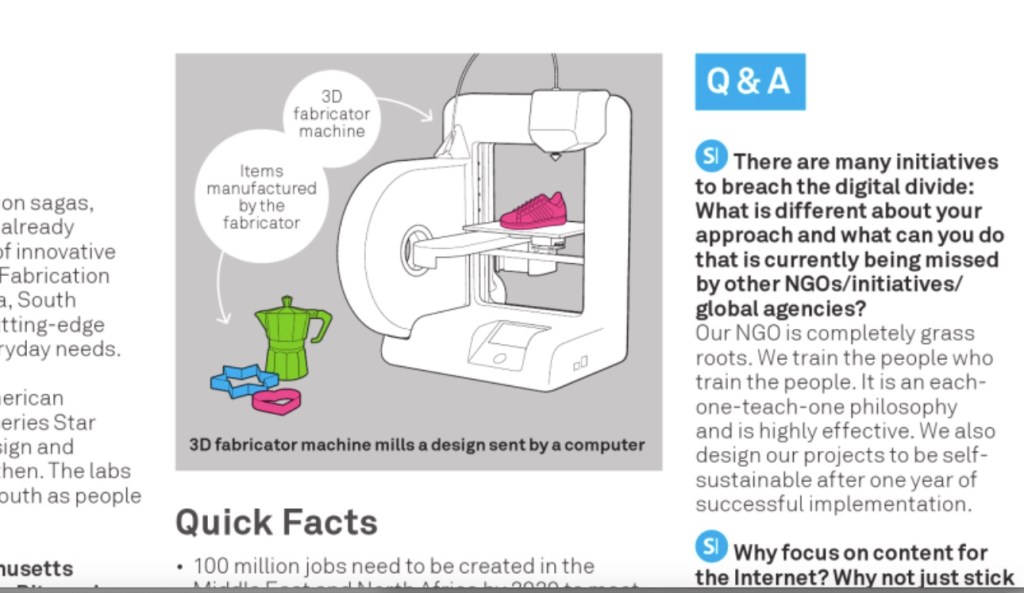
3D printing machines (http://www.k8200.eu/), or fabricators, can create 3D objects based on a design sent from a computer. This concept is now also being applied to biological materials with 3D bioprinters.

Hangzhou Dianzi University of Electronic Science and Technology (hdu.edu.cn) in China launched the Regenovo 3D Bio-printer in August 2013. It prints living tissue and looks like a silver metal frame with various nozzles situated above a platform for printing the tissue. Its makers claim it can print a liver in 40 minutes to an hour or an ear in 50 minutes.

A sheet of hydrogel is placed on the platform and then the bioprinter deposits cells into the hydrogel. As the process is repeated over and over again, layer after layer, a 3D biological structure emerges.

Unique Technology (sinounic.com) in Qingdao, Shandong province has also launched a 3D printer called “Re-human”. It is capable of printing at 15 microns and can operate in temperatures of between 0 and 300 degrees Celsius. Scientists there are working on clinical trials of 3D-printed tissue scaffolds and bones.

China is very advanced in the development of 3D manufacturing technology, and is home to the world’s largest 3D printers, developed by Dalian University of Technology (http://www.dlut.edu.cn/en/). Another Chinese company pioneering this technology is Shaanxi Hengtong Intelligent Machines (http://www.china-rpm.com/english/), which sells various laser-using rapid prototyping machines and 3D machines.

Around the world, bioprinting is currently being pioneered for printing heart valves, ears, artificial bones, joints, vascular tubes, and skin for grafts.

The number of scientific papers mentioning bioprinting tripled between 2008 and 2011 according to Popular Science. But why is this happening? Three things are occurring at once: sophisticated 3D printers are now available, there are significant advances in regenerative medicine, and CAD (computer-aided design) (http://en.wikipedia.org/wiki/Computer-aided_design) software continues to become more advanced.

San Diego, California’s Organovo (organovo.com), a company that designs and creates functional human tissues using 3D bioprinting, has big ambitions for the technology.

“Getting to a whole organ-in-a-box that’s plug-and-play and ready to go, I believe that could happen in my lifetime,” its chief technology officer, Sharon Presnell, told Popular Science.

In the field of gene science, China is also investing significant resources to make rapid progress. China is working to make its genetic research industry into one of the country’s pillar industries.

Beijing Genomics Institute (BGI) (http://www.genomics.cn/en/index) is the world’s largest genome-mapping institute, with more than 1,000 biological analysis devices working with top-of-the-line genome-sequencing machines. What makes BGI different is scale: it can handle data in vast quantities and industrialize its research, according to China Daily.

The China National Genebank in Shenzhen (http://www.nationalgenebank.org/en/index.html), associated with BGI and its Cognitive Genetics Project, is one of the largest gene banks in the world. It has collected the DNA (http://www.biologycorner.com/bio1/DNA.html) samples of some of the world’s smartest people to sequence their genomes and work out which alleles (http://www.sciencedaily.com/articles/a/allele.htm) determine human intelligence.

But what will they do with this information? By doing embryo screening, it will be possible to pick the brightest zygote (http://en.wikipedia.org/wiki/Zygote) and ensure an entire generation’s intelligence is increased by five to 15 IQ (intelligence quotient) points. This could have a significant impact on the country’s economic performance, the researchers believe, and help in the country making more rapid economic and development gains. This line of research is also seen globally as being fraught with ethical dilemmas and is controversial.

But the Chinese researchers believe the country’s economic productivity, business success, international competitiveness and the amount of innovation in the economy could all increase with an IQ boost.

The eggs are fertilized in the lab with the father’s sperm and the embryos are tested until they find the smartest one.

Embryo analysis could take place on a large scale in a few years. But it is not just better brains that are possible with this technique: choices can be made about hair and eye colors, and physical attributes such as body shape.

This level of research is benefiting from vast investments in higher education in China.

And it isn’t just human beings receiving the vast investment in gene research.

To help agriculture and agribusiness, the National Center for Gene Research (NCGR) (ncgr.ac.cn) is mapping and sequencing the rice genome, and genomes of other organisms. Since 2007, it has been using the latest generation sequencing technology to map the rice genome to identify common genetic factors. It has 50 million base pairs of rice genomic DNA sequences in its public database. It is hoped this will lead to more robust rice varieties that can withstand disease and climate fluctuations and help meet the food needs of a growing global population.

Published: November 2013

Resources

1) Wake Forest Institute for Regenerative Medicine: Wake Forest Innovations was created in 2012 as a new operating division of Wake Forest Baptist Medical Center. As the Medical Center’s technology commercialization arm, Wake Forest Innovations supports scholarship, investing in the innovative potential of academic and clinical communities and helping translate ideas and discoveries into valuable commercial products and services. Website: http://www.wakehealth.edu/WFIRM/

2) DEKA Research & Development: DEKA Research and Development Corporation is an established company focused on the development of radical new healthcare technologies that span a diverse set of applications. Website: http://www.dekaresearch.com/index.shtml

3) Organovo: Organovo design and create functional human tissues using proprietary three-dimensional bioprinting technology. The goal is to build living human tissues that are proven to function like native tissues. Website: http://www.organovo.com/

Project Cyborg: A web-based platform geared toward nanoscale molecular modeling and simulations for cellular biology. Website: http://www.autodeskresearch.com/projects/cyborg
Make your own bioprinter: DIYBioPrinter: Step by step construction of a bioprinter from an old HP 5150 inkjet printer. Website: http://www.instructables.com/id/DIY-BioPrinter/

6) Autodesk is working on CAD software for bioprinting. Website: autodesk.co.uk

7) BGI Cognitive Genetics Project: BGI Cognitive Genomics is an interdisciplinary research group at BGI, one of the largest genomics institutes in the world. The focus is human cognition, with emphasis on the use of tools made available by rapid advances in DNA sequencing technology. Website: https://www.cog-genomics.org/

8) Institute of Genetics and Developmental Biology Chinese Academy of Sciences: The mission of the institute is to address fundamental questions in genetics and developmental biology and to develop new technologies for the uses in health care and agriculture sciences as well as to meet the nation’s strategic needs in science and technology. Scientists in the institute use both plant and animal models to address fundamental questions in life sciences, such as genetic control of growth and development, gene expression, signal transduction, structural and functional genomics, biotech and molecular breeding, bioinformatics and systems biology. As China owns the biggest agricultural market in the world, researchers in the Institute have also made significant efforts on water saving agriculture and agronomic studies, focusing on the improvement of crop productivity and quality as well as bio-safety. Website: http://english.genetics.cas.cn/au/

https://davidsouthconsulting.org/2021/06/04/an-innovators-big-chicken-agenda-for-africa/

https://davidsouthconsulting.org/2022/07/25/award-winning-research-on-history-of-eugenics-reaps-honours/

https://davidsouthconsulting.org/2021/06/02/case-study-5-gosh-ich-child-health-portal-2001-2003/

https://davidsouthconsulting.org/2021/03/08/the-dawn-of-the-genetics-revolution-2001-2003/

https://davidsouthconsulting.org/2017/10/18/hannah-institute-for-the-history-of-medicine-1992-1994/

https://davidsouthconsulting.org/2021/10/20/research-reviews-2001-2002/

Development Challenges, South-South Solutions was launched as an e-newsletter in 2006 by UNDP’s South-South Cooperation Unit (now the United Nations Office for South-South Cooperation) based in New York, USA. It led on profiling the rise of the global South as an economic powerhouse and was one of the first regular publications to champion the global South’s innovators, entrepreneurs, and pioneers. It tracked the key trends that are now so profoundly reshaping how development is seen and done. This includes the rapid take-up of mobile phones and information technology in the global South (as profiled in the first issue of magazine Southern Innovator), the move to becoming a majority urban world, a growing global innovator culture, and the plethora of solutions being developed in the global South to tackle its problems and improve living conditions and boost human development. The success of the e-newsletter led to the launch of the magazine Southern Innovator.  

Follow @SouthSouth1

Google Books: https://books.google.co.uk/books?id=2fdcAwAAQBAJ&dq=development+challenges+november+2013&source=gbs_navlinks_s

Slideshare: http://www.slideshare.net/DavidSouth1/development-challenges-november-2013-issue

Southern Innovator Issue 1: https://books.google.co.uk/books?id=Q1O54YSE2BgC&dq=southern+innovator&source=gbs_navlinks_s

Southern Innovator Issue 2: https://books.google.co.uk/books?id=Ty0N969dcssC&dq=southern+innovator&source=gbs_navlinks_s

Southern Innovator Issue 3: https://books.google.co.uk/books?id=AQNt4YmhZagC&dq=southern+innovator&source=gbs_navlinks_s

Southern Innovator Issue 4: https://books.google.co.uk/books?id=9T_n2tA7l4EC&dq=southern+innovator&source=gbs_navlinks_s

Southern Innovator Issue 5: https://books.google.co.uk/books?id=6ILdAgAAQBAJ&dq=southern+innovator&source=gbs_navlinks_s

Creative Commons License
This work is licensed under a
Creative Commons Attribution-Noncommercial-No Derivative Works 3.0 License.

ORCID iD: https://orcid.org/0000-0001-5311-1052.

© David South Consulting 2023