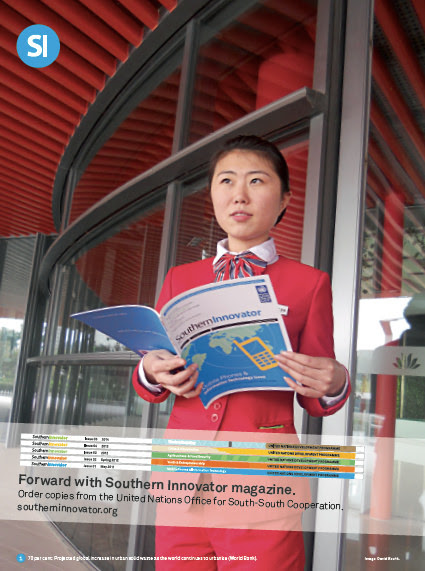
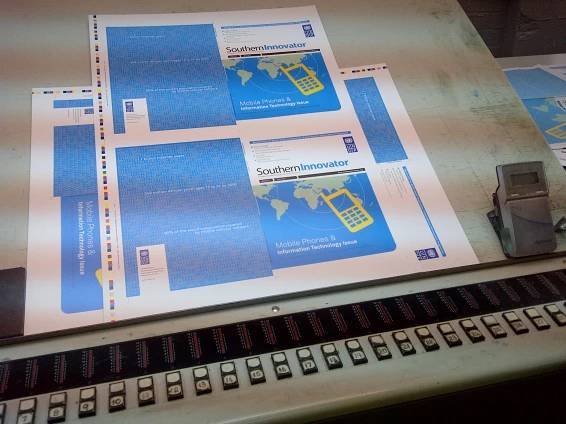
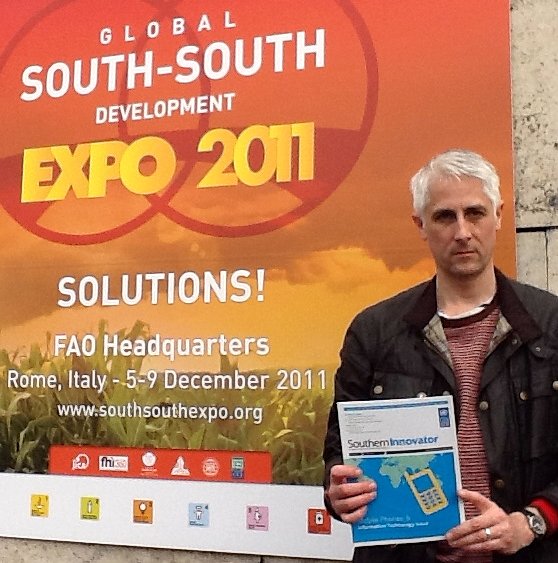
Launched in May 2011, the new global magazine Southern Innovator (ISSN 2222-9280) is about the people across the global South shaping our new world, eradicating poverty and working towards the achievement of the Millennium Development Goals (MDGs).
Launched in May 2011, the new global magazine Southern Innovator (ISSN 2222-9280) is about the people across the global South shaping our new world, eradicating poverty and working towards the achievement of the Millennium Development Goals (MDGs).
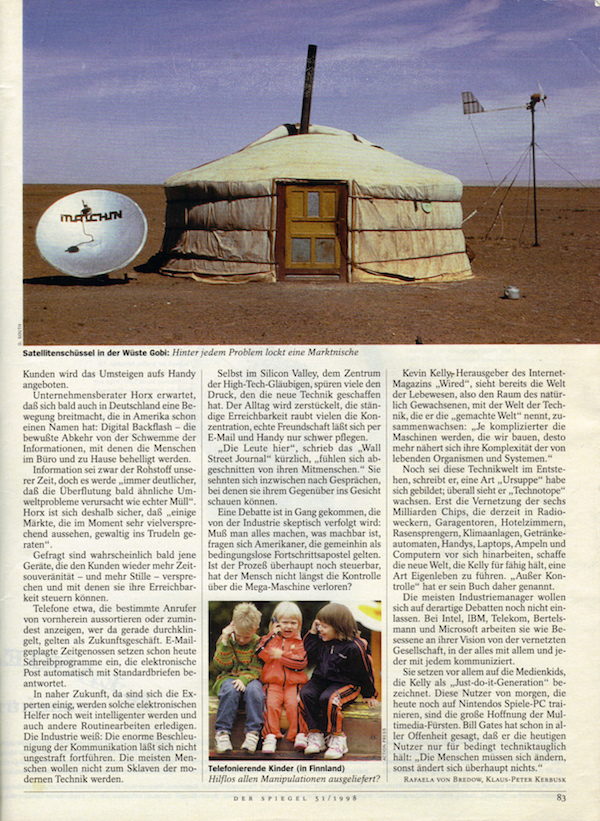
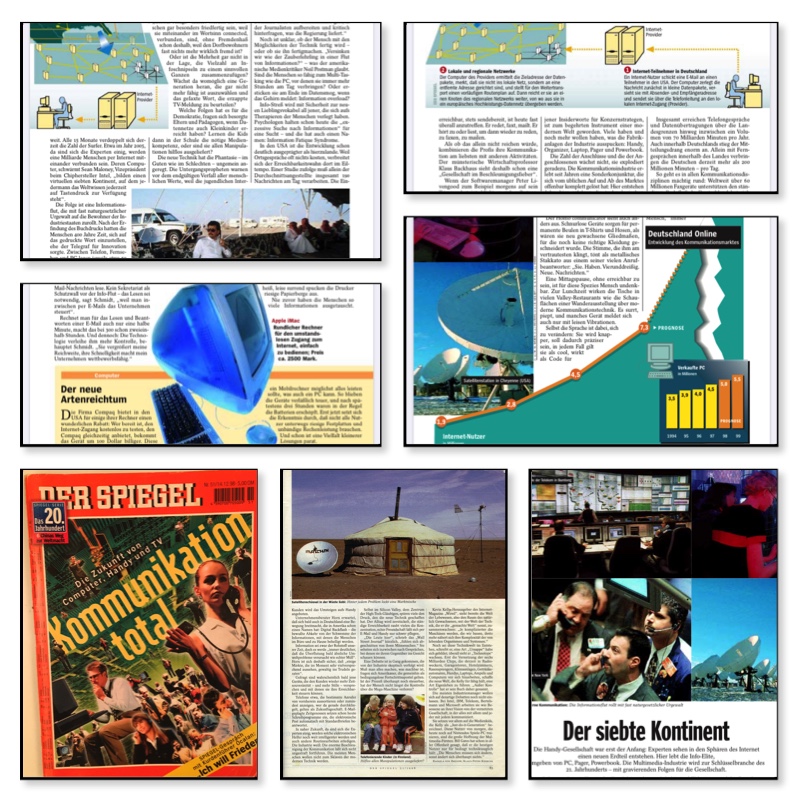
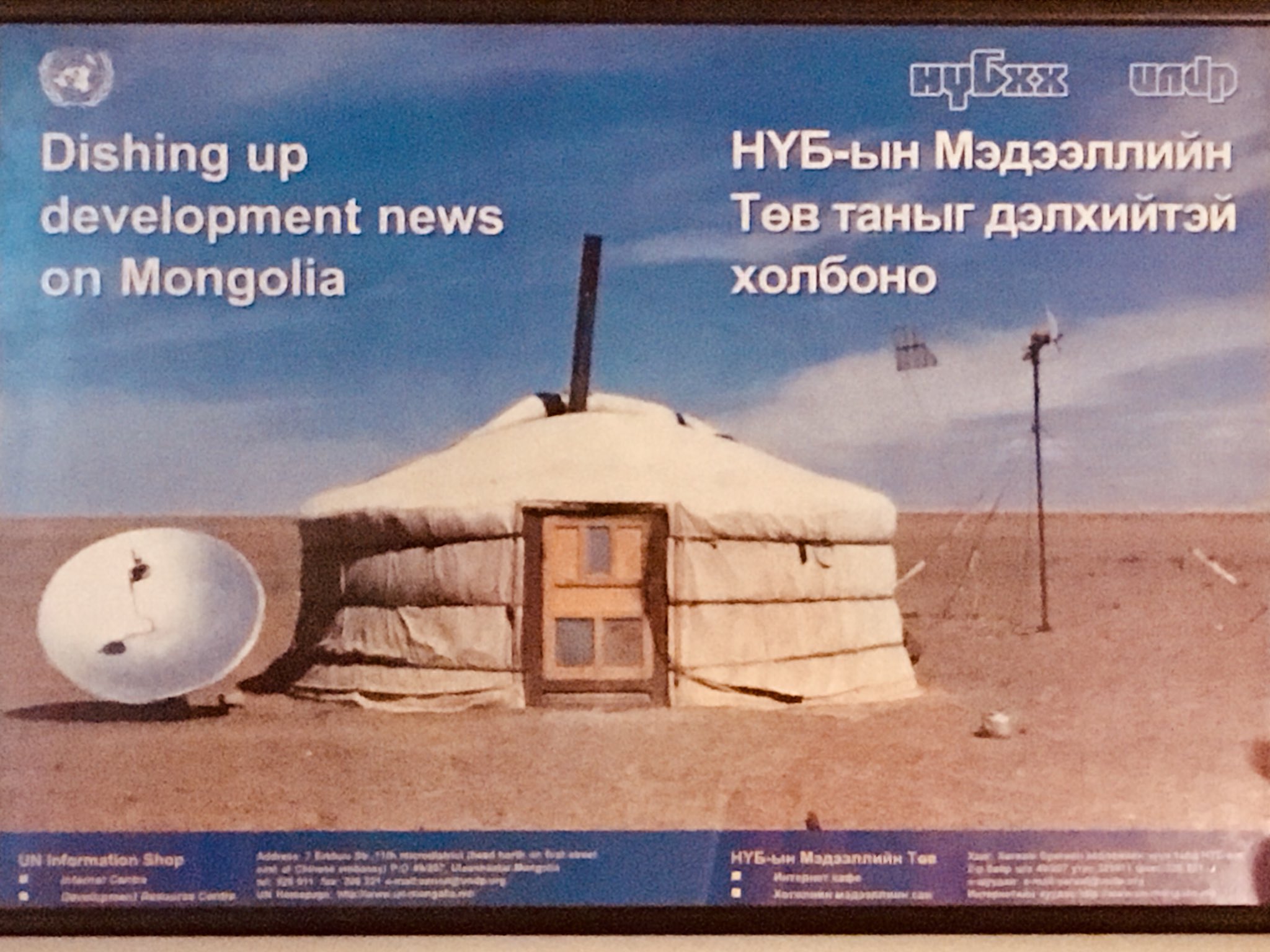
In 1998 Der Spiegel’s “Kommunikation total” issue profiled the global connectivity revolution underway and being accelerated by the Internet boom of the late 1990s. It chose my picture of a satellite dish and a ger in the Gobi Desert to symbolise this historic event.
Scroll through a PDF of the story (my photo is on the last page).
“Die Handy-Gesellschaft war erst der Anfang: Experten sehen in den Sphären des Internet einen neuen Erdteil entstehen. Hier lebt die Info-Elite, umgeben von PC, Pager, Powerbook. Die Multimedia-Industrie wird zur Schlüsselbranche des 21. Jahrhunderts – mit gravierenden Folgen für die Gesellschaft.”
English translation: “Total communication: the seventh continent – The cell phone society was just the beginning: Experts see a new continent emerging in the spheres of the Internet. The information elite live here, surrounded by PCs, pagers and power books. The multimedia industry is becoming the key industry of the 21st century – with serious consequences for society.” (http://t-off.khd-research.net/Spiegel/10.html). Original copy of magazine (above) from 1998. From The Turns of Translation Studies: New Paradigms Or Shifting Viewpoints? By Mary Snell-Hornby · 2006.
Der Spiegel is a German weekly news magazine and is one of Europe’s largest publications of its kind. It chose my photo taken in the Gobi Desert for its profile of the Internet revolution in 1998.
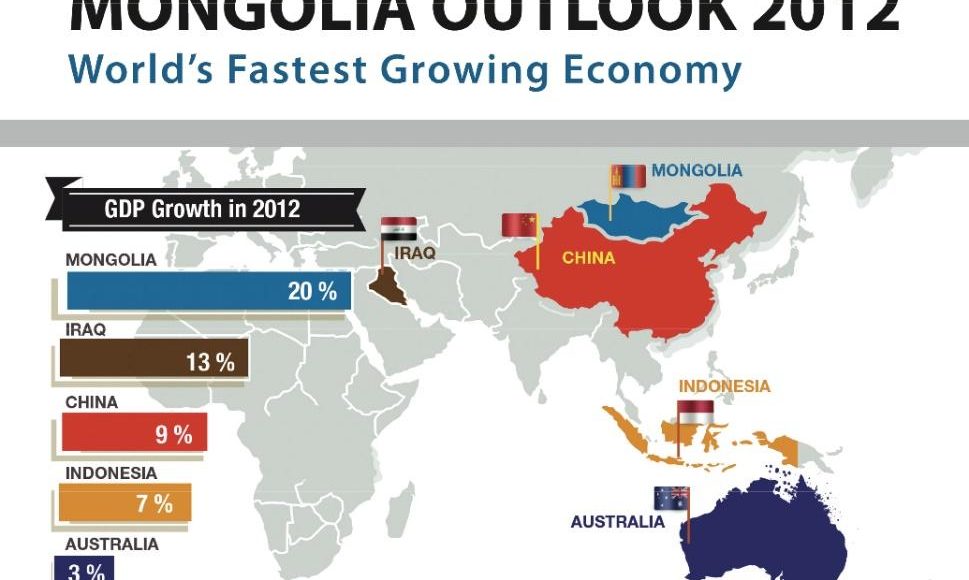
The world has changed considerably since then; and so has Mongolia. The digital revolution has rolled across the planet, the attacks of 9/11 unleashed a wave of violence and wars, and Mongolia even became the fastest-growing economy in the world a few years ago (2012). But back when this book was researched, Mongolia was just coming out of decades of isolation within the Soviet orbit under Communism, and the country experienced in the 1990s “one of the biggest peacetime economic collapses ever” (Mongolia’s Economic Reforms: Background, Content and Prospects, Richard Pomfret, University of Adelaide, 1994).
Two trends came together at the end of the 1990s and the start of the 2000s: the digital revolution and the mapping of the human genome. Both have given birth to whole new industries. Read more here: The Dawn Of The Genetics Revolution | 2001 – 2003
By the 1990s, cables (like above) were being joined by satellites to advance the global connectivity revolution. By the 2000s, cables (copper and fibre optic) and satellites were joined by mobile and smart phones, to deliver “kommunikation total”.
Information technology developments in Africa have long lagged behind those in other parts of the world. But the transformation being brought about by the widespread adoption and use of mobile phones – each one a mini-computer – and the expansion of undersea fibre optic cable connections to Africa are creating the conditions for an exciting new phase of computing growth on the continent.
Despite the global economic crisis, Africa is on course to see annual consumer spending reach US $1.4 trillion by 2020, nearly double the US $860 billion in 2008 (McKinsey). On top of this, by 2050, a projected 63 per cent of Africa’s population will be urban dwellers. With Africa’s middle class the fastest-growing in the world – doubling in less than 20 years – matching computing power with this consuming urban population could unleash a treasure trove of opportunity for information technology entrepreneurs.
These developments are creating the conditions for game-changing computing in the next years. And this is encouraging the creation of a new supercomputer (http://en.wikipedia.org/wiki/Supercomputer) for Africa in Kenya that will double the total number of supercomputers in Africa. Hugely powerful compared to personal or commercial computers, supercomputers use cutting-edge technology to carry out high-speed calculations involving vast quantities of data.
Expanded supercomputing power brings numerous advantages to both economic and human development. It will radically alter what can be accomplished in Africa – allowing mass data processing to be done, highly complex and data dense applications to be run, and very large research projects to be conducted on the continent rather than overseas.
Increasing computing power in Africa will bring in its wake, it is hoped, a surge in economic and research opportunities.
It will help African researchers and scientists to undertake globally competitive projects, rather than seeing this work done overseas. It will also open up a vast range of possibilities for African entrepreneurs and businesses to do complex data processing, modelling and research and will enable them to become more sophisticated operations.
The new supercomputer, the iHub Cluster, is being built in the Kenyan capital by one of Africa’s pioneering information technology hubs – iHub Nairobi (http://ihub.co.ke/pages/home.php) – in partnership with Internet products and services company Google and microchip maker Intel Corporation.
Africa’s first supercomputer is located in South Africa and is ranked 497 in terms of computing power on the list of 500 supercomputers in the world (http://www.top500.org/).
It is located in the “Tsessebe cluster” in Cape Town’s Centre for High Performance Computing (http://www.chpc.ac.za/).
“With mobile devices coming in multiple cores, it is important for developers to be exposed to higher performance computing; we are hoping to debut at a higher level than ‘Tsessebe cluster’,” Jimmy Gitonga, the project team leader for the iHub cluster, told Computer World.
Africa suffers from poor supercomputer capacity and this has had a knock-on affect on everything to do with economic development. The iHub supercomputer hopes to help universities and colleges to gain competitive edge and be able to undertake more complex research in the fields of media, pharmaceuticals and biomedical engineering.
“In Africa, we need to be on top of the mobile scene, its our widest used device,” Gitonga told Computer World.
Some of the practical applications for the iHub supercomputer in East Africa and the Horn of Africa include improving weather forecasting and drought prediction, increasing the ability to give advance warning of droughts and famines in the region.
“Most of the United Nations agencies and international agencies operating in the region have extensive field research on how to tackle natural disasters in the region. Imagine if they had affordable space where they can meet with developers and test resource-hungry applications,” Gitonga said.
The iHub also wants to offer the services of the supercomputer to researchers and organizations who have had to go abroad to have their data processed. The iHub supercomputer hopes to be used by mobile phone developers, gamers, universities and research institutions.
In the last two years, China had pushed the United States out of the number one spot for supercomputers. The Tianhe-1A located at the National Supercomputing Center in Tianjin (http://www.nscc-tj.gov.cn/en/), China, was the fastest computer in the world from October 2010 to June 2011.
For those looking to see how they can make the most of the growing supercomputer capability in Africa, examples from other countries offer a good idea. Supercomputers can be used for weather forecasting, climate research, oil and gas exploration, physical simulations like when testing aircraft, complex modelling for medical research, processing complex social data necessary for delivering effective social programmes or running modern health care systems.


















 David South Consulting
You must be logged in to post a comment.