Tag: mobile phones

  • Digital Mapping to put Slums on the Map

    Digital Mapping to put Slums on the Map

    By David SouthDevelopment Challenges, South-South Solutions

    SOUTH-SOUTH CASE STUDY

    Mobile phones are more and more part of daily life in the South’s slums – even for the poorest people. One result is that it has now become possible to undertake digital mapping initiatives to truly find out who is where and what is actually going on.

    About one-third of the world’s urban dwellers live in slums, and the United Nations estimates that the number of people living in such conditions will double by 2030 as a result of rapid urbanization in developing countries. How to improve their living conditions and raise their standard of living is the big challenge of the 21st century.

    With just over five years until the 2015 deadline to meet the Millennium Development Goals (http://www.undp.org/mdg/), and the current economic downturn reversing some gains, any tool that can make development decisions more precise has to be a benefit.

    People are now turning to the growing penetration of digital technologies into slums and poor areas to find solutions. With mobile phones available across much of the global South, and plans underway to expand access to broadband internet even in poorly served Africa, it is becoming possible to develop a digital picture of a slum area and map its needs and population.

    Put to the right use, this powerful development tool can fast-track the delivery of aid and also better connect people to markets and government services.

    In November, an NGO called Map Kibera (www.mapkibera.org) began work on an ambitious project to digitally map Africa’s largest slum, Kibera in Nairobi, Kenya .

    The partners behind Map Kibera are Humanitarian OpenStreetMap, JumpStart International, WhereCampAfrica, the Social Development Network, Pamoja Trust, Hands on Kenya and others.

    Estimates place the number of residents in Kibera at one million, but nobody really knows how many live there (UN-HABITAT). The slum is typical of such deprived areas, lacking in health and water resources and plagued by chaotic traffic and housing. Few fully grasp where everything is in the sprawl.

    While data does exist on the slum, it is not shared or collated into one source. The Map Kibera project uses an open-source software programme, OpenStreetMap (http://www.openstreetmap.org/), to allow users to edit and add information as it is gathered. This information is then free to use by anybody wanting to grasp what is actually happening in Kibera: residents, NGOs, private companies and government officials.

    This will literally put Kibera on Kenya’s map.

    The mapping team started with 12 young people recruited in Kibera to start the work in November of this year. They will be trained and also receive support from the growing Nairobi technology community.

    “The project will provide open-source data that will help illustrate the living conditions in Kibera,” said Map Kibera’s Mikel Maron. “Without basic knowledge of the geography of Kibera it is impossible to have an informed discussion on how to improve the lives of residents of Kibera.”

    Workshops will communicate with local residents and show them the findings available from the map. Paper maps will be distributed to residents and then updated as new information comes in. It is critical local people are kept informed to build trust and avoid conflict. As can be seen from the Google Street Views (http://www.google.co.uk/help/maps/streetview/) controversy, nobody likes to be mapped without their permission or consent.

    Like Kenya, Brazil has a long history of sprawling slums sprouting around its cities. Called favelas, they are complex places, with both rudimentary dwellings and elaborate mansions. Walking into a favela can be a journey through the dreams and aspirations of generations of people, often reflected in their dwellings. Favelas have many services, including hospitals, and there are restaurants and coffee shops. In short, while they are not in the official development plans, the favelas are vibrant economic entities and home to hundreds of thousands of people.

    But since they are chaotic and undocumented by official maps, the economic and social development of the favelas is hindered as even basic services like mail delivery are difficult to provide.

    An NGO called Rede Jovem (http://www.redejovem.org.br/) is deploying youths armed with GPS (global positioning system)-equipped (http://en.wikipedia.org/wiki/Global_Positioning_System) mobile phones to map the favelas of Rio de Janerio. To start with, they are mapping five favelas: Complexo do Alemão, Cidade de Deus, Morro do Pavão-Pavãozinho, Morro Santa Marta and Complexo da Maré.

    “The main goal was to mark public interest spots on a map and show places like schools and institutions and hospitals and restaurants,” Natalia Santos, the executive coordinator for Rede Jovem, told MobileActive (www.mobileactive.org) . “We wanted to spread the news about what slums do have, so all the people can get to know that the slum is not just a place for violence and marginality and robbery.”

    The mapping process works like this: the mappers physically travel around the favela and upload information on each, individual landmark (restaurants, roads etc.) as they go. They use Nokia N95s mobile phones that are connected to Google Maps (www.maps.google.com).

    According to Santos, reporters enter the information on the map displayed on the phone, and they can video or photograph to add more detail. They are using Wikimapa (www.wikimapa.org.br), and Twitter (www.twitter.com) to log the information.

    As Rede Jovem recruited young mappers, they discovered an interesting fact: the male reporters (aged between 17 and 25) were frightened to enter a favela with a mobile phone for fear of either being mugged or being stopped by the police. Because of this fact, all the mappers are young women.

    They are ambitious for the future despite their funds running out in December. “We want everyone who has a cell phone with GPS to be a wikireporter,” said Santos .

    How important it is to the favela residents to be recognised like this can’t be overstated. “I think they are very happy because they’re seeing that they exist,” said Santos. “And the mailman says that now he can deliver the mail.”

    Published: December 2009

    Resources

    • Mobile Active.org: MobileActive.org is a community of people and organizations using mobile phones for social impact. They are committed to increasing the effectiveness of NGOs around the world who recognize that the over 4 billion mobile phones provide unprecedented opportunities for organizing, communications, and service and information delivery. Website: http://www.mobileactive.org
    • Google Android: Get inventing! This software enables anyone to start making applications for mobile phones. And it offers a platform for developers to then sell the applications to others. Website: http://www.android.com/
    • Ushahidi: is a website that was developed to map reports of violence in Kenya after the post-election fallout at the beginning of 2008. The new Ushahidi Engine is being created to use the lessons learned from Kenya to create a platform that allows anyone around the world to set up their own way to gather reports by mobile phone, email and the web – and map them. It is being built so that it can grow with the changing environment of the web, and to work with other websites and online tools. Website: http://blog.ushahidi.com/
    • Textually.org: is the entry point of three weblogs devoted to cell phones and mobile content, focusing on text messaging and cell phone usage around the world, tracking the latest news and social impact of these new technologies. Website: http://www.textually.org/
    • Betavine Social Exchange has launched. It’s a matching site for NGOs looking for mobile solutions, and developers who can help build them, all brought to you by Vodafone. Website: http://www.betavine.net

    Citations

    Resilient Urban Regeneration in Informal Settlements in the Tropics: Upgrading Strategies in Asia and Latin America, Publisher: Springer Singapore (2020)

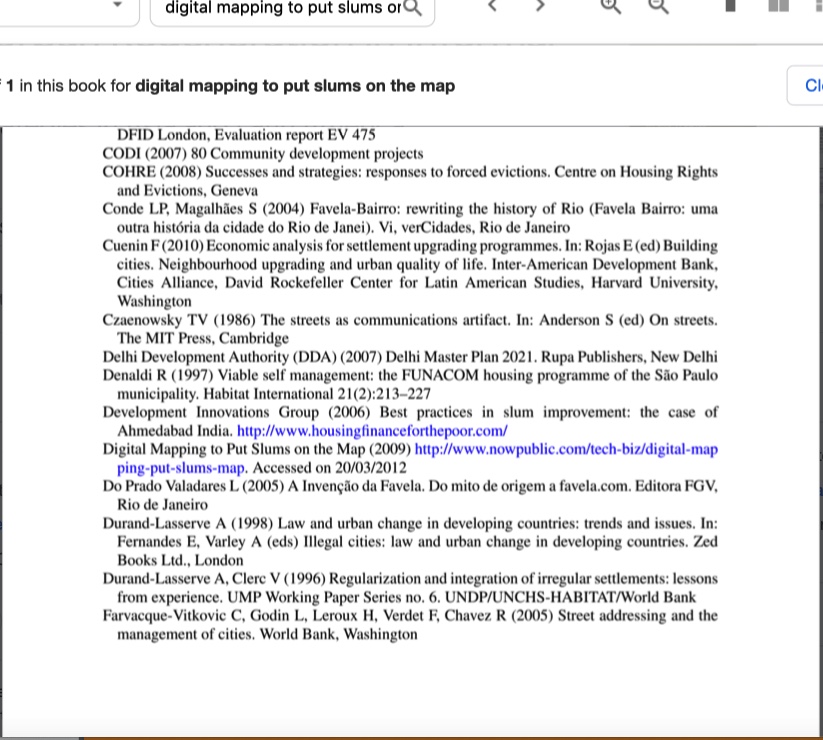
    The story first appeared in the UN e-newsletter Development Challenges, South-South Solutions in 2009. It was simultaneously published on the Vancouver, Canada-based crowd-powered news website, NowPublic. It was then published in the UN magazine Southern Innovator.

    Streets as Tools for Urban Transformation in Slums: A Street-led Approach to Citywide Slum Upgrading, Publisher: United Nations Human Settlements Programme (UN-Habitat) (2012)

    Other Stories on Mapping

    https://davidsouthconsulting.org/2021/08/28/african-entrepreneur-wants-to-bring-order-to-urban-chaos/

    https://davidsouthconsulting.org/2020/12/04/big-data-can-transform-the-global-souths-growing-cities/

    https://davidsouthconsulting.org/2021/03/04/indian-id-project-is-foundation-for-future-economic-progress/

    https://davidsouthconsulting.org/2022/10/31/mapping-beirut-brings-city-to-light/

    https://davidsouthconsulting.org/2022/10/17/mapping-to-protect-kenyas-environment-the-emazingira-solution/

    https://davidsouthconsulting.org/2021/03/31/new-weapon-against-crime-in-the-south/
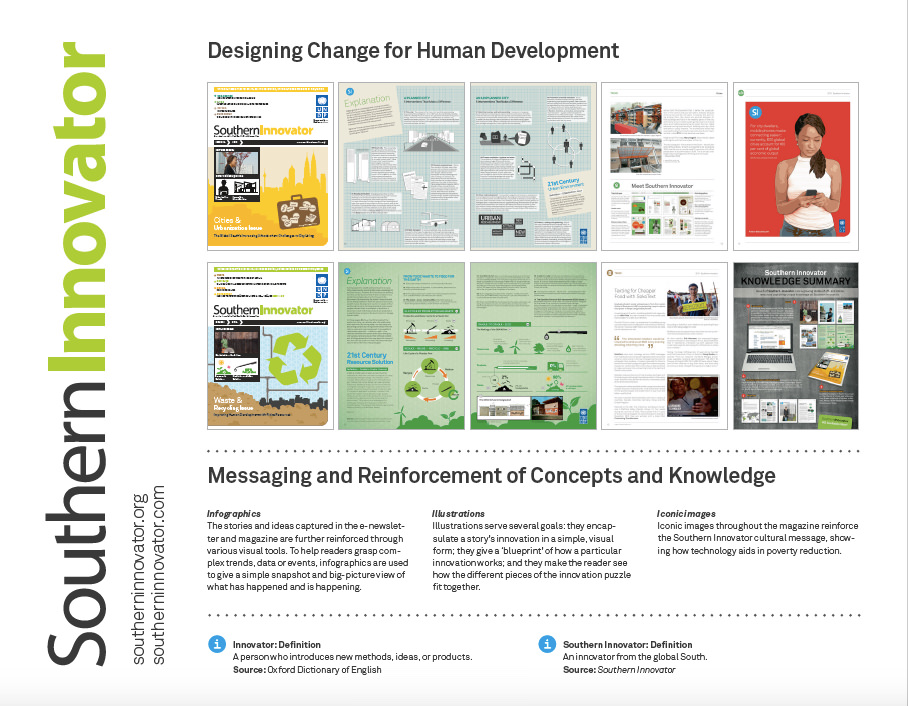
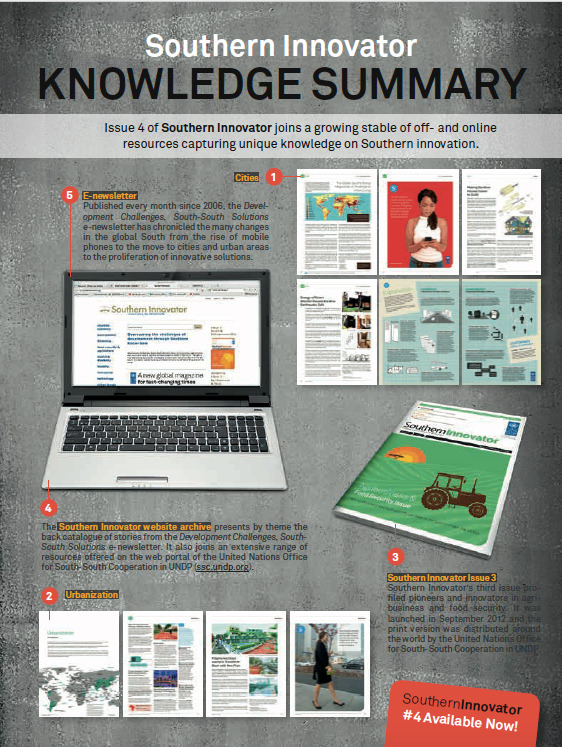
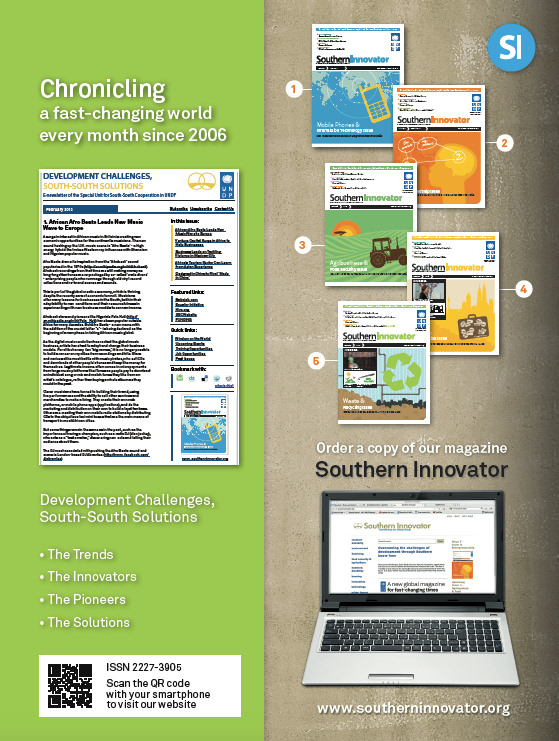
    By 2014, Southern Innovator had published five issues and become a recognised global innovation brand.

    https://davidsouthconsulting.org/2021/03/05/southern-innovator-issue-4/

    Follow @SouthSouth1

    Slideshare: http://www.slideshare.net/DavidSouth1/development-challengessouthsouthsolutionsnovember2010issue

    Southern Innovator Issue 1: https://books.google.co.uk/books?id=Q1O54YSE2BgC&dq=southern+innovator&source=gbs_navlinks_s

    Southern Innovator Issue 2: https://books.google.co.uk/books?id=Ty0N969dcssC&dq=southern+innovator&source=gbs_navlinks_s

    Southern Innovator Issue 3: https://books.google.co.uk/books?id=AQNt4YmhZagC&dq=southern+innovator&source=gbs_navlinks_s

    Southern Innovator Issue 4: https://books.google.co.uk/books?id=9T_n2tA7l4EC&dq=southern+innovator&source=gbs_navlinks_s

    Southern Innovator Issue 5: https://books.google.co.uk/books?id=6ILdAgAAQBAJ&dq=southern+innovator&source=gbs_navlinks_s

    Creative Commons License

    This work is licensed under a
    Creative Commons Attribution-Noncommercial-No Derivative Works 3.0 License.

    ORCID iD: https://orcid.org/0000-0001-5311-1052.

    © David South Consulting 2022

  • African Health Data Revolution

    African Health Data Revolution

    By David SouthDevelopment Challenges, South-South Solutions

    SOUTH-SOUTH CASE STUDY

    A pioneering tool for gathering health data now being used in Kenya could herald a revolution in the way diseases are tracked and defeated around the world. It uses mobile phones to better connect patients with medical and health personnel, and allows data to be gathered in real-time and used to track health and improve the delivery of services, especially to remote and under-serviced areas.

    In the past couple of years, Kenya has become a hotbed of mobile phone and information technology innovation. The now-famous Ushahidi crisis-mapping platform (www.ushahidi.com) is just one example. Social enterprise Data Dyne (www.datadyne.org) – with offices in Washington DC and Nairobi, Kenya – is offering its EpiSurveyor application (www.episurveyor.org) free to all to aid health data collection. It bills itself as “the first cloud-computing application for international development and global health … Think of it as like Gmail, but for data collection!”

    EpiSurveyor claims to have more than 2,600 users around the world and is currently being upgraded to a second version.

    “With the touch of a button I can see what’s going on across the country in real time,” Kenyan civil servant Yusuf Ibrahim told Britain’s Daily Telegraph newspaper. “It is amazing.”

    Ibrahim works in Nairobi as the Kenyan Ministry of Health liaison to Data Dyne.

    He uses maps and charts on mobile phones to track deadly disease outbreaks and vulnerable pregnancies.

    The EpiSurveyor application works simply: A user logs into the website and builds and creates the sort of form they want. They then download it to a phone and start collecting data straight away.

    Ibrahim gathers this data from mobile phones used by health care workers across the country.

    “It used to take days, weeks or even a couple of months to find out about an outbreak of polio on the other side of the country,” he said. “Now we know almost instantly. The speed with which we can now collect information has catapulted healthcare and prevention to another level. It has completely changed healthcare and saved countless lives.”

    He proudly points out Kenya’s mobile phone data collection system is “probably better than what they’ve got in the West.”

    “Although we are a third world country, I’m pretty sure we’ve done this before

    Western countries. While they are still collecting information in hard copy on clipboards, we are getting it instantly.”

    Packed with data processing power, mobile phones are capable of an immense range of tasks and applications. Some see phones as key to a revolution in how healthcare is provided: the mobile phone becomes one-part clinic, another part mobile hospital dispensing advice and transmitting vital information back to healthcare professionals and scientists in hospitals and labs.

    Despite dramatic improvements to the quality of hospitals in Africa and the number of qualified doctors, the continent’s healthcare services are still a patchwork, with rural and slum dwellers poorly served and the stresses of treating patients with contagious diseases like HIV/AIDS and malaria pushing resources to the limit.

    The United Nations has a number of initiatives partnering with mobile phone manufacturers, networks and software developers as part of a global campaign to reduce HIV/AIDS, malaria and deaths in childbirth.

    EpiSurveyor is being used by more than 15 countries’ ministries of health and is the adopted standard for the World Health Organization (www.who.int) (WHO) for electronic health data collection.

    It began as a partnership with the United Nations Foundation, The Vodafone Group Foundation, WHO and the ministries of health of Kenya and Zambia in 2006 to pilot test the software for EpiSurveyor.

    At the United Nations Foundation (www.unfoundation.org), chief executive Kathy Calvin equates the impact of mobile phones on global healthcare to the discovery of the antibiotic penicillin.

    “Instead of building clinics and roads to remote towns and villages so that people can access healthcare, we are bringing healthcare directly to the people via mobile phones. You get a lot more healthcare for your money,” Calvin told the Telegraph.

    Published: November 2010

    https://davidsouthconsulting.org/2022/10/06/african-technology-tackles-health-needs/

    https://davidsouthconsulting.org/2020/12/04/big-data-can-transform-the-global-souths-growing-cities/

    https://davidsouthconsulting.org/2021/01/18/cheap-paper-microscope-to-boost-fight-against-diseases/

    https://davidsouthconsulting.org/2020/12/04/data-surge-across-global-south-promises-to-re-shape-the-internet/

    https://davidsouthconsulting.org/2022/10/18/indians-fighting-inflation-with-technology/

    https://davidsouthconsulting.org/2022/10/12/lagos-traffic-crunch-gets-a-new-solution/

    https://davidsouthconsulting.org/2022/10/31/mapping-beirut-brings-city-to-light/

    https://davidsouthconsulting.org/2022/10/17/mapping-to-protect-kenyas-environment-the-emazingira-solution/

    https://davidsouthconsulting.org/2022/03/08/mobile-phone-microscopes-to-revolutionize-health-diagnostics/

    Development Challenges, South-South Solutions was launched as an e-newsletter in 2006 by UNDP’s South-South Cooperation Unit (now the United Nations Office for South-South Cooperation) based in New York, USA. It led on profiling the rise of the global South as an economic powerhouse and was one of the first regular publications to champion the global South’s innovators, entrepreneurs, and pioneers. It tracked the key trends that are now so profoundly reshaping how development is seen and done. This includes the rapid take-up of mobile phones and information technology in the global South (as profiled in the first issue of magazine Southern Innovator), the move to becoming a majority urban world, a growing global innovator culture, and the plethora of solutions being developed in the global South to tackle its problems and improve living conditions and boost human development. The success of the e-newsletter led to the launch of the magazine Southern Innovator.  

    https://davidsouthconsulting.org/2021/03/05/southern-innovator-issue-1/

    Follow @SouthSouth1

    Slideshare: http://www.slideshare.net/DavidSouth1/development-challengessouthsouthsolutionsnovember2010issue

    Southern Innovator Issue 1: https://books.google.co.uk/books?id=Q1O54YSE2BgC&dq=southern+innovator&source=gbs_navlinks_s

    Southern Innovator Issue 2: https://books.google.co.uk/books?id=Ty0N969dcssC&dq=southern+innovator&source=gbs_navlinks_s

    Southern Innovator Issue 3: https://books.google.co.uk/books?id=AQNt4YmhZagC&dq=southern+innovator&source=gbs_navlinks_s

    Southern Innovator Issue 4: https://books.google.co.uk/books?id=9T_n2tA7l4EC&dq=southern+innovator&source=gbs_navlinks_s

    Southern Innovator Issue 5: https://books.google.co.uk/books?id=6ILdAgAAQBAJ&dq=southern+innovator&source=gbs_navlinks_s

    Creative Commons License
    This work is licensed under a
    Creative Commons Attribution-Noncommercial-No Derivative Works 3.0 License.

    ORCID iD: https://orcid.org/0000-0001-5311-1052.

    © David South Consulting 2022

  • Turning African Youth on to Technology

    Turning African Youth on to Technology

    By David SouthDevelopment Challenges, South-South Solutions

    SOUTH-SOUTH CASE STUDY

    An African NGO believes the Internet is the single biggest key to rapid development in Africa – and it is working to connect youth, women and rural populations to the web, and in turn, switch them on to the vast resources stored across the world’s Internet sites.

    After initial successes with a youth project and with farmers, Voices of Africa (VOA) (http://www.voicesofafrica.info) is now seeking to scale up its work to fan out across Africa – and take its services to the world’s largest refugee camp, the Dadaab Refugee Camp in Kenya. 

    The youth and technology empowerment NGO has developed a business model to deliver low-cost Internet access and e-resources to Africa’s slums and rural farmers.

    VOA argues that “the digital divide, defined by a lack of access to information for a specific population, symbolizes the largest difference between developed and developing countries: the opportunity to obtain and utilize information.”

    “The digital divide runs much deeper than hardware and software,” it says. “While equipment is necessary it is not sufficient. The real heart of the digital divide is that those without access to information resources often suffer needlessly while the solutions to their problems are floating in the air.”

    But why is the Internet so important?

    “The internet puts the choice of content at the fingertips of the user,” explains executive director Crystal Kigoni. “Traditional media is one way communications. Internet is bi-directional.

    “Our NGO is completely grassroots. We train the people who train the people. It is an each one, teach one philosophy and is highly effective. We also design our projects to be self-sustainable after one year of successful implementation.”

    The philosophy behind Voices of Africa – “Sustainable Development through Information Empowerment” – is to give people the information and resources to take better control of their lives.

    Access to the Internet in Africa is patchy and, for the poor, an expensive resource. The penetration of mobile phones in Africa has been spectacular in the past five years. But there are limits to the resources people can afford to access with their phones. Issues abound about data costs, mobile phone networks, and mobile phone capability.

    VOA targets youth and women in sub-Saharan Africa through online educational resources offered on their e-learning website (http://elearning.voicesofafrica.info/). The resources have been certified by Nazarene University (http://www.anu.ac.ke), a private university in Nairobi, Kenya.

    The e-learning resources include high quality training videos, presentations and screencasts (http://en.wikipedia.org/wiki/Screencast) – like a movie, it is a digital recording of changes on a computer screen and is used to teach software – to share on the web. The resources are also shared through compact discs (CDs) and iPods (http://en.wikipedia.org/wiki/IPod).

    Project coordinator Nick Kungu coordinates the staff working on the pilot Kenyan projects: a Rural Internet Kiosk; a Youth Empowerment Center; and KiberaNet, which launched in August 2011. VOA uses a part-time and volunteer staff of more than 20 Kenyans and four international ‘virtual’ volunteers.

    The group is also working with farmers in Kutus, central Kenya, to help them get a better price for their products and introduce sustainable agriculture practices. This is done through online courses so the farmers do not need to travel. It is hoped by doing this they can improve the supply of food for the country.

    The Youth Empowerment Center in Webuye constituency of the Western province of Kenya involves a partnership with the government of Kenya to teach computer basics, research and data collection, social media, ICT (information communication technology) for development, social business and community health.

    In rural areas, the need for information cannot be overestimated. In the remote countryside, there are few schools with adequate resources and almost no community libraries. The lifesaving knowledge the people require has to date been completely beyond their grasp. As one rural woman in the Western province of Kenya exclaimed to VOA after encountering the resources on the Internet, “It is like being brought from the darkness into the light.”

    Another project in development is SlumNet, which seeks to combine the Internet with low-cost devices like tablet computers and netbooks. Its pilot scheme, KiberaNet, launched this month in the Kibera slum of Nairobi, Kenya to test the business model. VOA hopes to then expand it to Uganda, Tanzania, Ghana, Nigeria and Sierra Leone. It is using a business model to bring low-cost Internet access to Africa’s slums that is fully funded by the local communities and the users.

    It has identified the key needs of youth in slums that need to be met: a way to access the vast resources available on the Internet; a way to generate income, undertake low-cost learning, and organise for social justice; ways to overcome social, economic and political isolation; a way to access affordable equipment and resources to improve their quality of life in the short-term.

    To make it a sustainable business model, the community takes a 60 percent stake in the incorporated entity. Voices of Africa will select six local civil society organisations to take another 10 percent stake in the business. VOA takes 10 percent and the remaining 30 percent will be open to outside investors.

    It involves setting up a closed intranet system and Internet access covering the entire Kibera slum, which has an estimated population of 2 million, a majority under the age of 30.

    KiberaNet hopes to act as a community hub for socialising, education and generating content. A key part is creating an atmosphere that is welcoming to novices. The business model is about delivering the bandwidth of Internet access and simultaneously generating a sustainable source of income to keep it going. Partners in the business include Promote Africa, Plexus Group and Future Optics Networks.

    VOA also has been blogging about its time in Kenya’s Dadaab Refugee Camp (http://www.unhcr.org/cgi-bin/texis/vtx/page?page=49e483a16) at their website, www.voicesofafrica.info, and has been developing plans to expand services to the camp, home to over 400,000 refugees from drought and famine in Somalia. The camp was only designed to hold 90,000 people. The chronic food insecurity has caused a massive humanitarian crisis in the Horn of Africa, leaving over 10 million people in need of help.

    “There are plenty of resources going in but it is aid business as usual,” claims Kigoni. “You see lots of waste in many areas, and a lack in others that would be extremely beneficial. Hence, why Voices of Africa has come up with the youth technology and empowerment plan that accompanies a general information and communications system, DadaabNet.”

    DadaabNet will be a youth-run community Internet service and education service. VOA plans to use a wireless intranet, internal communications systems and low-cost internet access in the refugee camp.

    The project is the first of its kind in Dadaab and a first in Kenya, claims VOA, allowing free educational content without needing to access the Internet

    The intranet will host free educational videos that can be accessed by mobile phones and computers. The topics covered in the videos include health, nutrition, sanitation and computer training and how to use technology for sustainable development.

    The curriculum is also approved by Nazerene University to certificate level.

    The system is supervised and would be able to offer resources to other NGOs seeking to provide services to the camp’s residents. The intention is to open up opportunities for education and employment youth who are currently unemployed.

    At present the youth in the camp, many of whom have not completed secondary school, get by ‘hustling’ for work, according to VOA. By being left to their own devices, there is a risk they will fall into negative behaviour like crime and drug use or be preyed upon by terrorist organisations operating in the area like al Shabaab, they maintain.

    “In our dreams, everyone everywhere in the world can have the opportunity to develop their minds. It is through this creativity that Africa will rise,” concludes Kigoni.

    Published: August 2011

    Resources

    1) The Impact of Mobile Phones on Profits from Livestock Activities by Roxana Barrantes. Website: http://www.mendeley.com/research/impact-mobile-phones-profits-livestock-activities-evidence-puno-peru-14/

    2) 2011 UNHCR Country Operations Profile – Kenya. Website: http://www.unhcr.org/cgi-bin/texis/vtx/page?page=49e483a16

    3) Southern Innovator magazine: New global magazine Southern Innovator’s first issue is out now and is about Mobile Phones and Information Technology in the global South. Website: http://www.scribd.com/doc/57980406/Southern-Innovator-Issue-1

    Creative Commons License

    This work is licensed under a
    Creative Commons Attribution-Noncommercial-No Derivative Works 3.0 License.

    ORCID iD: https://orcid.org/0000-0001-5311-1052.

    © David South Consulting 2023

  • Ring Tones and Mobile Phone Downloads are Generating Income for Local Musicians in Africa

    Ring Tones and Mobile Phone Downloads are Generating Income for Local Musicians in Africa

    By David SouthDevelopment Challenges, South-South Solutions

    SOUTH-SOUTH CASE STUDY

    African musicians hoping to support themselves through their recordings have always had to contend with the added burden of poor copyright control over their work. While musicians in the West are supported by a highly regulated regime of copyright protection – ensuring some to become the richest people in their respective countries – most African musicians have had to stand back and watch their work being copied, sold and exchanged with little chance of seeing any royalties. Global audiences know of the success of artists like Fela Kuti, Youssou N’Dour, Manu Dibango and Miriam Makeba, but most African musicians can look forward to scant earnings from recording their music.

    Anyone who has walked through the markets of Africa will know there are plenty of pirated CDs for sale, yet it is of no use to a musician who never sees the money. Poverty is endemic amongst African musicians as a result of this loss of income. While music is a global business worth US $40 billion according to the Recording Industry Association of America, pirated music in Africa is rampant – some estimates by the Recording Industry of South Africa put it at over 80 percent of available music. How much money is being lost can be judged from the estimated daily income of a pirate music vendor in Africa, ranging between Euro 762 and Euro 2,744.

    But a solution to this problem is being pioneered in Botswana in southern Africa. A partnership between mobile phone provider Orange Botswana and Small House Records/Mud Hut Studios, ensures musicians get a slice of the profit pie. Managing director Solomon Monyame of Small House Records has signed a contract with Orange to share the profits from ring tone and song downloads to mobile phone subscribers. With more than 76.8 million people currently subscribing to mobile phone services in Africa, and the number growing by about 58 percent each year for the last five years, the potential royalties market for African musicians is vast if this initiative is replicated across the continent.

    In the paper “Development Goes Wireless” to be published in the spring 2007 issue of the journal of the Institute of Economic Affairs, lead researcher Karol Boudreaux of George Mason University’s Mercatus Center and Enterprise Africa!, discovered mobile phones and mobile phone companies can give artists a new way to control royalties for their work. She found that in the absence of effective copyright control mechanisms – as is the case in many African countries – the mobile phone company can step in to save the day.

    “When you walk through the markets there you see so much music available on the street, but there is little intellectual property rights protection,” she said.

    “In other countries, like the UK, you have strong intellectual property rights protection, but this just isn’t the case in much of Africa. The mobile phones are a very good way to get around this problem as long as cell phone providers are willing to make the contracts. Botswana is very lucky in that they have a very good contract environment, but this isn’t necessarily the case in other countries. It is a win-win for music providers and mobile companies.”

    The NetTel@Africa project started by USAID and the Center to Bridge the Digital Divide, in partnership with many African and US universities, is also championing copyright protection strategies.

    How important creative industries are becoming to economic development is slowly being recognized. It is now seen as an important component of modern post-industrial, knowledge-based economies, but equally also a way for economically underdeveloped countries to generate wealth. Not only are they thought to account for higher than average growth and job creation, they are also vehicles of cultural identity and play an important role in fostering cultural diversity. Initiatives like UNESCO’s Global Alliance for Cultural Diversity attempt to document this phenomenon and back it up with hard numbers.

    UNESCO also has a project to establish musicians’ cooperatives across Africa. As such, the musicians are able to pool their production resources, which are individually insufficient to ensure the economic viability of a small or medium-sized business. In Burkina Faso, a co-operative is working with the International Labour Organisation. Click here for more information.

    Festivals like Mali’s annual Festival in the Desert in the oasis of Essakane, 65 kilometers from Timbuktu, is an example of how African musicians are finding their own way to reach audiences. Targeted above all to promote African and Malian Music inside the continent, the Festival has also boosted international tourism to the region and almost 10 percent of last year’s 6,000 visitors came from outside of Africa.

    Another initiative for African musicians is the DigiArts Africa network. It was founded by UNESCO and aims to increase communication between artists, industries and educators, make musicians self-sustainable, use the ICT industries to support and contribute to cultural activities, and better promote African musicians within and outside Africa. Click here for more information.

    Well-known Senegalese musician Thione Seck is blunt about the economic effect of piracy on his income.

    “Were there no piracy, I could have bought an island, seeing the number of songs that I composed in more than 30 years of my career”, he told a local newspaper.

    According to Abdoul Aziz Dieng, president of the Senegal Music Works Association (AMS) and Chairman of the Board of the Senegalese Copyright Office (BSDA) (www.mali-music.com), out of 10 Senegalese artists’ CDs available on the local market, “only two are legal”. For audio cassettes, the ratio is three pirate copies out of every five sold.

    Opportunities to combat piracy and generate income are also not limited to just musicians. Filmmakers in Africa are starting to learn how to exploit the opportunities thrown up by the fast-expanding mobile phone networks on the continent. Already a phenomenon in South Africa (www.filmmaker.co.za), director Aryan Kaganof is in the process of releasing SMS Sugar Man, a feature length movie shot entirely with mobile devices. The movie will be beamed to cell phones in three-minute clips over 30 days.

    What are the effects of Piracy?

    • Artist
      • No royalty payments, no money to live
    • Record companies
      • No return on investments. Staff retrenchments
    • Retailers
      • Cannot compete with low prices. Staff retrenchments
    • Consumers
      • Many copies are of inferior quality. If tracks are missing or the sound quality is poor, no exchange or refunds
      • May be contributing to “organized crime” syndicates which are heavily involved in international music piracy

    Source: Recording Industry of South Africa

    Published: January 2007

    Resources

    Lively website about African musicians

    BBC website on African music

    Further reading from UNESCO: African music: new challenges, new vocations: Click here

    https://davidsouthconsulting.org/2022/10/02/african-afro-beats-leads-new-music-wave-to-europe/

    https://davidsouthconsulting.org/2022/11/11/berber-hip-hop-helps-re-ignite-culture-and-economy/

    https://davidsouthconsulting.org/2022/11/17/cashing-in-on-music-in-brazil/

    https://davidsouthconsulting.org/2022/12/18/disabled-congolese-musicians-become-world-hit/

    https://davidsouthconsulting.org/2021/11/09/mauritanian-music-shop-shares-songs-and-friendship/

    https://davidsouthconsulting.org/2023/02/07/mongolian-rock-and-pop-book-mongolia-sings-its-own-song/

    https://davidsouthconsulting.org/2020/12/17/mongolias-musical-entrepreneurs-led-way-out-of-crisis-2018/

    https://davidsouthconsulting.org/2021/03/05/southern-innovator-issue-1/

    https://davidsouthconsulting.org/2021/03/05/southern-innovator-issue-2/

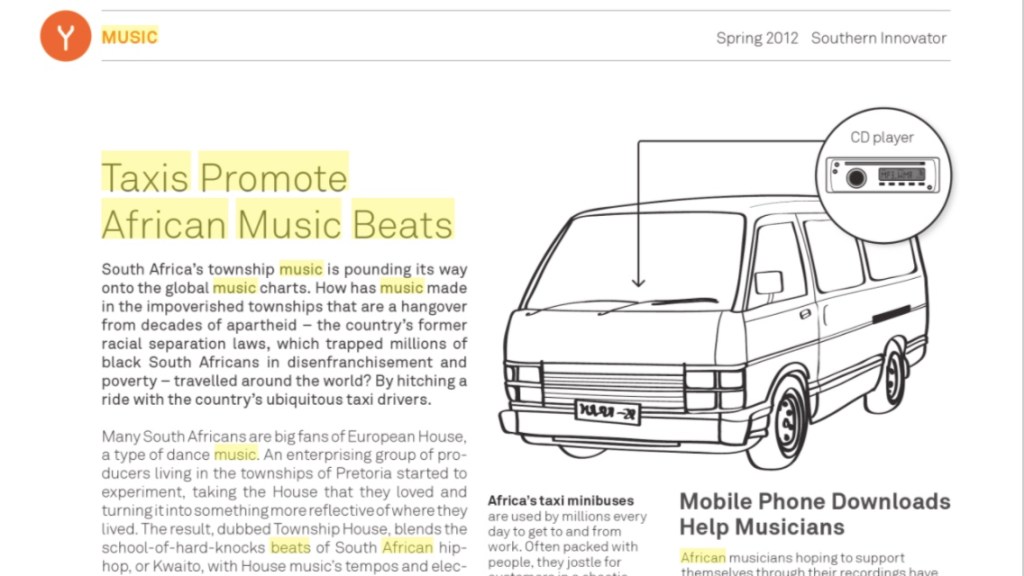
    https://davidsouthconsulting.org/2021/11/09/taxis-promote-african-music-beats/

    Creative Commons License

    This work is licensed under a
    Creative Commons Attribution-Noncommercial-No Derivative Works 3.0 License.

    ORCID iD: https://orcid.org/0000-0001-5311-1052.

    © David South Consulting 2023