Tag: Mobile Phones and Information Technology

  • Web 2.0: Networking to Eradicate Poverty

    Web 2.0: Networking to Eradicate Poverty

    By David SouthDevelopment Challenges, South-South Solutions

    SOUTH-SOUTH CASE STUDY

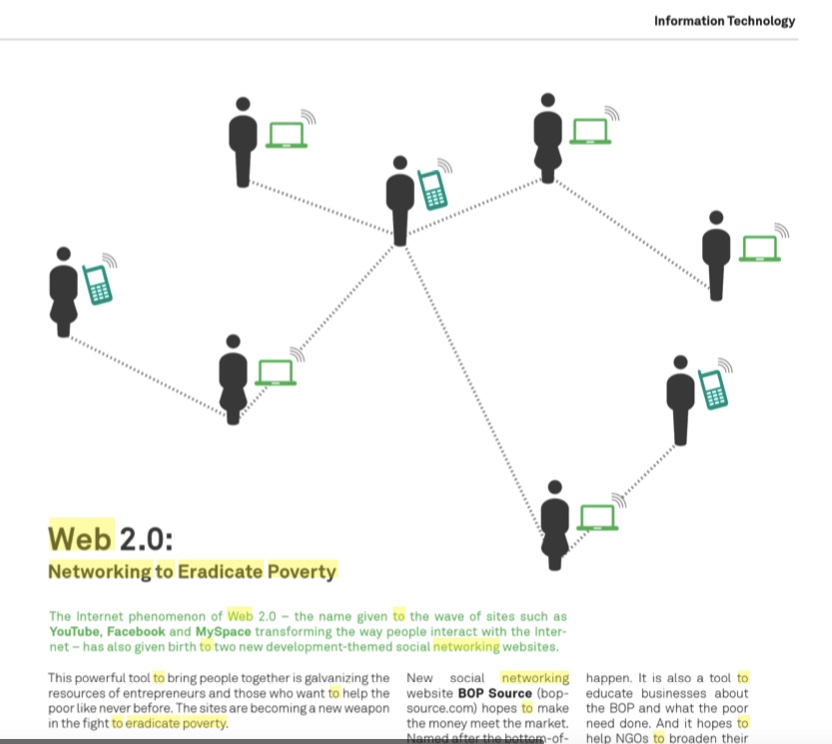
    The internet phenomenon of Web 2.0 (http://en.wikipedia.org/wiki/Web_2.0) – the name given to the wave of internet businesses and websites such as YouTube (www.youtube.com), Facebook and MySpace transforming the way people interact with the ‘Net – has also given birth to two new development-themed social networking websites.

    This powerful tool to bring people together is galvanizing the resources of entrepreneurs and those who want to help the poor like never before. The sites are becoming a new weapon in the fight to eradicate poverty.

    Social networking websites use various tools and applications (or ‘apps’ for short) to enhance the ability of users to connect and get things done. By bringing together a community of like-minded people, they are able to shorten the time it takes to organize and kick-start events. Web 2.0 can be used to build communities and social and business networks. By being able to store vast quantities of information online, it becomes faster to work and reduces the painful delays brought on by slow connections.

    All these new tools are making it easier and easier for entrepreneurs to work from home, in internet centres, or anywhere there is a wireless connection – and it is slashing the costs of managing a business. All the applications are online so there is no need to be hidebound by one operating system or hardware capability.

    Two newly launched social networking sites are targetting the poverty-eradication community.

    One is named after the Bottom of the Pyramid (BOP) concept as conceived by C.K. Prahalad. The BOP is the 4 billion people at the base of the global economic pyramid. As Prahalad sees it, they represent a vast market of unmet needs for entrepreneurs to tackle.

    New social networking website BOP Source hopes to make the money meet the market. Started by Jenara Nerenberg, BOP Source wants to put social networking tools into the hands of the world’s poor. It is a place to post business ideas and collaborate with others to make them happen. It is also a tool to educate businesses about the BOP and what the poor need done. And it hopes to help NGOs broaden their relationships with their constituencies and companies.

    While marketers can learn about the needs of the BOP, individuals can directly express their needs on the website and seek out the right people to solve problems.

    Another social networking website is Business Fights Poverty. Already at 1,000 members, it is a multimedia offering, with podcasts, videos, interviews and discussions about the role of business in addressing development goals.

    Published: November 2008
    Resources

    • BOP Source is a platform for companies and individuals at the BOP to directly communicate, ultimately fostering close working relationships, and for NGOs and companies to dialogue and form mutually valuable public-private partnerships that serve the BOP. Website: http://bopsource.ning.com/
    • Business Fights Poverty: Business Fights Poverty is the free-to-join, fast-growing, international network for professionals passionate about fighting world poverty through good business. Website: http://businessfightspoverty.ning.com/
    • Afriville is a Web 2.0 service and an African Caribbean social network. Afriville is a community website along the lines of the famous MySpace. Users are free to message and post profiles. The difference is that the user is able to choose how closed or open the networks are. The site features a state of the art music management system which allows African and Caribbean artists to get straight in touch with their fans.
    • Both Yahoo! And Google offer extensive free online tools for entrepreneurs and businesses that integrate seamlessly with their email services.
    • Kabissa: Space for Change in Africa: An online African web community promoting and supporting the transition to Web 2.0 services in Africa. Offers lots of opportunities to meet people throughout Africa and learn more.
    • Global Voices: An initiative from the Reuters news agency to aggregate the global conversation online from countries outside the US and Western Europe.
    • Information, Knowledge and Communication: Web 2.0 in Development Cooperation Bonn, Germany, 27-28 November 2008, Gustav Heinemann Haus. Website: http://www.eadi.org/index.php?id=994
    • 3rd IEEE/ACM International Conference on Information and Communication Technologies and Development (ICTD2009). Website: http://www.ictd2009.org

    https://davidsouthconsulting.org/2022/10/14/anti-bribery-website-in-india-inspires-others/

    https://davidsouthconsulting.org/2022/06/24/dabbawallahs-use-web-and-text-to-make-lunch-on-time/

    https://davidsouthconsulting.org/2022/03/07/david-south-consulting-ranked-in-the-top-10-million-websites/

    https://davidsouthconsulting.org/2021/05/25/ger-mongolias-first-web-magazine-and-a-pioneering-web-project-for-the-united-nations-12-january-2016/

    https://davidsouthconsulting.org/2022/06/25/shoes-with-sole-ethiopian-web-success-story/

    https://davidsouthconsulting.org/2022/10/21/social-networking-websites-a-way-out-of-poverty/

    https://davidsouthconsulting.org/2021/05/14/un-ukraine-web-development-experience-2000/

    https://davidsouthconsulting.org/2022/06/16/web-2-0-to-the-rescue-using-web-and-text-to-beat-shortages-in-africa/

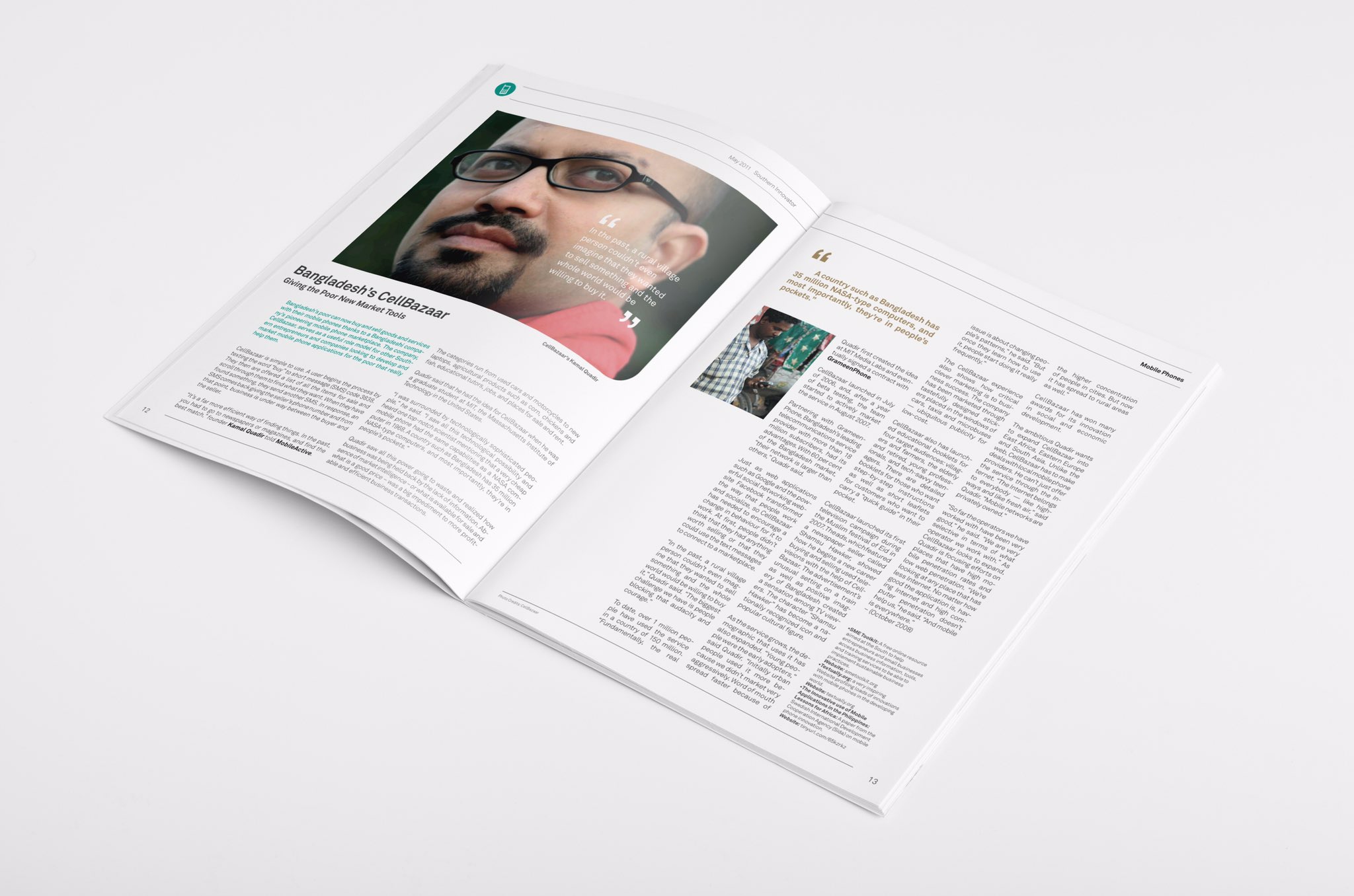
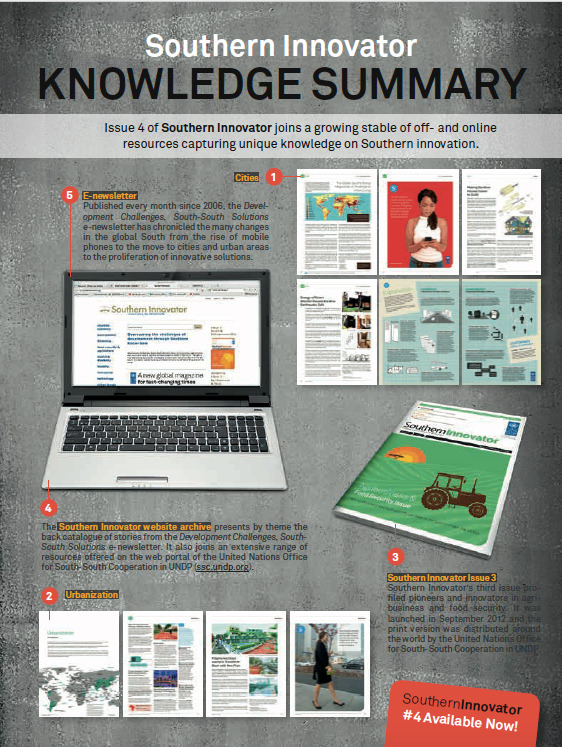
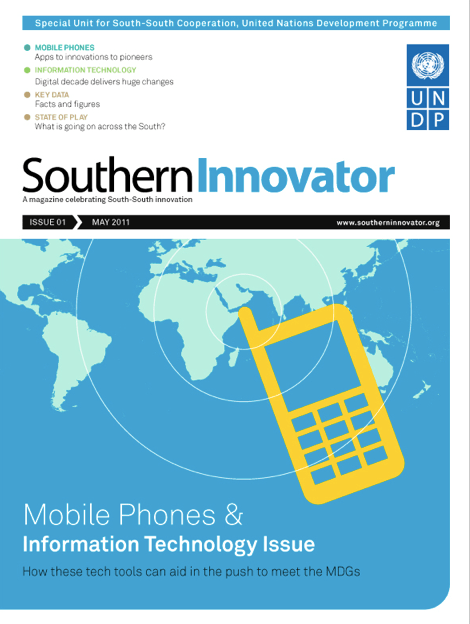
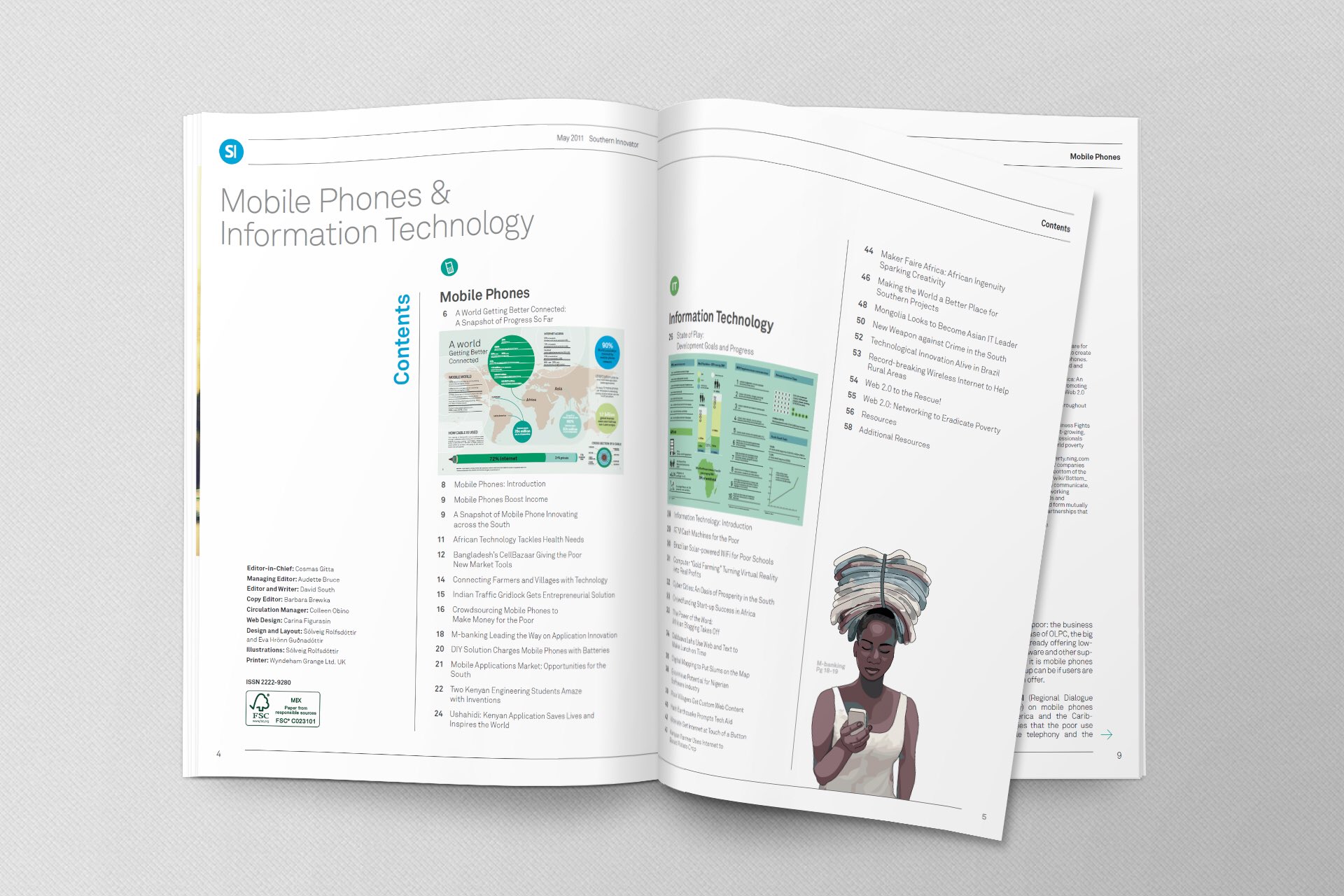
    Development Challenges, South-South Solutions was launched as an e-newsletter in 2006 by UNDP’s South-South Cooperation Unit (now the United Nations Office for South-South Cooperation) based in New York, USA. It led on profiling the rise of the global South as an economic powerhouse and was one of the first regular publications to champion the global South’s innovators, entrepreneurs, and pioneers. It tracked the key trends that are now so profoundly reshaping how development is seen and done. This includes the rapid take-up of mobile phones and information technology in the global South (as profiled in the first issue of magazine Southern Innovator), the move to becoming a majority urban world, a growing global innovator culture, and the plethora of solutions being developed in the global South to tackle its problems and improve living conditions and boost human development. The success of the e-newsletter led to the launch of the magazine Southern Innovator. 
    Southern Innovator’s online archive portal was launched in New York City, U.S.A. (home to the UN’s headquarters) in 2011 (southerninnovator.org).
    Creative Commons License

    This work is licensed under a
    Creative Commons Attribution-Noncommercial-No Derivative Works 3.0 License.

    ORCID iD: https://orcid.org/0000-0001-5311-1052.

    © David South Consulting 2023

  • Favela Fashion Brings Women Work

    Favela Fashion Brings Women Work

    By David SouthDevelopment Challenges, South-South Solutions

    SOUTH-SOUTH CASE STUDY

    A highly successful cooperative of women in Brazil has shown that it is possible for outsiders to make it in the fast-paced world of fashion. Despite being based in one of Rio de Janerio’s slums, or favelas (http://en.wikipedia.org/wiki/Favela), the women have developed a reputation for high-quality merchandise and even put on fashion shows.

    Fashion earns big money around the world: The global clothing industry is estimated to be worth more than US $900 billion a year. But fashion also has a reputation for relying on sweat shops, poor pay and poor working conditions. The poor are the most at risk of exploitation in the industry – upwards of 90 percent of sweatshop workers are women (www.feminist.org).

    Yet the COOPA-ROCA cooperative (www.coopa-roca.org.br/en/index_en.html) – or Rocinha Seamstress and Craftwork Co-operative Ltd – has pioneered a way to involve poor women in the business, build their skills while creating high-quality products, and be flexible enough to make time for their families’ needs. It particularly helps single mothers.

    The cooperative was founded by Maria Teresa Leal in Rocinha – the largest favela in Rio, home to over 180,000 people. After visiting her housekeeper’s home in the favela, Leal was impressed by the sewing skills of the women but found they weren’t making any money from their work. She decided to found the cooperative in 1981 and start making quilts and pillows. By the early 1990s, the cooperative had attracted the attention of Rio’s fashion scene. And in 1994, it jumped into making clothes for the fashion catwalks. Fashion designers in turn taught the women advanced production skills and about fashion trends.

    Today, the coop has established a hard-won reputation for quality and sells its clothes to the wealthy elite of Rio. Its success has led to contracts with major clothing stores, including Europe’s C&A.

    “Creativity is an important tool for transforming people and raising their consciousness,” Leal told Vital Voice. “My great passion is beauty. Beauty has the capacity to inspire, to touch individuals in a more subtle way. For this reason, I like to make beautiful things with the artisans of COOPA-ROCA.”

    Leal realized that most small businesses helping the poor fail despite their best intentions. They often make the same mistakes: they fail to produce high quality goods, they fail to do market research and understand who they are selling to, they fail to develop the skills of their workers, and most importantly, they fail to see that they have to compete in a global economy with lots of other enterprises. How many people have seen crafts and knickknacks for sale that nobody really wants?

    Slum dwellers are on the increase across the South. As the world becomes a more urban place – and 70 million people move every year to the world’s cities (UN) – the growing population of poor women and households presents a dilemma: how to provide meaningful work so they do not fall risk to exploitation? Without work opportunities, women can feel pressured to turn to prostitution, or even be trafficked by gangs for work or sex. And women in slums experience greater levels of unemployment than those who live elsewhere (UNHABITAT).

    Women now make up the majority of the world’s poor: 70 percent of the world’s poor are women, as are a majority of the 1.5 billion living on less than US $1 a day (UNESCO).

    Established in 1981 from a recycling project for local children, COOPA-ROCA started with finding ways to use thrown away scraps of cloth to make clothing. It eventually evolved into a cooperative. It focused on improving traditional Brazilian decorative craftwork skills like drawstring appliqué, crochet, knot work and patchwork.

    “COOPA-ROCA works with traditional handicraft techniques that are widely used by women around the world,” explains Leal. “As COOPA-ROCA works with fashion, and fashion is always linked with media, the COOPA-ROCA artisans inspire other women who recognize in themselves the potential to do the kind of work that COOPA-ROCA does.”

    For its first five years, COOPA-ROCA concentrated on building the organization and the skills of the artisans. Once a production structure was in place, quality control workshops were set up to increase the quality of the products so they could compete better in the marketplace.

    “Many social projects believe that money is the only resource required to begin their work. The COOPA-ROCA case proves that social organizations must use a more entrepreneurial vision to understand the concept of resources.”

    The cooperative’s mission statement is to “provide conditions for its members, female residents of Rocinha, to work from home and thereby contribute to their family budget, without having to neglect their childcare and domestic duties.”

    By doing this to a high standard, the profile and reputation of traditional crafts has been raised.

    The COOPA-ROCA hopes the work shows others how they can increase income in poor communities. The cooperative has 150 members and has partners in the wider fashion and decorative design markets.

    The women equally share responsibility for production, administration and publicity. While they work at home, they come to the office to drop off the completed pieces and pick up more fabric.

    The success of the cooperative has led to donations of funds to build a new headquarters designed by architect Joao Mauricio Pegorim.

    Despite the cooperative’s success, it is still not easy to work with partners. “There are many negative preconceptions about Rocinha and the people who live there, both within and outside of Brazil. COOPA-ROCA is consistently rejected when it applies for loans,” Leal said. “Furthermore, the cooperative’s commercial partners usually do not enter the favela themselves, and I must serve as a bridge between the two worlds.”

    But Leal is still ambitious for bigger things: “I envision COOPA-ROCA expanding to include 400 women artisans, producing for commercial partners, selling their own brand in Brazil and abroad, and carrying out fashion and design projects in the new headquarters in Rocinha.”

    Published: March 2010

    Resources

    1) The online service CafePress is a specially designed one-stop shop that lets entrepreneurs upload their designs, and then sell them via their online payment and worldwide shipping service. Website:http://www.cafepress.com/cp/info/sell/

    2) Tips on how to start your own t-shirt business. Website: http://www.pioneerthinking.com/dy_tshirt.html And how to do it online: Website:http://www.ehow.com/how_2135779_start-network-online-tshirt-company.html

    3) Once inspired to get into the global fashion business, check out this business website for all the latest news, jobs and events. Website:http://us.fashionmag.com/news/index.php

    4) iFashion: This web portal run from South Africa has all the latest business news on fashion in Africa and profiles of up-and-coming designers. Website:http://www.ifashion.co.za/index.php?option=com_frontpage&Itemid=1

    5) Kiva: Kiva’s mission is to connect people, through lending, for the sake of alleviating poverty. Website:http://www.kiva.org/

    6) Betterplace: Is another great way to solicit funds for NGOs or businesses in the developing world. Website: http://www.betterplace.org

    7) Viva Favela: The first Internet portal in Brazil. Viva Favela has a team made up of journalists and “community correspondents” – favela residents qualified to act as reporters and photographers. Website:http://www.vivafavela.com.br/publique/cgi/cgilua.exe/sys/start.htm?infoid=40489&sid=74

    8) Women in Poverty: A New Global Underclass by Mayra Buvinic (1998). Website: http://www.onlinewomeninpolitics.org/beijing12/womeninpoverty.pdf

    Development Challenges, South-South Solutions was launched as an e-newsletter in 2006 by UNDP’s South-South Cooperation Unit (now the United Nations Office for South-South Cooperation) based in New York, USA. It led on profiling the rise of the global South as an economic powerhouse and was one of the first regular publications to champion the global South’s innovators, entrepreneurs, and pioneers. It tracked the key trends that are now so profoundly reshaping how development is seen and done. This includes the rapid take-up of mobile phones and information technology in the global South (as profiled in the first issue of magazine Southern Innovator), the move to becoming a majority urban world, a growing global innovator culture, and the plethora of solutions being developed in the global South to tackle its problems and improve living conditions and boost human development. The success of the e-newsletter led to the launch of the magazine Southern Innovator. 
    Creative Commons License

    This work is licensed under a
    Creative Commons Attribution-Noncommercial-No Derivative Works 3.0 License.

    ORCID iD: https://orcid.org/0000-0001-5311-1052.

    © David South Consulting 2023

  • Palestinian Olive Oil’s Peaceful Prosperity

    Palestinian Olive Oil’s Peaceful Prosperity

    By David SouthDevelopment Challenges, South-South Solutions

    SOUTH-SOUTH CASE STUDY

    The economic devastation of the conflict between Israel and the Palestinians (http://en.wikipedia.org/wiki/Palestine) has brought much hardship to the Palestinian people. The United Nations under the UNRWA mission has been working to lesson the hardship for over 60 years (http://www.unrwa.org). But there is only so much it can do.

    However, several business initiatives are creating strong Palestinian food brands to improve the reputation and awareness of Palestine around the world. In particular, Palestinian olive oil has led the way and enjoyed strong sales in countries like the United Kingdom.

    Since 2004, the Palestine Fair Trade Association (PFTA) (http://www.palestinefairtrade.org) has been leading the movement of fair trade producers in Palestine, linking small Palestinian farms in fair trade collectives and cooperatives across the country.

    Zatoun (http://www.zatoun.com) – or Zaytoun (http://www.zaytoun.org) as its known in the UK – are olive oil and soap brands using the Arabic word for olive. Olive oil (http://en.wikipedia.org/wiki/Olive_oil) is a popular cooking and seasoning oil and is sought after for its health benefits. Most of it is cultivated in the Mediterranean region, with Spain the largest single producer. Like wine, the quality of the olive oil varies greatly and the bouquet and viscosity of the oil play a big role in how consumers select a brand. The trend in the past 10 years has been for consumers to be more selective about the olive oil they buy and to be more informed about the choices available. This increasingly sophisticated consumer choice is what is helping the Palestinian oil succeed.

    Another factor is the growing global popularity of the traditional Mediterranean diet. Research has linked it to the prevention of cancers, obesity and cardiovascular diseases, and an aid to food digestion. Olive oil and olives make up one of the six key groups of foods that are part of the Mediterranean Diet. The other elements are grains, fruits and vegetables, legumes and nuts, dairy products and fish.

    The Zatoun brand of olive oil uses its profits to help olive tree farmers and their families in Palestine.

    The brand is also hoping to alter public perceptions of Palestine. As its website states, “Zatoun helps to create a context based in ordinary everyday life to view and discuss the situation in Palestine-Israel. No longer is it an abstract geopolitical issue involving power elites and undefined national interest.”

    The Zatoun brand is led in Canada by Robert Massoud, winner of the 2004 YMCA Peace Medallion. Zatoun is sold in Canada through peace groups and social justice and faith groups and is “intended as a tool to help promote their work and bring home the message that the struggle of Palestinians is ultimately one of human rights and social justice.”

    The olive oil is certified fair trade under the Institute for Marketecology (IMO) (http://www.imo.ch/index.php?seite=imo_index_en) in Switzerland. The brand is operated as a not-for-profit with volunteer labour and the entire cost of the product goes to the farmers, customs and shipping costs, and promotion and administration. Each 750mL bottle sells from between CAD $15 (US $14) and CAD $17.50 (US $17.22) and each bar of soap is CAD $5.00 (US $4.90).

    In the U.K., the Zaytoun brand was started by British women Heather Masoud and Cathi Pawson, also in 2004. The Palestinian olive oil has benefited from sales promotion during the United Kingdom’s annual Fair Trade Fortnight: a highly publicized promotion over two weeks that has consistently raised the profile of all Fair Trade products. Palestinian products were profiled during the 2009 event.

    The Zaytoun brand is certified with the World Fair Trade Organization (www.wfto.com) and has been able to break through to sales in British supermarkets as a result. Having this certification is key to being accepted for display on the supermarket shelves. By being certified, the farmers are able to get guaranteed above market prices for their olives. This makes it easier to plan and invest in the farm and the community and avoid the wild fluctuations of market prices. It is common around the world for farmers to be bankrupted and impoverished when market prices crash and fall below the cost of growing and harvesting the product.

    “We have been working for the Fair Trade certificate for four years,” Nasser Abufarha, chairman of the Palestinian Fair Trade Association told the Guardian newspaper. “Fair Trade will increase our sales, and bring us new markets and widen our reach.

    “We have given farmers hope,” he said. “An economic exchange that recognises Palestinian farmers’ rights and respects the value of their connection to their land, after marginalization under Israeli occupation, is a major accomplishment.”

    Olives are Palestine’s biggest crop, and critical to the local economy. The industry employs more than 100,000 people and its economic health affects many more. But the ongoing conflict has harmed the olive industry in many ways, from the bulldozing of orchards to make way for the Israeli security fence – over 1,100 hectares olive orchards were cut off by the fence in the West Bank village of Anin alone – to clearing fields for the building of new settlements.

    For some of the farms, fair trade has meant access to outside markets they haven’t had for 40 years.

    The Palestinian olive oil is in a market with fierce competition. In the UK, the oil can retail for £14.49 (US $23) a litre, while some Italian olive oils can be had for just US $9. But the Palestinian olive oil has a number of advantages in the marketplace: consumers have shown a willingness to pay the premium to support the farmers and Palestine, and most importantly in the competitive world of food sales, food connoisseurs rave about it. Food and wine writer Malcom Gluck called Zaytoun olive oil “one of the aggressive yet pungently attractive olive oils I have tasted”. He believes it easily ranks alongside the best Sicilian, Cretan and northern Spanish oils.

    Another Palestinian company having success with the olive products is the Anabtawi Group (http://www.anabtawigroup.com/index.php?a=1&lid=3&lid1=24). Based in Nablus in the West Bank, it started in 2008 the Al-Ard Palestinian Agri-Products Company and sells Al-Ard extra virgin olive oil, virgin olive oil and an olive oil soap. Operating on a large scale, the group has the largest olive oil storage facility in Palestine and provides training and support to the farmers. It also undertakes marketing of the products in new markets including Latin America.

    Ziad Anabtawi, the company’s president and CEO, told the Brazil-Arab News Agency “Palestinian olive oil is known worldwide for its high quality and its very striking aroma. It is ‘premium’ and organic by nature. Farmers grow the product the traditional way. They do not irrigate the olive trees, [irrigation] comes from rainwater and we do not use any chemicals.”

    The Palestinian experience shows it is possible to create new economic opportunities for farmers under even the most arduous political and security conditions.

    Published: October 2010

    Resources

    Development Challenges, South-South Solutions was launched as an e-newsletter in 2006 by UNDP’s South-South Cooperation Unit (now the United Nations Office for South-South Cooperation) based in New York, USA. It led on profiling the rise of the global South as an economic powerhouse and was one of the first regular publications to champion the global South’s innovators, entrepreneurs, and pioneers. It tracked the key trends that are now so profoundly reshaping how development is seen and done. This includes the rapid take-up of mobile phones and information technology in the global South (as profiled in the first issue of magazine Southern Innovator), the move to becoming a majority urban world, a growing global innovator culture, and the plethora of solutions being developed in the global South to tackle its problems and improve living conditions and boost human development. The success of the e-newsletter led to the launch of the magazine Southern Innovator. 
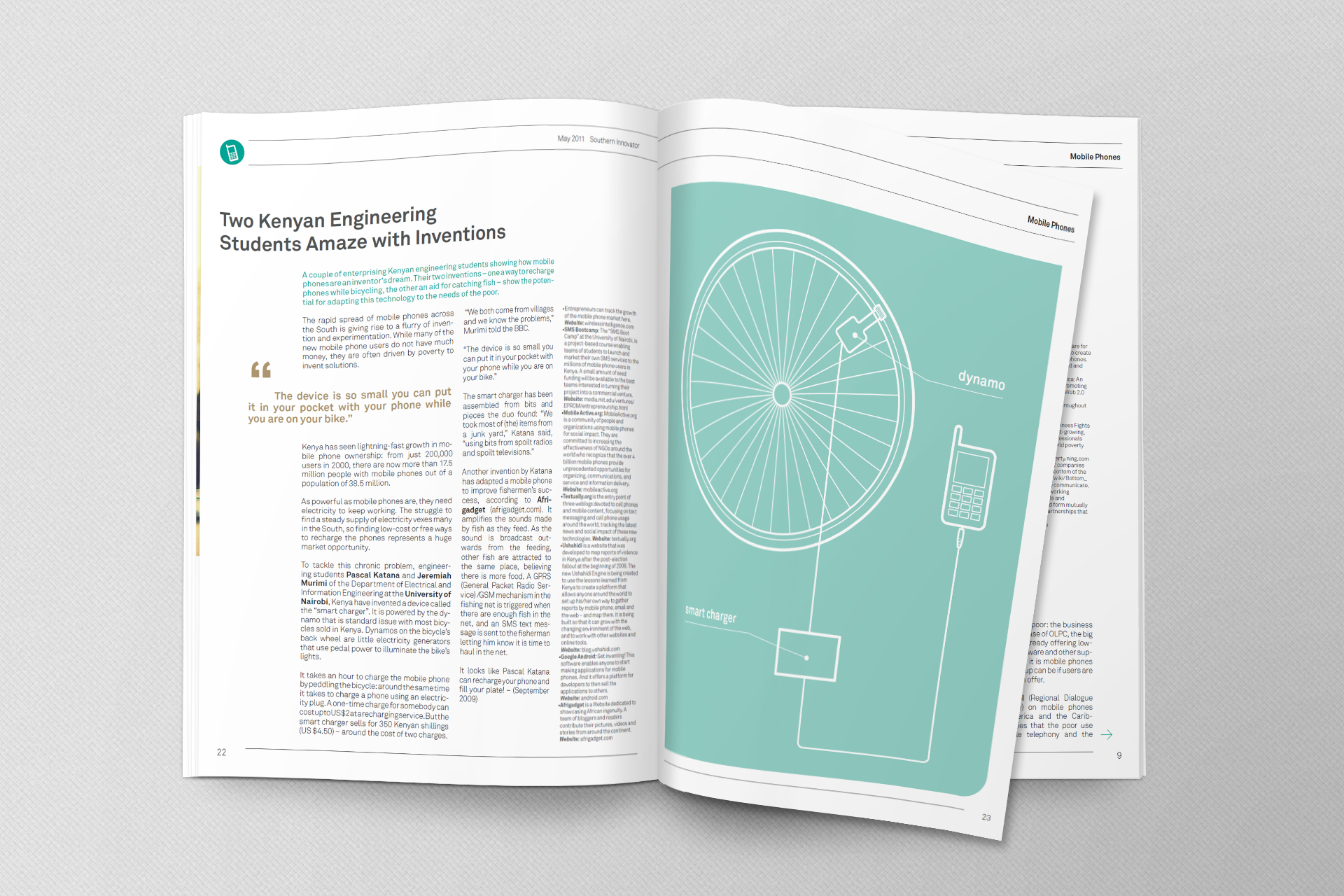
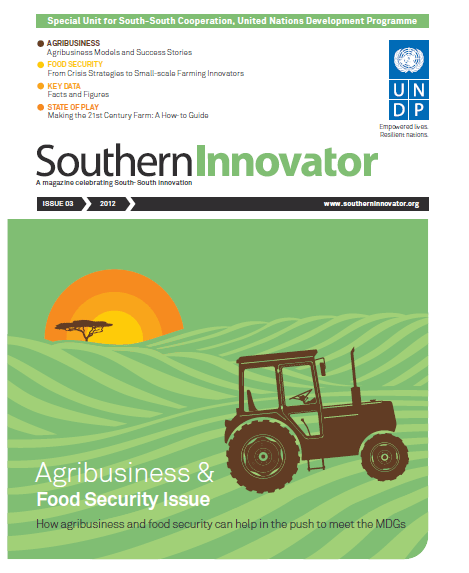
    https://davidsouthconsulting.org/2021/03/05/southern-innovator-issue-3/

    Creative Commons License

    This work is licensed under a
    Creative Commons Attribution-Noncommercial-No Derivative Works 3.0 License.

    ORCID iD: https://orcid.org/0000-0001-5311-1052.

    © David South Consulting 2022

  • Thai Organic Supermarkets Seek to Improve Health

    Thai Organic Supermarkets Seek to Improve Health

    By David SouthDevelopment Challenges, South-South Solutions

    SOUTH-SOUTH CASE STUDY

    A Thai business is working hard to expand access to organic food in the country. It sees this as part of a wider campaign to improve health in the country – and its success has caught the attention of the government, which wants to turn Thailand into a global health destination.

    The Lemon Farm chain run by Suwanna Langnamsank (http://www.lemonfarm.com/lmf/) was started 13 years ago and has grown to nine organic supermarkets in the capital, Bangkok. Lemon Farm works with 200 organic farms in Thailand and employs 160 people.

    Organic food (http://en.wikipedia.org/wiki/Organic_food) – grown without chemicals and artificial fertilizers and not irradiated or subjected to other tampering – is believed by many to be healthier because it avoids the harmful effects of accumulating chemicals. It is also thought to be richer in vitamins and minerals because of the use of non-chemical fertilizers on the soil.

    Lemon Farm sells made-in-Thailand organic vegetables and fruit, natural gift sets, soap and tea. There are also macrobiotic cafes in the supermarkets called Be Organic.  A macrobiotic diet avoids foods containing toxins (http://www.cancerresearchuk.org/cancer-help/about-cancer/treatment/complementary-alternative/therapies/macrobiotic-diet).

    The supermarkets use eye-pleasing modern design to set themselves apart from more conventional supermarkets.

    According to Lemon Farm’s website, it is a social enterprise and practices fair trade. It is using market-driven solutions to increase the availability of healthy food in the country. It seeks to support small-scale farmers and champion change in farming methods, encouraging a move away from dependence on harmful chemicals that damage human health and the environment and promoting “agricultural and economic self-sufficiency”.

    The macrobiotic restaurant operates to six values, among them using fresh vegetables and only using produce from associated farms. The restaurants do not use added sugar, they cook using a pressure cooker, and use natural ingredients such as sea salt, ginger, fermented soy sauce and natural miso. They do not use any artificial preservatives or flavour enhancers such as monosodium glutamate (MSG), a common practice in Asian cooking.

    Lemon Farm’s success as an organic food pioneer has caught the attention of the Thai government. The Ministry of Commerce (http://www2.moc.go.th/main.php?filename=index_design4_en) has contracted Lemon Farm to join its campaign to offer organic food in schools and hospitals.

    By promoting organic food, the government is hoping to boost farmers’ incomes while improving health in the country and bolstering the country’s thriving medical services industry serving foreign patients.

    “We need to promote healthy food and a healthy environment,” Piramol Charoenpao, deputy permanent secretary at the Ministry of Commerce, told Monocle magazine. “Thailand is a medical hub. The idea is to have retreat-style hospitals serving organic food. We’re increasing organic food production and educating people about it.”

    Thailand has already built a good reputation with its medical and health services. More than 1.6 million non-Thais are treated in Thai hospitals annually, with an estimated 500,000 travelling specifically for medical treatment (The Guardian).

    Former Thai Prime Minister Thaksin Shinawatra mooted the idea of making the country an international leader in medical tourism in 2003. It is expected providing medical services to overseas patients will make the country US $3.3 billion by 2015 (The Guardian).
 
It is hoped that offering organic food in hospitals and health facilities will boost the attractiveness and effectiveness of using health services in Thailand.

    Medical tourism is considered one of the fastest-growing sectors in the world. Estimates place it as a market worth US $100 billion. Three countries that compete in this market by offering medical services in the English language include India, Singapore and Thailand. They compete by offering services comparable to wealthier countries but at considerably less cost.

    Lemon Farm says it is on a mission to develop the marketplace for organic food in Thailand by educating consumers and producing “innovative natural food”.  It looks like it has already made a big impact.

    Published: February 2013

    Resources

    1) Whole Foods Market: The world’s leader in natural and organic foods, with more than 340 stores in North America and the United Kingdom. Website: wholefoodsmarket.com

    2) Conscious Capitalism: A book by Co-CEO of Whole Foods Market, John Mackey. Website:http://consciouscapitalism.org/resources/538

    3) Live Plan: A step-by-step online resource for creating a business plan for an organic supermarket. Website:http://www.bplans.com/organic_food_store_business_plan/company_summary_fc.php

    4) Start your own: Health food store: Advice and business tips on starting a health food store. Website:http://www.startups.co.uk/health-food-store.html

    Southern Innovator logo

    London Edit

    31 July 2013

    Google Books: https://books.google.co.uk/books?id=hvRcAwAAQBAJ&dq=development+challenges+february+2013&source=gbs_navlinks_s

    Slideshare: http://www.slideshare.net/DavidSouth1/development-challenges-february-2013-issue

    Southern Innovator Issue 1: https://books.google.co.uk/books?id=Q1O54YSE2BgC&dq=southern+innovator&source=gbs_navlinks_s

    Southern Innovator Issue 2:https://books.google.co.uk/books?id=Ty0N969dcssC&dq=southern+innovator&source=gbs_navlinks_s

    Southern Innovator Issue 3:https://books.google.co.uk/books?id=AQNt4YmhZagC&dq=southern+innovator&source=gbs_navlinks_s

    Southern Innovator Issue 4: https://books.google.co.uk/books?id=9T_n2tA7l4EC&dq=southern+innovator&source=gbs_navlinks_s

    Southern Innovator Issue 5:https://books.google.co.uk/books?id=6ILdAgAAQBAJ&dq=southern+innovator&source=gbs_navlinks_s

    Development Challenges, South-South Solutions was launched as an e-newsletter in 2006 by UNDP’s South-South Cooperation Unit (now the United Nations Office for South-South Cooperation) based in New York, USA. It led on profiling the rise of the global South as an economic powerhouse and was one of the first regular publications to champion the global South’s innovators, entrepreneurs, and pioneers. It tracked the key trends that are now so profoundly reshaping how development is seen and done. This includes the rapid take-up of mobile phones and information technology in the global South (as profiled in the first issue of magazine Southern Innovator), the move to becoming a majority urban world, a growing global innovator culture, and the plethora of solutions being developed in the global South to tackle its problems and improve living conditions and boost human development. The success of the e-newsletter led to the launch of the magazine Southern Innovator. 
    Creative Commons License

    This work is licensed under a
    Creative Commons Attribution-Noncommercial-No Derivative Works 3.0 License.

    ORCID iD: https://orcid.org/0000-0001-5311-1052.

    © David South Consulting 2022