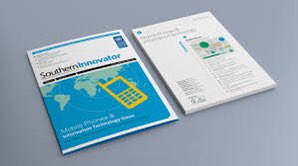
Tag: Mobile Phones and Information Technology

  • South Africa Innovates Healthcare with Prepay Phone Vouchers

    South Africa Innovates Healthcare with Prepay Phone Vouchers

    By David SouthDevelopment Challenges, South-South Solutions

    SOUTH-SOUTH CASE STUDY

    Pioneers in Africa are experimenting with new ways to fund the delivery of healthcare that is affordable and sustainable and not dependent on foreign aid and donations. A South African company is prototyping the selling of pre-payment healthcare services through mobile phones with a range of vouchers that can be bought and downloaded at the tap of a keypad. They are priced at between US $12 and US $49 and cover medical and dental check-ups, tests, treatments, chronic care and medicines. They are flexible and can also be sent to friends and family who need help.

    In South Africa, poverty is still widespread. The majority black population has a median income of US $2,000 a year (New Internationalist) and many still live in crowded townships and poor rural communities. Poverty has also increased for many white Afrikaner South Africans (http://en.wikipedia.org/wiki/Afrikaner). A study by the Standard Bank of South Africa found the number of whites earning less than US $80 a month grew from 2000 to 2004 by more than 50 per cent. In the government capital of Pretoria, 50 Afrikaner squatter camps have emerged in recent years. For many, affordable healthcare is a critical issue.

    The story of healthcare in Africa is not a linear one of constant progress. The continent as whole achieved its lowest child mortality rates in the 1970s. But after that, the quality of healthcare declined as a result of various factors including economic crises and the HIV/AIDS crisis – both of which overwhelmed public systems. In sub-Saharan Africa, health systems reached rock bottom in the late 1990s.

    “Few people could afford annual check-ups, medicines or user fees at hospitals,” wrote Dr. Ebrahim Malick Samba in the paper “African health care systems: what went wrong?” for News Medical (www.news-medical.net). “One result was the resurgence of infectious diseases such as malaria, tuberculosis and cholera.

    “Prior to the 1980s, the district hospitals, community health centres and other outreach health posts provided medical services and essential drugs free of charge. With reforms, user fees and cost recovery were introduced, and the sale of drugs was liberalized.

    “Many governments discontinued budget support to the health sector which paralysed the public health system. There was no money for medical equipment and maintenance; salaries and working conditions declined.”

    Things have been steadily improving from this low base through the 2000s, the result of increased aid funding for public health systems and greater national investments in staff, facilities and equipment. There is still a long way to go, but Africa is becoming a world leader in developing and deploying mobile phone applications for health and healthcare.

    Despite dramatic improvements to the quality of hospitals and the number of qualified doctors, the continent’s healthcare services are still a patchwork, with rural and slum dwellers poorly served and the stresses of treating patients with contagious diseases like HIV/AIDS and malaria pushing resources to the limit.

    Research has shown it is better and fairer to develop pre-payment mechanisms for healthcare than to just hit patients with fees when they are ill. With pre-payment, a person can buy care services when they are financially able to and bank up care for when they become ill and not able to work and save.

    This is a crucial issue for people with low incomes who can quickly be devastated by their illness or that of loved one or family member.

    The World Health Organization (WHO) has taken a firm stand against so-called out-of-pocket payments and encourages the growth in pre-payment methods. The World Health Report 2000 found that “Fairness of financial risk protection requires the highest possible degree of separation between contributions and utilization.”

    South Africa’s Yarona Care (www.yaronacare.co.za/prepaid.html) – a health insurance provider network – is rolling out prepaid mobile phone vouchers, allowing patients to see doctors or dentists and even traditional healers for treatment. When a patient visits, the healthcare worker redeems the mobile phone voucher to get paid. One product, Impilo Go, allows people to pay for one visit to a doctor and seven days of medicine for R230 (US $34). For people on a tighter budget, there is Impilo Care for R80 (US$12). A patient can visit a nurse practitioner for a medical check-up and receive tests.

    Impilo One offers medicines alone for R100, while Impilo Plus for R195 (US $29) is aimed at people with chronic conditions. They can get a prescription from the doctor and then go to a pharmacy participating in the scheme to receive medicines.

    Dental work is also covered by the vouchers.

    An online demonstration shows how the mobile phone process works (www.yaronacare.co.za/cellphonedemo.html).

    The service is marketed at a mix of customers, from individuals to corporate clients looking to cover large numbers of people to government and NGOs. They can purchase services by voucher, payroll schemes or mobile phones.

    Prepaid by mobile phone as a concept is already well established across Africa. It is a simple way to make payments and sell services. In the case of Yarona’s offering, the customer or patient uses their mobile phone to dial a code to pay for a service. When at the doctor or dentist’s office, he or she spends the voucher for the service by giving a unique code to the healthcare professional. Once this is done, Yarona Care pays the healthcare provider for the service.

    The voucher approach allows customers to buy health services for family members for a defined period of time. Vouchers can also be sent to family members for emergencies.

    Published: April 2011

    Resources

    1) South Africa’s Afridoctor mobile phone application claims to be Africa’s first personal mobile health clinic. It lets patients use its “SnapDiagnosis” system to submit photos of their ailments and in turn receive advice from a panel of medical professionals, or use the mapping feature to find doctors, clinics and health industry-related services nearby. Website: http://twitter.com/afridoctor

    2) Ghana’s mPedigree uses cell phones to build networks to tackle and identify counterfeit drugs. Website: http://mpedigree.net

    Development Challenges, South-South Solutions was launched as an e-newsletter in 2006 by UNDP’s South-South Cooperation Unit (now the United Nations Office for South-South Cooperation) based in New York, USA. It led on profiling the rise of the global South as an economic powerhouse and was one of the first regular publications to champion the global South’s innovators, entrepreneurs, and pioneers. It tracked the key trends that are now so profoundly reshaping how development is seen and done. This includes the rapid take-up of mobile phones and information technology in the global South (as profiled in the first issue of magazine Southern Innovator), the move to becoming a majority urban world, a growing global innovator culture, and the plethora of solutions being developed in the global South to tackle its problems and improve living conditions and boost human development. The success of the e-newsletter led to the launch of the magazine Southern Innovator. 

    Creative Commons License

    This work is licensed under a
    Creative Commons Attribution-Noncommercial-No Derivative Works 3.0 License.

    ORCID iD: https://orcid.org/0000-0001-5311-1052.

    © David South Consulting 2023

  • Indians Fighting Inflation with Technology

    Indians Fighting Inflation with Technology

    By David SouthDevelopment Challenges, South-South Solutions

    SOUTH-SOUTH CASE STUDY

    Despite the global economic downturn, many countries of the South are seeing rapid economic growth. That can have a down side: inflation (http://en.wikipedia.org/wiki/Inflation). Inflation can be caused by variety of factors – too much money chasing too few goods, deliberate government policies to increase demand for goods and services, environmental disasters creating scarcity, or poor investment in infrastructure straining against rapid economic growth. But when it gets out of control for life-essential goods like food, then people need solutions to survive.

    In India – home to more poor people than all of sub-Saharan Africa – rising inflation has prompted the Reserve Bank of India to raise interest rates, which in turn leads to more expensive loans and credit, just when funds need to be borrowed to invest in infrastructure improvements for the country.

    India’s finance minister, Pranab Mukherjee, has warned that the rising interest rates necessary to fight inflation will hurt India’s economic growth.

    India has seen inflation jump from single digits in 2008 to double digits this year. Consumer price inflation for industrial and farm workers in India rose by 14 percent, government data show – up from 5.51 percent in January 2008 (It hit 16.22 percent in January 2010, according to the Indian Ministry of Labour).

    And it is the poorest who suffer the most from inflation. Inflation in India has led to worker protests for wage increases and rising prices for essentials like food: a life-and-death issue for the poor.

    Other countries across the South are also experiencing high inflation, the worst being Venezuela. India has the highest inflation after Venezuela’s 32 percent rate, according to Bloomberg data compiled from 82 countries.

    The UN’s trade and development body, UNCTAD, has called for new measures to tackle inflation. “In the past few decades, monetary policies have been more and more gradually based on inflation targeting,” said Supachai Panitchpakdi, secretary-general of UNCTAD. “I see there should be other instruments to contain inflation rather than monetary policies.”

    Frustration with inflation has even been taken up by India’s vibrant entertainment industry, Bollywood (http://www.bollywoodworld.com).

    The song “Mehangayi Daayan” (“The Inflation Witch”) in a film produced by acting star Aamir Khan has the lyrics, “my husband’s earnings are good but his second wife — inflation — is eating them up.”

    Indian marketing consultant Suhasini Sakhare (http://www.suhasinisakhare.com/index.php?option=com_content&view=section&layout=blog&id=2&Itemid=12) from Nagpur has called for Indian consumers to be empowered, just as farmers are with the successful e-Choupal web portal.

    E-Choupal (http://www.echoupal.com) has developed a reputation for both controlling prices and increasing incomes for poor farmers. Started in 2000 by the major Indian company ITC Limited (http://www.itcportal.com), it links farmers to the latest prices for products including soybeans, wheat, coffee and prawns.

    E-Choupal works through computers set up in rural areas. It has built one of the largest internet initiatives in rural India, reaching 4 million farmers in 40,000 villages. It does this through 6,500 computer kiosks located in the homes of farmer-coordinators called Sanchalaks. The kiosks offer weather reports and the latest market prices, important scientific developments, risk management advice, and help with sales and marketing. The computer is in the Sanchalak’s house and connects to the internet by telephone. Each computer can serve around 600 farmers in the surrounding area.

    Indian agriculture suffers from being very fragmented, with poor infrastructure and an army of middlemen looking to get the best price for themselves at the expense of farmers and consumers. Indian farmers are heavily in debt and plagued by a very high suicide rate as a result (http://en.wikipedia.org/wiki/Farmers’_suicides_in_India). This agricultural crisis has a direct impact on India’s ability to meet its development goals and lift many millions more out of poverty in the future.

    E-Choupal sees itself as creating a “virtuous circle of higher productivity, higher incomes, enlarged capacity for farmer risk management, larger investments and higher quality and productivity.”

    E-Choupal has increased yields for farmers, reduced transaction costs, and raised the quality of output leading to rising farmer incomes.

    It is clear from experience in other countries that better access to price information helps control price inflation. E-Choupal has the advantage of providing both information and the means to access it: a big problem in rural India. Most poor Indian consumers do not have access to the internet and make food purchases from small vendors, whom they must trust to set the right price for products.

    Online, there are plenty of price comparison websites for Indians (http://explore.oneindia.in/internet/portal/comparisonsites): computers, electronics and household goods (http://compareindia.in.com) for example. But this is of no use to poor Indians without access to the information.

    Economic commentator Paranjoy Guha Thakurta told AFP of the political dangers: “There’s a huge amount of discontent and anger across the country and certainly among the poor. Speak to the person on the street and their biggest problem is inflation.”

    Published: August 2010

    Resources

    • Olam: A global food supply company in ‘agri-products’ that got its start in Nigeria. It shows how a Southern brand can grow and go global, and overcome the difficulties of cross-border trade. Website: www.olamonline.com
    • Model Village India: A pioneering initiative is reviving impoverished rural villages. Drawing on self-organizing methods used in India since 1200 BC, the Model Village India is based around India’s democratic system of Panchayats: a village assembly of people stemming back to pre-colonial times. Website: www.modelvillageindia.org.in
    • e-Choupal: Hope or Hype? By Neeraj Dangi and Harjit Singh, American Journal of Economics and Business Administration 2 (2): 179-184, 2010. Website: http://tinyurl.com/3682r3p
    • A book on the consequences of inflation when it gets out of control: When Money Dies: The Nightmare of the Weimar Hyper-Inflation by Adam Fergusson. Website: http://www.amazon.co.uk/When-Money-Dies-Nightmare-Hyper-Inflation/dp/1906964440
    • The American National Inflation Association: A website with educational videos and resources on inflation. Website: http://inflation.us

    https://davidsouthconsulting.org/2022/10/14/anti-bribery-website-in-india-inspires-others/

    https://davidsouthconsulting.org/2022/09/29/the-battle-for-indias-coffee-drinkers-in-buzzing-economy/

    https://davidsouthconsulting.org/2022/11/22/bio-ethanol-from-sturdy-and-once-unwanted-indian-plant/

    https://davidsouthconsulting.org/2022/02/07/boosting-tourism-in-india-with-surfing-culture/

    https://davidsouthconsulting.org/2022/09/29/cheap-indian-tablet-seeks-to-bridge-digital-divide/

    https://davidsouthconsulting.org/2021/09/01/disaster-recovery-ten-years-after-the-gujarat-india-experience/

    https://davidsouthconsulting.org/2022/10/20/the-e-reader-battle-reaches-india/

    https://davidsouthconsulting.org/2022/10/09/entrepreneurs-use-mobiles-and-it-to-tackle-indian-traffic-gridlock/

    https://davidsouthconsulting.org/2022/04/04/help-is-at-hand-for-indias-beleaguered-bus-riders/

    https://davidsouthconsulting.org/2022/09/27/india-2-0-can-the-country-make-the-move-to-the-next-level/

    https://davidsouthconsulting.org/2022/10/14/indias-modernizing-food-economy-unleashing-new-opportunities/

    https://davidsouthconsulting.org/2021/08/29/indian-business-model-makes-green-energy-affordable/

    https://davidsouthconsulting.org/2022/10/25/indian-city-slum-areas-become-newly-desirable-places-to-live/

    https://davidsouthconsulting.org/2021/08/28/indian-entrepreneur-brings-dignity-to-poor-women/

    https://davidsouthconsulting.org/2021/03/04/indian-id-project-is-foundation-for-future-economic-progress/

    https://davidsouthconsulting.org/2022/10/18/indian-initiatives-to-make-travel-safer-for-women/

    https://davidsouthconsulting.org/2022/06/15/indian-mobile-phone-application-innovators-empower-citizens/

    https://davidsouthconsulting.org/2022/11/01/indian-newspapers-thrive-with-economy/

    https://davidsouthconsulting.org/2022/10/06/indian-solar-economy-brings-new-vocation-for-women/

    https://davidsouthconsulting.org/2022/10/06/indian-solar-power-pack-powers-villages/

    https://davidsouthconsulting.org/2022/10/25/indian-toilet-pioneer-champions-good-ideas/

    https://davidsouthconsulting.org/2022/03/29/model-city-to-test-the-new-urbanism-concept-in-india/

    https://davidsouthconsulting.org/2020/12/04/model-indian-villages-to-keep-rural-relevant/

    Development Challenges, South-South Solutions was launched as an e-newsletter in 2006 by UNDP’s South-South Cooperation Unit (now the United Nations Office for South-South Cooperation) based in New York, USA. It led on profiling the rise of the global South as an economic powerhouse and was one of the first regular publications to champion the global South’s innovators, entrepreneurs, and pioneers. It tracked the key trends that are now so profoundly reshaping how development is seen and done. This includes the rapid take-up of mobile phones and information technology in the global South (as profiled in the first issue of magazine Southern Innovator), the move to becoming a majority urban world, a growing global innovator culture, and the plethora of solutions being developed in the global South to tackle its problems and improve living conditions and boost human development. The success of the e-newsletter led to the launch of the magazine Southern Innovator. 

    https://davidsouthconsulting.org/2021/03/05/southern-innovator-issue-1/

    https://davidsouthconsulting.org/2021/03/05/southern-innovator-issue-5/

    Creative Commons License

    This work is licensed under a
    Creative Commons Attribution-Noncommercial-No Derivative Works 3.0 License.

    ORCID iD: https://orcid.org/0000-0001-5311-1052.

    © David South Consulting 2023

  • Vietnam Launches Low-cost, High-Quality Video Game

    Vietnam Launches Low-cost, High-Quality Video Game

    By David SouthDevelopment Challenges, South-South Solutions

    SOUTH-SOUTH CASE STUDY

    The creative economy offers huge opportunities to the countries of the global South. With the proliferation of new technologies – mobile phones, digital devices, personal computers with cheap or free software, the Internet – the tools to hand for creative people are immense. This begins to level the playing field and allows hardworking and talented people in poor countries to start to compete directly with those in wealthy countries.

    One case of this dynamic at work is the computer and video games industry. Once, they were only created by ‘first world’ nations like Japan, the United States and the United Kingdom. And then came South Korea, as its prosperity increased through the 1980s and 1990s. And then China got in on the game. And India.

    And now innovators in Vietnam are using the medium to make money, and tell a story from a distinctly Vietnamese perspective. And that story is the long-running Vietnam wars that engulfed the country, from the 1950s through the 1960s until 1975 when the last of the United States’ helicopters left Saigon, then the capital of South Vietnam.

    Emobi Games (http://emobigames.vn) from Hanoi, unified Vietnam’s current capital, uses the motto “Enjoy challenges.” Launched in 2011 by founder and director Nguyen Tuan Huy, it has created 7554, a game that places players in the shoes of a Vietnamese soldier during the independence war against the French. Cleverly, it also comes at a competitive price: US $12.

    The game’s name refers to May 7, 1954, the day the French army in Dien Bien Phu surrendered to the Vietnamese People’s Army. This led to the end of the European colonial power’s occupation of its Indochinese colonies. The high death toll and sacrifice from the wars with France and the United States still resonate in the country, and the game reflects this.

    A young team of 20 developers worked on the project for three years. It cost the company an estimated US $802,748 to complete. It was extensively researched to ensure historical accuracy.

    “Dien Bien Phu is a great victory that we are proud of. That day, 7th of May 1954, is a symbol of our strength,” Huy told Ars Technica (http://arstechnica.com).

    “I think it is similar to what Americans feel when they celebrate July 4th. Independence is very important and something worth fighting for. It is also something worth honouring.”

    The game is the end product of an intense struggle to prove critics and sceptics wrong. Many doubted the company could deliver a product that could compete with the more established players. The video game market for firstperson shooters – where the player uses a weapon to engage in first-person combat – has been transformed in the last decade. Many games are highly sophisticated products akin to major films. The Call of Duty (callofduty.com) franchise is a good example. These games have elaborate graphics and story concepts, often use professional actors and come with high-cost, high-publicity marketing campaigns to back up game launches.

    The money at stake is significant: the global video games market is estimated to be worth US $65 billion in 2011 (Reuters). Game makers Activision Blizzard, makers of Call of Duty, had an annual revenue of US $4.8 billion.

    On its website, Emobi proudly takes on the doubters: “We are a very young company in Vietnam, currently we focus on one task: Building a successful PC Video Game for the Vietnamese. Most Vietnamese don’t believe that Vietnam can produce (a) PC Video Game.

    “We, the young people, think about this as a challenge, and want to overcome that. Maybe we will fail, maybe we will succeed. But that’s not important. (It is) Important that it must be time for the Vietnamese Game.”

    Huy admits it was a struggle to make the game.

    “Video games, films or any kind of entertainment in our country must adhere to certain standards,” explains Huy. “Entertainment must not be too violent or too sexy. Our government policy is stricter than other countries, especially when compared to Western countries.”

    Vietnam regulates gaming in various ways including limiting how long people can play online and the opening hours for Internet cafes.

    Out of a population of over 86 million people (World Bank) it is believed Vietnam has 12 million video gamers: a substantial market in the country alone. They play games from around the world and increasingly are willing to pay for legal licenses. This is a key development, since getting gamers to pay represents a revenue stream. With revenue, players in the global South can contribute to the building of their home-grown businesses to become big players.

    “The video game industry is just in its infancy,” said Huy. “We only have four studios that develop major games. Most work on online games. There are not many people who work in game development. Those that do are self-taught. There are no universities that provide education in games development. We learn by doing, failing and doing it again until we get it right.”

    Viewing warfare through non-Western eyes is part of the game’s unique selling point, Huy says.

    “American gamers have not been exposed to many war games where they play as a soldier who is not of American or British background. I think some may find this perspective refreshing.”

    Huy said that “7554 may give some gamers a new perspective. But what is most important is that we create a game that is fun to play.

    “We think we have created a game that FPS (first person shooter) shooter fans will enjoy. The price point is low so that will hopefully allow more people to play the game. I think gamers understand that a good game can come from anywhere in the world. I think gamers are willing to experience different cultures through games, so long as the experience is enjoyable.”

    The 7554 game is scheduled to be launched in the United States and France in February 2012 for personal computers.

    In the future, the company hopes to raid history for more battle scenarios to create new games.

    “Unfortunately there have been many battles fought, so we have a full history to pull from in order to create games,” Huy said.

    Published: January 2012

    Resources

    1) Animation Xpress Asia Pacific: A website packed with interviews and resources for the animation community.Website: http://www.axapac.com

    2) How to make video games: An online website with step-by-step resources to get started. Website:http://www.make-video-games.com

    3) Changing Dynamics of Global Computer Software and Services Industry: Implications for Developing Countries:A report from UNCTAD on how computer software can become the most internationally dispersed high-tech industry. Website:http://www.unctad.org/templates/webflyer.asp?docid=1913&intitemid=2529&lang=1

    4) Southern Innovator: A new magazine launched by UNDP’s Special Unit for South-South Cooperation. The first issue’s theme is mobile phones and information technology. Website: http://www.southerninnovator.org

    Development Challenges, South-South Solutions was launched as an e-newsletter in 2006 by UNDP’s South-South Cooperation Unit (now the United Nations Office for South-South Cooperation) based in New York, USA. It led on profiling the rise of the global South as an economic powerhouse and was one of the first regular publications to champion the global South’s innovators, entrepreneurs, and pioneers. It tracked the key trends that are now so profoundly reshaping how development is seen and done. This includes the rapid take-up of mobile phones and information technology in the global South (as profiled in the first issue of magazine Southern Innovator), the move to becoming a majority urban world, a growing global innovator culture, and the plethora of solutions being developed in the global South to tackle its problems and improve living conditions and boost human development. The success of the e-newsletter led to the launch of the magazine Southern Innovator. 

    Creative Commons License

    This work is licensed under a
    Creative Commons Attribution-Noncommercial-No Derivative Works 3.0 License.

    ORCID iD: https://orcid.org/0000-0001-5311-1052.

    © David South Consulting 2023

  • Mapping to Protect Kenya’s Environment: the eMazingira Solution

    Mapping to Protect Kenya’s Environment: the eMazingira Solution

    By David SouthDevelopment Challenges, South-South Solutions

    SOUTH-SOUTH CASE STUDY

    Powerful new grassroots crowd-mapping tools have sprung up in the past few years across the global South, from Brazil’s Wikicrimes (www.wikicrimes.org) real-time crime mapping technology to the now famous Ushahidi (http://ushahidi.com) – a non-profit company making the free and open source Ushahidi software for information collection, visualization and interactive mapping – from its base in Kenya. They share some common features. All draw on the widespread use of mobile phones in the global South combined with growing access to the Internet, either through 3G mobile phone services, WiFi wireless connections, Internet centres or increasingly available broadband Internet services.

    They then connect the mobile phones to the new mapping services available either on the phones or on the Internet. One example is Google Maps (http://maps.google.com).

    These mapping services are revolutionary in what they bring to poor communities. They allow people to quantify in real time what is happening in their area, as well as see what is happening around the world. Where in the past this sort of mapping and statistical data collection was chiefly the domain of government departments and private services for wealthy corporations, individuals can now participate in the collection of data and map what is happening in their area. This can include mapping actual crime as it occurs, or slum-mapping, where a visual snap-shot of a slum area is made to better target aid and development.

    This is a game-changer for human and sustainable development. It has the potential to close the gap between the collection and analysis of data and action. Accurate, real-time data makes it easier to push government agencies to deliver on their promises, especially during a crisis.

    Kenya’s eMazingira website (www.emazingira.org) is showing the difference these tools can make. It allows people to identify potentially destructive practices that harm the environment – unregulated forestry, pollution, dangerous animals, land degradation, climate change – and alert others to what is happening. This level of awareness, it is hoped, will in time reduce the destruction of local environments and improve the quality of life for both humans and wildlife.

    Mazingira means “environment” in Swahili. The website’s motto is “Keeping the environment clean for the future generation”.

    The eMazingira website is a visually simple affair with a leafy banner image and an interactive map showing what is happening. It is in its first iteration and future upgrades are on the way. A rolling list of incidents keeps readers briefed on what is happening, from “Fire burning” to “Sewer burst” to “Rogue elephant”. There are five main categories to choose from and users can file reports by text message, email, sending a Tweet (www.twitter.com) or filling in an online form on the website.

    “We got to know about Ushahidi during its first deployment which was in Kenya, when it was used to map post-election violence incidents in early 2008,” explains Dunston Machoka, director of BTI Millman Limited (www.btimillman.com) inNairobi,Kenya, a custom software development firm leading the project.

    “We were inspired to develop eMazingira, on one hand, because of the passion we had for environmental conservation and on the other hand, from the success stories we had observed of Ushahidi deployments inKenya,HaitiandJapan.”

    Machoka believes this is a critical time forKenya’s environment: “eMazingira comes at a time when environmental conservation is a huge concern inKenya. Our key observation was that there was no effective reporting mode for environmental incidents for citizens.”

    The website hopes to better engage citizens in tackling the country’s environmental problems and sees this as a way to spur further government action.

    One of eMazingira’s proudest moments came when it won the World Summit Youth Award as the 2011 Runner Up for the use of ICT towards attaining the United Nations Millennium Development Goals.

    But how easy is it to work with this technology? Machoka advises those starting out to turn to the Ushahidi team for support.

    “I would advise them to get in touch with the Ushahidi team through their website and by doing so the deployment will be easy, fast and there will be adequate assistance in case of any challenges,” he said.

    For the next two years, eMazingira will be focusing on rolling out the service to the country, from the main towns to rural areas.

    “At the end of the period we hope to start similar programmes in East Africa based on the lessons learnt inKenya,” confirms Machoka.

    And that isn’t where the eMazingira story will stop: its creators also want to deploy the technology globally, if countries have the right conditions.

    “The key necessity for the application would be good mobile and Internet infrastructure and government that can promote citizen participation in environmental conservation,” Machoka said.

    Published: December 2011

    Resources

    1) With less than five years until the 2015 deadline to meet the Millennium Development Goals, any tool that can make development decisions more precise is a benefit. Website:http://www.undp.org/mdg

    2) The Map Kibera project uses an open-source software programme, OpenStreetMap, to allow users to edit and add information as it is gathered. This information is then free to use by anybody wanting to grasp what is actually happening in Kibera: residents, NGOs, private companies and government officials. Website:http://www.openstreetmap.org

    3) NGO called Rede Jovem is deploying youths armed with GPS (global positioning system)-equipped (http://en.wikipedia.org/wiki/Global_Positioning_System) mobile phones to map the favelas of Rio de Janerio. Website: http://www.redejovem.org.br

    4) Mobile Active.org: MobileActive.org is a community of people and organizations using mobile phones for social impact. They are committed to increasing the effectiveness of NGOs around the world who recognize that the over 4 billion mobile phones provide unprecedented opportunities for organizing, communications, and service and information delivery. Website: http://www.mobileactive.org

    https://davidsouthconsulting.org/2020/12/04/big-data-can-transform-the-global-souths-growing-cities/

    https://davidsouthconsulting.org/2020/12/11/cyber-cities-an-oasis-of-prosperity-in-the-south/

    https://davidsouthconsulting.org/2020/12/04/data-surge-across-global-south-promises-to-re-shape-the-internet/

    https://davidsouthconsulting.org/2022/02/17/digital-mapping-to-put-slums-on-the-map/

    https://davidsouthconsulting.org/2022/10/25/indian-city-slum-areas-become-newly-desirable-places-to-live/

    https://davidsouthconsulting.org/2021/03/04/indian-id-project-is-foundation-for-future-economic-progress/

    https://davidsouthconsulting.org/2022/10/31/mapping-beirut-brings-city-to-light/

    https://davidsouthconsulting.org/2021/03/31/new-weapon-against-crime-in-the-south/

    Development Challenges, South-South Solutions was launched as an e-newsletter in 2006 by UNDP’s South-South Cooperation Unit (now the United Nations Office for South-South Cooperation) based in New York, USA. It led on profiling the rise of the global South as an economic powerhouse and was one of the first regular publications to champion the global South’s innovators, entrepreneurs, and pioneers. It tracked the key trends that are now so profoundly reshaping how development is seen and done. This includes the rapid take-up of mobile phones and information technology in the global South (as profiled in the first issue of magazine Southern Innovator), the move to becoming a majority urban world, a growing global innovator culture, and the plethora of solutions being developed in the global South to tackle its problems and improve living conditions and boost human development. The success of the e-newsletter led to the launch of the magazine Southern Innovator. 

    https://davidsouthconsulting.org/2021/03/05/southern-innovator-issue-1/

    Creative Commons License

    This work is licensed under a
    Creative Commons Attribution-Noncommercial-No Derivative Works 3.0 License.

    ORCID iD: https://orcid.org/0000-0001-5311-1052.

    © David South Consulting 2022