Categories
Archive Development Challenges, South-South Solutions Newsletters

African Innovation Helps Make Banking Transactions Safer

By David SouthDevelopment Challenges, South-South Solutions

SOUTH-SOUTH CASE STUDY

As economies grow in Africa, more and more people are conducting their financial transactions electronically. This can be either through mobile phones and digital devices, or through the hole-in-the-wall of the automatic teller machine, or ATM.

These short cuts mean many people no longer have to endure long line-ups at banks to conduct day-to-day financial transactions. This convenience is revolutionizing banking for many millions of people, but there is a risk: fraud and theft. Both are rising, and are costing customers and banks, both in cash and in damage to the reputation of electronic banking.

Criminal gangs and lone individuals alike are behind this crime. Most notorious are the “carding” and “skimming” gangs, who plant devices on ATMs to read plastic bank cards and steal victims’ money. Mobile devices can also be “hacked” by sophisticated criminal gangs and the data stolen and used to plunder bank accounts. Lone thieves also take people hostage and force them to use their card to withdraw money. A crime victim is usually forced to give over his or her Personal Identification Number (PIN), which the thief then uses to withdraw cash from the ATM.

But just as thieves have become cleverer about the new opportunities created by digital financial transactions, enterprising start-ups are developing innovations to improve financial security.

One Kenyan start-up is hoping to be a pioneer in innovative financial safety software for mobile devices and ATMs.
Usalama Innovative Systems, LTD. (http://usalama.biz/), co-owned by graduate student and lead programmer Denis Karema (deniskarema.com), has already been singled out for a CIO magazine’s CIO100 Award in Enterprise Innovation in 2011 (http://www.cio.com/cio-awards/cio100).

Karema has been working in information technology since 2008 and has a background in computer science. He has built his experience while working on various information technology projects in East Africa.

The ambitious company says it wants to be “the leading provider of innovative solutions to financial entities in Africa by 2015.”
Usalama has developed various systems pending patents and copyrights and has built up experience in deploying enterprise information technology.

Usalama is seeking additional funding from investors for multiple innovations to protect customer financial transactions. One of them is an ATM solution, which the company claims can reduce theft by over 90 per cent. Speaking with the Business Daily Africa website, Karema explained the anti-fraud application, dubbed Safety Pin.

“When someone approaches you or when you are involved in a carjacking, or one of those unfortunate incidences, you give them your card or PIN as they ask for it, but when they get to the machine it does not treat them the same way as it does you,” Karema said.

The thief is presented with what looks like the victim’s bank account but actually only has 10 per cent of their cash on display. The thief will then withdraw this cash and think they have cleaned out the victim’s bank account.

It is a clever solution which doesn’t entirely block the thief from receiving money from the ATM, but just gives them a small portion of the amount in the account. The idea is to fulfil the psychological need of the thief to get some cash in the robbery attempt, so they will then release the hostage and go away.

“We are working on reducing the amounts that can be lost by up to 90 per cent, so it means if I have 100,000 shillings in my account, only 10,000 shillings can be lost through fraud,” Karema said.

The amount that is stolen can be covered by bank insurance policies so that the customer does not suffer a serious financial loss.

“(The) good thing about this application, first of all, is this hasn’t been done before,” Karema said. “People have come close to creating ATM anti-fraud measures, like asking you to put your PIN in reverse. But they don’t seem to work. For each of them, you are ending up having your money stolen and then following up with the fraudster. So our application prevents the money from being stolen in the first place. So our preventative measure is better than a curative one when money is involved. And also the application is applicable globally.

“We intend to have this implemented in each and every commercial bank, not only in Africa, but the rest of the world.

“A bank can recoup investment in our application within the first year [by avoiding the loss of clients and funds from fraud]. Aside from that, the bank is also able to receive complete and detailed reports each and every time a fraud occurs and so it makes it easier for the bank to monitor trends and also to know which of their outlets are having more and more fraud-related cases.”

Other innovations Usalama has been developing include Usalama Pin, which helps commercial banks monitor fraud in real time; Usalama Spy, which gives more detailed fraud reports and analyzes the information; Home Bank, a way to offer 24/7 banking to customers so they can deposit the money directly into savings accounts without delay; and Usalama Mobile, a mobile banking and money service solution.

Usalama believes the suite of solutions will help banks to retain current customers and make their financial transactions safer, attracting so-called “high net worth” clients. Usalama believes this will help banks in Africa grow their number of customers and cash reserves.

“We are always thinking about innovation because we feel that innovation is the key thing to developing sustainable enterprises,” Karema believes.

Published: March 2013

Resources

1) Sinapis: Sinapis’ mission is to empower aspiring entrepreneurs in the developing world with innovative, scalable business ideas by providing them with a rigorous business education, world-class consulting and mentoring services and access to seed capital. Website:http://www.sinapisgroup.org/entrepreneurs.php

2) DarkMarket: How Hackers Became the New Mafia: We live our lives online – banking, shopping, working, dating – but have we become complacent? Website:http://www.randomhouse.co.uk/editions/darkmarket-how-hackers-became-the-new-mafia/9780099546559

3) Usalama is seeking investors via the Venture Capital for Africa platform. Website:http://vc4africa.biz/members/254innovative/

4) University Student Launches Startup Kenya, A Crowdmap Of All Startups In Kenya. Website:http://techmoran.com/2013/01/22/university-student-launches-startup-kenya-a-crowdmap-of-all-startups-in-kenya/

5) Southern Innovator Magazine Issue 1: Mobile Phones and Information Technology. Website:http://www.scribd.com/doc/95410448/Southern-Innovator-Magazine-Issue-1-Mobile-Phones-and-Information-Technology

Southern Innovator logo

London Edit

31 July 2013

Creative Commons License

This work is licensed under a
Creative Commons Attribution-Noncommercial-No Derivative Works 3.0 License.

ORCID iD: https://orcid.org/0000-0001-5311-1052.

© David South Consulting 2023

Categories
Archive Blogroll Development Challenges, South-South Solutions Newsletters

Kenya Reaches Mobile Phone Banking Landmark

By David SouthDevelopment Challenges, South-South Solutions

SOUTH-SOUTH CASE STUDY

Financial transactions and banking with mobile phones have been a Kenyan success story.

Now, one service, M-Shwari, has reached a significant milestone in the history of m-banking (mobile phone banking): it was able to record a billion Kenyan shillings (US $11,926,100) in savings deposits in a month after its launch in November 2012 and reached deposits of Kenyan shillings 2.8 billion (US $33 million) by February of 2013. This outstripped the Kenyan shillings 378 million (US $4 million) in loans lent by the service, reports Daily Nation.

M-Shwari is a mobile phone banking product that allows people to save and borrow money by phone and earn some interest too. The service offers small emergency loans to customers, offering a financial lifeline to people who would have been frozen out of financial services in the past.

There is no need to have any contact with a bank or bother with paperwork. And loans are instant because they are small.

Safaricom Chief Executive Officer Bob Collymore told the Daily Nation “Trends show that it has become more of a savings service than a lending service. This is what we intended since the beginning.”

As of February 1.6 million customers had used the service.

On top of this success, the pioneering M-PESA (http://www.safaricom.co.ke/personal/m-pesa/m-pesa-services-tariffs/relax-you-have-got-m-pesa) mobile phone banking platform developed in Kenya by Safaricom is set to roll out across India and help bring banking services to the country’s 700 million “unbanked.”

Both these developments are solid proof that innovation aimed at drawing in the poor into the mainstream economy not only works, it is profitable and exportable.

M-Shwari (http://www.safaricom.co.ke/personal/m-pesa/m-shwari/m-shwari-faqs) works like this: a customer can save as little as one Kenyan shilling to receive an interest rate of up to 5 per cent. If they want a loan, then they can borrow from 100 Kenyan shillings (US $1.19) to a maximum of 20,000 Kenyan shillings (US $238) for a processing fee of 7.5 per cent which will need to be paid back after 30 days.

By offering greater access to loans, M-Shwari s increasing competition in the banking sector and giving customers a choice.

It joins an ongoing revolution in access to credit for the poor. Powerful mobile phones enable individual depositors and businesspeople to organize their financial affairs and business needs on the phone. This is a revolutionary development in many places where people previously had to contend with poor access to financial services – or no access at all.

M-Shwari and products like it allow people to borrow, save and conduct transactions with family, friends, business partners and customers over their mobile phones.

M-Shwari is a collaboration between Kenyan telecoms company Safaricom and the Commercial Bank of Africa. It is being hailed as an example of how banks and telecommunications companies can cooperate to offer innovative financial products to the country.

For the unbanked in India, the initiative between Vodafone India (https://www.vodafone.in/pages/index.aspx) and ICICI Bank, India’s largest private bank, has started to roll out the Kenyan M-PESA mobile phone banking platform in India as of April 2013. They are hoping to open up access to banking to 700 million Indians who currently do not have bank accounts or access to banking facilities. The rollout starts in the country’s eastern regions of Kolkata and West Bengal (CNN).

It looks like access to banking services for the poor in the global South will soon undergo radical change with these large-scale initiatives.

Published: May 2013

Resources

1) Southern Innovator Magazine Issue 1: Mobile Phones and Information Technology: Southern Innovator’s first issue broke new ground in its portrayal of a global South awash in innovators transforming how people use information technology and mobile phones. Website: http://www.scribd.com/doc/95410448/Southern-Innovator-Magazine-Issue-1-Mobile-Phones-and-Information-Technology

2) iHub Nairobi: Nairobi’s Innovation Hub for the technology community is an open space for the technologists, investors, tech companies and hackers in the area. This space is a tech community facility with a focus on young entrepreneurs, web and mobile phone programmers, designers and researchers. Website: ihub.co.ke/

3) Hubs in Africa: A crowdsourced map of the growing number of African information technology hubs. Website: https://africahubs.crowdmap.com/main

4) Appfrica: Founded in 2008 in Kampala, Uganda, Appfrica is an innovative global consultancy specializing in market research studies, custom technology solutions and investment in emerging markets. Website: http://appfrica.com/

Southern Innovator logo

London Edit

31 July 2013

David South Consulting first launched in Toronto, Canada in 1991. In 2010 it had a brand re-launch, with a new logo and website developed in Reykjavik, Iceland using 100% renewable energy. 

https://davidsouthconsulting.org/2022/10/04/the-brck-kenyan-developed-solution-to-boost-internet-access/

https://davidsouthconsulting.org/2022/10/10/bringing-the-invention-and-innovation-mindset-to-young-kenyans/

https://davidsouthconsulting.org/2020/04/30/crowdsourcing-mobile-phones-to-make-the-poor-money/

https://davidsouthconsulting.org/2020/05/01/diy-solution-charges-mobile-phones-with-batteries/

https://davidsouthconsulting.org/2022/11/01/innovative-mobile-phone-applications-storm-south/

https://davidsouthconsulting.org/2021/02/01/kenya-turns-to-geothermal-energy-for-electricity-and-growth/

https://davidsouthconsulting.org/2022/10/31/kenyan-bank-helps-the-poor-and-gets-rich/

https://davidsouthconsulting.org/2022/05/26/kenyan-book-company-brings-online-sales-to-east-africa/

https://davidsouthconsulting.org/2021/11/22/kenyan-eco-village-being-built-by-slum-dwellers/

https://davidsouthconsulting.org/2022/11/23/kenyan-farmer-uses-internet-to-boost-potato-farm/

https://davidsouthconsulting.org/2022/10/27/kenyan-mobile-phone-innovations/

https://davidsouthconsulting.org/2022/10/24/kenyan-products-a-global-success-story/

https://davidsouthconsulting.org/2022/11/23/kenyan-safari-begins-minutes-from-airport/

https://davidsouthconsulting.org/2022/10/17/mapping-to-protect-kenyas-environment-the-emazingira-solution/

https://davidsouthconsulting.org/2020/12/20/mobile-phones-bring-the-next-wave-of-new-ideas-from-the-south/

https://davidsouthconsulting.org/2020/12/20/mobile-phones-engineering-souths-next-generation-of-entrepreneurs/

https://davidsouthconsulting.org/2020/12/12/mobile-phones-new-market-tools-for-the-poor/

https://davidsouthconsulting.org/2022/10/31/new-kenyan-services-to-innovate-mobile-health-and-farming/

https://davidsouthconsulting.org/2022/03/30/riverwood-kenyan-super-fast-super-cheap-filmmaking/

https://davidsouthconsulting.org/2021/02/04/us-450-million-pledged-for-green-economy-investments-at-kenyan-gssd-expo/

Development Challenges, South-South Solutions was launched as an e-newsletter in 2006 by UNDP’s South-South Cooperation Unit (now the United Nations Office for South-South Cooperation) based in New York, USA. It led on profiling the rise of the global South as an economic powerhouse and was one of the first regular publications to champion the global South’s innovators, entrepreneurs, and pioneers. It tracked the key trends that are now so profoundly reshaping how development is seen and done. This includes the rapid take-up of mobile phones and information technology in the global South (as profiled in the first issue of magazine Southern Innovator), the move to becoming a majority urban world, a growing global innovator culture, and the plethora of solutions being developed in the global South to tackle its problems and improve living conditions and boost human development. The success of the e-newsletter led to the launch of the magazine Southern Innovator.

https://davidsouthconsulting.org/2021/03/05/southern-innovator-issue-1/

https://davidsouthconsulting.org/2021/03/05/southern-innovator-issue-2/

Creative Commons License

This work is licensed under a
Creative Commons Attribution-Noncommercial-No Derivative Works 3.0 License.

ORCID iD: https://orcid.org/0000-0001-5311-1052.

© David South Consulting 2023
Categories
Archive Blogroll data Development Challenges, South-South Solutions Newsletters digital ID Southern Innovator magazine

China Sets Sights on Dominating Global Smartphone Market

By David SouthDevelopment Challenges, South-South Solutions

SOUTH-SOUTH CASE STUDY

The rise of smartphones – mobile phones capable of Internet access and able to run ‘apps’ or applications – is the latest wave of the global connectivity revolution. Mobile phones rapidly made their way around the world to become almost ubiquitous – the most successful take-up of a piece of communications technology in history – and now smartphones are set to do the same. The number of mobile phone subscriptions in the world surpassed 6 billion in 2012 (out of a population of 7 billion) and, according to the International Telecommunications Union (ITU), the number of mobile phones will exceed the world’s population by 2014.

Over the last five years, with the increasing popularity of smartphones, the focus of the mobile industry has shifted from voice and messaging to apps and data services.

Smartphones are complex pieces of technology and any country that can develop the capability to make them and innovate is set to make a lot of money.

The high export value potential of designing and making “computer equipment, office equipment, telecommunication equipment, electric circuit equipment, and valves and transistors” was flagged up as a priority for developing nations back in 2005 at a UN meeting looking for “New and Dynamic Sectors of World Trade” (UNCTAD).

At present, smartphones have a long way to go to surpass old-style mobile phones: by the end of 2016, according to Portio Research (portioresearch.com), the number of non-smartphones in the Asia-Pacific region alone will still be bigger than the entire worldwide number of all smartphones. Even so, it’s predicted that by 2016, there will be 555 million active smartphones in China alone, as well as half a billion smartphones in Europe by the end of 2014. By 2013, North America’s smartphones will make up 50 per cent of all mobile phones. All in all, a lucrative market.

The main factor holding back the rise of smartphones is price. Smartphones tend to cost more than a basic mobile phone. But as China gets more heavily involved in the smartphone marketplace with its own smartphone and mobile phone brands, low income consumers will find themselves with a wider choice of affordable and powerful smartphones, each one a mini-computer.

Out of the 10 largest global manufacturers of smartphones, four are Chinese: Lenovo, Yulong, Huawei and ZTE (Gartner).

Huawei (http://www.huawei.com/en/), the world’s biggest smartphone seller (according to research firm Canalys) (canalys.com), has started to move some of its design team to London in the United Kingdom, to better tailor its products for foreign markets. It has revenues each year of US $35 billion.

China’s mobile phone market is vast, accounting for a third of all smartphones sold in the world. Getting a foothold in this marketplace places a company in a very strong position to build the expertise and capital to push into the wider global marketplace. And that is what Chinese brands are starting to do. So far, Chinese exports of branded smartphones make up a fifth of those sold around the world (Canalys).

The big global competitors to date have been South Korea’s Samsung (samsung.com) and the American Apple brand (apple.com). Other large competitors are Canada’s troubled Blackberry and Finland’s Nokia.

To compete with them, popular and successful Chinese brands include Xiaomi (xiaomi.cn), which sells more mobile phones in China than does the American Apple brand, and ZTE (http://wwwen.zte.com.cn/en/).

For years, many of the top global brands have had their phones and the components manufactured in China. This meant Chinese manufacturers were assembling the phones but not benefiting from the high value that can be extracted from being the owner of the brand name and the originator of the innovation and holder of the copyrights and trademarks.

But now China’s Lenovo brand (http://www.lenovo.com/uk/en/), for example, has successfully pulled past U.S. electronics maker Hewlett-Packard (www.hp.com) to become the largest seller of personal computers in the world. It is also selling more mobile phones and tablet computers than personal computers.

Lenovo Chief Executive Yang Yuanqing espouses a two-part strategy to defend market share at home in China while going hard at overseas markets. Lenovo started with so-called emerging markets in Russia, India and Indonesia.

“We have very aggressive plans to explore overseas markets,” Lenovo’s mobile phone division head Liu Jun told China Daily. “We hope the overseas market will contribute more than half of Lenovo’s total smartphone revenue in the long run.”

Xiaomi founder Lei Jun is considered part of a new generation of dynamic Chinese technology leaders. His casual clothing and charismatic public presentations have had some equate him to the late Apple founder Steve Jobs. But Jun is not happy with selling smartphones and instead sees the company’s future in software and that the phones are just a tool to access the software. Xiaomi hopes to make even more money from selling games, running online marketplaces and offering social media.

The Chinese-made smartphone brand Coolpad (http://coolpadamericas.com/) – made by Yulong Computer Telecommunication Scientific Co. – is the third best-selling in the Chinese marketplace, surpassing Huawei and Apple and has global annual revenue of US $1.8 billion, according to Forbes magazine. Sino Market Research found 10.2 per cent of China’s smartphone users own a Coolpad, behind Korean brand Samsung and China’s Lenovo.

Coolpad has succeeded by investing heavily in research and development (R&D) and innovation to make the phones cheap but also powerful.

Innovations include technology that lets users have more than one phone number for the same phone by being able to connect to two different network technologies. The phones also include security and privacy protections that make them popular with businesspeople and government officials.

The Coolpad brand has also been frenetic in launching different models of the phones to appeal to its customers. In 2012, it launched 48 different models, selling for between US $50 and US $500.

Coolpad was launched in 2012 in the US as part of the company’s global expansion plans.

China has placed innovation at the core of its economic development policies. China increased its R&D spending in 2009 to US $25.7 billion, a 25.6 per cent rise over 2008, according to Du Zhanyuan, vice minister of the Ministry of Science and Technology. In 2011, China surpassed South Korea and Europe in total patents filed and was in a neck-and-neck race with Japan and the United States.

China now boasts twice as many Internet users as the United States, and is the main global maker of computers and consumer electronics, from toys to games consoles to digital everything.

China is also on course to become the world’s largest market for Internet commerce and computing.

The drive to change and transform China’s global economic role was promoted in 2011’s Beijing International Design Week (http://www.bjdw.org/en/), with its theme of transforming “Made in China to Designed in China.”

Published: September 2013

Resources

1) iHub Nairobi: iHub – Nairobi’s Innovation Hub for the technology community is an open space for the technologists, investors, tech companies and hackers in the area. This space is a tech community facility with a focus on young entrepreneurs, web and mobile phone programmers, designers and researchers. Website: http://www.ihub.co.ke/

2) Venture Capital for Africa: Venture Capital for Africa (www.vc4africa.biz) is the continent’s leading founder’s network, the largest and fastest growing community of  entrepreneurs and investors building promising companies in Africa. Website: https://vc4africa.biz/

Red Dot: The red dot logo stands for belonging to the best in design and business. The red dot is an internationally recognized quality label for excellent design that is aimed at all those who would like to improve their business activities with the help of design. Website: http://www.red-dot.de

C3: C3 offers product design and product engineering services in Shanghai, China. Their strong point is managing innovative design processes from scratch (market research) until production: a one shop service: Website: chinacreativecompany.com

North Korea Tech: North Korea Tech is dedicated to covering and collecting information regarding the state of information technology and related industry in North Korea. You can expect to find articles related to Internet connectivity in the country (yes, it does exist), North Korea’s use of technology, and the country’s centrally-controlled and heavily-censored mass media. Website: http://www.northkoreatech.org/

ISSN 2227-3905

Google Snippit December 2020.

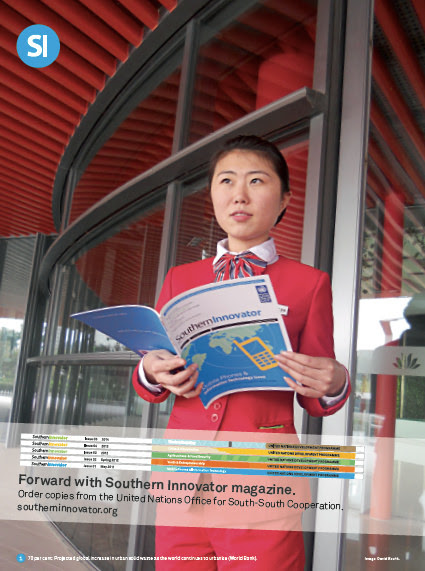
Note on story: Very few outside of China in 2013 were talking about this topic, let alone the increasing market share of smartphone manufacturer Huawei. This was one of many stories to result from a research trip to China. For the keen-eyed, try and spot the Huawei logo in the accompanying photo taken in Tianjin.

https://davidsouthconsulting.org/2020/04/30/crowdsourcing-mobile-phones-to-make-the-poor-money/

https://davidsouthconsulting.org/2020/05/01/diy-solution-charges-mobile-phones-with-batteries/

https://davidsouthconsulting.org/2022/10/09/entrepreneurs-use-mobiles-and-it-to-tackle-indian-traffic-gridlock/

https://davidsouthconsulting.org/2022/06/15/indian-mobile-phone-application-innovators-empower-citizens/

https://davidsouthconsulting.org/2022/11/01/innovative-mobile-phone-applications-storm-south/

https://davidsouthconsulting.org/2020/12/20/kenya-reaches-mobile-phone-banking-landmark/

https://davidsouthconsulting.org/2022/10/27/kenyan-mobile-phone-innovations/

https://davidsouthconsulting.org/2022/10/10/mobile-applications-market-opportunities-for-south/

https://davidsouthconsulting.org/2022/03/08/mobile-phone-microscopes-to-revolutionize-health-diagnostics/

https://davidsouthconsulting.org/2022/04/06/mobile-phone-peacekeeping/

https://davidsouthconsulting.org/2020/12/12/mobile-phone-shopping-to-create-efficient-markets-across-borders/

https://davidsouthconsulting.org/2020/12/20/mobile-phones-bring-the-next-wave-of-new-ideas-from-the-south/

https://davidsouthconsulting.org/2020/12/20/mobile-phones-engineering-souths-next-generation-of-entrepreneurs/

https://davidsouthconsulting.org/2020/12/12/mobile-phones-new-market-tools-for-the-poor/

https://davidsouthconsulting.org/2022/10/09/a-new-mobile-phone-aimed-at-the-poor/

https://davidsouthconsulting.org/2021/11/09/ring-tones-and-mobile-phone-downloads-are-generating-income-for-local-musicians-in-africa/

Development Challenges, South-South Solutions was launched as an e-newsletter in 2006 by UNDP’s South-South Cooperation Unit (now the United Nations Office for South-South Cooperation) based in New York, USA. It led on profiling the rise of the global South as an economic powerhouse and was one of the first regular publications to champion the global South’s innovators, entrepreneurs, and pioneers. It tracked the key trends that are now so profoundly reshaping how development is seen and done. This includes the rapid take-up of mobile phones and information technology in the global South (as profiled in the first issue of magazine Southern Innovator), the move to becoming a majority urban world, a growing global innovator culture, and the plethora of solutions being developed in the global South to tackle its problems and improve living conditions and boost human development. The success of the e-newsletter led to the launch of the magazine Southern Innovator.  

Follow @SouthSouth1

Google Books: https://books.google.co.uk/books?id=uXWUyfb4MacC&dq=development+challenges+september+2009&source=gbs_navlinks_s

Slideshare: http://www.slideshare.net/DavidSouth1/development-challengessouthsouthsolutionsseptember2009issue

Southern Innovator Issue 1: https://books.google.co.uk/books?id=Q1O54YSE2BgC&dq=southern+innovator&source=gbs_navlinks_s

Southern Innovator Issue 2: https://books.google.co.uk/books?id=Ty0N969dcssC&dq=southern+innovator&source=gbs_navlinks_s

Southern Innovator Issue 3: https://books.google.co.uk/books?id=AQNt4YmhZagC&dq=southern+innovator&source=gbs_navlinks_s

Southern Innovator Issue 4: https://books.google.co.uk/books?id=9T_n2tA7l4EC&dq=southern+innovator&source=gbs_navlinks_s

Southern Innovator Issue 5: https://books.google.co.uk/books?id=6ILdAgAAQBAJ&dq=southern+innovator&source=gbs_navlinks_s

This work is licensed under a Creative Commons Attribution 4.0 International License.

https://davidsouthconsulting.org/2021/03/05/southern-innovator-issue-1/

Creative Commons License

This work is licensed under a
Creative Commons Attribution-Noncommercial-No Derivative Works 3.0 License.

ORCID iD: https://orcid.org/0000-0001-5311-1052.

© David South Consulting 2023