Categories
Archive Development Challenges, South-South Solutions Newsletters Southern Innovator magazine

Avoiding Wasting Food and Human Potential with ICTs

By David SouthDevelopment Challenges, South-South Solutions

SOUTH-SOUTH CASE STUDY

Creative use of information technology in the South is helping to address two very different kinds of waste – of food and of human and community potential.

In Ghana, a mobile phone-driven Internet marketplace is helping to improve efficiencies in farming and selling food. Another initiative is addressing the crisis in India’s villages by drawing on the diaspora of former villagers now living in urban environments around the world.

Finding ways to efficiently trade food is crucial to keeping hunger at bay and meeting the needs of growing populations. In a report earlier this year, the UN’s Environment Programme (UNEP) found that more than half of the world’s food is wasted or discarded.

“There is evidence … that the world could feed the entire projected population growth alone by becoming more efficient,” said Achim Steiner, UNEP Executive Director, at the launch of The Environmental Food Crisis: The Environment’s Role in Averting Future Food Crises.

Ghana is a country that has already gained a reputation as an IT leader in West Africa (www.ghanaictawards.com). Now a clever technology based in the capital, Accra, is using mobile phones to connect farmers and agricultural businesses and associations to the marketplace. By using SMS (http://en.wikipedia.org/wiki/SMS) text messages, information from the field is gathered and collated. This can include tracking what is happening on the farm, how crops are surviving the weather, and the status of food inventories day-by-day. All the data is collected by the TradeNet website and displayed with prices and deadlines for buyers and sellers to get in touch with each other. This reduces the time and cost involved in gathering updates from thousands of people across the country.

Launched in 2007, the service recently won the Information Communication Technology innovations contest by the World Summit Award (WAS) (http://www.wsis-award.org/about/index.wbp) of the United Nations’ World Summit on Information Society (WSIS).

TradeNet is currently collating market data from 13 countries and proclaims itself the largest SMS-based market information service on the continent of Africa. It has more than 12,000 registered users and covers 500 individual markets.

The service’s full name is TradeNet: Market Information on your Mobile (http://www.tradenet.biz/?lang=en), and it tracks products like ground nuts, sesame, tomato, maize and white beans. It offers market information from Afghanistan , Benin , Burkina Faso , Cameroon , Cote d’Ivoire , Ghana , Madagascar , Mali , Mozambique , Nigeria , Sudan and Togo.

Founded by its chief executive officer Mark Davies, TradeNet is run out of the internet start-up incubator Busy Lab (http://www.busylab.com/) in Accra. Busy Lab specializes in building mobile web solutions for companies and projects involved in rural media and computing.

While in India, villages are in crisis: As India’s economy has boomed, its small towns and villages have withered. Home to the majority of the country’s population, they are suffering declining populations and high suicide rates. India’s urban slums are where people are going; they are growing 250 percent faster than the country’s population. Yet so many people share some past connection with the country’s 260,000 ailing villages.

And while the world has become a majority urban place, it is acknowledged the future for the environment and agriculture rests in the health of villages.

The social media website Mana Vuru (www.manavuru.com) seeks to connect people living in cities with the villages they were born in, or where their families came from. It is about restoring the broken connection with the village in order to enhance their future development.

As Mana Vuru declares: “Villages form the backbone of our economy. True progress, growth and prosperity can only be realized when villages become self-sustainable.”

The site points out that “most villages are suffering from crippling infrastructure and some even lack the basic amenities like electricity and fresh water. We believe that every person who migrated to greener pastures and attained success and wealth should feel some sort of moral responsibility and do their bit for their respective villages.”

A project of the Palette School of Multimedia (http://www.palettemultimedia.com/) in Hyderabad – one of India’s technology hubs – the site lets former village dwellers register and start meeting and connecting with fellow members of the diaspora. Together they can network to help the village address its development challenges.

Published: August 2009

Resources

1) A video story by CNN on Tradenet. Website: http://www.youtube.com/watch?v=s6z0ywkHPPQ

2) BOP Source is a platform for companies and individuals at the BOP (bottom of the pyramid) to directly communicate, ultimately fostering close working relationships, and for NGOs and companies to dialogue and form mutually valuable public-private partnerships that serve the BOP.
Website: http://bopsource.ning.com/

3) Afriville is a Web 2.0 service and an African Caribbean social network. Afriville is a community website along the lines of the famous MySpace. Users are free to message and post profiles. The difference is that the user is able to choose how closed or open the networks are. The site features a state of the art music management system which allows African and Caribbean artists to get straight in touch with their fans.
Website: www.afriville.com

4) Business Action for Africa: Business Action for Africa is an international network of businesses and business organisations from Africa and elsewhere, coming together in support of three objectives: to positively influence policies for growth and poverty reduction, to promote a more balanced view of Africa, and to develop and showcase good business practice in Africa
Website: www.businessactionforafrica.org

5) Model Village India: An innovative concept to rejuvenate India’s villages and build economies and self-reliance. Website: http://www.modelvillageindia.org.in/index1.html

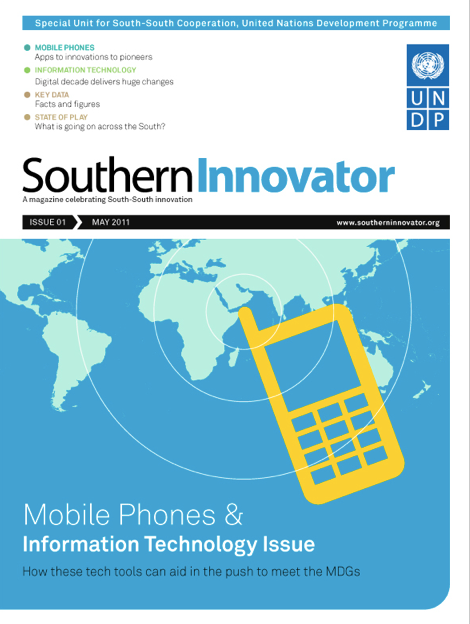
Development Challenges, South-South Solutions was launched as an e-newsletter in 2006 by UNDP’s South-South Cooperation Unit (now the United Nations Office for South-South Cooperation) based in New York, USA. It led on profiling the rise of the global South as an economic powerhouse and was one of the first regular publications to champion the global South’s innovators, entrepreneurs, and pioneers. It tracked the key trends that are now so profoundly reshaping how development is seen and done. This includes the rapid take-up of mobile phones and information technology in the global South (as profiled in the first issue of magazine Southern Innovator), the move to becoming a majority urban world, a growing global innovator culture, and the plethora of solutions being developed in the global South to tackle its problems and improve living conditions and boost human development. The success of the e-newsletter led to the launch of the magazine Southern Innovator.  

Creative Commons License

This work is licensed under a
Creative Commons Attribution-Noncommercial-No Derivative Works 3.0 License.

ORCID iD: https://orcid.org/0000-0001-5311-1052.

© David South Consulting 2023

Categories
Archive

E-Books

MOST READ! Southern Innovator Issue 1: Mobile Phones and Information Technology: http://www.scribd.com/doc/57980406/Southern-Innovator-Magazine-Issue-1

Southern Innovator Issue 2: Youth and Entrepreneurship: http://www.scribd.com/doc/86451057/Southern-Innovator-Magazine-Issue-2

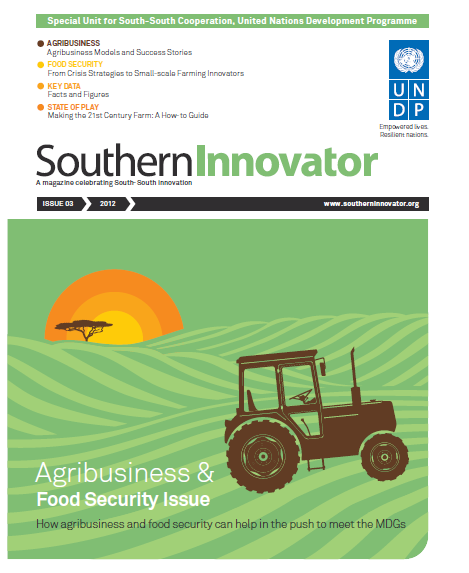
Southern Innovator Issue 3: Agribusiness and Food Security: http://www.scribd.com/doc/105746025/Southern-Innovator-Magazine-Issue-3

Southern Innovator Issue 4: Cities and Urbanization:  http://www.scribd.com/doc/128283953/Southern-Innovator-Magazine-Issue-4

NEW! Southern Innovator Issue 5: Waste and Recycling: http://www.scribd.com/doc/207579744/Southern-Innovator-Magazine-Issue-5-Waste-and-Recycling

AWARD-WINNING! GOSH e-Health Project Launch Brochure and Screen Grabs: http://www.scribd.com/doc/20857167/GOSH-e-Health-Project-Launch-Brochure-and-Screen-Grabs

Environmental Public Awareness Handbook: Case Studies and Lessons Learned in Mongolia: http://www.scribd.com/doc/28633063/Environmental-Public-Awareness-Handbook-Case-Studies-and-Lessons-Learned-in-Mongolia-Part-One

In their own words: Selected writings by journalists on Mongolia, 1997-1999: http://www.scribd.com/doc/24832935/In-their-own-words-Selected-writings-by-journalists-on-Mongolia-1997-1999

Mongolian Rock and Pop Book: http://www.scribd.com/doc/23917535/Mongolian-Rock-and-Pop-Book

Mongolian Green Book: http://www.scribd.com/doc/20889227/Mongolian-Green-Book

Mongolia Update 1998 Book: http://www.scribd.com/doc/20864541/Mongolia-Update-1998-Book

Human Development Report Mongolia 1997: http://www.scribd.com/doc/20793173/Human-Development-Report-Mongolia-1997

Creative Commons License

This work is licensed under a
Creative Commons Attribution-Noncommercial-No Derivative Works 3.0 License.

ORCID iD: https://orcid.org/0000-0001-5311-1052.

© David South Consulting 2022

Categories
Archive Blogroll data Development Challenges, South-South Solutions Newsletters digital ID Southern Innovator magazine

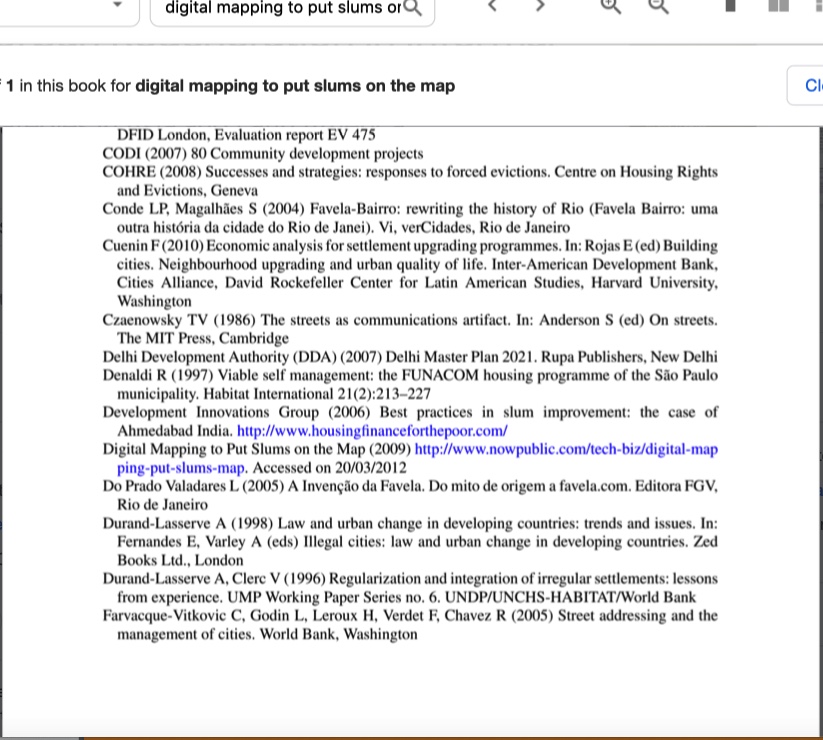
Digital Mapping to put Slums on the Map

By David SouthDevelopment Challenges, South-South Solutions

SOUTH-SOUTH CASE STUDY

Mobile phones are more and more part of daily life in the South’s slums – even for the poorest people. One result is that it has now become possible to undertake digital mapping initiatives to truly find out who is where and what is actually going on.

About one-third of the world’s urban dwellers live in slums, and the United Nations estimates that the number of people living in such conditions will double by 2030 as a result of rapid urbanization in developing countries. How to improve their living conditions and raise their standard of living is the big challenge of the 21st century.

With just over five years until the 2015 deadline to meet the Millennium Development Goals (http://www.undp.org/mdg/), and the current economic downturn reversing some gains, any tool that can make development decisions more precise has to be a benefit.

People are now turning to the growing penetration of digital technologies into slums and poor areas to find solutions. With mobile phones available across much of the global South, and plans underway to expand access to broadband internet even in poorly served Africa, it is becoming possible to develop a digital picture of a slum area and map its needs and population.

Put to the right use, this powerful development tool can fast-track the delivery of aid and also better connect people to markets and government services.

In November, an NGO called Map Kibera (www.mapkibera.org) began work on an ambitious project to digitally map Africa’s largest slum, Kibera in Nairobi, Kenya .

The partners behind Map Kibera are Humanitarian OpenStreetMap, JumpStart International, WhereCampAfrica, the Social Development Network, Pamoja Trust, Hands on Kenya and others.

Estimates place the number of residents in Kibera at one million, but nobody really knows how many live there (UN-HABITAT). The slum is typical of such deprived areas, lacking in health and water resources and plagued by chaotic traffic and housing. Few fully grasp where everything is in the sprawl.

While data does exist on the slum, it is not shared or collated into one source. The Map Kibera project uses an open-source software programme, OpenStreetMap (http://www.openstreetmap.org/), to allow users to edit and add information as it is gathered. This information is then free to use by anybody wanting to grasp what is actually happening in Kibera: residents, NGOs, private companies and government officials.

This will literally put Kibera on Kenya’s map.

The mapping team started with 12 young people recruited in Kibera to start the work in November of this year. They will be trained and also receive support from the growing Nairobi technology community.

“The project will provide open-source data that will help illustrate the living conditions in Kibera,” said Map Kibera’s Mikel Maron. “Without basic knowledge of the geography of Kibera it is impossible to have an informed discussion on how to improve the lives of residents of Kibera.”

Workshops will communicate with local residents and show them the findings available from the map. Paper maps will be distributed to residents and then updated as new information comes in. It is critical local people are kept informed to build trust and avoid conflict. As can be seen from the Google Street Views (http://www.google.co.uk/help/maps/streetview/) controversy, nobody likes to be mapped without their permission or consent.

Like Kenya, Brazil has a long history of sprawling slums sprouting around its cities. Called favelas, they are complex places, with both rudimentary dwellings and elaborate mansions. Walking into a favela can be a journey through the dreams and aspirations of generations of people, often reflected in their dwellings. Favelas have many services, including hospitals, and there are restaurants and coffee shops. In short, while they are not in the official development plans, the favelas are vibrant economic entities and home to hundreds of thousands of people.

But since they are chaotic and undocumented by official maps, the economic and social development of the favelas is hindered as even basic services like mail delivery are difficult to provide.

An NGO called Rede Jovem (http://www.redejovem.org.br/) is deploying youths armed with GPS (global positioning system)-equipped (http://en.wikipedia.org/wiki/Global_Positioning_System) mobile phones to map the favelas of Rio de Janerio. To start with, they are mapping five favelas: Complexo do Alemão, Cidade de Deus, Morro do Pavão-Pavãozinho, Morro Santa Marta and Complexo da Maré.

“The main goal was to mark public interest spots on a map and show places like schools and institutions and hospitals and restaurants,” Natalia Santos, the executive coordinator for Rede Jovem, told MobileActive (www.mobileactive.org) . “We wanted to spread the news about what slums do have, so all the people can get to know that the slum is not just a place for violence and marginality and robbery.”

The mapping process works like this: the mappers physically travel around the favela and upload information on each, individual landmark (restaurants, roads etc.) as they go. They use Nokia N95s mobile phones that are connected to Google Maps (www.maps.google.com).

According to Santos, reporters enter the information on the map displayed on the phone, and they can video or photograph to add more detail. They are using Wikimapa (www.wikimapa.org.br), and Twitter (www.twitter.com) to log the information.

As Rede Jovem recruited young mappers, they discovered an interesting fact: the male reporters (aged between 17 and 25) were frightened to enter a favela with a mobile phone for fear of either being mugged or being stopped by the police. Because of this fact, all the mappers are young women.

They are ambitious for the future despite their funds running out in December. “We want everyone who has a cell phone with GPS to be a wikireporter,” said Santos .

How important it is to the favela residents to be recognised like this can’t be overstated. “I think they are very happy because they’re seeing that they exist,” said Santos. “And the mailman says that now he can deliver the mail.”

Published: December 2009

Resources

  • Mobile Active.org: MobileActive.org is a community of people and organizations using mobile phones for social impact. They are committed to increasing the effectiveness of NGOs around the world who recognize that the over 4 billion mobile phones provide unprecedented opportunities for organizing, communications, and service and information delivery. Website: http://www.mobileactive.org
  • Google Android: Get inventing! This software enables anyone to start making applications for mobile phones. And it offers a platform for developers to then sell the applications to others. Website: http://www.android.com/
  • Ushahidi: is a website that was developed to map reports of violence in Kenya after the post-election fallout at the beginning of 2008. The new Ushahidi Engine is being created to use the lessons learned from Kenya to create a platform that allows anyone around the world to set up their own way to gather reports by mobile phone, email and the web – and map them. It is being built so that it can grow with the changing environment of the web, and to work with other websites and online tools. Website: http://blog.ushahidi.com/
  • Textually.org: is the entry point of three weblogs devoted to cell phones and mobile content, focusing on text messaging and cell phone usage around the world, tracking the latest news and social impact of these new technologies. Website: http://www.textually.org/
  • Betavine Social Exchange has launched. It’s a matching site for NGOs looking for mobile solutions, and developers who can help build them, all brought to you by Vodafone. Website: http://www.betavine.net

Citations

Resilient Urban Regeneration in Informal Settlements in the Tropics: Upgrading Strategies in Asia and Latin America, Publisher: Springer Singapore (2020)

The story first appeared in the UN e-newsletter Development Challenges, South-South Solutions in 2009. It was simultaneously published on the Vancouver, Canada-based crowd-powered news website, NowPublic. It was then published in the UN magazine Southern Innovator.

Streets as Tools for Urban Transformation in Slums: A Street-led Approach to Citywide Slum Upgrading, Publisher: United Nations Human Settlements Programme (UN-Habitat) (2012)

Other Stories on Mapping

https://davidsouthconsulting.org/2021/08/28/african-entrepreneur-wants-to-bring-order-to-urban-chaos/

https://davidsouthconsulting.org/2020/12/04/big-data-can-transform-the-global-souths-growing-cities/

https://davidsouthconsulting.org/2021/03/04/indian-id-project-is-foundation-for-future-economic-progress/

https://davidsouthconsulting.org/2022/10/31/mapping-beirut-brings-city-to-light/

https://davidsouthconsulting.org/2022/10/17/mapping-to-protect-kenyas-environment-the-emazingira-solution/

https://davidsouthconsulting.org/2021/03/31/new-weapon-against-crime-in-the-south/

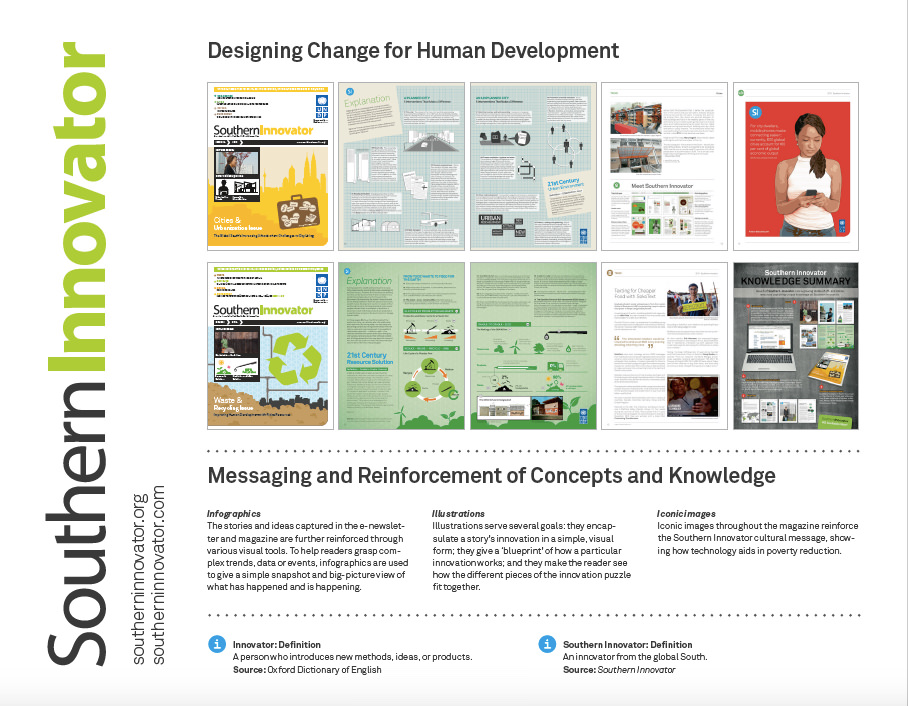
By 2014, Southern Innovator had published five issues and become a recognised global innovation brand.

https://davidsouthconsulting.org/2021/03/05/southern-innovator-issue-4/

Follow @SouthSouth1

Slideshare: http://www.slideshare.net/DavidSouth1/development-challengessouthsouthsolutionsnovember2010issue

Southern Innovator Issue 1: https://books.google.co.uk/books?id=Q1O54YSE2BgC&dq=southern+innovator&source=gbs_navlinks_s

Southern Innovator Issue 2: https://books.google.co.uk/books?id=Ty0N969dcssC&dq=southern+innovator&source=gbs_navlinks_s

Southern Innovator Issue 3: https://books.google.co.uk/books?id=AQNt4YmhZagC&dq=southern+innovator&source=gbs_navlinks_s

Southern Innovator Issue 4: https://books.google.co.uk/books?id=9T_n2tA7l4EC&dq=southern+innovator&source=gbs_navlinks_s

Southern Innovator Issue 5: https://books.google.co.uk/books?id=6ILdAgAAQBAJ&dq=southern+innovator&source=gbs_navlinks_s

Creative Commons License

This work is licensed under a
Creative Commons Attribution-Noncommercial-No Derivative Works 3.0 License.

ORCID iD: https://orcid.org/0000-0001-5311-1052.

© David South Consulting 2022

Categories
Archive Development Challenges, South-South Solutions Newsletters Southern Innovator magazine

Turning African Youth on to Technology

By David SouthDevelopment Challenges, South-South Solutions

SOUTH-SOUTH CASE STUDY

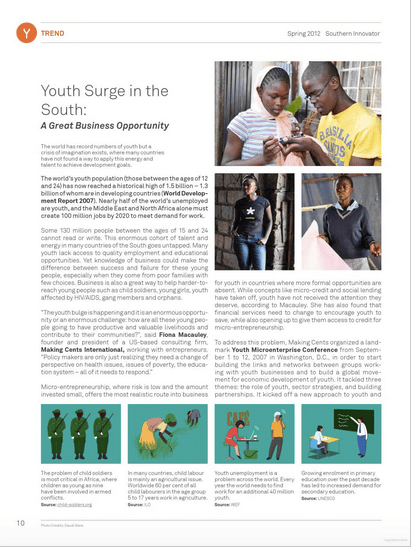
An African NGO believes the Internet is the single biggest key to rapid development in Africa – and it is working to connect youth, women and rural populations to the web, and in turn, switch them on to the vast resources stored across the world’s Internet sites.

After initial successes with a youth project and with farmers, Voices of Africa (VOA) (http://www.voicesofafrica.info) is now seeking to scale up its work to fan out across Africa – and take its services to the world’s largest refugee camp, the Dadaab Refugee Camp in Kenya. 

The youth and technology empowerment NGO has developed a business model to deliver low-cost Internet access and e-resources to Africa’s slums and rural farmers.

VOA argues that “the digital divide, defined by a lack of access to information for a specific population, symbolizes the largest difference between developed and developing countries: the opportunity to obtain and utilize information.”

“The digital divide runs much deeper than hardware and software,” it says. “While equipment is necessary it is not sufficient. The real heart of the digital divide is that those without access to information resources often suffer needlessly while the solutions to their problems are floating in the air.”

But why is the Internet so important?

“The internet puts the choice of content at the fingertips of the user,” explains executive director Crystal Kigoni. “Traditional media is one way communications. Internet is bi-directional.

“Our NGO is completely grassroots. We train the people who train the people. It is an each one, teach one philosophy and is highly effective. We also design our projects to be self-sustainable after one year of successful implementation.”

The philosophy behind Voices of Africa – “Sustainable Development through Information Empowerment” – is to give people the information and resources to take better control of their lives.

Access to the Internet in Africa is patchy and, for the poor, an expensive resource. The penetration of mobile phones in Africa has been spectacular in the past five years. But there are limits to the resources people can afford to access with their phones. Issues abound about data costs, mobile phone networks, and mobile phone capability.

VOA targets youth and women in sub-Saharan Africa through online educational resources offered on their e-learning website (http://elearning.voicesofafrica.info/). The resources have been certified by Nazarene University (http://www.anu.ac.ke), a private university in Nairobi, Kenya.

The e-learning resources include high quality training videos, presentations and screencasts (http://en.wikipedia.org/wiki/Screencast) – like a movie, it is a digital recording of changes on a computer screen and is used to teach software – to share on the web. The resources are also shared through compact discs (CDs) and iPods (http://en.wikipedia.org/wiki/IPod).

Project coordinator Nick Kungu coordinates the staff working on the pilot Kenyan projects: a Rural Internet Kiosk; a Youth Empowerment Center; and KiberaNet, which launched in August 2011. VOA uses a part-time and volunteer staff of more than 20 Kenyans and four international ‘virtual’ volunteers.

The group is also working with farmers in Kutus, central Kenya, to help them get a better price for their products and introduce sustainable agriculture practices. This is done through online courses so the farmers do not need to travel. It is hoped by doing this they can improve the supply of food for the country.

The Youth Empowerment Center in Webuye constituency of the Western province of Kenya involves a partnership with the government of Kenya to teach computer basics, research and data collection, social media, ICT (information communication technology) for development, social business and community health.

In rural areas, the need for information cannot be overestimated. In the remote countryside, there are few schools with adequate resources and almost no community libraries. The lifesaving knowledge the people require has to date been completely beyond their grasp. As one rural woman in the Western province of Kenya exclaimed to VOA after encountering the resources on the Internet, “It is like being brought from the darkness into the light.”

Another project in development is SlumNet, which seeks to combine the Internet with low-cost devices like tablet computers and netbooks. Its pilot scheme, KiberaNet, launched this month in the Kibera slum of Nairobi, Kenya to test the business model. VOA hopes to then expand it to Uganda, Tanzania, Ghana, Nigeria and Sierra Leone. It is using a business model to bring low-cost Internet access to Africa’s slums that is fully funded by the local communities and the users.

It has identified the key needs of youth in slums that need to be met: a way to access the vast resources available on the Internet; a way to generate income, undertake low-cost learning, and organise for social justice; ways to overcome social, economic and political isolation; a way to access affordable equipment and resources to improve their quality of life in the short-term.

To make it a sustainable business model, the community takes a 60 percent stake in the incorporated entity. Voices of Africa will select six local civil society organisations to take another 10 percent stake in the business. VOA takes 10 percent and the remaining 30 percent will be open to outside investors.

It involves setting up a closed intranet system and Internet access covering the entire Kibera slum, which has an estimated population of 2 million, a majority under the age of 30.

KiberaNet hopes to act as a community hub for socialising, education and generating content. A key part is creating an atmosphere that is welcoming to novices. The business model is about delivering the bandwidth of Internet access and simultaneously generating a sustainable source of income to keep it going. Partners in the business include Promote Africa, Plexus Group and Future Optics Networks.

VOA also has been blogging about its time in Kenya’s Dadaab Refugee Camp (http://www.unhcr.org/cgi-bin/texis/vtx/page?page=49e483a16) at their website, www.voicesofafrica.info, and has been developing plans to expand services to the camp, home to over 400,000 refugees from drought and famine in Somalia. The camp was only designed to hold 90,000 people. The chronic food insecurity has caused a massive humanitarian crisis in the Horn of Africa, leaving over 10 million people in need of help.

“There are plenty of resources going in but it is aid business as usual,” claims Kigoni. “You see lots of waste in many areas, and a lack in others that would be extremely beneficial. Hence, why Voices of Africa has come up with the youth technology and empowerment plan that accompanies a general information and communications system, DadaabNet.”

DadaabNet will be a youth-run community Internet service and education service. VOA plans to use a wireless intranet, internal communications systems and low-cost internet access in the refugee camp.

The project is the first of its kind in Dadaab and a first in Kenya, claims VOA, allowing free educational content without needing to access the Internet

The intranet will host free educational videos that can be accessed by mobile phones and computers. The topics covered in the videos include health, nutrition, sanitation and computer training and how to use technology for sustainable development.

The curriculum is also approved by Nazerene University to certificate level.

The system is supervised and would be able to offer resources to other NGOs seeking to provide services to the camp’s residents. The intention is to open up opportunities for education and employment youth who are currently unemployed.

At present the youth in the camp, many of whom have not completed secondary school, get by ‘hustling’ for work, according to VOA. By being left to their own devices, there is a risk they will fall into negative behaviour like crime and drug use or be preyed upon by terrorist organisations operating in the area like al Shabaab, they maintain.

“In our dreams, everyone everywhere in the world can have the opportunity to develop their minds. It is through this creativity that Africa will rise,” concludes Kigoni.

Published: August 2011

Resources

1) The Impact of Mobile Phones on Profits from Livestock Activities by Roxana Barrantes. Website: http://www.mendeley.com/research/impact-mobile-phones-profits-livestock-activities-evidence-puno-peru-14/

2) 2011 UNHCR Country Operations Profile – Kenya. Website: http://www.unhcr.org/cgi-bin/texis/vtx/page?page=49e483a16

3) Southern Innovator magazine: New global magazine Southern Innovator’s first issue is out now and is about Mobile Phones and Information Technology in the global South. Website: http://www.scribd.com/doc/57980406/Southern-Innovator-Issue-1

Creative Commons License

This work is licensed under a
Creative Commons Attribution-Noncommercial-No Derivative Works 3.0 License.

ORCID iD: https://orcid.org/0000-0001-5311-1052.

© David South Consulting 2023