Categories
Archive Development Challenges, South-South Solutions Newsletters

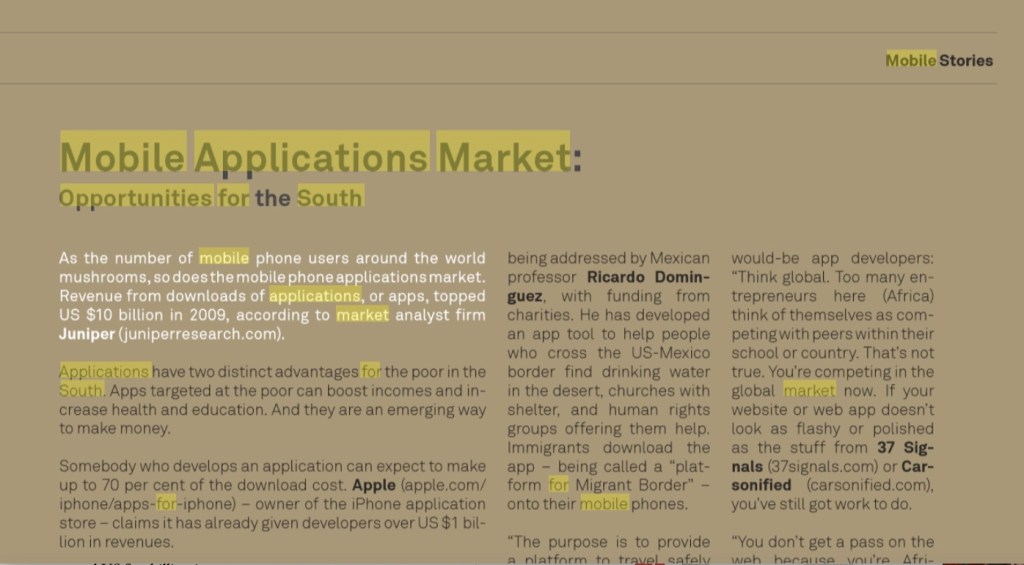
Mobile Applications Market: Opportunities for South

By David SouthDevelopment Challenges, South-South Solutions

SOUTH-SOUTH CASE STUDY

As the number of mobile phone users around the world mushrooms, so does the mobile phone applications market. Revenue from downloads of applications, or apps, topped US $10 billion in 2009, according to market analyst firm Juniper (http://juniperresearch.com).

Applications have two distinct advantages for the poor in the South. Apps targeted at the poor can boost incomes and increase health and education. And they are an emerging way to make money.

Somebody who develops an application can expect to make up to 70 percent of the download cost. Apple (http://www.apple.com/iphone/apps-for-iphone) – owner of the iPhone application store – claims it has already given developers over US $1 billion in revenues.

It is a growing industry. The market-leading Apple App Store now boasts more than 225,000 applications for download and sale. It says they have been downloaded an impressive 5 billion times.

Android Market (http://www.android.com/market/#app=com.com2us.HG), run by the search engine Google, has more than 60,000 apps on offer. GetJar (www.getjar.com), an independent mobile phone application store from Sweden, says it has 72,000 apps available and has had 1 billion downloads.

Now that the apps economy has been running for a couple years, it is possible to divine what increases a developer’s success. Some believe the apps marketplace mimics the dynamics of the music business, rather than the traditional software business.

GetJar chief executive Ilja Laurs told the Economist that it takes as long to write an app as a song. Apps on average cost about the same as a music download: US $1.90. And just like the pop music charts, a few become big hits but most never make it. Apps are also a quick hit: even after becoming successful they can quickly fade back to obscurity again. In short, they are fad and trend driven and are very much about the moment and a current need.

That means they are wide open to newcomers from the South.

With mobile phones now the main channel for information in East Africa, for example, and mobile penetration exceeding 40 percent of the population there, vast markets have opened for apps. East Africa has more than 120 million citizens, with a large majority living in rural areas: many needing poverty-fighting apps to change their lives.

Various new applications show the creative thinking already coming out of the South. South Africa’s Afridoctor (www.afridoctor.com) is Africa’s first personal mobile health clinic. Users submit photos of ailments and receive advice from a panel of professionals, or use the mapping feature to find doctors, clinics and all health industry related services nearby. The emergency feature notifies next of kin of your distress and location. Features include symptom checkers, first-aid information, health calculators and quizzes. Afridoctor hopes to make health care affordable and accessible to Africans. It is made by 24.com (http://store.ovi.com/publisher/24.com), South Africa’s largest digital brands group.

In Mexico, the tragedy of migrants dying as they try to cross the border to the United States is being addressed by Mexican professor Ricardo Dominguez, with funding from charities. He has developed an app tool to help people who cross the US-Mexico border find drinking water in the desert, churches with shelter, and human right groups offering them help. Immigrants download the app – being called a “platform for Migrant Border” – onto their mobile phones.

“The purpose is to provide a platform to travel safely through the desert,” said Dominguez, who led the design team.

App action has heated up in India, where Spice Mobiles (http://www.spiceglobal.com/SpiceMobiles/SpiceMobiles.aspx) – a wing of the Spice Group – is launching an application store with 250 content providers. India’s Bharti Airtel launched its first home-grown mobile application store in February of this year – Airtel App Central (http://www.airtel.in/apps). It clocked up over 13 million downloads in four months.

India’s Reliance Communications (http://www.rcom.co.in/Rcom/personal/home/index.html) also launched an application called Socially. It has been designed to enable users to follow the recent activity of friends, and also allows the user to update their status on different social networks like Facebook, Twitter and LinkedIn through a single client.

Jon Gosier, from Appfrica Labs (http://appfrica.net/blog) – behind the highly successful crisis crowdsourcing Ushahidi application (http://www.ushahidi.com) – explained the thinking behind apps in Africa:

“Our goal is to show the world that Africa is capable of solving some of its own problems,” he told CP-Africa.com. “Too often Africans aren’t even considered as a resource when discussing how to improve their own quality of life.”

He has the following advice for would-be app developers: “Think global. Too many entrepreneurs here (Africa) think of themselves as competing with peers within their school or country. That’s not true. You’re competing in the global market now. If your website or web app doesn’t look as flashy or polished as the stuff from 37 Signals (www.37signals.com) or Carsonified (www.carsonified.com), you’ve still got work to do.

“You don’t get a pass on the web because you’re African. You get the challenge of working harder.”

NEW: Apps4Africa Competition: Apps 4 Africa is a regional competition with the goal of promoting local technology entrepreneurs as they build tools to serve the needs of NGOs and the local community. This unprecedented partnership meshes civil society with developers and designers to create technical solutions to local challenges. The competition will ask civil society and citizens throughout the region to submit local community challenges on issues like transparency and better governance, health, education and more where technology can be a part of the solution. The burgeoning ranks of innovative techies in the region will then use this list of community challenges as the basis of their work, thus creating “an app for that.” Website:www.apps4africa.org

Published: August 2010

Deadline: August 31, 2010

Resources

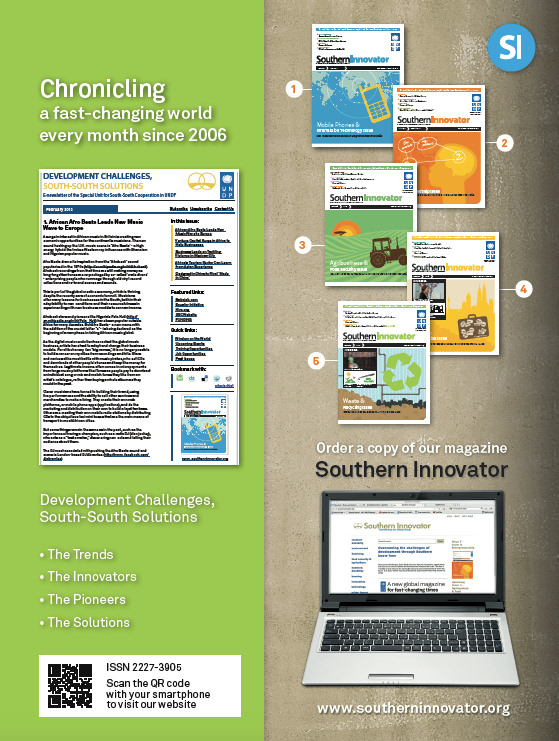
Development Challenges, South-South Solutions was launched as an e-newsletter in 2006 by UNDP’s South-South Cooperation Unit (now the United Nations Office for South-South Cooperation) based in New York, USA. It led on profiling the rise of the global South as an economic powerhouse and was one of the first regular publications to champion the global South’s innovators, entrepreneurs, and pioneers. It tracked the key trends that are now so profoundly reshaping how development is seen and done. This includes the rapid take-up of mobile phones and information technology in the global South (as profiled in the first issue of magazine Southern Innovator), the move to becoming a majority urban world, a growing global innovator culture, and the plethora of solutions being developed in the global South to tackle its problems and improve living conditions and boost human development. The success of the e-newsletter led to the launch of the magazine Southern Innovator.  

Creative Commons License

This work is licensed under a
Creative Commons Attribution-Noncommercial-No Derivative Works 3.0 License.

ORCID iD: https://orcid.org/0000-0001-5311-1052.

© David South Consulting 2022

Categories
Archive Development Challenges, South-South Solutions Newsletters Southern Innovator magazine

A New Mobile Phone Aimed at the Poor

By David SouthDevelopment Challenges, South-South Solutions

SOUTH-SOUTH CASE STUDY

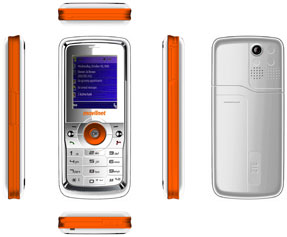
A low-cost Venezuelan mobile phone aimed at the South’s poor is proving that South-South technological cooperation works. Packed with features and costing no more than US $15 – making it one of the cheapest mobile handsets in the world – the phone is aimed at the fast-growing mobile market across the global South.

The South is a dynamic market and has seen quick acceptance of mobile phones. The number of mobile phone users in the world passed 4 billion in 2008, and the fastest growth was in the South (ITU). The development of inexpensive handsets means the phones will be able to reach even more poor people. And packing these phones with the latest in multimedia capability means the poor will be able to make a technological leap.

The Venezuelan phone is being championed as the world’s cheapest mobile phone. It is a bold effort to create an affordable mobile phone packed with features: a camera, WAP internet access (wireless application protocol), FM radio, and MP3 and MP4 players for music and videos.

The phone uses inexpensive parts from China and is assembled in Venezuela. A quarter of the cost of manufacturing the phone is subsidized by the government. Venezuela often uses the profits from its oil industry to subsidize social goals.

The phone was launched on Mother’s Day by Venezuela’s president Hugo Chavez with a call to his mother. Chavez boasted to the Guardian newspaper: “This telephone will be the biggest seller not only in Venezuela but the world.”

With his usual bravado, he said that “whoever doesn’t have Vergatario is nothing” – a statement that has become the marketing slogan for the phone on its website.

The phone already has a waiting list of 10,000 people. The phones are assembled in western Venezuela by Vetelca, a joint state (85 percent) and Chinese (15 percent) company. Vetelca hope to make 600,000 phones in 2009, and to sell more than 2 million in 2011. Exports will first target the Caribbean and then the world.

The desire to spark technological innovation at home is also alive in the Southern African country of Mozambique, which is making the bold move to start manufacturing computers for schools in the country. Like other African countries, Mozambique is connecting schools with computers and the internet. By manufacturing the laptop computers within the country, Mozambiquans are increasing the program’s economic benefit to the country, and building advanced technical skills.

Most Southern African countries rely on importing computers, and Rwanda, South Africa and Ethiopia are getting their school computers from the OLPC (One Laptop Per Child) (www.laptop.org) initiative from the United States.

The Mozambique laptops are call Magalhael (www.portatilmagalhaes.com) and are made in partnership with the Mozambican Ministry of Science and Technology (www.mct.gov.mz/portal/page?_pageid=615,1&_dad=portal&_schema=PORTAL) and Portugal Telecom (www.telecom.pt/InternetResource/PTSite/PT). They come with a 60 gigabyte (GB) hard drive and 2 GB of RAM (memory) and are entirely built in Mozambique.

Read these stories on ICT4D from Development Challenges, South-South Solutions:

Published: June 2009

Resources

  • Google Android: Android is a software for mobile phones that allows people to create useful applications (apps) for the phones. Website: http://code.google.com/android/and www.android.com
  • Kabissa: Space for Change in Africa: An online African web community promoting and supporting the transition to Web 2.0 services in Africa. Offers lots of opportunities to meet people throughout Africa and learn more.Website: www.kabissa.org
  • Business Fights Poverty: Business Fights Poverty is the free-to-join, fast-growing, international network for professionals passionate about fighting world poverty through good business.Website:http://businessfightspoverty.ning.com/
  • BOP Source is a platform for companies and individuals at the BOP to directly communicate, ultimately fostering close working relationships, and for NGOs and companies to dialogue and form mutually valuable public-private partnerships that serve the BOP. Website:http://bopsource.ning.com/
  • Venezuelan Phone. Website: www.vergatorio.com

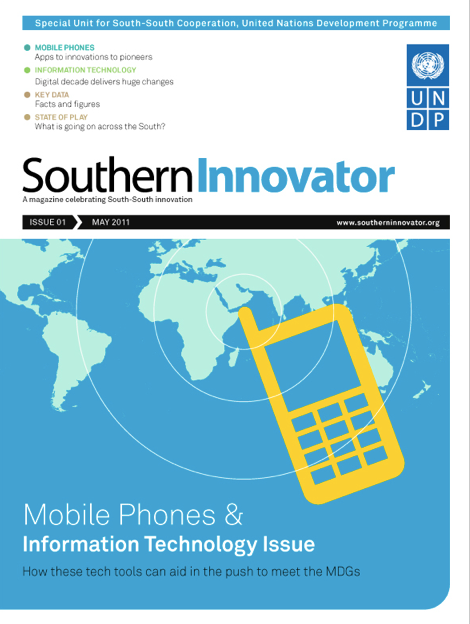
Like this story? Please check out our first issue of Southern Innovator on mobile phones and information technology.

Development Challenges, South-South Solutions was launched as an e-newsletter in 2006 by UNDP’s South-South Cooperation Unit (now the United Nations Office for South-South Cooperation) based in New York, USA. It led on profiling the rise of the global South as an economic powerhouse and was one of the first regular publications to champion the global South’s innovators, entrepreneurs, and pioneers. It tracked the key trends that are now so profoundly reshaping how development is seen and done. This includes the rapid take-up of mobile phones and information technology in the global South (as profiled in the first issue of magazine Southern Innovator), the move to becoming a majority urban world, a growing global innovator culture, and the plethora of solutions being developed in the global South to tackle its problems and improve living conditions and boost human development. The success of the e-newsletter led to the launch of the magazine Southern Innovator.  
Creative Commons License

This work is licensed under a
Creative Commons Attribution-Noncommercial-No Derivative Works 3.0 License.

ORCID iD: https://orcid.org/0000-0001-5311-1052.

© David South Consulting 2023

Categories
Archive Development Challenges, South-South Solutions Newsletters Southern Innovator magazine

Entrepreneurs Use Mobiles and IT to Tackle Indian Traffic Gridlock

By David SouthDevelopment Challenges, South-South Solutions

SOUTH-SOUTH CASE STUDY

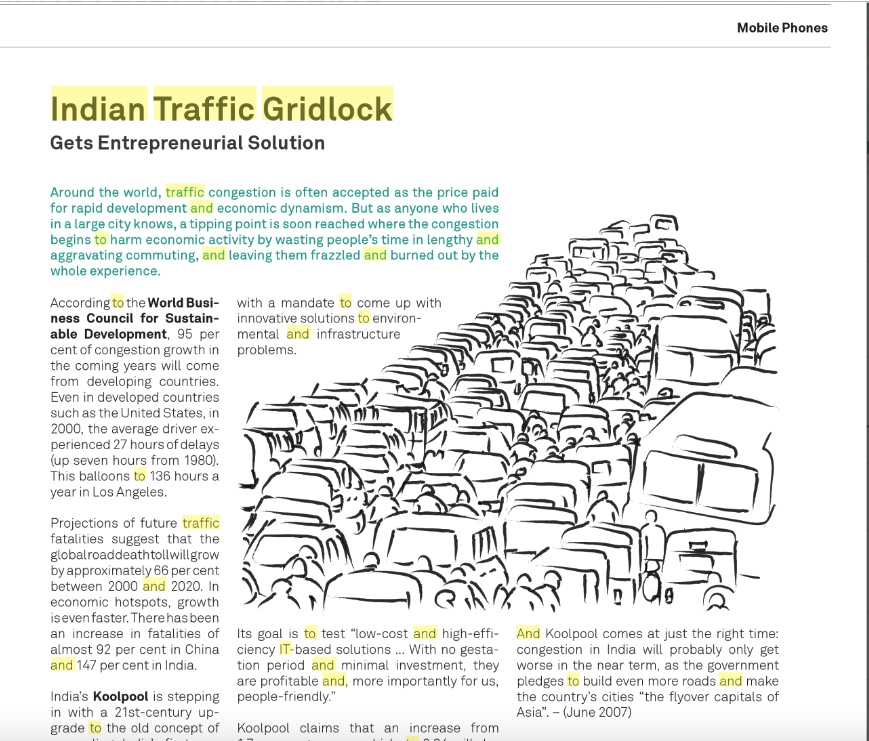
Around the world, traffic congestion is often accepted as the price paid for rapid development and economic dynamism. But as anyone who lives in a large city knows, a tipping point is soon reached where the congestion begins to harm economic activity by wasting people’s time in lengthy and aggravating commuting, and leaving them frazzled and burned out by the whole experience. According to the World Business Council for Sustainable Development, 95 percent of congestion growth in the coming years will come from developing countries. Even in developed countries like the United States, in 2000, the average driver experienced 27 hours of delays (up seven hours from 1980) (MIT Press). This balloons to 136 hours in Los Angeles.

Developing countries are growing their vehicle numbers by between 10 and 30 percent per year (World Bank). In economic hotspots, growth is even faster. In India, the cities of Delhi, Mumbai, Kolkata and Bangalore account for five percent of the nation’s population but have 14 percent of the total registered vehicles. In the Islamic Republic of Iran, Kenya, Mexico and Chile, 50 percent of cars are in the capital cities (www.peopleandplanet.net).

India’s Koolpool is stepping in with a 21st century upgrade to the old concept of carpooling. India’s first carpooling service (in which drivers share rides to reduce congestion and save money) uses the power of the country’s mobile phone network to link up people by SMS (short message service) text. Already launched in Mumbai, it is being rolled out in other cities as well.

Koolpool surveyed Indian drivers and found that the average car only had two passengers. Koolpool is an idea from the Mumbai Environmental Social Network (MESN), a registered charity with the mandate to come up with innovative solutions to environmental and infrastructure problems. Its goal is to prove “low-cost and high efficiency IT-based solutions are the way of the future. With no gestation period and minimal investment, they are profitable and more importantly for us, people friendly.” Koolpool claims that an increase from 1.7 passengers per vehicle to 2.04 will decrease travel time and pollution levels by 25 percent. It also claims to be the first carpooling service to combine SMS text messaging and IT.

Ride-givers send a text message to Koolpool just before going down a major road. Koolpool then sends a list of ride seekers on the route, their membership identifications, the designated stopping point for pick-up, number of riders and login time. If there are no ride givers on that route, then ride seekers are pooled together to get a taxi and share the costs. Members of Koolpool pay an annual membership fee and exchange credits by mobile phone between ride seekers and ride givers, which are then redeemed at gas stations for petrol.

And Koopool comes at just the right time: congestion in India will probably only get worse in the near term, as the government pledges to build even more roads and make the country’s cities “the flyover capital of Asia”.

In Kolkata, says Sudarsanam Padam, former director of the Central Institute of Road Transport in the city of Pune, the average speed during peak hours in the central business district (CBD) area is as low as seven km/hr. Bangalore currently has average speeds of about 13-15 km/hr in its CBD, but this is expected to go down to three to eight km/hr in the next 15 years, according to the city’s police traffic commissioner, M N Reddi.

Published: June 2007

Resources

  • Mobility 2001: World Mobility at the End of the Twentieth Century and its Sustainability published by the World Business Council for Sustainable Development.
  • Another Indian car pooling business allows people to post requests for rides on an internet bulletin board, Car Sales India.
  • Another solution to traffic congestion has been the motorcycle taxi. Beginning in Thailand, motorcycle taxis can now be found in Cambodia, India and the UK. Read more at here.
  • SENSEable City: A project at the Massachusetts Institute of Technology’s SENSEable City Laboratory to use the new generation of sensors and hand-held electronics to change how cities are understood and navigated. This includes creating real-time maps of cities that can then be used to help with avoiding traffic congestion and other problems.
  • Read more about India’s traffic congestion problem by India’s only science and environment biweekly online newsletter, Down to Earth.

Development Challenges, South-South Solutions was launched as an e-newsletter in 2006 by UNDP’s South-South Cooperation Unit (now the United Nations Office for South-South Cooperation) based in New York, USA. It led on profiling the rise of the global South as an economic powerhouse and was one of the first regular publications to champion the global South’s innovators, entrepreneurs, and pioneers. It tracked the key trends that are now so profoundly reshaping how development is seen and done. This includes the rapid take-up of mobile phones and information technology in the global South (as profiled in the first issue of magazine Southern Innovator), the move to becoming a majority urban world, a growing global innovator culture, and the plethora of solutions being developed in the global South to tackle its problems and improve living conditions and boost human development. The success of the e-newsletter led to the launch of the magazine Southern Innovator.  

Creative Commons License

This work is licensed under a
Creative Commons Attribution-Noncommercial-No Derivative Works 3.0 License.

ORCID iD: https://orcid.org/0000-0001-5311-1052.

© David South Consulting 2022

Categories
Archive Development Challenges, South-South Solutions Newsletters Southern Innovator magazine

African Technology Tackles Health Needs

By David SouthDevelopment Challenges, South-South Solutions

SOUTH-SOUTH CASE STUDY

Africa is becoming a world leader in mobile phone applications for health and healthcare. Despite dramatic improvements to the quality of hospitals and the number of qualified doctors, the continent’s healthcare services are still a patchwork, with rural and slum dwellers poorly served and the stresses of treating patients with contagious diseases like HIV/AIDS and malaria pushing resources to the limit.

But innovative inventions are coming along to provide new tools to doctors and medical personnel and to better engage patients with remote services.

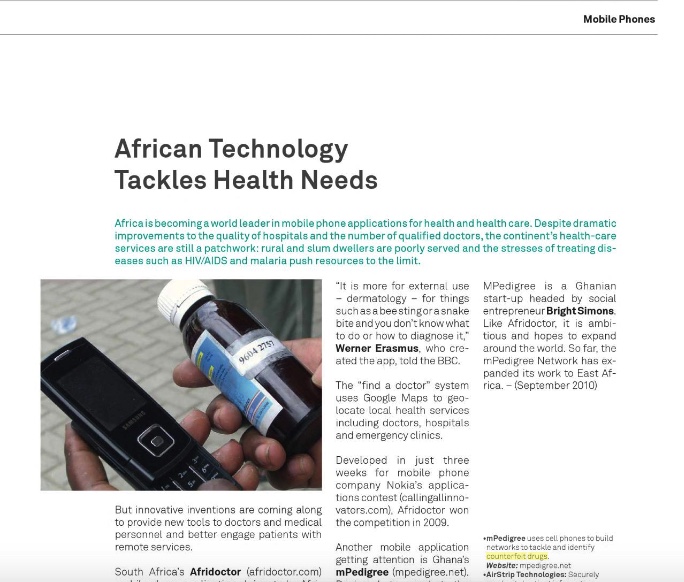
South Africa’s Afridoctor (http://twitter.com/afridoctor) mobile phone application claims to be Africa’s first personal mobile health clinic. It lets patients use its “SnapDiagnosis” system to submit photos of their ailments and in turn receive advice from a panel of medical professionals, or use the mapping feature to find doctors, clinics and health industry-related services nearby.

Afridoctor was conceived to fill the gap across Africa for basic health information that is reliable and trustworthy.

There is an emergency feature to notify next of kin during a medical emergency and provide a location. Other features include symptom checkers, first-aid information, health calculators and quizzes.

Expert feedback comes within 48 hours after submission of a request.

A winner of a Nokia competition, Afridoctor was developed by the labs of media company 24.com (http://20fourlabs.com) of Cape Town, South Africa.

“It is more for external use – like dermatology – for things like a bee sting or a snake bite and you don’t know what to do or how to diagnose it,” Werner Erasmus, who created the app, told the BBC.

The “find a doctor” system uses Google Maps to geo-locate local health services including doctors, hospitals and emergency clinics.

The distress feature enables users to contact a family member or friend at the touch of a button. It does this by storing the mobile phone number of a selected relative. When the distress button is pressed, they are notified of the phone’s location.

Developed in just three weeks, to enter mobile phone company Nokia’s contest (http://www.callingallinnovators.com) for mobile phone applications, Afridoctor went on to win the competition in 2009. It is now being expanded to be usable on most, if not all, smart phones.

As in the rest of Africa, mobile phone use in South Africa has dramatically increased in the past 10 years. It is estimated that over 70 percent of South Africans now have access to one.

Another application getting attention is Ghana’s mPedigree (http://mpedigree.net). Designed to combat the damage done by counterfeit drugs in Africa and across the South, mPedigree works by letting a person send a text message by mobile phone to the mPedigree service to check a drug’s authenticity. A message comes back confirming whether the medicine is authentic or not.

The World Health Organization (WHO) has estimated that 25 percent of medicines sold around the developing world are counterfeit. Some contain no active ingredients, and others are even harmful.

MPedigree is a Ghanian start-up headed by social entrepreneur Bright Simons (http://www.worldpress.org/freelancers/index.cfm/hurl/page=freelancerDetails/id=7). Like Afridoctor, it is ambitious and hopes to expand around the world. So far, the mPedigree Network has expanded its work to East Africa.

Published: September 2010

Resources

Development Challenges, South-South Solutions was launched as an e-newsletter in 2006 by UNDP’s South-South Cooperation Unit (now the United Nations Office for South-South Cooperation) based in New York, USA. It led on profiling the rise of the global South as an economic powerhouse and was one of the first regular publications to champion the global South’s innovators, entrepreneurs, and pioneers. It tracked the key trends that are now so profoundly reshaping how development is seen and done. This includes the rapid take-up of mobile phones and information technology in the global South (as profiled in the first issue of magazine Southern Innovator), the move to becoming a majority urban world, a growing global innovator culture, and the plethora of solutions being developed in the global South to tackle its problems and improve living conditions and boost human development. The success of the e-newsletter led to the launch of the magazine Southern Innovator.  
Creative Commons License

This work is licensed under a
Creative Commons Attribution-Noncommercial-No Derivative Works 3.0 License.

ORCID iD: https://orcid.org/0000-0001-5311-1052.

© David South Consulting 2023