Categories
Archive Development Challenges, South-South Solutions Newsletters

Floating Bank Floats New Dreams for Brazilian Middle Class

By David SouthDevelopment Challenges, South-South Solutions

SOUTH-SOUTH CASE STUDY

Brazil’s booming economy has seen a dramatic increase in the size of its middle class. More and more people have been lifted out of poverty as a growing, stable economy overcomes years of political and economic instability. In 2010, Brazil’s economy grew by a record 7.5 percent, surpassing a previous peak in 1986 (Brazilian Institute of Geography and Statistics) (IBGE) (www.ibge.gov.br/english). The country’s gross domestic product (GDP) reached 3.67 trillion reais (US $2.21 trillion) in 2010, making it Latin America’s largest economy.

This strong growth is being fuelled by growing domestic demand in Brazil.

One key component in building personal wealth is the ability to save and bank. It is common across the global South for the poor and lower middle classes to be ignored by traditional banking services.

Freezing large numbers of people out of banking services is a double problem. Individuals are being denied a safe way to store and grow wealth and borrow to improve their economic situation, and the wider economy suffers because many millions are left out of the mainstream economy and can neither consume high-value products nor use services beyond those that meet the basic needs of daily survival.

This leaves many economies experiencing what can be described as a whirlpool effect: wealth spiralling around small clusters of people – for example those with privileged access to natural resources – but failing to spread across the whole of society. This has the effect of discounting the contribution made by the majority of a nation’s people. That majority is a market that needs tending to, not ignoring, as pioneers like the late C.K. Prahalad (http://en.wikipedia.org/wiki/C._K._Prahalad) have shown.

In Brazil, one major bank has woken up to this fact and is pioneering services for millions of the nation’s “unbanked” (http://en.wikipedia.org/wiki/Unbanked). Even wealthy countries like the United States have large numbers of unbanked people, often those living paycheck to paycheck and with little or no savings. In the US in 2009, 7.7 percent of the population fell into this category (Federal Deposit Insurance Corporation) (FDIC).

Banco Bradesco SA (www.bradesco.com.br) has pioneered reaching the poor and marginalised by opening branches in long-neglected places like the impoverished and crime-ridden shanty town favelas (http://en.wikipedia.org/wiki/Favela) that surround major cities like Rio de Janeiro and Sao Paulo. It is creating a path other businesses can follow.

“Every bank will care about these people eventually,” Odair Rebelato, the executive heading Bradesco’s retail banking outreach programme, told The Wall Street Journal.

According to FEBRABAN (http://www.febraban.org.br), the Brazilian Banking Federation, the number of bank accounts in the country has tripled in the past decade. It has surged from 42 million in 1997, to 126 million by the end of 2008. That still leaves around 50 million Brazilians who do not have bank accounts.

It’s not just poverty that cuts many Brazilians off from banking services – there is also the problem of isolation.

Brazil is home to the largest portion of the vast Amazon rainforest (http://en.wikipedia.org/wiki/Amazon_Rainforest), whose population is spread out in isolated villages reachable only by boat. The capital of Amazonas state, Manaus, is the economic hub of the region but transport links only connect it to major cities and not the region’s many isolated villages.

A solution to both problems comes in the form of Bradesco bank’s Voyager III, a three-deck riverboat converted into a floating bank. Launched in November 2010, the white-and-blue 38 metre riverboat ventures up the Solimões River on a journey to 50 isolated communities in 11 municipalities.

“It was something never seen before in the world – a floating branch,” Nézio Vieira, a Bradesco bank manager in São Paulo, told Monocle magazine. “We are now present in 100 per cent of Brazil’s municipalities.”

Luzia Moraes is a former housewife and now the manager of the Voyager III’s floating bank. The bank offers savings and checking accounts, personal loans and direct deposits. Most of the customers are public servants, pensioners and the poor.

It is a simple operation: a red banner is hung in a cramped former storeroom on the boat. Sitting behind a desk, Moraes has just three tools to offer the full banking services: a laptop computer, a printer and an automated teller machine.

Enterprising and adventures, Moraes even uses canoes and rafts to reach out from the riverboat to even remoter villages.

“Before, there were cases where people would take 10 to 12 hours by boat to get to a bank. It wasn’t worth it,” Vieira said. “To be able to serve these river-dwellers you need to go to them. Today the Voyager goes there.”

The Voyager III has signed up more than 1,000 new account holders by touring the river. It heads off every two weeks from Manaus, reaching as far as a remote town on the border with Colombia and Peru, Tabatinga.

The boat’s computers communicate with a satellite, allowing 24-hour access to the bank’s servers so people can access accounts and apply for loans.

A regional lifeblood, the Voyager III also carries 500 tons of beans, chicken, bleach and other goods to sell on the 1,609 kilometre river journey. The boat can carry around 200 passengers for the trip.

“People don’t know what to think,” Moraes told The Wall Street Journal, “but it’s not hard to explain that a bank can make things easier.”

Published: May 2011

Resources

1) Kenya’s Equity Bank: By offering Kenya’s poor people savings accounts and microloans, Equity Bank has captured 50 percent of the Kenyan bank market. Website: http://www.equitybank.co.ke

2) Safaricom M-PESA: Mobile phone banking in Kenya is proving highly successful. Customers can deposit, transfer and withdraw money using their mobile phones. Website: http://www.safaricom.co.ke/index.php?id=123

https://davidsouthconsulting.org/2022/10/21/african-media-changing-to-reach-growing-middle-class/

https://davidsouthconsulting.org/2021/08/29/brazilian-design-for-new-urban-middle-class-world/

https://davidsouthconsulting.org/2022/10/20/global-souths-middle-class-is-increasing-prosperity/

https://davidsouthconsulting.org/2022/11/15/indonesian-middle-class-recycle-wealth-back-into-domestic-economy/

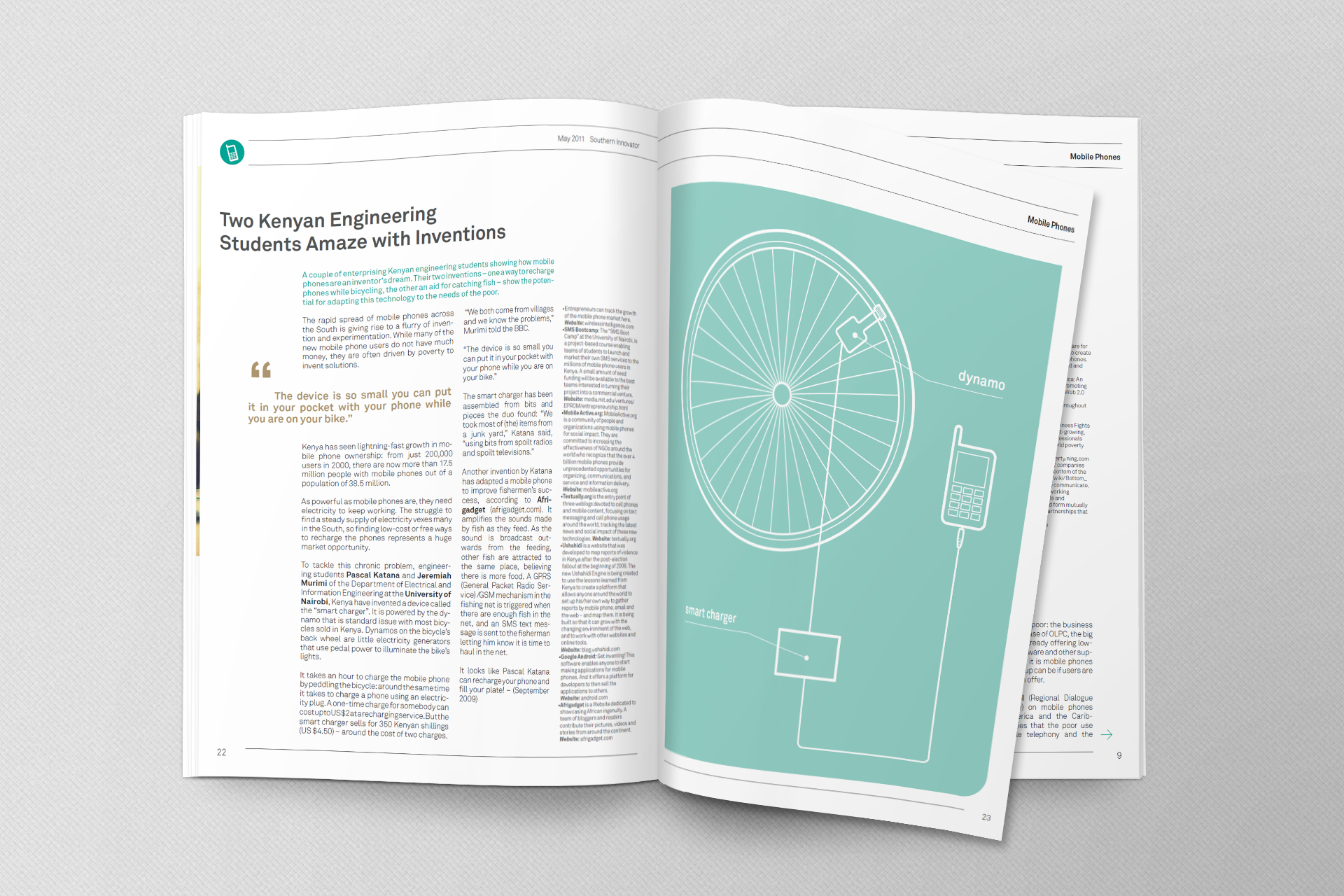
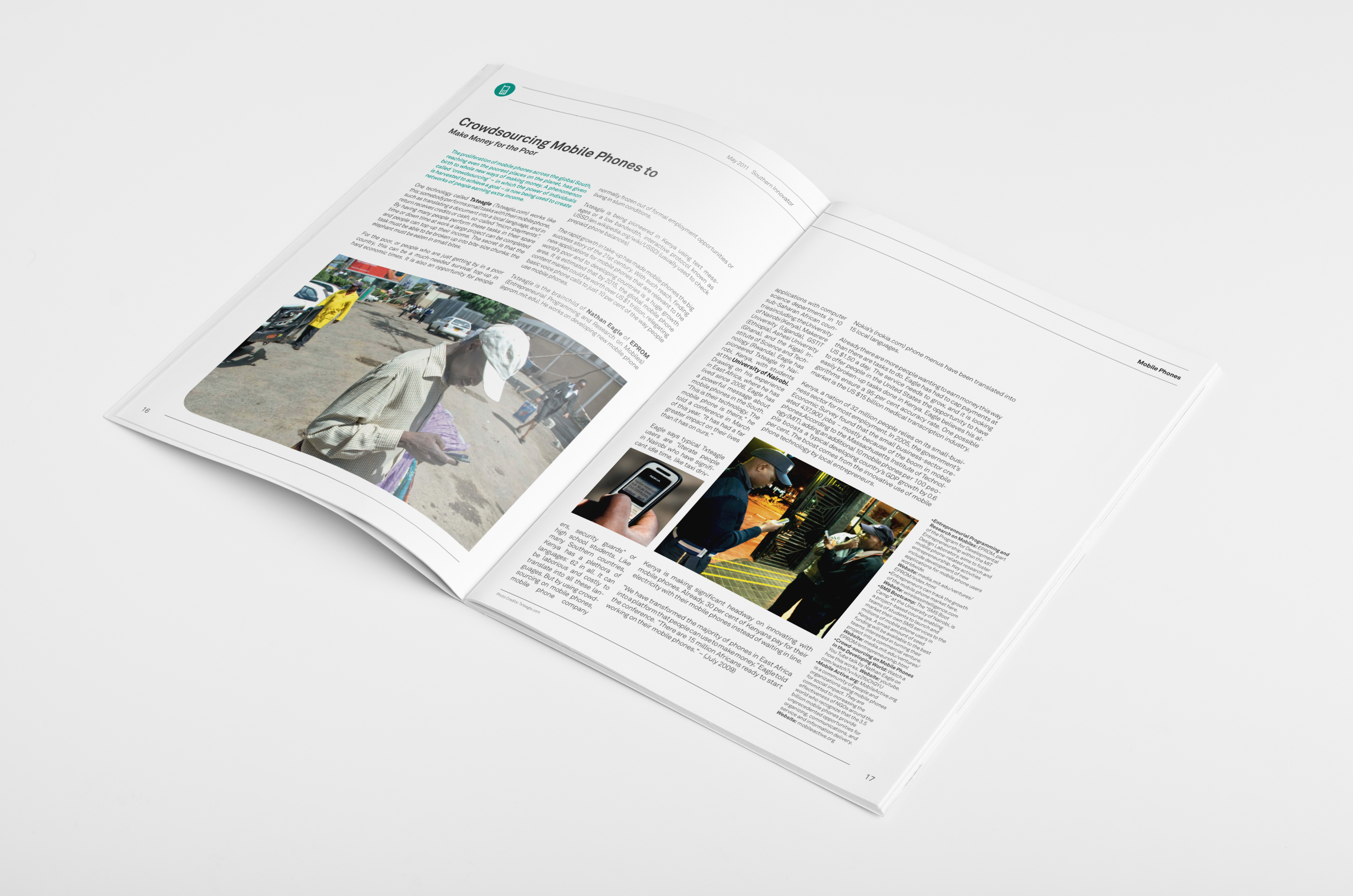
Development Challenges, South-South Solutions was launched as an e-newsletter in 2006 by UNDP’s South-South Cooperation Unit (now the United Nations Office for South-South Cooperation) based in New York, USA. It led on profiling the rise of the global South as an economic powerhouse and was one of the first regular publications to champion the global South’s innovators, entrepreneurs, and pioneers. It tracked the key trends that are now so profoundly reshaping how development is seen and done. This includes the rapid take-up of mobile phones and information technology in the global South (as profiled in the first issue of magazine Southern Innovator), the move to becoming a majority urban world, a growing global innovator culture, and the plethora of solutions being developed in the global South to tackle its problems and improve living conditions and boost human development. The success of the e-newsletter led to the launch of the magazine Southern Innovator. 

https://davidsouthconsulting.org/2021/03/05/southern-innovator-issue-2/

Creative Commons License

This work is licensed under a
Creative Commons Attribution-Noncommercial-No Derivative Works 3.0 License.

ORCID iD: https://orcid.org/0000-0001-5311-1052.

© David South Consulting 2023

Categories
Archive Development Challenges, South-South Solutions Newsletters

African Media Changing to Reach Growing Middle Class

By David SouthDevelopment Challenges, South-South Solutions

SOUTH-SOUTH CASE STUDY

Africa’s growing middle classes are being targeted by a new generation of media entrepreneurs. This growing group of Africans is ambitious and intelligent, and they want media that matches their aspirational ways. Clever media people are stepping up to feed this trend.

The continent as a whole forms the 10th largest economy in the world. Of Africa’s more than 1 billion people, 900 million can be classified as part of the consumer economy. Out of this group, there a third – approximately 300 million people – make modest sums by Western standards, about US $200 a month, but have spare cash to buy things like mobile phones, DVDs and new clothes, or pay for better schools. They are the population that is overlooked when attention is focused only on the very poor living on less than US $2 a day.

Pulitzer Prize-winning Nigerian journalist Dele Olojede is one of several African media pioneers re-shaping the continent’s media and taking it to the next level. Another is Godfrey Mwampembwa, whose popular puppet television show satirizes contemporary politics and current events and brings a welcome local flavour to a programming schedule packed with foreign imports.

A book by University of Texas professor Vijay Mahajan, Africa Rising, details the phenomenon of Africa’s middle class consumer society. He calls this group of middle class consumers ‘Africa 2’, with the desperately poor called Africa 3s, and the extremely rich Africa 1s.

This new group has expanded far beyond just the ruling elites and government workers. Many of its members work in the private sector, as secretaries, computer entrepreneurs, merchants and others who have benefited from consistent growth rates in many African countries.

And because these people consume products and services – and advertising products and services are the lifeblood of private media – the opportunities are plentiful.

“I’m convinced that Africa is going to be built by Africa 2s,” Mahajan told the Washington Post newspaper. “These are the people sending their kids to school . . . who are the most optimistic, the most forward-thinking.”

Olojede, owner and publisher of Next newspaper (http://234next.com/csp/cms/sites/Next/Home/index.csp) in Nigeria’s biggest city, Lagos, has been able to grab readers by breaking original stories and offering a quality, well-designed publication. Launched in 2008, it has its sights set on going continent-wide by 2011.

“There is a need for a newspaper for the African metropolitan middle classes, along the lines of the International Herald Tribune,” he told Monocle magazine.

Olojede cut his teeth as a foreign editor for the US newspaper Newsday and has used this experience to make Next such a success.

Next has become the number one news website in Nigeria’s highly competitive media scene.

Wisely, Olojede put design at the centre of making his newspaper and website stand out from the competition. He commissioned the experienced newspaper design team of Garcia Media (http://garciamedia.com/blog/articles/in_west_africa_a_new_newspaper_is_born_—online_first) – who have designed for The Wall Street Journal, The Miami Herald and Die Zeit – to develop the template and prototypes.

Kenyan economist James Shikwati (http://en.wikipedia.org/wiki/James_Shikwati) believes Africa’s middle-income consumers are also a driving force for political change.

“It’s empowering,” he told the Washington Post. “If you give people a sense of freedom in the economic sector, then you deny it in the political sector, you have a problem.”

Kenya-based newspaper cartoonist Gado (Godfrey Mwampembwa) has profited from this phenomenon. Fed up with TV channels sticking to a menu of foreign imports and dull news programmes, he looked to famous puppet TV shows Spitting Image (from Britain) and Les Guignols (from France) for inspiration. The result is the XYZ Show (http://xyzshow.com/blog), which features grotesque puppet caricatures of well-known public and political figures. The show’s blog makes for an excellent entry point into African TV programme-making and its ups and downs. The show is broadcast on Citizen TV in Kenya’s capital, Nairobi.

“I moved to Nairobi in 1992 when I was 23,” Mwampembwa explained to Monocle. “The Daily Nation, the biggest newspaper in Kenya, had lost its editorial cartoonist so they ran a competition to look for his replacement. I sent in my drawings and came second.”

“I took a year off in 2000-2001 to study film and animation in Vancouver. When I got back to Nairobi I started thinking about the sort of TV programme I would like to make. Kenya needed a show that would make fun of our politicians and expose hypocrisy and I thought a puppet show like Les Guignols or Spitting Image would be a great way to do it.”

“We managed to raise funds for a pilot in 2007 and Citizen TV (http://www.facebook.com/pages/Citizen-TV-Kenya/261061365404), a private station, eventually agreed to broadcast a series.”

Each episode costs US $16,740 and the puppets are US $3,600 to make. The programme-makers could only get money from foreign donors: the French, Dutch, and Finnish embassies and the Ford Foundation.

Despite initial complaints from politicians, the show is preparing for its second season – and, Mwampembwa said, “there will be a lot of big stories for us to cover.”

Making a popular TV show is not an easy thing to do. Mwampembwa maintains a furious work pace to straddle his many roles:

“I have to draw a cartoon every day but editorial cartooning is not a nine-to-five job, it’s 24/7. Whenever I get ideas I have to sketch them.

“It was a steep learning curve in the first season. The show is important for Kenyan TV and everything is done here in Nairobi. We won’t change any of the politics though. We are very hard-hitting and we will stay that way.

“Over the years I’ve got nasty letters, emails and phone calls but that’s OK, it’s part of it.”

As these media innovators show, there is nothing but opportunity for entrepreneurs feeding the hungry news and information appetite of the continent’s ambitious middle class.

And Mwampembwa says becoming better informed doesn’t have to be dull: “We are informing the public but I’d like to think we are entertaining them too.”

Published: September 2010

Resources

  • Africa Rising: A book by Professor Vijay Mahajan on how Africa’s consumer economy is growing and growing. Website: http://tinyurl.com/2vk3m9n

Development Challenges, South-South Solutions was launched as an e-newsletter in 2006 by UNDP’s South-South Cooperation Unit (now the United Nations Office for South-South Cooperation) based in New York, USA. It led on profiling the rise of the global South as an economic powerhouse and was one of the first regular publications to champion the global South’s innovators, entrepreneurs, and pioneers. It tracked the key trends that are now so profoundly reshaping how development is seen and done. This includes the rapid take-up of mobile phones and information technology in the global South (as profiled in the first issue of magazine Southern Innovator), the move to becoming a majority urban world, a growing global innovator culture, and the plethora of solutions being developed in the global South to tackle its problems and improve living conditions and boost human development. The success of the e-newsletter led to the launch of the magazine Southern Innovator. 

Creative Commons License

This work is licensed under a
Creative Commons Attribution-Noncommercial-No Derivative Works 3.0 License.

ORCID iD: https://orcid.org/0000-0001-5311-1052.

© David South Consulting 2023

Categories
Archive Development Challenges, South-South Solutions Newsletters

Global South’s Middle Class is Increasing Prosperity

By David SouthDevelopment Challenges, South-South Solutions

SOUTH-SOUTH CASE STUDY

The global middle class is on the rise – and this is creating both challenges and opportunities. As poverty rates have come down across the global South, many countries have seen a rise in the proportion of their population categorized as “middle class”. Globally, being middle class is defined as a person able to consume between US $4 a day and US $13 a day (ILO).

According to the Organization for Economic Cooperation and Development (OECD), most of this growth will be in Asia and the region will soon make up 66 per cent of the world’s middle class. Historical experience shows that members of the middle class quickly become absorbed in spending their accumulated capital on housing, equipment, industry and business, health and education. In countries with a growing middle class, policy makers need to show a strong interest in creating stable economic conditions to encourage this expanding consumption and domestic demand, the OECD advises.

Growth of the world’s middle class took off after 2001, with an additional 400 million workers joining this group. The McKinsey group of consultants found the total number reached 2 billion in a dozen “emerging nations” in 2010, collectively spending US $6.9 trillion every year (McKinsey).

Forecasters predict a further increase in the middle class across the global South will bring with it a surge in consumption (a combination of spending and demand). Areas being highlighted by various studies and reports include China’s small and mid-size cities, other areas of East Asia and Africa.

Middle class spending in these dozen emerging nations could reach US $20 trillion during the next decade – twice the amount of consumption occurring in the United States right now (McKinsey).

The result is a re-shaping of populations, with growing numbers of people now neither rich nor desperately poor, but landing in the middle of the income distribution.

And local competitors in the global South are fighting hard for these consumers on their own turf.

The Hangzhou Wahaha (http://en.wahaha.com.cn/) beverage maker in China has been able to compete against multinationals such as Coca-Cola and PepsiCo, according to McKinsey. It has turned itself into a US $5.2 billion business using a multi-pronged strategy: targeting rural areas, catering to local needs, keeping costs low and positioning itself as the patriotic choice.

And this change is also occurring in Africa, where a growing middle class is fuelling sales of refrigerators, television sets, mobile phones, motors and automobiles across the continent, according to the OECD. In Ghana, for example, car and motorcycle ownership has risen by 81 per cent since 2006.

According to the African Development Bank (AfDB), Africa’s middle class has reached 34 per cent of the population, or 350 million people. In 1980, it was 126 million people, or 27 per cent of the population.

Countries with the largest middle classes in Africa include Tunisia and Morocco, while Liberia and Burundi have the smallest number of people in the middle class.

The economic growth that is fuelling this middle-class surge is coming from a combination of increasing investment in the services sector, the tapping of the natural resource sector and better economic policies in the past two decades. Africa’s middle class is driving growth in the private sector and boosting demand for goods and services, most often also provided by the private sector.

“The liberalization of African economies has resulted in improved efficiencies and led to a rapid growth in the service sector, which has spurred the growth of the middle class,” Lawrence Bategeka, a principal researcher at the Uganda-based Economic Policy Research Centre, told The East African newspaper.

How important the middle class is to increasing consumption levels can be seen in the cases of Brazil and South Korea.

According to the OECD, both countries had similar income levels and growth rates in the 1960s. But by the 1980s, high income inequality in Brazil capped the middle class at 29 per cent of the population. In South Korea in the 1980s, the middle class population reached 53 per cent. This larger middle class population enabled South Korea to switch from an export-driven growth strategy to domestic consumption.

While Brazil wasn’t able to do this at the time, it has since made impressive gains in reducing poverty – from 40 per cent of the population in 2001 to 25 per cent in 2009. This has seen the middle class grow to 52 per cent of the population and boosted domestic consumption.

While a rising middle class in the global South is good news for improving human development and living standards, the OECD found much of the new middle class was vulnerable and could easily slip out of that category. They also often lacked enough income to purchase more expensive durable goods such as automobiles (OECD Yearbook 2012).

The success of this fragile but growing middle class will be key to how well the global economy fares in the coming years.

A new report by the UN’s International Labour Organization (ILO) argues that the global South’s growing middle classes are just the thing to spur growth across the wider world economy.

“Over time, this emerging middle-class could give a much needed push to more balanced global growth by boosting consumption, particularly in poorer parts of the developing world,” said Steven Kapsos, one of the authors of the report.

In Indonesia, an example of the economic impact of the middle class trend in action can be seen in the surging life insurance business.

Association of Indonesian Life Insurance Companies (AAJI) chairman Hendrisman Rahim believes the growing middle class are potential customers for the country’s thriving life insurance industry.

“They are the ones who have the need to be insured and can afford to purchase a policy. Extremely rich people are financially capable [of buying], but may not have the need. Extremely poor people have the need, but require financial assistance to be insured,” he said to the Jakarta Post.

As the Indonesian middle class increases, the life insurance industry is expecting to see revenue rise by 30 per cent in 2013.

Published: February 2013

Resources

1) The $10 Trillion Dollar Prize by Michael J. Silverstein. Website: amazon.com

2) The Middle of the Pyramid: Dynamics of the Middle Class in Africa. Website: http://www.afdb.org/en/blogs/afdb-championing-inclusive-growth-across-africa/post/the-african-consumer-market-8901/

3) McKinsey Quarterly: Capturing the world’s emerging middle class. Website:http://www.mckinseyquarterly.com/Capturing_the_worlds_emerging_middle_class_2639

4) OECD Observer: An emerging middle class by Mario Pezzini. Website:http://www.oecdobserver.org/news/fullstory.php/aid/3681/An_emerging_middle_class.html

Southern Innovator logo

London Edit

31 July 2013

Development Challenges, South-South Solutions was launched as an e-newsletter in 2006 by UNDP’s South-South Cooperation Unit (now the United Nations Office for South-South Cooperation) based in New York, USA. It led on profiling the rise of the global South as an economic powerhouse and was one of the first regular publications to champion the global South’s innovators, entrepreneurs, and pioneers. It tracked the key trends that are now so profoundly reshaping how development is seen and done. This includes the rapid take-up of mobile phones and information technology in the global South (as profiled in the first issue of magazine Southern Innovator), the move to becoming a majority urban world, a growing global innovator culture, and the plethora of solutions being developed in the global South to tackle its problems and improve living conditions and boost human development. The success of the e-newsletter led to the launch of the magazine Southern Innovator. 

Creative Commons License

This work is licensed under a
Creative Commons Attribution-Noncommercial-No Derivative Works 3.0 License.

ORCID iD: https://orcid.org/0000-0001-5311-1052.

© David South Consulting 2023