Categories
Archive Development Challenges, South-South Solutions Newsletters Southern Innovator magazine

Creative and Inventive Ways to Aid the Global Poor

By David SouthDevelopment Challenges, South-South Solutions

SOUTH-SOUTH CASE STUDY

As the saying goes, “necessity is the mother of invention”. Poverty can be a major spur to invention, and invention a route out of poverty – but only if the poor in the developing world can get the recognition, capital and support for navigating the legal and bureaucratic hurdles that will inevitably stand in their way. Thankfully many new initiatives acknowledge this.

Contrary to popular perception, the poor do have buying power, as has been documented by Massachusetts Institute of Technology (MIT) professors Abhijit Banerjee and Esther Duflo in their paper “The Economic Lives of the Poor”. Surveying 13 countries, they found those living on less than a dollar a day, the very poor, actually spent 1/3 of their household income on things other than food, including tobacco, alcohol, weddings, funerals, religious festivals, radios and TVs. The researchers also found that the poor increasingly used their spending power to seek out private sector options when the public sector failed to provide adequate services. As awareness of global poverty has grown in the past decade, a new wave of scientists, inventors and entrepreneurs has started to apply their considerable brain power to tackling the everyday problems of the poor.

Afrigadget, a website celebrating African ingenuity and inventions, serves as a goldmine for small-scale entrepreneurs looking for inspiration. All the inventions on the website share something in common: they are grassroots, homemade and handmade solutions to everyday problems of the poor. Examples of inventions profiled on the website include multi-machines, basically a 3-in-1 machine used as a metal lathe, mill and drill press, all built by hand from old car engine parts; a US $100 bicycle motor that gets 50 kilometres per liter made in Kisumu, Kenya; hand-made African wire toys; do-it-yourself telephone handsets which are then used to run roadside phone booths as a small business; and Malawian homemade windmills used to generate electricity for both home use and as a business to recharge mobile phone and radio batteries.

Another African invention tackles the urgent need for inexpensive or free common toilets that are self-financing. In the Kibera slum of Nairobi, Kenya, where 60 percent of the city’s inhabitants live, the lack of decent toilet facilities has led to the widespread use of so-called “flying toilets”, plastic bags filled with excrement and then flung as far away as possible. The resulting build-up turns the streets into a foul-smelling sludge in the rainy season and causes disease outbreaks like diarrhoea and typhoid fever. Up to now, conventional attempts to provide communal toilets have failed to resolve the problem, because they charge too much to use. But an innovative solution has been developed: bio-latrines that capture the methane gas produced by the toilets for sale as gas for cooking, heating and lighting, and the sludge for fertilizer. A joint initiative between a Kenyan company, Globology Limited, and the NGOs Umande Trustand Ushirika Roho Safi Laini Saba, it is partly funded by the Swedish International Development Agency (SIDA). The toilets are used by 500 people a day and are self-financing from the profits made by the sale of the gas and fertilizer.

In India, social entrepreneurs have stepped in to help the rural poor navigate the Indian government bureaucracy. Drishtee, an internet service provider – offers a fast-track to government services used by the poor in rural villages through its e-government services information kiosk. Using a franchise model, it has branches spread out through 160 locations in the country and serves 1.5 million people. Drishtee’s niche is that it saves the poor the exhausting and draining time and long travel normally required to access any government services. Drishtee’s “ask a government employee” service brings government to the poorest people.

Operating out of New Zealand and South Africa, Ecologics is an engineering company focused on developing appropriate technologies for sustainable livelihoods in developing countries. All their inventions are built around the principles of low maintenance and costs, and ease of use. Its African operations are based in South Africa and run under the Black Economic Empowerment (BEE) scheme. It builds step powered pumps, the Step Action Water Pump which works just like a gym step exercise machine and is a highly efficient way to power the pump – for small scale mining and agricultural irrigation. The pumps can deliver 5,000 to 6,000 litres of water per hour, weigh just 11 kilograms, and have been field tested in Fiji, Lesotho and South Africa.

Published: April 2007

Resources

  • NextBillion.net: Hosted by the World Resources Institute, it identifies sustainable business models that address the needs of the world’s poorest citizens.
  • A paper on social lending via the web: PDF version
  • African Inventors Museum: The International African Inventors Museum promotes positive images and self-esteem in children and adults and teaches people of all nationalities about the contributions that Africans throughout the world have given to society.
  • AU-WIPO Prize: The AU-WIPO is an initiative of the Africa Union Commission and the World Intellectual Property Organization. It is a leading continental award in Africa honoring the scientists and technologists whose efforts are towards addressing critical problems in Africa and the attainment of the Millennium Development Goals.
United Nations e-newsletter Development Challenges, South-South Solutions visited the Berlin, Germany headquarters of start-up betterplace.org in 2009. It was the dawn of the Berlin digital tech boom.

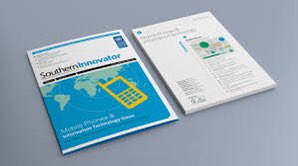
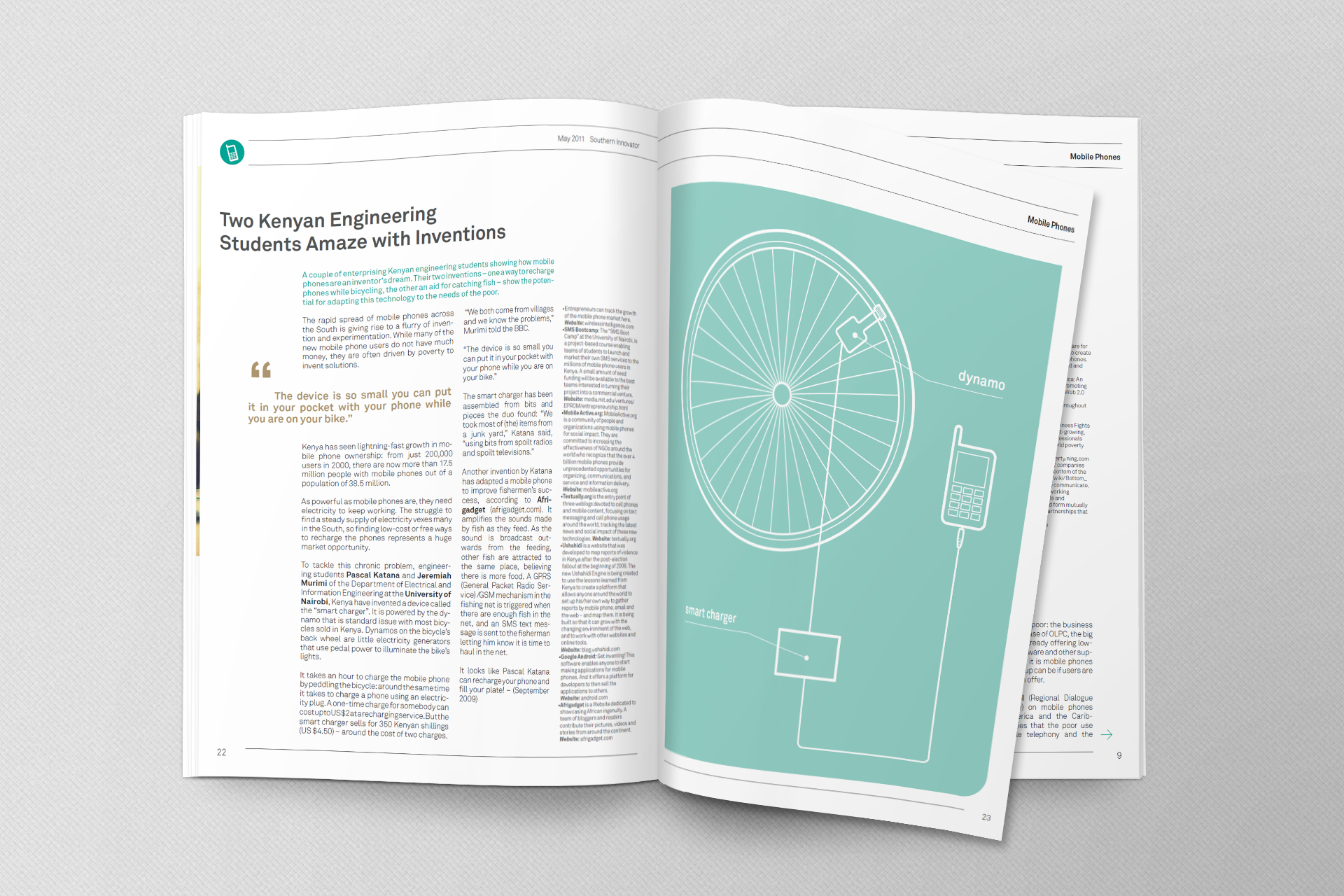
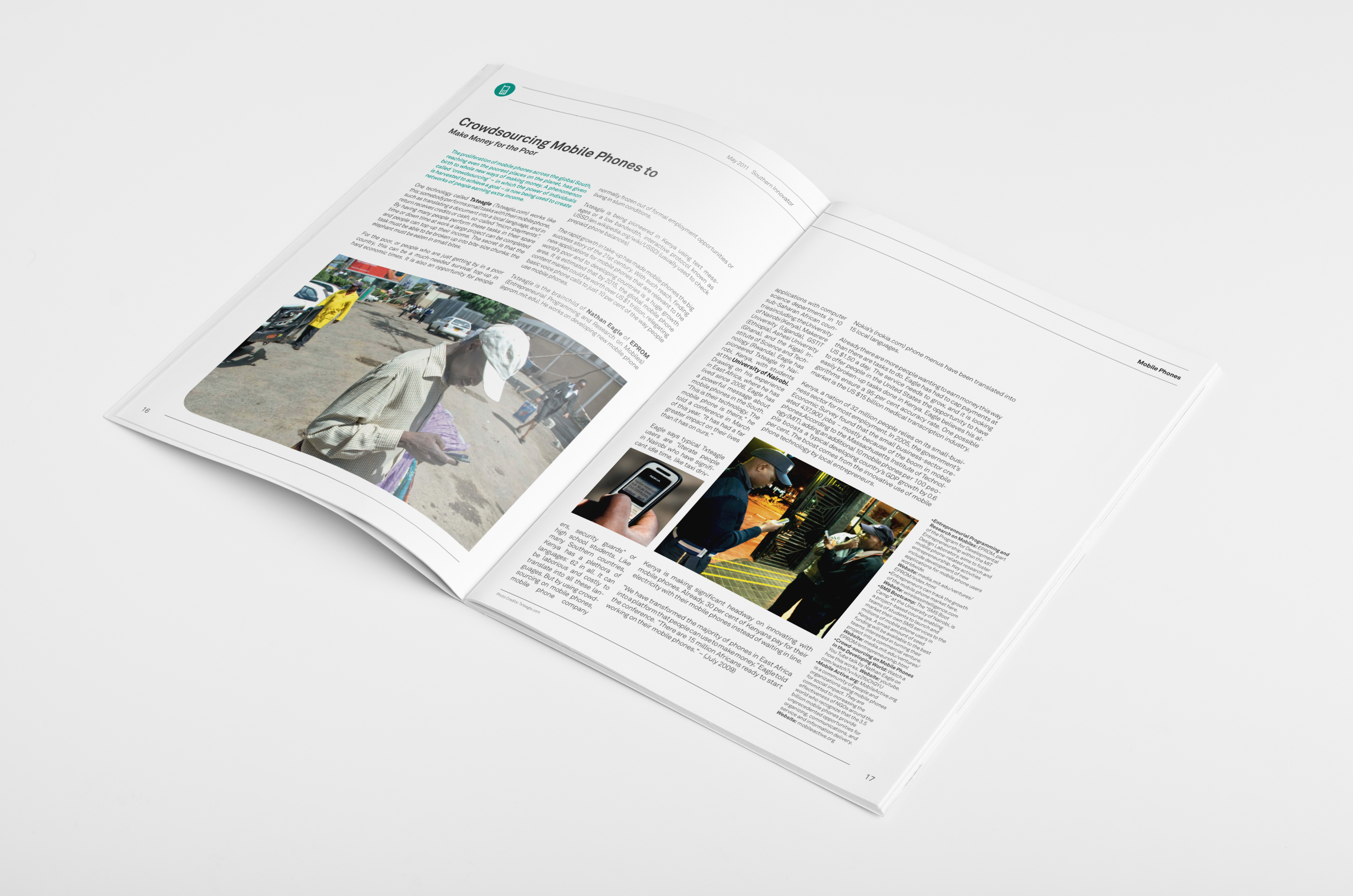
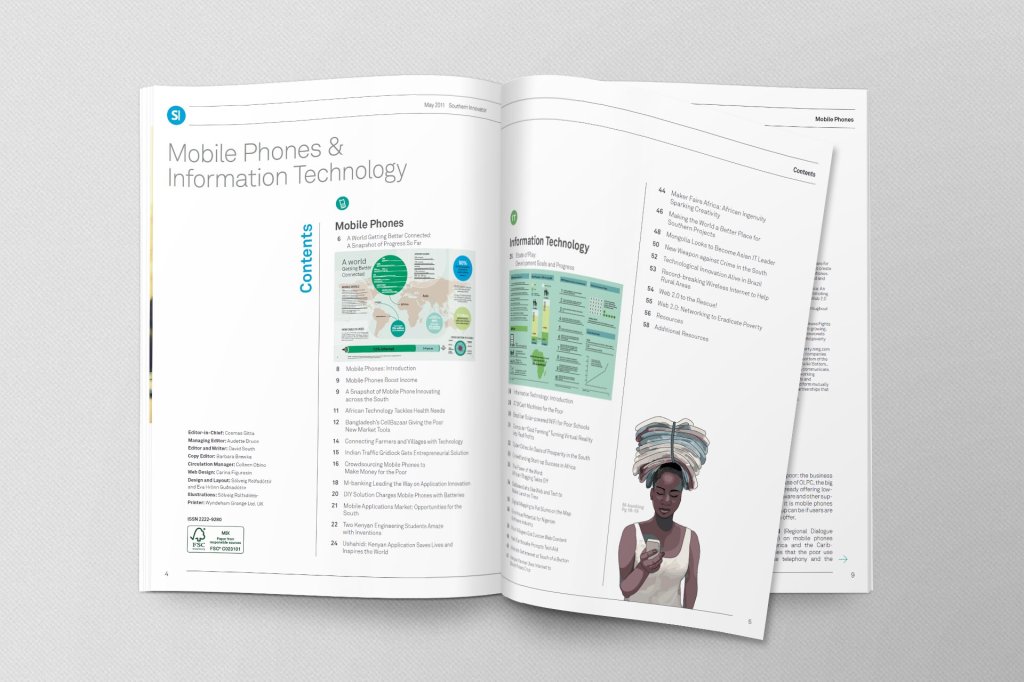
Development Challenges, South-South Solutions was launched as an e-newsletter in 2006 by UNDP’s South-South Cooperation Unit (now the United Nations Office for South-South Cooperation) based in New York, USA. It led on profiling the rise of the global South as an economic powerhouse and was one of the first regular publications to champion the global South’s innovators, entrepreneurs, and pioneers. It tracked the key trends that are now so profoundly reshaping how development is seen and done. This includes the rapid take-up of mobile phones and information technology in the global South (as profiled in the first issue of magazine Southern Innovator), the move to becoming a majority urban world, a growing global innovator culture, and the plethora of solutions being developed in the global South to tackle its problems and improve living conditions and boost human development. The success of the e-newsletter led to the launch of the magazine Southern Innovator. 

Creative Commons License

This work is licensed under a
Creative Commons Attribution-Noncommercial-No Derivative Works 3.0 License.

ORCID iD: https://orcid.org/0000-0001-5311-1052.

© David South Consulting 2023
Categories
Archive Development Challenges, South-South Solutions Newsletters

2011 Trends for the South

By David SouthDevelopment Challenges, South-South Solutions

SOUTH-SOUTH CASE STUDY

The world has been through a dramatic and fascinating period since the global economic crisis erupted in 2008. While the wealthy, developed nations of the North have been pitched into one crisis after another, the countries of the global South (many of whom are well accustomed to crises) have been part of a powerful new economic phenomenon: the rapid growth of South-South trade, investment and exchange. Its effects include stronger ties between Asia and South America and between China and Africa.

South-South trade is the great economic success story of the past decade. World Trade Organization (WTO) (www.wto.org) figures show South-South trade grew to 16.4 percent of the US $14 trillion in total world exports in 2007, from 11.5 percent in 2000. While the global economic crisis has slowed trade down, the overall trend for South-South trade and connections seems firmly established.

South-South trade made up 20 percent of global exports by 2010, and foreign direct investment to developing economies rose by 10 percent in 2010 due to a rapid economic recovery and increasing South-South flows.

Trade between China and Africa has surged during the decade since China joined the WTO in 2001, from around US $10 billion in 2000 to US $73.3 billion in 2007, a year-on-year increase of 32.2 percent. By 2008, it had soared by 44.1 percent to reach a record high of US $106.84 billion, according to Zhang Yongpeng of the Institute for West Asian and African Studies (IWAAS).

The surge is remarkable and recent. For example, according to accountants KPMG, between 2001 and 2009 China invested just US $215 million in Brazil. But in 2010, China invested US $20 billion in energy and chemical companies in Argentina and Brazil. And Luis Alberto Moreno, president of the Inter-American Development Bank, told the Financial Times that “seven percent of Colombian gasoline has been replaced by domestic ethanol, produced with green Indian technology – while Indian companies, including Infosys and Tata, now have 17,000 employees in Latin America and the Caribbean.”

This jump in investment has also had its downside: coming fast and furious as investment cash chases better investment profits in the global South, it has pushed up inflation and commodity prices and spawned property speculation bubbles. This, as can be seen across North Africa and the Middle East, can lead to political and social instability.

A review of the big trends bubbling under the surface in 2011 shows how important South-South exchange will be in alleviating poverty and improving lives in the run-up to the 2015 Millennium Development Goals (http://www.un.org/millenniumgoals/). It also shows up the dangers inherent in this new environment – rising inflation without economic growth can crush the poor. A focus on innovation and new thinking will be necessary to get through this year and beyond.

Some of the top trends that will have a big impact in 2011 are:

– Inflation: In 2011 it looks like we will hear a lot about inflation. As the global economy tries to stabilize and return to growth, there will be inflation surges for a wide variety of reasons. People will need strategies and new techniques to make sure they can afford the necessities of life. This will be critical if development gains from the past decade are not to be lost.

– Super cycle: Some are putting forward the theory we are entering a ‘super cycle’ (http://www.bloomberg.com/news/2011-01-23/super-cycle-leaves-no-economy-behind-as-davos-shifts-to-growth-from-crisis.html) created by better connectivity, global travel and mobility and the ease of moving around investment to create businesses and jobs. The super cycle theory claims that this will spark the greatest period of human development in history – raising all national economies – as more and more people benefit from rising living standards and opportunities.

– Switch to South-South trade: With the trend of increasing South-South trade now firmly established, there is a greater awareness now of the power of sharing ideas across the South. One example of this idea-sharing is the annual Global South-South Development Expo (http://www.southsouthexpo.org/) run by UNDP’s Special Unit for South-South Cooperation Unit (http://ssc.undp.org/).

– New technologies: The spread of new technologies around the world will continue and bring many changes. Africa is seeing increasing access to high-speed Internet as new undersea cables are laid around the continent. Mobile phones will continue to be a critical tool for many to stay in touch and boost incomes.

– MDGs on horizon in 2015: The Millennium Development Goals (MDGs) target of 2015 is just four years away. This will face the headwinds of the global economic crisis and urgent attention will be needed to make sure gains are not lost as 2015 approaches. The role played by South-South trade will be a critical partner in aiding goal achievements.

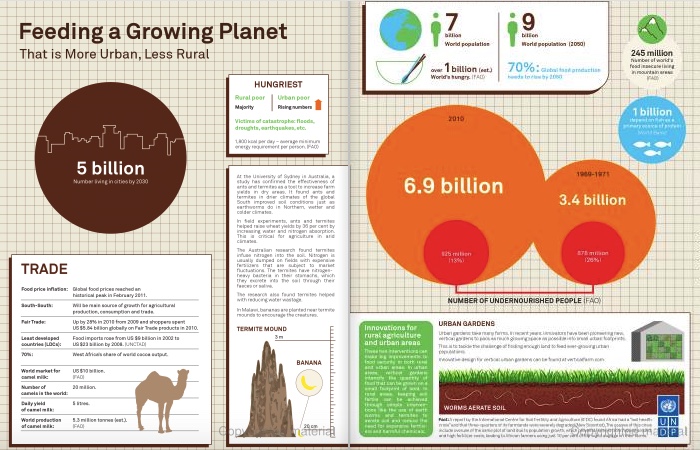
– Cities: A surge to the urban was pronounced by 2007 and we are now living in a majority urban world. Innovation and sharing experiences and knowledge will play a key role in ensuring this is not a disaster. A recent book, Arrival City by Canadian journalist Doug Saunders, detailed this urban surge occurring across the global South, the largest movement of people to cities and urban and semi-urban areas in human history. It follows the pattern that was seen in Europe in the 19th century, as economies change and people seek the new opportunities promised by cities, or find rural economies unsustainable.

– The China model of development: The big talking point will be China’s economic model for eradicating poverty on a mass scale. A new book by Dambisa Moyo, How the West Was Lost: Fifty Years of Economic Folly – And the Stark Choices Ahead, investigates the mistakes made in developed, Western nations and what can be learned from the experiences in the global South.

– Food crisis: At the beginning of February, the Food and Agricultural Organization (FAO) issued a warning about the risk of a new global food crisis after its food price index reached a record high in January 2011. The FAO also issued an alert about severe drought in China, the world’s largest wheat producer. Flooding in Brazil and Australia have also devastated crops, much of which are exported to countries across the South. There is also risk to crops from flooding in southern Africa. Wheat, corn and soybean prices are rising, and prices reached a peak just as they did in 2008 (FAO).

Even developed countries normally used to food surpluses are at risk. In the US, corn reserves are at a 15 year low (US Department of Agriculture), and the price of corn has doubled in past six months.

A billion people go to bed hungry every night; someone starves to death every 3.6 seconds – 75 percent are children under five, according to the World Food Programme (http://www.wfp.org/1billion).

Published: 2011

Resources
1) Global Information and Early Warning System on Food and Agriculture: A data mix tracking global food prices and situation reports. Website: http://www.fao.org/worldfoodsituation/wfs-home/en/
2) World Bank Food Crisis blog: Website: http://www.worldbank.org/foodcrisis/
3) Trade Law Centre for Southern Africa: “Building capacity to help Africa trade better”: tralac’s mission is to build trade law capacity in southern Africa so that these countries can participate effectively in the global economy; to negotiate trade agreements that will support their development objectives, and so that they can implement the agreements to ensure that they realise the potential benefits of international trade. Website: http://www.tralac.org/cgi-bin/giga.cgi?cmd=cause_dir_cause&cause_id=1694
4) Future Forum world videos: Compelling animated videos exploring the hard choices of an urbanizing world and the need to promote sustainable development and environmental harmony. Website: http://www.youtube.com/user/forumforthefuture96

Development Challenges, South-South Solutions was launched as an e-newsletter in 2006 by UNDP’s South-South Cooperation Unit (now the United Nations Office for South-South Cooperation) based in New York, USA. It led on profiling the rise of the global South as an economic powerhouse and was one of the first regular publications to champion the global South’s innovators, entrepreneurs, and pioneers. It tracked the key trends that are now so profoundly reshaping how development is seen and done. This includes the rapid take-up of mobile phones and information technology in the global South (as profiled in the first issue of magazine Southern Innovator), the move to becoming a majority urban world, a growing global innovator culture, and the plethora of solutions being developed in the global South to tackle its problems and improve living conditions and boost human development. The success of the e-newsletter led to the launch of the magazine Southern Innovator. 

Creative Commons License

This work is licensed under a
Creative Commons Attribution-Noncommercial-No Derivative Works 3.0 License.

ORCID iD: https://orcid.org/0000-0001-5311-1052.

© David South Consulting 2022

Categories
Archive Development Challenges, South-South Solutions Newsletters Southern Innovator magazine

Flurry of Anti-poverty Innovations

By David SouthDevelopment Challenges, South-South Solutions

SOUTH-SOUTH CASE STUDY

Innovation is key to transforming the lives of the world’s four billion poor. And it is at the core of much of the new thinking these days. While the world’s poor can’t rely on political developments, or wider macro-economic events to go their way, they can harness the power of invention, innovation and self-reliance to make big changes in the quality of their lives and increase income – and so can those who want to help them. New York Times journalist and author Thomas Friedman put it like this: “Africa needs many things, but most of all it needs capitalists who can start and run legal companies. More Bill Gateses, fewer foundations. People grow out of poverty when they create small businesses that employ their neighbours. Nothing else lasts.”

In the 1940s, Austrian economist Joseph Schumpeter wrote that “the function of entrepreneurs is to reform or revolutionise the pattern of production.” Schumpeter’s definition remains at the core of an entrepreneurial approach that focuses on innovation and enterprise as a means of addressing social needs. “Social innovators” are pragmatic and embrace innovation to tackle social problems through both for-profit and non-profit models.

International Development Enterprises India (IDEI) is a non-profit that uses product invention to transform the lives of the poor and tackle hunger and malnutrition. Its approach is to take existing technologies and adapt them, reducing costs and improving effectiveness. By constantly evolving the design, they can focus in on making it cheap and relevant.

One innovation is the Treadle Pump: a foot operated, water pump for small plots of land. It enables crops to be grown in winter and summer – no need to rely on rain. And since women are key to farm life, it is physically easy for women to use. So far more than 350,000 small farms are using it. It has been calculated the pump increases household incomes by a minimum of US $100/year.

Another of their innovations is the Affordable Drip Irrigation Technology Intervention. While drip irrigation systems have been for sale in India for the past 15 years, they were not relevant or affordable for small and marginal farms. IDEI adapted these technologies during trials from 1997 to 2000. Existing technologies suffer from two drawbacks: they are complicated to maintain and they are expensive to buy. A big challenge was demystifying the idea that crop irrigation methods were for only the big orchards. The irrigation systems are sold as kits and are scalable so that farmers can expand their systems if they want. IDEI has sold over 85,000 of the various irrigation kits.

Both inventions are designed to mimic traditional technologies and are inexpensive, thus maximising take-up by small farmers, who can recover the cost within one season of crops.

They not only do the research and development and product design and manufacturing, but also set up the vertically integrated marketing and sales network and make it viable for the private sector to step up and sell the kits.

Paul Polak, the founder of the global International Development Enterprises, believes progress is only possible if products are sold at a fair market price. “When you give things away, you lack discipline in how you design them because you don’t have to get feedback from the customer,” he said.

In the village of Otse, Botswana in southern Africa, the Godisa Technologies Trust has brought affordable solar-powered hearing aids to the poor. Most of the employees are deaf, and as a non-profit social enterprise, its battery chargers – and its branded Solar Aid digital behind-the-ear (BTE) hearing aid – are all for use in developing countries. It is estimated over 600 million people suffer from some form of hearing impairment. According to the World Health Organization, 278 million people in the world are affected by moderate hearing loss. Yet the global production of hearing aids does not come anywhere close to meeting the need.

The Solar Aid needs only six to eight hours of sunlight to recharge for a full week. And it is fully compliant with WHO guidelines. Conventional hearing aids and batteries are very expensive and often not locally available. Solar Aid batteries can take 400 charges before being replaced.

The Solar Aid hearing aid was developed through field testing, funds were raised for further design improvements, and it went on to win several awards. But it initially failed to earn back its production costs and so the Godisa Technologies Trust was established to sweat the details on making it sustainable. It was developed in partnership with the Botswana Technology Centre,

“I want to help other deaf people to have access to education training and employment. I would like to use my skills and opportunities to help other deaf people achieve their goals,” said one of Godisa’s technicians, Sarah Phiri. So successful are these hearing aids, there is interest around the world, including in Canada.

Adequate street lighting has been proven to cut down muggings and improve public safety, reduce traffic accidents, and boost business confidence in neighbourhoods because people feel safe going there. StarSight’s street lamps combine solar-powered street lighting and internet access in a wireless configuration, freeing up the lighting poles from needing to access the main power and telephone grids. Each one contains VoIP, wi-fi broadband, CCTV and are being rolled out in Istanbul.

StarSight street lamp poles, designed in Turkey, are also being rolled out in Martinique, Republic of Congo, Cameroon, and Cote d-Ivoire. StarSight’s goal is to install 70,000 street lamps by 2011. Malaysia and Indonesia are next.

d.light design is a social enterprise targeting the 1.6 billion people who rely on kerosene oil to light their lanterns, or use candles. There is an ambitious goal behind this business: they want to replace all the kerosene lanterns in the world with their lights within the next ten years. They use light emitting diode (LED) technology and are about commercializing light and power solutions for families living without electricity in emerging markets.

Better lighting has many benefits, including helping children and adults to study and learn during dark hours. Importantly, it will make the air inside dwellings cleaner and the environment safer without the risk of fire. Indoor air pollution is one of the biggest killers of children under five in India. UNDP has found that families with improved lighting see a 30 per cent increase in their income because they can keep doing things at night.

On high beam, the lights last five hours; on low beam, they last for 200 hours without a charge. It can be re-charged by solar panels or by normal electric outlet. They promise consumers can expect to save $150 over five years. They have received additional support from the Acumen Fund to enter the peri-urban and, later, the rural market in India.

Published: December 2007

Resources

  • Rockefeller Foundation Innovation for Development Initiative: It will “spur the development of solutions to the challenges facing poor or vulnerable people around the world.”
    Team leader: Maria Blair, email: Innovation_dev@rockfound.org
  • Pratt Design Incubator for Sustainable Innovation: It brings together the entrepreneurial talents of designers, artists and architects with one goal: to link the social entrepreneur with the business of design. Budding social entrepreneurs get start-up support, design help and connection to mentors.
  • E and Co: An investor providing seed funding to energy entrepreneurs in developing countries.
  • SEAF (Small Enterprise Assistance Fund): A global investment firm focused on helping small companies and entrepreneurs in emerging markets, and those underserved by traditional sources of capital.
  • Microplace: An online marketplace to connect retail investors (anybody looking to invest US $100 or more) with microfinance organisations looking for funds.

https://davidsouthconsulting.org/2022/02/17/african-digital-laser-breakthrough-promises-future-innovation/

https://davidsouthconsulting.org/2022/10/05/african-innovation-eco-system-taking-shape/

https://davidsouthconsulting.org/2021/05/18/african-innovation-helps-make-banking-transactions-safer/

https://davidsouthconsulting.org/2022/10/10/bringing-the-invention-and-innovation-mindset-to-young-kenyans/

https://davidsouthconsulting.org/2020/04/25/china-looking-to-lead-on-robot-innovation/

https://davidsouthconsulting.org/2021/03/24/frugal-innovation-trend-meets-global-souths-innovation-culture/

https://davidsouthconsulting.org/2022/11/16/housing-innovation-in-souths-urban-areas/

https://davidsouthconsulting.org/2017/10/18/innovation-agenda-and-timeline-2007-2015/

https://davidsouthconsulting.org/2022/11/11/innovation-cairos-green-technology-pioneers/

https://davidsouthconsulting.org/2020/12/14/innovation-in-growing-cities-to-prevent-social-exclusion/

https://davidsouthconsulting.org/2022/04/28/innovation-in-the-slums-can-bring-peace-and-prosperity/

https://davidsouthconsulting.org/2020/04/27/innovation-from-the-global-south/

https://davidsouthconsulting.org/2021/03/04/innovation-villages-tackling-mdgs/

https://davidsouthconsulting.org/2021/10/22/innovations-in-green-economy-top-three-agenda/

https://davidsouthconsulting.org/2022/10/27/kenyan-mobile-phone-innovations/

https://davidsouthconsulting.org/2021/03/02/new-3d-technology-makes-innovation-breakthrough-and-puts-mind-over-matter/

https://davidsouthconsulting.org/2022/10/09/next-generation-of-innovation-for-the-grassroots/

https://davidsouthconsulting.org/2022/04/08/technological-innovation-alive-in-brazil/

Development Challenges, South-South Solutions was launched as an e-newsletter in 2006 by UNDP’s South-South Cooperation Unit (now the United Nations Office for South-South Cooperation) based in New York, USA. It led on profiling the rise of the global South as an economic powerhouse and was one of the first regular publications to champion the global South’s innovators, entrepreneurs, and pioneers. It tracked the key trends that are now so profoundly reshaping how development is seen and done. This includes the rapid take-up of mobile phones and information technology in the global South (as profiled in the first issue of magazine Southern Innovator), the move to becoming a majority urban world, a growing global innovator culture, and the plethora of solutions being developed in the global South to tackle its problems and improve living conditions and boost human development. The success of the e-newsletter led to the launch of the magazine Southern Innovator. 

https://davidsouthconsulting.org/2022/11/01/southern-innovator-magazine-2010-2014/

Creative Commons License

This work is licensed under a
Creative Commons Attribution-Noncommercial-No Derivative Works 3.0 License.

ORCID iD: https://orcid.org/0000-0001-5311-1052.

© David South Consulting 2023

Categories
Archive Development Challenges, South-South Solutions Newsletters

Brewing Prosperity Creates Good Jobs

By David SouthDevelopment Challenges, South-South Solutions

SOUTH-SOUTH CASE STUDY

In the Democratic Republic of Congo – home to the world’s largest United Nations peacekeeping mission and decades of bloody civil war – a brewery has not only survived, it has thrived to become a popular brand throughout central Africa. By being a success, the Brasimba brewery has brought prosperity and high-quality jobs to Congo’s second largest city, Lubumbashi (http://en.wikipedia.org/wiki/Lubumbashi), and proven that a modern business can do well there despite the obstacles.

The Brasimba brewery has an ultra-modern factory (http://www.viddler.com/explore/kaysha/videos/298/) complete with high-tech laboratories to constantly test the quality of the beer. It employs 700 people – most of whom are Congolese – and produces 250,000 bottles of Simba beer every day, according to Monocle magazine. The company’s beer brands are Simba Biere du Lion and Tembo Biere and its slogan is a proud Notre Biere (Our Beer).

Lubumbashi is a city described by the BBC as without “child beggars, without potholes and where there are no festering mounds of rubbish.”

A study of the economic impact of breweries in Uganda and Honduras found that more than 100 local jobs, from farmers to truck drivers, depended on every person employed by a brewery (http://www.inclusivebusiness.org/2009/10/sabmiller-impact-assessment.html). Markets across the South are seen as growth areas for beer companies: China’s beer consumers now outnumber those in the U.S. By 2003, world sales of beer reached 148 billion hectolitres (Euromonitor). Overall, it is forecast that global beer consumption will rise by 3.5 percent by 2015, mostly in the South.

Apart from creating steady employment, breweries also help to improve the development of the advertising and marketing businesses of a community as they promote their various brands, and they support local activities like sport with team sponsorship. They also offer a local example of how to run a modern beverage business, with mechanized production, distribution systems and laboratories to ensure hygiene and quality standards are maintained.

Brasimba has been operating in Lubumbashi for eight decades, through the twists and turns of the country’s history. The city has prospered from its copper mines and wisely used that wealth to improve the city’s general prosperity.

The brewery has successfully become a regional favourite, producing beer that is drunk not only in the surrounding Katanga province, but also in Zimbabwe and Zambia. It’s an impressive accomplishment for a company operating in such a turbulent environment. Distribution of the beer by truck is not easy, with the trip taking between six days and two weeks depending on the weather and the condition of the roads.

And the beer is not cheap, at around US $1.48 for a big bottle — a sure sign there is money to be made.

The healthy economic environment has also spawned a beer war with rivals Bralima, owned by the multinational Heineken. With five breweries in Congo and its head office in the capital Kinshasa, Heineken claims the lessons it has learned in Congo are helping it to change its marketing and business strategies far away in the United States.

It recently transferred its commercial director of Congo operations to head up operations in the United States. Heineken Chief Executive Officer Jean-Francois van Boxmeer told the Bloomberg news agency that working in Africa was “certainly worth three times Harvard Business School.”

Heineken’s market share doubled in the Democratic Republic of Congo in just four years and Africa has become a significant market for the brewer.

Published: December 2009

Resources

  • Small businesses looking to develop their brand can find plenty of free advice and resources here: Website: http://www.brandingstrategyinsider.com
  • A Brandchannel: The world’s only online exchange about branding, packed with resources, debates and contacts to help businesses intelligently build their brand. Website: http://www.brandchannel.com
  • Just Food is a web portal packed with the latest news on the global food industry and packed with events and special briefings to fill entrepreneurs in on the difficult issues and constantly shifting market demands. Website: http://www.just-food.com

Development Challenges, South-South Solutions was launched as an e-newsletter in 2006 by UNDP’s South-South Cooperation Unit (now the United Nations Office for South-South Cooperation) based in New York, USA. It led on profiling the rise of the global South as an economic powerhouse and was one of the first regular publications to champion the global South’s innovators, entrepreneurs, and pioneers. It tracked the key trends that are now so profoundly reshaping how development is seen and done. This includes the rapid take-up of mobile phones and information technology in the global South (as profiled in the first issue of magazine Southern Innovator), the move to becoming a majority urban world, a growing global innovator culture, and the plethora of solutions being developed in the global South to tackle its problems and improve living conditions and boost human development. The success of the e-newsletter led to the launch of the magazine Southern Innovator. 

Creative Commons License

This work is licensed under a
Creative Commons Attribution-Noncommercial-No Derivative Works 3.0 License.

ORCID iD: https://orcid.org/0000-0001-5311-1052.

© David South Consulting 2023