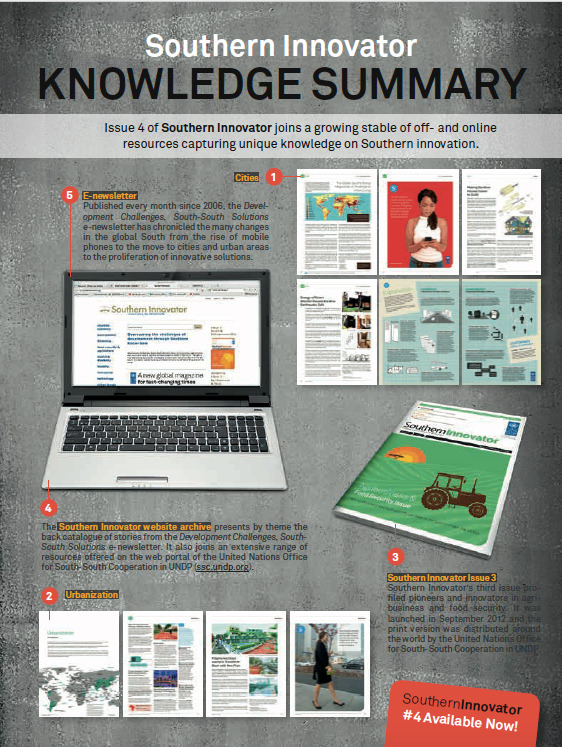
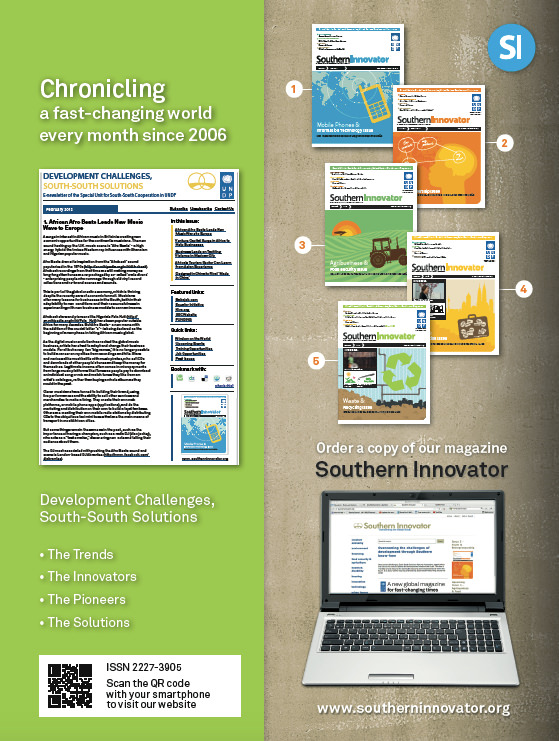
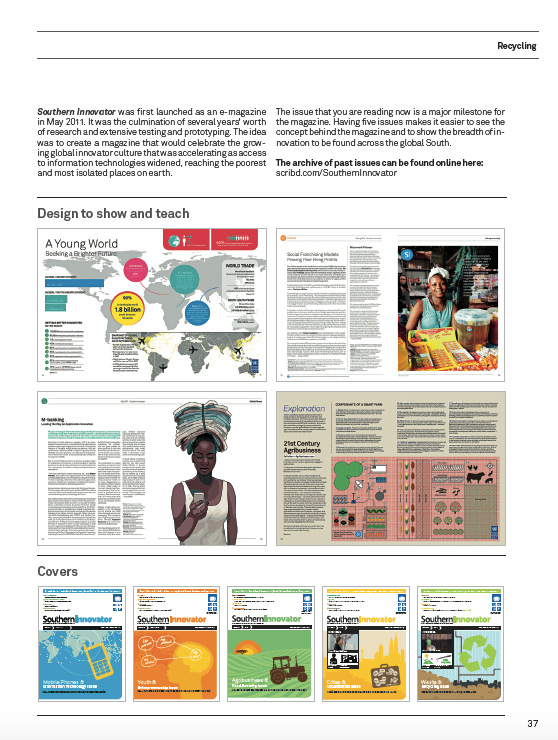
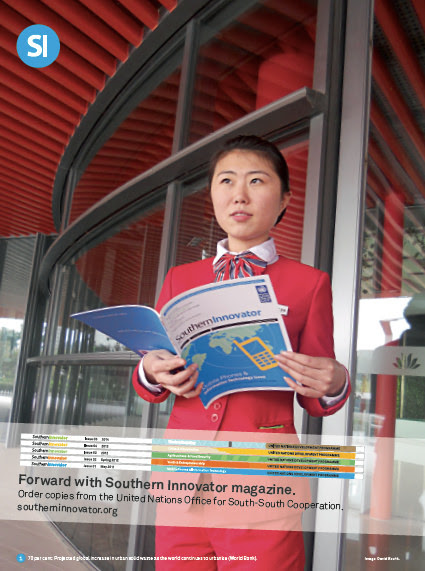
The new global magazine Creative Sparks now has a new name: Southern Innovator. It is off to the printer and shall be released very soon. Keep an eye here for more details as the magazine launches and rolls out across the globe. It is a complex endeavour to pull together a global magazine to a tight budget and this is only the beginning. A small but talented and experienced team have been working on the project and have received cooperation and assistance from many people spanning many countries. It is hoped the magazine will play a helpful role in the push to achieve the Millennium Development Goals as 2015 approaches.
As the global downturn bears down on country after country, governments around the world are introducing austerity measures to try to keep their economies going. Many countries are now facing financial crisis and the need for loans and support from the International Monetary Fund (IMF).
Formerly comfortable people are going from regular employment to unemployment or erratic employment, and growing numbers of people are finding it hard even to afford basics such as food.
In Balkan nation Serbia, trade unions have come up with a solution: they are called SOS Shops and they feature food and other products priced at as much as 70 percent less than regular shops. By cutting back on the profit margin for the products, the store can make drastic cuts in prices.
In the capital, Belgrade, the shops are run by trade unions in partnership with a local retail chain, Jabuka. The Association of Free and Independent Trade Unions uses Jabuka to run the stores. Anyone with an income below 20,000 dinars (US $280) a month can receive a special card to shop at the SOS stores.
In Jabuka’s other stores, the profit margin is 20 percent, and in rival stores it can be over 30 percent. Jabuka also makes savings by sourcing locally and suppliers offering discounts of between 15 percent and 25 percent.
“The prices there are 30 to 50 percent lower than in major supermarkets,” Jabuka manager Milorad Miskovic told IPS. “It’s a hard time for many people, so we decided to lower our margin of profit to only five percent at the SOS shops.
“SOS shops are intended for the socially handicapped. SOS shops offer goods at lower prices to Serbian citizens earning minimum wages or pensions lower than RSD 20,000, to the unemployed, to the displaced from Kosovo and the citizens on the dole (welfare).”
Hard hit by the global downturn, Serbia has seen its recent boom times disappear quickly. The country had enjoyed average yearly growth since 2000 of 6.7 percent.
The country is currently negotiating bridging loans with the IMF (www.imf.org). The conditions for the loan mean severe cuts to public sector wages and tax rises.
According to the Serbian Statistical Office, Serbia has lost 10,000 jobs a month since the beginning of 2009. The official unemployment rate is 14 percent, and the government believes half a million people now live below the official poverty line, out of a population of 10 million.
“Many people have lost their jobs and the main problem is that the middle class is now poor. That is the real problem,” Nebojsa Rajkovic of the Association of Independent Trade Unions told the BBC. “The government prepared a social programme to deal with the economic crisis in Serbia, but it was not enough and that is the reason the union devised this project.”
This month, the Jabuka trade company opened its third SOS shop in Belgrade. The shop, the largest SOS shop so far, will be opened in the Mirijevo neighbourhood of Belgrade, and it will offer a wider range of products.
The unions plan to open 100 social supermarkets this year. Basic staples like bread, milk and potatoes are the cheapest goods. Unlike other supermarkets, the stores feature local brands and products made in Serbia: a boost to local producers in the economic downturn.
In order to stop hoarding of the cheap food or people buying a lot and then selling it for a profit, the amount that can be bought on one shopping trip is limited. For example, just three bottles of cooking oil are allowed each time.
“Most people in Serbia are finding things difficult financially. We only have maybe five or 10 percent of the population who don’t have financial problems,” continued Rajkovic.
One customer, 26-year-old Milica Marjanovic , found the shops provided much-needed support to her unemployed family. “My mother, my sister and I are unemployed. We don’t get any social benefits,” she said to the BBC.
“There are a lot of unemployed people in Serbia, life is hard for a lot of people and they can hardly manage.
“Many families don’t even have what is basic for living. So, these shops are welcome.”
Published: May 2010
Resources
The Co-operative Food: This pioneering network of supermarkets offers both affordable food prices for customers and good prices and terms for suppliers. They are a founding member of the Ethical Trading Initiative (ETI). This is an alliance of companies, trade unions and non-governmental organisations (NGOs) working together to improving working conditions in supply chains. Website:http://www.co-operative.coop/food/
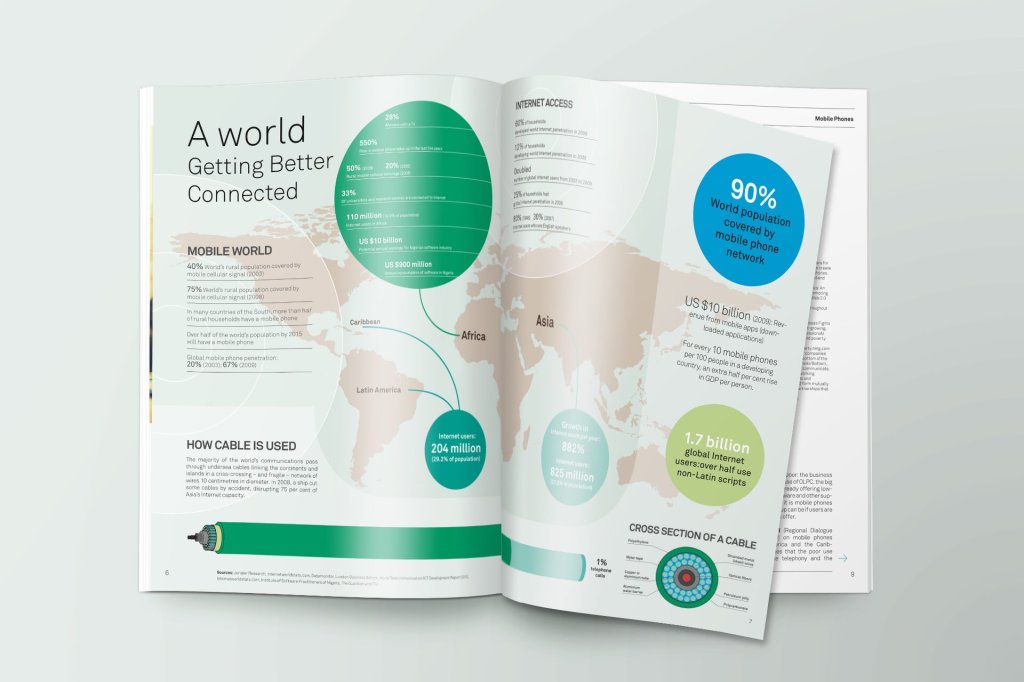
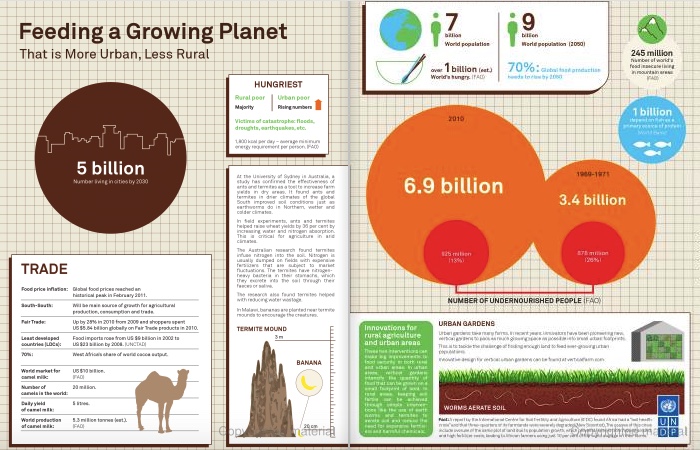
Development Challenges, South-South Solutions was launched as an e-newsletter in 2006 by UNDP’s South-South Cooperation Unit (now the United Nations Office for South-South Cooperation) based in New York, USA. It led on profiling the rise of the global South as an economic powerhouse and was one of the first regular publications to champion the global South’s innovators, entrepreneurs, and pioneers. It tracked the key trends that are now so profoundly reshaping how development is seen and done. This includes the rapid take-up of mobile phones and information technology in the global South (as profiled in the first issue of magazine Southern Innovator), the move to becoming a majority urban world, a growing global innovator culture, and the plethora of solutions being developed in the global South to tackle its problems and improve living conditions and boost human development. The success of the e-newsletter led to the launch of the magazine Southern Innovator.
Along with growing economies, the global South is seeing growing numbers of readers and a newly flourishing publishing industry. The creative economy – of which book publishing is part – is experiencing a jolt from a combination of expanding economies and urbanizing cities. Just as the first settled cities of ancient Mesopotamia (today’s Iraq) spawned literature and learning, so the rapidly urbanizing South is changing dynamics and creating the space and demand for books.
The creative economy is seen as the “interface between creativity, culture, economics and technology in a contemporary world dominated by images, sounds, texts and symbols” (UNCTAD). It has been shown to be an effective way for emerging economies to leapfrog into high-growth areas in the 21st century world economy.
Telling stories about local conditions and people’s rapidly changing lives is proving a commercial success formula. Fast-growing India is forecast to become the largest market for English language books within a decade. India’s economic boom, which saw 6.7 percent growth in 2009, and its expanding middle class are driving demand for books. India saw the number of literate people pass 66 percent by 2007.
“It is a forward-looking generation,” said Manish Singh, country manager for publisher Harlequin Mills and Boon, to The Guardian newspaper.
Estimates of India’s book reading market put the number of readers at just 5 million out of a population of over 1 billion people. But according to Anantha Padmanabhan, the director of sales in India for publisher Penguin, “that is set to increase dramatically.”
A survey by Tehelka (http://www.tehelka.com) found Indians are favouring stories about local conditions and set in the places where they live.
India’s most popular current writer is Chetan Bhagat, a former investment banker. He has sold more than 3 million books in the last five years. His latest, Two States, sold a million copies in four months.
Bhagat puts his success down to the way the stories are written. “This is not like the mature English literature market,” he said. “It needs an English that is highly accessible, simple, and with stories that are still interesting and relevant.”
Book prices in India have stayed affordable for the middle classes. A book can cost from US $1.85 to US $2.65 for a paperback – still a high cost for the poor, however, who live on a dollar a day.
In Egypt, around 30 percent of the population is illiterate and book reading has been historically very low: it has been claimed an average literate Egyptian reads a quarter of a page of a novel per year. From this low base, a best seller only needs to sell a few thousand copies.
However, in Egypt small-scale independent publishers are starting to make an impact. Mohamed Hashem – founder of the Dar Merit publishing house (http://www.zoominfo.com/Search/ReferencesView.aspx?PersonID=1007104230) – has built from scratch in 12 years one of the country’s most critically acclaimed publishers: all from a tiny apartment in a rundown Cairo building.
“We can’t compete with the big firms in terms of profits,” he told The Guardian, “but the new wave of authors will always be sitting here. Yes, we have poverty and limited resources. But we also have the future.”
Launched to counter what Hashem felt was an unimaginative book market, his stable of authors have shaken up the Arabic fiction world. The global success of Alaa al-Aswany’s The Yacoubian Building (http://en.wikipedia.org/wiki/The_Yacoubian_Building) is proof Hashem’s gamble on edgy talent was correct: rejected by two government-run publishing houses, the book went on to be a hit in English and Arabic and has been made into a film.
Hashem is being credited with unleashing a wave of new talented authors that has pushed literature out from being the preserve of a select group.
One of its successful authors, Hamdi Abu Golayyel – winner of the country’s top literary prize, the Naquib Mahfouz medal – believes “Merit has changed the way pioneering literature emerges in Egypt.”
“Before, you had the innovative writers – there are normally no more than five or six in a generation – meeting together in mutual isolation, because popular opinion rejected them.”
Merit “had the drive and ambition to support and distribute new and younger authors properly. Today innovative writing is wanted by the people.”
Hashem’s secret in attracting talented writers has been more than just business savvy: he also gives them “the freedom to write in my own way,” according to writer Ahmed Alaidy.
The writers also have a credibility advantage: they are writing about their circumstances rather than just imagining what it would be like. Writer Hani Abdel Mourid comes from Cairo’s traditional garbage-collecting neighbourhood; another author, Mohamed Salah Al Azab, has written a book named after the folding seats on Egypt’s lively minibuses.
Demographic changes and Cairo’s relentless expansion are being cited as the catalyst for the new writing.
“The fact that the city has grown the way it has,” says Samia Mehrez, a literature professor in Cairo, “the fact that what we used to call the periphery is now the centre, that is very important.”
“The year we started, we published five titles and the number of people interested could be counted in the dozens,” he told The Guardian. “Now we have 600 titles under our belt, and thousands are interested. It’s my duty to try and expand that circle. We’re chipping away at a wall, and slowly we’re making progress.”
Published: May 2010
Resources
1) Creative Economy Report 2008. An economic and statistical assessment of creative industries world-wide as well as an overview of how developing countries can benefit from trade in creative products and services produced by UNCTAD and the Special Unit for South-South Cooperation in UNDP. Website:http://www.unctad.org/en/docs/ditc20082cer_en.pdf
2) Global Creative Economy Convergence Summit 2009: The summit is about the successful and emerging creative technologies and initiatives that are driving economic growth locally, nationally and internationally. Website: http://www.gcecs2009.com/
5) Jaipur Literature Festival: Described as the ‘greatest literary show on Earth’, the Jaipur Literature Festival is a sumptuous feast of ideas.The past decade has seen it transform into a global literary phenomenon having hosted nearly 2000 speakers and welcoming over a million book lovers from across India and the globe. Website: https://jaipurliteraturefestival.org/
Development Challenges, South-South Solutions was launched as an e-newsletter in 2006 by UNDP’s South-South Cooperation Unit (now the United Nations Office for South-South Cooperation) based in New York, USA. It led on profiling the rise of the global South as an economic powerhouse and was one of the first regular publications to champion the global South’s innovators, entrepreneurs, and pioneers. It tracked the key trends that are now so profoundly reshaping how development is seen and done. This includes the rapid take-up of mobile phones and information technology in the global South (as profiled in the first issue of magazine Southern Innovator), the move to becoming a majority urban world, a growing global innovator culture, and the plethora of solutions being developed in the global South to tackle its problems and improve living conditions and boost human development. The success of the e-newsletter led to the launch of the magazine Southern Innovator.
A formerly obscure berry from the Amazon rainforest in Brazil has become a global marketing success. The açaí berry – a dark, small fruit similar in appearance to blueberries – has surged in popularity around the world and brought newfound prosperity to poor communities.
The açaí berry (http://en.wikipedia.org/wiki/Açaí_Palm) has seen its popularity take off because of its purported antioxidant properties (http://en.wikipedia.org/wiki/Antioxidants). It is marketed as a way to reduce cancer and heart disease, although hype has sometimes portrayed the benefits to be higher than scientific studies have found. But whatever the truth of the berry’s overall health-giving properties, it has become an economic success story in Brazil.
A rapid success story – açaí was first exported from Brazil after 2000 – the berry is now sought by health-conscious consumers and the diet industry for its antioxidant properties and slimming effects.
Harvesting the berries is providing poor communities with an alternative source of income in the Amazon rainforest (http://en.wikipedia.org/wiki/Amazon_Rainforest). And the successful marketing and selling of the berries offers a good example to others trying to improve profits for agricultural products from the South.
Prior to its global popularity, a bowl of açaí berries was a staple for poor families in some parts of Brazil. The pulp is traditionally eaten as a side dish. It is a common sight in Brazil to see street vendors or shops selling crushed açaí pulp. Trendier places in Rio de Janerio sell sweetened açaí berry smoothies. In Belem, the capital of Para State, two ice cream chains sell açaí flavoured ice cream. A white and purple swirl of açaí and tapioca is a common favourite. Other treats include açaí candy and açaí tarts in bakeries.
Some claim the taste of the berry when sweetened is earthy, while left in a natural state it is more grassy. The berry grows wild on palm trees lining rivers or on farms.
Orisvaldo Ferreira de Souza is an açaí farmer on the island of Itanduba, an hour by boat from the town of Cametá, population 117,000. Açaí harvesting has become the main livelihood for many families in the area. Orisvaldo harvests açaí from 8,000 palm trees on a 14 hectare farm.
“Two or three years ago, we had a lot of trouble selling the product,” he told the New York Times. “We had to bring it to town, and sometimes we came back without selling it.”
But times have changed and the buyers now come to the farmers. “Just yesterday, six buyers came by,” he said. “We sold 10 baskets each to two of them.”
At the CAMTA cooperative (http://www.camta.com.br/companyE.htm) in Tomé-Açu, a town with a population of 40,000, the berry is a significant source of income. The co-op’s director, Ivan Saiki, notes the boost to local incomes: “Before the boom, the harvest came and the açaí was worth practically nothing. Before, nobody had television, nobody had a motorized canoe. Now many have their own electricity at home. It’s greatly improved the life of the river communities.”
The co-op has a fruit pulp processing factory to improve the profits for the farmers and, by controlling quality, raise the reputation for their products. In order to avoid over-dependence on one commodity, the co-op members grow many other fruits as well, including papaya, mango, lemons, and local favourites abrico, uxi and bacuri.
Another initiative is Sambazon (Sustainable Management of the Brazilian Amazon) (www.sambazon.com). This small company, founded in 2000, combines business with a partnership to ensure local communities benefit from the berry’s success story. Sambazon buys the berries from over 10,000 people in the Amazon and is certified organic (http://www.organicfarmers.org.uk). Through its SAP (Sustainable Amazon Partnership), over 1,100 local family farmers are able to harvest açaí berries as an alternative income source to logging, cattle ranching and monoculture plantations – all of which are threats to the Amazon rainforest. The company sells a range of products, from sorbet to supplements to juices and energy drinks. It also uses athletes to promote the products and encourage a healthy lifestyle.
Other companies like Açaí Roots (www.acairoots.com) – founded by three Brazilians in Rio de Janerio – also associate the product with an overall healthy lifestyle. It sells drinks, smoothies, energy shots and liquid concentrate. Founded in 2005, it is selling the concept of the healthy Brazilian lifestyle and proudly claims its founders “were born and raised on açaí.”
Published: May 2010
Resources
1) Just Food is a web portal packed with the latest news on the global food industry and packed with events and special briefings to fill entrepreneurs in on the difficult issues and constantly shifting market demands. Website:www.just-food.com
2) International Cooperative Agricultural Organisation: The ICAO is the democratic organisation representing agricultural co-operatives and farmers worldwide. Website: http://www.agricoop.org
3) Waitrose Supermarket: It regularly sources fair trade and organic food products from the global South. Website: http://www.waitrose.com/index.aspx
4) Food Safety – From the Farm to the Fork is the European Commission’s guidelines on food safety and how to prepare food for import into the European Community. Website: http://ec.europa.eu/food/international/trade index_en.htm
Development Challenges, South-South Solutions was launched as an e-newsletter in 2006 by UNDP’s South-South Cooperation Unit (now the United Nations Office for South-South Cooperation) based in New York, USA. It led on profiling the rise of the global South as an economic powerhouse and was one of the first regular publications to champion the global South’s innovators, entrepreneurs, and pioneers. It tracked the key trends that are now so profoundly reshaping how development is seen and done. This includes the rapid take-up of mobile phones and information technology in the global South (as profiled in the first issue of magazine Southern Innovator), the move to becoming a majority urban world, a growing global innovator culture, and the plethora of solutions being developed in the global South to tackle its problems and improve living conditions and boost human development. The success of the e-newsletter led to the launch of the magazine Southern Innovator.











 David South Consulting
You must be logged in to post a comment.