Categories
Archive Development Challenges, South-South Solutions Newsletters

African Online Supermarket Set to Boost Trade

By David SouthDevelopment Challenges, South-South Solutions

SOUTH-SOUTH CASE STUDY

Online retailing and marketing strategies are revolutionizing how people around the world buy products and services – but so far they have not benefited most of Africa’s small businesses and traders. On a continent where trading for survival is the norm, very few people are reaping the benefits of selling on the Internet.

Not only has limited access to the Internet and the lack of high bandwidth in Africa impeded communication within the continent, it has restricted African businesses from taking advantage of the most profound change in global business for decades: e-retailing (also known as e-tailing or e-commerce).

But the African information technology pioneers of Ghana – a country that has already gained a reputation as an IT leader in West Africa (www.ghanaictawards.com) – are setting out to change this situation, and in turn to change the way people access African goods and services.

Pledging in its motto to reach “every African nook and cranny,” ShopAfrica53 is an online shopping portal similar to famous brands like Amazon or eBay, but focused entirely on giving African traders the ability to sell across the continent and to the world online.

The one-stop shopping site – taking its name from the 53 countries on the continent – can be accessed by Internet users, or better still, by the enormous number of mobile phone users not only in Africa but around the world.

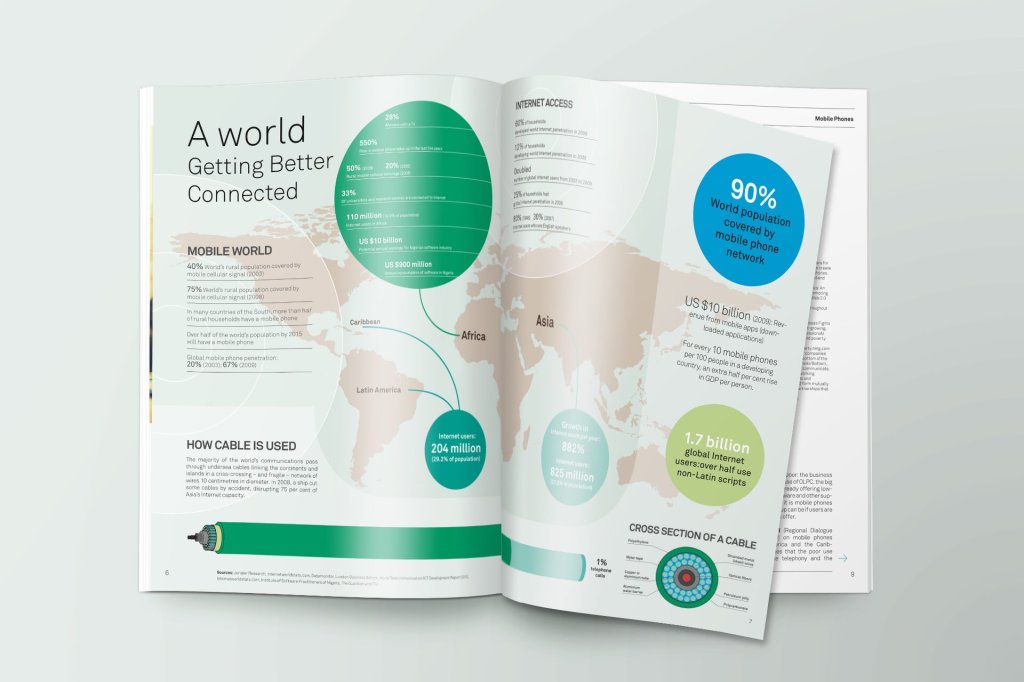
The number of mobile phone subscribers in Africa surpassed 300 million in 2008 (ITU), representing a significant market in their own right. Research group Informa Telecoms and Media estimates mobile networks now cover 90 per cent of the world’s population – 40 per cent of whom are covered but not connected.

ShopAfrica53 works like this: merchants first fill out an online form on the ShopAfrica53 website. They are then contacted by ShopAfrica, and an account is set up.

People wanting to buy goods and services on the website use the African Liberty Card to ensure the transactions are safe and not at risk from hackers and fraudsters. The disposable pre-paid scratch card can be used on mobile phones and the Internet and is purchased from store outlets.

ShopAfrica handles the logistical hassles of shipping to customers around the world, facilitates payment transfers, and helps with record keeping for merchants.

ShopAfrica offers an eclectic selection of goods: apparel and accessories, books and stationery, groceries, handicraft, health and personal care, home and garden, machinery and tools, technology and entertainment. It promises to offer the “best selection of African products, anywhere, worldwide” – everything from building supplies, household items and electronics to processed foods and fabrics.

One Ghanaian merchant, Mohammed Salifu, promises to deliver in two days a “large brown cow for delivery or collection. The size, colour and weight of animal will vary. This merchant provides live goats, sheep, cattle for special occasions and festivities and can also provide a slaughtering service for clients.”

Then there is Vera Ami Kpogli, who is selling a ‘Beyonce’ Electric Blue necklace. Tse-Lee Fashions offers Batik/Tie and Dye Print Shirt in aqua and navy. And for the ‘king’ of the house, Ama Afrique Designs is selling Men’s Royal Rulers, sandals “worn many centuries ago by African kings.”

The potential of this service to boost incomes is considerable: in the United Kingdom, online sales now make up 15 percent of all retail spending, reaching £43.8 billion (US $66.12 billion) in 2008 (IMRG).

As has been seen with other countries of the Global South, trade in high quality goods boosts incomes. South-South trade grew by an average of 13 percent per year between 1995 and 2007. By 2007, South-South trade made up 20 percent of world trade. And over a third of South-South commerce is in high-skill manufacturing. Making finished goods, rather than just selling raw materials, improves workers’ skill levels and increases the return on trade.

The rapid changes to African countries – the tilt to being more urban than rural, and being home to a larger urban population than North America, with 25 of the world’s fastest growing cities (International Institute for Environment and Development) – means there is an urgent need to boost incomes and better connect traders and manufacturers to the global economy.

ShopAfrica53 could be the start of a very big thing for African trade.

Published: May 2009

Resources

  • The red dot logo stands for belonging to the best in design and business. The red dot is an internationally recognised quality label for excellent design that is aimed at all those who would like to improve their business activities with the help of design.
    Website: www.red-dot.de
  • BOP Source is a platform for companies and individuals at the BOP (bottom of the pyramid) to directly communicate, ultimately fostering close working relationships, and for NGOs and companies to dialogue and form mutually valuable public-private partnerships that serve the BOP.
    Website: http://bopsource.ning.com/
  • Business Fights Poverty: Business Fights Poverty is the free-to-join, fast-growing, international network for professionals passionate about fighting world poverty through good business.
    Website: businessfightspoverty.ning.com
  • Dutch Design in Development: As a matchmaker, DDiD puts together European clients, Dutch designers and small and medium-sized enterprises in developing countries. The designers share their knowledge of European consumer tastes, product development, design and quality standards
    Website: www.ddid.nl
  • Afriville is a Web 2.0 service and an African Caribbean social network. Afriville is a community website along the lines of the famous MySpace. Users are free to message and post profiles. The difference is that the user is able to choose how closed or open the networks are. The site features a state of the art music management system which allows African and Caribbean artists to get straight in touch with their fans.
    Website: www.afriville.com
  • Business Action for Africa: Business Action for Africa is an international network of businesses and business organisations from Africa and elsewhere, coming together in support of three objectives: to positively influence policies for growth and poverty reduction, to promote a more balanced view of Africa, and to develop and showcase good business practice in Africa
    Website: www.businessactionforafrica.org
  • Interactive Media in Retail Group (IMRG) is a membership community for the e-retail industry, whose vision is to maximise the commercial potential of online shopping
    Website: www.imrg.org

https://davidsouthconsulting.org/2021/03/20/accessing-global-markets-via-design-solutions/

https://davidsouthconsulting.org/2022/06/02/afghanistans-juicy-solution-to-drug-trade/

https://davidsouthconsulting.org/2022/10/26/african-trade-hub-in-china-brings-mutual-profits-2/

https://davidsouthconsulting.org/2021/03/20/carbon-markets-need-to-help-the-poor/

https://davidsouthconsulting.org/2022/11/21/chinese-trade-in-angola-helps-recovery/

https://davidsouthconsulting.org/2021/03/20/computer-gold-farming-turning-virtual-reality-into-real-profits/

https://davidsouthconsulting.org/2022/04/12/djibouti-re-shapes-itself-as-african-trade-hub/

https://davidsouthconsulting.org/2021/07/19/global-south-trade-boosted-with-increasing-china-africa-trade-in-2013/

https://davidsouthconsulting.org/2020/12/12/mobile-phone-shopping-to-create-efficient-markets-across-borders/

https://davidsouthconsulting.org/2021/12/08/new-media-markets-and-screen-finance/

https://davidsouthconsulting.org/2022/10/26/perfume-of-peace-helps-farmers-switch-from-drug-trade/

https://davidsouthconsulting.org/2022/10/04/popular-chinese-social-media-chase-new-markets/

https://davidsouthconsulting.org/2021/07/19/south-south-trade-helping-countries-during-economic-crisis/

https://davidsouthconsulting.org/2022/11/17/sos-shops-keep-food-affordable-for-poor-unemployed/

https://davidsouthconsulting.org/2022/11/16/thai-organic-supermarkets-seek-to-improve-health/

https://davidsouthconsulting.org/2022/10/20/trade-to-benefit-the-poor-up-in-2006-and-to-grow-in-2007/

https://davidsouthconsulting.org/2020/04/17/virtual-supermarket-shopping-takes-off-in-china/

https://davidsouthconsulting.org/2022/10/05/women-empowered-by-fair-trade-manufacturer/

https://davidsouthconsulting.org/2022/06/16/women-mastering-trade-rules/

Development Challenges, South-South Solutions was launched as an e-newsletter in 2006 by UNDP’s South-South Cooperation Unit (now the United Nations Office for South-South Cooperation) based in New York, USA. It led on profiling the rise of the global South as an economic powerhouse and was one of the first regular publications to champion the global South’s innovators, entrepreneurs, and pioneers. It tracked the key trends that are now so profoundly reshaping how development is seen and done. This includes the rapid take-up of mobile phones and information technology in the global South (as profiled in the first issue of magazine Southern Innovator), the move to becoming a majority urban world, a growing global innovator culture, and the plethora of solutions being developed in the global South to tackle its problems and improve living conditions and boost human development. The success of the e-newsletter led to the launch of the magazine Southern Innovator. 

https://davidsouthconsulting.org/2021/03/05/southern-innovator-issue-2/

Creative Commons License

This work is licensed under a
Creative Commons Attribution-Noncommercial-No Derivative Works 3.0 License.

ORCID iD: https://orcid.org/0000-0001-5311-1052.

© David South Consulting 2023

Categories
Archive Development Challenges, South-South Solutions Newsletters

Cleaner Stoves To Reduce Global Warming

By David SouthDevelopment Challenges, South-South Solutions

SOUTH-SOUTH CASE STUDY

The use of polluting fuel-burning stoves by half the world’s population – including 80 percent of rural households – is a documented contributor to a host of health problems. Poor households not only have to contend with the ill health effects of dirty water and poor sanitation, the fumes from burning dung, wood, coal or crop leftovers lead to the deaths of more than 1.6 million people a year from breathing toxic indoor air (WHO).

The polluting stoves have also been identified as major contributors to climate change. The soot from the fires produces black carbon, now considered a significant contributor to global warming. While carbon dioxide is the number one contributor to rising global temperatures, black carbon is second, causing 18 percent of warming.

Getting black carbon levels down is being seen as a relatively inexpensive way to reduce global warming while gaining another good: cleaner air for poor households. The soot only hangs around in the atmosphere for a few weeks while carbon dioxide lingers for years, so the impact can be seen quickly.

A flurry of initiatives across the South are now designing, developing and testing clean-burning stoves to tackle this problem. The number of initiatives is impressive (see list of clean-burning stove initiatives by country: http://www.bioenergylists.org/en/country), but the test will be who can develop stoves that poor households will actually use and find the right model to distribute them to half the world’s population.

In India, the Surya cookstove project is test marketing six prototypes of clean burning stoves with poor households. Developed by the Energy and Resources Institute (TERI) in New Delhi, the six stoves are still undergoing field testing. Initial criticisms from users have focused on the stoves’ durability and overly clinical appearance.

Cost will be critical to success no matter what the stove’s final design: “I’m sure they’d look nice, but I’d have to see them, to try them,” Chetram Jatrav in Kohlua, central India, told the New York Times. As her three children coughed, she continued that she would like a stove that “made less smoke and used less fuel” but she cannot afford one.

Envirofit India – founded in 2007 as a branch of the US-based Envirofit International – is at a more advanced stage, already selling clean-burning stoves across India and the Philippines. It claims to have already sold over 10,000 stoves to poor households.

They have developed high-quality stoves in four models: the B-110 Value Single Pot (a simple stove for one pot), S-2100 Deluxe Single Pot (a sturdier design), S-4150 Deluxe Double Pot (two burning surfaces), S-4150 Deluxe Double Pot with Chimney. They have been designed to be visually appealing for households – in tasteful colours like blue and green – and using high quality engineering for durability.

They have been tested by engineers at the Colorado State University’s Engines and Energy Conversion Laboratory and are certified for design and environmental standards.

The stoves are on sale in 1,000 villages in Karnataka, Tamil Nadu, Kerala, and Andhra Pradesh. The stoves have already successfully undergone pilot testing in Chitradurga and Dharmapuri. The manufacturer uses a network of dealers, distributors, village entrepreneurs and not-for-profit organizations to make the stoves commercially available for purchase. They hope to have 1,500 dealer outlets by the end of 2009.

“Envirofit clean cookstoves have received an overwhelming reception in India,” said Ron Bills, chairman and chief executive officer at Envirofit. “Our cookstoves are not only meticulously engineered to reduce toxic emissions and fuel use; they are also aesthetically designed and durable. Envirofit takes great pride in offering high-quality, affordable products to typically underserved global markets.”

But once again price comes up as a major issue: Envirofit’s stoves are designed to last five years, and thus they cost more than other stoves for sale in India. An Envirofit stove costs between 500 rupees (US $10) to 2,000 rupees (US $40): existing stoves sell for between 250 rupees (US $5) and 1,000 rupees (US $20), and last a year at most.

As one blogger complained: “The envirofit stoves … are way beyond the capacity of the low income households who form 65% of the Indian population. Only the 10% of the middle to higher income segment can go for them… perhaps the price can be brought down by reducing the showy part of the stove to help the poorest.”

Envirofit is part of the Shell Foundation’s Breathing Space program, established to tackle indoor air pollution from cooking fires in homes and hopes to sell and place 10 million clean-burning stoves in five countries over the next five years.

Published: May 2009

Resources

A video shows the installation of clean-burning stoves in Peru, South America. It also has links to many other videos of clean-burning stoves and how to build and install them.
Website: http://www.youtube.com/watch?v=neZZvvnL8Lg

Designing a clean-burning dung fuel stove.
Website: www.bioenergylists.org

Follow @SouthSouth1

Slideshare: http://www.slideshare.net/DavidSouth1/development-challengessouthsouthsolutionsnovember2010issue

Southern Innovator Issue 1: https://books.google.co.uk/books?id=Q1O54YSE2BgC&dq=southern+innovator&source=gbs_navlinks_s

Southern Innovator Issue 2: https://books.google.co.uk/books?id=Ty0N969dcssC&dq=southern+innovator&source=gbs_navlinks_s

Southern Innovator Issue 3: https://books.google.co.uk/books?id=AQNt4YmhZagC&dq=southern+innovator&source=gbs_navlinks_s

Southern Innovator Issue 4: https://books.google.co.uk/books?id=9T_n2tA7l4EC&dq=southern+innovator&source=gbs_navlinks_s

Southern Innovator Issue 5: https://books.google.co.uk/books?id=6ILdAgAAQBAJ&dq=southern+innovator&source=gbs_navlinks_s

Creative Commons License

This work is licensed under a
Creative Commons Attribution-Noncommercial-No Derivative Works 3.0 License.

ORCID iD: https://orcid.org/0000-0001-5311-1052.

© David South Consulting 2023

Categories
Archive Blogroll Development Challenges, South-South Solutions Newsletters Southern Innovator magazine

Rebuilding After Chinese Earthquake: Beautiful Bamboo Homes

By David SouthDevelopment Challenges, South-South Solutions

SOUTH-SOUTH CASE STUDY

It has been a year since the May 12, 2008 Sichuan earthquake in China that killed more than 70,000 people.

China’s strongest earthquake for more than half a century, with a magnitude of 8.0 (en.wikipedia.org), it devastated large parts of the province of Sichuan. More than 10 million people were made homeless, most of them poor and elderly villagers (cities were not badly damaged).

Getting Sichuan back to normal is critical for not only the province’s people, but for all of China. Sichuan is China’s rice bowl, growing more food than any other province. But despite the abundance of food, Sichuan remains poor and has seen its working age population move away for work. If it is to have a viable future then its communities need to get back to normal as fast as possible – and its farming economy back to full production.

The unprecedented media coverage of the disaster meant people across China saw the scenes of devastation and have since contributed large donations to help with the reconstruction. The Chinese government has pledged to spend US $151 billion on reconstruction projects.

Finding ways to re-house people after large disasters has become an urgent issue over the last five years. From the Asian tsunami to Hurricane Katrina in the United States and multiple hurricane disasters in the Caribbean, restoring communities is critical for the health of the people and the economies they rely on. Experience has shown that temporary shelters have many drawbacks, being usually of poor quality for long-term habitation and a source of health problems.

The temporary shelters erected for the Sichuan homeless are unsuitable for long-term housing: the 12 square metre grey boxes – two sheets of aluminium sandwiching a polystyrene core for insulation – have no heating. The occupants roast inside in the summer and freeze in the winter. They are also located away from the main source of income: the farms.

The dilemma is how to build new, long-term houses that will not cost too much. Inflation has increased the costs of conventional building materials: bricks, cement and steel.

But the use of traditional building materials and home designs offers an alternative. By drawing on the abundant bamboo and wood in Sichuan and by building to traditional designs, cheaper but sturdy and beautiful homes can be built.

An average home now costs around 80,000 yuan (US $11,688). The Chinese government estimates the price is now 820 yuan per square meter for a new home: bamboo homes cost between 300 and 400 yuan per square meter. Government compensation is between 16,000 yuan (US $2,337) and 23,000 yuan (US $3,360) per family. The bamboo houses range in size from 75 to 200 square metres, and in cost from 22,500 yuan to 80,000 yuan for a very large home.

In Daping village, Pengzhou Town, original homes destroyed by the earthquake sit at the edge of a forested hill. Their frames are more or less intact, but the walls and roofs have collapsed. The new houses replacing them are large, two stories high and have solid grey clay tile roofs. The beauty of the designs stands out and sits in stark contrast to the temporary shelters and concrete buildings.

“There are 43 houses and two public buildings being rebuilt in this project,” says team member Hu Rong Rong of the Green Building Research Centre of Xi’an University of Architecture and Technology. “The design and the main building material are based on the ecological and sustainable habitat idea. The place (Sichuan) is rich in bamboo and wood. These natural materials are cheap and friendly to the environment. In some buildings we use light steel which can be also recycled.”

The new homes are built to earthquake resistance standards. Led by Professor LiuJiaping, a team of 15 people from the research centre and two from a design institute developed the home designs and supervised the training of local people. They were joined by 10 people from an NGO called Global Village of Beijing, who managed the project to completion.

“All the designs were discussed with the local people,” continues Hu. “We trained a local construction team, which means the local people would build their own houses by themselves. Both our research center and the local people were involved in developing the home design.

“To get the trust from the local people is a challenge in the project. We resolved it by showing our respect to the local people. Before we started our design we discussed with the local people many times to know what kind of house they like. We built the first house to make them believe us.”

Hu believes it is possible to replicate the homes across Sichuan.

“The design is suitable for other villages in Sichuan which have a similar climate and culture with this village. To rebuild sustainable houses after a disaster we should know well about the local life, environment and culture – try to find the useful technique which was used in their traditional houses and upgrade the traditional house to meet the need of their modern life.”

Others have not been as lucky as these villagers. In the village of Yuan Bao, Chen Jingzhong, 66, has had to build a makeshift shack: “They wanted to get us to build our own houses but they didn’t give us enough money,” Chen told the Telegraph Magazine. “All we could afford was this shack, which we built ourselves, with our own hands and without any help from anyone.”

Published: May 2009

Resources

Architecture for Humanity: By tapping a network of more than 40,000 professionals willing to lend time and expertise to help those who would not otherwise be able to afford their services, they bring design, construction and development services where they are most critically needed. Website: www.architectureforhumanity.org

Chinese Red Cross: The Red Cross Society of China is accepting donations for disaster reconstruction and is coordinating rebuilding efforts in Sichuan Website: http://www.redcross.org.cn/ywzd/

Gerd Niemoeller has developed flat pack, cardboard homes that can be deployed quickly after a disaster and can become permanent homes.Website: http://tinyurl.com/6t6jtf and the company
Website: http://www.wall.de/en/home

Global Greenhouse Warming is a website that tracks extreme weather events around the world: drought, flooding, severe storms, severe winter, tropical cyclone, wildfires, and extreme heat waves.Website: www.global-greenhouse-warming.com

The Building and Social Housing Foundation: An independent research organization promoting sustainable development and innovation in housing through collaborative research and knowledge transfer. Website: www.bshf.org

https://davidsouthconsulting.org/2021/09/01/disaster-recovery-ten-years-after-the-gujarat-india-experience/

https://davidsouthconsulting.org/2021/11/12/energy-efficient-wooden-houses-are-also-earthquake-safe/

https://davidsouthconsulting.org/2021/09/01/haiti-earthquake-prompts-tech-aid/

https://davidsouthconsulting.org/2021/02/12/rammed-earth-houses-china-shows-how-to-improve-and-respect-traditional-homes/

https://davidsouthconsulting.org/2022/09/26/3d-home-printing-landmark-10-houses-in-a-day/

Development Challenges, South-South Solutions was launched as an e-newsletter in 2006 by UNDP’s South-South Cooperation Unit (now the United Nations Office for South-South Cooperation) based in New York, USA. It led on profiling the rise of the global South as an economic powerhouse and was one of the first regular publications to champion the global South’s innovators, entrepreneurs, and pioneers. It tracked the key trends that are now so profoundly reshaping how development is seen and done. This includes the rapid take-up of mobile phones and information technology in the global South (as profiled in the first issue of magazine Southern Innovator), the move to becoming a majority urban world, a growing global innovator culture, and the plethora of solutions being developed in the global South to tackle its problems and improve living conditions and boost human development. The success of the e-newsletter led to the launch of the magazine Southern Innovator.
https://davidsouthconsulting.org/2021/03/05/southern-innovator-issue-4/

Creative Commons License

This work is licensed under a
Creative Commons Attribution-Noncommercial-No Derivative Works 3.0 License.

ORCID iD: https://orcid.org/0000-0001-5311-1052.

© David South Consulting 2023