Tag: markets

  • Mobile Phone Shopping to Create Efficient Markets across Borders

    Mobile Phone Shopping to Create Efficient Markets across Borders

    By David SouthDevelopment Challenges, South-South Solutions

    SOUTH-SOUTH CASE STUDY

    An anticipated game-changing revolution in African trading set for 2013 is getting one innovative business very excited.

    Southern African mobile phone “m-commerce” pioneer moWoza (mowoza.com) is developing new ways of selling services and products through mobile phones and developing the networks and infrastructure to capitalize on coming changes in Africa as cross-border trade is liberalized.

    It is already selling food packages containing well-known South African brands that can be ordered by migrants on their mobile phones and then delivered to recipients – family or friends – even in remote and hard-to-reach communities. The service is currently operating between Mozambique and South Africa – the two countries share a border.

    The start-up hopes to help the millions of migrant workers and small traders who contribute to the constant flow of trade and wealth between states in Africa. These people face many obstacles, including bureaucratic red tape, corruption and harassment.

    Cross-border trade by economic migrants is largely informal. moWoza hopes to make it formal and efficient while reducing exploitation of migrants and corrupt practices by officials. By providing an easy-to-use mobile phone service, it hopes to build trust with these transactions.

    Africa is a market of a billion people worth US $2 trillion in trade and business, but the World Bank estimates the continent is losing billions of dollars in potential earnings because of high trade barriers. It found that it is easier for African countries to trade with the rest of the world than with other African countries.

    The continent’s leaders are calling for a continent-wide free trade area by 2017.

    Studies by the World Bank and others have repeatedly shown that inefficient transport and trade barriers translate into higher prices of goods for consumers as importers pass along high transport costs to consumers. Food prices remain extremely high in Africa – almost 25 per cent higher than they were in 2006, according to the World Bank. In developing countries, people normally spend up to 80 per cent of their incomes on food.

    With the world in the grip of an ongoing food crisis brought about by multiple factors – including growing populations, environmental challenges such as drought and soil depletion, declining rural economies, inefficient farming methods and commodity speculation – measures that increase efficiencies and trade can be a powerful counterweight and help drive prices back down again.

    moWoza – mo stands for mobile and Woza is a Zulu word meaning running -sells a range of products including basic foodstuffs to a target market of cross-border migrants in Southern Africa. moWoza estimates there are 7 million migrant and cross-border shoppers in South Africa alone, and it’s building a network reaching into remote communities to deliver packages ordered through its m-commerce service on mobile phones.

    moWoza aims to open up access to products in these underserved markets.

    moWoza is trying to position itself for the new opportunities that will arise when, in 2013, 23 African borders open for regional trade, creating a vast trading area stretching from Cairo in Egypt to Cape Town in South Africa.

    moWoza wants to be the m-commerce brand that people will turn to. It is chasing customer markets that include African economic migrants, small and medium-sized enterprises doing cross border trade, and the 30 million African economic migrants who are supporting family back in their home countries.

    Founder Suzana Moreira says the company carried out extensive research in South Africa, Mozambique, Lesotho, Zimbabwe and Kenya before launching its first trial runs between South Africa and Mozambique. “We ran several pilots to determine the most efficient way to provide access to packages for the beneficiaries and developed the necessary technology to enable our customers (migrants) to place orders simply. We are now operating between Johannesburg and Maputo,” she said.

    Officially incorporated in 2009, moWoza did not get up and running until 2010.

    Once a customer has experienced a delivery from moWoza, they are introduced to other services like banking or how to download information from the Internet. Many customers are only just learning about the resources available online.

    “We look forward to the opening up of cross border trade as our findings suggest that the liberalization and facilitation of the cross-border trade initiative will increase demand for all products and services from South Africa to neighbouring countries,” Moreira said. “South Africa offers an extensive range of products compared to the choice of products that are offered in many of the neighbouring countries.

    “The structures and networks that compel migrants to come to South Africa are well established,” she explained.

    “The social networks encourage the movement of labour. Hundreds of thousands of male migrants from the Southern African Develoment Community, SADC (http://www.sadc.int/), countries have spent the greater parts of their working lives in South Africa. They in turn had parents or grandparents who had worked in South Africa, while providing a lifeline to the family in the home country.

    “This practice will continue: mobile money to a degree will facilitate this lifeline but as long as products can be sourced cheaper in South Africa, the demand for South African products will continue.”

    The people behind moWoza sound like business radicals, proclaiming that traditional ‘bricks and mortar’ businesses will be replaced in a shopping revolution by WAP (wireless application protocol) and SMS (short message service) business platforms operating on mobile phones.

    Apart from developing the m-commerce business, moWoza aspires to become a well-known brand for the migrant community.

    “Becoming a lifestyle brand is a bold statement on our part,” Moreira said. “However, this goal reflects a measure of success and would demonstrate that we are delivering value to our customers (migrants and micro-merchants) and their beneficiaries.”

    The moWoza brand hopes to reflect the lives of their customers and be all about embracing fluidity and mobility.

    “As our primary customers are transnational and highly mobile (immigrants with a dual existence), we would like moWoza to represent mobility and fluidity (attune to anytime, anywhere, always).” she said. “Their greatest aspiration is an improved livelihood and a simplification of the rigours of grass-roots existence.”

    moWoza foresees big changes coming for the economies of the African countries affected by the opening up of regional trade. According to its website: “New markets and trading routes will mushroom, traditional value chains will be replaced with ICT [information and communications technology] innovations; a savvier and younger consumer will emerge who will value convenience and simplicity.”

    For users, moWoza’s service works like this: A customer uses a mobile phone to make a purchase. An agent helps with selecting the right package and delivery options. When the payment is made, an SMS mobile receipt – a so-called m-receipt – is sent to the customer. The person who will be receiving the parcel will also receive a text message. During the delivery process, ‘m-updates’ are sent on progress to both parties and when the parcel is finally delivered, a final notification is sent of delivery.

    Special drop-off points have been set up in countries where the service is available and there is follow-up contact with the customer to determine their continuing needs.

    MoWoza hires people from the communities they operate in as agents. An agent works with the customer to show how the Internet works on mobile phones and to improve their literacy skills.

    Product parcels are selected to meet the World Health Organization (WHO) nutritional guidelines. The packages are selected based on focus groups and customer feedback.

    With offices in South Africa and the United Kingdom, moWoza is looking forward to expanding what it can offer.

    “We will continue to innovate, and deliver services that improve the livelihoods of our target market and their beneficiaries,” Moreira said. “We will extend our packages to include seeds and other agricultural products, school and educational materials, and health products. As we grow, our services will extend to digital (virtual) goods, e.g. insurance products specifically targeting the underserved communities.”

    Published: August 2012

    Resources

    1) A downloadable map showing border delays, bribes and barriers impeding cross-border trade. Website: http://www.borderlesswa.com/resources/18th-usaid-uemoa-road-governance-map

    2) Borderless Alliance: Removing Trade Barriers in West Africa: Borderless is a vision for competitive trade in West Africa – of eliminating barriers to trade. Streamlining procedures, attacking corruption and facilitating the movement of people and goods will lower costs. Consequently, businesses will expand, create jobs and generate more revenue for government and more income for people. Website: http://www.borderlesswa.com/

    3) Borderless Conference 2013 and 2014: Call for proposals: The Borderless Alliance Secretariat announces a call for proposals to host the 2013 annual Borderless Conference. Borderless Conference 2013 will be the second transport and trade annual conference in West Africa, and will bring together more than 300 stakeholders from around the world to discuss efficiency in logistics, using data for decision making and advocacy. Website:http://www.borderlesswa.com/news/borderless-conference-2013-2014-call-proposals

    4) West Africa Trade Hub: Website:http://www.watradehub.com

    5) Trade Mark East Africa: Supporting East African Integration: Through TradeMark East Africa, a cost-effective regional aid delivery mechanism has been established that can focus on building long-term East African capacity. TradeMark East Africa provides a durable platform for scaling-up of Aid For Trade to East Africa. Website: http://www.trademarkea.com/home/

    6) Geneva Trade and Development Forum. Website: http://www.gtdforum.org/

    7) Spaza News: The newspaper aimed at spaza shop owners seeking to connect them. Website: http://www.spazanews.co.za/

    8) Africa Trade Gateway: Website: https://www.africatradegateway.com/

    9) Cross Border Trade Desk: This website is a ‘resource’ to help cross border traders in Eastern and Southern Africa to find an association near to them, to voice their opinions and explain what COMESA is doing in improving conditions for small-scale cross border traders. Website: http://www.cbtcomesa.com/

    10) Defragmenting Africa website including the report De-Fragmenting Africa: Deepening Regional Trade Integration in Goods and Services by the World Bank. Website: http://tinyurl.com/cta3ykf

    https://davidsouthconsulting.org/2022/10/09/a-new-mobile-phone-aimed-at-the-poor/

    https://davidsouthconsulting.org/2020/04/30/crowdsourcing-mobile-phones-to-make-the-poor-money/

    https://davidsouthconsulting.org/2020/05/01/diy-solution-charges-mobile-phones-with-batteries/

    https://davidsouthconsulting.org/2022/10/09/entrepreneurs-use-mobiles-and-it-to-tackle-indian-traffic-gridlock/

    https://davidsouthconsulting.org/2022/11/01/innovative-mobile-phone-applications-storm-south/

    https://davidsouthconsulting.org/2022/10/27/kenyan-mobile-phone-innovations/

    https://davidsouthconsulting.org/2022/10/10/mobile-applications-market-opportunities-for-south/

    https://davidsouthconsulting.org/2020/12/20/mobile-phones-engineering-souths-next-generation-of-entrepreneurs/

    https://davidsouthconsulting.org/2020/12/12/mobile-phones-new-market-tools-for-the-poor/

    https://davidsouthconsulting.org/2020/12/20/mobile-phones-bring-the-next-wave-of-new-ideas-from-the-south/

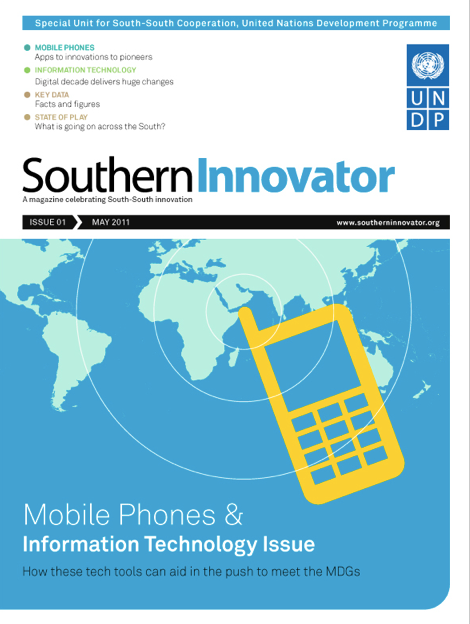
    Development Challenges, South-South Solutions was launched as an e-newsletter in 2006 by UNDP’s South-South Cooperation Unit (now the United Nations Office for South-South Cooperation) based in New York, USA. It led on profiling the rise of the global South as an economic powerhouse and was one of the first regular publications to champion the global South’s innovators, entrepreneurs, and pioneers. It tracked the key trends that are now so profoundly reshaping how development is seen and done. This includes the rapid take-up of mobile phones and information technology in the global South (as profiled in the first issue of magazine Southern Innovator), the move to becoming a majority urban world, a growing global innovator culture, and the plethora of solutions being developed in the global South to tackle its problems and improve living conditions and boost human development. The success of the e-newsletter led to the launch of the magazine Southern Innovator.

    https://davidsouthconsulting.org/2021/03/05/southern-innovator-issue-1/

    Creative Commons License

    This work is licensed under a
    Creative Commons Attribution-Noncommercial-No Derivative Works 3.0 License.

    ORCID iD: https://orcid.org/0000-0001-5311-1052.

    © David South Consulting 2022

  • Mobile Phones: New Market Tools for the Poor

    Mobile Phones: New Market Tools for the Poor

    By David SouthDevelopment Challenges, South-South Solutions

    SOUTH-SOUTH CASE STUDY

    Bangladesh’s poor can now buy and sell goods and services with their mobile phones, thanks to a Bangladeshi company’s pioneering mobile phone marketplace. The company, CellBazaar, serves as a useful role model for other Southern entrepreneurs and companies looking to develop and market mobile phone applications for the poor that really help them.

    CellBazaar is simple to use: A user begins the process by texting the word “buy” to short message (SMS) code 3838. They then are offered a list of all the items for sale and scroll through them to find what they want. When they have found something, they send another SMS. In response, an SMS comes back telling the seller’s phone number. And from that point, business is underway between the buyer and the seller.

    “It’s a far more efficient way of finding things. In the past you have to go to newspapers, magazines, and find the best match,” founder Kamal Quadir told MobileActive.

    The categories run from used cars and motorcycles, to new laptops, agricultural products like corn, chickens and fish, educational tutors, jobs, and places for sale and rent.

    Quadir said he had the idea for CellBazaar when he was a graduate student at MIT, the Massachusetts Institute of Technology in the United States.

    “I was surrounded by technologically sophisticated people,” he said. “I saw all this technological possibility and heard one top-notch scientist mentioning that a very cheap mobile phone had the same capabilities as a NASA computer in 1968. A country like Bangladesh has 35 million NASA-type computers, and most importantly, they’re in people’s pockets.”

    Quadir saw all this power going to waste, and realized how business was being held back by the lack of information. Absence of market intelligence – or what is available for sale and what is a good price – was a big impediment to more profitable and efficient business transactions.

    Quadir first created the idea at MIT Media Labs and eventually signed a contract with GrameenPhone. CellBazaar launched in July of 2006, and, after a year of beta testing, the team started to actively market the service in August 2007.

    CellBazaar can also be accessed through its website. This has the advantage of making what is a very local market an international market.

    Partnering with Grameen Phone, Bangladesh’s leading telecommunications service provider with more than 18 million subscribers, had its advantages. With 60 percent of the Bangladesh market, “their network is larger than others,” Quadir said.

    Just as web applications like Google and the powerful social networking website Facebook (www.facebook.com) transformed the way people work and socialize, so CellBazaar has needed to encourage a change in behaviour for it to work. At first, people didn’t think they had anything worth selling, or that they could use the text messages to connect to a marketplace.

    “In the past, a rural village person couldn’t even imagine that they wanted to sell something and the whole world would be willing to buy it,” Quadir said. “The biggest challenge we have is people blocking that audacity and courage.”

    To date, over 1 million people have used the service out of a country of 150 million people. “Fundamentally the real issue is about changing people’s patterns,” he said. “But once they learn how to use it, people start doing it really frequently.”

    The CellBazaar experience also shows how critical clever marketing is to business success. The company has been marketed through tastefully designed stickers placed in the windows of cars, taxis and microbuses — ubiquitous and continuous publicity for low cost.

    CellBazaar also has launched educational booklets for four target audiences: villagers and farmers, the elderly and retired, young professionals, and tech-savvy teenagers. There are detailed booklets for those who want step-by-step instructions, as well as short leaflets for customers who want to carry a “quick guide” in their pocket.

    CellBazaar launched its first television campaign during the Muslim festival of Eid in 2007. The ads featured a newspaper seller called Shamsu Hawker, and show how he begins a new career buying and selling used televisions with the help of CellBazaar. The advertisement’s unusual setting on a train, as well as positive imagery of Bangladesh, created a sensation among TV viewers. The character “Shamsu Hawker” has become a nationally recognized icon and popular cultural figure.

    As the service grows, the demographic that uses it has also expanded. “Young people were the early adopters,” said Quadir. “Initially urban people used it more, because we didn’t market very aggressively. Word of mouth spread faster because of the higher concentration of people in cities. But now it has spread to rural areas as well.”

    CellBazaar has won many awards for its innovation in social and economic development.

    The ambitious Quadir wants to expand CellBazaar into East Africa, Eastern Europe, and South Asia. Unlike the web, CellBazaar has to make deals with local mobile phone providers. He can’t just offer the service through the internet. “The Internet belongs to everybody — like highways and like fresh air,” said Quadir. “Mobile networks are privately owned.”

    “So far the operators we have worked with have been very good,” he said. “We are very selective in terms of what operator we work with.” As CellBazaar looks to expand, Quadir is focusing efforts on places that have high mobile penetration rates and low web penetration. “We’re looking at any place that has less internet. No matter how good the application is, having internet and high computer penetration doesn’t help us,” he said. “And mobile is everywhere.”

    The same lesson is being learned around the world. A study of grain traders in Niger found that “cell phones reduce grain price dispersion across markets by a minimum of 6.4 percent and reduce intra-annual price variation by 10 percent.” According to the study, “The primary mechanism by which cell phones affect market-level outcomes appears to be a reduction in search costs, as grain traders operating in markets with cell phone coverage search over a greater number of markets and sell in more markets.”

    Mobile phones are now the fastest growing consumer product in history. Portio Research estimates that between 2007 and 2012 the number of mobile subscribers will grow by another 1.8 billion, mostly in emerging economies like India and China.

    Informa Telecoms and Media estimates mobile networks now cover 90 per cent of the world’s population – 40 per cent of whom are covered but not connected. With such reach, finding new applications for mobile phones that are relevant to the world’s poor and to developing countries is a huge growth area. It is estimated that by 2015, the global mobile phone content market could be worth over US $1 trillion, and basic voice phone calls will account for just 10 per cent of how people use mobile phones.

    Leonard Waverman of the London Business School has estimated that an extra 10 mobile phones per 100 people in a typical developing country, leads to an extra half a percentage point of growth in GDP per person.

    The experience in the Philippines has shown that the best way to drive fast take up of mobile phone services is to offer something very practical and connected to personal income.

    “The most significant lesson learned so far,” said Shawn Mendes, lead author on the report, The Innovative Use of Mobile Applications in the Philippines: Lessons for Africa, “is that m-Banking, rather than more altruistic applications such as m-Health and m-Education, has delivered the greatest benefits to people in developing countries.”

    Published: October 2008

    Resources

    • SME Toolkit: A free online resource aimed at the South to help entrepreneurs and small businesses access business information, tools, and training services to be able to implement sustainable business practices. Website:http://www.smetoolkit.org/smetoolkit/en
    • Entrepreneurial Programming and Research on Mobiles: EPROM, part of the Program for Developmental Entrepreneurship within the MIT Design Laboratory, aims to foster mobile phone-related research and entrepreneurship. Key activities include development of new applications for mobile phone users worldwide. Website: http://eprom.mit.edu/
    • Textually.org: a very inspiring website profiling loads of innovations with mobile phones in the developing world. 
      Website:http://www.textually.org/textually/archives/cat_mobile_phone_projects_thir
    • The innovative use of mobile applications in the Philippines Lessons for Africa: A paper from the Swedish International Development Cooperation Agency (Sida) on mobile phone innovation. Website:http://www.sida.se/sida/jsp/sida.jsp?d=118&a=33306&language=en

    https://davidsouthconsulting.org/2020/04/30/crowdsourcing-mobile-phones-to-make-the-poor-money/

    https://davidsouthconsulting.org/2020/05/01/diy-solution-charges-mobile-phones-with-batteries/

    https://davidsouthconsulting.org/2022/10/09/entrepreneurs-use-mobiles-and-it-to-tackle-indian-traffic-gridlock/

    https://davidsouthconsulting.org/2022/06/15/indian-mobile-phone-application-innovators-empower-citizens/

    https://davidsouthconsulting.org/2022/11/01/innovative-mobile-phone-applications-storm-south/

    https://davidsouthconsulting.org/2020/12/20/kenya-reaches-mobile-phone-banking-landmark/

    https://davidsouthconsulting.org/2022/10/27/kenyan-mobile-phone-innovations/

    https://davidsouthconsulting.org/2022/10/10/mobile-applications-market-opportunities-for-south/

    https://davidsouthconsulting.org/2022/03/08/mobile-phone-microscopes-to-revolutionize-health-diagnostics/

    https://davidsouthconsulting.org/2022/04/06/mobile-phone-peacekeeping/

    https://davidsouthconsulting.org/2020/12/12/mobile-phone-shopping-to-create-efficient-markets-across-borders/

    https://davidsouthconsulting.org/2020/12/20/mobile-phones-bring-the-next-wave-of-new-ideas-from-the-south/

    https://davidsouthconsulting.org/2020/12/20/mobile-phones-engineering-souths-next-generation-of-entrepreneurs/

    https://davidsouthconsulting.org/2022/10/09/a-new-mobile-phone-aimed-at-the-poor/

    https://davidsouthconsulting.org/2021/11/09/ring-tones-and-mobile-phone-downloads-are-generating-income-for-local-musicians-in-africa/

    Development Challenges, South-South Solutions was launched as an e-newsletter in 2006 by UNDP’s South-South Cooperation Unit (now the United Nations Office for South-South Cooperation) based in New York, USA. It led on profiling the rise of the global South as an economic powerhouse and was one of the first regular publications to champion the global South’s innovators, entrepreneurs, and pioneers. It tracked the key trends that are now so profoundly reshaping how development is seen and done. This includes the rapid take-up of mobile phones and information technology in the global South (as profiled in the first issue of magazine Southern Innovator), the move to becoming a majority urban world, a growing global innovator culture, and the plethora of solutions being developed in the global South to tackle its problems and improve living conditions and boost human development. The success of the e-newsletter led to the launch of the magazine Southern Innovator.

    https://davidsouthconsulting.org/2021/03/05/southern-innovator-issue-1/

    Creative Commons License

    This work is licensed under a
    Creative Commons Attribution-Noncommercial-No Derivative Works 3.0 License.

    ORCID iD: https://orcid.org/0000-0001-5311-1052.

    © David South Consulting 2023

  • Nollywood: Booming Nigerian Film Industry

    Nollywood: Booming Nigerian Film Industry

    By David SouthDevelopment Challenges, South-South Solutions

    SOUTH-SOUTH CASE STUDY

    The digital revolution in filmmaking over the last decade has given birth to an African success story: Nollywood – Nigeria’s answer to Hollywood, uses low-cost digital filmmaking and editing to tell local stories — in the process making money and creating thousands of jobs.

    This do-it-yourself (DIY), straight-to-DVD and video market has in just 13 years ballooned into a US $250 million-a-year industry employing thousands of people. In terms of the number of films produced each year, Nollywood is now in third place behind India’s Bollywood and America’s Hollywood. Despite rampant pirating of DVDs and poor copyright controls, directors, producers, actors, stars, vendors and technicians are all making a living in this fast-growing industry.

    The power of creative industries to create jobs and wealth has been a focus of UNESCO, through its Global Alliance for Cultural Diversity. UNESCO has been in the forefront in helping African countries re-shape their policies to take cultural industries into consideration. The promotion of cultural industries also has been incorporated into the New Partnership for Africa’s Development (NEPAD).

    What is particularly attractive about Nollywood to the poor in the South is its rough-and-ready approach to filmmaking: combining low-cost digital cameras and film editing software on personal computers, with small budgets and fast turn-around times. Films are made on location using local people. These factors make getting into filmmaking accessible and within reach of more people.

    Nollywood grew out of frustration, necessity and crisis: in the late 1980s and early 1990s, Nigerian cities became crime hotbeds. People were terrified to go out on the streets, and this led to the closing down of many movie theatres. Desperate for entertainment at home – and unsatisfied with foreign imports from India and the West – Nigerians turned to telling their own stories to stave off the boredom of staying in.

    The film credited with sparking off the industry is 1992’s Living in Bondage – a huge financial hit credited with raising the level of professionalism and production values in Nigerian cinema.

    Now, between 500 and 1,000 feature-length movies are made each year, selling well across the continent of Africa. Average productions take 10 days and cost around US $15,000 (www.thisisnollywood.com). Nollywood stars are famous throughout Africa – and Nigeria culturally dominates West Africa just as the US does the world. It is estimated there are 300 producers and that 30 titles go to shops and market stalls every week. On average, a film sells 50,000 copies: a hit will sell several hundred thousand. With each DVD costing around US $2, it is affordable to most Nigerians and very profitable for the producers.

    “These are stories about Africa, not someone else’s,” well-known actor Joke Silva told the Christian Science Monitor.

    Focused on Africa, the films’ themes revolve around AIDS, corruption, women’s rights, the occult, crooked cops and prostitution. They do so well because they speak directly to the lives of slum-dwellers and rural villagers.

    “We are telling our own stories in our way, our Nigerian way, African way,” said director Bond Emeruwa. “I cannot tell the white man’s story. I don’t know what his story is all about. He tells his story in his movies. I want him to see my stories too.”

    The big brands – Sony, Panasonic, JVC and Canon – all produce cameras capable of high-definition digital filmmaking and these have become the staple tools of this filmmaking revolution.

    More and more, the films are capitalising on the large African diaspora around the world, on top of Africa’s large internal market. And this is offering a step-up into the global marketplace for Nigerian directors and producers.

    The Nollywood phenomemon has been documented in the documentary This is Nollywood, directed by Franco Sacchi, a teacher from the Center of Digital Imaging Arts at Boston University.

    The prospects for the industry are only looking up: the Nigeria in the Movies project has been launched to help grow the industry, establish standards, improve distribution and broaden its international appeal and awareness. It also offers filmmaking grants for neophyte filmmakers.

    Of course, filmmaking can be a tricky business: authorities in largely Muslim northern Nigeria have imposed 32 restrictions on the local film industry — nicknamed “Kannywood” after the city of Kano. A six-month ban lost the industry US $29 million and put thousands out of work: a sign of the economic importance of this DIY filmmaking business. The message is clear: filmmakers need to be sensitive to the cultural norms of the communities in which they work.

    Kannywood, started in 1992, has 268 production companies and 40 editing studios, employing over 14,000 people.

    Adim Williams is one Nigerian director who is getting an international audience. He spends about US $40,000 on films that take two weeks to shoot. He has already secured an American release of a comedy, Joshua. Another director, Tunde Kelani, is regularly featured at international film festivals, where Nollywood screenings are more common.

    And some, like young director Jeta Amata, believe Nollywood’s cheap, fast-production, DIY approach has a lot to teach Hollywood, with its expensive filmmaking and ponderous production cycles.

    Published: March 2008

    Resources

    • This is Nollywood: A documentary about Nigeria’s booming movie industry.
      Website: http://www.thisisnollywood.com
      There is also an inspiring trailer to the film here.
      Website: http://www.thisisnollywood.com
    • The global charity Camfed (dedicated to eradicating poverty in Africa through the education of girls and empowerment of women) has projects to teach women filmmaking skills.
      Website: http://uk.camfed.org
    • Festival Panafricain du Cinema et de la Television de Ouagadoogou 2009: Africa’s biggest film festival.
      Website: http://www.fespaco.bf/
    • Naijarules: Billing itself as the “largest online community of lovers and critics of Nollywood”, an excellent way to connect with all the players in the business.
      Website: http://www.naijarules.com/vb/index.php
    • Nollywood Foundation: Based in the US, aims to bring Nigerian films and culture to an international audience and to promote new films and new media.
      Website:http://www.nollywoodfoundation.org/home.php

    https://davidsouthconsulting.org/2022/03/30/angolan-film-grabs-attention-at-film-festival/

    https://davidsouthconsulting.org/2022/04/01/bolivian-film-schools-film-scene-paying-off/

    https://davidsouthconsulting.org/2022/04/01/new-african-film-proving-power-of-creative-economy/

    https://davidsouthconsulting.org/2021/02/04/new-cuban-film-seeks-to-revive-sector/

    https://davidsouthconsulting.org/2022/03/30/riverwood-kenyan-super-fast-super-cheap-filmmaking/

    Development Challenges, South-South Solutions was launched as an e-newsletter in 2006 by UNDP’s South-South Cooperation Unit (now the United Nations Office for South-South Cooperation) based in New York, USA. It led on profiling the rise of the global South as an economic powerhouse and was one of the first regular publications to champion the global South’s innovators, entrepreneurs, and pioneers. It tracked the key trends that are now so profoundly reshaping how development is seen and done. This includes the rapid take-up of mobile phones and information technology in the global South (as profiled in the first issue of magazine Southern Innovator), the move to becoming a majority urban world, a growing global innovator culture, and the plethora of solutions being developed in the global South to tackle its problems and improve living conditions and boost human development. The success of the e-newsletter led to the launch of the magazine Southern Innovator.  

    Follow @SouthSouth1

    Google Books: https://books.google.co.uk/books?id=DqmXBgAAQBAJ&dq=development+challenges+march+2008&source=gbs_navlinks_s

    Slideshare: http://www.slideshare.net/DavidSouth1/development-challengessouthsouthsolutionsmarch2008issue-44443163

    Southern Innovator Issue 1: https://books.google.co.uk/books?id=Q1O54YSE2BgC&dq=southern+innovator&source=gbs_navlinks_s

    Southern Innovator Issue 2:https://books.google.co.uk/books?id=Ty0N969dcssC&dq=southern+innovator&source=gbs_navlinks_s

    Southern Innovator Issue 3:https://books.google.co.uk/books?id=AQNt4YmhZagC&dq=southern+innovator&source=gbs_navlinks_s

    Southern Innovator Issue 4: https://books.google.co.uk/books?id=9T_n2tA7l4EC&dq=southern+innovator&source=gbs_navlinks_s

    Southern Innovator Issue 5:https://books.google.co.uk/books?id=6ILdAgAAQBAJ&dq=southern+innovator&source=gbs_navlinks_s

    One of the many stories we covered on Africa’s fast-growing cities from 2007. It was witnessing first-hand Africa’s innovators and their adaptive use of mobile and information technologies that inspired us to give birth to Southern Innovator’s first issue.

    Citations

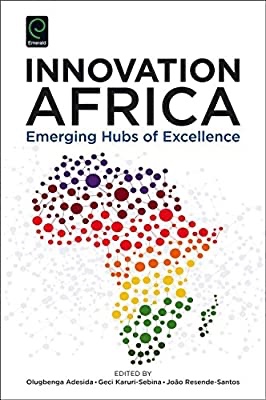
    Cited in Innovation Africa: Emerging Hubs of Excellence edited by Olugbenga Adesida, Geci Karuri-Sebina, Joao Resende-Santos (Emerald Group Publishing, 2016).

    https://davidsouthconsulting.org/2021/03/05/southern-innovator-issue-2/

    Creative Commons License

    This work is licensed under a
    Creative Commons Attribution-Noncommercial-No Derivative Works 3.0 License.

    ORCID iD: https://orcid.org/0000-0001-5311-1052.

    © David South Consulting 2023