Tag: markets

  • Popular Chinese Social Media Chase New Markets

    Popular Chinese Social Media Chase New Markets

    By David SouthDevelopment Challenges, South-South Solutions

    SOUTH-SOUTH CASE STUDY

    China has a vast and growing market for the Internet and mobile devices. Over the past decade that market has been largely confined to China –  most businesses have had enough domestic demand and opportunities inside the country to keep them busy.

    But now companies in China’s dynamic Internet and mobile sector are seeking out new markets outside the country. Both online shopping service Alibaba (alibaba.com) and Weibo (weibo.com), the Chinese version of Twitter (twitter.com), are seeking to list on the New York Stock Exchange. The excitement this news has generated shows how many people want to get a piece of the large Chinese market for technology, social networks and online shopping. It is also sending a chill through America’s Silicon Valley – home to the country’s innovative high technology sector – that they are missing out on China’s fast-growing marketplace. Many American services are banned from operating in China. Even more worrying for Silicon Valley, these home-grown Chinese companies, with the market sewn up at home, are now set to compete globally for customers using their increasingly deep pockets.

    One example is Tencent (http://www.tencent.com/en-us/index.shtml), owner of popular Chinese social messaging application (app) Weixin (weixin.qq.com), known as WeChat (wechat.com) outside China. Used on mobile phones and smartphones, Weixin has gained 300 million users in just three years, becoming the dominant social messaging service in the world’s largest smartphone market. Its has been so successful that many rivals are trying to chip away at its customer base.

    Weixin, pronounced way-shin, allows smartphone users to send messages and share news, photos, videos and web links with friends. One of its selling points is its claim to not store messages on its servers.

    Building on its success in social networking in China, it is looking to expand in other markets, including Southeast Asia, Europe and Latin America. It also wants to grow its offerings in online payment and e-commerce.

    One factor in Weixin’s success is the ability to send messages by recording a voice message rather than just typing in characters: very useful for non-Latin script users, and especially for Chinese-language users, who use thousands of characters in everyday communication.

    One ambitious forecast claims Weixin could reach 400 million users and make US $500 million revenue within a year.

    Cosmetics marketer Jenny Zhao, who uses an iPhone 5, told The New York Times: “I’m probably on Weixin six hours a day. A lot of what I do revolves around it.”

    “I use Weixin every day,” said Zhang Shoufeng, a food and drinks seller. “My friends are on it and my boss is on it. We are talking about where to eat, where to hang out and where to meet for company conferences. This is how we communicate.”

    Analysts believe Weixin has benefitted from not having to compete with banned-in-China American company Facebook (facebook.com).

    “Even if Facebook had permission, it’s probably too late,” said Wang Xiaofeng, an analyst at Forrester Research. “Weixin has all the functionality of Facebook and Twitter, and Chinese have already gotten used to it.”

    Tencent is an example of a wider trend: As Chinese companies and offerings have become stronger, wealthier and more innovative, they increasingly look to build their customer base outside China.

    Founded in November, 1998, Tencent, Inc. has grown into China’s largest and most used Internet service portal. Its most popular services include QQ (QQ Instant Messenger), WeChat, QQ.com, QQ Games, Qzone, 3g.QQ.com, SoSo, PaiPai and Tenpay, as well as Weixin.

    The company claims to put innovation at the heart of its business, with more than half of its employees devoted to research and development. The Tencent Research Institute, established in 2007 with RMB 100 million (US $16 million), calls itself “China’s first Internet research institute, with campuses in Beijing, Shanghai, and Shenzhen.” It has patents for technologies it has developed for instant messaging, e-commerce, online payment services, search, information security, and gaming.

    Tencent was driven to innovate by a fear it could quickly become irrelevant in the information technology space. Weixin is also pioneering ways to book taxis, hotels and airline flights through the service and even ways to control home appliances.

    “Chinese Internet companies are no longer behind,” said William Bao Bean, a managing director at the venture capital firm SingTel Innov8 (http://innov8.singtel.com/). “Now in some areas, they’re leading the way.”

    Published: April 2014

    Resources

    1) Weibo: Sina Weibo is a Chinese microblogging (weibo) website. Akin to a hybrid of Twitter and Facebook, it is one of the most popular sites in China, in use by well over 30 per cent of Internet users, with a market penetration similar to what Twitter has established in the USA. Website: weibo.com

    2) Laiwang: A variation on the WeChat service, its biggest competitor. Website: laiwang.com

    3) WhatsApp: WhatsApp Messenger is a cross-platform mobile messaging app which allows you to exchange messages without having to pay for SMS. Website: whatsapp.com

    4) Southern Innovator Issue 1: Mobile Phones and Information Technology: Pioneering and innovative ways to deploy mobile phones and information technology to tackle poverty. Website: http://www.scribd.com/doc/57980406/Southern-Innovator-Magazine-Issue-1 and here: http://tinyurl.com/q6bfnpz

    https://davidsouthconsulting.org/2022/10/20/china-consumer-market-asian-perspective-helps/

    https://davidsouthconsulting.org/2020/12/10/china-sets-sights-on-dominating-global-smartphone-market/

    https://davidsouthconsulting.org/2021/03/20/computer-gold-farming-turning-virtual-reality-into-real-profits/

    https://davidsouthconsulting.org/2021/01/26/designed-in-china-to-rival-made-in-china/

    https://davidsouthconsulting.org/2022/10/26/tackling-chinas-air-pollution-crisis-an-innovative-solution/

    https://davidsouthconsulting.org/2020/04/17/virtual-supermarket-shopping-takes-off-in-china/

    Citation

    Qianyu, Ji (2014) “Exploring the Concept of QR Code and the Benefits of Using QR Code for Companies,” Lapland University of Applied Sciences, School of Business and Culture Degree Programme in Business Information Technology, 2014.

    Development Challenges, South-South Solutions was launched as an e-newsletter in 2006 by UNDP’s South-South Cooperation Unit (now the United Nations Office for South-South Cooperation) based in New York, USA. It led on profiling the rise of the global South as an economic powerhouse and was one of the first regular publications to champion the global South’s innovators, entrepreneurs, and pioneers. It tracked the key trends that are now so profoundly reshaping how development is seen and done. This includes the rapid take-up of mobile phones and information technology in the global South (as profiled in the first issue of magazine Southern Innovator), the move to becoming a majority urban world, a growing global innovator culture, and the plethora of solutions being developed in the global South to tackle its problems and improve living conditions and boost human development. The success of the e-newsletter led to the launch of the magazine Southern Innovator.  

    Creative Commons License

    This work is licensed under a
    Creative Commons Attribution-Noncommercial-No Derivative Works 3.0 License.

    ORCID iD: https://orcid.org/0000-0001-5311-1052.

    © David South Consulting 2025

  • CASE STUDY 2: Watch Magazine | 1994 And 1996

    CASE STUDY 2: Watch Magazine | 1994 And 1996

    Expertise: Editing, start-ups, youth media, content development, art direction, design and layout, investigative journalism.

    Location: Toronto, Ontario, Canada 1994 and 1996

    Editor-in-Chief: David South

    Abstract

    In 1994 I was hired by start-up Youth Culture to be Editor-in-Chief of Toronto’s Watch Magazine, a bi-weekly distributed to the city’s high schools and to all youth hang-outs. In 1996 I was hired again to help with preparing the magazine for its national launch. 

    About

    In 1994, the Internet had not arrived in any great form (though Watch Magazine was on top of its emergence as Internet cafes popped up in the city) and the digital economy was still minimal. There was no such thing as ‘start-up culture’ for youth. There was an urgent need to create opportunity for youth, to create new markets, and to change the business culture of the city of Toronto, which had been hit hard by an economic crash and austerity. 

    Watch Magazine had had a brief false start prior to my arrival in 1994. The previous format had not worked and the magazine needed a vision and somebody with the experience and dedication to see it through. It was also entering a competitive marketplace for readers, with already existing free magazines capturing most of the advertising spend for youth-oriented marketing in Toronto (though failing to offer a genuine youth content experience as could be found in Europe – the UK especially – at that time). As an example, Toronto lacked sharp and credible coverage of youth popular culture in the early 1990s. Drawing on my extensive experience as a journalist (including at Toronto’s established alternative weekly, Now Magazine) and editor, I assembled a team of youth editors and writers to work on making the content and magazine’s design appealing to the youth demographic in Toronto. The magazine needed to turn a profit in short order and become credible to advertisers, its main source of income (in Canada, 64 per cent of magazine revenues come from advertisers)*. The design and content needed to appeal to a youth audience but work with a tight (but increasing) budget. It was doing this in a tough economy with high unemployment, austerity, business failures, and a generally negative business environment.

    By having an actual youth editorial team, Watch Magazine quickly developed an authentically young 1990s voice. The magazine also benefited from its youth team’s ability to spot trends bubbling under the surface ready to explode into mainstream society. As an example, they had this to say on the Internet in a piece on Toronto’s coffee shops, “Some mean places for bean”: “The powers-that-be think we should cocoon in our houses and rent videos, play with the Internet and order in food …” 

    Youth unemployment was high in the early to mid 1990s in Canada. It reached 19.3 per cent for those 15 to 19 years old in 1993. “It should be noted, however, that youth unemployment relative to that of adults has worsened since the 1990-91 recession (Youth Unemployment in Canada by Kevin B. Kerr, 2000).”

    The Canadian economy overall severely contracted and unemployment was at 11.4 per cent by 1993 (Statistics Canada), and as Statistics Canada said, “Because employment recovered at a snail’s pace after the recession of the early 1990s, the decline in the unemployment rate was delayed until 1994”.

    As the Bank of Canada also said: “In early 1994, Canada’s economic situation was not that favourable—our economy was facing some rather serious problems. … the recession here was more severe than in the United States.

    “Working their way out of these difficulties was disruptive and painful for Canadian businesses. Defaults, restructurings, and downsizings became the order of the day. With all this, unemployment took a long time to recover from the 1990–91 recession …” *

    And the media in general could not avoid the crisis. According to the book The Missing News: Filters and Blind Spots in Canada’s Press (Robert A. Hackett and Richard S. Garneau, Canadian Centre for Policy Alternatives, University of Toronto Press 2000), Canada’s media was also in a crisis throughout the 1990s, as declining resources, staff layoffs and media closures reduced the breadth and depth of news coverage.

    In less than a year, Watch Magazine had gone from being an unknown quantity, to being a fast-growing and profitable youth publication, significantly increasing its advertising revenue: a key metric for a magazine reliant on this as its main source of income. It had expanded in size and audited distribution and was able to make a move to new digs (the Watch Magazine “crib” – a studio and work space) at innovative “arts-and-culture hub” start-up space 401 Richmond Street in Toronto – at the centre of Toronto’s emerging media and design neighborhood in its former fashion district.  All the contributors were high-school-age youth drawn from talent across the city; many had already shown their ability by starting their own publications and media. They gained first-hand experience in investigative journalism skills, business skills in a start-up, and magazine and media production skills. 

    “… thanks to David [South] for all his hard work on Watch magazine! I learned a lot from him and it was a great experience.” William White

    In 1996, I was hired again to help with preparing the content format for Watch’s expansion to a national magazine – further proof of its success as a publication and a business. 

    * (Bank of Canada: Canada’s Economic Future: What Have We Learned from the 1990s?)

    * The Missing News: Filters and Blind Spots in Canada’s Press (Robert A. Hackett and Richard S. Garneau, Canadian Centre for Policy Alternatives, University of Toronto Press 2000)

    Brief descriptions of sample issues are below: 

    Youth Gangs Cover

    In 1994, with Canada’s economy still in the doldrums, Watch Magazine exploded into Toronto’s high schools. Staffed by talented youth, it shook up the staid publishing scene and proved young people did have something to say. This first issue still remains relevant, with its exploration of youth gangs and violence in the school system.  

    Therapy Cover

    After its successful launch, Watch Magazine was grabbing readers and getting the attention of advertisers and television. It was time to improve the design and introduce the latest in graphic design software. The results paid off: the magazine looked sharper and quickly ran from its cheeky launch, when we had basically avoided all traditional approaches to a launch (like actually having a designer).

    For anoraks out there, this photo shoot with Irish band Therapy took place outside the former Wellesley Hospital emergency department in Toronto. And, yes, that is a genuine restraining ‘straitjacket’ used by psychiatric hospitals to restrain mental health patients. 

    Digable Planets Cover

    By this issue, Watch had hit its stride: we were the first to seriously review the ballooning zine culture, get immersed in the rave and late-night party scene, and dig deep into “chopsocky world”: Hong Kong and Asian film fans. But “Hip-Hop Comb-munism”? What were we thinking?

    It was also the biggest issue to date. 

    Beck Cover

    Highly talented Beck gave Watch his eloquent thoughts on the media’s infatuation with Generation X and how it always desperately needs to sell young people more stuff. Watch took on Ontario’s film censors over the GG Allin documentary, Hated: GG Allin and the Murder Junkies, and let students across the city blow off steam on life in the 1990s. 

    Bass is Base Cover

    By October 1994 the magazine’s investigative powers were in full flow. Two investigations – a sex scandal at an alternative school, and whether the Battle of the Bands contests, a fixture at most high schools, are really worth it – joined a profile of the band Bass is Base and more coverage on the growing rave scene in Toronto. 

    Oasis Cover

    In 1994, Oasis were still an indie band with a lot of bottle and big mouths. Riding a tsunami of hype from the UK, they washed up in North America to face their biggest challenge: could they become as big as The Beatles or The Rolling Stones? Lead singer Liam Gallagher does not disappoint, as he gives me an expletive-laden exposition on everything under the sun.

    This was the first published print interview with the band in Canada.

    Sloan Cover

    Canada’s answer to the ‘Madchester’ scene of the early 1990s, Sloan, played the pop game with gusto. In the photo shoot for the feature, it was pants down and prayer hands to an unseen religious icon.

    Timeline 

    1994: Hired to re-launch and expand Watch Magazine in Toronto.

    1996: Hired to re-develop editorial content for Watch Magazine’s national launch.  

    Testimonials 

    “As one of those high school kids and the guy who wrote (most of) this article, I’d like to say thanks to David [South] for all his hard work on Watch magazine! I learned a lot from him and it was a great experience.” William White

    Impact

    Micro 

    •  Toronto’s first youth culture media start-up. Introduced ‘youth culture’ concept to Canada
    •  oversaw two format re-launches of the magazine as it expanded and grew
    •  assembled talented youth editorial team
    •  grew magazine and its profile as the main media source for reaching Toronto’s youth
    •  writers trained and appeared on TV as youth commentators
    •  first profile in Canada of British band Oasis, among many other story firsts
    •  became first stop for anyone wishing to target the youth market, or seeking intelligence on the youth market 

    Macro

    • created youth culture market in Toronto
    • first magazine to be based at new start-up hub in Toronto – pioneering concept at the time 

    A sample of published stories is below:  

    Freaky – The 70s Meant Something

    Oasis Has Arrogance, A Pile of Attitude and the Best Album of 1994

    Citations 

    Other Resources 

    GOSH Child Health Portal 2001 to 2003 Resources

    Note: Complete issues of the magazine’s first year await professional digital scanning. This could be of interest to a library, scholar or university interested in archiving this authentic artefact of 1990s youth culture. Please send an email if you would like to get in touch or share a thought: mailto: davidsouthconsulting@gmail.com.  

    Media

    Youth culture magazine Watch goes national, Wendy Cuthbert, September 1, 1997, Strategy, Canada

    “Free teen publication Watch Magazine is going national this month – promising to more than double its high school penetration. 

    The self-described youth culture magazine, which last year at this time went province-wide – delivering copies to 350 high schools across Ontario – plans to send out 125,000 copies to 800 participating high schools across Canada. 

    Going national only four years after its inception (the magazine started as a Toronto-only vehicle in 1993) could make national advertisers interested in reaching the elusive teen market very happy.”

    “The self-described youth culture magazine, which last year at this time went province-wide – delivering copies to 350 high schools across Ontario – plans to send out 125,000 copies to 800 participating high schools across Canada.”

    Ryerson Review of Journalism, Page 34, 2003, Toronto, Canada

    By Mindy Bell, Published June 23, 2003.

    Selling Students Short

    “Owned by marketing company Youth Culture Group, these gender – specific magazines attempt to construct a teen image that is built on spending.”

    “Youth Culture originally produced a younger, unisex magazine called Watch, which eventually became Bang.”

    By Dimetre Alexiou, Published April 4, 1995. Some context on poor youth representation in Canadian media in the early to mid 1990s.
    Watch Magazine Editor-in-Chief David South
    Watch Magazine Editor-in-Chief David South photographed at Toronto’s Beaches neighbourhood in 1994. Watch Magazine was Toronto’s first youth culture media start-up and led the way on Toronto’s revival after the economic crisis of the early 1990s. Photo: Margaret South.

    Note: Complete issues of the magazine’s first year await professional digital scanning. This could be of interest to a library, scholar or university interested in archiving this authentic artifact of 1990s youth culture. Please send an email if you would like to get in touch or share a thoughtmailto: davidsouthconsulting@gmail.com. You can also fund this goal through our PayPal account here:

    https://davidsouthconsulting.org/2021/07/20/case-study-3-id-magazine-1996-1997-2/

    https://davidsouthconsulting.org/2021/05/25/ger-mongolias-first-web-magazine-and-a-pioneering-web-project-for-the-united-nations-12-january-2016/

    https://davidsouthconsulting.org/2021/03/12/southern-innovator-magazine/

    We accept payments and donations. We use any funds received to keep content online, or to create new content. Thank you! https://www.paypal.me/davidsouthconsulting
    Creative Commons License

    This work is licensed under a
    Creative Commons Attribution-Noncommercial-No Derivative Works 3.0 License.

    ORCID iD: https://orcid.org/0000-0001-5311-1052.

    © David South Consulting 2025

  • Making the World a Better Place for Southern Projects

    Making the World a Better Place for Southern Projects

    By David SouthDevelopment Challenges, South-South Solutions

    SOUTH-SOUTH CASE STUDY

    Good ideas are plentiful, but how to fund life-improving projects has always been a thorny issue. Judging how effective a project is can also be fraught with debate and contention. Over the past two decades, the number of NGOs in the global South has exploded (http://lboro.ac.uk/gawc/rb/rb144.html). The best of them offer the local knowledge and understanding required to make development gains. But unlike NGOs in the North, many lack the powerful fundraising capabilities of the big global NGO brands.

    An exciting new initiative based in Germany, but already featuring hundreds of projects from across the South, is using the power of the internet to directly connect projects and donors.

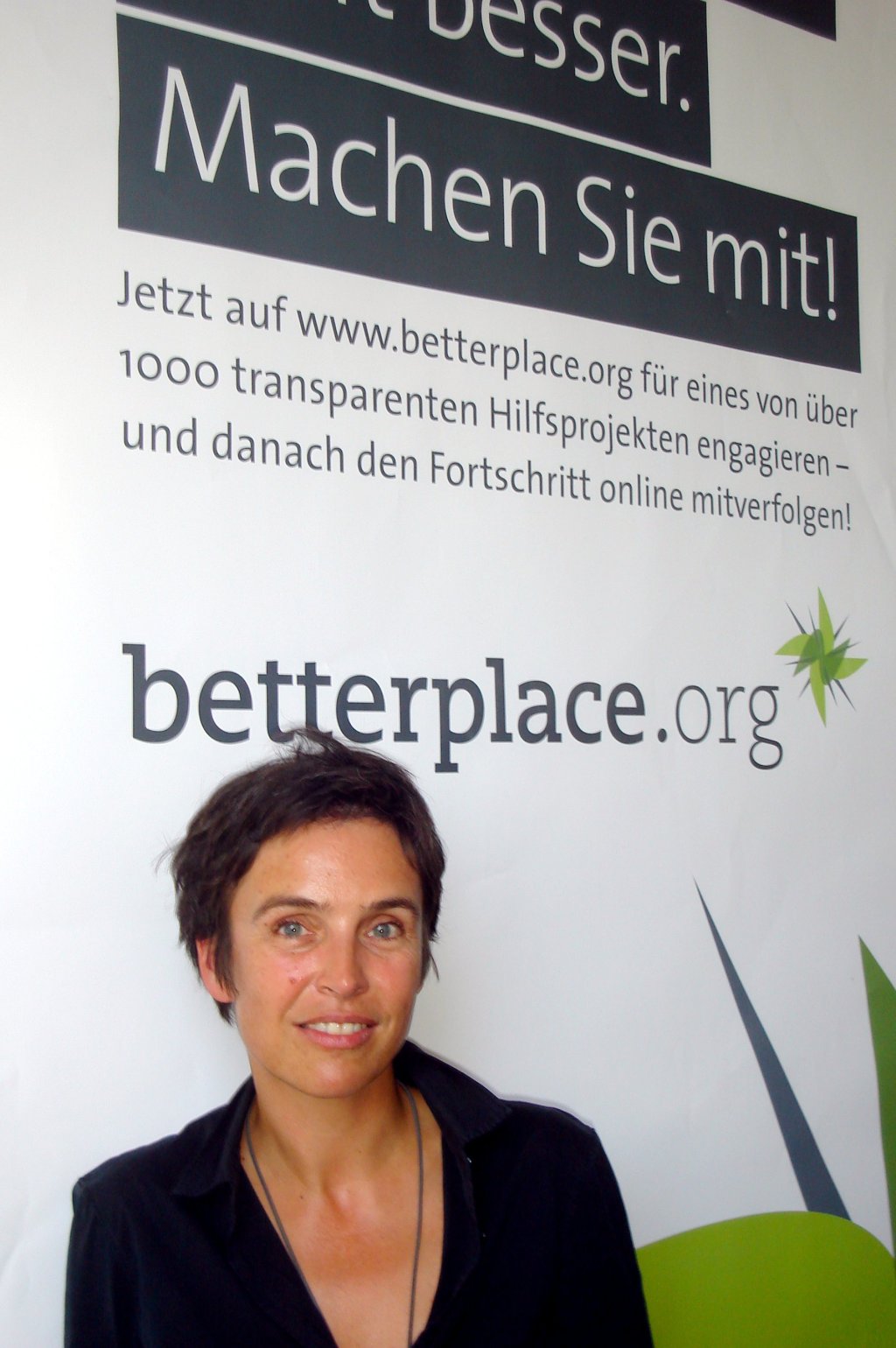
    Joana Breidenbach, an anthropologist, author and co-founder of betterplace.org (www.betterplace.org), says NGOs are emerging in India and other countries of the South to challenge the big Northern global NGOs.

    “Why wouldn’t you want to donate to these Southern NGOs? There are more entrepreneurs and local approaches which are better.

    “Betterplace gives local institutions a platform to express themselves.”

    Started in 2007, betterplace is an online marketplace for projects to raise funds. It is free, and it passes on 100 percent of the money raised on the platform to the projects. The foundation that runs betterplace supports its overheads by offering additional services that people can pay for if they wish. It works in a way similar to the online marketplace eBay (http://www.ebay.com): NGOs post their project, set up an account, blog about their achievements and successes and needs, and receive donations direct to their bank account when they come in.

    Breidenbach points out up to a third of any NGO’s income is spent on fundraising. In Germany, that represents more than Euro 1.3 billion out of over Euro 4 billion in private donations – money that could have gone directly into the hands of the people needing help.

    With betterplace, donators can surf through the projects and pick the one they want. Already, more than 100 large corporations trawl through betterplace seeking projects to fund to meet their corporate social responsibility (CSR) obligations (http://en.wikipedia.org/wiki/Corporate_social_responsibility).

    “I find it very exciting to introduce a good and innovative NGO to a corporate sponsor,” Breidenbach said.

    Breidenbach says betterplace’s ultimate goal is “to transfer the donation market online.” It hopes to change the rules in donation and charity in the same way blogs and the search engine Google changed the way people publish and search for information.

    “This provides better transparency, feedback,” Breidenbach said. “Now (with betterplace) donors and organizations can cut out the middlemen. A lot of established organizations do not like this too much.”

    Over the past decade, new concepts like social entrepreneurs and venture philanthropy have emerged to straddle the delicate line between social good and private profit. Betterplace joins this wave of new thinking about how to do development better.

    In the 20 months since betterplace went online more than 1,500 projects have joined. They are now averaging between 20 to 35 new projects joining every week.

    Betterplace is a simple open-plan office on the top floor of a Berlin warehouse beside the city’s Spree river. The small team (http://www.betterplace.org/about_us/team) work on laptop computers. A blackboard on the wall details in bright colours a running tally of the projects that have joined.

    Breidenbach gives the example of a mother in Cameroon who is using betterplace to raise the school fees for her children. The mother blogs about the children’s progress and has been able to raise the fees for a year and a half.

    “People are now directly connected to somebody in need.”

    “Right now the functionality (of the website) does not allow people getting in contact publicly and we want to enable this knowledge transfer in 2010. If you want to build a well in Cameroon then you could search for the best technology and to contact other people who are doing similar projects to learn from them.”

    Success on betterplace is by no means certain. “The experience of the project managers has been as varied as development work is – some have done really well, raising thousands of Euros over the website – others have received no funding at all,” Breidenbach said.

    But betterplace provides tools to give the projects the best chance possible. “Projects can present their work, breaking it down in a transparent way (in order to let supporters know exactly what is needed for their realization), there are sound payment processes in place and project managers can give feedback through their project blog, supporters can download project widgets etc., all supplied free of charge.”

    Breidenbach has other tips for making betterplace work for a project: post details in English when creating a profile, break down the project into much smaller, low-cost goals (few people are willing to make large donations) – this also has the advantage of receiving payments straight away when they are small. Tell a good story about the project, and try and use actual testimonials from the people affected. Blog and update regularly with photos and videos to keep people engaged. Also avoid copying and pasting text from a previous grant application.

    “We have the numbers to show that projects which give regular feedback and have a lively web of trust receive more donations than others, which are not very active.”

    “Don’t think you can just go on to betterplace and the money starts rolling in,” said Breidenbach.

    The betterplace platform places all projects seeking funds on the same level, allowing individuals and small NGOs to compete equally with the big, branded global NGOs with their websites and sophisticated fundraising operations.

    “All the big NGOs have their own websites,” continues Breidenbach. “But it is the small initiatives that often don’t have a website or know how to use Pay Pal etc. (http://www.paypal.com). We are very useful for smaller NGOs.”

    “Another big advantage is that we are a real marketplace: whatever your interests (as a potential donor), you will find a project tackling this issue on the platform.”

    But what about fraud and people seeing betterplace as a coin-making machine rather than a way to make the world a better place?

    “We have a feeling for dodgy projects. We check the IP address. We have a number of trust mechanisms in place (and are currently working on enlarging them). Thus projects on betterplace can create trust through their good name … But we also include something which I would call network-trust: In our web of trust different kinds of stakeholders of an organization or a project have a voice and can publicly state what they think of it. Thus beneficiaries of a project can say if the project has done them good or has been counterproductive, people who have visited the project on the ground can describe what they have seen etc. … we hope to give a much denser and more varied impression of social work and give donors (a terribly badly informed group of people), the basis for a much more informed choice.

    “If a contributor to a project is dissatisfied with the project’s outcome … she can either directly contact the project manager via betterplace, or openly voice her concern on the project page for other potential donors to see her views.”

    For now, betterplace is still only useful to people who have access to the internet and have a bank account (necessary for the money transfers). But in the future betterplace hopes to have mobile phone interactivity and more features to expand who they can reach.

    “We are also re-working our site to make it more intuitive and easier to use for people without computer skills,” Breidenbach said. “In the pipeline is also a knowledge backbone, enabling people to access knowhow about development and social innovation issues and exchange views and experiences. This will be very useful for projects in the South as so many people are working on the same issues without knowing about it. They could learn a lot from each other, without the “help” of the north.”

    With internet broadband in Africa set to take off, according to the report Africa Connect: Undersea Cables to Drive an African Broadband Boom (http://www.pyr.com/downloads.htm?id=5&sc=PR090309_INSAME1.6), even more people will soon be able to make the most of initiatives like betterplace.

    Published: September 2009

    Resources

    1) CSR Wire: This is a news service with all the latest news, reports and events and where companies announce their CSR (corporate social responsibility) programmes and how much they are contributing. A great resource for any NGO looking to make a targeted appeal for funds. Website:http://www.csrwire.com/

    2) Alibaba: Alibaba.com is an online marketplace started in China but is now global. It allows businesses from all over the world to trade with each other, make deals and find funding. Website: http://www.alibaba.com/

    3) More photos from the Betterplace HQ in Berlin, Germany. Website: http://www.flickr.com/photos/15195144@N06/sets/72157622386871044/ and here https://davidsouthconsulting.org/betterplace-photos/

    https://davidsouthconsulting.org/2022/11/23/betterplace-org-hq-photos/

    Development Challenges, South-South Solutions was launched as an e-newsletter in 2006 by UNDP’s South-South Cooperation Unit (now the United Nations Office for South-South Cooperation) based in New York, USA. It led on profiling the rise of the global South as an economic powerhouse and was one of the first regular publications to champion the global South’s innovators, entrepreneurs, and pioneers. It tracked the key trends that are now so profoundly reshaping how development is seen and done. This includes the rapid take-up of mobile phones and information technology in the global South (as profiled in the first issue of magazine Southern Innovator), the move to becoming a majority urban world, a growing global innovator culture, and the plethora of solutions being developed in the global South to tackle its problems and improve living conditions and boost human development. The success of the e-newsletter led to the launch of the magazine Southern Innovator.  

    Follow @SouthSouth1

    Google Books: https://books.google.co.uk/books?id=uXWUyfb4MacC&dq=development+challenges+september+2009&source=gbs_navlinks_s

    Slideshare: http://www.slideshare.net/DavidSouth1/development-challengessouthsouthsolutionsseptember2009issue

    Southern Innovator Issue 1: https://books.google.co.uk/books?id=Q1O54YSE2BgC&dq=southern+innovator&source=gbs_navlinks_s

    Southern Innovator Issue 2: https://books.google.co.uk/books?id=Ty0N969dcssC&dq=southern+innovator&source=gbs_navlinks_s

    Southern Innovator Issue 3: https://books.google.co.uk/books?id=AQNt4YmhZagC&dq=southern+innovator&source=gbs_navlinks_s

    Southern Innovator Issue 4: https://books.google.co.uk/books?id=9T_n2tA7l4EC&dq=southern+innovator&source=gbs_navlinks_s

    Southern Innovator Issue 5: https://books.google.co.uk/books?id=6ILdAgAAQBAJ&dq=southern+innovator&source=gbs_navlinks_s

    “A few weeks ago, David South, Development consultant and author of UNDP’s Development Challenges, South-South Solutions Newsletter, came by the betterplace office to take a look at our work. When I asked him how he had come about betterplace.org, he answered: he found me on twitter! So much for the twitter-scepticts. Read the article about how we can Make the World a Better Place for Southern Projects. (As the UNDP always publishes the newsletter on its South to South Website only months later, here is the link via David South’s blog).”

    Photos from inside the Betterplace.org Berlin HQ: Betterplace.org HQ Photos

    Joana Breidenbach
    Creative Commons License

    This work is licensed under a
    Creative Commons Attribution-Noncommercial-No Derivative Works 3.0 License.

    ORCID iD: https://orcid.org/0000-0001-5311-1052.

    © David South Consulting 2024

  • Camel Ice Cream Delivering Desert Dessert

    Camel Ice Cream Delivering Desert Dessert

    By David South, Development Challenges, South-South Solutions

    SOUTH-SOUTH CASE STUDY

    The global food crisis is forcing people around the world to think differently about how food is produced and what new products can boost the incomes of farmers. U.N. Secretary General Ban Ki-moon has called for food production to increase 50 percent by 2030 just to meet rising demand – and right now there are 862 million people worldwide who are undernourished (FAO).

    The world’s over 19.4 million camels (FAO, 2003) are now being tapped for their highly nutritious, healing and tasty milk. Camel milk is three times as rich in Vitamin C as cow’s milk. And it has several unique properties that differ from other milks, like cow and buffalo. It contains enzymes with anti-bacterial and anti-viral properties to fight diseases. The milk also contains insulin (http://en.wikipedia.org/wiki/Insulin), a hormone that regulates blood sugar levels, something that is critical to the survival of diabetics.

    With more and more areas of the world suffering from severe drought or desertification, camels’ renowned ability to go without a drink of water for up to three weeks makes them ideal animals. Camels continue to lactate milk even in a dehydrated state.

    The current 5.4 million tonnes of camel milk produced every year isn’t enough to meet demand. The Food and Agriculture Organization (FAO) is confident, that with the right investment and innovation, camel milk has a potential market of a minimum 200 million people in the Arab world, and many millions more in Africa, Europe and the Americas.

    Fresh camel milk fetches roughly US $1 dollar a litre on African markets. A world market worth US $10 billion is entirely within the realm of possibility, the FAO says.

    “The potential is massive,” said FAO dairy and meat expert Anthony Bennett. “Milk is money.”

    “No one is suggesting intensive camel dairy farming,” said Bennett. “But just with improved feed, husbandry and veterinary care, daily yields could rise to 20 litres (per camel).”

    An Indian NGO – the Lokhit Pashu-Pala Sansthan (LPPS), which supports landless livestock owners and means “welfare organization for livestock keepers” in Hindi – is re-inventing the business model for camel herding in India (http://www.lpps.org/). The LPPS is a canny user of publicity and has created products that are eye-catching and instant conversation starters: camel ice cream and camel-dung paper.

    Produced in the Indian state of Rajasthan (http://en.wikipedia.org/wiki/Rajasthan), the camel milk ice cream is being sold in shops and hotels. It comes in two flavours: kesar (saffron) (http://en.wikipedia.org/wiki/Saffron) and strawberry vanilla.

    The camel is integral to the traditional way of life in Rajasthan and is the state’s signature animal. India once boasted the third-largest population of camels in the world: over 1 million.

    But that number has fallen to just 400,000. Grazing areas once just for camels are now being used by agriculture and wildlife sanctuaries. The camel breeders, the Raika people, have experienced a serious decline in income from camel herding, and many have sold their camels for slaughter.

    If there was to be a future for camel herding in Rajasthan, new products had to be developed and the whole business of camel herding re-branded.

    The ice cream is part of a two-year project to help camel breeders develop new products using camel milk. Camels are seen as ideal animals to raise in the drought-afflicted climate of Rajasthan, and can produce four to six litres of milk a day.

    ‘With groundwater levels dropping rapidly, it spells the end of water-intensive agriculture. In this scenario, camel husbandry represents a perfect solution to the chronic water woes of the state,’ said Bagdi Ram Raika, president of the Rajasthan Pastoralist Development Association.

    ‘We would like to see the camel breeders of Rajasthan make use of their traditional assets and avail themselves of the new marketing opportunities. Our role is to support them in this,’ said Hanwant Singh, director of LPPS.

    The highly inventive people at LPPS have also come up with paper made from camel dung. Handmade, the notebooks, diaries and greeting cards are all made from the dung paper. The camel’s dung contains undigested fibre, which makes an excellent material for making paper.

    Published: April 2009

    Resources

    Creative Commons License

    This work is licensed under a
    Creative Commons Attribution-Noncommercial-No Derivative Works 3.0 License.

    ORCID iD: https://orcid.org/0000-0001-5311-1052.

    © David South Consulting 2021