Categories
Archive Development Challenges, South-South Solutions Newsletters

Trade to Benefit the Poor Up in 2006 and to Grow in 2007

By David SouthDevelopment Challenges, South-South Solutions

SOUTH-SOUTH CASE STUDY

The global fair trade market – in which goods and services are traded under the Fairtrade logo, guaranteeing a minimum fair price to producers experienced unprecedented growth in 2006. In the UK alone, 2006 sales totalled £290 million – a jump of 46 percent from 2005. The Fairtrade Foundation predicts sales will reach UK £300 million in 2007.

In 2005 Fairtrade sales were € 1.1 billion in the brand’s main markets of Switzerland, the UK, New Zealand, Australia and the US. At present fair trade works with 5 million farmers in the global South, and it represents an ever-increasing opportunity for Southern entrepreneurs.

A tipping point has been reached in Western awareness of and demand for the Fairtrade brand and concept, and it is now being adopted by major supermarkets. In the UK, 62 percent of consumers know the logo and understand what it means.

The concept of fair trade began in the Netherlands in 1988, when the Max Havelaar Foundation launched the Fairtrade consumer label with coffee from Mexico. Unlike conventional businesses, where the price paid to a producer is what the market dictates, fair trade guarantees the producer a minimum price for their product. This amount is set at a level that ensures the producer can live a life with dignity and meet all the essentials. A portion of the profits is also kept in a communal fund which the producers democratically elect to spend as they wish (many choose to spend it on community projects).

Fair trade has been criticized for a number of reasons. It has been seen as too small and marginal to really make inroads on poverty, and has been accused of privileging a small number of producers while ignoring the rest. It has also been criticized for not focusing enough on innovation and increasing production to really eradicate poverty in the developing world.

For all its faults and shortcomings, it is a fact that the Fairtrade brand is a runaway success and offers a wide range of opportunities for entrepreneurs.

In the UK, fair trade now includes 2,500 products, ranging from footballs, to tea, cotton and honey – up from just 150 in 2003, an astonishing rate of growth. Where fair-trade products were once confined to co-operative and charity shops, they are now widely sold in major supermarkets.

The success of fair trade is not confined to Europe and the US. It is growing in Japan, where, says fair trade retailer Sonoko Iwasa, “the concept of using trade to equalize the world by buying goods from developing countries from Asia and Africa was a notion that had no connection with everyday lives.”

Iwasa’s Rumaba Goods store just outside Tokyo sells organic chocolates from Africa, woollen gloves and hats from Nepal, and elegant clothes from Thailand. Iwasa found that the key in the highly competitive Japanese consumer market was to focus on quality, not fairness. This, she says, has made these products fashionable.

At present, the fair trade market is worth only about US $6 to $7 million a year in Japan and includes 1,500 products. But according to Michiko Ono of Japan’s best-known fair trade label, People Tree, the trend is catching on among the country’s socially aware youth.

To start a fair trade business, entrepreneurs or producers need first to contact the international body that certifies fair trade products and ensure that production meets the ethical standards required.

Published: January 2007

Resources

https://davidsouthconsulting.org/2022/06/02/afghanistans-juicy-solution-to-drug-trade/

https://davidsouthconsulting.org/2022/11/02/african-online-supermarket-set-to-boost-trade/

https://davidsouthconsulting.org/2022/10/26/african-trade-hub-in-china-brings-mutual-profits-2/

https://davidsouthconsulting.org/2022/11/21/chinese-trade-in-angola-helps-recovery/

https://davidsouthconsulting.org/2022/11/19/cooking-up-a-recipe-to-end-poverty/

https://davidsouthconsulting.org/2022/04/12/djibouti-re-shapes-itself-as-african-trade-hub/

https://davidsouthconsulting.org/2022/10/24/flurry-of-anti-poverty-innovations/

https://davidsouthconsulting.org/2021/07/19/global-south-trade-boosted-with-increasing-china-africa-trade-in-2013/

https://davidsouthconsulting.org/2022/10/21/local-animation-a-way-out-of-poverty/

https://davidsouthconsulting.org/2022/10/26/perfume-of-peace-helps-farmers-switch-from-drug-trade/

https://davidsouthconsulting.org/2022/10/21/social-networking-websites-a-way-out-of-poverty/

https://davidsouthconsulting.org/2021/07/19/south-south-trade-helping-countries-during-economic-crisis/

https://davidsouthconsulting.org/2021/03/05/southern-innovator-issue-2/

https://davidsouthconsulting.org/2021/01/23/a-steppe-back-economic-liberalisation-and-poverty-reduction-in-mongolia/

https://davidsouthconsulting.org/2021/01/23/the-sweet-smell-of-failure-the-world-bank-and-the-persistence-of-poverty/

https://davidsouthconsulting.org/2022/11/18/web-2-0-networking-to-eradicate-poverty/

https://davidsouthconsulting.org/2022/10/05/women-empowered-by-fair-trade-manufacturer/

https://davidsouthconsulting.org/2022/06/16/women-mastering-trade-rules/

Development Challenges, South-South Solutions was launched as an e-newsletter in 2006 by UNDP’s South-South Cooperation Unit (now the United Nations Office for South-South Cooperation) based in New York, USA. It led on profiling the rise of the global South as an economic powerhouse and was one of the first regular publications to champion the global South’s innovators, entrepreneurs, and pioneers. It tracked the key trends that are now so profoundly reshaping how development is seen and done. This includes the rapid take-up of mobile phones and information technology in the global South (as profiled in the first issue of magazine Southern Innovator), the move to becoming a majority urban world, a growing global innovator culture, and the plethora of solutions being developed in the global South to tackle its problems and improve living conditions and boost human development. The success of the e-newsletter led to the launch of the magazine Southern Innovator. 

Creative Commons License

This work is licensed under a
Creative Commons Attribution-Noncommercial-No Derivative Works 3.0 License.

ORCID iD: https://orcid.org/0000-0001-5311-1052.

© David South Consulting 2023

Categories
Archive Development Challenges, South-South Solutions Newsletters

Women Empowered by Fair Trade Manufacturer

By David SouthDevelopment Challenges, South-South Solutions

SOUTH-SOUTH CASE STUDY

There is sometimes a great deal of negativity surrounding the issue of manufacturing in Africa. Some claim the risks of doing business are too high or that the workers are not motivated enough. But one garment manufacturer is out to prove the skeptics wrong. It pays decent wages and gives its mostly female workforce a stake in the business in a bid to drive motivation and make it worthwhile to work hard.

Liberty and Justice (http://libertyandjustice.com), one of Africa’s newest fair-trade garment manufacturers, is drawing attention for the way it is transforming women’s lives. It is also giving opportunities to a group often ignored by employers: women over the age of 30.

Liberty and Justice has factories in Liberia and Ghana, and 90 per cent of its workers are female. The company says it pays 20 per cent higher wages than the industry norm, and gives employees collectively a 49 per cent stake in the enterprise.

The global fair trade market – in which producers are guaranteed a minimum fair price and goods are marketed under the Fairtrade logo – has been growing year on year since it was established in the late 1980s.

The brand and certification process is managed by the Fairtrade Foundation (fairtrade.net) and is considered the most recognized ethical mark in the world.

More than 1 million small-scale producers and workers around the world participate in the Fairtrade system. As of 2013, fair trade has become a 5 billion euro-a-year (US $6.79 billion a year) global movement.

The label can be found on more than 30,000 products, ranging from tea to bananas to sugar and chocolate. It benefits more than 1.35 million farmers and workers around the world.

Liberty and Justice specializes in “high-volume, time-sensitive, duty-free goods for leading American clothing brands, trading companies, and other importers who care about exceptional quality, on-time delivery, social and environmental impact, and geographic diversity.”

The company wants to “transform the apparel supply chain from worker exploitation and environmental degradation to partnership and sustainability.”

Liberty and Justice was established by Chid Liberty (http://libertyandjustice.com/#about), the son of an exiled Liberian diplomat. His life had been a privileged one living amongst Africa’s overseas diplomatic community.

“I thought Africans drove (Mercedes) Benzes and dressed up every day and went to the best schools,” he told Fast Company magazine. “It even messed up my orientation on things like race, because we had all different kinds of people working in my house as a kid – German, Indian, Turkish – and all of them were serving us in some way. So I just kind of grew up thinking that Africans were at the top of the food chain.”

Living in a prosperous bubble in Germany, he had an awakening to the real conditions in Africa when he was in the seventh grade: “When I read only 2 per cent of people have a telephone, I was so confused,” he said. “I started to really understand my place.”

After the death of his father, Liberty started to wonder about life back in Liberia. He had moved on to working in Silicon Valley in California, helping technology startups get funding. Inspired by Liberia’s President Ellen Sirleaf (http://en.wikipedia.org/wiki/Ellen_Johnson_Sirleaf) and the end of the country’s 15-year civil war, he thought: “‘All right, well, I think I can apply that skill to providing economic opportunities for women.’ And decided to come here and try, in an industry that I knew absolutely nothing about.”

In 2010 he and Adam Butlein founded Liberty and Justice fair-trade apparel manufacturer. The company now makes tops and bottoms for brands such as Prana, FEED Projects, Haggar and others in the US.

“We really try to be worker-focused,” Liberty said. “And we actually think that’s what gave us a cutting edge at the end of the day: having really devoted workers. People don’t really believe in these types of factories in Africa, because they believe that African workers aren’t motivated. I think that’s hogwash.”

The company faced a dilemma common to any manufacturing enterprise trying to make goods for the highly competitive global export markets. How to produce the garments fast enough? A consultant had advised them to only hire young women. But Liberty and Justice had hired women in their 30s, 40s and 50s. Rather than firing everyone, the company decided to invest in the workers’ skills and get productivity to where it should be.

“These older women really set the culture of the Liberian Women’s Sewing Project, our first factory,” Liberty said. “They come to work an hour early – we never asked them to do that – they pray and sing together before they get on the machines, they’re very serious about the details of how your uniform should look, and you just wouldn’t have gotten that out of a bunch of 19-year-old girls the first time.”

Liberty and Justice expanded to Ghana in 2012 and launched the Ghanaian Women’s Sewing Project. It had to adapt to how things are done in Ghana, and that was a steep learning curve.

But the company has learned a great deal about how to succeed in Africa as opportunities increase alongside growing wealth and incomes.

“You could easily get squashed in Africa if you don’t know the right people. You’ll just get sent down rabbit holes every day,” Liberty said.

“In Liberia, the World Bank reports that about 40 per cent of children are enrolled in school. Among the women for whom we provide jobs, 98 per cent of their children are in school. So to me it’s very clear: You give a woman the opportunity to work, and her priority will be putting her kids in school.”

And he believes this is just the beginning of something big. As LIberia recovers from civil war, it will lead to an economic and innovation renaissance that will filter out across West Africa.

“I really think that the opportunities for innovation are right here. And once we get the social finance opportunities right, I think you’ll see a little West African impact renaissance happening. There’s still a lot of work to do. I hope Liberty and Justice can be a small part of that.”

Published: March 2014

Resources

1) Fairtrade International: Fair trade is an alternative approach to conventional trade based on a partnership between producers and traders, businesses and consumers. The international Fairtrade system – made up of Fairtrade International and its member organizations – represents the world’s largest and most recognized fair trade system. Website: http://www.fairtrade.net/

2) Fairtrade Max Havelaar Netherlands: The Max Havelaar Foundation is an independent non-profit organization that licenses use of the Fairtrade Certification Mark on products in the Netherlands in accordance with internationally agreed Fairtrade standards. Website: http://www.maxhavelaar.nl/

3) Ten Thousand Villages: Ten Thousand Villages is an exceptional source for unique handmade gifts, jewelry, home decor, art and sculpture, textiles, serveware and personal accessories representing the diverse cultures of artisans in Asia, Africa, Latin America and the Middle East. One of the world’s largest fair trade organizations and a founding member of the World Fair Trade Organization (WFTO), the company strives to improve the livelihood of tens of thousands of disadvantaged artisans in 38 countries. Website: http://www.tenthousandvillages.com/

4) Ananse Village: An online marketplace selling traditional African crafts produced in a fair trade environment. Website: http://www.anansevillage.com/

5) Ecouterre: An online guide to the best ideas, innovations and emerging trends in eco fashion, sustainable style, organic beauty and ethical apparel. Website: http://www.ecouterre.com

6) Partnering with the United Nations-endorsed Ethical Fashion Initiative, whose motto “Not Charity, Just Work” seeks to promote sustainable development over aid, New Zealand designer Karen Walker tasked Kenya’s finest micro-producers, designers, and craftspeople to produce screen-printed pouches that will accompany every Karen Walker eyewear purchase from the collection. Website: http://www.karenwalkereyewear.com/ and https://www.facebook.com/media/set/?set=a.10152167286434183.1073741834.92673569182&type=1

Google Books: https://books.google.co.uk/books?id=WBM9BQAAQBAJ&dq=development+challenges+march+2014&source=gbs_navlinks_s

Slideshare: http://www.slideshare.net/DavidSouth1/development-challenges-march-2014-published-44135069

Southern Innovator Issue 1: https://books.google.co.uk/books?id=Q1O54YSE2BgC&dq=southern+innovator&source=gbs_navlinks_s

Southern Innovator Issue 2: https://books.google.co.uk/books?id=Ty0N969dcssC&dq=southern+innovator&source=gbs_navlinks_s

Southern Innovator Issue 3: https://books.google.co.uk/books?id=AQNt4YmhZagC&dq=southern+innovator&source=gbs_navlinks_s

Southern Innovator Issue 4: https://books.google.co.uk/books?id=9T_n2tA7l4EC&dq=southern+innovator&source=gbs_navlinks_s

Southern Innovator Issue 5: https://books.google.co.uk/books?id=6ILdAgAAQBAJ&dq=southern+innovator&source=gbs_navlinks_s

Development Challenges, South-South Solutions was launched as an e-newsletter in 2006 by UNDP’s South-South Cooperation Unit (now the United Nations Office for South-South Cooperation) based in New York, USA. It led on profiling the rise of the global South as an economic powerhouse and was one of the first regular publications to champion the global South’s innovators, entrepreneurs, and pioneers. It tracked the key trends that are now so profoundly reshaping how development is seen and done. This includes the rapid take-up of mobile phones and information technology in the global South (as profiled in the first issue of magazine Southern Innovator), the move to becoming a majority urban world, a growing global innovator culture, and the plethora of solutions being developed in the global South to tackle its problems and improve living conditions and boost human development. The success of the e-newsletter led to the launch of the magazine Southern Innovator.  

Creative Commons License

This work is licensed under a
Creative Commons Attribution-Noncommercial-No Derivative Works 3.0 License.

ORCID iD: https://orcid.org/0000-0001-5311-1052.

© David South Consulting 2023

Categories
Archive Development Challenges, South-South Solutions Newsletters Southern Innovator magazine

Making the World a Better Place for Southern Projects

By David SouthDevelopment Challenges, South-South Solutions

SOUTH-SOUTH CASE STUDY

Good ideas are plentiful, but how to fund life-improving projects has always been a thorny issue. Judging how effective a project is can also be fraught with debate and contention. Over the past two decades, the number of NGOs in the global South has exploded (http://lboro.ac.uk/gawc/rb/rb144.html). The best of them offer the local knowledge and understanding required to make development gains. But unlike NGOs in the North, many lack the powerful fundraising capabilities of the big global NGO brands.

An exciting new initiative based in Germany, but already featuring hundreds of projects from across the South, is using the power of the internet to directly connect projects and donors.

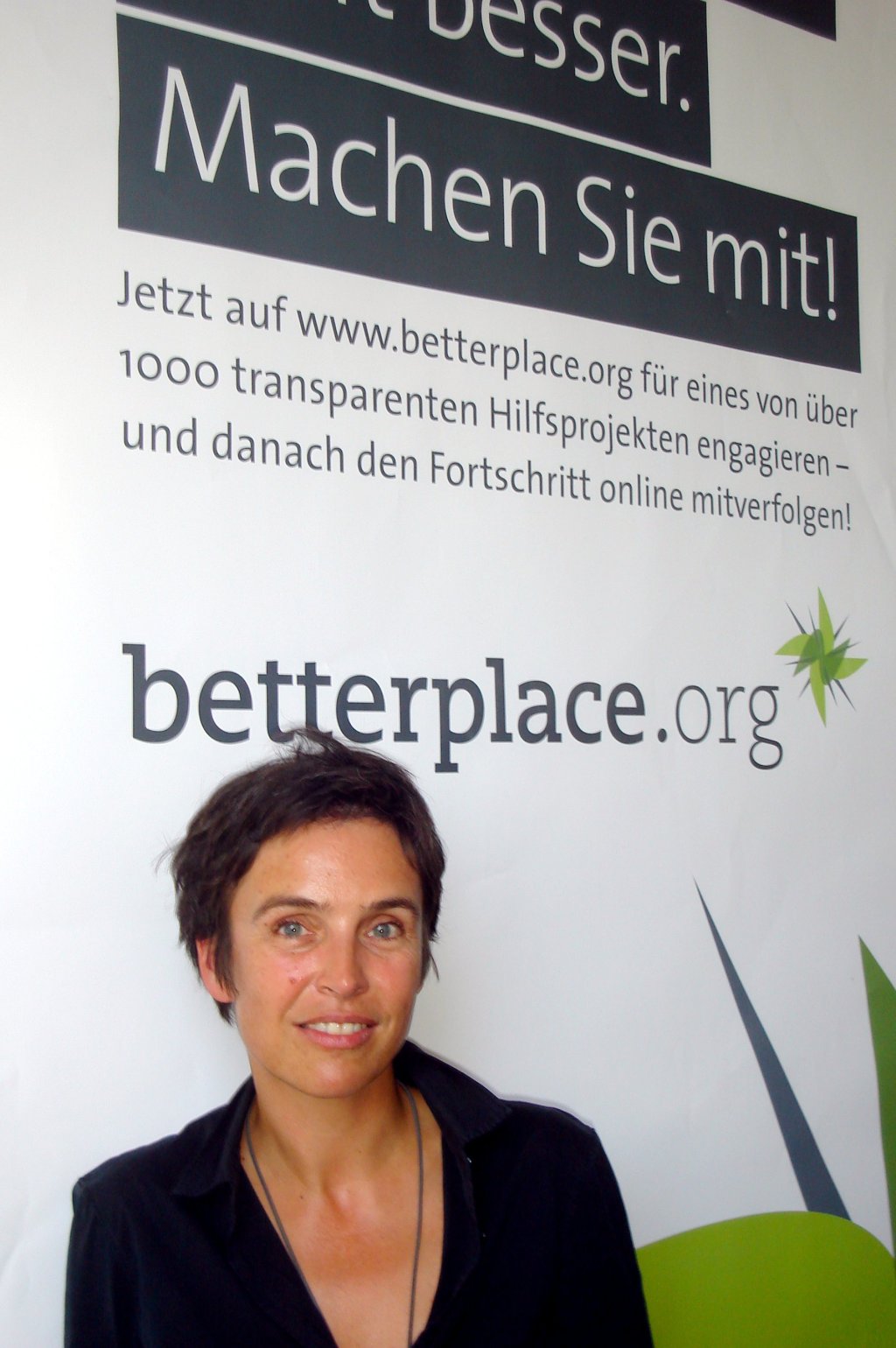
Joana Breidenbach, an anthropologist, author and co-founder of betterplace.org (www.betterplace.org), says NGOs are emerging in India and other countries of the South to challenge the big Northern global NGOs.

“Why wouldn’t you want to donate to these Southern NGOs? There are more entrepreneurs and local approaches which are better.

“Betterplace gives local institutions a platform to express themselves.”

Started in 2007, betterplace is an online marketplace for projects to raise funds. It is free, and it passes on 100 percent of the money raised on the platform to the projects. The foundation that runs betterplace supports its overheads by offering additional services that people can pay for if they wish. It works in a way similar to the online marketplace eBay (http://www.ebay.com): NGOs post their project, set up an account, blog about their achievements and successes and needs, and receive donations direct to their bank account when they come in.

Breidenbach points out up to a third of any NGO’s income is spent on fundraising. In Germany, that represents more than Euro 1.3 billion out of over Euro 4 billion in private donations – money that could have gone directly into the hands of the people needing help.

With betterplace, donators can surf through the projects and pick the one they want. Already, more than 100 large corporations trawl through betterplace seeking projects to fund to meet their corporate social responsibility (CSR) obligations (http://en.wikipedia.org/wiki/Corporate_social_responsibility).

“I find it very exciting to introduce a good and innovative NGO to a corporate sponsor,” Breidenbach said.

Breidenbach says betterplace’s ultimate goal is “to transfer the donation market online.” It hopes to change the rules in donation and charity in the same way blogs and the search engine Google changed the way people publish and search for information.

“This provides better transparency, feedback,” Breidenbach said. “Now (with betterplace) donors and organizations can cut out the middlemen. A lot of established organizations do not like this too much.”

Over the past decade, new concepts like social entrepreneurs and venture philanthropy have emerged to straddle the delicate line between social good and private profit. Betterplace joins this wave of new thinking about how to do development better.

In the 20 months since betterplace went online more than 1,500 projects have joined. They are now averaging between 20 to 35 new projects joining every week.

Betterplace is a simple open-plan office on the top floor of a Berlin warehouse beside the city’s Spree river. The small team (http://www.betterplace.org/about_us/team) work on laptop computers. A blackboard on the wall details in bright colours a running tally of the projects that have joined.

Breidenbach gives the example of a mother in Cameroon who is using betterplace to raise the school fees for her children. The mother blogs about the children’s progress and has been able to raise the fees for a year and a half.

“People are now directly connected to somebody in need.”

“Right now the functionality (of the website) does not allow people getting in contact publicly and we want to enable this knowledge transfer in 2010. If you want to build a well in Cameroon then you could search for the best technology and to contact other people who are doing similar projects to learn from them.”

Success on betterplace is by no means certain. “The experience of the project managers has been as varied as development work is – some have done really well, raising thousands of Euros over the website – others have received no funding at all,” Breidenbach said.

But betterplace provides tools to give the projects the best chance possible. “Projects can present their work, breaking it down in a transparent way (in order to let supporters know exactly what is needed for their realization), there are sound payment processes in place and project managers can give feedback through their project blog, supporters can download project widgets etc., all supplied free of charge.”

Breidenbach has other tips for making betterplace work for a project: post details in English when creating a profile, break down the project into much smaller, low-cost goals (few people are willing to make large donations) – this also has the advantage of receiving payments straight away when they are small. Tell a good story about the project, and try and use actual testimonials from the people affected. Blog and update regularly with photos and videos to keep people engaged. Also avoid copying and pasting text from a previous grant application.

“We have the numbers to show that projects which give regular feedback and have a lively web of trust receive more donations than others, which are not very active.”

“Don’t think you can just go on to betterplace and the money starts rolling in,” said Breidenbach.

The betterplace platform places all projects seeking funds on the same level, allowing individuals and small NGOs to compete equally with the big, branded global NGOs with their websites and sophisticated fundraising operations.

“All the big NGOs have their own websites,” continues Breidenbach. “But it is the small initiatives that often don’t have a website or know how to use Pay Pal etc. (http://www.paypal.com). We are very useful for smaller NGOs.”

“Another big advantage is that we are a real marketplace: whatever your interests (as a potential donor), you will find a project tackling this issue on the platform.”

But what about fraud and people seeing betterplace as a coin-making machine rather than a way to make the world a better place?

“We have a feeling for dodgy projects. We check the IP address. We have a number of trust mechanisms in place (and are currently working on enlarging them). Thus projects on betterplace can create trust through their good name … But we also include something which I would call network-trust: In our web of trust different kinds of stakeholders of an organization or a project have a voice and can publicly state what they think of it. Thus beneficiaries of a project can say if the project has done them good or has been counterproductive, people who have visited the project on the ground can describe what they have seen etc. … we hope to give a much denser and more varied impression of social work and give donors (a terribly badly informed group of people), the basis for a much more informed choice.

“If a contributor to a project is dissatisfied with the project’s outcome … she can either directly contact the project manager via betterplace, or openly voice her concern on the project page for other potential donors to see her views.”

For now, betterplace is still only useful to people who have access to the internet and have a bank account (necessary for the money transfers). But in the future betterplace hopes to have mobile phone interactivity and more features to expand who they can reach.

“We are also re-working our site to make it more intuitive and easier to use for people without computer skills,” Breidenbach said. “In the pipeline is also a knowledge backbone, enabling people to access knowhow about development and social innovation issues and exchange views and experiences. This will be very useful for projects in the South as so many people are working on the same issues without knowing about it. They could learn a lot from each other, without the “help” of the north.”

With internet broadband in Africa set to take off, according to the report Africa Connect: Undersea Cables to Drive an African Broadband Boom (http://www.pyr.com/downloads.htm?id=5&sc=PR090309_INSAME1.6), even more people will soon be able to make the most of initiatives like betterplace.

Published: September 2009

Resources

1) CSR Wire: This is a news service with all the latest news, reports and events and where companies announce their CSR (corporate social responsibility) programmes and how much they are contributing. A great resource for any NGO looking to make a targeted appeal for funds. Website:http://www.csrwire.com/

2) Alibaba: Alibaba.com is an online marketplace started in China but is now global. It allows businesses from all over the world to trade with each other, make deals and find funding. Website: http://www.alibaba.com/

3) More photos from the Betterplace HQ in Berlin, Germany. Website: http://www.flickr.com/photos/15195144@N06/sets/72157622386871044/ and here https://davidsouthconsulting.org/betterplace-photos/

https://davidsouthconsulting.org/2022/11/23/betterplace-org-hq-photos/

Development Challenges, South-South Solutions was launched as an e-newsletter in 2006 by UNDP’s South-South Cooperation Unit (now the United Nations Office for South-South Cooperation) based in New York, USA. It led on profiling the rise of the global South as an economic powerhouse and was one of the first regular publications to champion the global South’s innovators, entrepreneurs, and pioneers. It tracked the key trends that are now so profoundly reshaping how development is seen and done. This includes the rapid take-up of mobile phones and information technology in the global South (as profiled in the first issue of magazine Southern Innovator), the move to becoming a majority urban world, a growing global innovator culture, and the plethora of solutions being developed in the global South to tackle its problems and improve living conditions and boost human development. The success of the e-newsletter led to the launch of the magazine Southern Innovator.  

Follow @SouthSouth1

Google Books: https://books.google.co.uk/books?id=uXWUyfb4MacC&dq=development+challenges+september+2009&source=gbs_navlinks_s

Slideshare: http://www.slideshare.net/DavidSouth1/development-challengessouthsouthsolutionsseptember2009issue

Southern Innovator Issue 1: https://books.google.co.uk/books?id=Q1O54YSE2BgC&dq=southern+innovator&source=gbs_navlinks_s

Southern Innovator Issue 2: https://books.google.co.uk/books?id=Ty0N969dcssC&dq=southern+innovator&source=gbs_navlinks_s

Southern Innovator Issue 3: https://books.google.co.uk/books?id=AQNt4YmhZagC&dq=southern+innovator&source=gbs_navlinks_s

Southern Innovator Issue 4: https://books.google.co.uk/books?id=9T_n2tA7l4EC&dq=southern+innovator&source=gbs_navlinks_s

Southern Innovator Issue 5: https://books.google.co.uk/books?id=6ILdAgAAQBAJ&dq=southern+innovator&source=gbs_navlinks_s

“A few weeks ago, David South, Development consultant and author of UNDP’s Development Challenges, South-South Solutions Newsletter, came by the betterplace office to take a look at our work. When I asked him how he had come about betterplace.org, he answered: he found me on twitter! So much for the twitter-scepticts. Read the article about how we can Make the World a Better Place for Southern Projects. (As the UNDP always publishes the newsletter on its South to South Website only months later, here is the link via David South’s blog).”

Photos from inside the Betterplace.org Berlin HQ: Betterplace.org HQ Photos

Joana Breidenbach
Creative Commons License

This work is licensed under a
Creative Commons Attribution-Noncommercial-No Derivative Works 3.0 License.

ORCID iD: https://orcid.org/0000-0001-5311-1052.

© David South Consulting 2024

Categories
Archive data Development Challenges, South-South Solutions Newsletters Southern Innovator magazine

Texting For Cheaper Marketplace Food With SokoText

By David SouthDevelopment Challenges, South-South Solutions

SOUTH-SOUTH CASE STUDY

An international group of graduate-social entrepreneurs from the London School of Economics (LSE) is pioneering a way to reduce food prices in Kenya using mobile phones.

Answering a call to action to address global food insecurity by the Hult Prize (hultprize.org), the team members looked at how they could make food cheaper for urban slum dwellers.

The Hult Prize, funded by Swedish educational entrepreneur and billionaire, Bertil Hult, is a start-up accelerator for budding young social entrepreneurs emerging from the world’s universities. The winner receives US $1 million and mentorship to make their idea become real.

SokoText (sokotext.com) (soko means market in Swahili) uses SMS (short message service) messages from mobile phones to empower vegetable sellers and kiosk owners in slums when it comes to bargaining the price for wholesale fresh produce. SokoText makes it possible for them to benefit from bulk prices by pooling their orders together every day. Usually vendors lack the funds to buy in bulk and have to make numerous time-consuming trips to the centre of Nairobi to buy stock.

SokoText reduces the price of fresh produce by 20 per cent for kiosk owners by buying the produce earlier in the supply chain. SokoText then delivers the food to a wholesale outlet at the entrance to the slum.

This approach makes available a wider range of produce and reduces the price. And best of all, it will knock down prices for the poorest people and enable them to buy more food and better quality food.

The team behind SokoText come from a variety of countries – Colombia, Canada, Kenya, Britain and Germany.

Hatched at the LSE, the enterprise prototyped its service in Mathare Valley, Nairobi, Kenya for four weeks during the summer of 2013 with 27 users and began the second phase of testing in November 2013, working with a local NGO, Community Transformers (https://www.facebook.com/pages/Community-Transformers-kenya/119937408165671).

According to SokoText, slum dwellers spend on average 60 per cent of their daily budget on food.

Mobile phones can be transformative since they are now a common communications tool, even in slums.

On the SokoText website, respected blogger and commentator on technology in Africa, Erik Hersman (http://whiteafrican.com/about/), calls it “a fantastic low-tech approach that could really scale for decreasing the inefficiencies in urban slum markets.”

SokoText’s 21-year-old co-founder and chief executive, Suraj Gudka, explained the genesis of the project to news and technology in Africa website, 140Friday.com.

“From our research, the Mama Mboga (small-scale vegetable retailers) spend between 150 and 200 Kenyan shillings (US $1.70 and US $2.3) daily, about 25 per cent of her revenue, to buy her stock, and since they do not buy in bulk they [she] get their goods at a higher price.”

Getting the market traders to cooperate is very difficult, Gudka found, because competition is fierce and trust is low. SokoText sees itself as a solution to this situation. By encouraging bulk buying by way of the SMS text service, there is no need to build trust between the traders before the produce is purchased.

“To use our service, the interested retailers would be required to send us an SMS every evening detailing what they need,” said Gudka, “and then we will source the produce and they come pick it up from us the next morning. In this way they do not have to incur the additional costs of transporting their goods and it also saves them time.”

SokoText is being incubated at the Nailab (nailab.co.ke) in Nairobi, a startup accelerator that offers a three to 12 month entrepreneurship program, with a focus on growing innovative technology-driven ideas.

SokoText’s summer pilot test confirmed taking the orders can work but found getting the product to the market in time was difficult.

The next step will be to set up a presence in the Mathare slum.

“We will be selling about seven to 10 different kinds of produce, and from our calculations, according to our projections for how much the Mama Mbogas buy every day, we hope to get  40-50 customers within three months,” Gudka said.

Published: December 2013

Resources

1) SokoText: The website explains further how the service works. Website: sokotext.com

2) Hult Prize: The Hult Prize Foundation is a not-for-profit organization dedicated to launching the world’s next wave of social entrepreneurs. It encourages the world’s brightest business minds to compete in teams to solve the planet’s biggest challenges with innovative ideas for sustainable start-up enterprises. Annual Hult Prize winners can make their ideas reality with the help of US $1 million in seed funding. Website: hultprize.org

3) White African: Where Africa and Technology Collide! Website: http://whiteafrican.com/about/

4) Nailab: Nailab (Nairobi Incubation Lab) is a startup accelerator that offers an entrepreneurship program focusing on growing innovative technology driven ideas. This is done through providing business advice, technical training and support, professional mentoring and coaching, giving access to market and fostering strategic partnerships as well as linking them to investors. Website: nailab.co.ke

https://davidsouthconsulting.org/2020/04/30/crowdsourcing-mobile-phones-to-make-the-poor-money/

https://davidsouthconsulting.org/2022/06/24/dabbawallahs-use-web-and-text-to-make-lunch-on-time/

https://davidsouthconsulting.org/2022/11/01/innovative-mobile-phone-applications-storm-south/

https://davidsouthconsulting.org/2022/10/27/kenyan-mobile-phone-innovations/

https://davidsouthconsulting.org/2021/09/06/microwork-pioneer-transforms-prospects-for-poor-vulnerable/

https://davidsouthconsulting.org/2020/12/20/mobile-phones-engineering-souths-next-generation-of-entrepreneurs/

https://davidsouthconsulting.org/2020/12/12/mobile-phones-new-market-tools-for-the-poor/

https://davidsouthconsulting.org/2022/06/16/web-2-0-to-the-rescue-using-web-and-text-to-beat-shortages-in-africa/

Development Challenges, South-South Solutions was launched as an e-newsletter in 2006 by UNDP’s South-South Cooperation Unit (now the United Nations Office for South-South Cooperation) based in New York, USA. It led on profiling the rise of the global South as an economic powerhouse and was one of the first regular publications to champion the global South’s innovators, entrepreneurs, and pioneers. It tracked the key trends that are now so profoundly reshaping how development is seen and done. This includes the rapid take-up of mobile phones and information technology in the global South (as profiled in the first issue of magazine Southern Innovator), the move to becoming a majority urban world, a growing global innovator culture, and the plethora of solutions being developed in the global South to tackle its problems and improve living conditions and boost human development. The success of the e-newsletter led to the launch of the magazine Southern Innovator.  

Follow @SouthSouth1

Google Books: https://books.google.co.uk/books?id=hPNcAwAAQBAJ&dq=development+challenges+december+2013&source=gbs_navlinks_s

Slideshare: http://www.slideshare.net/DavidSouth1/development-challenges-december-2013-issue

Southern Innovator Issue 1: https://books.google.co.uk/books?id=Q1O54YSE2BgC&dq=southern+innovator&source=gbs_navlinks_s

Southern Innovator Issue 2: https://books.google.co.uk/books?id=Ty0N969dcssC&dq=southern+innovator&source=gbs_navlinks_s

Southern Innovator Issue 3: https://books.google.co.uk/books?id=AQNt4YmhZagC&dq=southern+innovator&source=gbs_navlinks_s

Southern Innovator Issue 4: https://books.google.co.uk/books?id=9T_n2tA7l4EC&dq=southern+innovator&source=gbs_navlinks_s

Southern Innovator Issue 5: https://books.google.co.uk/books?id=6ILdAgAAQBAJ&dq=southern+innovator&source=gbs_navlinks_s

SokoText co-founder Sofia Zab (left). She oversees SokoText’s marketing strategy and manages SokoText’s technology products.

Development Challenges, South-South Solutions was launched as an e-newsletter in 2006 by UNDP’s South-South Cooperation Unit (now the United Nations Office for South-South Cooperation) based in New York, USA. It led on profiling the rise of the global South as an economic powerhouse and was one of the first regular publications to champion the global South’s innovators, entrepreneurs, and pioneers. It tracked the key trends that are now so profoundly reshaping how development is seen and done. This includes the rapid take-up of mobile phones and information technology in the global South (as profiled in the first issue of magazine Southern Innovator), the move to becoming a majority urban world, a growing global innovator culture, and the plethora of solutions being developed in the global South to tackle its problems and improve living conditions and boost human development. The success of the e-newsletter led to the launch of the magazine Southern Innovator.

https://davidsouthconsulting.org/2021/03/05/southern-innovator-issue-1/

https://davidsouthconsulting.org/2021/03/05/southern-innovator-issue-5/

Creative Commons License

This work is licensed under a
Creative Commons Attribution-Noncommercial-No Derivative Works 3.0 License.

ORCID iD: https://orcid.org/0000-0001-5311-1052.

© David South Consulting 2023