Categories
Archive Development Challenges, South-South Solutions Newsletters

Venezuela’s Currencies Promote Cooperation Not Competition

By David SouthDevelopment Challenges, South-South Solutions

SOUTH-SOUTH CASE STUDY

The global economic crisis has spread around the world and is bringing many problems in its wake.  As global currency markets gyrate wildly, and people find they can go from having wealth to being poor almost overnight, the question is being asked: “is there another way?”

The global economy is slowing rapidly. Even Iceland – a country recently named as having the best quality of life in the world (Human Development Index) (HDI) – has gone broke, and many other nations around the world will face serious economic crises. People will need to protect themselves from the worst effects of the fallout from various economic bubbles bursting.

Runaway inflation, as is occurring in Zimbabwe – reaching 231 million percent in October, 2008 according to official sources – shows faith in a country’s currency can be sorely tested. But do people and the poor in particular, need to be prisoners of the economy managed by a national currency?

The ‘prosumer’ movement (http://en.wikipedia.org/wiki/Prosumer), where consumers take an active role in re-shaping markets and economies to their benefit, around the world is looking for ways to bypass national currencies and make food, goods and services more affordable and stable, improving the lives of the poor. One way this is done is through alternative currencies (http://en.wikipedia.org/wiki/Alternative_currency).

Cimarrones, or the Cimarron, joins 10 other alternative currencies currently in operation across Venezuela. They are circular cardboard tokens with a picture of a runaway slave on them.

Supported by Hugo Chavez, the country’s president, the new currencies are aimed at tackling poverty and establishing new economies. The currencies can’t be exchanged for the Venezuelan currency, the bolivar.

It works like this: to be a prosumer, you must first bring something to sell before you can buy anything. The range of products for sale at prosumer markets is not vast, but that isn’t the point.

“It’s magic,” Pablo Mayayo, an Argentinian advising Venezuela on prosumer schemes, told The Economist. “ When you take away money, which is the cause of almost all the great evils in the world, people relate to each other in a different way, by cooperating, not competing.”

Argentina pioneered so-called “barter markets” in response to its economic crises, helping people avoid starvation, looting and perhaps a revolution. By the end of 2002, there were 4,500 barter markets being used by half a million people producing 600 million credits.

“They were organized geographically around church halls, car parks and baseball courts,” recalled Peter North, a Liverpool University geographer. “They offered a wide range of products and services, supplied by professionals, trades people and farmers, as well as housewives and the unemployed. Stalls attracted ‘prosumers’ in their thousands, who paid with credit coupons issued by one or more barter markets. Everyone involved was both a prosumer and a producer, since you couldn’t purchase credits or exchange them for pesos.”

In Rio Chico, a small town in the Venezuelan coastal region of Barlovento, the prosumer currency market has people happy with the prices.

“I grow coconuts,” said Angenia Hernandez. “In the shops they cost 3.5 bolivares each (US $1.63) at the official exchange rate), but we we’re going to sell them at [the equivalent of] 1.5.” She calls it an end to “commercial fascism.”

Because of global currency speculation and investment flows, national currencies are not entirely at the control of national governments. High inflation seriously hurts the poor and low-waged, and national currencies can hurt the rural poor, who become prisoners to high interest rates charged by urban lenders.

Turning to a local, alternative currency has many advantages: it stops currency speculation, stops the flow of wealth to urban areas, preserves purchasing power, keeps trading local. Avoiding the draining away of wealth to middlemen, it addresses currency scarcity, and fosters greater awareness of how economies function and the mechanisms of trade

Criticism of these schemes say it is just a re-run of regressive company currencies and feudal tokens that were used in the past to control people and force them to only buy products from the landowner or boss.

In Papua New Guinea , shells are used for money and are called Tabu.  It is an ancient currency system used by the Tolai people of East New Britain Island . Stephen Demeulenaere (www.network-economies.com), who has worked on alternative currencies around the world and helped with the re-introduction of the Tabu in Papua New Guinea , sees it playing a key role in the local economy.

“Tabu was very effective at addressing poverty,” he said, “because anything could be purchased with it, from a handful of peanuts up to a piece of land or even a car, without needing national currency.  Tabu is produced traditionally by women, so theoretically nobody would suffer from a lack of it.  The advantage over the national currency is that it has a very long history of use, and people trust it more than the national currency.

“Tabu builds wealth by facilitating the exchange of locally-produced goods and services which may not circulate in a ‘national-currency only’ economy, and values activities that may not be considered to be economically viable if the use of national currency was the only option.  In the west we see this where ‘mother’s work’, hobbies, mutual-aid and other traditional under-valued but economically important activities are not valued monetarily.

“By encouraging the exchange of locally-produced goods and services, wealth is built in the community from the ground up.”

Over 75,000 people now use the shells, usually traded in great rings.

Getting the introduction of an alternative currency right is critical. In Argentina, such currencies were criticised for being manipulated by criminal gangs and political forces.

“The main advice I have is to study the community closely, and our website at http://www.complementarycurrency.org, provides free resources for people wishing to start their system,” Demeulenaere said.

“The system must be transparent so that people trust it and participate in maintaining its health and stability; democratic, so that it can not be abused by those in power; appropriate, so that it achieves general social and economic goals and aspirations of the community; and to be complementary to the regular economy so that the system helps its members to improve their lives economically.”

At the Jai Marketplace in Thailand , all of the goods in the market can be bought entirely in the local currency called “Jai’. Jai is convertible to Thai Baht or to organic, locally made cow fertilizer, and is designed to improve the local economy and the climate for micro, small and medium enterprises through the local exchange network.

Published: January 2009

Resources

https://davidsouthconsulting.org/2022/10/26/african-trade-hub-in-china-brings-mutual-profits-2/

https://davidsouthconsulting.org/2022/10/14/cash-machines-for-the-poor/

https://davidsouthconsulting.org/2020/12/15/development-challenges-south-south-solutions-newsletter-2007-2010-2/

https://davidsouthconsulting.org/2020/12/15/development-challenges-south-south-solutions-newsletter-2011-2014-2/

https://davidsouthconsulting.org/2022/04/12/djibouti-re-shapes-itself-as-african-trade-hub/

https://davidsouthconsulting.org/2022/02/10/food-inflation-ways-to-fight-it/

https://davidsouthconsulting.org/2022/10/20/global-souths-rising-economies-gain-investor-spotlight-2/

https://davidsouthconsulting.org/2021/07/19/global-south-trade-boosted-with-increasing-china-africa-trade-in-2013/

https://davidsouthconsulting.org/2022/07/01/poorest-countries-being-harmed-by-euro-currency-crisis/

https://davidsouthconsulting.org/2022/11/17/sos-shops-keep-food-affordable-for-poor-unemployed/

https://davidsouthconsulting.org/2021/07/19/south-south-trade-helping-countries-during-economic-crisis/

https://davidsouthconsulting.org/2021/01/23/the-sweet-smell-of-failure-the-world-bank-and-the-persistence-of-poverty/

https://davidsouthconsulting.org/2022/10/20/trade-to-benefit-the-poor-up-in-2006-and-to-grow-in-2007/

https://davidsouthconsulting.org/2022/10/05/women-empowered-by-fair-trade-manufacturer/

https://davidsouthconsulting.org/2022/06/16/women-mastering-trade-rules/

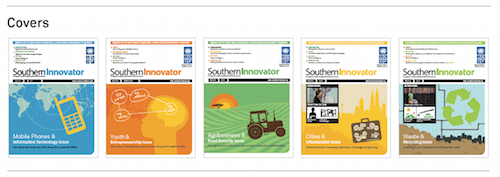
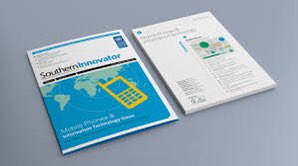
Development Challenges, South-South Solutions was launched as an e-newsletter in 2006 by UNDP’s South-South Cooperation Unit (now the United Nations Office for South-South Cooperation) based in New York, USA. It led on profiling the rise of the global South as an economic powerhouse and was one of the first regular publications to champion the global South’s innovators, entrepreneurs, and pioneers. It tracked the key trends that are now so profoundly reshaping how development is seen and done. This includes the rapid take-up of mobile phones and information technology in the global South (as profiled in the first issue of magazine Southern Innovator), the move to becoming a majority urban world, a growing global innovator culture, and the plethora of solutions being developed in the global South to tackle its problems and improve living conditions and boost human development. The success of the e-newsletter led to the launch of the magazine Southern Innovator.
https://davidsouthconsulting.org/2021/03/05/southern-innovator-issue-2/

Creative Commons License

This work is licensed under a
Creative Commons Attribution-Noncommercial-No Derivative Works 3.0 License.

ORCID iD: https://orcid.org/0000-0001-5311-1052.

© David South Consulting 2023

Categories
Archive Development Challenges, South-South Solutions Newsletters

Trade to Benefit the Poor Up in 2006 and to Grow in 2007

By David SouthDevelopment Challenges, South-South Solutions

SOUTH-SOUTH CASE STUDY

The global fair trade market – in which goods and services are traded under the Fairtrade logo, guaranteeing a minimum fair price to producers experienced unprecedented growth in 2006. In the UK alone, 2006 sales totalled £290 million – a jump of 46 percent from 2005. The Fairtrade Foundation predicts sales will reach UK £300 million in 2007.

In 2005 Fairtrade sales were € 1.1 billion in the brand’s main markets of Switzerland, the UK, New Zealand, Australia and the US. At present fair trade works with 5 million farmers in the global South, and it represents an ever-increasing opportunity for Southern entrepreneurs.

A tipping point has been reached in Western awareness of and demand for the Fairtrade brand and concept, and it is now being adopted by major supermarkets. In the UK, 62 percent of consumers know the logo and understand what it means.

The concept of fair trade began in the Netherlands in 1988, when the Max Havelaar Foundation launched the Fairtrade consumer label with coffee from Mexico. Unlike conventional businesses, where the price paid to a producer is what the market dictates, fair trade guarantees the producer a minimum price for their product. This amount is set at a level that ensures the producer can live a life with dignity and meet all the essentials. A portion of the profits is also kept in a communal fund which the producers democratically elect to spend as they wish (many choose to spend it on community projects).

Fair trade has been criticized for a number of reasons. It has been seen as too small and marginal to really make inroads on poverty, and has been accused of privileging a small number of producers while ignoring the rest. It has also been criticized for not focusing enough on innovation and increasing production to really eradicate poverty in the developing world.

For all its faults and shortcomings, it is a fact that the Fairtrade brand is a runaway success and offers a wide range of opportunities for entrepreneurs.

In the UK, fair trade now includes 2,500 products, ranging from footballs, to tea, cotton and honey – up from just 150 in 2003, an astonishing rate of growth. Where fair-trade products were once confined to co-operative and charity shops, they are now widely sold in major supermarkets.

The success of fair trade is not confined to Europe and the US. It is growing in Japan, where, says fair trade retailer Sonoko Iwasa, “the concept of using trade to equalize the world by buying goods from developing countries from Asia and Africa was a notion that had no connection with everyday lives.”

Iwasa’s Rumaba Goods store just outside Tokyo sells organic chocolates from Africa, woollen gloves and hats from Nepal, and elegant clothes from Thailand. Iwasa found that the key in the highly competitive Japanese consumer market was to focus on quality, not fairness. This, she says, has made these products fashionable.

At present, the fair trade market is worth only about US $6 to $7 million a year in Japan and includes 1,500 products. But according to Michiko Ono of Japan’s best-known fair trade label, People Tree, the trend is catching on among the country’s socially aware youth.

To start a fair trade business, entrepreneurs or producers need first to contact the international body that certifies fair trade products and ensure that production meets the ethical standards required.

Published: January 2007

Resources

https://davidsouthconsulting.org/2022/06/02/afghanistans-juicy-solution-to-drug-trade/

https://davidsouthconsulting.org/2022/11/02/african-online-supermarket-set-to-boost-trade/

https://davidsouthconsulting.org/2022/10/26/african-trade-hub-in-china-brings-mutual-profits-2/

https://davidsouthconsulting.org/2022/11/21/chinese-trade-in-angola-helps-recovery/

https://davidsouthconsulting.org/2022/11/19/cooking-up-a-recipe-to-end-poverty/

https://davidsouthconsulting.org/2022/04/12/djibouti-re-shapes-itself-as-african-trade-hub/

https://davidsouthconsulting.org/2022/10/24/flurry-of-anti-poverty-innovations/

https://davidsouthconsulting.org/2021/07/19/global-south-trade-boosted-with-increasing-china-africa-trade-in-2013/

https://davidsouthconsulting.org/2022/10/21/local-animation-a-way-out-of-poverty/

https://davidsouthconsulting.org/2022/10/26/perfume-of-peace-helps-farmers-switch-from-drug-trade/

https://davidsouthconsulting.org/2022/10/21/social-networking-websites-a-way-out-of-poverty/

https://davidsouthconsulting.org/2021/07/19/south-south-trade-helping-countries-during-economic-crisis/

https://davidsouthconsulting.org/2021/03/05/southern-innovator-issue-2/

https://davidsouthconsulting.org/2021/01/23/a-steppe-back-economic-liberalisation-and-poverty-reduction-in-mongolia/

https://davidsouthconsulting.org/2021/01/23/the-sweet-smell-of-failure-the-world-bank-and-the-persistence-of-poverty/

https://davidsouthconsulting.org/2022/11/18/web-2-0-networking-to-eradicate-poverty/

https://davidsouthconsulting.org/2022/10/05/women-empowered-by-fair-trade-manufacturer/

https://davidsouthconsulting.org/2022/06/16/women-mastering-trade-rules/

Development Challenges, South-South Solutions was launched as an e-newsletter in 2006 by UNDP’s South-South Cooperation Unit (now the United Nations Office for South-South Cooperation) based in New York, USA. It led on profiling the rise of the global South as an economic powerhouse and was one of the first regular publications to champion the global South’s innovators, entrepreneurs, and pioneers. It tracked the key trends that are now so profoundly reshaping how development is seen and done. This includes the rapid take-up of mobile phones and information technology in the global South (as profiled in the first issue of magazine Southern Innovator), the move to becoming a majority urban world, a growing global innovator culture, and the plethora of solutions being developed in the global South to tackle its problems and improve living conditions and boost human development. The success of the e-newsletter led to the launch of the magazine Southern Innovator. 
Creative Commons License

This work is licensed under a
Creative Commons Attribution-Noncommercial-No Derivative Works 3.0 License.

ORCID iD: https://orcid.org/0000-0001-5311-1052.

© David South Consulting 2023

Categories
Archive

Indian Solar Power Pack Powers Villages

By David SouthDevelopment Challenges, South-South Solutions

SOUTH-SOUTH CASE STUDY

Developments in India are showing the way forward for low-cost solar power for the poor. The Duron Solar Home Power System (http://www.duronenergy.com/product_info/) is now enabling the rural poor to generate and store solar electricity. It is powerful enough to charge gadgets and appliances and run LED lights. It allows people to do their household chores into the dark hours and to study or earn extra income.

As the company says, it “allows ample light for cooking, for children to study at night, and for shop owners to stay open later to earn more money.”

The system removes the need for polluting and dangerous kerosene lamps, which are used by an estimated one million families for lighting in India.

Kerosene lamps are a major contributor to indoor air pollution, which itself claims the lives of 1.5 million people each year. Kerosene lamps have also caused countless deaths by suffocation, burns and fatal fires.

The United Nations Environment Program says kerosene fumes are responsible for around 64 percent of deaths for children under the age of five in developing countries.

More than 1.7 billion people around the world have no domestic electricity supply, of whom more than 500 million live in sub-Saharan Africa (World Bank). Some 400 million people in India do not have access to electricity, according to the World Bank, and 600,000 villages lack an electrical supply. Prime Minister Manmohan Singh has pledged “power for all” by 2012. Without electricity, many development goals remain dreams that will never be achieved.

Being able to see at night unleashes a vast range of possibilities, but for the very poor lighting is often the most expensive household expense, soaking up 10 to 15 percent of income.

According to Greenpeace (http://www.greenpeace.org/international/), India could generate 10 percent of its electricity from solar power by 2030.

The Duron package comes with a five watt solar panel, a cell phone charger connection, three LED (http://en.wikipedia.org/wiki/LED_lamp) lights, and an AC grid charger. After a day of charging, the Duron can power three hours of bright lighting or 10 hours of dim lighting.

The Duron system sells for about 5,999 rupees, or around US $130, and the typical user to date has been small businesses and schools.

Duron is selling several thousand units a month and the company is currently scaling up its sales efforts.

Duron’s approach is to provide a market solution to the huge problem of providing electricity to India’s rural poor.

The company was launched in 2008 with the goal of providing electricity to those without around the world. It was developed out of the Idea Lab (http://www.idealab.com/), a Pasadena, Californian incubator of technology companies.

Extensive field research was conducted across India to determine what was the best solution and what were the needs of rural dwellers. Duron moved its headquarters to Bangalore, India in 2009 to be closer to its customers and expand sales. The company operates in the Indian states of Uttar Pradesh and Karnataka.

By August 2009, more than 2,100 people had light because of the Duron system. The company calculates this translated into 172,500 hours of light.

One customer, Anil Singh, lives with his family in the unelectrified village of Narainpur. His family used kerosene lamps and was paying US $4 a day for unreliable lighting. But after seeing his neighbour, Santosh Singh, with bright, powerful lights at his home, he was curious as to why. When he found out about Duron’s system, he installed a system to light his front porch and two rooms in his house. His family now enjoys two-and-half hours of reliable light in the evening to do things.

“The Duron has made my life so much easier,” said Anil. “It’s a much cheaper (lighting) option compared to kerosene lamps, and I now have a reliable source of power on a daily basis,” he told the company’s website.

Another innovative start-up with offices in India and Africa, is the d.light company, which also has a new, highly-efficient solar-powered product available. The Kiran LED lamp (http://www.dlightdesign.com/products_kiran_global.php) stays lit for eight hours on a full battery and is four times brighter than a kerosene lamp. It illuminates 360 degrees and produces an even, bright white light.

Published: February 2010

Resources

1) Lighting Africa: this website run by the World Bank is a virtual business community and has forums, market intelligence, access to grants, network and partnership opportunities. Website: http://lightingafrica.org/index.cfm?Page=Home

2) D.light Design is dedicated to bringing modern lighting and power to more than 1.6 billion people globally currently living without electricity. They aim to be the number one player in off-grid lighting and power solutions worldwide. Website: http://www.dlightdesign.com/

3) Solar Power Answers is a one-stop-shop for everything to do with solar power. It has a design manual and guides to the complex world of solar power equipment. Website: http://www.solar-power-answers.co.uk/index.php

4) Sun King solar lantern: The lantern provides 16 hours of light for a day’s charge. Website: http://www.greenlightplanet.com/ourusers.html

Development Challenges, South-South Solutions was launched as an e-newsletter in 2006 by UNDP’s South-South Cooperation Unit (now the United Nations Office for South-South Cooperation) based in New York, USA. It led on profiling the rise of the global South as an economic powerhouse and was one of the first regular publications to champion the global South’s innovators, entrepreneurs, and pioneers. It tracked the key trends that are now so profoundly reshaping how development is seen and done. This includes the rapid take-up of mobile phones and information technology in the global South (as profiled in the first issue of magazine Southern Innovator), the move to becoming a majority urban world, a growing global innovator culture, and the plethora of solutions being developed in the global South to tackle its problems and improve living conditions and boost human development. The success of the e-newsletter led to the launch of the magazine Southern Innovator.  
Creative Commons License

This work is licensed under a
Creative Commons Attribution-Noncommercial-No Derivative Works 3.0 License.

ORCID iD: https://orcid.org/0000-0001-5311-1052.

© David South Consulting 2022