Categories
Archive Development Challenges, South-South Solutions Newsletters

From Warriors to Tour Guides

By David SouthDevelopment Challenges, South-South Solutions

SOUTH-SOUTH CASE STUDY

In the wake of conflict, demobilizing combatants is as critical as ending the fighting if there is hope for the peace to last. When conflict ends, former fighters usually find themselves unemployed. But tourism is proving a viable way to deal with the social and political dangers of neglecting former fighters post-conflict.

Global tourism accounts for more than 10 per cent of global GDP and eight per cent of total employment worldwide. It grew by six per cent in 2007, according to the UN World Tourism Organisation. The Asia-Pacific region grew by 10 per cent, and Africa by eight per cent.

Ironically, much conflict has taken place in areas of natural beauty that offer a strong pull to tourists. While perception judging from the media is that conflict is getting worse, in fact trends show the opposite: according to Global Conflict Trends, “The levels of both interstate and societal warfare declined dramatically through the 1990s and this trend continues in the early 2000s, falling over 60% from their peak levels.”

A lot is at stake and it proves it is worthwhile to make peace pay – and that it is possible.

Battle-hardened rebels like 28-year-old Marjuni Ibrahim lived in the jungle and fought as guerrillas in Aceh, Indonesia. On the northwestern tip of Indonesia, Aceh was devastated by both a 30-year war that killed 15,000 people and the 2004 tsunami. Marjuni lost his sister and parents in the tsunami, in which more than 170,000 died or are missing.

Much of the coastline was destroyed, but the shock of the catastrophe pushed both sides into peace talks. The separatist Free Aceh Movement (GAM) battled the Indonesian army (TNI) up to 2005, when they signed a peace agreement.

Marjuni is now cashing in on a guerilla’s best survival technique: being tough. He now takes adventure and extreme-hiking enthusiasts deep into the jungle, where they once fought and lived. It is a habitat of steep, rocky trails, enormous teak trees – all with the reward of pristine waterfalls and refreshing rock pools for the hardy travelers.

The tours target mainly the community of aid workers in the area helping to re-build Aceh, but the hope is to expand: “I want to make the Acehnese aware of the potential for community-based tourism, and put Aceh on the map as a friendly tourism destination”, said Mendal Pols, a Dutch tour operator and founder of Aceh Explorer on the island, to Reuters.

The jungle is home to endangered Sumatran tigers, deer and hornbills.

“The area is very beautiful. I like trekking and I was interested to see what life was like during the conflict,” said Hugo Lamer, a Dutch trekker. “It’s difficult to imagine but three or more years ago they were running around here with guns and fighting the TNI. When I went, they took us to a place where they had lost some of their friends. And then you realize that we are there for fun, but for them this was really serious.”

In Vietnam, the famous Cu Chi Tunnels, formerly used by the Vietcong during the Vietnam War, have become major tourist attractions. The vast network of underground tunnels in Ho Chi Minh City link up with a tunnel network stretching across the country, and were used as hiding spots and as supply routes, hospitals, food and weapon dumps and living quarters.

In Rwanda, the government turned to tourism to help heal the wounds of the massacre that led to the deaths of almost 1 million people in 1994. It markets its population of mountain gorillas, diverse landscape with volcanic ranges, hills, lakes and savannah. But it is also not covering up the past: genocide sites are also on the tourist itinerary. And it is meant to shock: in the town of Murambi, classrooms still contain the bodies of the people who were killed there, covered in lime to preserve them. In Kigali, a museum documents the genocide. Survivors lead the tours to help them heal from the horror.

The goal is to restore the country’s tourism industry and generate US $100 million a year by 2010. It is currently bringing in US $45 million. The approach is to target the ethical end of the tourism market. The idea is to use tourism as a means to avert the tensions that helped to cause the genocide in the first place: poverty, illiteracy and government hording all the wealth. The idea is to employ as many people as possible and spread the wealth as wide as possible.

Published: March 2008

Resources

  • The UN Environment Programme has a special division to advise on post-conflict and disaster management.
    Website: http://postconflict.unep.ch/

Development Challenges, South-South Solutions was launched as an e-newsletter in 2006 by UNDP’s South-South Cooperation Unit (now the United Nations Office for South-South Cooperation) based in New York, USA. It led on profiling the rise of the global South as an economic powerhouse and was one of the first regular publications to champion the global South’s innovators, entrepreneurs, and pioneers. It tracked the key trends that are now so profoundly reshaping how development is seen and done. This includes the rapid take-up of mobile phones and information technology in the global South (as profiled in the first issue of magazine Southern Innovator), the move to becoming a majority urban world, a growing global innovator culture, and the plethora of solutions being developed in the global South to tackle its problems and improve living conditions and boost human development. The success of the e-newsletter led to the launch of the magazine Southern Innovator.

Creative Commons License

This work is licensed under a
Creative Commons Attribution-Noncommercial-No Derivative Works 3.0 License.

ORCID iD: https://orcid.org/0000-0001-5311-1052.

© David South Consulting 2022

Categories
Archive Development Challenges, South-South Solutions Newsletters Southern Innovator magazine

Innovative Stoves to Help the Poor

By David SouthDevelopment Challenges, South-South Solutions

SOUTH-SOUTH CASE STUDY

Half of the world’s population cook with a fuel-burning stove, and this figure rises to 80 per cent of households in rural areas in developing countries. Typical fuels burned include wood, coal, crop leftovers and animal dung. The indoor pollution from smoke and carbon monoxide is a top health hazard in the developing world, ranking just behind dirty water, poor sanitation and malnutrition. The World Health Organization (WHO) estimates that 1.6 million people die each year as a result of toxic indoor air.

A landmark five-year study comparing Guatemalans cooking on open fires, to those using improved stoves, has brought more evidence forward of the damage done by indoor air pollution: “It’s been shown that children living in houses using open fires with solid fuels will have more pneumonia than children living in houses that are using cleaner fuels,” said Dr. Kirk R. Smith, an environmental health scientist at the University of California, Berkeley.

The research, combined with studies in Asia, suggests additional health problems from indoor air pollution, including higher frequency of cataracts, partial blindness, tuberculosis, low birth weights and high blood pressure. The researchers found that cleaner stoves had larger effects than reducing salt in the diet or lowering blood pressure in women, with the results published last July in Environmental Health Perspectives.

But Southern innovators are finding practical ways to curb pollution from indoor cooking and the burning of trash in slums.

In Yunnan Province, China, entrepreneur Hao Zheng Yi’s Yunnan Zhenghong Environmental Protection Co. has been selling clean-burning stoves to rural farmers. One fifth of rural China has no electricity (UN), and 80 per cent rural dwellers burn wood or straw in ovens for heating and cooking. This creates heavy indoor air pollution, damaging health.

The so-called Efficient Gasification Burning system combines traditional fuel and natural gas: a hybrid that helps low-income households to affordably use the stove and not pollute their indoor air.

The stoves are sold for a profit in Yunnan Province, and so far 50,000 have been sold. Because the ovens are sold for a profit, Zhenghong had to consult extensively with the farmers in the design phase to make sure the ovens meet their needs.

The result has been that Zhenghong ovens run for five to eight years using the same amount of wood and hay a conventional oven burns in one year.

Another source of air pollution is burning trash in slums. The lack of formal trash removal services in slums has two bad consequences: one is the pollution and poison from rotting rubbish leaching into the soil and water table; the other is ad-hoc burning of the trash to get rid of it, which pollutes the air with a toxic, acrid stench. In Nairobi’s Kibera slum – the second biggest in Africa – over 60 per cent of the city’s residents live in the slum, and are bypassed by garage collection services. Garbage is piled up along the muddy roads and paths, or hangs in the trees.

The Kenyan NGO Umande Trust, which specialises in water and sanitation projects, has developed a home-grown method to burn trash and avoid having to turn to very expensive and complicated incinerators from Europe. The sheer quantity of trash that needs to be burned in the slum means smaller solutions will not be able to handle the problem.

Its “community cooker” re-uses garbage from the community as fuel for a boiler and oven attached to it. The heat generated by burning the rubbish provides hot water and cooking facilities – and also jobs for unemployed youths who collect the rubbish and stock the incinerator. It was developed by a Kenyan architect, and it is hoped the “community cooker” will be taken up across Africa.

The community cooker’s inventor, Kenyan architect Jim Archer, took eight years to design and build it: “My thinking was how do we get rid of the rubbish and …how can we induce people to pick it up. Then I thought, well if we can convert it to heat on which people can cook…” he told Australia’s ABC News.

Similar industrial scale trash incinerators can cost between US $50 million to US $280 million (World Bank) – “…when applying waste incineration, the economic risk of project failure is high…”. The community cooker on the other hand, will sell for US $10,000.

The idea was to create an incinerator that was simple to use and repair: something that the commercially available, computer-controlled incinerators were not able to do. As the cooker gets up to speed, it will be able to burn 60 per cent of the slum’s trash.

Local youth go house-to-house collecting trash. They get money from the slum residents for this. Rubbish is then exchanged for cooking time or hot water for washing.

“The trash has started to help us a bit after the cooker came. There are fewer diseases like diarrhea and the environment has improved. … I think burning the rubbish will bring good health to this community,” said Patricia Ndunge, as she fried onions on the cooker.

And it looks like the community cooker has a future: Kenya’s largest supermarket, Nakumatt, has pledged to pay for 20 more slum cookers.

Published: March 2008

Resources

  • Envirofit: A Shell Foundation supported project to produce 300,000 clean, wood-burning stoves for the developing world (starting with India, Brazil, Kenya and Uganda). Envirofit will offer a variety of sleek ceramic stoves from single to multipot, with and without chimneys, and with colors like apple red, baby blue and gold. The cost is to start at $10 to $20 and run to $150 to $200.
    Website: http://www.envirofit.org/

Follow @SouthSouth1

Slideshare: http://www.slideshare.net/DavidSouth1/development-challengessouthsouthsolutionsnovember2010issue

Southern Innovator Issue 1: https://books.google.co.uk/books?id=Q1O54YSE2BgC&dq=southern+innovator&source=gbs_navlinks_s

Southern Innovator Issue 2: https://books.google.co.uk/books?id=Ty0N969dcssC&dq=southern+innovator&source=gbs_navlinks_s

Southern Innovator Issue 3: https://books.google.co.uk/books?id=AQNt4YmhZagC&dq=southern+innovator&source=gbs_navlinks_s

Southern Innovator Issue 4: https://books.google.co.uk/books?id=9T_n2tA7l4EC&dq=southern+innovator&source=gbs_navlinks_s

Southern Innovator Issue 5: https://books.google.co.uk/books?id=6ILdAgAAQBAJ&dq=southern+innovator&source=gbs_navlinks_s

Creative Commons License

This work is licensed under a
Creative Commons Attribution-Noncommercial-No Derivative Works 3.0 License.

ORCID iD: https://orcid.org/0000-0001-5311-1052.

© David South Consulting 2023

Categories
Archive Development Challenges, South-South Solutions Newsletters

Carbon Markets Need to Help the Poor

By David SouthDevelopment Challenges, South-South Solutions

SOUTH-SOUTH CASE STUDY

The global carbon credit trading schemes emanating from the Kyoto Protocol have created a multi-billion dollar market – the global carbon market was worth US $30 billion in 2007 (World Bank) – and represents one of the fastest growing business opportunities in the world. The bulk of this trading is with the European Union’s emissions trading scheme, some US $25 billion. But the big problem to date has been most of this investment is enriching stock brokers, and not the poor.

And this is a huge opportunity missed, as some point out: “These numbers are relevant because they demonstrate that the carbon market has become a valuable catalyst for leveraging substantial financial flows for clean energy in developing countries,” according to Warren Evans, the World Bank’s director of environment.

And the way to do this is through the Clean Development Mechanism (CDM) – where wealthy countries can meet their greenhouse gas targets by investing in clean energy projects in the South. But so far, it has been criticised for spending 4.6 billion Euros on projects that would have cost just 100 million Euros if implemented by development agencies.

But if done right, the CDM could become directly beneficial to the so-called Bottom of the Pyramid (BOP) – the four billion who live on less than US $2 a day. The CDM allows developed countries to offset their greenhouse gas emissions by paying projects targeting the poor to develop clean energy, or to create what are called carbon sinks (planting trees for example), to cut global emissions.

One mechanism to make all of this work is the CDM Bazaar: officially launched in September 2007, it is about linking together buyers and sellers. This is a place where people with business ideas or projects can go for start-up funding. It is also a place to share information, contacts and learn about how to tap the market.

And two Southern innovators are showing what can be achieved by tapping the power of the sun to help the poor.

One such initiative In India, owned by Mr. Deepak Gadhia and Dr Mrs. Shirin Gadhia, is targeting the 63 per cent of the BOP market that is with rural populations. All of these people need affordable and clean energy if their lives are to improve: most currently use firewood and kerosene for cooking and heating. The company Gadhia Solar is building and selling solar steam cook stoves in rural villages. The giant solar dishes which resemble satellite TV dishes, can fry and roast using the sun and come in Do-it-Yourself kits. The enormous silver dishes beam concentrated sunlight on to a black plate on the oven, reaching temperatures of over 450 Celsius.

In Morocco, the company Tenesol, an electric supply co-operative society, is using solar power to bring electricity to 60,000 poor households in 29 provinces. And it is making Morocco a world leader in the use of solar for rural electricity.

Each house is equipped with a solar home system comprising a solar panel, battery and controller. It is powerful enough to light four to eight lamps, and support a television, radio or mobile phone charger.

Customers pay a connection fee of US $80, and then a monthly service fee of between US $7.50 and US $17.50. The fee competes well with what rural households were spending on candles and batteries.

The initial outlay for equipment is mostly paid for by investors, with the hope that the money will be made back on the service fees.

Tenesol hopes to bring electricity to 101,500 households, and also wire them up and provide light bulbs.

Published: March 2008

Resources

  • More on emissions trading: Click here
  • UNDP has produced a free users guide introduction to the Clean Development Mechanism.
    Website: http://www.undp.org/
  • South South North has also produced a Practitioners’ Practical Toolkit.
    Website: http://www.cdmguide.com/

Development Challenges, South-South Solutions was launched as an e-newsletter in 2006 by UNDP’s South-South Cooperation Unit (now the United Nations Office for South-South Cooperation) based in New York, USA. It led on profiling the rise of the global South as an economic powerhouse and was one of the first regular publications to champion the global South’s innovators, entrepreneurs, and pioneers. It tracked the key trends that are now so profoundly reshaping how development is seen and done. This includes the rapid take-up of mobile phones and information technology in the global South (as profiled in the first issue of magazine Southern Innovator), the move to becoming a majority urban world, a growing global innovator culture, and the plethora of solutions being developed in the global South to tackle its problems and improve living conditions and boost human development. The success of the e-newsletter led to the launch of the magazine Southern Innovator.  

Follow @SouthSouth1

Google Books: https://books.google.co.uk/books?id=DqmXBgAAQBAJ&dq=development+challenges+march+2008&source=gbs_navlinks_s

Slideshare: http://www.slideshare.net/DavidSouth1/development-challengessouthsouthsolutionsmarch2008issue-44443163

Southern Innovator Issue 1: https://books.google.co.uk/books?id=Q1O54YSE2BgC&dq=southern+innovator&source=gbs_navlinks_s

Southern Innovator Issue 2: https://books.google.co.uk/books?id=Ty0N969dcssC&dq=southern+innovator&source=gbs_navlinks_s

Southern Innovator Issue 3: https://books.google.co.uk/books?id=AQNt4YmhZagC&dq=southern+innovator&source=gbs_navlinks_s

Southern Innovator Issue 4: https://books.google.co.uk/books?id=9T_n2tA7l4EC&dq=southern+innovator&source=gbs_navlinks_s

Southern Innovator Issue 5: https://books.google.co.uk/books?id=6ILdAgAAQBAJ&dq=southern+innovator&source=gbs_navlinks_s

This work is licensed under a Creative Commons Attribution 4.0 International License.

ORCID iD: https://orcid.org/0000-0001-5311-1052.

© David South Consulting 2021

Categories
Archive Blogroll Development Challenges, South-South Solutions Newsletters

Nollywood: Booming Nigerian Film Industry

By David SouthDevelopment Challenges, South-South Solutions

SOUTH-SOUTH CASE STUDY

The digital revolution in filmmaking over the last decade has given birth to an African success story: Nollywood – Nigeria’s answer to Hollywood, uses low-cost digital filmmaking and editing to tell local stories — in the process making money and creating thousands of jobs.

This do-it-yourself (DIY), straight-to-DVD and video market has in just 13 years ballooned into a US $250 million-a-year industry employing thousands of people. In terms of the number of films produced each year, Nollywood is now in third place behind India’s Bollywood and America’s Hollywood. Despite rampant pirating of DVDs and poor copyright controls, directors, producers, actors, stars, vendors and technicians are all making a living in this fast-growing industry.

The power of creative industries to create jobs and wealth has been a focus of UNESCO, through its Global Alliance for Cultural Diversity. UNESCO has been in the forefront in helping African countries re-shape their policies to take cultural industries into consideration. The promotion of cultural industries also has been incorporated into the New Partnership for Africa’s Development (NEPAD).

What is particularly attractive about Nollywood to the poor in the South is its rough-and-ready approach to filmmaking: combining low-cost digital cameras and film editing software on personal computers, with small budgets and fast turn-around times. Films are made on location using local people. These factors make getting into filmmaking accessible and within reach of more people.

Nollywood grew out of frustration, necessity and crisis: in the late 1980s and early 1990s, Nigerian cities became crime hotbeds. People were terrified to go out on the streets, and this led to the closing down of many movie theatres. Desperate for entertainment at home – and unsatisfied with foreign imports from India and the West – Nigerians turned to telling their own stories to stave off the boredom of staying in.

The film credited with sparking off the industry is 1992’s Living in Bondage – a huge financial hit credited with raising the level of professionalism and production values in Nigerian cinema.

Now, between 500 and 1,000 feature-length movies are made each year, selling well across the continent of Africa. Average productions take 10 days and cost around US $15,000 (www.thisisnollywood.com). Nollywood stars are famous throughout Africa – and Nigeria culturally dominates West Africa just as the US does the world. It is estimated there are 300 producers and that 30 titles go to shops and market stalls every week. On average, a film sells 50,000 copies: a hit will sell several hundred thousand. With each DVD costing around US $2, it is affordable to most Nigerians and very profitable for the producers.

“These are stories about Africa, not someone else’s,” well-known actor Joke Silva told the Christian Science Monitor.

Focused on Africa, the films’ themes revolve around AIDS, corruption, women’s rights, the occult, crooked cops and prostitution. They do so well because they speak directly to the lives of slum-dwellers and rural villagers.

“We are telling our own stories in our way, our Nigerian way, African way,” said director Bond Emeruwa. “I cannot tell the white man’s story. I don’t know what his story is all about. He tells his story in his movies. I want him to see my stories too.”

The big brands – Sony, Panasonic, JVC and Canon – all produce cameras capable of high-definition digital filmmaking and these have become the staple tools of this filmmaking revolution.

More and more, the films are capitalising on the large African diaspora around the world, on top of Africa’s large internal market. And this is offering a step-up into the global marketplace for Nigerian directors and producers.

The Nollywood phenomemon has been documented in the documentary This is Nollywood, directed by Franco Sacchi, a teacher from the Center of Digital Imaging Arts at Boston University.

The prospects for the industry are only looking up: the Nigeria in the Movies project has been launched to help grow the industry, establish standards, improve distribution and broaden its international appeal and awareness. It also offers filmmaking grants for neophyte filmmakers.

Of course, filmmaking can be a tricky business: authorities in largely Muslim northern Nigeria have imposed 32 restrictions on the local film industry — nicknamed “Kannywood” after the city of Kano. A six-month ban lost the industry US $29 million and put thousands out of work: a sign of the economic importance of this DIY filmmaking business. The message is clear: filmmakers need to be sensitive to the cultural norms of the communities in which they work.

Kannywood, started in 1992, has 268 production companies and 40 editing studios, employing over 14,000 people.

Adim Williams is one Nigerian director who is getting an international audience. He spends about US $40,000 on films that take two weeks to shoot. He has already secured an American release of a comedy, Joshua. Another director, Tunde Kelani, is regularly featured at international film festivals, where Nollywood screenings are more common.

And some, like young director Jeta Amata, believe Nollywood’s cheap, fast-production, DIY approach has a lot to teach Hollywood, with its expensive filmmaking and ponderous production cycles.

Published: March 2008

Resources

  • This is Nollywood: A documentary about Nigeria’s booming movie industry.
    Website: http://www.thisisnollywood.com
    There is also an inspiring trailer to the film here.
    Website: http://www.thisisnollywood.com
  • The global charity Camfed (dedicated to eradicating poverty in Africa through the education of girls and empowerment of women) has projects to teach women filmmaking skills.
    Website: http://uk.camfed.org
  • Festival Panafricain du Cinema et de la Television de Ouagadoogou 2009: Africa’s biggest film festival.
    Website: http://www.fespaco.bf/
  • Naijarules: Billing itself as the “largest online community of lovers and critics of Nollywood”, an excellent way to connect with all the players in the business.
    Website: http://www.naijarules.com/vb/index.php
  • Nollywood Foundation: Based in the US, aims to bring Nigerian films and culture to an international audience and to promote new films and new media.
    Website:http://www.nollywoodfoundation.org/home.php

https://davidsouthconsulting.org/2022/03/30/angolan-film-grabs-attention-at-film-festival/

https://davidsouthconsulting.org/2022/04/01/bolivian-film-schools-film-scene-paying-off/

https://davidsouthconsulting.org/2022/04/01/new-african-film-proving-power-of-creative-economy/

https://davidsouthconsulting.org/2021/02/04/new-cuban-film-seeks-to-revive-sector/

https://davidsouthconsulting.org/2022/03/30/riverwood-kenyan-super-fast-super-cheap-filmmaking/

Development Challenges, South-South Solutions was launched as an e-newsletter in 2006 by UNDP’s South-South Cooperation Unit (now the United Nations Office for South-South Cooperation) based in New York, USA. It led on profiling the rise of the global South as an economic powerhouse and was one of the first regular publications to champion the global South’s innovators, entrepreneurs, and pioneers. It tracked the key trends that are now so profoundly reshaping how development is seen and done. This includes the rapid take-up of mobile phones and information technology in the global South (as profiled in the first issue of magazine Southern Innovator), the move to becoming a majority urban world, a growing global innovator culture, and the plethora of solutions being developed in the global South to tackle its problems and improve living conditions and boost human development. The success of the e-newsletter led to the launch of the magazine Southern Innovator.  

Follow @SouthSouth1

Google Books: https://books.google.co.uk/books?id=DqmXBgAAQBAJ&dq=development+challenges+march+2008&source=gbs_navlinks_s

Slideshare: http://www.slideshare.net/DavidSouth1/development-challengessouthsouthsolutionsmarch2008issue-44443163

Southern Innovator Issue 1: https://books.google.co.uk/books?id=Q1O54YSE2BgC&dq=southern+innovator&source=gbs_navlinks_s

Southern Innovator Issue 2:https://books.google.co.uk/books?id=Ty0N969dcssC&dq=southern+innovator&source=gbs_navlinks_s

Southern Innovator Issue 3:https://books.google.co.uk/books?id=AQNt4YmhZagC&dq=southern+innovator&source=gbs_navlinks_s

Southern Innovator Issue 4: https://books.google.co.uk/books?id=9T_n2tA7l4EC&dq=southern+innovator&source=gbs_navlinks_s

Southern Innovator Issue 5:https://books.google.co.uk/books?id=6ILdAgAAQBAJ&dq=southern+innovator&source=gbs_navlinks_s

One of the many stories we covered on Africa’s fast-growing cities from 2007. It was witnessing first-hand Africa’s innovators and their adaptive use of mobile and information technologies that inspired us to give birth to Southern Innovator’s first issue.

Citations

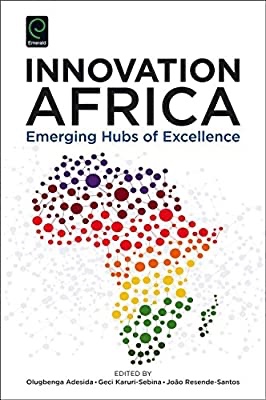
Cited in Innovation Africa: Emerging Hubs of Excellence edited by Olugbenga Adesida, Geci Karuri-Sebina, Joao Resende-Santos (Emerald Group Publishing, 2016).

https://davidsouthconsulting.org/2021/03/05/southern-innovator-issue-2/

Creative Commons License

This work is licensed under a
Creative Commons Attribution-Noncommercial-No Derivative Works 3.0 License.

ORCID iD: https://orcid.org/0000-0001-5311-1052.

© David South Consulting 2023