Categories
Archive Development Challenges, South-South Solutions Newsletters

African Breakthroughs To Make Life Better

By David SouthDevelopment Challenges, South-South Solutions

SOUTH-SOUTH CASE STUDY

In the last 50 years, the domestication of high technology – bringing cheaper access to everything from personal computers to digital cameras and applications like global positioning systems (GPS) – has transformed millions of lives and the way business is done. In the next 50 years, biotechnology is set to do the same.

One aspect of biotechnology, genetic engineering (GE), has been lambasted by protest groups for being “unnatural” and driven by profit and the privatisation of nature. It has been seen as the domain of the big and powerful and remote from everyday needs. But now Africa is pioneering new approaches that are rooted in the real challenges faced by African people – and proving world-class scientific research can take place in Africa.

One initiative in South Africa aims to help small and medium sized farmers save their maize (corn) crops. The Food and Agriculture Foundation estimates that 854 million people in the world do not have sufficient food for an active and healthy life, and food security is a serious issue in Africa.

Maize streak viruses (MSV) are geminiviruses that destroy maize crops, and are a big problem throughout sub-Saharan Africa and the Indian Ocean islands. It leaves characteristic yellow-white streaks across the plant’s leaves, and produces deformed corn cobs, often severely dwarfed. Over half of the food supply for people in sub-Saharan Africa comes from maize, but MSV can wipe out an entire farmer’s crop.

Scientists at the University of Cape Town (www.uct.ac.za), South Africa, and the South African seed company PANNAR Pty Ltd have developed a resistant variety of maize that they hope will alleviate food shortages as well as promote the reputation of genetically engineered (GE) foods in Africa.

The MSV-resistant maize is the first GE crop developed and tested solely by Africans. Field trials will soon begin to make sure there are no unintended consequences on the environment and animal life dependent on maize.

Maize arrived in Africa in the 1500s from Mexico, and quickly displaced native food crops like sorghum and millet. Maize streak virus is an endemic pathogen of native African grasses, and is passed on to maize plants by leaf hopping insects.

The technology being developed can also be applied to other geminiviruses, like Wheat dwarf virus (WDV), sugarcane streak virus, barley, oats and millet. The scientists hope this development will prove the safety of GE foods, and address the criticism it is only a profit-driven technology by selling the seeds for minimal profit to subsistence farmers.

“If the GE maize turns out to be as hardy in the field as in the greenhouse,” said Dr Dionne Shepherd, who leads the research, “it could have a great impact on small and medium sized farmers. These are the farmers who need it the most, since they can’t afford preventative measures such as insecticides to control the leafhopper which transmits the disease. When small scale farmers lose 100 per cent of their crop (which they often do) due to maize streak disease, they not only lose any income they would have obtained selling their excess maize, but they also lose a massive chunk of their annual food supply.”

Other African institutions are working on GE crops with international partners, but, Shepherd, says, “The reason the MSV-resistant maize could improve the reputation of GE in Africa, is that international biotech partners, especially in the private sector, are generally not interested in solving problems that are unique to Africa, and Africans are therefore suspicious of their motives when they try to sell or even give away GE food.”

“MSV is endemic to sub-Saharan Africa, and our MSV-resistant maize was developed by Africans for Africa with no ulterior motives, which will hopefully make Africans accept the technology.”

“I think it should attract more funding, because once international funders see that world-class research can happen in Africa, they may be more willing to commit funds.”

In another development, African science is tackling the scourge of malaria on the continent. Caused by a parasite carried by mosquitoes, it kills more than a million people a year and makes 300 million more seriously ill (World Health Organisation). Ninety per cent of the deaths are in Africa south of the Sahara, and most are children.

While bed nets, insecticides and anti-malarial drugs are effective, the disease has become resistant to some drugs and work on a vaccine is slow.

Research in Kenya has found an effective way to both provide food and destroy mosquito larvae. The Nile tilapia – a highly nutritious fish – has long been known to feed on mosquito larvae. But nobody has made the connection between this fact and the fight against malaria. Francois Omlin, a researcher at the International Centre of Insect Physiology and Ecology in Nairobi, Kenya (www.icipe.org), has conducted the first field tests to prove this approach.

“The tilapia species was never tested in the field for its ability to eat mosquito larvae,” he told Reuters.

Ten days after introducing the tilapia to a pond, they had destroyed most of the larvae and after 41 weeks the number of mosquitoes fell by 94 per cent, according to Omlin.

This means two important goals can be served by harvesting tilapia fish: greater access for Africans to the nutritious fish, and a dramatic reduction in mosquito-borne malaria.

Published: September 2007

Resources

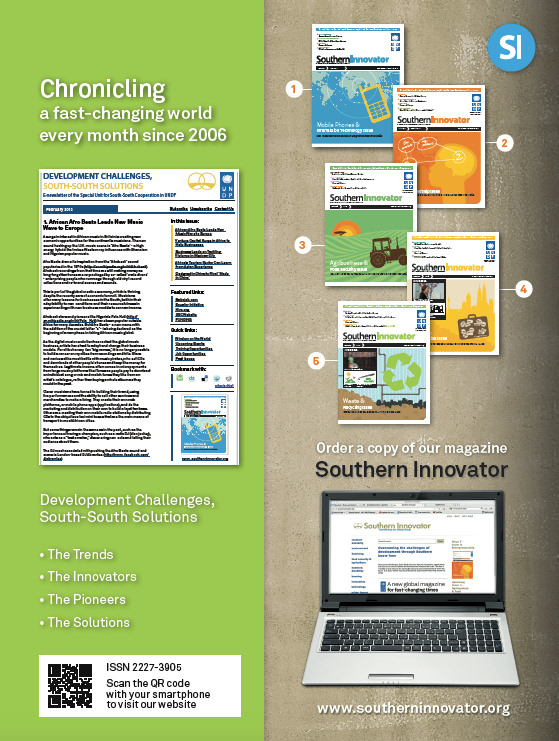
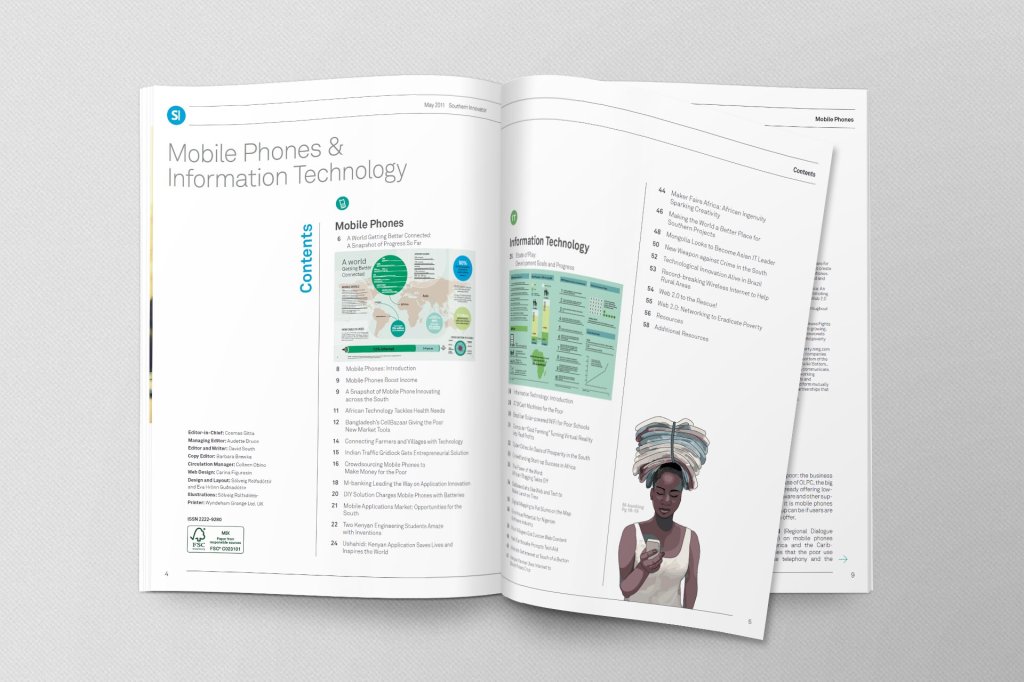
Development Challenges, South-South Solutions was launched as an e-newsletter in 2006 by UNDP’s South-South Cooperation Unit (now the United Nations Office for South-South Cooperation) based in New York, USA. It led on profiling the rise of the global South as an economic powerhouse and was one of the first regular publications to champion the global South’s innovators, entrepreneurs, and pioneers. It tracked the key trends that are now so profoundly reshaping how development is seen and done. This includes the rapid take-up of mobile phones and information technology in the global South (as profiled in the first issue of magazine Southern Innovator), the move to becoming a majority urban world, a growing global innovator culture, and the plethora of solutions being developed in the global South to tackle its problems and improve living conditions and boost human development. The success of the e-newsletter led to the launch of the magazine Southern Innovator. 

Creative Commons License

This work is licensed under a
Creative Commons Attribution-Noncommercial-No Derivative Works 3.0 License.

ORCID iD: https://orcid.org/0000-0001-5311-1052.

© David South Consulting 2023

Categories
Archive Development Challenges, South-South Solutions Newsletters

Small-scale Farmers Can Fight Malaria Battle

By David SouthDevelopment Challenges, South-South Solutions

SOUTH-SOUTH CASE STUDY

Malaria is one of Africa’s biggest killers. Each year globally 300 to 500 million people are infected, and around 1 million die from the disease (theglobalfund). Ninety percent of malaria deaths occur in sub-Saharan Africa – mostly to children under the age of five. The disease costs African countries US$12 billion a year in lost gross domestic product.

Malaria is a parasitic disease – the parasite plasmodium – transmitted by mosquito bites. Symptoms include fever, headache and vomiting. Internal bleeding, kidney and liver failure may follow and can result in coma and death.

The most common and effective treatment, recommended by the World Health Organization, is artemisinin-based combination therapies, known as ACTs. ACTs have low toxicity, few side effects and act rapidly against the parasite. Research shows that artemisinin remedies cure 90 percent of patients within three days.

But there are far fewer doses available than people who need them. WHO has claimed the quantity made available by pharmaceutical companies falls far short of the more than 130 million doses required to combat malaria throughout the world.

And ACTs are very expensive to deliver: in just one country, Tanzania, providing such therapy for three years would cost US $48.3 million. Every year, this would account for 9.5 percent of Tanzania’s health budget, and 28.7 percent of yearly spending on medical supplies: a six-fold increase in budget for malaria treatment (Malaria Journal 2008, 7:4).

But a cheap alternative to the expensive pill form of the treatment is being piloted across Africa. It involves the drinking of a tea made from the bushes of the artemisia plant. Artemisia annua is an annual shrub and the active ingredient in the pills (artemisinin). It is native to China and Vietnam and has been used for 2,000 years to treat fevers.

Bushes cultivated by farmers in Kenya, Malawi, Tanzania, Zambia, Zimbabwe and Mozambique under the supervision of the World Agroforestry Centre in Nairobi, Kenya, are helping to bring down malaria rates without the long wait for the pills to arrive.

The leaves are boiled and made into a tea. Drinking the tea gives a high enough dose of artemisinin in the blood to cure malaria. Helen Meyer, a nurse operating nine mobile health clinics in rural Mozambique, is using the bitter tea made from the dried leaves. Even in treating drug resistant malaria, she has found the artemisia tea effective: “If you drink the tea, you feel better after the first day. Other medicines take a few days.”

A special hybrid of artemisia, A-3, is used because it is adapted for warmer climates. The wild variety grows to only five centimetres in the tropics, but A-3 grows to three metres and packs 20 times more artemisinin. It is also highly economical: thousands of plants can come from a single stem.

The daily adult dose of anti-malaria tea just needs five grams of dried A-3 leaves in one litre of water. The tea is drunk every six hours for seven days. Each plant produces 200 grams of dried leaves, and a thousand shrubs can cure 5,700 people. Since it is a cheap cure, money can be spent instead on other things. Farmers are also able to supplement their income by growing the bushes. And the dried leaves have long-lasting power: even after three years the leaves retain close to a 100 percent of their artemisinin.

Access to authentic artemisinin is critical: it is estimated 16 percent of malaria medicines in Kenya are counterfeit. Elsewhere, the proliferation of counterfeit anti-malarials substantially raises the risk of the emergence of resistance to artemesinin combination therapy, the last truly effective treatment against malaria. Past misuse of other malaria drugs, such as chloroquine in the 1980s and sulphadoxine/pyrimethamine in the 1990s, resulted in the malaria parasite becoming resistant. Hundreds of thousands of people in malaria-prone areas may have died as a result.

The World Agroforestry Centre, recognizing potential problems with artemesinin monotherapies, is working to combine it with indigenous herbal remedies made from other anti-malarial trees, producing a herbal combination therapy (HCT).

“I used to grow fruits and beans here,” said Charles Kiruthi, a Kenyan farmer, to the IRIN news service. “but I will get a better return from this plant. No pests attack it, and until harvesting time it requires very little labour.”

“I expect to get a good return, and I am also very happy to be helping fight malaria,” continued Kiruthi. “I recently lost two friends to the disease, and my child gets sick with malaria sometimes.”

Published: July 2008

Resources

Development Challenges, South-South Solutions was launched as an e-newsletter in 2006 by UNDP’s South-South Cooperation Unit (now the United Nations Office for South-South Cooperation) based in New York, USA. It led on profiling the rise of the global South as an economic powerhouse and was one of the first regular publications to champion the global South’s innovators, entrepreneurs, and pioneers. It tracked the key trends that are now so profoundly reshaping how development is seen and done. This includes the rapid take-up of mobile phones and information technology in the global South (as profiled in the first issue of magazine Southern Innovator), the move to becoming a majority urban world, a growing global innovator culture, and the plethora of solutions being developed in the global South to tackle its problems and improve living conditions and boost human development. The success of the e-newsletter led to the launch of the magazine Southern Innovator. 

Creative Commons License

This work is licensed under a
Creative Commons Attribution-Noncommercial-No Derivative Works 3.0 License.

ORCID iD: https://orcid.org/0000-0001-5311-1052.

© David South Consulting 2023

Categories
Archive Development Challenges, South-South Solutions Newsletters

Solar-Powered Mobile Clinics to Boost Rural Healthcare in Africa

By David SouthDevelopment Challenges, South-South Solutions

SOUTH-SOUTH CASE STUDY

Around the world, innovative thinking is finding new ways of using solar power technology to bring electricity to underserved areas of the global South. Innovators are experimenting with new technologies, new business models and new ways to finance getting solar power into the hands of the poor.

One recently launched new solution is a solar-powered mobile health clinic that is bringing 21st-century medical diagnostic services to rural areas.

The US $250,000 Solar Powered Health Centre has been built by the Korean technology company Samsung (http://www.samsung.com/africa_en/news/localnews/2013/samsung-launches-solar-powered-health-centre-model-to-bring-quality-healthcare-to-rural-areas).

A truck packed with medical equipment that draws electricity from solar panels, it is traveling to rural, underserved parts of sub-Saharan Africa.

The truck is seven metres in length and comes packed with medical goodies, including a fully equipped eye and blood clinic and a dental surgery. It hopes to make it easier to reach the six in 10 residents of sub-Saharan Africa who live in rural areas, and who are often very far from affordable medical services. There is a blood analyzer, spectacle repair kit, and a non-contact tonometry test to measure the inside of a person’s eye. People can also be tested for HIV, malaria and many other conditions.

Samsung (samsung.com) developed the truck as part of its efforts to create “Built for Africa” technologies. The truck was built in Johannesburg, South Africa, helping create local jobs and skills.

Samsung hopes to scale the initiative to a million people in Africa by 2015.

The clinics were launched in Cape Town at the 2013 Samsung Africa Forum and are being rolled out by Samsung Electronics Africa (http://www.samsung.com/africa_en/#latest-home) as part of what the company calls a “large-scale medical initiative on the continent”.

The roaming trucks will be staffed by qualified medical professionals and will educate people about the importance of preventive medical screening.

Targeted conditions include diabetes, high blood pressure, tooth decay and cataracts. The clinics will also conduct public health education campaigns about the importance of preventive medicine (http://en.wikipedia.org/wiki/Preventive_medicine).

“What many see as minor health issues will not only get worse over time, but will affect other aspects of quality of life. The child that cannot see properly cannot learn properly,” said Dr. Mandlalele Mhinga, a member of the Nelson Mandela Children’s Hospital (http://nelsonmandelachildrenshospital.org/). “Mobile solutions help address this issue by making medical services accessible to more people in rural areas, and educating them about health care at the same time.”

The mobile clinics hope to reduce the vast difference between the quality of health care available to rural residents and people in urban areas.

Even in countries such as South Africa with the highest level of development in the region, medical care coverage is patchy and unreliable. For those who can afford it, 20 per cent of the population, there are private medical schemes. But everyone else must rely on an over-stretched and under-funded public health sector.

Samsung has based this innovation on its first-hand experience with providing medical services to rural areas in Africa.

“This experience has shown us how desperately medical treatment is needed across the continent, and inspired us to develop a sustainable and innovative solution to reach the people who need it most,” said Ntutule Tshenye, Business-to-Government and Corporate Citizenship Lead for Samsung Africa. “While our CSR (corporate social responsibility) strategy in Africa is largely focused on education, our efforts to enrich lives will not be felt if people’s basic needs, such as access to healthcare, are not met.”

Samsung’s “Built for Africa” product range (http://www.samsung.com/africa_en/africancitizenship/home4.html) also has a wide range of other projects and initiatives to boost health and living standards on the continent. These include education programmes, such as the Samsung Electronics Engineering Academy, Samsung Solar Powered Internet Schools, the Samsung Power Generator, and the Samsung eLearning Centres.

Samsung Electronics Co., Ltd. is a consumer electronics multinational and employs 227,000 people worldwide.

Published: August 2013

Development Challenges, South-South Solutions was launched as an e-newsletter in 2006 by UNDP’s South-South Cooperation Unit (now the United Nations Office for South-South Cooperation) based in New York, USA. It led on profiling the rise of the global South as an economic powerhouse and was one of the first regular publications to champion the global South’s innovators, entrepreneurs, and pioneers. It tracked the key trends that are now so profoundly reshaping how development is seen and done. This includes the rapid take-up of mobile phones and information technology in the global South (as profiled in the first issue of magazine Southern Innovator), the move to becoming a majority urban world, a growing global innovator culture, and the plethora of solutions being developed in the global South to tackle its problems and improve living conditions and boost human development. The success of the e-newsletter led to the launch of the magazine Southern Innovator.  

Follow @SouthSouth1

Google Books: https://books.google.co.uk/books?id=YfRcAwAAQBAJ&dq=development+challenges+august+2013&source=gbs_navlinks_s

Slideshare: http://www.slideshare.net/DavidSouth1/development-challenges-august-2013-issue

Southern Innovator Issue 1: https://books.google.co.uk/books?id=Q1O54YSE2BgC&dq=southern+innovator&source=gbs_navlinks_s

Southern Innovator Issue 2: https://books.google.co.uk/books?id=Ty0N969dcssC&dq=southern+innovator&source=gbs_navlinks_s

Southern Innovator Issue 3: https://books.google.co.uk/books?id=AQNt4YmhZagC&dq=southern+innovator&source=gbs_navlinks_s

Southern Innovator Issue 4: https://books.google.co.uk/books?id=9T_n2tA7l4EC&dq=southern+innovator&source=gbs_navlinks_s

Southern Innovator Issue 5: https://books.google.co.uk/books?id=6ILdAgAAQBAJ&dq=southern+innovator&source=gbs_navlinks_s

Creative Commons License

This work is licensed under a
Creative Commons Attribution-Noncommercial-No Derivative Works 3.0 License.

ORCID iD: https://orcid.org/0000-0001-5311-1052.

© David South Consulting 2023