It could be said that there is no girl who does not dream of becoming a model. Many Mongolian girls, particularly Ulaanbaatar city girls, are flocking to attend courses in modelling in the last few years. Some say models are mushrooming in Mongolia, a country known for its fresh-faced people and robust physiques.
Ger interviewed S. Ikhertsetseg, one of the twin top models of Mongolia.
When did you first appear on the fashion stage?
“When we were 15 we played piano for the state concert on International Women’s Day on March 8. The ( Best Fashion) company was in trouble and they did not have anyone to wear some leather fashions for the show in the concert. It was fortuitous that we were asked to be the models. We kept it secret from our parents until we received a prize from Mongolia’s top fashion show, Goyol (or beauty) , in 1988. That was a year after the state concert. Being a fashion model was not considered so desirable as it is now. We were busy studying at music school and our parents did not know what we were doing.”
What do you think of today’s models?
“In the early days of fashion shows in Mongolia in the 1980s, we did not have many competitors. These days there are many beautiful Mongolian models we have to compete with, but only a few are very good. If someone is lucky, they have the potential to compete at the world level. Personally, I don’t like models who are too trained by courses.”
Do you think becoming famous is pure luck?
“Of course it is luck. But that doesn’t mean it isn’t a lot of hard work. You must send photos to agencies, and then only then, will someone see your photo – that is luck.”
What about design and fashion in Mongolia? Are Mongolians fashion sensitive?
“I can not say Mongolians are sensitive to fashion. I think our designers should work harder. Design is not a dress or a suit. It is everything, the whole cornucopia of details. I do not think we are going to compete with Europe, which has a long history of making clothing, rich in colors or designs. There is a big difference between fashion in the West and in Mongolia.”
Mongolia has a lively free press who sometimes step over the line when it comes to gossip and scandal reporting. These so-called “yellow” newspapers have damaged many people’s reputations. This had also happened to you. Some newspapers called the two of you the Barbie girls in Beijing, earning a lot of money.
“Yes, they did say those bad things. We replied to them.”
Was it before the court?
“No, that is a personal question.”
What was the result?
“The newspapers didn’t do that again.”
What do you do now?
“Both of us keep up the fashion work and also teach piano. Music is our profession and love. We founded the Association of Models of Mongolia to protect their rights and strengthen their position in the society.”
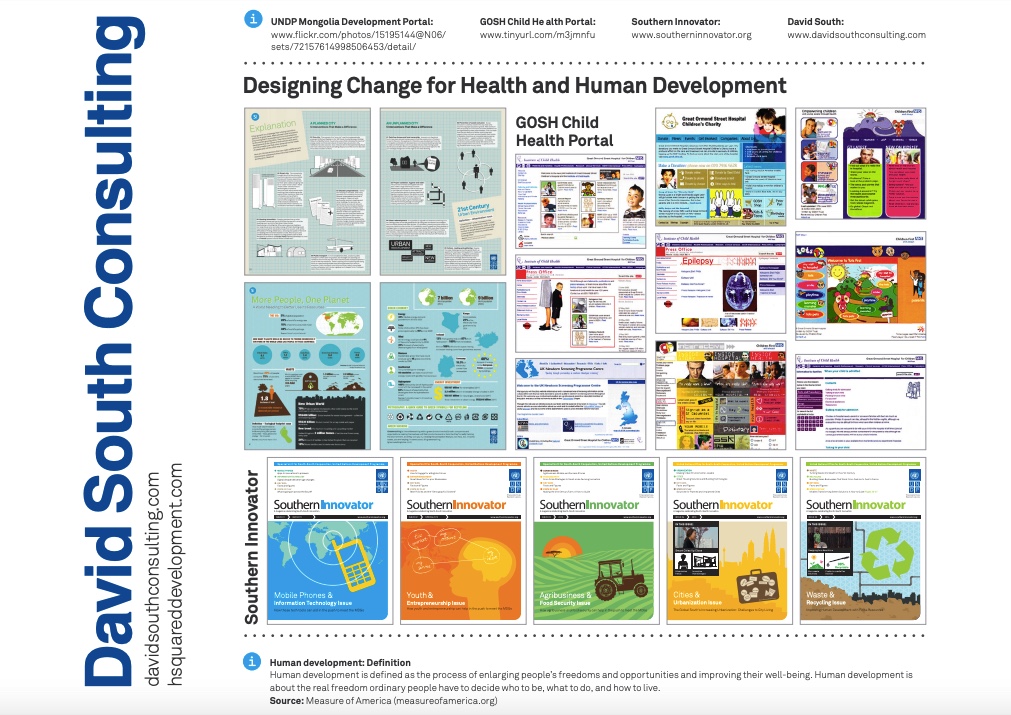
The first business card for David South Consulting. Inspired by the Dutch post office’s (PTT Post) corporate identity developed by Studio Dumbar, the card was designed by Brian Cartwright of Toronto’s Rocket Design. Work at this time included investigative journalism for Canada’s top magazines and newspapers, magazine and newsletter editing, and communications for a prestigious medical history funder. From the very beginning, we were inspired by Dutch design for the public sector and the importance placed on this in The Netherlands. The work of Hein van Haaren, former head of the PTT’s Aesthetics Department, and graphic design pioneers Wim Crouwel and Gert Dumbar, still remain key influences to this day.As a reporter for two Financial Times newsletters, New Media Markets and Screen Finance, I covered the rapidly growing UK (and Scandinavian) television and new media markets and the expanding film-financing sector in Europe.This Canadian alternative bi-weekly magazine broke new ground with its investigative journalism and online journalism. It gathered together highly talented, young contributors, many of whom are leading figures in journalism, the arts and technology today.As the UN’s head of communications in Mongolia (1997-1999), I founded the UNDP Mongolia Communications Office and oversaw a two-year communications programme to respond to the biggest post-WWII peacetime economic collapse. Award-winning and influential, the Office pioneered the use of the Internet in international development crisis response and was called a “role model” for the rest of the United Nations.Following on from the success of the UNDP Mongolia Communications Office, I worked with the head of the UN Ukraine mission to strategically relaunch the mission web portal, incorporating the newly launched UN Millennium Development Goals (MDGs).Drawing on my extensive experience strategically using the Internet to achieve communications goals, I was hired to head a two-year project to launch the GOSH Child Health Web Portal. Award-winning, it was called a “role model” for the wider National Health Service (NHS) and one of the most admired websites in the UK public and charity sectors. The website was cited as contributing to the hospital’s high rating and attracted additional funding for its research.As part of an assessment of Mongolia’s media capabilities to communicate the Millennium Development Goals (MDGs), infographics were introduced for the first time to the mission.With the Global Financial Crisis erupting, I was retained by the United Nations Office for South-South Cooperation (UNOSSC) to research and write a monthly e-newsletter and develop a new magazine to offer solutions and raise the profile of South-South cooperation as a development response to the crisis. Both publications proved highly influential, leading to the wider adoption of South-South cooperation and to national governments picking up the innovation agenda being brought about by the rapid take-up of mobile phones and information technology. The magazine Southern Innovator was called “a terrific tour de force of what is interesting, cutting edge and relevant in the global mobile/ICT space…”.In 2010, David South Consulting was relaunched with a new logo and branding for the 21st century. It represented a new phase, as work became global and very high-profile and influential. The foundations have been laid for future growth and expansion.
Watch Magazine
Watch Magazine was launched in 1994 and quickly became the authentic 1990s voice of Toronto’s youth. As one of Toronto’s first youth start-ups, Youth Culture became a successful youth communications brand and expanded to national distribution by the late 1990s. Launched during the economic austerity years in Canada, it was one of the contributors to Toronto’s economic resurgence and renewed business vitality.
New Media Markets
As a reporter for two Financial Times newsletters, New Media Markets and Screen Finance, I covered the rapidly growing UK (and Scandinavian) television and new media markets and the expanding film-financing sector in Europe.
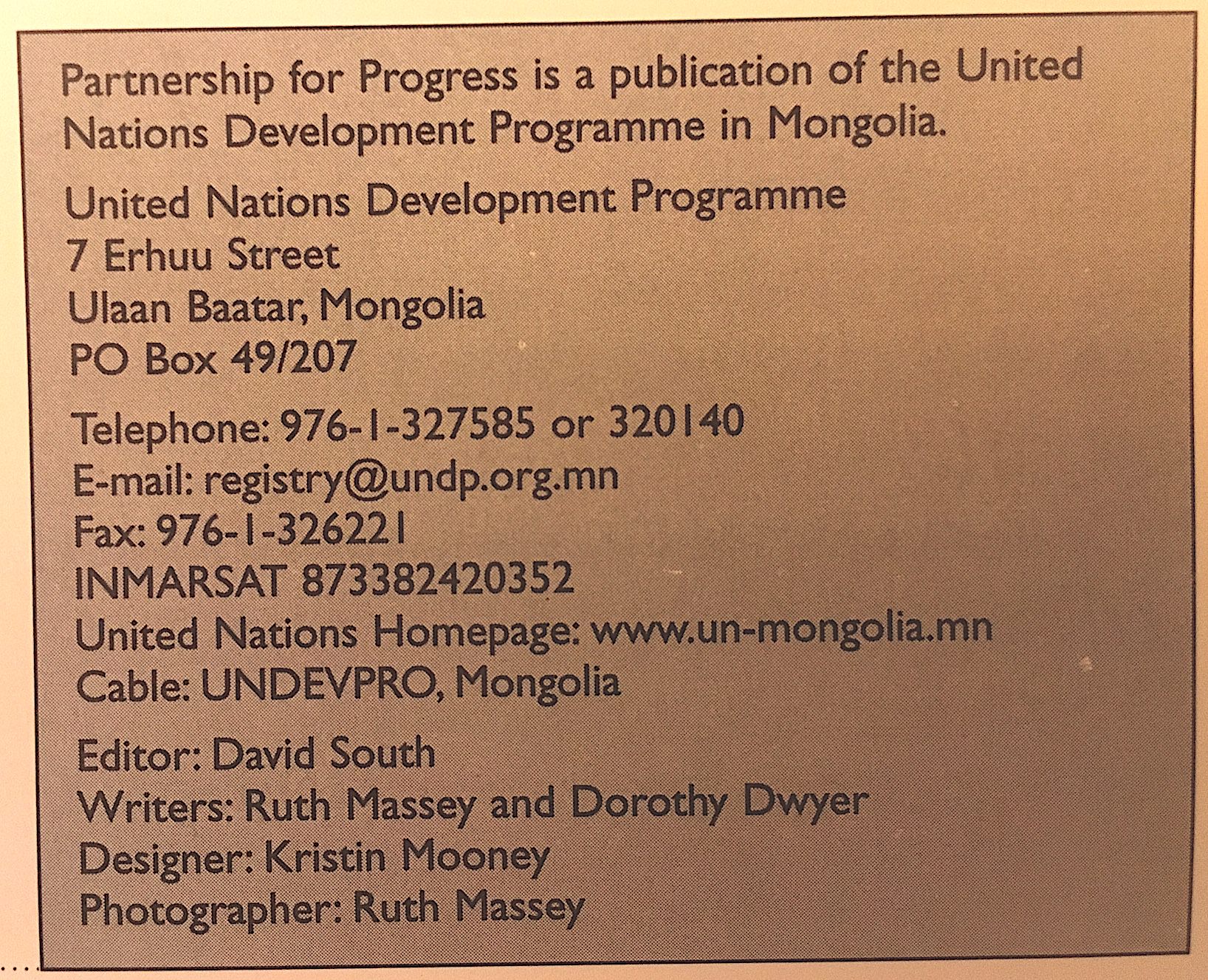
A Partnership for Progress: The United Nations Development Programme in Mongolia
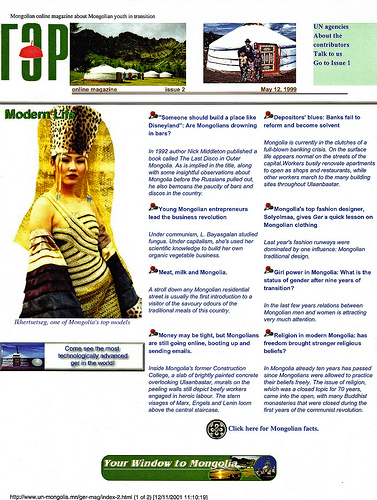
The Partnership for Progress brochure raised the curtain on the UN’s response to Mongolia’s economic and social crisis in the late 1990s. It celebrated Mongolia’s independence and its flourishing media scene and free expression after the long years of Communism and state repression.
Human Development Report Mongolia 1997
The first human development report for Mongolia captured in data and stories the damage done by the harsh transition from Communism and the imposition of austerity during the 1990s. It found high levels of poverty in the country and a heavy toll taken on people’s health, communities and families. The report was received with great enthusiasm and had two print runs.
Blue Sky Bulletin
The Blue Sky Bulletin newsletter broke with the usual approach taken by UN newsletters of offering up ‘grip n’ grin’ pictures of men in suits and instead offered actual stories and data on how Mongolia’s transition crisis was faring. It was distributed within Mongolia and by post and email outside the country to help raise awareness of the country and its development challenges.
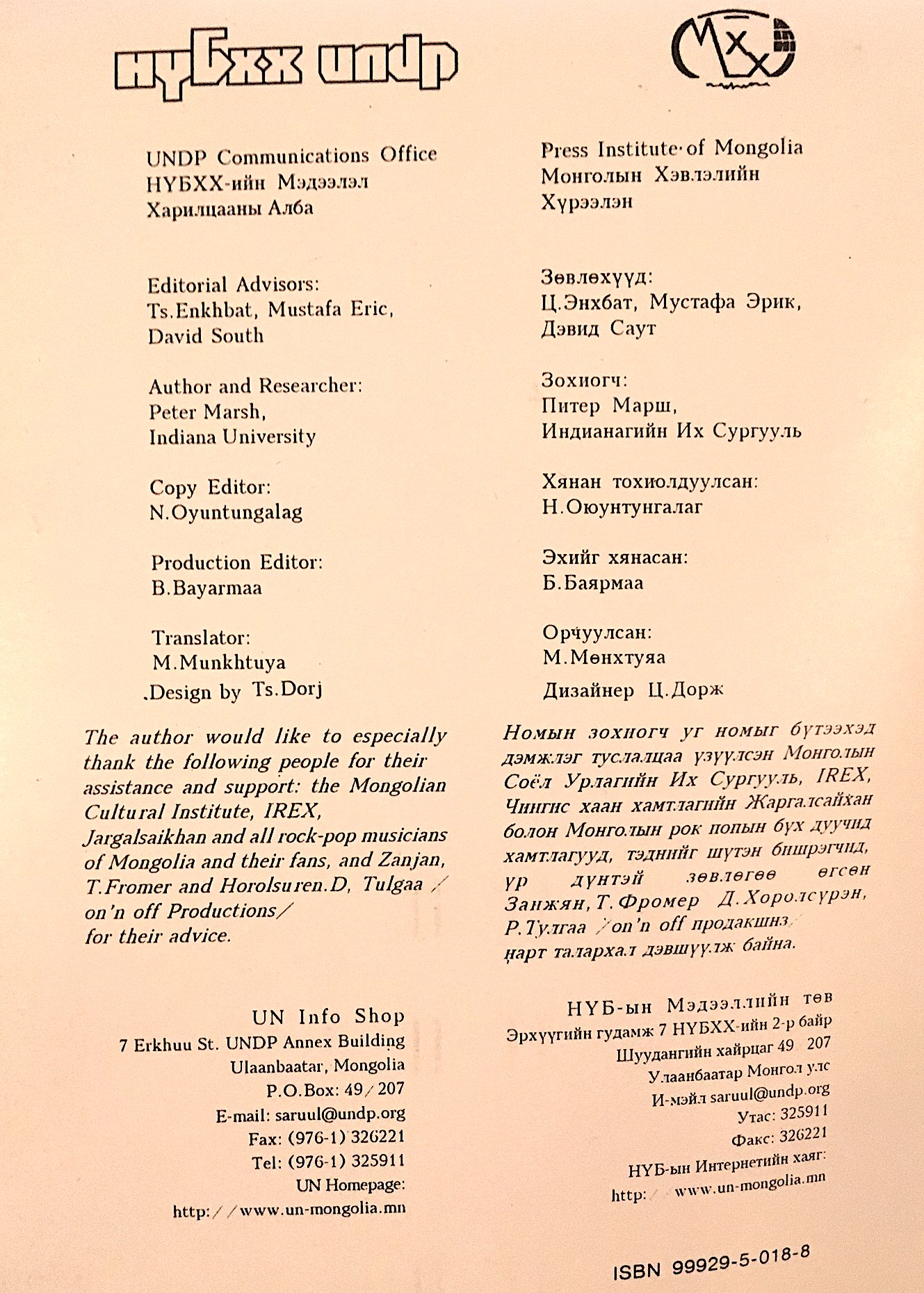
Mongolian Rock-Pop Book
Researched and written by ethnomusicologist Dr. Peter Marsh, this book on the impact of Mongolian rock and pop on the country’s business and entrepreneurship culture, shone a spotlight on a lively modern music scene.
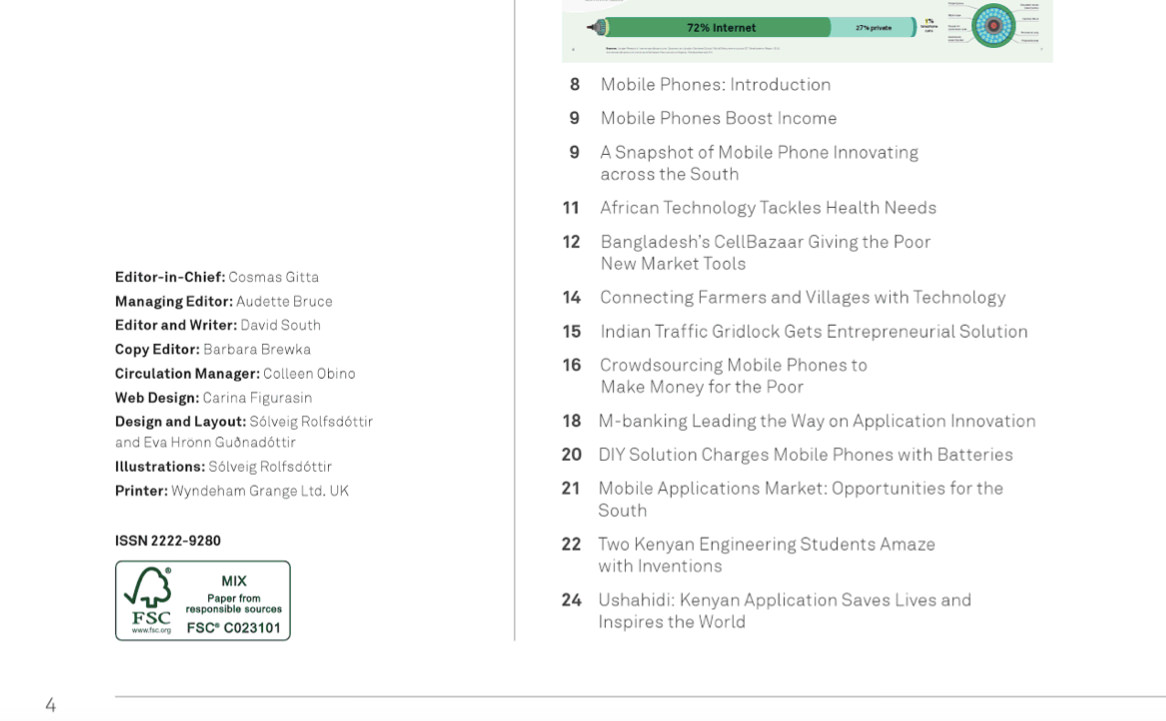
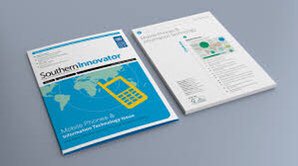
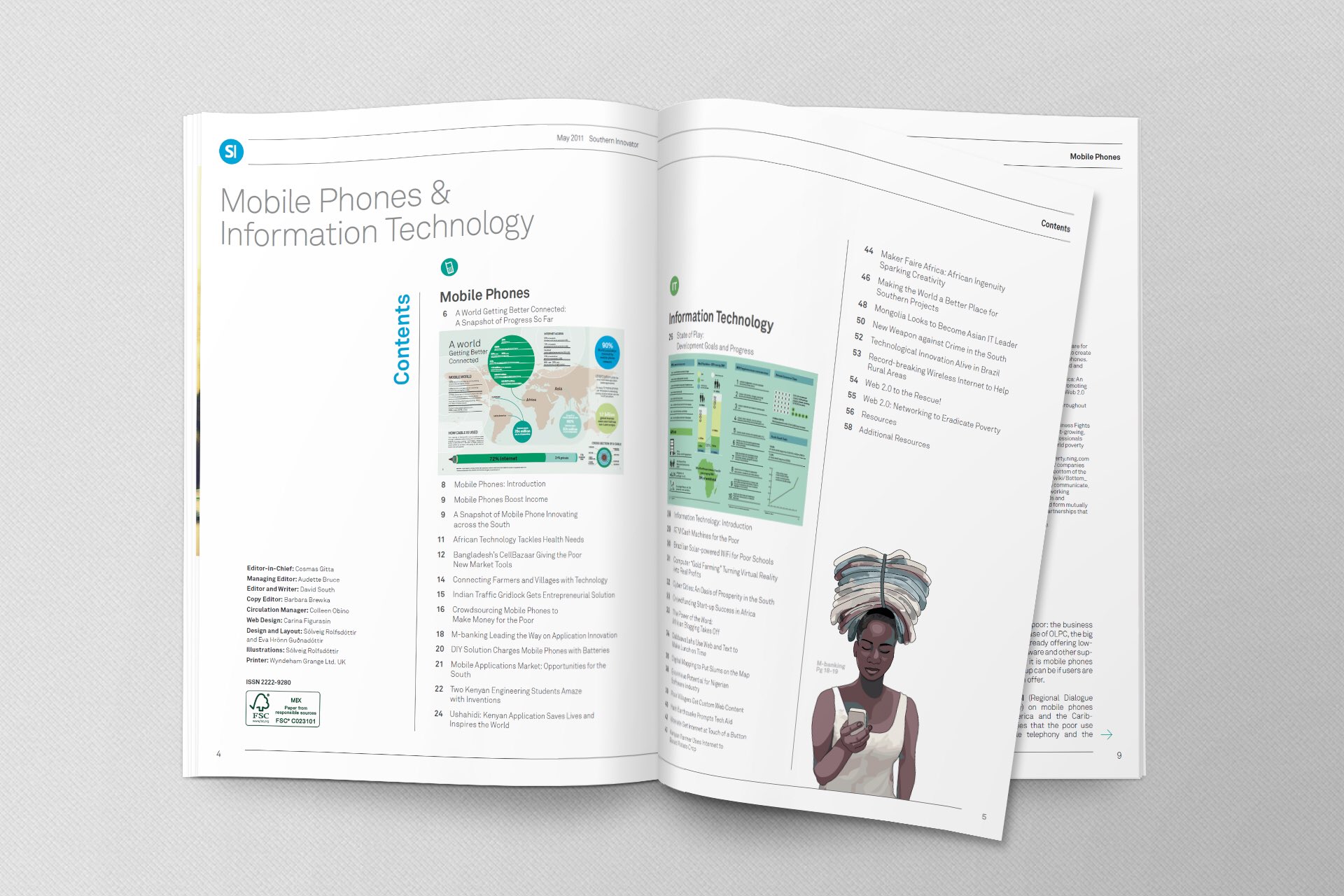
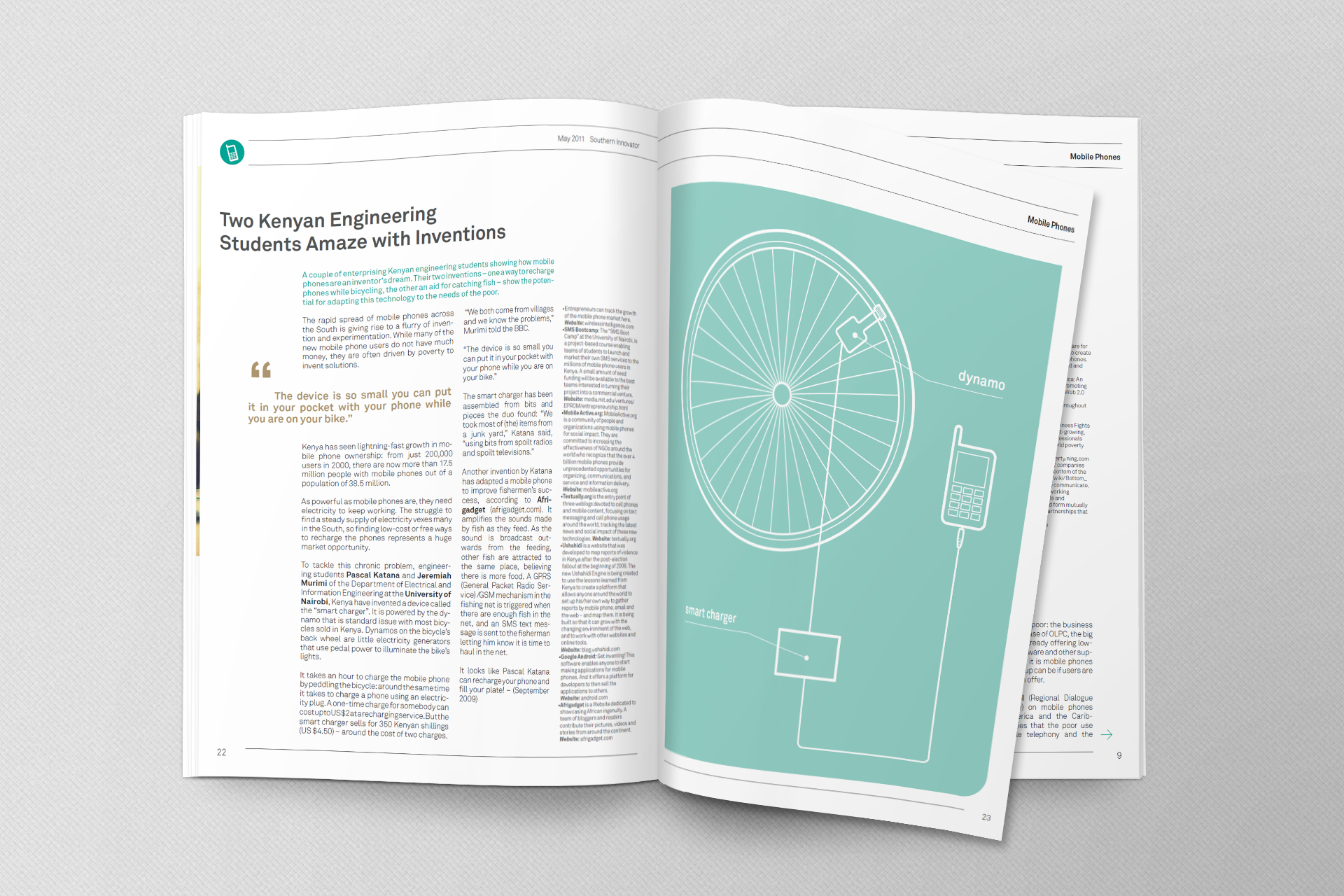
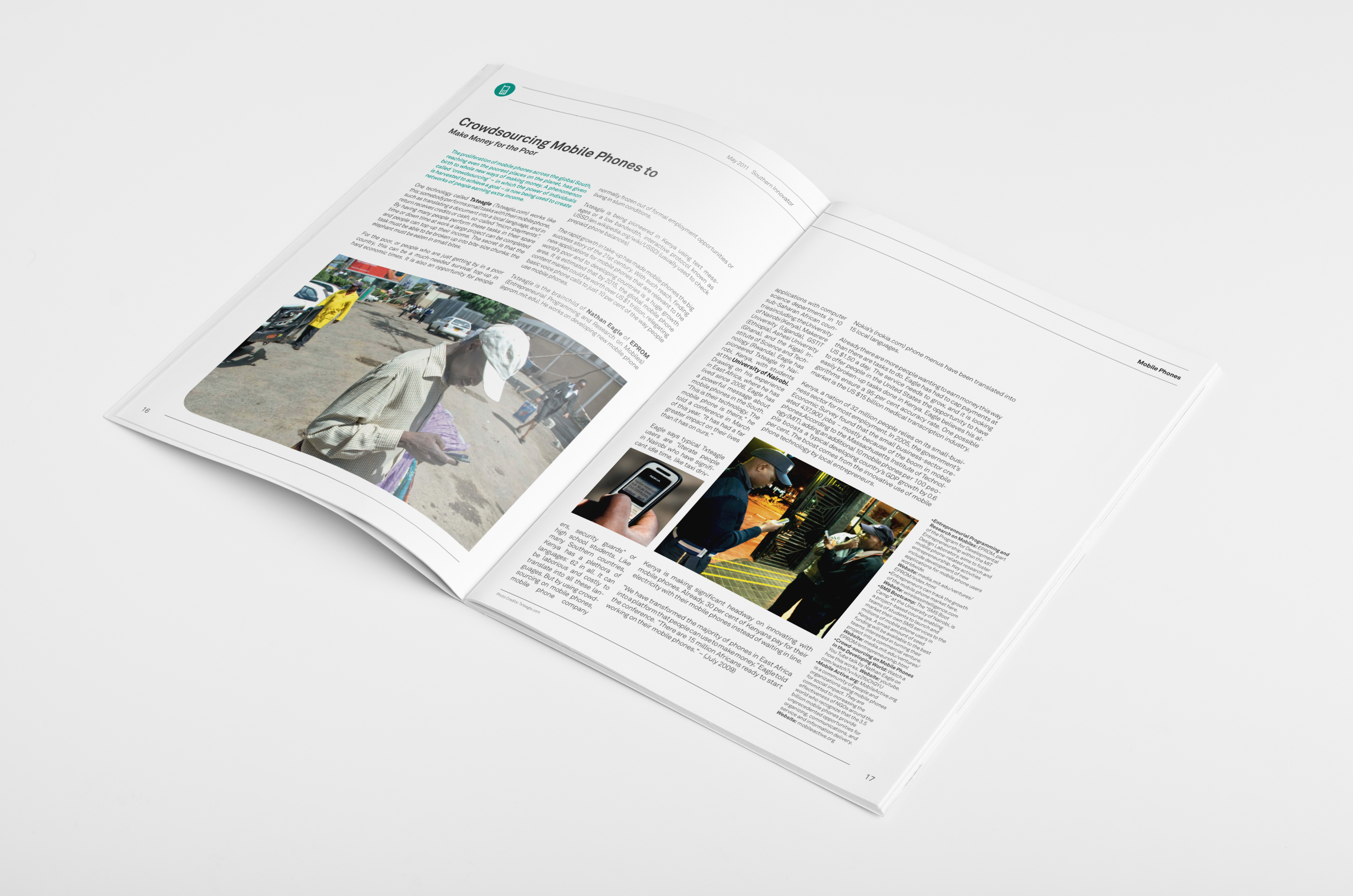
Southern Innovator Magazine Issue 1: Mobile Phones and Information Technology
The first issue of Southern Innovator was called “a terrific tour de force of what is interesting, cutting edge and relevant in the global mobile/ICT space… ” and a “Beautiful, inspiring magazine from UNDP on South-South innovation.”
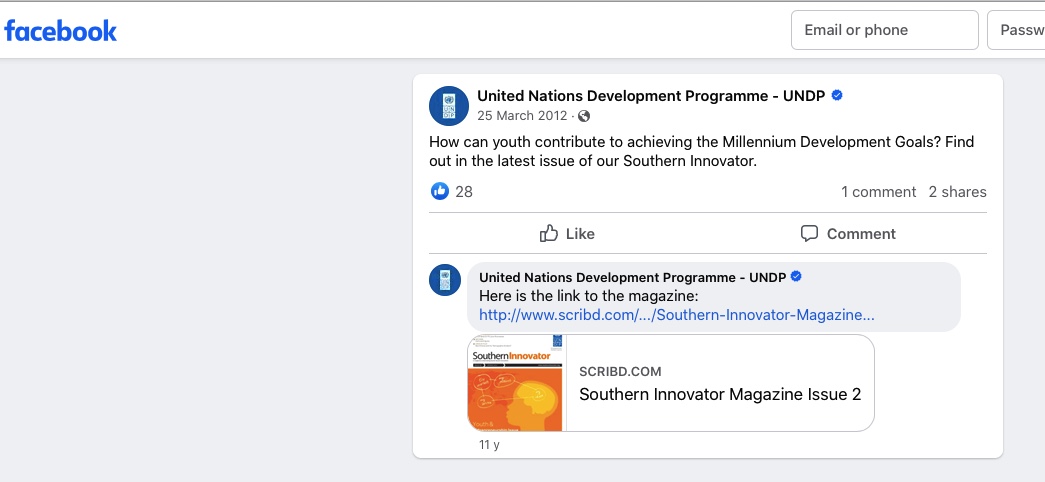
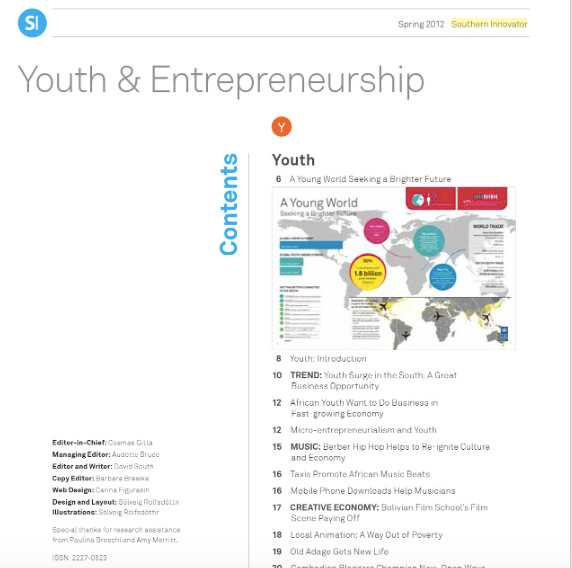
Southern Innovator Magazine Issue 2: Youth and Entrepreneurship
Issue 2 of Southern Innovator drew praise for painting a positive picture of how the world’s development challenges could be taken on: “Thank you David – Your insight into the issues facing us a[s] [a] ‘global Village’ is made real in the detail of your article – 10 out of 10 from the moladi team.”
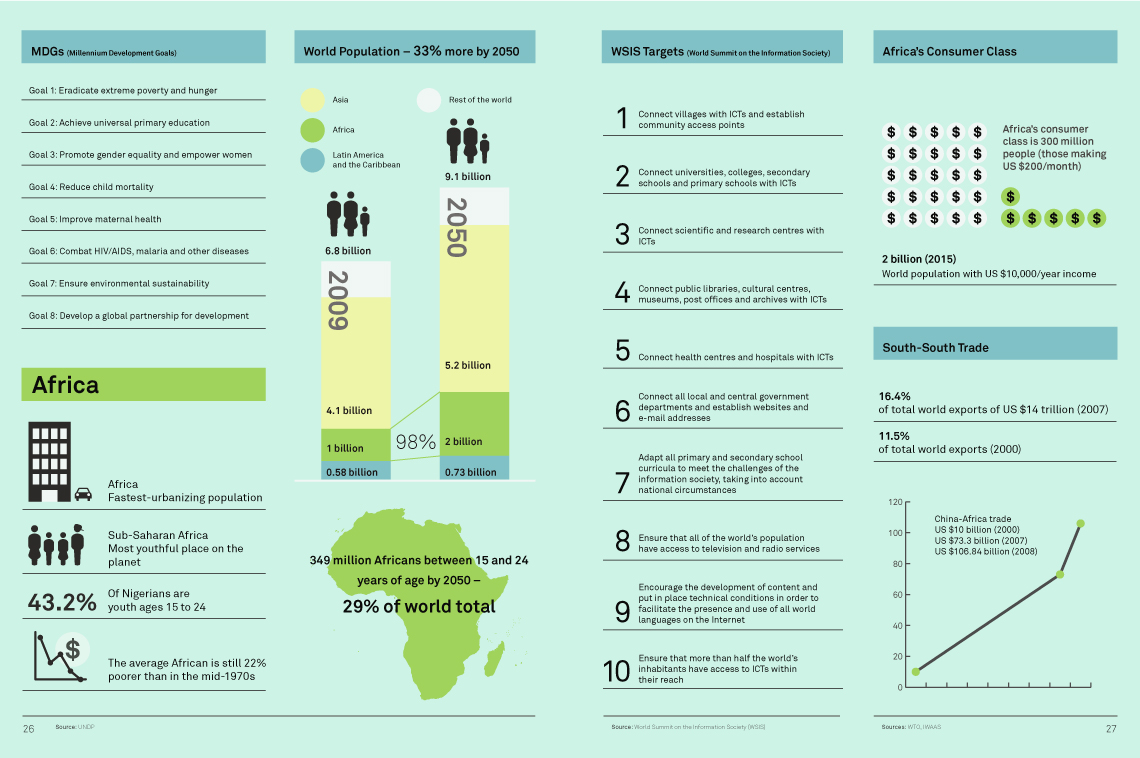
Southern Innovator Magazine Issue 3: Agribusiness and Food Security
Issue 3 was on the theme of agribusiness and food security.
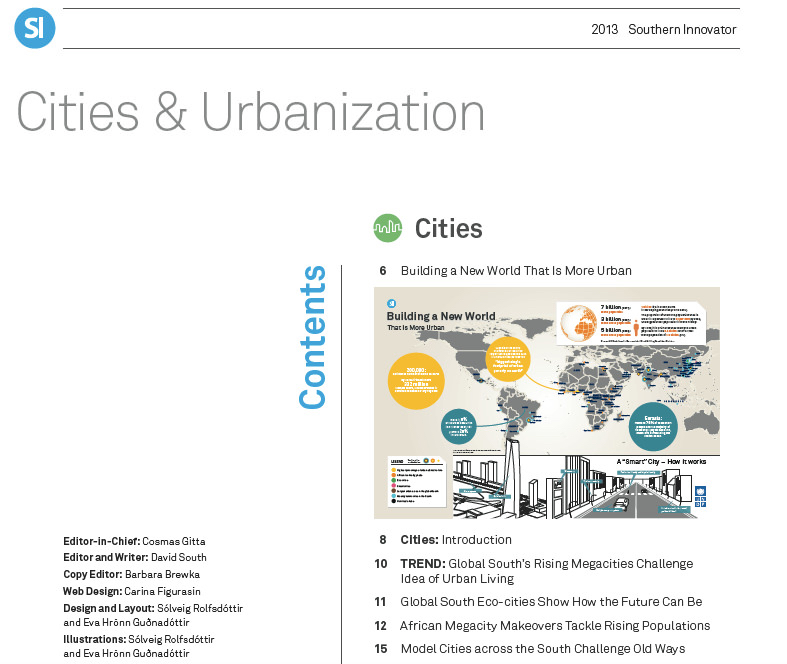
Southern Innovator Magazine Issue 4: Cities and Urbanization
Issue 4 on cities and urbanization saw Southern Innovator visit innovative new cities across Asia. Readers said “The magazine looks fantastic, great content and a beautiful design!” It is designed by Icelandic graphic designer and illustrator Solveig Rolfsdottir.
Southern Innovator Magazine Issue 5: Waste and Recycling
By this point, the Southern Innovator brand was drawing praise for being “one of the best sources out there for news and info on #solutions to #SouthSouth challenges.” Readers also said they “really enjoyed reading them [Southern Innovator], impressive work & a great resource. Looking forward to Issue 6. My best wishes to you & your team at SI.”
Africa has seen huge changes to its communications and media in the past five years. The rise and rise of mobile phones, the expansion of the Internet and the explosion in African blogging and social media, on top of flourishing print and broadcast media, all bring an increasing range of options for telling African stories and increasing dialogue.
With all this new media creating new communications channels – and all the turmoil and change affecting millions as economies and countries change – people need the ability to make sense of it all. One magazine is trying to play that role.
An entrepreneur and multimedia innovator has created a unique publication that is capturing the spirit, ideas and stories of modern Africa. It is a high-quality product, has gathered together talented writers and photographers and is gaining a growing global audience. Chimurenga Magazine (http://www.chimurenga.co.za/) based in Cape Town, South Africa, calls itself a “pan African publication of writing, art and politics.” Named for the Zimbabwean Shona word for “revolutionary struggle,” it is published three times a year. Editor Ntone Edjabe is from Cameroon and came to Cape Town in the 1990s after the end of South Africa’s racist Apartheid regime.
With more than 100 contributors, the magazine offers insight into contemporary Africa, what occupies people’s thoughts and how their lives are actually lived.
It is involved in a wide range of other activities, including co-curating a Global South Dialogue Series. And its readership is truly diverse.
“We have readers who are long-term prisoners at Pretoria Central Prison, who have subscriptions that they get to us in coins, and readers who are successful businessmen,” Edjabe said to The Financial Times Magazine.
Chimurenga is out to challenge perceptions of Africa. Practicing the art of long-form journalism more associated with established high-end publications like The New Yorker (newyorker.com), the magazine sets out to challenge perceptions about Africa.
“Discourse on Africa is geared towards simplicity,” Edjabe told CNN. “Everything must be simple – ‘he’s a poor black man, he’s a victim’ – like there has to be a simple story, in a way this is what signifies Africa and global consciousness.
“The moment you bring a degree of complexity to it, it kind of throws people off, they just don’t know where to look anymore. It’s like, ‘what’s going on?’ So Chimurenga in a way does not try to maintain the superficiality of this narrative – we engage with life, we try to present life as complex as it really is.”
Stories in the journal include Billy Kahora writing on the decay of a neighbourhood in Nairobi, Kenya, Michael Abrahams writing about his time in the Cape Town mental hospital after a suicide attempt, and Sean O’Toole following a Zimbabwean immigrant on his journey into South Africa.
The magazine’s website carries back issues of the journal, along with a shop selling magazines, books and t-shirts and the “Chimurenga Library,” an archive of pan-African, independent periodicals. There’s also live online streaming of music – “from ancient techno to future roots” – through the Pan African Space Station radio station, there is a biennial publication of urban life it calls “Africa-style,” and the writings of 14 African writers who visited 14 African cities to check-up on life in urban areas.
As an example of the creativity of Chimurenga’s talent, a special issue of the magazine tried to better understand the impact of violence in South Africa in May 2008 that led to the deaths of 62 people. It did this by creating a fictitious newspaper called The Chimurenga Chronic (http://www.chimurenga.co.za/chimurenga-magazine/current-issue) set during the violence.
The writers are a mix of Anglophones and Francophones, all based in Africa. Common subjects focus on the world of lower-middle class Africa. Examples of past issues show the variety of its content: Conversations With Poets Who Refuse To Speak, Futbol, Politricks & Ostentatious Cripples, Conversations in Luanda and Other Graphic Stories, *We’re all Nigerian!
Well-travelled editor Edjabe has studied and lived in Lagos, Nigeria and Johannesburg, South Africa. He has worked as a disc jockey, music writer and basketball coach. He launched Chimurenga in 2002. He told The Financial Times Magazine “I printed 1,000 copies, which I carried around in my bag. I sold it mainly to friends.”
It was supposed to be a one-off publication but became a journal, initially written mostly by his friends.
“I found out later that this is how most journals actually begin,” he said. “At the time I thought it was unique.”
He aspired to get Africans writing about the Africa they saw and lived in. The challenge was changing the dynamic he found of writers only considering something worth writing about if it had been featured in non-African media.
Edjabe had already made his mark with an innovative initiative to show the diversity of what Africa has to offer. Three years after arriving in South Africa he started the Pan African Market (PAM) in Cape Town. An African cultural centre, it began as a craft market with various traders able to run their individual businesses and leasing stall space from the market. PAM became very successful because it brought together Africans from across the continent and offered a vibrant mix of artists, small businesses and food. It now has 33 stores and stalls from 14 countries of Africa. Shoppers can find arts and crafts, hair dressing, tailoring, holistic healing and catering.
Hard copies of Chimurenga are distributed around Africa and sent to Europe, the United States and India.
“There’s a feeling about writing something, sharing something that is beautiful and truthful from one’s perspective,” Edjabe told CNN.
2) Venture Capital for Africa: VC4Africa is the largest online community of investors, angels and entrepreneurs working to build businesses on the continent. Website: http://vc4africa.biz/landing/?redir_to=%2F
Development Challenges, South-South Solutions was launched as an e-newsletter in 2006 by UNDP’s South-South Cooperation Unit (now the United Nations Office for South-South Cooperation) based in New York, USA. It led on profiling the rise of the global South as an economic powerhouse and was one of the first regular publications to champion the global South’s innovators, entrepreneurs, and pioneers. It tracked the key trends that are now so profoundly reshaping how development is seen and done. This includes the rapid take-up of mobile phones and information technology in the global South (as profiled in the first issue of magazine Southern Innovator), the move to becoming a majority urban world, a growing global innovator culture, and the plethora of solutions being developed in the global South to tackle its problems and improve living conditions and boost human development. The success of the e-newsletter led to the launch of the magazine Southern Innovator.
























 David South Consulting
You must be logged in to post a comment.