Categories
Archive Development Challenges, South-South Solutions Newsletters

Innovative Mobile Phone Applications Storm South

By David SouthDevelopment Challenges, South-South Solutions

SOUTH-SOUTH CASE STUDY

The pace of change in information technology in the South is impressive, and nowhere has it been more rapid than in the take-up of mobile phones. In the past three years China has become the world’s largest exporter of information and communications technology (ICT), and home to the same number of mobile-phone users (500 million) as the whole of Europe. According to India’s telecoms regulator, half of all urban dwellers now have mobile- or fixed-telephone subscriptions and the number is growing by eight million a month. In Tanzania, mobile phone use grew by 1,600 percent between 2002 and 2008. In Nigeria it grew by almost 7,000 percent over six years, from 5 percent of the population 140 million in 2002, to a predicted 34.3 percent by the first quarter of this year.

But it is the Philippines that has become a global leader in mobile phone commerce. A whole panoply of banking tasks can now be done by mobile phone: transferring funds from one person to another, making small purchases, or paying fees.

“The most significant lesson learned so far,” said Shawn Mendes, lead author on a report titled The Innovative Use of Mobile Applications in the Philippines Lessons for Africa. “Is that m-Banking, rather than more altruistic applications such as m-Health and m-Education, has delivered the greatest benefits to people in developing countries.”

Access to basic banking services is vital for the world’s poor: The Consultative Group to Assist the Poor (CGAP) found that over 3 billion poor people lack access to even the most minimal banking services to manage their lives.

But mobile phones have come to the rescue as the fastest growing consumer product in history. Portio Research estimates that between 2007 and 2012 the number of mobile subscribers will grow by another 1.8 billion, mostly in emerging economies like India and China.

The Philippines is not alone in introducing so-called m-Banking (mobile phone banking) Africa’s leaders include the Democratic Republic of the Congo (CelPay), Kenya (M-PESA), South Africa (MTN MobileBanking and WIZZIT) and Zambia (CelPay).

“Safari-Com’s M-Pesa in Kenya has grown rapidly from start-up in early 2007 to well over 1 million accounts today,” said Mendes, the report author. “In May of this year Vodacom launched M-Pesa in Tanzania for their 4 million subscribers in that country. I expect very rapid growth of this service in Tanzania where less than 10 per cent of the adult population have conventional bank accounts. There are numerous other examples such as CelPay in Zambia and the Congo but I have been watching the success of M-Pesa in East Africa most closely.”

But the Philippines has taken m-Banking the furthest, with two great models for other countries: G-Cash and Smart Money. And the country has shown that it is possible to make these services attractive to the poor, not just the wealthy.

A combination of a good regulatory environment and an atmosphere of innovation brought mobile phone costs down, and made this possible. The mobile phone innovations were also successful because they mimicked existing consumer habits of the poor, piggy-backing on the extensive retail network of small village shops or “sari sari” stores. Poor Filipinos usually buy “tingi” or “sachets” of products like shampoo, fish sauce or soap. And it is in these shops that credit top-up centres were set up and prepaid phone cards sold.

Cleverly, mobile phone operators in the Philippines at first offered free SMS (short message service) text messaging. This was key to how m-Banking took off. As Smart Money’s Napoleon Nazareno said: “there must be an existing SMS habit.”

This should bode well for Africa, where an SMS habit has taken hold because it is so much cheaper than voice calls. Another important habit was prepayment. People learned how to use prepay cards, call numbers and how to enter codes into phones to purchase credits. They learned how to check their credit balance and to electronically load credit on to their phone. This habit made m-Commerce much easier and fuelled its growth.

In South Africa, m-Banking services are revolutionizing daily life. Hair salon owner Andile Mbatha in Soweto used to have to travel for two hours by minibus to a bank to send money to his relatives. But by setting up a bank account with a service called Wizzit, he no longer needs to keep stacks of cash in his salon (and risk robbery), can send money to his sister in Cape Town by phone, and receive payment for hair cuts by phone from his customers. “This has taken out a lot of stress,” said Mr Mbatha.

For Southern entrepreneurs looking to get the most from mobile phones, another recent development will help. Mobile phone companies are following developments with computers and turning away from using only proprietary software, to allowing open source software. Over the next six months, this will mean small-scale entrepreneurs can get in on making applications for mobile phones on a massive scale. Two software companies are now involved: Symbian, which provides the operating system for most of the new generation mobile phones with web access, and Google’s Android open source operating system for mobiles. In Sub-Saharan Africa and East Africa, these applications will help to bypass the lack of internet bandwidth.

In India, poor rural farmers are using mobile phone text messaging to get an advantage over the commodity markets. With so-called “agflation” and “rising prices for food ” it is crucial farmers keep on top of fluctuating commodity prices. Over 250 million Indians rely on farming for survival. But the pressure on farmers is severe and suicide rates are high.

Banana farmer Kapil Jachak is using a text messaging service to get the latest on the weather and daily market prices. The service, Reuters Market Light, costs a dollar a month. It’s a for-profit business venture by the global business news service, but helps farmers make money too. It already has 15,000 customers signed up.

This market knowledge gives the farmers a huge advantage when they compete with the traders in the wholesale markets of the city of Pune. “By getting the weather reports we can see exactly how much water our banana plants need,” said Kapil to the BBC. “I keep my cost down, and get the best crop I can.”

“This has increased my profit. I don’t have to make some headache, and go to any market, any shopkeepers, and wholesalers. I can do my marketing easily and get more and more money.” The service has already armed him with the knowledge to fight off banana stem weevils when they were attacking crops. The text recommended a pesticide.

Published: July 2008

Resources

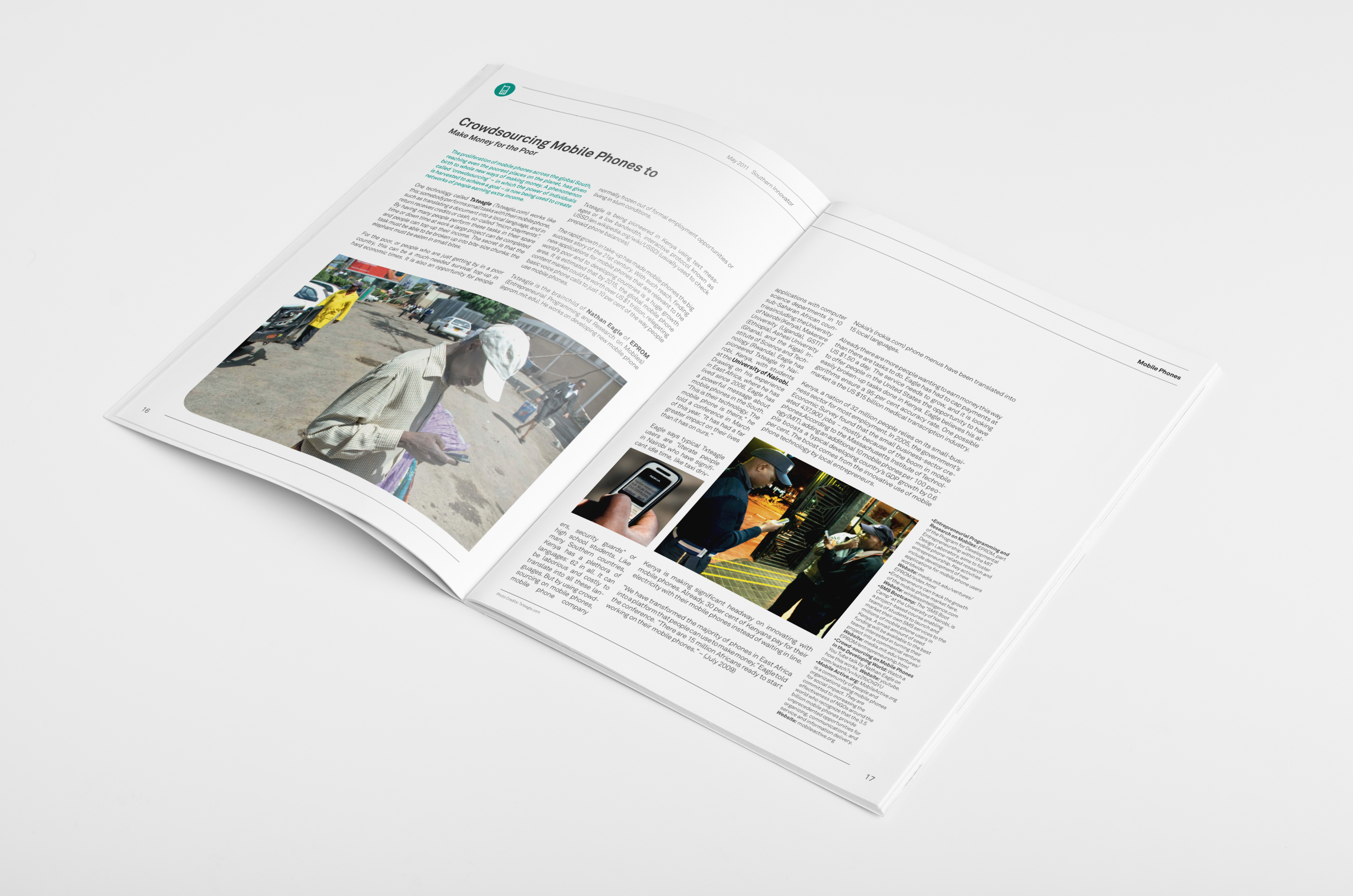
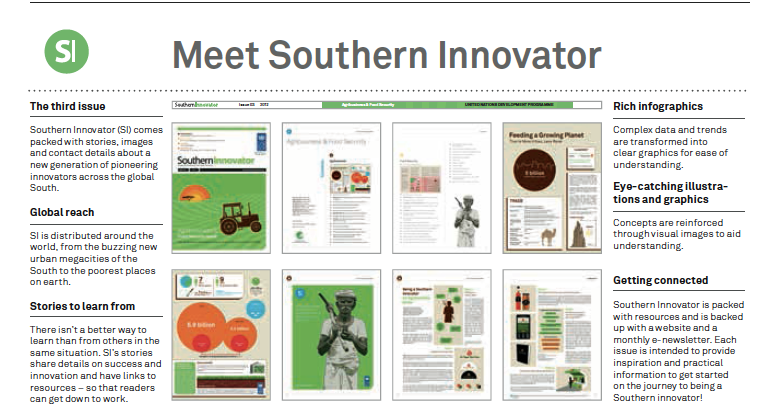
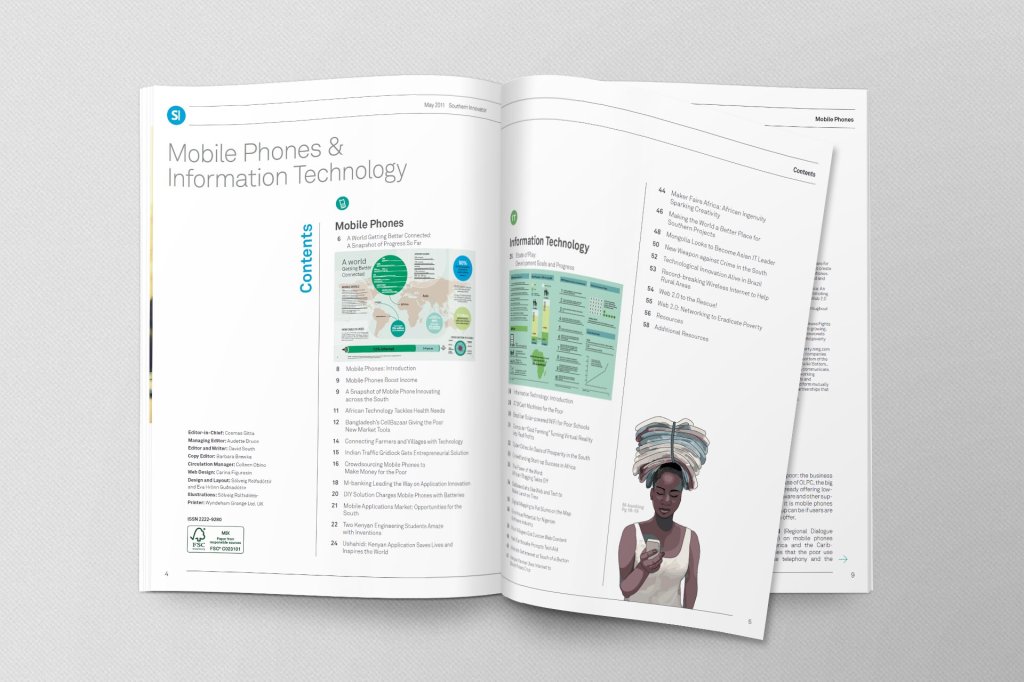
Development Challenges, South-South Solutions was launched as an e-newsletter in 2006 by UNDP’s South-South Cooperation Unit (now the United Nations Office for South-South Cooperation) based in New York, USA. It led on profiling the rise of the global South as an economic powerhouse and was one of the first regular publications to champion the global South’s innovators, entrepreneurs, and pioneers. It tracked the key trends that are now so profoundly reshaping how development is seen and done. This includes the rapid take-up of mobile phones and information technology in the global South (as profiled in the first issue of magazine Southern Innovator), the move to becoming a majority urban world, a growing global innovator culture, and the plethora of solutions being developed in the global South to tackle its problems and improve living conditions and boost human development. The success of the e-newsletter led to the launch of the magazine Southern Innovator. 

Creative Commons License

This work is licensed under a
Creative Commons Attribution-Noncommercial-No Derivative Works 3.0 License.

ORCID iD: https://orcid.org/0000-0001-5311-1052.

© David South Consulting 2022

Categories
Archive Development Challenges, South-South Solutions Newsletters

Kenyan Book Company Brings Online Sales to East Africa

By David SouthDevelopment Challenges, South-South Solutions

SOUTH-SOUTH CASE STUDY

The Internet has revolutionized retail sales in many developed countries – and nowhere more so than for booksellers. The ability to offer an almost unlimited supply of books through a website is revolutionizing the way people shop and giving life to books long out of print or by unknown authors.

Kenya has recently gained a reputation for doing things differently in Africa and making great strides when it comes to using information technologies. And the next development in this story is the launch of a Kenyan online book shop modelled on the successful U.S. online bookseller Amazon (amazon.com).

A book boom is well underway across the global South. Literary festivals continue to expand, from Colombia in South America to India to Nigeria in West Africa, and so do sales of books, newspapers and magazines. While the publishing industries in developed countries despair at the impact of digital media on their profits, in the global South, rising prosperity and literacy are fuelling greater interest in reading and a growing print publishing industry. For example, India is experiencing 15-per-cent-a-year growth for its publishing industry, which is valued at nearly US $2 billion (Frankfurt Book Fair).

Kenya’s Text Book Centre (TCB) (textbookcentre.com), considered one of the country’s most reputable booksellers, has launched its own online book selling portal and its “eBook web store”. It is targeting readers across East Africa and sells books in 14 categories. Being Kenyan, it is taking an innovative approach that recognizes the large numbers of people who are doing all their transactions over mobile phones. The book portal allows customers to make purchases with their mobile phones using mobile money. This system uses the Kopo Kopo (kopokopo.com) software platform, which allows small and medium sized businesses to accept mobile phone payments.

Kopo Kopo was first developed in Sierra Leone in 2011, before being further prototyped in Kenya. Kopo Kopo wanted to develop an effective mobile platform to help small and medium sized businesses to better interact with their customers. The Kopo Kopo service was officially launched in February 2012 and is partnered with Safaricom, using its M-PESA Buy Goods service. It is being currently used by hundreds of businesses, from “salons to restaurants to office supply stores”, according to Kopo Kopo’s website.

As an added benefit, the Kenyan online book platform is joined by a new marketplace for thousands of African ebooks. This part of the service is called eKitabu (ekitabu.com).

EKitabu will be a big boost to the continent’s authors and also open up new opportunities for budding authors who previously would have struggled to get published and distribute their work. If the ebook web store follows the dynamic of online booksellers in more developed markets, then this ability to gain exposure for author’s work and find an audience could also attract bigger publishers and spark interest in international book deals for formerly obscure writers.

The Text Book Centre was founded in 1964 by two Indian business partners in Kenya, Mr. SV Shah and Mr. MJ Rughani, and is now considered the leading bookstore in Kenya, specializing in leisure and educational books, according to its website.

Headquartered in Nairobi’s central business district, it focuses on providing books for the educational sector and strives to be “East Africa’s leading leisure and educational bookstore and office support resource centre”. It also supplies to customers in Uganda, Sudan, Somalia, Malawi, Zanzibar and Tanzania.

Published: March 2013

Resources

1) Tara Books: Based in Chennai, India, the book publisher is a co-operative and has published 200,000 hand-made books since its founding in 1994. Website: http://www.tarabooks.com/

2) Pathlight: A Beijing, China-based literary magazine with new writing and poetry. Website: http://paper-republic.org/pubs/pathlight/

3) “Indian readers keep publishing industry on growth track”. Website: http://hcilondon.in/headlines_1686.html

4) African Publishers Network (APNET): APNET’s vision is the transformation of African peoples through books. APNET’s mission is to strengthen African publishing through networking, training, trade promotion, Intellectual Property (IP) and advocacy, in partnership with other stakeholders, to fully meet Africa’s need for quality, relevant books. Website: http://www.african-publishers.net/

Southern Innovator logo

London Edit

31 July 2013

Creative Commons License

This work is licensed under a
Creative Commons Attribution-Noncommercial-No Derivative Works 3.0 License.

ORCID iD: https://orcid.org/0000-0001-5311-1052.

© David South Consulting 2023

Categories
Archive Development Challenges, South-South Solutions Newsletters

“Pocket-Friendly” Solution to Help Farmers Go Organic

By David SouthDevelopment Challenges, South-South Solutions

SOUTH-SOUTH CASE STUDY

Interest in organic food and farming is high, and organics have become a growing global industry. The worldwide market for organic food grew by more than 25 per cent between 2008 and 2011, to US $63 billion, according to pro-organic group the Soil Association. That is an impressive accomplishment given the backdrop of the global economic crisis, and evidence that people value quality food, even in tough times.

One Kenyan company is hoping to help farmers benefit from this global surge in interest in organic food. The company is selling a healthy alternative to chemical fertilizers and is hoping it will soon be able to source its products in Kenya, too.

BioDeposit (http://biodeposit.lv/index.php?page=elixir-3) sells soil conditioner and natural fertilizer made from two ingredients: peat found in marshlands and silt dredged up from lakes, which is called sapropel (http://en.wikipedia.org/wiki/Sapropel). This naturally occurring resource is rich in all the elements required for abundant crops and has the added benefit of not poisoning the soil and water table when used on farmer’s fields.

It is sold as a solution to the multiple pressures hitting farmers, from chaotic weather patterns to soil damage and decreasing yields. It offers a way to boost farm productivity without damaging the soil in the long term.

In 2011 the amount of farmland that was organic reached 37.2 million hectares in 162 countries – but this is still just 0.86 per cent of the world’s agricultural land (Research Institute of Organic Agriculture and International Federation of Organic Agriculture Movements). If BioDeposit has its way, Kenyan farmers could help to grow the number of hectares being farmed organically.

Presenting the solution in October 2013 at the Global South-South Development Expo (southsouthexpo.org) at the headquarters of the UN’s Environment Programme (UNEP) in Nairobi, Kenya, BioDeposit communications and media chief Nelly Makokha (http://ke.linkedin.com/pub/nelly-makokha/29/a08/634), explained that the company is hoping to bring the technology behind BioDeposit to Kenya, if they can get permission.

At present, the source materials for the products are dredged from lakes in Latvia in Eastern Europe. Because of the political structures of Kenya, it means a long political process is ahead to gain permission to dredge any of the country’s lakes. BioDeposit’s Latvian scientists conducted research on the potential for Lake Naivasha (http://en.wikipedia.org/wiki/Lake_Naivasha) in the Rift Valley and claim it has enough deposits to provide Kenya’s farmers with organic fertilizer for the next 200 years.

“If the government agrees, the fertilizer is basically cheaper than any other fertilizer the farmer [will] have ever used in a long time,” said Makokha. “It will be pocket-friendly for them. As they earn more money from the more yields, they are spending less on the fertilizer.

“Our slogan is ‘smart agriculture for health and wealth’  – health in terms of you become organically grown, and if you are looking for organic certification, we will organize that for the certifiers. Right now most countries are looking for organic food and cannot find it.

“So when you become organic that means you earn more money on your products so it means you are healthy and you are wealthy!”

The fertilizer comes in 12 milliliter packets that cost 200 Kenyan shillings (US $2.30). A farmer would need two packets for each quarter acre of farmland.

Based on a Russian discovery from the early 20th century, BioDeposit draws on naturally occurring resources.

Its products include BioDeposit Agro, described as a “biologically active soil conditioner,” and BioDeposit Elixir, described as a “humic plant growth stimulator.” The Elixir is a “sustainable, water-soluble” concentrate made from peat and can be used to soak seeds prior to planting, increasing the germination cycle. For the farmer, it means more seedlings in a shorter time. It also can be poured on compost piles to boost humic content to speed compost decay. Peat is formed from above-ground marsh plants, either on the surface or under a layer of water.

BioDeposit Agro is made from sapropel from the sediment at the bottom of freshwater lakes. It is a renewable, naturally-occurring resource as it has been formed from the accumulated settling of plants such as reeds, algae, trees, grasses and animals over time as they decay.

Unlike other chemical fertilizers, using the BioDeposit product does not require special protective clothing and does not harm human health. Children are also not at risk if they accidentally ingest the product.

“Most farmers have small farms – quarter acre, half acre, at most three acres,” said Makokha. “For a quarter acre you spend five dollars and you get more yields. Two of them would be approximately five dollars – that’s enough for a whole season – so it is pocket friendly.”

And if the company is able to harvest the material in Kenya, it would be even cheaper.

“You can imagine if we dredge here – probably (get the cost down to) a dollar – so it makes more sense for the farmers.”

The dredging has another positive impact: it helps with managing flooding by making the lake deeper once the silt is dredged out, making life better and safer for people living nearby.

BioDeposit has been operating in Kenya for a year and, Makokha said, “the response is awesome.”

BioDeposit organizes workshops for farmers through cooperative societies, helping to guide farmers through the whole process of becoming organically certified.

The company believes its products will help avert problems such as what happened recently when the European Union prevented some flowers – a major source of overseas income for Kenyan farmers – from entering the EU because of banned pesticides.

Cleverly, BioDeposit does most of its business digitally through mobile phones. It conducts its business with sales representatives by phone and conducts training by phone as well. All payments and bank transfers are done by phone using the M-PESA system (http://www.safaricom.co.ke/?id=257).

“It is the easiest way to do business in Kenya,” said Makokha. “Everybody right now owns a mobile phone. When we get the M-PESA, we transfer directly to the account. You get the money and transfer to the bank account and you are done, very easy for everybody … doing wonders for us.”

Published: March 2014

Resources

1) Soil health crisis threatens Africa’s food supply. Website: http://www.newscientist.com/article/dn8929-soilhealth-crisis-threatens-africas-food-supply.html

2) 2050: Africa’s Food Challenge: Prospects good, resources abundant, policy must improve: A discussion paper from the Food and Agricultural Organization (FAO). Website: http://www.fao.org/wsfs/forum2050/wsfs-background-documents/issues-briefs/en

3) State of the World 2011: Innovations that Nourish the Planet. Website: http://www.worldwatch.org/sow11

5) Integrating Ethno-Ecological and Scientific Knowledge of Termites for Sustainable Termite Management and Human Welfare in Africa by Gudeta W. Sileshi et al, Ecology and Society, Volume 14, Number 1. Website: http://www.ecologyandsociety.org/vol14/iss1/art48

6) Soil Association: The Soil Association was founded in 1946 by a group of farmers, scientists and nutritionists who observed a direct connection between farming practice and plant, animal, human and environmental health. Website: http://www.soilassociation.org/marketreport

7) Research Institute of Organic Agriculture: FiBL is an independent, non-profit, research institute with the aim of advancing cutting-edge science in the field of organic agriculture.  Website: http://www.fibl.org/en/fibl.html

International Federation of Organic Agriculture Movements: Since 1972, IFOAM has occupied an unchallenged position as the only international umbrella organization of the organic world, i.e. all stakeholders contributing to the organic vision. Website: http://www.ifoam.org/

9) BioDeposit on Facebook. Website: https://www.facebook.com/BioDepositAfrica

https://davidsouthconsulting.org/2022/11/21/africa/

https://davidsouthconsulting.org/2020/12/14/african-farming-wisdom-now-scientifically-proven/

https://davidsouthconsulting.org/2022/11/21/agribusiness-food-security/

https://davidsouthconsulting.org/2022/10/10/cheap-farming-kit-hopes-to-help-more-become-farmers/

https://davidsouthconsulting.org/2022/11/23/kenyan-farmer-uses-internet-to-boost-potato-farm/

https://davidsouthconsulting.org/2022/10/31/new-kenyan-services-to-innovate-mobile-health-and-farming/

https://davidsouthconsulting.org/2021/09/16/small-fish-farming-opportunity-can-wipe-out-malnutrition/

https://davidsouthconsulting.org/2021/03/05/southern-innovator-issue-3/

https://davidsouthconsulting.org/2022/11/11/urban-farming-to-tackle-global-food-crisis/

https://davidsouthconsulting.org/2022/10/18/woman-wants-african-farming-to-be-cool/

Development Challenges, South-South Solutions was launched as an e-newsletter in 2006 by UNDP’s South-South Cooperation Unit (now the United Nations Office for South-South Cooperation) based in New York, USA. It led on profiling the rise of the global South as an economic powerhouse and was one of the first regular publications to champion the global South’s innovators, entrepreneurs, and pioneers. It tracked the key trends that are now so profoundly reshaping how development is seen and done. This includes the rapid take-up of mobile phones and information technology in the global South (as profiled in the first issue of magazine Southern Innovator), the move to becoming a majority urban world, a growing global innovator culture, and the plethora of solutions being developed in the global South to tackle its problems and improve living conditions and boost human development. The success of the e-newsletter led to the launch of the magazine Southern Innovator.
Creative Commons License

This work is licensed under a
Creative Commons Attribution-Noncommercial-No Derivative Works 3.0 License.

ORCID iD: https://orcid.org/0000-0001-5311-1052.

© David South Consulting 2023


Categories
Archive Blogroll Development Challenges, South-South Solutions Newsletters

Kenya Reaches Mobile Phone Banking Landmark

By David SouthDevelopment Challenges, South-South Solutions

SOUTH-SOUTH CASE STUDY

Financial transactions and banking with mobile phones have been a Kenyan success story.

Now, one service, M-Shwari, has reached a significant milestone in the history of m-banking (mobile phone banking): it was able to record a billion Kenyan shillings (US $11,926,100) in savings deposits in a month after its launch in November 2012 and reached deposits of Kenyan shillings 2.8 billion (US $33 million) by February of 2013. This outstripped the Kenyan shillings 378 million (US $4 million) in loans lent by the service, reports Daily Nation.

M-Shwari is a mobile phone banking product that allows people to save and borrow money by phone and earn some interest too. The service offers small emergency loans to customers, offering a financial lifeline to people who would have been frozen out of financial services in the past.

There is no need to have any contact with a bank or bother with paperwork. And loans are instant because they are small.

Safaricom Chief Executive Officer Bob Collymore told the Daily Nation “Trends show that it has become more of a savings service than a lending service. This is what we intended since the beginning.”

As of February 1.6 million customers had used the service.

On top of this success, the pioneering M-PESA (http://www.safaricom.co.ke/personal/m-pesa/m-pesa-services-tariffs/relax-you-have-got-m-pesa) mobile phone banking platform developed in Kenya by Safaricom is set to roll out across India and help bring banking services to the country’s 700 million “unbanked.”

Both these developments are solid proof that innovation aimed at drawing in the poor into the mainstream economy not only works, it is profitable and exportable.

M-Shwari (http://www.safaricom.co.ke/personal/m-pesa/m-shwari/m-shwari-faqs) works like this: a customer can save as little as one Kenyan shilling to receive an interest rate of up to 5 per cent. If they want a loan, then they can borrow from 100 Kenyan shillings (US $1.19) to a maximum of 20,000 Kenyan shillings (US $238) for a processing fee of 7.5 per cent which will need to be paid back after 30 days.

By offering greater access to loans, M-Shwari s increasing competition in the banking sector and giving customers a choice.

It joins an ongoing revolution in access to credit for the poor. Powerful mobile phones enable individual depositors and businesspeople to organize their financial affairs and business needs on the phone. This is a revolutionary development in many places where people previously had to contend with poor access to financial services – or no access at all.

M-Shwari and products like it allow people to borrow, save and conduct transactions with family, friends, business partners and customers over their mobile phones.

M-Shwari is a collaboration between Kenyan telecoms company Safaricom and the Commercial Bank of Africa. It is being hailed as an example of how banks and telecommunications companies can cooperate to offer innovative financial products to the country.

For the unbanked in India, the initiative between Vodafone India (https://www.vodafone.in/pages/index.aspx) and ICICI Bank, India’s largest private bank, has started to roll out the Kenyan M-PESA mobile phone banking platform in India as of April 2013. They are hoping to open up access to banking to 700 million Indians who currently do not have bank accounts or access to banking facilities. The rollout starts in the country’s eastern regions of Kolkata and West Bengal (CNN).

It looks like access to banking services for the poor in the global South will soon undergo radical change with these large-scale initiatives.

Published: May 2013

Resources

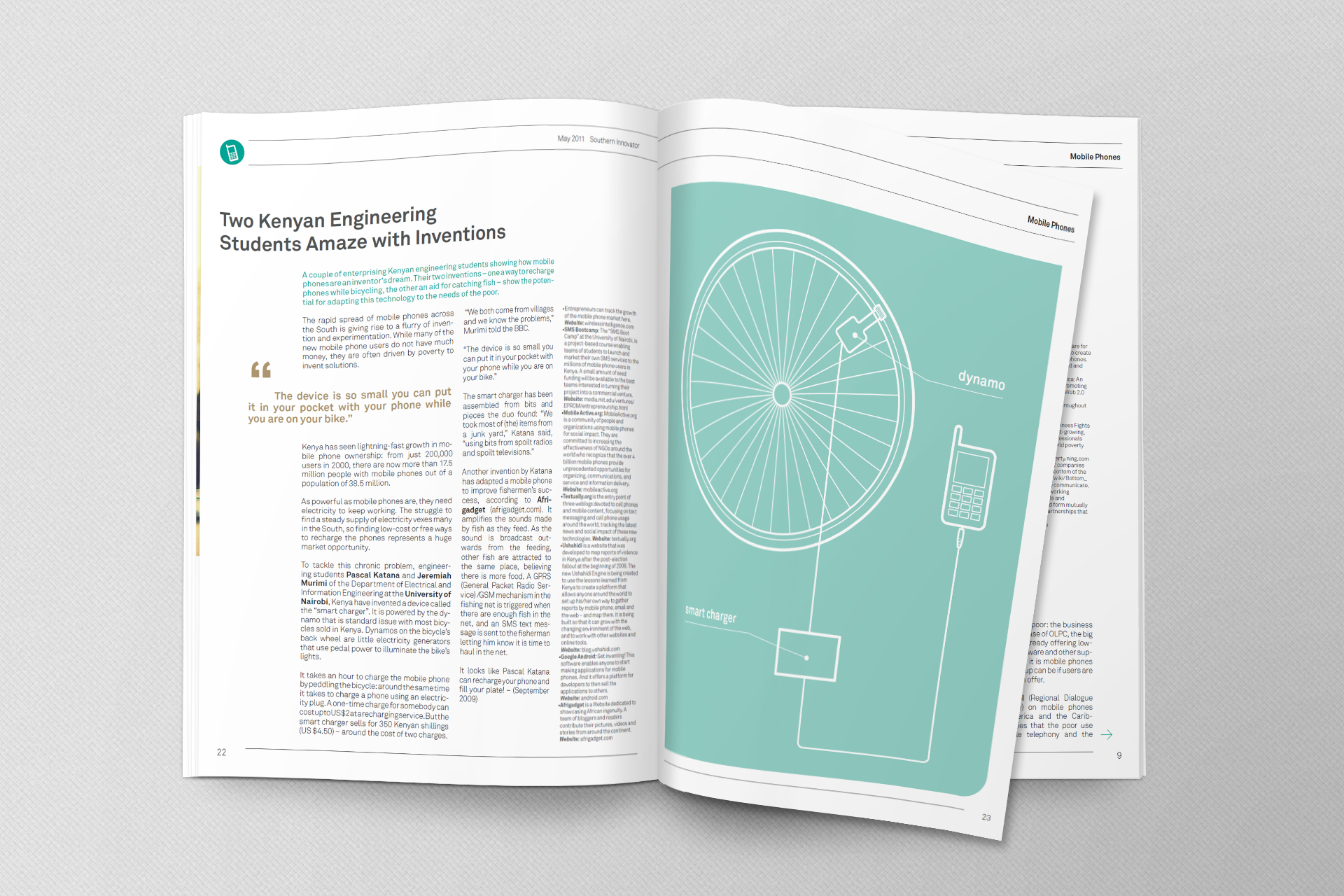
1) Southern Innovator Magazine Issue 1: Mobile Phones and Information Technology: Southern Innovator’s first issue broke new ground in its portrayal of a global South awash in innovators transforming how people use information technology and mobile phones. Website: http://www.scribd.com/doc/95410448/Southern-Innovator-Magazine-Issue-1-Mobile-Phones-and-Information-Technology

2) iHub Nairobi: Nairobi’s Innovation Hub for the technology community is an open space for the technologists, investors, tech companies and hackers in the area. This space is a tech community facility with a focus on young entrepreneurs, web and mobile phone programmers, designers and researchers. Website: ihub.co.ke/

3) Hubs in Africa: A crowdsourced map of the growing number of African information technology hubs. Website: https://africahubs.crowdmap.com/main

4) Appfrica: Founded in 2008 in Kampala, Uganda, Appfrica is an innovative global consultancy specializing in market research studies, custom technology solutions and investment in emerging markets. Website: http://appfrica.com/

Southern Innovator logo

London Edit

31 July 2013

David South Consulting first launched in Toronto, Canada in 1991. In 2010 it had a brand re-launch, with a new logo and website developed in Reykjavik, Iceland using 100% renewable energy. 

https://davidsouthconsulting.org/2022/10/04/the-brck-kenyan-developed-solution-to-boost-internet-access/

https://davidsouthconsulting.org/2022/10/10/bringing-the-invention-and-innovation-mindset-to-young-kenyans/

https://davidsouthconsulting.org/2020/04/30/crowdsourcing-mobile-phones-to-make-the-poor-money/

https://davidsouthconsulting.org/2020/05/01/diy-solution-charges-mobile-phones-with-batteries/

https://davidsouthconsulting.org/2022/11/01/innovative-mobile-phone-applications-storm-south/

https://davidsouthconsulting.org/2021/02/01/kenya-turns-to-geothermal-energy-for-electricity-and-growth/

https://davidsouthconsulting.org/2022/10/31/kenyan-bank-helps-the-poor-and-gets-rich/

https://davidsouthconsulting.org/2022/05/26/kenyan-book-company-brings-online-sales-to-east-africa/

https://davidsouthconsulting.org/2021/11/22/kenyan-eco-village-being-built-by-slum-dwellers/

https://davidsouthconsulting.org/2022/11/23/kenyan-farmer-uses-internet-to-boost-potato-farm/

https://davidsouthconsulting.org/2022/10/27/kenyan-mobile-phone-innovations/

https://davidsouthconsulting.org/2022/10/24/kenyan-products-a-global-success-story/

https://davidsouthconsulting.org/2022/11/23/kenyan-safari-begins-minutes-from-airport/

https://davidsouthconsulting.org/2022/10/17/mapping-to-protect-kenyas-environment-the-emazingira-solution/

https://davidsouthconsulting.org/2020/12/20/mobile-phones-bring-the-next-wave-of-new-ideas-from-the-south/

https://davidsouthconsulting.org/2020/12/20/mobile-phones-engineering-souths-next-generation-of-entrepreneurs/

https://davidsouthconsulting.org/2020/12/12/mobile-phones-new-market-tools-for-the-poor/

https://davidsouthconsulting.org/2022/10/31/new-kenyan-services-to-innovate-mobile-health-and-farming/

https://davidsouthconsulting.org/2022/03/30/riverwood-kenyan-super-fast-super-cheap-filmmaking/

https://davidsouthconsulting.org/2021/02/04/us-450-million-pledged-for-green-economy-investments-at-kenyan-gssd-expo/

Development Challenges, South-South Solutions was launched as an e-newsletter in 2006 by UNDP’s South-South Cooperation Unit (now the United Nations Office for South-South Cooperation) based in New York, USA. It led on profiling the rise of the global South as an economic powerhouse and was one of the first regular publications to champion the global South’s innovators, entrepreneurs, and pioneers. It tracked the key trends that are now so profoundly reshaping how development is seen and done. This includes the rapid take-up of mobile phones and information technology in the global South (as profiled in the first issue of magazine Southern Innovator), the move to becoming a majority urban world, a growing global innovator culture, and the plethora of solutions being developed in the global South to tackle its problems and improve living conditions and boost human development. The success of the e-newsletter led to the launch of the magazine Southern Innovator.
https://davidsouthconsulting.org/2021/03/05/southern-innovator-issue-1/

https://davidsouthconsulting.org/2021/03/05/southern-innovator-issue-2/

Creative Commons License

This work is licensed under a
Creative Commons Attribution-Noncommercial-No Derivative Works 3.0 License.

ORCID iD: https://orcid.org/0000-0001-5311-1052.

© David South Consulting 2023