UNESCO’s Kronberg Declaration on the Future of Knowledge Acquisition and Sharing is blunt: the future of learning will increasingly be mediated by technology, and traditional educational processes will be revolutionized. Acquiring factual knowledge will decrease and instead people will need to find their way around complex systems and be able to judge, organize and creatively use relevant information.
According to Abdul Waheed Khan, UNESCO’s Assistant Director General for Communications and Information, “Lack of access to knowledge increasingly accentuates marginalization and economic deprivation, and we need to join efforts to bridge these gaps”
More and more initiatives are stepping in to break down barriers in the exchange of information and knowledge, and break out from the gatekeepers. The advent of Web 2.0 and its user-contributed resources is making this happen.
Connexions sees itself as the partner to go with the free and low-cost laptops being distributed by the One Laptop Per Child Project to schoolchildren in the developing world. Connexions is a Web 2.0 website that allows teachers and educators to upload their learning materials by subject for sharing with anyone who wants them. All content is broken down into modules for easy access. The content can be mixed to build courses, and adapted to suit local conditions. It represents a cornucopia of knowledge, ranging from mathematics to engineering to music lessons.
The content’s adaptability is its charm – users can add additional media like video and photos and modify and add on-the-ground case studies to really bring the material to life for students. The ability to re-mix and re-contextualise into the local circumstances is critical to get take-up of these resources argues Connexions.
Open Educational Resources is a global teaching and learning sharing website. It is all about getting teachers to open up and share their knowledge with other teachers. It contains full courses, course modules, syllabi, lectures, homework assignments, quizzes, lab and classroom activities, pedagogical materials, games and simulations, It is run by ISKME,an independent, non-profit educational think tank whose mission is to understand and improve how schools, colleges, and universities, and the organizations and agencies that support them, build their capacity to systematically collect and share information
Another excellent way to share information is the online publishing tool Lulu. While it is free to publish – whether a book, photo book, brochure, artwork, digital media, DVD and e-books – it does cost the person who wants to download or order a printed and bound copy. The creator of the content gets to choose how much should be charged and what is a fair price. The beauty of this website is the ability for anyone to publish and to bypass the limitations of traditional publishing.
Once you have created your content, and taken the decision to share it with the world, you can also make sure it is copyright protected so that nobody accept you makes money from it. It is aimed at authors, scientists, artists and educators, and lets them protect their work for free. The Creative Commons initiative allows repeat use for free of the content as long as the user attributes its source to its original author. Any content you publish online will be given a logo clearly stating what rights it has.
Published: August 2007
Resources
Professor Richard Baraniuk explains his concept in a video: click here to view
The Creative Commons provides free tools that let authors, scientists, artists and educators to easily define what rights they will allow people to have who use their work. The website has all the tools (including logos) to get started licensing work: www.creativecommons.org
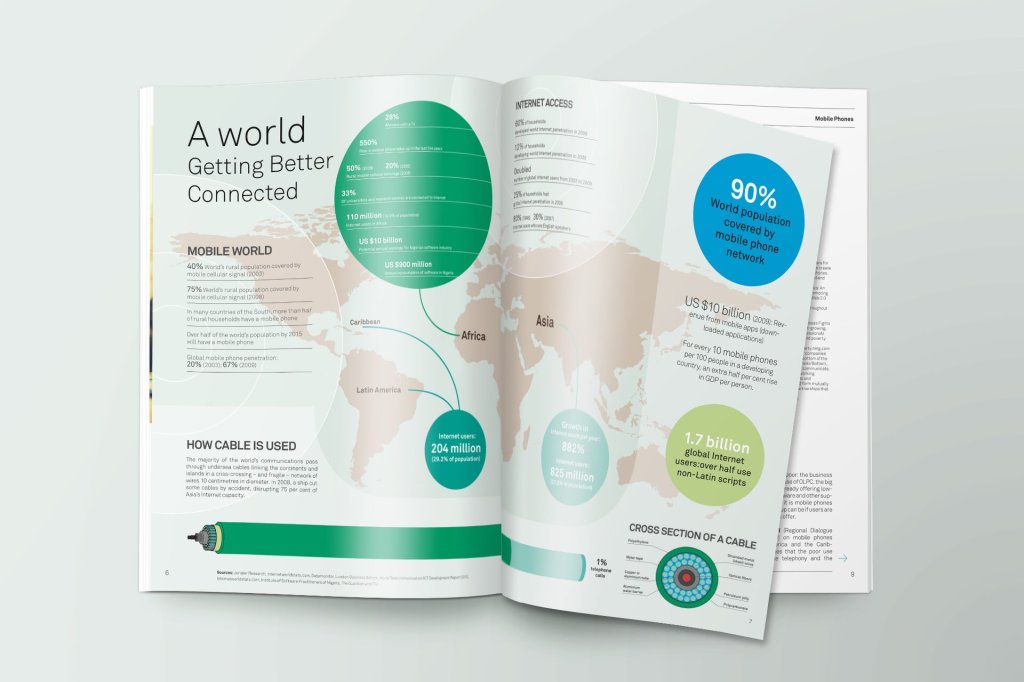
Development Challenges, South-South Solutions was launched as an e-newsletter in 2006 by UNDP’s South-South Cooperation Unit (now the United Nations Office for South-South Cooperation) based in New York, USA. It led on profiling the rise of the global South as an economic powerhouse and was one of the first regular publications to champion the global South’s innovators, entrepreneurs, and pioneers. It tracked the key trends that are now so profoundly reshaping how development is seen and done. This includes the rapid take-up of mobile phones and information technology in the global South (as profiled in the first issue of magazine Southern Innovator), the move to becoming a majority urban world, a growing global innovator culture, and the plethora of solutions being developed in the global South to tackle its problems and improve living conditions and boost human development. The success of the e-newsletter led to the launch of the magazine Southern Innovator.
The United States’ fast-paced and highly inventive technology sector is re-shaping philanthropy and proving it is possible to do good and make money at the same time. The approach taken by these philanthropists is flavoured by their experiences in the cut-throat world of technology, where innovation is a necessity and where re-invention and risk are de rigeur. They share many of these qualities, counter intuitively, with millions of the world’s poor as they struggle day in and day out to survive and get ahead.
Differing from the Fairtrade movement – whose origins are in NGOs seeking guaranteed fair price for goods – so-called ‘venture philanthropists’ and ‘social entrepreneurs’ focus more on profit and growth. They draw their inspiration from the online networks that have rocked the business world in the past few years, and look to apply a model of constant innovation.
The past ten years have seen non-profits more and more adopt the language and methods of business. For ‘venture philanthropists’ and ‘social entrepreneurs’, business is the tool to do good. By breaking out of the narrow view of philanthropy as about giving away money, it becomes possible to see the connections between doing good and making good money, venture philanthropists argue. And as more people think this way, more tools are emerging to make it easier and easier to do.
The highly successful online auction house Ebay’s founders Jeff Skoll and Pierre Omidyar are part of a wave of new thinking from California’s high-tech Silicon Valley that is shaping the way huge sums of private capital get invested in social change.
‘Venture philanthropists’ focus on a small portfolio of grantees that make the most of the investment. By giving them large, long commitments, including money for infrastructure such as staff and computers, they don’t spend all their time fundraising. And unlike traditional philanthropists, they get in their offices and work with them like partners instead of waiting for annual reports, and they hold the grantees to quantifiable goals.
The success of Nobel Prize winner Mohammed Yunus and his microcredit bank, Grameen, has spawned an even more ambitious venture. The Omidyar Network – led by billionaire Omidyar – calculated it would take between US $50 and US $60 billion to provide micro-lending services to the entire world’s poor. The Network is currently putting together the financing to launch this new micro-lending facility across the world. According to Omidyar, private capital is functionally limitless. Look at it that way, he said recently to the Los Angeles Times, and “$60 billion is nothing.”
Billing itself as a nonprofit venture capital firm, the Acumen Fund uses the principles of design to solve the problems of the poor. Just as the Procter & Gambles (PG) and Motorolas (MOT) of the corporate world conduct extensive ethnographic research on consumers, Acumen finances companies that create systems from the bottom up. “Start with the individuals,” said founder Jacqueline Novogratz. “Build systems from their perspective. Really pay attention, and then see if they can scale.”
Under Novogratz’s leadership, the New York-based fund manages $20 million in investments in companies that fall within three portfolios: health, water, and housing. It’s not a lot of money compared with any of the traditional venture funds in Silicon Valley. But Acumen’s goal is not to launch initial public offerings. Rather, Novogratz and her team are building prototypes for new business models that measure returns in social benefits as well as monetary rewards.
“We are betting on entrepreneurs, we look for a strong management team,” said Brian Trelstad, Chief Investment Officer of the Acumen Fund. “We currently have US $20 million in investments in six countries. We hope to take that to US $100 million in the next five years. We are beginning to see a really rich pipeline developing in our investment countries and more high quality investment opportunities coming our way. We are looking for people who are passionate about their approach and who continue to build their business from the perspective of the people in need.”
Larry Page and Sergey Brin, the founders of the successful search engine Google, started their philanthropic wing, Google.org, following Ebay’s example. They endowed Google.org with stock now worth about US $1 billion. Then they followed Omidyar’s example and set themselves up as a for-profit network.
“In the old American business model, the relationships between a firm and its investors, bank, suppliers and customers tended to be very arm’s length,” says Annalee Saxenian, dean of UC Berkeley’s School of Information. “You would make a deal and report back after some specified period of time. The new business model is much more engaged. Everyone learns from one another, and there is a continuous flow of information. The firms are more specialized, but they see each other as collaborators.”
The approach, just like in the pell mell pace of the computer industry, is relentless. Just as computer software and hardware manufacturers follow a constant improvement and innovation cycle, so can social entrepreneurs.
Ashoka: Ashoka is the global association of the world’s leading social entrepreneurs. It identifies and invests in leading social entrepreneurs with innovative and practical ideas at the launch stage. They then receive a living stipend for three years to focus on their ideas.
Social Ventures Partners: While only focused on the Seattle, USA area, SVP offers a model that can be applied throughout the global South. The vision of the founders was to build a philanthropic organization using a venture capital model, where partners actively nurture their financial investments with guidance and resources.
Generation Investment Management: Started in 2004 with former US vice president Al Gore, they only focus on investments that are long-term, sustainable and that they really believe in.
Omidyar Network: Started by Ebay’s founders, it funds for-profits and non-profits who promote equal access to information, tools and opportunities, and encourage shared interests and a sense of ownership among participants.
Skoll Foundation: The mission of the Foundation is to seek out social entrepreneurs who are already implementing successful programs on a small scale, and then through three-year awards, support the continuation, replication or extension of the program. Issues funded are: tolerance and human rights, health, environmental sustainability, economic and social equity, institutional responsibility, and personal security.
SV2: Silicon Valley Social Venture Fund: A partnership of successful technology entrepreneurs, it pools funds to support social entrepreneurs by giving money and giving time – venture philanthropy.
Google.org: It uses the talent, technology and financial resources of the successful search engine to tackle global poverty.
Acumen Fund: A non-profit venture fund that invests in market-based solutions to global poverty. The Fund supports entrepreneurial approaches to developing affordable goods and services for the 4 billion people in the world who live on less than $4 a day.
TechnoServe: Helps budding entrepreneurs turn good business ideas into thriving enterprises. With funding from the Google Foundation, they are launching a Business Plan Competition and an Entrepreneurship Development Program in Ghana.
Development Challenges, South-South Solutions was launched as an e-newsletter in 2006 by UNDP’s South-South Cooperation Unit (now the United Nations Office for South-South Cooperation) based in New York, USA. It led on profiling the rise of the global South as an economic powerhouse and was one of the first regular publications to champion the global South’s innovators, entrepreneurs, and pioneers. It tracked the key trends that are now so profoundly reshaping how development is seen and done. This includes the rapid take-up of mobile phones and information technology in the global South (as profiled in the first issue of magazine Southern Innovator), the move to becoming a majority urban world, a growing global innovator culture, and the plethora of solutions being developed in the global South to tackle its problems and improve living conditions and boost human development. The success of the e-newsletter led to the launch of the magazine Southern Innovator.
Niagara Falls – Niagara Falls has always been a town that attracted big dreamers with even bigger schemes. The beauty of the Falls has intoxicated many with grand ideas. Towards the turn of the century, the inventor of the Gillette safety razor, King Camp Gillette, tried to transform the American side into a Utopian paradise, planning to house most of the US population in a community of beehive-style high-rises covering an area 135 miles long and 45 miles wide.
Given the long history of grand schemes to remake both sides of Niagara Falls, it is hard not to see the hyperbole surrounding the planned casnio, slated to open by the end of the year, as another over-hyped dream. Just as Gillette spoke of untold riches, the government-owned Ontario Casino Corporation also sees Utopia ready to be born at the edge of the Falls. As provincial tourism minister Doug Saunderson said last month, “The casino and tourist development will provide Niagara with a kick start into the 21st century… I believe they will move Niagara to the very top of the list of destinations for world travellers.”
Those expectations sound even more impressive if you believe the government’s estimates for job creation. In a city of 76,000, the government projects between 3,000 and 9,000 jobs will result from the casino and its spin-offs. With numbers like that, it is hard to find many people who will say no.
Everywhere in Niagara Falls’ tourist district roads are being ripped up. Tourists from New York, Japan and Quebec tread through the clouds of gravel dust to see the Falls. But it isn’t just the government which is dreaming big for Niagara Falls.
Three dreams are fighting in this town for the hearts and souls of its residents, and depending on your perspective, have their merits. One, a scheme being championed by a group of local church leaders, is to build a wholesome theme park based around the exploits of local heroine Laura Secord during the War of 1812. Another more flamboyant scheme that has been on and off again since 1993, involves building a $1.4 billion theme park dedicated to transcendental meditation. So far, the casino is winning hands down.
The casino on its own is helping to raise another dream, phoenix-like, from the ashes. In 1979, the DiCenzo family built Maple Leaf Village as a joint shopping mall/theme park attraction. Now it sits derelict, waiting for renovations by the Buttcon construction company to turn it into the temporary site for the casino.
The run-down Maple Leaf Village, with its old-world European facade resembling a castle, became known for tacky attractions like the JFK Assassination Museum, the Elvis Presley Museum and the Nightmares Therapy Centre.
Judy MacCarthy has fought plans to build a casino since they were first discussed. She helped put together a coalition of church groups called the Try Another Way Committee. MacCarthy’s dream involves a theme park extolling the virtues of Laura Secord, whose claim to fame was snitching on the American invaders, having them ambushed by Indians near Niagara Falls.
MacCarthy says the provincial government has shown some interest in the project, even sending officials from Toronto to meet with her.
As for the more ambitious transcendental meditation theme park, it looks as if the whole project hangs on securing enough funds to get it off the ground.
In 1993, Maharishi Veda Land’s chair, the effervescent magician Doug Henning, told the media that Niagara Falls had to make up its mind: choose between the transcendental theme park, with its centre-piece floating bridge, or the moral decadence of a casino.
Three years later, what many thought to be a project even less tangible than Henning’s metaphysical musings, seems to still have some life left. Tucked away on the 13th floor of a Bay Street office tower in Toronto, Maharishi Veda Land Inc. – Enlightenment, Knowledge, Entertainment – continues to run with a handful of staff. As three office workers scatter behind closed doors, a secretary tells me the theme park is still a go, but refuses to give any more details. But MVL has told a Florida newspaper it isn’t going to build a theme park on property the company owns there.
Tucked away on the 13th floor of a Bay Street office tower in Toronto, Maharishi Veda Land Inc. – Enlightenment, Knowledge, Entertainment – continues to run with a handful of staff. As three office workers scatter behind closed doors, a secretary tells me the theme park is still a go, but refuses to give any more details.
Ted Cook, the former vice-president of PCL Eastern, the construction company Henning contracted to build the park, says there was a change in attitude: “Henning’s position softened as time passed (over the casino). He became less opposed on moral grounds, and it was now ‘maybe we can make it work’.”
If there was an epicentre to the Niagara dream machine, it is the office of its mayor, Wayne Thompson.
Dean Iorfida is the mayor’s executive assistant. For Iorfida, the casino is a matter of turning a seasonal economy dependent on summer-time tourists into a viable year-round attraction. Even when they do come to Niagara Falls, he says, the average tourist’s stay is just four hours.
Iorfida is dreaming large, imagining the permanent site will include an auditorium, convention centre and amusement park. “Vegas has gone that way,” he says.
But he also wants to see the whole city transformed by the casino. “We have to spread it around or you get a black hole effect: too much in one location.”
As for the complaints that the casino will only add to the tacky reputation of Niagara Falls, Iorfida believes “the city doesn’t want anything that turns people off, but we can’t stop private enterprise. We are talking about one location, I don’t think it will be like Vegas where casinos try to out-garish each other.”
Many associated with the traditional tourist attractions in Niagara are banking on seeing some of the casino cash. Merchants on Clifton Hill, “The street of fun at the falls,” are hoping they can complement the casino rather than compete.
So far, the tourist trap, despite the shabby strip of Clifton Hill with its wax museums and fudge shops, or even the block after block of cheap hotels and motels, has been able to avoid turning into a seedier form of sleaze – it is still a family atmosphere. In fact, the declasse’ tone of the city hides an impressive stability and prosperity that makes the residents of Niagara Falls, New York jealous. For many opposed to the casino, it is this stability that is at stake.
Overhead is the dayglo pink and turquoise marquee of the Movieland Wax Museum, where one can see wax likeness’ of such luminaries as Jim Carrey. Guy Paone, the general manager of the museum, says he is happy about the casino, hoping it will bring year-round business.
“We get families down here,”he says. “If dad wants to go to the casino, then mom and the kids can come here.”
Paone isn’t expecting any business from the die-hard gamblers though. “The hard-core gamblers didn’t come here any way. You know how it is – in Vegas some people don’t eat or sleep.”
As for some of the doom and gloom about increasing crime scaring off the family tourists, Paone doesn’t buy it. “We are pretty tight on petty crime here. I don’t think the casino will affect the family reputation.”
Paone does have a sobering thought he leaves me with, “we are the suicide capital.”
All the hope has already spawned new jobs teaching the unemployed how to gamble. Frank Cricenti, black jack course co-ordinator at the National Casino Academy, joins a growing number of people employed in the lucrative business of teaching the unemployed casino skills. According to Cricenti, casino schools “are just popping up.” At government employment centres, staff are anticipating more than 100,000 applications to flood in chasing the 3,000 jobs being offered. Such a yawning chasm between expectations and reality means times are good for the adult education business.
At the 47-room Cataract Motel, the casino is an excuse to spiff the place up. “We have painted and renovated the rooms so that they look like they’re brand new,” says the motel’s manager, who will only give his name as B. John.
Other property owners are banking on the casino rescuing them from the slump. Eva Klein of Klein Developments, wants to especially unload her pricier properties. “There has been a little bit of change in the rental market, some casino people are moving into town,” Klein tells id. “We’ve had a high vacancy of higher-end rentals in Niagara Falls and we’re expecting these to be filled by a new influx from the casino.”
For Niagara Falls, the casino looks set to turn the city into a smaller, more Canadian Las Vegas. For a city desperate for more work, that doesn’t sound too bad. For the provincial government’s travelling road show, the next stop is to move the existing Windsor casino’s management over to staff the new casino at Niagara Falls.
Id Magazine was published in Guelph, Canada in the 1990s. It was one of the first Canadian magazines to embrace the internet and to routinely publish an online version.
“What a tremendous magazine your team has produced! It’s a terrific tour de force of what is interesting, cutting edge and relevant in the global mobile/ICT space… Really looking forward to what you produce in issues #2 and #3. This is great, engaging, relevant and topical stuff.”
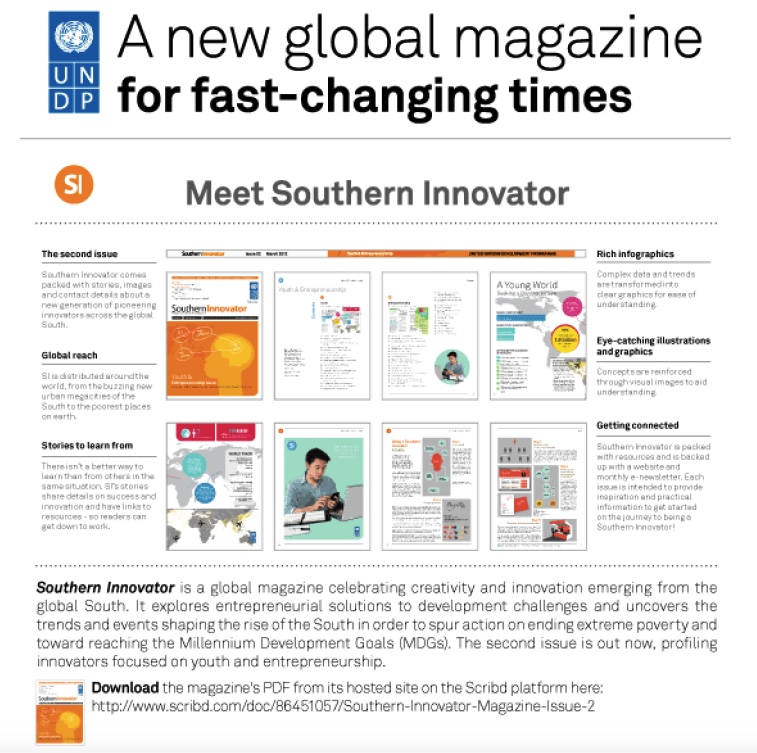
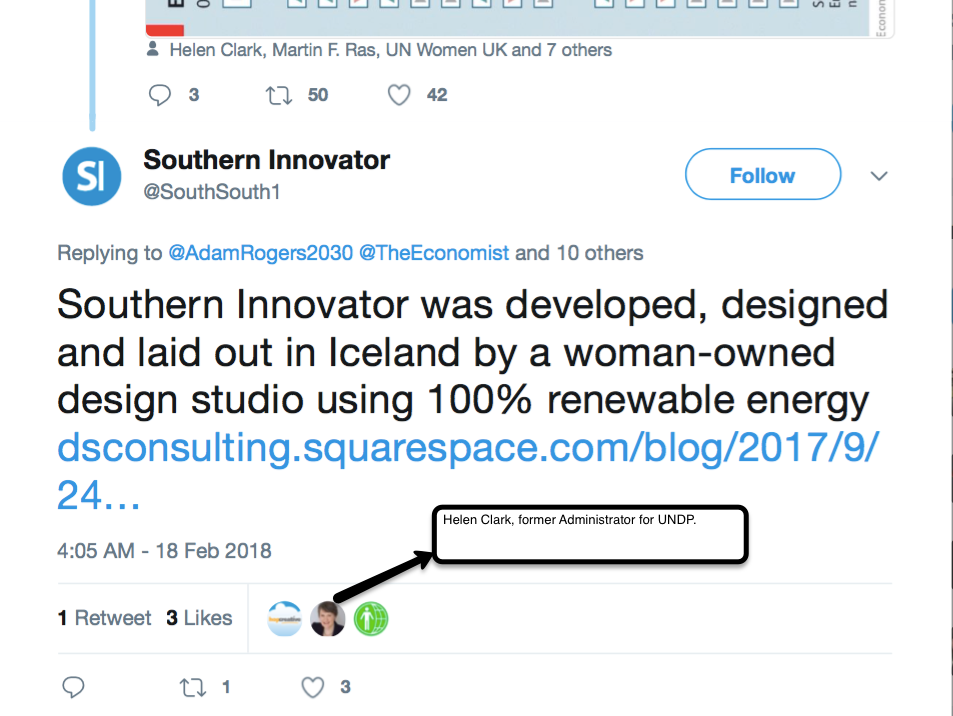
Southern Innovator was initially launched in 2011 with the goal of inspiring others (just as we had been so inspired by the innovators we contacted and met). The magazine seeks to profile stories, trends, ideas, innovations and innovators overlooked by other media. The magazine grew from the monthly e-newsletter Development Challenges, South-South Solutions published by the United Nations Office for South-South Cooperation (UNOSSC) since 2006.
Issue 6’s theme has been decided on: it will focus on Science, Technology and Innovation. For this issue, Southern Innovator is seeking invitations from cutting-edge knowledge and science innovators in the global South to view their work. Time is tight, so don’t miss this opportunity to let the whole global South know about your work. In the past, Southern Innovator has visited green pioneers in Cuba, a smart city in South Korea and an eco-city in China.
Contact me if you wish to receive a copy/copies of the magazine for distribution. Follow @SouthSouth1.
“The e-newsletter Development Challenges, South-South Solutions proved to be a timely and prescient resource on the fast-changing global South, tracking the rise of an innovator culture driven by the rapid adoption of mobile phones and information technology …
“In 2010, work began on the development of the world’s first magazine dedicated to the 21st-century innovator culture of the global South. My goal was to create a magazine that would reach across countries and cultures, meet the UN’s standards, and inspire action. Southern Innovator was the result. Mr. [David] South played a vital role in the magazine’s development from its early conception, through its various design prototypes, to its final global launch and distribution.
“Both the e-newsletter and magazine raised the profile of South-South cooperation and have been cited by readers for inspiring innovators, academics, policy makers and development practitioners in the United Nations and beyond.
“I highly recommend Mr. [David] South as a thoughtful, insightful, analytical, creative and very amicable person who has the unique ability to not only grasp complex problems but also to formulate a vision and strategy that gets things done. … ” Cosmas Gitta, Former Assistant Director, Policy and United Nations Affairs at United Nations Office for South-South Cooperation (UNOSSC) in UNDP
“I think you [David South] and the designer [Solveig Rolfsdottir] do great work and I enjoy Southern Innovator very much!” Ines Tofalo, Programme Specialist, United Nations Office for South-South Cooperation
According to zoominfo in 2023, Southern Innovator is one of the Popular Searches online for the United Nations Office for South-South Cooperation (UNOSSC).
Like our content? Help contribute to the costs of keeping it online.














 David South Consulting
You must be logged in to post a comment.