Going green may sound like the right thing to do but it can also be associated with being a costly burden and boring. But, as one island nation is proving, being green is a great selling point for attracting tourists and investors – especially in a world where many places are grappling with pollution and resource depletion.
St. Kitts, an island located between the Caribbean Sea and the Atlantic Ocean, is part of the Federation of Saint Kitts and Nevis and has a population of around 35,000 (stkittstourism.kn).
The country shut down its main source of income, the sugar industry, in 2005. Facing dropping profits, it decided the industry was not worth supporting anymore.
But what would be the replacement source of income and employment? St. Kitts has turned to tourism for the answer. While many other Caribbean islands have long drawn on tourism – along with banking and finance, in some cases – in order to diversify economies away from dependence on agriculture, St. Kitts had not developed this sector. As a latecomer, St. Kitts needed to think about how it could do things differently and stand out from the crowd.
St. Kitts decided to become a regional champion for green tourism and green energy, and to lure tourists to the island by championing its green credentials.
Joining the new solar farm, an all-green resort is hoping to further boost St. Kitts’ green credentials. The ambitious Kittitian Hill (kittitianhill.com) resort stretches across 162 hectares and includes four hotels, an organic farm and multiple restaurants. In the pipeline is a plan to open film production and editing facilities to lure movie-makers looking for a green film-making studio.
Kittitian Hill is the brainchild of property developer Val Kempadoo (http://www.linkedin.com/pub/valmiki-kempadoo/8/53a/339), who is trying to set a precedent for sustainable resorts in the Caribbean. It is being developed with a mix of foreign experts and local contractors.
The resort boasts organic food fresh from tropical farms and an on-site tropical forest, described as an “edible landscape” offering a bounty of fresh fruit and vegetables. Around the resort, “Pick Me” signs encourage visitors to pick ripe fruit and sit down and make a meal of it.
The grounds include rare and heirloom fruit trees, and the resort hopes to create a reserve to protect endangered species. To spread the green message, the plants and seeds are shared locally with farmers and others. It is part of a strategy to encourage farmers to produce organic food, avoiding pesticides and chemicals, and to farm animals ethically.
The resort’s green ethos even extends to its 18-hole golf course. Golf courses are notorious water-wasters, but this one has a smart water management system, using organic crops and fruit trees to help keep the soil moist, interweaving a farm throughout the golf course. Caddies will guide golfers to the ripest fruits while they putt their way around the course.
“My vision is to bring together community and culture, along with mindful conservation of natural resources,” said Kempadoo. “This means we can offer our guests an unforgettable experience, while bringing lasting, life-changing benefits to the local people and economy.”
As an added sweetener to get investment coming in, St. Kitts and Nevis offers citizenship to investors in the country. In return, investors can travel visa-free to 120 countries – something that has appealed to investors from around the global South.
“It is important for St. Kitts to be selective and careful about development and focus on high-end rather than high-volume tourism,” Kempadoo told Monocle magazine. “The best asset of this island is its natural beauty, and we want to preserve it.”
Published: June 2014
Resources
1) The International Ecotourism Society: The International Ecotourism Society (TIES) is a 501(c)(3) nonprofit organization dedicated to promoting ecotourism. Website: https://www.ecotourism.org/what-is-ecotourism
3) 3 Rivers Dominica Eco Lodge: “An award-winning range of comfortable and charming self-contained cottages, nature, adventure and community-based ecotourism activities, restaurant, rivers and relaxation”. Website: http://www.3riversdominica.com/
4) Jungle Bay Resort and Spa: Award-winning Jungle Bay was built and is operated in alignment with international Geotourism and Ecotourism guidelines. As an alternative to traditional Caribbean tourism, the focus is on enjoyable nature-based activities and wellness of guests with quality service, guided by the principles as set by both National Geographic’s Center for Sustainable Destinations and The International Ecotourism Society (TIES). Website: junglebaydominica.com
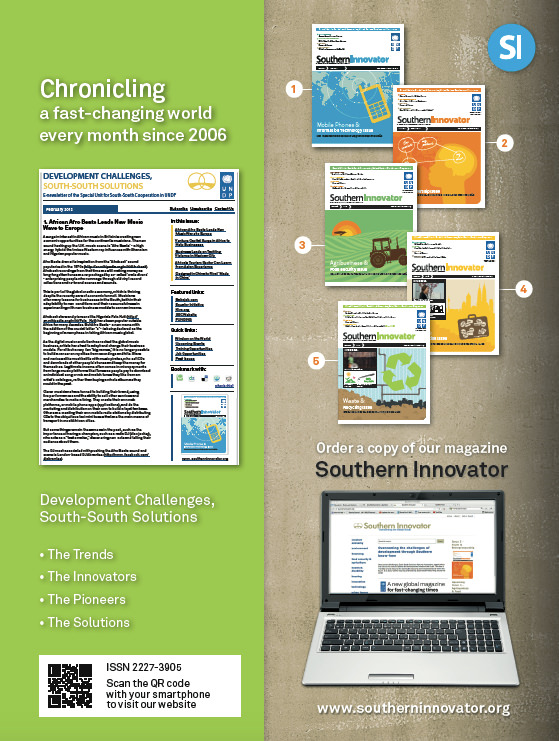
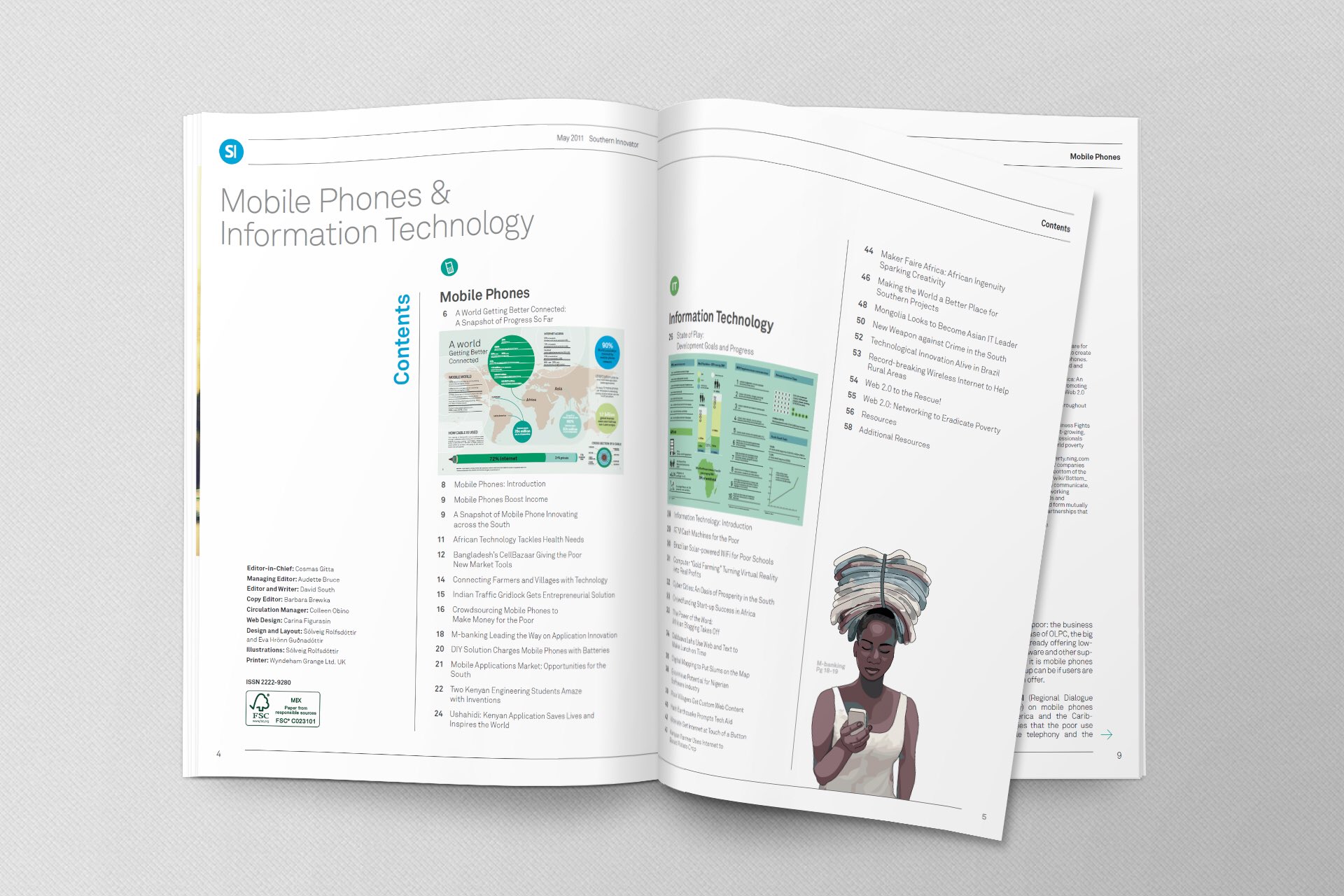
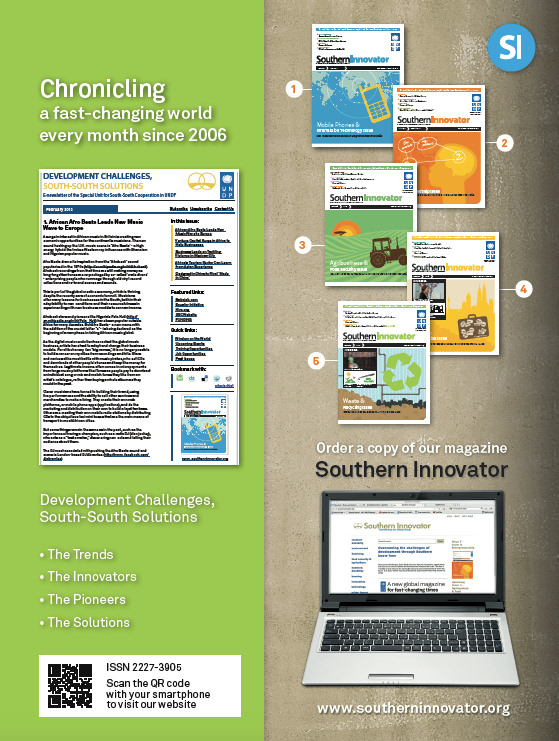
Development Challenges, South-South Solutions was launched as an e-newsletter in 2006 by UNDP’s South-South Cooperation Unit (now the United Nations Office for South-South Cooperation) based in New York, USA. It led on profiling the rise of the global South as an economic powerhouse and was one of the first regular publications to champion the global South’s innovators, entrepreneurs, and pioneers. It tracked the key trends that are now so profoundly reshaping how development is seen and done. This includes the rapid take-up of mobile phones and information technology in the global South (as profiled in the first issue of magazine Southern Innovator), the move to becoming a majority urban world, a growing global innovator culture, and the plethora of solutions being developed in the global South to tackle its problems and improve living conditions and boost human development. The success of the e-newsletter led to the launch of the magazine Southern Innovator.
The technology already exists to provide renewable energy and electricity to all the world’s poor. The trick is finding a way to pay for it and to make it sustainable. Many innovators are experimenting with business models to reach the so-called Bottom of the Pyramid (BOP) cohort, and the 1.2 billion poorest people in the world who do not have access to electricity (World Bank) (http://tinyurl.com/n9p3f5x). A further 2.8 billion have to rely on wood or other biomass materials to cook and heat their homes.
The International Energy Agency (iea.org) believes US $48 trillion of investment will be needed between now and 2035 to make sure energy capacity matches rapid population growth.
In the influential book The Fortune at the Bottom of the Pyramid (http://www.amazon.co.uk/Fortune-Bottom-Pyramid-Eradicating-Poverty/dp/8177587765), the late professor C.K. Prahalad (http://en.wikipedia.org/wiki/C._K._Prahalad) advocated seeing the poor as people with needs and assets: consumers who just need the right goods and services designed for them. It was a change from thinking only of the world’s wealthier populations as consumers, and revealed a market worth billions waiting to be tapped.
Energy is key to development and improvements to living standards. Yet energy poverty plagues much of the global South, especially in Africa and particularly in rural areas.
The World Bank has identified 20 countries in developing Asia and sub-Saharan Africa which will require a massive effort to expand access to electricity and safe cooking methods for poor households.
Around 80 per cent of the people without modern energy live in rural areas. While progress has been made since 1990 in expanding access to energy, it has failed to keep pace with population growth. According to the World Bank, the pace of expansion will have to double to meet the 100 percent access target set for 2030.
To avoid increasing global carbon emissions while achieving this goal, many are looking to renewable energy sources and technologies to reach these last groups of people.
As pointed out by the Institute of Development Studies (http://www.ids.ac.uk/news/can-renewable-electricity-reduce-poverty), “The global threat posed by climate change means that we also face the pressing need to use less carbon in existing energy systems. Making progress on both energy poverty and decarbonization requires a sharp increase in renewable electricity production, both on and off-grid.”
The institute identified four necessary factors for access to renewable energy to benefit poor people.
1. Once electricity is generated, it needs to be reliably fed into the system. 2. This additional supply must be made accessible, and affordable, for poor people. 3. Increased electricity consumption then needs to translate into poverty reduction. 4. Increased electricity supply can indirectly reduce poverty by boosting economic growth.
India’s Simpa Networks (simpanetworks.com), started in 2011, has a business model it believes will do the trick. Simpa has developed a clever way to increase access to home solar power systems for the poor, by allowing customers to purchase the system in gradual “rental” payments over time. The customers eventually come to own the power system outright, and from then on to generate electricity for free. Since the payments are small and incremental, it suddenly becomes within the realm of poor households to afford modern solar energy systems.
This is called the “Progressive Purchase Pricing Model” – similar to “prepaid”, “pay as you go” and “installment plan” models. Under this model, customers make a 10 percent down payment and receive the home solar system. The customer then buys a time-specific amount of energy for between US $1 and US $10 with their mobile phone. The orange lock box on the power system has a keypad on the front. When a code is punched in, it releases electricity (http://simpanetworks.com/our-solution/).
In increments, while the customer purchases energy for home use they also eat away at the cost of the system, until eventually it is paid off, usually at a total of US $300. Systems have an expected life span of 10 years.
With few cash resources, poor households usually are not capable of saving enough cash to purchase a full energy system for their home. Instead, they rely on buying kerosene for lamps or using battery-powered torches and lamps when they can afford it.
In 2012, Simpa teamed up with SELCO India (http://www.selco-india.com/) – a social enterprise providing sustainable energy solutions and services to households – to sell 1,000 home solar power systems, expanding to 5,000 systems in 2013, according to a case study from not-for-profit Synergie pour l’Echange et la Valorisation des Entrepreneurs d’Avenir (SEVEA) (sevea-asso.org). The goal is to reach 25,000 units sold by the end of 2014, proving this business model can scale. Ultimately, Simpa wishes to mega-scale its approach and reach 1 million households over the next five years.
Simpa believes take-up will be quick because this model reduces risk, both for the seller and for the bank that may loan the cash for the 10 per cent down payment. Simpa acts as a go-between for the system sellers such as SELCO and the banks. Simpa believe this business model reduces the risk of non-payment or loan default and has the right incentives in place to encourage the customer to hang in and keep making payments until they own the system outright. Customers enjoy the benefits of clean energy 24/7 from day one and can see clearly the connection between the energy they receive and the small payments they make. For those who default from paying, the system is taken from their home.
When the system was piloted in Karnataka, India, all loans were successfully repaid.
Simpa Networks is a venture capital-backed technology company. It hopes its approach will attract investors, particularly social investors, seeking a low-risk investment in helping expand energy access.
Published: June 2014
Development Challenges, South-South Solutions was launched as an e-newsletter in 2006 by UNDP’s South-South Cooperation Unit (now the United Nations Office for South-South Cooperation) based in New York, USA. It led on profiling the rise of the global South as an economic powerhouse and was one of the first regular publications to champion the global South’s innovators, entrepreneurs, and pioneers. It tracked the key trends that are now so profoundly reshaping how development is seen and done. This includes the rapid take-up of mobile phones and information technology in the global South (as profiled in the first issue of magazine Southern Innovator), the move to becoming a majority urban world, a growing global innovator culture, and the plethora of solutions being developed in the global South to tackle its problems and improve living conditions and boost human development. The success of the e-newsletter led to the launch of the magazine Southern Innovator.
Weathering the global economic crisis is testing the stability of countries across the global South. But many countries are finding South-South trade and catering to their domestic middle classes can lift incomes and maintain growth rates despite the global turmoil.
A decade of boom in global markets as they became more integrated has brought rising incomes and created growing economies in the so-called emerging markets of the global South. Finance and investment from developed countries flowed into the global South and helped bolster growing economies, boosting incomes and bringing millions of people into the middle classes. But since the start of the global economic crisis in 2008, more and more countries in the global South have experienced turmoil, chaos and crisis.
The export-driven model that had served many Asian countries well – creating products for developed Western markets – is being tested by high unemployment in developed economies and declining purchasing power for the Western middle classes. Two trends that have grown in the past 10 years may offer a solution to this economic crisis. One is to build on the growth in South-South trade, and the other is to tap the growing middle classes of the global South by expanding the products and services available to them and further improving their quality of life.
It is well established that one of the key elements to securing sustainable prosperity is a thriving middle class. Middle classes in many countries in the global South are still classified as vulnerable – at risk of returning to poverty if the economy experiences a short-term crisis. Their resilience to an economic downturn needs to be strengthened, and this can be done by improving the quality of products and services available to them.
Building this market can also strengthen domestic job growth and help reduce a country’s dependence on imports.
One country facing up to this challenge is Indonesia. The New York Times recently reported that ports in Indonesia and other resource-exporting countries are quiet, as China’s demand for resources slows.
But while export markets are experiencing a slowdown, investment is going into Indonesia’s agricultural food-processing industry. Agricultural multinational Cargill (cargill.com) is building a cocoa-bean processing plant in the country, and the PT. Suprama (suprama.co.id/en/) instant-noodle factory is running at full capacity to meet the needs of the country’s growing middle class.
Many countries have experienced significant inflows of investment money as a result of stimulus measures led by the United States Federal Reserve (http://www.federalreserve.gov/faqs/about_12594.htm) to counter the economic contraction caused by the global economic crisis. This money, however, is uncertain and can just as easily disappear as it leaves to chase the next opportunity. Wise countries take measures to avoid being dependent on this fickle and fast investment funding.
Unlike in the Asian Crisis of 1997-1998 (http://en.wikipedia.org/wiki/1997_Asian_financial_crisis), many emerging-market countries now have large foreign currency reserves and robust stock markets. They have also built up their middle classes and increased consumption. Trade links with other countries in the global South have grown enormously since the late 1990s. For example, the trade between China and Africa, as announced by Chinese President Xi Jinping (http://en.wikipedia.org/wiki/Xi_Jinping) in early 2014, has surpassed US $200 billion for the first time, turning China into Africa’s largest trading partner
The relationship between trade and poverty reduction, the case of China.
Despite a raging global crisis, in many emerging economies domestic spending is holding up and, in some cases, has never been stronger.
China now plays a key role in maintaining global economic demand. According to the global bank HSBC, Chinese growth adds “twice as many dollars to annual global demand as growth in the United States economy and far more than the economies of the European Union.”
China is also in the process of altering its economy, from being the low-wage workshop of the world to an increasingly high-tech, high-value economy with growing science, technology and innovation sectors buoyed by heavy investment in research and development, for example China’s Xi’an Hi-tech Industries Development Zone (xdz.com). As China changes, other countries can step in and replace the industries that no longer find China an affordable place to manufacture their goods.
As an example, the Indonesian vice minister of trade, Bayu Krisnamurthi, announced that the Foxconn Technology Group of Taiwan (foxconn.com), which makes components and assembles devices for the popular Apple (apple.com) computer brand, is looking to set up a large factory in Indonesia.
“The other brands will come in their footsteps,” Krisnamurthi told The New York Times.
Other countries are bucking the crisis trend and using greater freedom to boost economic growth.
Cuba has been able to bounce back with free-market reforms. The Caribbean island has had its ups and downs economically since its revolution in the late 1950s. After the revolution, the country had several decades of impressive human development gains and built up enviable education and health care systems. But with the collapse of the Soviet Union in the early 1990s, the country lost its trade relationships and subsidies and was pitched into a major economic crisis.
During the Cold War, the USSR hoovered up almost all of Cuba’s exports of sugar, nickel and citrus fruit, and sold Cuba two-thirds of its food and 98 per cent of its fuel.
What was termed the “special period” after the collapse of the Soviet Union saw petrol become scarce. Many had to turn to cycling and walking to get around. Factories closed and food production declined.
One estimate by Hal Klepak of the Royal Military College of Canada, reported in The Observer newspaper, found the economy collapsed by 50 per cent in the five years to 1993.
Since then, Cuba has endured significant austerity and has struggled to regain its trade relationships and restore economic growth. Tourism has played a key role in keeping the country going.
And since 2008, various economic reforms have started to shift the economy away from over-dependence on the state and towards a more mixed market model.
Its capital, Havana, is a UNESCO world heritage site and is a popular tourist destination with one of the best-preserved former Spanish colonial architecture in the Caribbean.
When President Raul Castro took over from his brother Fidel, he began to slowly experiment with reforms to test how much market freedom could boost the economy and increase incomes. This has included allowing paladares, or privately-run restaurants, which are now flourishing and benefiting from the steady flow of tourists to the island.
The state now allows people to set up as independent traders in 200 occupations. Some have established entertainment businesses such as paint balling, others are running bars, or bookshops. It is now possible to easily change money in Havana and to find accommodation in private homes. Cash machines are spreading throughout the capital and more and more businesses will accept credit cards.
Registered businesspeople rose from 157,000 in October 2011 to more than 442,000 in 2013.
By being flexible, it is possible to discover new ways to grow economies and increase incomes, even in hard times. And increasing South-South trade is the way to go.
1) The China Africa Project: The China Africa Project is a multimedia resource dedicated to exploring every aspect of China’s growing engagement with Africa. Website: chinaafricaproject.com
2) China’s trade and investment in Africa: Resources to contribute to more informed investment and trade policies and decision making in sectors and locations where China is emerging as a major player. Website: http://www.cifor.org/china-africa/home.html
Made-in-China.com: With the continuous and explosive growth of Chinese exports, trade and the number of internet users, Focus Technology launched its online trade platform, Made-in-China.com. Made-in-China.com provides the most complete, accurate and up-to-date information on Chinese products and Chinese suppliers available anywhere on the web. Nowadays, Made-in-China.com is a world-leading B2B portal, specializing in bridging the gap between global buyers and quality Chinese suppliers. Website: made-in-china.com
Development Challenges, South-South Solutions was launched as an e-newsletter in 2006 by UNDP’s South-South Cooperation Unit (now the United Nations Office for South-South Cooperation) based in New York, USA. It led on profiling the rise of the global South as an economic powerhouse and was one of the first regular publications to champion the global South’s innovators, entrepreneurs, and pioneers. It tracked the key trends that are now so profoundly reshaping how development is seen and done. This includes the rapid take-up of mobile phones and information technology in the global South (as profiled in the first issue of magazine Southern Innovator), the move to becoming a majority urban world, a growing global innovator culture, and the plethora of solutions being developed in the global South to tackle its problems and improve living conditions and boost human development. The success of the e-newsletter led to the launch of the magazine Southern Innovator.
The coming years will see a major new force dominating development: Big Data. The term refers to the vast quantities of digital data being generated as a result of the proliferation of mobile phones, the Internet and social media across the global South – a so-called ‘data deluge’ (UN Global Pulse). It is an historically unprecedented surge in data, much of it coming from some of the poorest places on the planet and being gathered in real time.
Big Data will have a profound impact on how the cities of the future develop, and will re-shape the way the challenges and problems of human development are handled.
Estimates by Cisco (cisco.com) foresee 10 billion mobile Internet-enabled devices around the world by 2016. With the world population topping 7.3 billion by then, that will work out to 1.4 devices per person.
Some estimates say 90 per cent of the digital data ever generated in the world has been produced in the past two years. It is also estimated that available digital data will increase by 40 per cent every year (UN Global Pulse). This digital transformation is being accompanied by another trend: the largest migration in human history from rural to semi-urban and urban areas.
This presents an unprecedented opportunity to make this rapid urbanization and social change smarter and more responsive to human needs, and to avoid the failures of the past, from over-crowding to crime, disease, pollution, unemployment and poverty. Some believe data collection can radically alter development by flagging up problems quickly, giving cities the chance to respond and correct negative trends before they get out of control. In short, to build in resilience by way of digital technology.
The latest region to see rapid industrialization and urbanization has been Asia – in particular China, a country that since the 1980s has simultaneously lifted the largest number of people in world history out of poverty and undertaken the biggest migration ever from rural to urban areas.
And now Africa is beginning to follow in Asia’s wake.
Unlike previous waves of industrialization and urbanization, Africa’s transformation is occurring in the age of the mobile phone, the Internet, personal computers and miniature electronic devices capable of more computing power than the computers used during the Apollo space programme (http://www.nasa.gov/audience/foreducators/diypodcast/rocket-evolution-index-diy.html). This changes the game significantly.
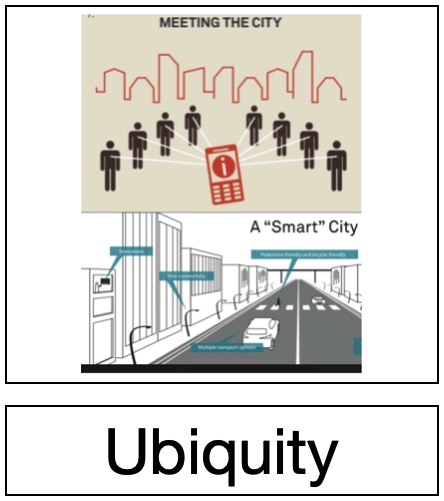
This 21st-century approach to urban growth is at its most sophisticated, and utopian, in so-called “smart cities.” These are built-from-scratch cities that use the “Internet of Things”, where everything, from lamp posts to garbage bins to roads are embedded with microchips and radio frequency transmitters (RFID chips) (http://en.wikipedia.org/wiki/Radio-frequency_identification) to communicate data in real time. By analyzing this data, cities can be responsive to human needs and mitigate problems – improving waste collection and traffic management, reducing crime and pollution. Services can be customized to residents’ needs and liberate them to spend more time on things that matter such as their own health, family, work and hobbies. Examples of these cities include Tianjin Eco-city (tianjinecocity.gov.sg) in China, Masdar (masdar.ae) in Abu Dhabi in the United Arab Emirates and Songdo International Business District (songdo.com) in the Republic of Korea.
These experimental smart cities are springing up in the East, and it will be the East – as well as Africa – that will see most of the action going forward. As the global management consulting firm McKinsey noted in its report Urban World: Mapping the Economic Power of Cities: “Over the next 15 years, the center of gravity of the urban world will move south and, even more decisively, east.”
Cities in the global South will be generating the new prosperity of the 21st century. And it is widely accepted that people living in cities have the potential to become very efficient economically while rapidly driving prosperity higher.
The McKinsey report says that “by 2025, developing-region cities of the City 600 (a list gathered by McKinsey) will be home to an estimated 235 million middle-class households earning more than (US) $20,000 a year at purchasing power parity (PPP).
“Emerging-market mega-and middleweight cities together – 423 of them are included in the City 600 – are likely to contribute more than 45 percent of global growth from 2007 to 2025 (http://www.mckinsey.com/insights/urbanization/urban_world).”
The world’s future prosperity is going to be found in the urban, the digitally connected, and the middle class.
Tracking all this digital change is the UN Global Pulse. UN Global Pulse (unglobalpulse.org) was started by Secretary-General Ban Ki-moon in 2009 with a mandate to study these changes and build expertise in applying Big Data to global development. UN Global Pulse functions as a network of innovation labs where research on Big Data for development is conceived and coordinated. It partners with experts from UN agencies, governments, academia, and the private sector to research, develop, and mainstream approaches for applying real-time digital data to 21st-century development challenges.
Unlike major technological trends of the past, this one is not restricted to the industrialized, developed world. Through the spread of mobile phone technology, billions of people are now using a device that constantly collects digital data, even in the poorest places on earth.
From an international development perspective, Big Data has five characteristics, according to UN Global Pulse: it is digitally generated, passively produced by people interacting with digital services, automatically collected, can be geographically or temporally traced and can be continuously analyzed in real time.
Sources of Big Data include chatter from social networks, web server logs, traffic flow sensors, satellite imagery, telemetry from vehicles and financial market data.
The key to using Big Data is combining datasets and then contrasting them in lots of different ways and doing it very quickly. The purpose? Better decision-making, based on an understanding of what is really happening on the ground.
This data exceeds the capability of existing database software. It is either too much, or comes in too quickly, or can’t be handled using current software technology. Tackling this problem is creating a whole new wave of opportunities for those working in information technology.
As technology and processing power continue to improve, the cost of wrestling with this data and putting it to use is coming down.
The data can be analyzed for patterns and hidden information that before would have been too difficult to gather. This approach has been used by big companies such as WalMart (walmart.com), but it has cost them a large amount of money and time.
Pioneers in Big Data include search engine Google, email and search provider Yahoo, online shopping service Amazon and social media service Facebook. Many supermarkets use Big Data to analyze the way customers behave when they are shopping, combining it with their social and geographical data.
But new developments in hardware, cloud architecture, and open-source software mean Big Data processing is more accessible, including for small start-ups, who can just rent the capacity required on a cloud-based service (http://en.wikipedia.org/wiki/Cloud_computing).
In the past, governments and planners had a ready excuse as to why they could not keep on top of ballooning urban populations and the chaos they brought. They could just throw up their hands and say “We do not know who these people are or what to do about them!”
This excuse does not work in the age of the mobile phone. It is now relatively easy to deploy the power of the networked computing inside mobile phones to map urban slums and identify the needs of the people there. Parse that data, and you have an accurate account of what is happening in the slum – all in real-time.
Making sense of all this information is creating its own new industries as innovators, entrepreneurs and companies step forward to chart this brave new world.
Historically, significant improvements in human development have occurred only after large-scale gathering of data and information on the actual living conditions of the population. For example, prototypes of today’s infographics (http://en.wikipedia.org/wiki/Infographic) – informative visual representations of complex data – were created during the great attempts at tackling poverty and disease in Europe in the 19th century. Today’s masters of this technique include the Swedish doctor, academic and statistician Hans Rosling (gapminder.org), whose dynamic infographics are renowned for changing people’s perceptions of global problems.
UN Global Pulse notes “much of the data used to track progress toward the Millennium Development Goals (MDGs) dates back to 2008 or earlier and doesn’t take into account the more recent economic crisis.
“While this may feed a perception that there is a scarcity of information about the wellbeing of populations, the opposite is in fact true. Thanks to the digital revolution, there is an ocean of data, being continuously generated in both developed and developing nations, that did not exist even a few years ago.”
UN Global Pulse believes Big Data can be used to protect social development gains when crises strike. Rather than undoing decades of good development work and human development achievements, Big Data can help to create agile responses to crisis as it happens.
UN Global Pulse believes the same data, tools and analytics used by business can be turned to help the public sector understand “where people are losing the fight against hunger, poverty and disease, and to plan or evaluate a response.”
Published: June 2014
Resources
1) Big Data: The Next Frontier for Innovation, Competition, and Productivity, Publisher: McKinsey Global Institute. Website: mckinsey.com
2) United Nations Global Pulse: Global Pulse is an innovation initiative launched by the Executive Office of the United Nations Secretary-General, in response to the need for more timely information to track and monitor the impacts of global and local socio-economic crises. The Global Pulse initiative is exploring how new, digital data sources and real-time analytics technologies can help policymakers understand human well-being and emerging vulnerabilities in real-time, in order to better protect populations from shocks. Website: http://www.unglobalpulse.org/
11) Hadoop: Is open source software for handling of large data sets across clusters of computers using simple programming models. Website: http://hadoop.apache.org/
12) Pivotal: Pivotal develops software applications for big data. A testimonial on the Pivotal website sums it up: “With the ability to load a day’s worth of data for a million meters in under fifty (50) seconds, we are able to keep up with the tremendous amount of data generated and start experimenting with many useful smart grid analytics.” Website: gopivotal.com
13) TotallyDot: A way to centralize all the social media people use into a single page. Website: totallydot.com
Development Challenges, South-South Solutions was launched as an e-newsletter in 2006 by UNDP’s South-South Cooperation Unit (now the United Nations Office for South-South Cooperation) based in New York, USA. It led on profiling the rise of the global South as an economic powerhouse and was one of the first regular publications to champion the global South’s innovators, entrepreneurs, and pioneers. It tracked the key trends that are now so profoundly reshaping how development is seen and done. This includes the rapid take-up of mobile phones and information technology in the global South (as profiled in the first issue of magazine Southern Innovator), the move to becoming a majority urban world, a growing global innovator culture, and the plethora of solutions being developed in the global South to tackle its problems and improve living conditions and boost human development. The success of the e-newsletter led to the launch of the magazine Southern Innovator.








 David South Consulting
You must be logged in to post a comment.