Categories
Archive Development Challenges, South-South Solutions Newsletters

Mobile Phone Microscopes to Revolutionize Health Diagnostics

By David SouthDevelopment Challenges, South-South Solutions

SOUTH-SOUTH CASE STUDY

Mobile phone usage has increased hugely across the global South in the past five years. In Africa, the number of mobile phone subscribers reached 545 million in 2013, while there are 3.5 billion mobile phone users in Asia and the Pacific (ITU). Some 93 million people in Africa and 895 million in Asia and the Pacific have mobile phone Internet access (ITU).

“Every day we are moving closer to having almost as many mobile-cellular subscriptions as people on earth,” Brahima Sanou, Director of the ITU Telecommunication Development Bureau, wrote in its latest report on their growth.

The number of mobile phone subscriptions in the developing world has surpassed 5 billion and the number in the world as a whole reached 6.8 billion in 2013 (ITU), out of a world population of more than 7.1 billion. This compares to considerably lower numbers of people with access to the Internet: 2.7 billion in the world (ITU).

While many people in poorer countries have basic versions of mobile phones, the next generation of smartphones has been growing in number as prices come down (http://en.wikipedia.org/wiki/Smartphone). Examples of these smart phones include the BlackBerry, Apple’s iPhone, the Samsung Galaxy, and the Nokia Lumia. Smartphones tend to have enormous computing power and an ability to run complex ‘apps’ or applications – including public transport options, maps, restaurant and store locators, banking services and market information and resources. They can also access the Internet through Wi-Fi, and have camera and video capability.

What people can do with these feature-packed phones is limited by little other than human imagination. With the ability to store large amounts of data and images, using apps that perform a limitless range of services and tasks, smartphones can be deployed as powerful tools to tackle problems.

Science fiction sagas have long fantasized about people being able to walk around with small electronic devices that can do immensely powerful tasks, including being a medical diagnostic tool. But this science fiction dream is rapidly becoming reality in the global South.

Various initiatives and innovators are using mobile phones and smartphones to conduct medical diagnosis and gather data for medical studies in real time.

Some innovations are even turning smartphones into mobile microscopes.

Developed by the University of California, Berkeley in the lab of Professor Daniel Fletcher (http://cellscope.berkeley.edu/), the CellScope (cellscope.com) is capable of turning the camera on a cell (mobile) phone into a diagnostic microscope with a magnification of 5x to 60x. Fletcher’s lab has also pioneered work on needle-free injection technology.

The CellScope can be used for ocular imaging (technologies for visualizing and assessing a range of diseases of the eye) and for detecting tuberculosis, blood-borne diseases and parasitic worms.

Fletcher is a bioengineer and was impressed with how much mobile phone technology has proliferated across the global South.

“You don’t have to put in these copper wires (for phone lines) anymore; you have the (cell) towers. It’s big business,” Fletcher told The Scientist Magazine.

“It’s leaping over the need for infrastructure.”

Fletcher and his colleagues experimented by attaching extra lenses to smartphones. They then used the phone to image cells that had been stained with fluorescent dyes to make them easier to see. The quality of the image was so good, they were able to diagnose malaria from blood samples and tuberculosis from sputum (spit) samples.

With the addition of image analyzing software, the phone was able to automatically count the number of Mycobacterium tuberculosis bacilli. They were trying to prove you did not need conventional microscopes to do this sort of diagnostic work.

Fletcher and his colleagues are currently trialling the technology in Vietnam, India, Cameroon and Thailand.

“Technology alone doesn’t create effective health care,” Fletcher emphasizes. “It’s got to be part of a context in which the information is captured and validated and is analyzed in the right way, and treatments are then available in response to information.”

Another group from Toronto General Hospital in Canada (http://www.uhn.ca/corporate/AboutUHN/OurHospitals/Pages/TGH.aspx) has ‘hacked’ an iPhone smartphone by placing a 1 millimeter ball lens on the phone’s camera. Isaac Bogoch, an infectious disease specialist, had been investigating parasitic worm infections in children on Pemba Island off the coast of Tanzania. Along with Jason Andrews of Massachusetts General Hospital, they had been inspired by a report about how a team of researchers from the University of California, Davis had created a simple microscope out of an iPhone with a 1 millimeter lens. This makeshift microscope was used to take pictures of blood smears at a 350 times magnification and giving a 1.5 micron resolution.

“We thought that was a great idea,” Bogoch told The Scientist Magazine. Bogoch regularly works as part of an international team around the world, often in remote locations.

“We thought … we could take it to the field and see if it accurately works in a more real-world setting.”

Inspired, Bogoch got together with his colleagues and created a similar microscope with a 3 millimeter ball lens and then got to work using it to identify soil-transmitted helminth eggs in stool samples in Tanzania. When examining the stool samples of 199 children in a clinical trial using the makeshift microscope, they were able to accurately identify helminth infections in 70 per cent of the cases. They also found the iPhone microscope did very well at spotting eggs of particular parasites, such as 80 per cent of Ascaris lumbricoides infections (http://en.wikipedia.org/wiki/Ascaris_lumbricoides). The success rate dropped significantly, however, when trying to detect whipworm parasites (just over half) and hookworm infections (14 per cent).

But this is early days and an experiment: “Obviously the results aren’t perfect and there’s definitely room for improvement,” Bogoch admits.

What stands out is the potential to completely revolutionize health care by continuing to develop the capability of smartphones. With their portability and low cost, they also have the advantage of not needing a trained physician to operate them, according to David Walker, president of the American Society of Tropical Medicine and Hygiene, in The Scientist Magazine.

One of the many advantages of combining a microscope with a digital smartphone is the ability to take a picture and send it straight away to someone to make a diagnosis.

Even more exciting, Sebastian Wachsmann-Hogiu at the University of California, Davis (http://cbst.ucdavis.edu/people/sebastian/) is adapting mobile phones to undertake spectroscopy (http://en.wikipedia.org/wiki/Spectroscopy), using diagnostic test software to analyze samples on the spot. This, when successful, would be akin to the capabilities first mooted in the science fiction television and film series Star Trek (startrek.com). In Star Trek, the doctor is able to use a small handheld digital device to quickly diagnose what ails somebody.

The potential for this technology in the global South is significant. Aydogan Ozcan at the University of California, Los Angeles, who is also working on mobile phone microscopes, believes this is as significant as the dawn of the personal computer: “If you look at the early computers, they were bulky, they were extremely expensive,” he says.

But now computers “are portable … and almost anyone can afford them. The same thing is going on today (with microscopy). We are miniaturizing our micro- and nano-analysis tools. We’re making them more affordable; we’re making them more powerful.”

It looks like this science fiction dream will soon become today’s reality.

Published: July 2013

Resources

1) World Telecommunication/ICT Indicators Database. Website: http://www.itu.int/en/ITU-D/Statistics/Pages/stat/default.aspx

2) HealthMap: HealthMap was founded in 2006 by a team of researchers, epidemiologists and software developers at Boston Children’s Hospital. It is an established global leader in utilizing online informal sources for disease outbreak monitoring and real-time surveillance of emerging public health threats. Website: http://www.healthmap.org/en/

3) A home-made portable microscope: A design developed in the 1970s by Chinese students who fashioned a microscope from a plastic bottle. Website: http://www.microscopy-uk.org.uk/mag/indexmag.html?http://www.microscopy-uk.org.uk/mag/artjul00/awscope.html

4) Ways to make simple homemade microscope lenses. Website: http://www.microscopy-uk.org.uk/mag/indexmag.html?http://www.microscopy-uk.org.uk/mag/artoct07/jd-lens.html
Creative Commons License

This work is licensed under a
Creative Commons Attribution-Noncommercial-No Derivative Works 3.0 License.

ORCID iD: https://orcid.org/0000-0001-5311-1052.

© David South Consulting 2023

Categories
Archive Development Challenges, South-South Solutions Newsletters

Small Fish Farming Opportunity Can Wipe Out Malnutrition

By David SouthDevelopment Challenges, South-South Solutions

SOUTH-SOUTH CASE STUDY

Pioneering work to boost diets across the global South is turning to the smallest of fish. While small in size, tiny fish are packed with nutrition when eaten whole, as they are in many cultures. Often these fish come packed with vitamin A, iron, zinc, calcium, protein and essential fats – all necessary elements to eradicate malnutrition and hidden hunger, especially among women and children.

It is estimated that 684,000 child deaths worldwide could be prevented by increasing access to vitamin A and zinc (WFP).

Iron deficiency is the most prevalent form of malnutrition worldwide, affecting an estimated 2 billion people. Iron deficiency is impairing the mental development of 40 to 60 per cent of children in developing countries (UNICEF). The World Health Organization says that eradicating iron deficiency can improve national productivity levels by as much as 20 percent.

Vitamin A deficiency affects approximately 25 per cent of the developing world’s pre-schoolers. It is associated with blindness, susceptibility to disease and higher mortality rates, and leads to the death of approximately 1 to 3 million children each year (UN).

This devastating evidence shows the need to find effective food solutions to eradicate these nutrient deficiencies. Access to affordable nutrient-rich food is also key to social and political stability. Already, there is serious unrest in many countries around the world because of food-price inflation.

Finding ways to boost nutritional health that are sustainable, low-cost and do not require substantial use of resources will have the best success in the poorest areas.

A number of studies suggest one solution may be eating more small fish. In many countries, these species are eaten as part of the diet, but often not in large enough quantities to address hunger and malnutrition. Small fish species are a remarkable food source because they are usually eaten whole, bringing greater nutritional benefits.

Small fish have a long history in human diets. Anchovies (http://en.wikipedia.org/wiki/Anchovy) are used  in many cuisines, for example.

A study conducted between 2010 and 2013 in Bangladesh and Cambodia by Dr. Shakuntala Haraksingh Thilsted, Senior Nutrition Adviser to WorldFish (worldfishcenter.org), found that the eating of small fish in both countries gave a significant boost to daily diets and massively improved nutrition and health. The project, called Linking Fisheries and Nutrition: Promoting Innovative Fish Production Technologies in Ponds and Wetlands with Nutrient-dense Small Fish Species, was supported by the International Fund for Agricultural Development.

People in both countries still currently suffer from undernutrition and micronutrient deficiencies.

In rural areas of Bangladesh and Cambodia it found 50 to 80 per cent of total fish consumed were small fish. The quantities consumed during each meal were small but they occurred in diets frequently. Typically, they were eaten whole, with the head, viscera (internal organs) and bones consumed. This meant consuming small fish packed a punch, giving the eater a dose of calcium, vitamin A, iron and zinc.

More specifically, the study found the iron-rich Mekong flying barb (Esomus longimanus) (http://www.iucnredlist.org/details/169546/0) – eaten as part of a meal of rice and sour soup with its head intact in Cambodia – could provide 45 per cent of the daily iron requirement for a woman.

Malnutrition is also a serious problem in Bangladesh. Half the population lives below the poverty line and diets are poor in delivering necessary vitamins and minerals. This is damaging to peoples’ physical and mental health.

The study found existing fish aquaculture methods in Bangladesh were inefficient. But new technologies provide an opportunity to increase the quantity of fish harvested and increase household incomes. By using highly efficient low-risk polyculture systems – basically combining small, nutrient-dense fish with high-value fish such as carp or freshwater prawn – it is possible to significantly increase the quantity of fish produced.

Another one of the new techniques includes increasing pond depth, which conserves broodfish (http://en.wikipedia.org/wiki/Broodstock). Broodfish are the mature fish used for the production of eggs or sperm and are also called spawners.

The study estimated a production of 10 kilograms per pond per year of fish spread across the 4 million small ponds in Bangladesh has the potential to meet the recommended dietary intake for 6 million children in the country.

The work in Bangladesh to boost the production of small fish has inspired similar initiatives in Sunderbans, West Bengal, India and in Terai, Nepal. Initiatives in Cambodia and Kenya have also developed meals for young children by combining powdered rice or maize with small fish.

And in Africa, some are calling for more use of aquaculture as an alternative to dwindling fish sources. For sub-Saharan Africans, fish can make up 22 per cent of the protein in their diet.

As populations on the continent quickly rise, marine fisheries are beginning to be over-exploited. The Food and Agriculture Organization of the United Nations and WorldFish are calling for an aquaculture revolution on the continent to move away from the old approach of just using ponds located on farms. To make a real impact, both organizations argue, there needs to be a partnership between smallholder farmers and others to build a commercial fish farming sector.

“Per capita fish supplies in Africa are dwindling,” Malcolm Beveridge, director for aquaculture at WorldFish, one of the 15 CGIAR research centers (Consultative Group on International Agricultural Research) (http://www.cgiar.org/cgiar-consortium/research-centers/), that generate and disseminate knowledge, technologies, and policies for agricultural development. “In Malawi, they fell from 10 kilograms to 6 kilograms per person between 1986 and 2006. Aquaculture has the potential to increase supplies of this affordable nutritious food for poor and vulnerable consumers,” he told The Guardian.

Published: July 2013

Resources

1) Scaling Up Nutrition: Scaling Up Nutrition, or SUN, is a unique movement founded on the principle that all people have a right to food and good nutrition. It unites people – from governments, civil society, the United Nations, donors, businesses and researchers – in a collective effort to improve nutrition. Website: http://scalingupnutrition.org/

2) The WorldFish Center: WorldFish, a member of the CGIAR Consortium, is an international, non-profit research organization dedicated to reducing poverty and hunger by improving fisheries and aquaculture. Website: http://www.worldfishcenter.org/

3) Bangladesh Shrimp and Fish Foundation: Bangladesh Shrimp and Fish Foundation (BSFF) is a non-profit private research and advocacy organization created through a USAID project. Website: http://www.shrimpfoundation.org/

4) Aquaculture for the Poor in Cambodia – Lessons Learned: The project was implemented by the WorldFish Center with financial support from the Ministry of Foreign Affairs (Government of Japan). Website: http://www.worldfishcenter.org/resource_centre/WF_2769.pdf

5) Global Aquatics: The website design is a bit dated but it is packed with the basics on aquaculture. Website: http://growfish.com/

6) Practical Action: Extensive resources are available on aquaculture and farming fish, including experience and techniques from the global South. Website: http://practicalaction.org/farming-fish-and-aquaculture

7) Preserving fish safely: Tips on the top ways to preserve fish from the University of Minnesota. Website: http://www1.extension.umn.edu/food/food-safety/preserving/meat-fish/preserving-fish-safely/

8) Preserving food techniques: Many inventive ways to preserve food, from wild game to fish to vegetables and fruits. Website: http://www.thenewsurvivalist.com/food_preservation_techniques.html

9) Ugandan fish sausages enterprise: A pioneering business started by a young businesswoman. Website: http://katifarms.org/

https://davidsouthconsulting.org/2022/11/21/agribusiness-food-security/

https://davidsouthconsulting.org/2021/06/04/an-innovators-big-chicken-agenda-for-africa/

https://davidsouthconsulting.org/2022/02/10/food-inflation-ways-to-fight-it/

https://davidsouthconsulting.org/2021/03/05/southern-innovator-issue-3/

https://davidsouthconsulting.org/2021/09/16/ugandan-fish-sausages-transform-female-fortunes/

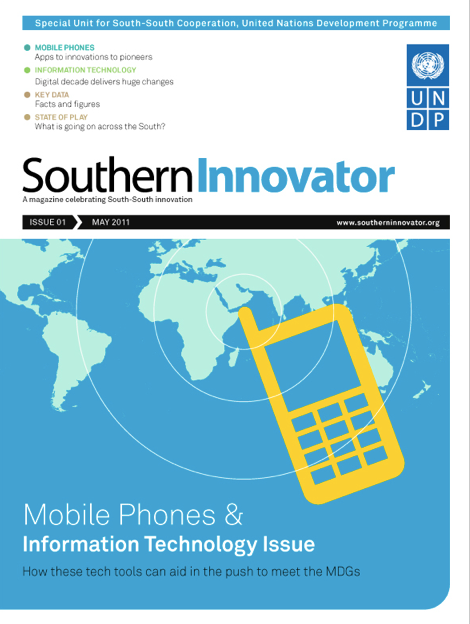
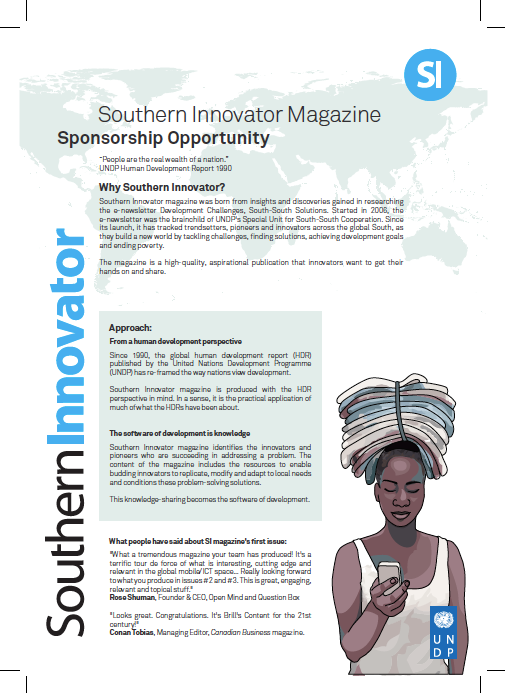
Development Challenges, South-South Solutions was launched as an e-newsletter in 2006 by UNDP’s South-South Cooperation Unit (now the United Nations Office for South-South Cooperation) based in New York, USA. It led on profiling the rise of the global South as an economic powerhouse and was one of the first regular publications to champion the global South’s innovators, entrepreneurs, and pioneers. It tracked the key trends that are now so profoundly reshaping how development is seen and done. This includes the rapid take-up of mobile phones and information technology in the global South (as profiled in the first issue of magazine Southern Innovator), the move to becoming a majority urban world, a growing global innovator culture, and the plethora of solutions being developed in the global South to tackle its problems and improve living conditions and boost human development. The success of the e-newsletter led to the launch of the magazine Southern Innovator.  

Follow @SouthSouth1

Google Books: https://books.google.co.uk/books?id=D_A1VeiJWycC&dq=development+challenges+november+2012&source=gbs_navlinks_s

Slideshare: http://www.slideshare.net/DavidSouth1/development-challenges-november-2012-issue

Southern Innovator Issue 1: https://books.google.co.uk/books?id=Q1O54YSE2BgC&dq=southern+innovator&source=gbs_navlinks_s

Southern Innovator Issue 2: https://books.google.co.uk/books?id=Ty0N969dcssC&dq=southern+innovator&source=gbs_navlinks_s

Southern Innovator Issue 3: https://books.google.co.uk/books?id=AQNt4YmhZagC&dq=southern+innovator&source=gbs_navlinks_s

Southern Innovator Issue 4: https://books.google.co.uk/books?id=9T_n2tA7l4EC&dq=southern+innovator&source=gbs_navlinks_s

Southern Innovator Issue 5: https://books.google.co.uk/books?id=6ILdAgAAQBAJ&dq=southern+innovator&source=gbs_navlinks_s

This work is licensed under a Creative Commons Attribution 4.0 International License.

ORCID iD: https://orcid.org/0000-0001-5311-1052.

© David South Consulting 2023