Categories
Archive Development Challenges, South-South Solutions Newsletters

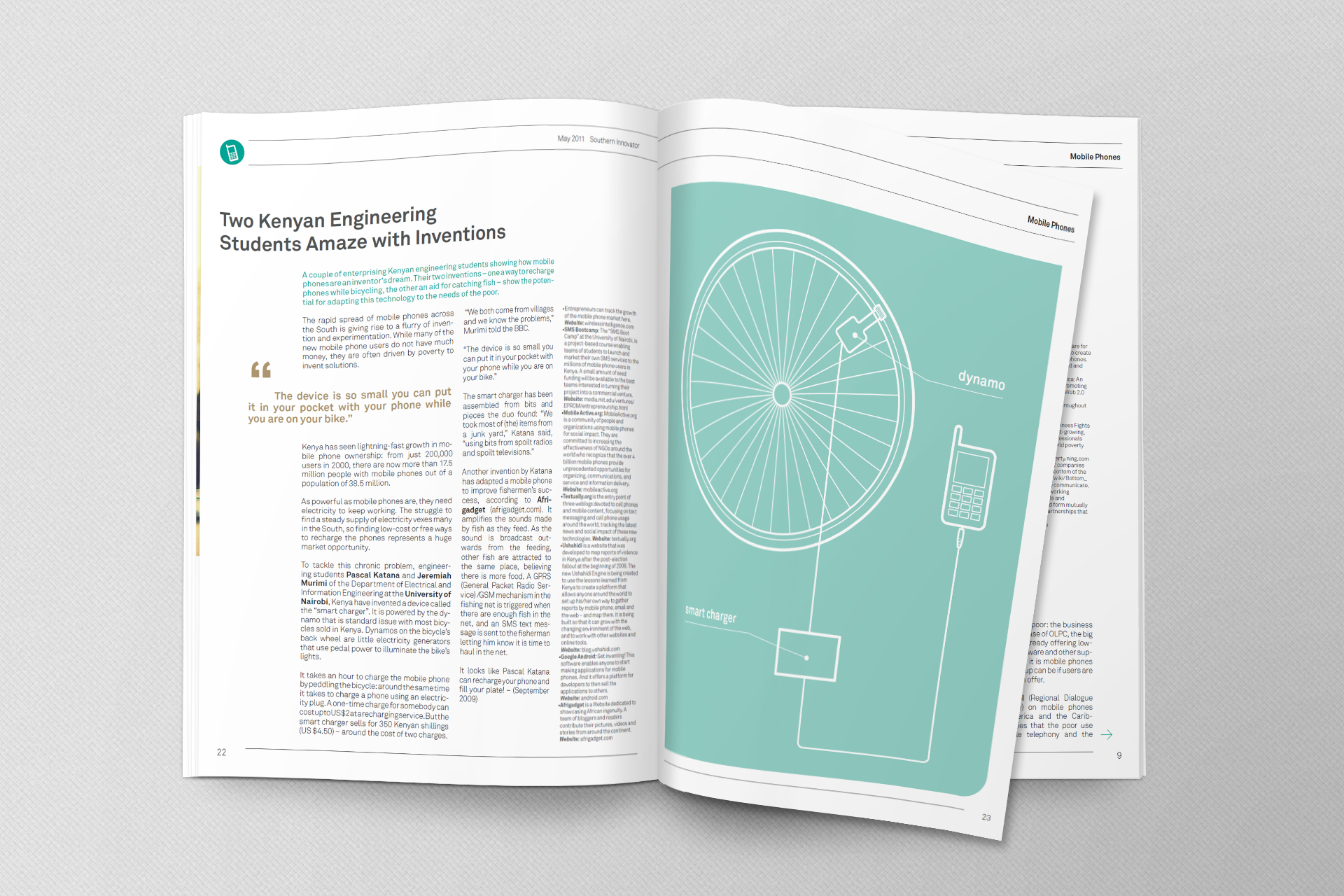
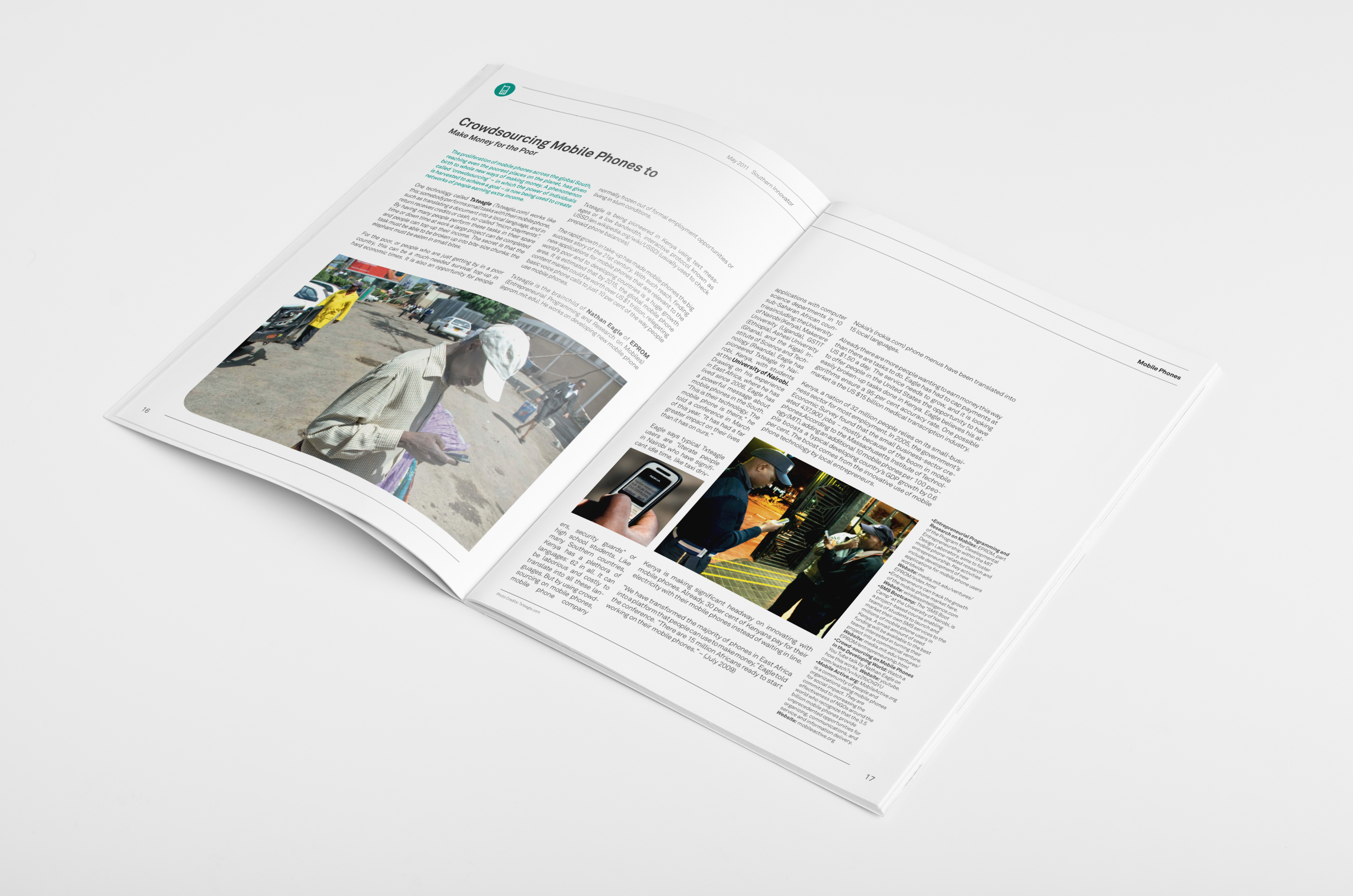
Innovative Mobile Phone Applications Storm South

By David SouthDevelopment Challenges, South-South Solutions

SOUTH-SOUTH CASE STUDY

The pace of change in information technology in the South is impressive, and nowhere has it been more rapid than in the take-up of mobile phones. In the past three years China has become the world’s largest exporter of information and communications technology (ICT), and home to the same number of mobile-phone users (500 million) as the whole of Europe. According to India’s telecoms regulator, half of all urban dwellers now have mobile- or fixed-telephone subscriptions and the number is growing by eight million a month. In Tanzania, mobile phone use grew by 1,600 percent between 2002 and 2008. In Nigeria it grew by almost 7,000 percent over six years, from 5 percent of the population 140 million in 2002, to a predicted 34.3 percent by the first quarter of this year.

But it is the Philippines that has become a global leader in mobile phone commerce. A whole panoply of banking tasks can now be done by mobile phone: transferring funds from one person to another, making small purchases, or paying fees.

“The most significant lesson learned so far,” said Shawn Mendes, lead author on a report titled The Innovative Use of Mobile Applications in the Philippines Lessons for Africa. “Is that m-Banking, rather than more altruistic applications such as m-Health and m-Education, has delivered the greatest benefits to people in developing countries.”

Access to basic banking services is vital for the world’s poor: The Consultative Group to Assist the Poor (CGAP) found that over 3 billion poor people lack access to even the most minimal banking services to manage their lives.

But mobile phones have come to the rescue as the fastest growing consumer product in history. Portio Research estimates that between 2007 and 2012 the number of mobile subscribers will grow by another 1.8 billion, mostly in emerging economies like India and China.

The Philippines is not alone in introducing so-called m-Banking (mobile phone banking) Africa’s leaders include the Democratic Republic of the Congo (CelPay), Kenya (M-PESA), South Africa (MTN MobileBanking and WIZZIT) and Zambia (CelPay).

“Safari-Com’s M-Pesa in Kenya has grown rapidly from start-up in early 2007 to well over 1 million accounts today,” said Mendes, the report author. “In May of this year Vodacom launched M-Pesa in Tanzania for their 4 million subscribers in that country. I expect very rapid growth of this service in Tanzania where less than 10 per cent of the adult population have conventional bank accounts. There are numerous other examples such as CelPay in Zambia and the Congo but I have been watching the success of M-Pesa in East Africa most closely.”

But the Philippines has taken m-Banking the furthest, with two great models for other countries: G-Cash and Smart Money. And the country has shown that it is possible to make these services attractive to the poor, not just the wealthy.

A combination of a good regulatory environment and an atmosphere of innovation brought mobile phone costs down, and made this possible. The mobile phone innovations were also successful because they mimicked existing consumer habits of the poor, piggy-backing on the extensive retail network of small village shops or “sari sari” stores. Poor Filipinos usually buy “tingi” or “sachets” of products like shampoo, fish sauce or soap. And it is in these shops that credit top-up centres were set up and prepaid phone cards sold.

Cleverly, mobile phone operators in the Philippines at first offered free SMS (short message service) text messaging. This was key to how m-Banking took off. As Smart Money’s Napoleon Nazareno said: “there must be an existing SMS habit.”

This should bode well for Africa, where an SMS habit has taken hold because it is so much cheaper than voice calls. Another important habit was prepayment. People learned how to use prepay cards, call numbers and how to enter codes into phones to purchase credits. They learned how to check their credit balance and to electronically load credit on to their phone. This habit made m-Commerce much easier and fuelled its growth.

In South Africa, m-Banking services are revolutionizing daily life. Hair salon owner Andile Mbatha in Soweto used to have to travel for two hours by minibus to a bank to send money to his relatives. But by setting up a bank account with a service called Wizzit, he no longer needs to keep stacks of cash in his salon (and risk robbery), can send money to his sister in Cape Town by phone, and receive payment for hair cuts by phone from his customers. “This has taken out a lot of stress,” said Mr Mbatha.

For Southern entrepreneurs looking to get the most from mobile phones, another recent development will help. Mobile phone companies are following developments with computers and turning away from using only proprietary software, to allowing open source software. Over the next six months, this will mean small-scale entrepreneurs can get in on making applications for mobile phones on a massive scale. Two software companies are now involved: Symbian, which provides the operating system for most of the new generation mobile phones with web access, and Google’s Android open source operating system for mobiles. In Sub-Saharan Africa and East Africa, these applications will help to bypass the lack of internet bandwidth.

In India, poor rural farmers are using mobile phone text messaging to get an advantage over the commodity markets. With so-called “agflation” and “rising prices for food ” it is crucial farmers keep on top of fluctuating commodity prices. Over 250 million Indians rely on farming for survival. But the pressure on farmers is severe and suicide rates are high.

Banana farmer Kapil Jachak is using a text messaging service to get the latest on the weather and daily market prices. The service, Reuters Market Light, costs a dollar a month. It’s a for-profit business venture by the global business news service, but helps farmers make money too. It already has 15,000 customers signed up.

This market knowledge gives the farmers a huge advantage when they compete with the traders in the wholesale markets of the city of Pune. “By getting the weather reports we can see exactly how much water our banana plants need,” said Kapil to the BBC. “I keep my cost down, and get the best crop I can.”

“This has increased my profit. I don’t have to make some headache, and go to any market, any shopkeepers, and wholesalers. I can do my marketing easily and get more and more money.” The service has already armed him with the knowledge to fight off banana stem weevils when they were attacking crops. The text recommended a pesticide.

Published: July 2008

Resources

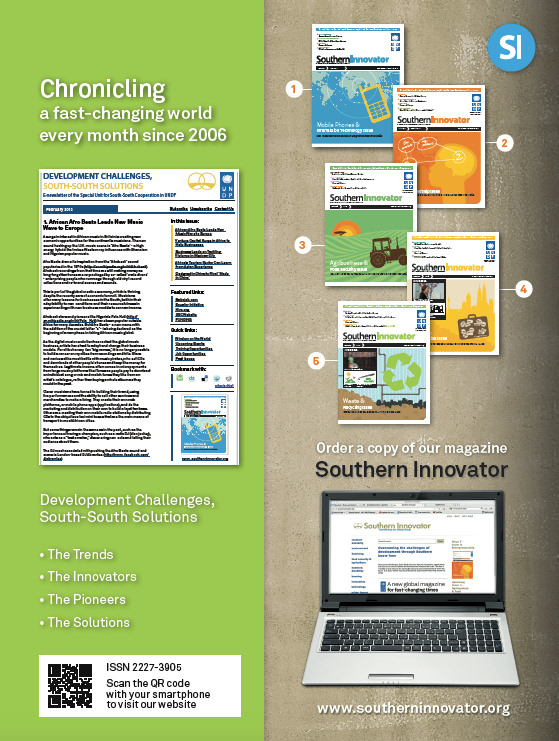
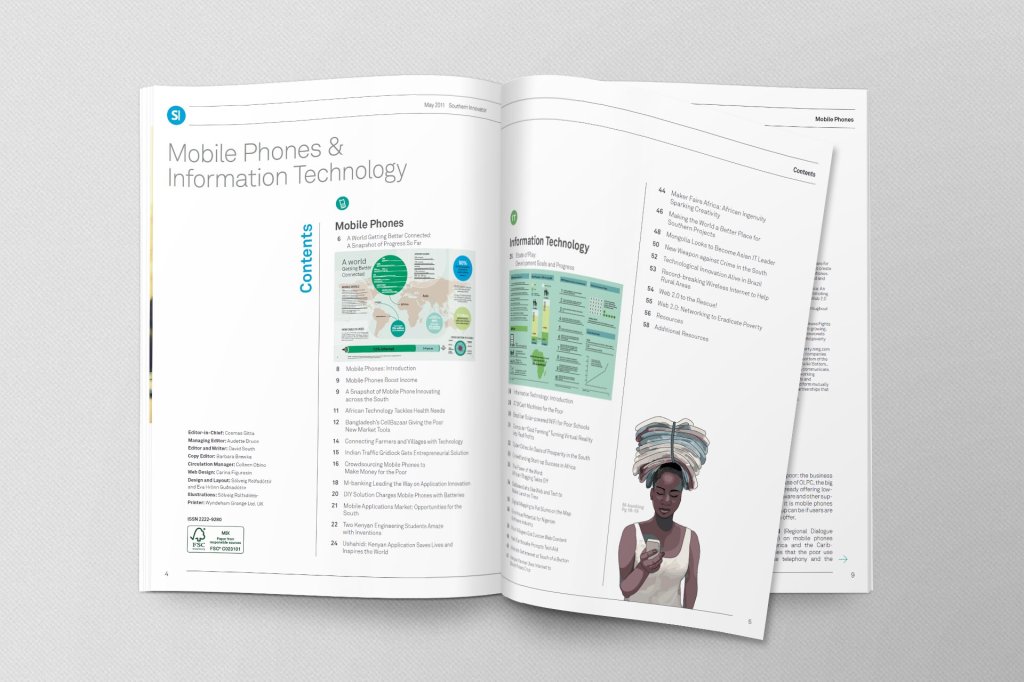
Development Challenges, South-South Solutions was launched as an e-newsletter in 2006 by UNDP’s South-South Cooperation Unit (now the United Nations Office for South-South Cooperation) based in New York, USA. It led on profiling the rise of the global South as an economic powerhouse and was one of the first regular publications to champion the global South’s innovators, entrepreneurs, and pioneers. It tracked the key trends that are now so profoundly reshaping how development is seen and done. This includes the rapid take-up of mobile phones and information technology in the global South (as profiled in the first issue of magazine Southern Innovator), the move to becoming a majority urban world, a growing global innovator culture, and the plethora of solutions being developed in the global South to tackle its problems and improve living conditions and boost human development. The success of the e-newsletter led to the launch of the magazine Southern Innovator. 
Creative Commons License

This work is licensed under a
Creative Commons Attribution-Noncommercial-No Derivative Works 3.0 License.

ORCID iD: https://orcid.org/0000-0001-5311-1052.

© David South Consulting 2022

Categories
Archive Development Challenges, South-South Solutions Newsletters

Small-scale Farmers Can Fight Malaria Battle

By David SouthDevelopment Challenges, South-South Solutions

SOUTH-SOUTH CASE STUDY

Malaria is one of Africa’s biggest killers. Each year globally 300 to 500 million people are infected, and around 1 million die from the disease (theglobalfund). Ninety percent of malaria deaths occur in sub-Saharan Africa – mostly to children under the age of five. The disease costs African countries US$12 billion a year in lost gross domestic product.

Malaria is a parasitic disease – the parasite plasmodium – transmitted by mosquito bites. Symptoms include fever, headache and vomiting. Internal bleeding, kidney and liver failure may follow and can result in coma and death.

The most common and effective treatment, recommended by the World Health Organization, is artemisinin-based combination therapies, known as ACTs. ACTs have low toxicity, few side effects and act rapidly against the parasite. Research shows that artemisinin remedies cure 90 percent of patients within three days.

But there are far fewer doses available than people who need them. WHO has claimed the quantity made available by pharmaceutical companies falls far short of the more than 130 million doses required to combat malaria throughout the world.

And ACTs are very expensive to deliver: in just one country, Tanzania, providing such therapy for three years would cost US $48.3 million. Every year, this would account for 9.5 percent of Tanzania’s health budget, and 28.7 percent of yearly spending on medical supplies: a six-fold increase in budget for malaria treatment (Malaria Journal 2008, 7:4).

But a cheap alternative to the expensive pill form of the treatment is being piloted across Africa. It involves the drinking of a tea made from the bushes of the artemisia plant. Artemisia annua is an annual shrub and the active ingredient in the pills (artemisinin). It is native to China and Vietnam and has been used for 2,000 years to treat fevers.

Bushes cultivated by farmers in Kenya, Malawi, Tanzania, Zambia, Zimbabwe and Mozambique under the supervision of the World Agroforestry Centre in Nairobi, Kenya, are helping to bring down malaria rates without the long wait for the pills to arrive.

The leaves are boiled and made into a tea. Drinking the tea gives a high enough dose of artemisinin in the blood to cure malaria. Helen Meyer, a nurse operating nine mobile health clinics in rural Mozambique, is using the bitter tea made from the dried leaves. Even in treating drug resistant malaria, she has found the artemisia tea effective: “If you drink the tea, you feel better after the first day. Other medicines take a few days.”

A special hybrid of artemisia, A-3, is used because it is adapted for warmer climates. The wild variety grows to only five centimetres in the tropics, but A-3 grows to three metres and packs 20 times more artemisinin. It is also highly economical: thousands of plants can come from a single stem.

The daily adult dose of anti-malaria tea just needs five grams of dried A-3 leaves in one litre of water. The tea is drunk every six hours for seven days. Each plant produces 200 grams of dried leaves, and a thousand shrubs can cure 5,700 people. Since it is a cheap cure, money can be spent instead on other things. Farmers are also able to supplement their income by growing the bushes. And the dried leaves have long-lasting power: even after three years the leaves retain close to a 100 percent of their artemisinin.

Access to authentic artemisinin is critical: it is estimated 16 percent of malaria medicines in Kenya are counterfeit. Elsewhere, the proliferation of counterfeit anti-malarials substantially raises the risk of the emergence of resistance to artemesinin combination therapy, the last truly effective treatment against malaria. Past misuse of other malaria drugs, such as chloroquine in the 1980s and sulphadoxine/pyrimethamine in the 1990s, resulted in the malaria parasite becoming resistant. Hundreds of thousands of people in malaria-prone areas may have died as a result.

The World Agroforestry Centre, recognizing potential problems with artemesinin monotherapies, is working to combine it with indigenous herbal remedies made from other anti-malarial trees, producing a herbal combination therapy (HCT).

“I used to grow fruits and beans here,” said Charles Kiruthi, a Kenyan farmer, to the IRIN news service. “but I will get a better return from this plant. No pests attack it, and until harvesting time it requires very little labour.”

“I expect to get a good return, and I am also very happy to be helping fight malaria,” continued Kiruthi. “I recently lost two friends to the disease, and my child gets sick with malaria sometimes.”

Published: July 2008

Resources

Development Challenges, South-South Solutions was launched as an e-newsletter in 2006 by UNDP’s South-South Cooperation Unit (now the United Nations Office for South-South Cooperation) based in New York, USA. It led on profiling the rise of the global South as an economic powerhouse and was one of the first regular publications to champion the global South’s innovators, entrepreneurs, and pioneers. It tracked the key trends that are now so profoundly reshaping how development is seen and done. This includes the rapid take-up of mobile phones and information technology in the global South (as profiled in the first issue of magazine Southern Innovator), the move to becoming a majority urban world, a growing global innovator culture, and the plethora of solutions being developed in the global South to tackle its problems and improve living conditions and boost human development. The success of the e-newsletter led to the launch of the magazine Southern Innovator. 

Creative Commons License

This work is licensed under a
Creative Commons Attribution-Noncommercial-No Derivative Works 3.0 License.

ORCID iD: https://orcid.org/0000-0001-5311-1052.

© David South Consulting 2023

Categories
Archive Development Challenges, South-South Solutions Newsletters Southern Innovator magazine

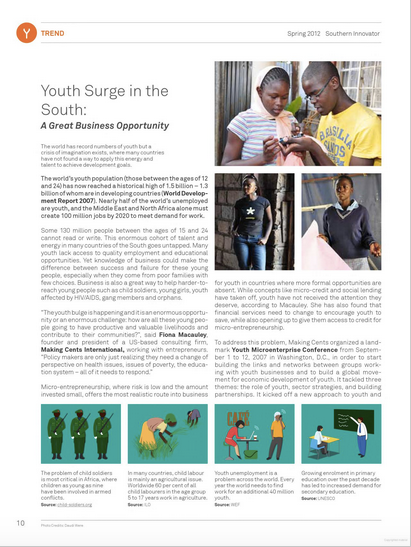
Urban Youth: A Great Source of Untapped Growth

By David SouthDevelopment Challenges, South-South Solutions

SOUTH-SOUTH CASE STUDY

The world’s growing urbanization means that a whole generation of youth will have a dramatically different life than their parents. The world’s 3.3 billion urbanites now outnumber rural residents for the first time (UNFPA’s State of the World Population 2007 Report). And the vast majority live in slums or periurban areas, places of sprawl, where public services are poor and housing conditions unhealthy. Most young people working in the urban informal sector live in slum areas: for example, 75 per cent in Benin in Africa, and 90 per cent in Burkina Faso, the Central African Republic, Chad and Ethiopia. Most of this work is just bare survival work: according to the International Labour Organization, approximately 85 per cent of all new employment falls into this category.

Getting youth into quality work and earning more than enough simply to survive is critical to building a healthy society. Young people are bombarded every day with good and bad influences, and as UNFPA found in its Youth Supplement: Growing Up Urban, “the interactions with the urban environment can have an intense impact on the socialization of young people, exposing them to a multitude of influences as they develop, experiment, question, and assume roles in their societies.”

It is predicted that over the next 10 years, 1.2 billion youths will enter the working-age population (UNFPA). But youth unemployment is a huge problem around the world. Unemployed young people make up almost half (43.7 per cent) of the world’s total unemployed (UNFPA). Young people aged 15 to 19 are more than three times as likely to be unemployed as adults. Young people are the future, a resource no society can afford to waste. If their innate energy and enthusiasm is tapped, countries can see significant economic growth.

There are youth entrepreneurs who are defying the gloom and coming up with great business ideas. Five finalists for BBC Swahili’s regional entrepreneur competition – Faidika na BBC (Prosper with the BBC) – offer inspiration for youth across the South. Finalists from Burundi, Kenya, Rwanda, Tanzania and Uganda were selected for their bright schemes.

The overall winner was 24-year-old Burundian student Ashura Kisesa for a plan to build commercial public toilets in the cities and towns of East and Central Africa. Ashura, who entered but failed to reach the Faidika na BBC finals last year, has 12 brothers and sisters and is studying for a degree in agronomy at Burundi University.

“I am very happy to win the top prize in this competition,” she told the BBC. “The lack of public toilets throughout East and Central Africa is a major problem that needs to be addressed and I hope to make a difference with my business idea. My whole family wanted me to win and they really supported me which makes me especially proud. I cannot wait to get started with my business.”

On June 26 in Kampala, Uganda, Kisesa was awarded US $5,000 to put towards her business.

Kenyan national winner, 22-year-old Witness Omoga from Kakamega, wants to make identity cards for schools. Right now he works as a volunteer at his uncle’s photo studio, and hopes to get into Makerere University to pursue a degree in computer science. “I am very excited,” he said to the BBC. “I have never been number one in my life, but now I have emerged first in this competition.”

The Rwandan winner is a pioneer in the growing field of biomass energy production. A 17-year-old student from Kigali, Rangira Aime Frederick, impressed the panel of judges with his idea to turn domestic waste into energy. The national winner for Tanzania is a private tutor from Dar es Salaam, Apolinary Joseph Laksh. A business education tutor, 23-year-old Apolinary’s idea is to produce charcoal from recycled materials to offer people in rural areas sustainable and affordable cooking fuel.

Ugandan finalist, 23-year-old Dereick Kajukano, is in his last year at Kampala International University doing a degree in business administration. Dereick’s business idea is to make bags out of plastic trash. He was inspired by last year’s Faidika na BBC winner, David Ssegawa from Uganda: “When I heard him defend his proposal on air, I said to myself, why don’t I do it as well. That’s when it all started, and here I am.”

Published: July 2008

Resources

  • 2008 Global Youth Enterprise Conference: Designed as a participatory learning event, this conference aims to support youth enterprise and entrepreneurship programs and policies achieve greater effectiveness around the world.
    Website: www.youthenterpriseconference.org
  • KickStart is a South African project aimed at inculcating a culture of entrepreneurship among young people between the ages of 18 and 35, by promoting business awareness through training, providing grants as start-up capital and providing mentorship and assistance during the setting up phase of the business.
    Website: http://www.sabkickstart.co.za/
  • iDISC – the infoDev Incubator Support Center – is a virtual networking and knowledge-sharing platform for incubators and technology parks leveraging ICT to facilitate entrepreneurship and new business creation in developing countries.
    Website: http://www.idisc.net/en/Index.html
  • Climate Capital Network: this company offers strategic advice, intelligence and assistance with fundraising for low-carbon solutions around the world. They have 2,000 investors looking for projects to invest in.
    Website: http://www.climatecapital.net/
  • Global Entrepreneurship Week: the website for this event in November has many opportunities for youth entrepreneurs to connect with each other through social networking websites.
    Website: http://unleashingideas.org/welcome

Follow @SouthSouth1

Google Books: https://books.google.co.uk/books?id=waeXBgAAQBAJ&dq=Development+Challenges+February+2008&source=gbs_navlinks_s

Slideshare: http://www.slideshare.net/DavidSouth1/development-challengessouthsouthsolutionsfebruary2008issue

Southern Innovator Issue 1: https://books.google.co.uk/books?id=Q1O54YSE2BgC&dq=southern+innovator&source=gbs_navlinks_s

Southern Innovator Issue 2: https://books.google.co.uk/books?id=Ty0N969dcssC&dq=southern+innovator&source=gbs_navlinks_s

Southern Innovator Issue 3: https://books.google.co.uk/books?id=AQNt4YmhZagC&dq=southern+innovator&source=gbs_navlinks_s

Southern Innovator Issue 4: https://books.google.co.uk/books?id=9T_n2tA7l4EC&dq=southern+innovator&source=gbs_navlinks_s

Southern Innovator Issue 5: https://books.google.co.uk/books?id=6ILdAgAAQBAJ&dq=southern+innovator&source=gbs_navlinks_s

Creative Commons License

This work is licensed under a
Creative Commons Attribution-Noncommercial-No Derivative Works 3.0 License.

ORCID iD: https://orcid.org/0000-0001-5311-1052.

© David South Consulting 2023