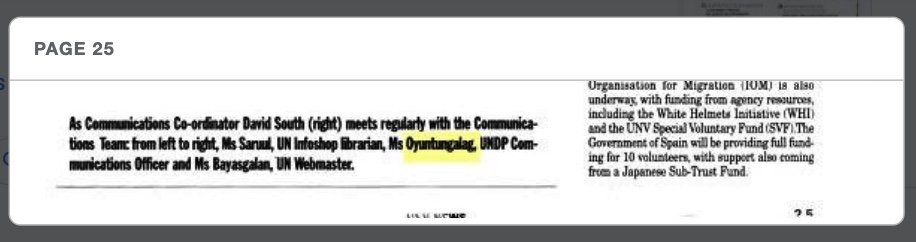
Bonn, Germany: “The training allows us to learn about western theories of journalism,” says Mr. Nyamjav, editor of the Erkh Choloo (Freedom) newspaper. A UNDP project in Mongolia has brought journalists from Ulaanbaatar, Mongolia’s capital, to run an investigative journalist training programme for their colleagues in the rural community of Moron. The programme introducing investigative journalism to students consists of a workshop and various field assignments. Here, I report on day two of the training.
9:00 a.m.
Eleven student journalists and the two trainers, Ms Oyunsetseg and Mr. Batbold from the Press Institute of Mongolia, quickly run through the day’s schedule. The journalists will spend the next two hours interviewing subjects for their stories. All the journalists say this is the first time they’ve explored in detail this sub-category of journalism. Not all the students are experienced journalists, but this is made up for by the quality of the two facilitators, both of whom keep the workshop lively.
11:30 a.m.
The debate begins over the choice of stories. One team has chosen to look at poverty alleviation projects at the Bak (local government) level. They want to write a story looking at poor accountability for loans, the practice of nepotism and the ability of recipients to start small businesses. The team investigating power black-outs wants to conduct further interviews with the poorest people affected by such interruptions.
4:00 p.m.
Back at the offices of the Erkh Choloo newspaper, editor Nyamjav discusses the week’s news with his graphic designer. The skills of the staff impress me. While they have only one computer and barren offices, the paper won an award from the Press Institute for being the best local paper in 1997. The newspaper will be cut off from local government subsidies for printing at the end of this year and is already making plans to find other sources of revenue. Nyamjav is pleased with the results of the UNDP project, saying: “It has noticeably changed our stories – I know how to criticise reporters and push them to be more investigative.”
8:30 p.m.
Outside Ulaanbaatar a petrol shortage has hit hard. At a Moron filling station drivers patiently wait for new supplies to arrive or to receive their ration. Not only is there no fuel, there is also no electricity. On a field assignment the journalists investigating the power black-outs interview Mr. Sukhbaatar the power station director who says 3,500 households owe the utility Tug 27 million (US$27,411). It is the poorest households that are unable to pay in the Ger districts. A Ger is a Mongolian felt tent. Without payment, their power is cut off.
9:00 p.m.
I am asked to conduct a one-hour discussion of my experiences as an investigative journalist in Canada and England. The debate afterwards is lively. A common question is how to deal with pressure from government and corporations to alter the content of stories. The difficulty the regional journalists have in distributing newspapers to remote communities is a common complaint. They ask how international donors could help in this matter, pointing out that in the past the government subsidised newspaper distribution to a greater extent. They would like to be linked with international journalists in some way, preferably through an association.
Good ideas are plentiful, but how to fund life-improving projects has always been a thorny issue. Judging how effective a project is can also be fraught with debate and contention. Over the past two decades, the number of NGOs in the global South has exploded (http://lboro.ac.uk/gawc/rb/rb144.html). The best of them offer the local knowledge and understanding required to make development gains. But unlike NGOs in the North, many lack the powerful fundraising capabilities of the big global NGO brands.
An exciting new initiative based in Germany, but already featuring hundreds of projects from across the South, is using the power of the internet to directly connect projects and donors.
Joana Breidenbach, an anthropologist, author and co-founder of betterplace.org (www.betterplace.org), says NGOs are emerging in India and other countries of the South to challenge the big Northern global NGOs.
“Why wouldn’t you want to donate to these Southern NGOs? There are more entrepreneurs and local approaches which are better.
“Betterplace gives local institutions a platform to express themselves.”
Started in 2007, betterplace is an online marketplace for projects to raise funds. It is free, and it passes on 100 percent of the money raised on the platform to the projects. The foundation that runs betterplace supports its overheads by offering additional services that people can pay for if they wish. It works in a way similar to the online marketplace eBay (http://www.ebay.com): NGOs post their project, set up an account, blog about their achievements and successes and needs, and receive donations direct to their bank account when they come in.
Breidenbach points out up to a third of any NGO’s income is spent on fundraising. In Germany, that represents more than Euro 1.3 billion out of over Euro 4 billion in private donations – money that could have gone directly into the hands of the people needing help.
With betterplace, donators can surf through the projects and pick the one they want. Already, more than 100 large corporations trawl through betterplace seeking projects to fund to meet their corporate social responsibility (CSR) obligations (http://en.wikipedia.org/wiki/Corporate_social_responsibility).
“I find it very exciting to introduce a good and innovative NGO to a corporate sponsor,” Breidenbach said.
Breidenbach says betterplace’s ultimate goal is “to transfer the donation market online.” It hopes to change the rules in donation and charity in the same way blogs and the search engine Google changed the way people publish and search for information.
“This provides better transparency, feedback,” Breidenbach said. “Now (with betterplace) donors and organizations can cut out the middlemen. A lot of established organizations do not like this too much.”
Over the past decade, new concepts like social entrepreneurs and venture philanthropy have emerged to straddle the delicate line between social good and private profit. Betterplace joins this wave of new thinking about how to do development better.
In the 20 months since betterplace went online more than 1,500 projects have joined. They are now averaging between 20 to 35 new projects joining every week.
Betterplace is a simple open-plan office on the top floor of a Berlin warehouse beside the city’s Spree river. The small team (http://www.betterplace.org/about_us/team) work on laptop computers. A blackboard on the wall details in bright colours a running tally of the projects that have joined.
Breidenbach gives the example of a mother in Cameroon who is using betterplace to raise the school fees for her children. The mother blogs about the children’s progress and has been able to raise the fees for a year and a half.
“People are now directly connected to somebody in need.”
“Right now the functionality (of the website) does not allow people getting in contact publicly and we want to enable this knowledge transfer in 2010. If you want to build a well in Cameroon then you could search for the best technology and to contact other people who are doing similar projects to learn from them.”
Success on betterplace is by no means certain. “The experience of the project managers has been as varied as development work is – some have done really well, raising thousands of Euros over the website – others have received no funding at all,” Breidenbach said.
But betterplace provides tools to give the projects the best chance possible. “Projects can present their work, breaking it down in a transparent way (in order to let supporters know exactly what is needed for their realization), there are sound payment processes in place and project managers can give feedback through their project blog, supporters can download project widgets etc., all supplied free of charge.”
Breidenbach has other tips for making betterplace work for a project: post details in English when creating a profile, break down the project into much smaller, low-cost goals (few people are willing to make large donations) – this also has the advantage of receiving payments straight away when they are small. Tell a good story about the project, and try and use actual testimonials from the people affected. Blog and update regularly with photos and videos to keep people engaged. Also avoid copying and pasting text from a previous grant application.
“We have the numbers to show that projects which give regular feedback and have a lively web of trust receive more donations than others, which are not very active.”
“Don’t think you can just go on to betterplace and the money starts rolling in,” said Breidenbach.
The betterplace platform places all projects seeking funds on the same level, allowing individuals and small NGOs to compete equally with the big, branded global NGOs with their websites and sophisticated fundraising operations.
“All the big NGOs have their own websites,” continues Breidenbach. “But it is the small initiatives that often don’t have a website or know how to use Pay Pal etc. (http://www.paypal.com). We are very useful for smaller NGOs.”
“Another big advantage is that we are a real marketplace: whatever your interests (as a potential donor), you will find a project tackling this issue on the platform.”
But what about fraud and people seeing betterplace as a coin-making machine rather than a way to make the world a better place?
“We have a feeling for dodgy projects. We check the IP address. We have a number of trust mechanisms in place (and are currently working on enlarging them). Thus projects on betterplace can create trust through their good name … But we also include something which I would call network-trust: In our web of trust different kinds of stakeholders of an organization or a project have a voice and can publicly state what they think of it. Thus beneficiaries of a project can say if the project has done them good or has been counterproductive, people who have visited the project on the ground can describe what they have seen etc. … we hope to give a much denser and more varied impression of social work and give donors (a terribly badly informed group of people), the basis for a much more informed choice.
“If a contributor to a project is dissatisfied with the project’s outcome … she can either directly contact the project manager via betterplace, or openly voice her concern on the project page for other potential donors to see her views.”
For now, betterplace is still only useful to people who have access to the internet and have a bank account (necessary for the money transfers). But in the future betterplace hopes to have mobile phone interactivity and more features to expand who they can reach.
“We are also re-working our site to make it more intuitive and easier to use for people without computer skills,” Breidenbach said. “In the pipeline is also a knowledge backbone, enabling people to access knowhow about development and social innovation issues and exchange views and experiences. This will be very useful for projects in the South as so many people are working on the same issues without knowing about it. They could learn a lot from each other, without the “help” of the north.”
With internet broadband in Africa set to take off, according to the report Africa Connect: Undersea Cables to Drive an African Broadband Boom (http://www.pyr.com/downloads.htm?id=5&sc=PR090309_INSAME1.6), even more people will soon be able to make the most of initiatives like betterplace.
Published: September 2009
Resources
1) CSR Wire: This is a news service with all the latest news, reports and events and where companies announce their CSR (corporate social responsibility) programmes and how much they are contributing. A great resource for any NGO looking to make a targeted appeal for funds. Website:http://www.csrwire.com/
2) Alibaba: Alibaba.com is an online marketplace started in China but is now global. It allows businesses from all over the world to trade with each other, make deals and find funding. Website:http://www.alibaba.com/
Development Challenges, South-South Solutions was launched as an e-newsletter in 2006 by UNDP’s South-South Cooperation Unit (now the United Nations Office for South-South Cooperation) based in New York, USA. It led on profiling the rise of the global South as an economic powerhouse and was one of the first regular publications to champion the global South’s innovators, entrepreneurs, and pioneers. It tracked the key trends that are now so profoundly reshaping how development is seen and done. This includes the rapid take-up of mobile phones and information technology in the global South (as profiled in the first issue of magazine Southern Innovator), the move to becoming a majority urban world, a growing global innovator culture, and the plethora of solutions being developed in the global South to tackle its problems and improve living conditions and boost human development. The success of the e-newsletter led to the launch of the magazine Southern Innovator.
“A few weeks ago, David South, Development consultant and author of UNDP’s Development Challenges, South-South Solutions Newsletter, came by the betterplace office to take a look at our work. When I asked him how he had come about betterplace.org, he answered: he found me on twitter! So much for the twitter-scepticts. Read the article about how we can Make the World a Better Place for Southern Projects. (As the UNDP always publishes the newsletter on its South to South Website only months later, here is the link via David South’s blog).”
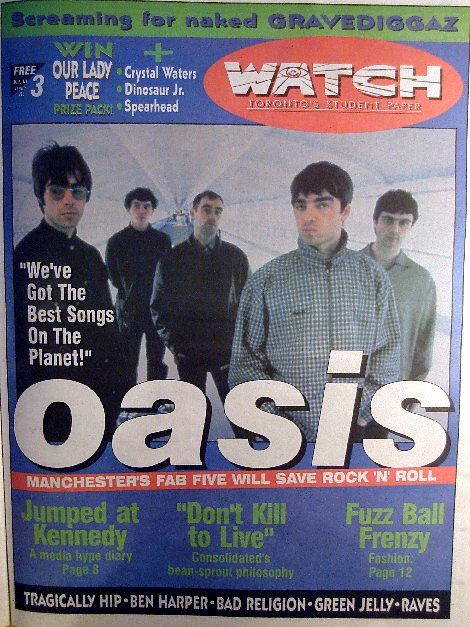
Watch Magazine (Toronto, Canada), October 12, 1994
Preparing to invade Lee’s Palace October 19, supersonically hyped English pop fivesome Oasis have a lot to live up to. The Manchester-based band have experienced a tsunami of media hype reminiscent of The Sex Pistols or The Beatles.
A triple slam of three hit singles in three months – Supersonic, Shakermaker, Live Forevever – and four sold out UK tours preceded their first album, Definitely Maybe. But this clever English pop formula faces its biggest challenge: North America.
The band has developed in less than a year, a reputation for being a ferry-disturbing, hotel-trashing, media-slagging, earth-shattering, shit-disturbing, ego-boosting, self-absorbed, tune-churning, attention-grabbing machine.
And what does an Oasis album sound like?
After you’ve heard all the hype and b.s., approaching 11-track Definitely Maybe should be a disappointing experience. It’s not. The album is craftily tight, with every song great. These guys left the crap at home – a lesson for other bands.
Singer Liam Gallagher’s voice isn’t polished, posh or slick. He drags words out, lets his voice crack, he whines. But this is the charm. Brother Noel Gallagher’s lyrics are cheeky, deliberately oblique at times, pragmatic and just simply entertaining. Gone are the 12-point manifestos of other bands, into the trash goes the primary-school poetry.
Noel writes songs that deliberately pay homage to their influences: The Stone Roses, The Jam, The Beatles, The Rolling Stones, The Sex Pistols. But listen closely. Each one is manipulative – you can’t help feeling the rhythm flow. There’s straight chord-bashing, multi-layered jangle guitar, and a lager-laden freight train ripping through the entire album.
Though it is worth mentioning there are five in Oasis – 22-year-old Liam, 27-year-old songwriter and guitarist Noel, guitarist Paul Arthurs, bassist Paul McGuigan, drummer Tony McCarroll – the band has deliberately served up brothers Liam and Noel as willing fodder for the press.
Hailing from the much-maligned north of England – Burnage, South Manchester to be exact – has meant the band has taken buckets of regional bigotry over their Mancunian accents. It seems the London style gestapo will still let good old fashioned English class and regional prejudices get in the way of a solid analysis of Oasis.
Calling up from Austin, Texas, lead singer Liam’s thick Mancunian accent rips through the telephone line in a firestorm of profanity – it’s refreshing.
The band is on a mission to devour all the “crap bands.” And through a little of Liam and Noel’s own version of the power of positive thinking, or to some, bold-faced arrogance, Oasis are going to give the music business an enema like they’ve never seen before.
“Crap bands. That motivates us to be big,” says Liam confidently. “We were pissed off listening to all the daft bands – blagging the kids that this is what it is all about when it’s not. We are there to prove them all wrong. No bullshit, no strings attached – just simple rock n’ roll.”
Are they the vanguard of a new English invasion, or just another crew of hyped-up, trainer traipsing tossers? North America represents a walled fortress that has buffeted repeated attempts to resurrect the Brit-pack musical and cultural invasion of the 60s. The times have changed in the land where hip-hop, country music and heavy metal rule.
The classic British art-school pop formula of acquiring a very cool one-word name, a pile of trendy clothes, some mega-cool posters – and these days a video – falls flat amongst a population more comfortable in sweatpants and a baseball cap.
But Liam disagrees, and points to their appearance at the New Music Conference in New York.
“Packed-out – the crowd was havin’ it. The gigs have been like at home. Because we’re from England they don’t know much about us – they just come and listen to the music, go home and have a good night.
“We are fucking slick, a big machine! But we’ve not been trained. We know our songs are fucking good. We know we’ve got the best songs on the fucking planet. It ain’t just England – we know our kid (Noel) write the best songs in a long, long time. Since the days of Lennon and McCartney. And he’s doing it on his own.”
Liam’s antics, much to the disappointment of Noel, have gotten some major print in England’s tabloid music press, and has lead to a sleazy prose slug-fest between rivals the New Musicial Express and Melody Maker.
There was the ferry fracas, with Liam san Noel being tossed off for fighting and public drunkenness. Or how about being arrested for some serious hotel trashing with Primal Scream and the Verve while on tour in Sweden.
With the media hyping the scrapper reputation, an ugly element has been attracted to their concerts. During an August 9 concert, a fan punched Noel in the eye during Bring it Down, resulting in a mob of 300 stoning the tour bus.
But the band has never been sedate. They got their first record contract by storming a concert and demanding to be allowed to play or they will tear the place down.
“We’re not hype – I laugh at the English press. They’re stupid. They don’t even understand our music. They like it, that’s about it. Then they’ve got to write about me and our kid fighting, bits about trashing the hotel.”
Talking to Oasis, forget about the nice-boys-next-door routine. In fact, forget about every false face pop musicians had to put on in the puritanical 80s, and the politically correct 90s. Oasis not only admit to using drugs, shock of shock, they like it.
“Our mums know about it. I was doing drugs since I was 13. Sniffing gas, sniffing glue, drinking cider, getting off my face.”
They don’t labour themselves with the soul-consuming indie band angst of worry that if they get big they have somehow sold out.
Depending on the day of the week and who you talk to, the brothers either enjoy a healthy creative conflict, or bloody well hate each other. Certainly, the evidence points to the latter, while Liam says otherwise.
There was the time at a South England gig where Noel punched Liam in the face and chased him off stage. But there is the Noel who returned from being a roadie for the Inspiral Carpets and approached the band in 1992 telling them their songs are “shite” and they should let him write the songs and take over.
“Our kid, he’s a bit of a singer, but he knows he can’t sing. He says I can’t write a song. We are both kind of jealous of each other. That’s how I see it anyway. I don’t know. He thinks he’s the only one who really loves music, and his own brother don’t understand it. And I ant to prove to him I mean it a little more than he does – and it freaks him out. He sings totally different – then I get a grip of it and I bite the head off of it.”
It has been Noel’s discipline and raw talent, Liam admits, that pulled Oasis together.
They believe in total commitment to the cause of being the best band in the world.
“There’s a day when you turn around and say, right “Do you want this to be every Tuesday, Thursday night, like a fucking scout club meeting, or do you want it to be real?” If you want it to be real, you’ve got to be here every Monday, Tuesday, Wednesday, Thursday, Friday, Saturday, Sunday – you can’t go out drinkingwith your mates or doing this with your bird. You can’t have a bird if you want to be the biggest band in the world – this is what it’s about. If you don’t like it, piss off, tell us now.”
They gotten a reputation for being a juicy interview for jaded journalists tired of earnest musicians telling of their next charity album, or wanking on about how their music is deep.
The British press have gorged themselves on a love-hate feast of large portions of Oasis.
For Oasis watchers, the landmark article was the April 23 issue this year of NME. Titled The Bruise Brothers, this was the true beginning of the hype machine. The article immediately focuses in on the duelling brothers, barely touching the fact they are a band.
The stage was set for a punch and judy comedy involving the nasty yet lovable Gallagher brothers. Shakespeare couldn’t have written a better play for the press gang to report.
While Liam denies it, there has been talk of a full-blown conspiracy involving Oasis record label Creation and their buddies within the press – an Oasis hype mafia some have called it.
“If someone likes you and your on their label, they are going to talk about you. We’ve done all the shit gigs man. The reason why we are bigis because we are fucking crafty. We’ve done four sell-out tours within the space of four months. What other band does that? – none. We’ve had a single out every month. People are just tripping. There’s no big mafia working us up. If there is, I don’t fucking know it. No one’s told me.
“They just want to build us up as hype and then see if they can knock us down. But they won’t be able to – ’cause we are writing the best songs – we can rip their papers up and wipe our bums with it and throw it in the fucking bin, they can’t do it with us. They can do it with Suede, ’cause Suede let em. If someone stitches me in the paper and I meet them in London or wherever, they get it, I tell them.
“A couple weeks ago we were on the front cover of the NME, Melody Maker – we didn’t even do an interview with the NME. They just sneaked over and got a picture, the picture that was on the cover of the NME was going to be for VOX.
“They got (freelance photographer) Keving Cummings to sell the VOX picture to the NME. Now Kevin Cummings don’t come near us, if he does I’ll slap him, and I’ve told him. He says this is for VOX, and the next fucking day it’s on the front cover of the NME without even an interview with us.
“They can try and have a backlash – we will release Whatever at xmas with proper Beatles styling, which will sell thousands and thousands of fucking copies and put us in the charts.”
When former Jam powerhouse and English pop icon Paul Weller dropped by an Oasis gig, the meeting was blown into the clash of titan egos by the press.
“He comes to the gig because he likes the music. We chilled out with him. You know how the press works, they just build it up. They made out as if Paul Weller walked in our dressing room and our kid fucking snaps at him. He loves Paul Weller. This is bullshit, I’m not having the NME or the Melody Maker deciding what we are. No way, I’m not having it.”
In fact Liam sees Weller on holy ground. “The other two guys in the band were dicks, I don’t care for them at all. Paul Weller was a diamond. He wrote some mega songs. They are bloody selling groceries, trying to get it together.
“Everyone is going they should form the Jam again – no way man. They look like 50-year-old men, them two now. Paul Weller looks like a young lad now. He’s kept it together, why should he go back, go jamming with them again. He’s still young.”
It took just one tour with Primal Scream for Oasis to determine who is the greatest rock n’ roll band alive. Lead singer Bobby Gillespie’s degenerate 70s roadshow follies didn’t impress Liam.
“They ain’t the rock n’ roll band everybody makes them out to be. There’s only three in Primal Scream – the rest are all hiding. A rock n’ roll band to me is about five people who know each other very well, they are all friends. They ain’t the last rock n’ roll band, we are! Fucking idiots, we are! Well we aren’t the last, but we are the rock n’ roll band to date if there is one about – not Primal Scream.
“Plus he (Gillespie) smells and they don’t wash their clothes. They are too rock n’ roll cliche, you know what I mean. I know for a fact lot of these rock n’ roll types look at us and say we aren’t rock n’ roll because we have trainers. So fucking what! It’s not all about winkle pickers, skin-tight pants and long greasy hair. That’s Guns n’ Roses material!”
Note:This was the first article about Oasis in North America. In October, 2007 Liam Gallagher was named one of the ten wittiest Englishmen in history.
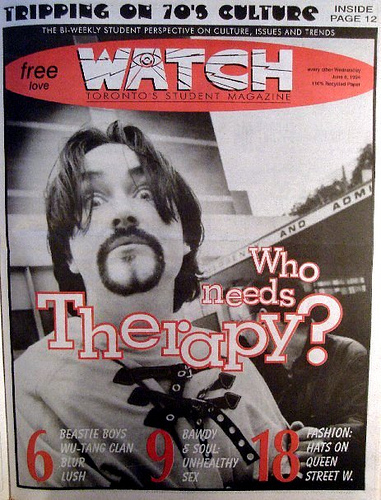
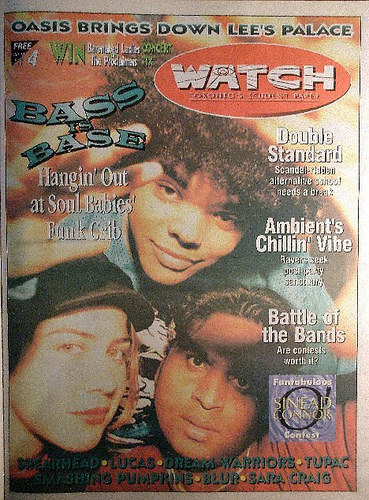
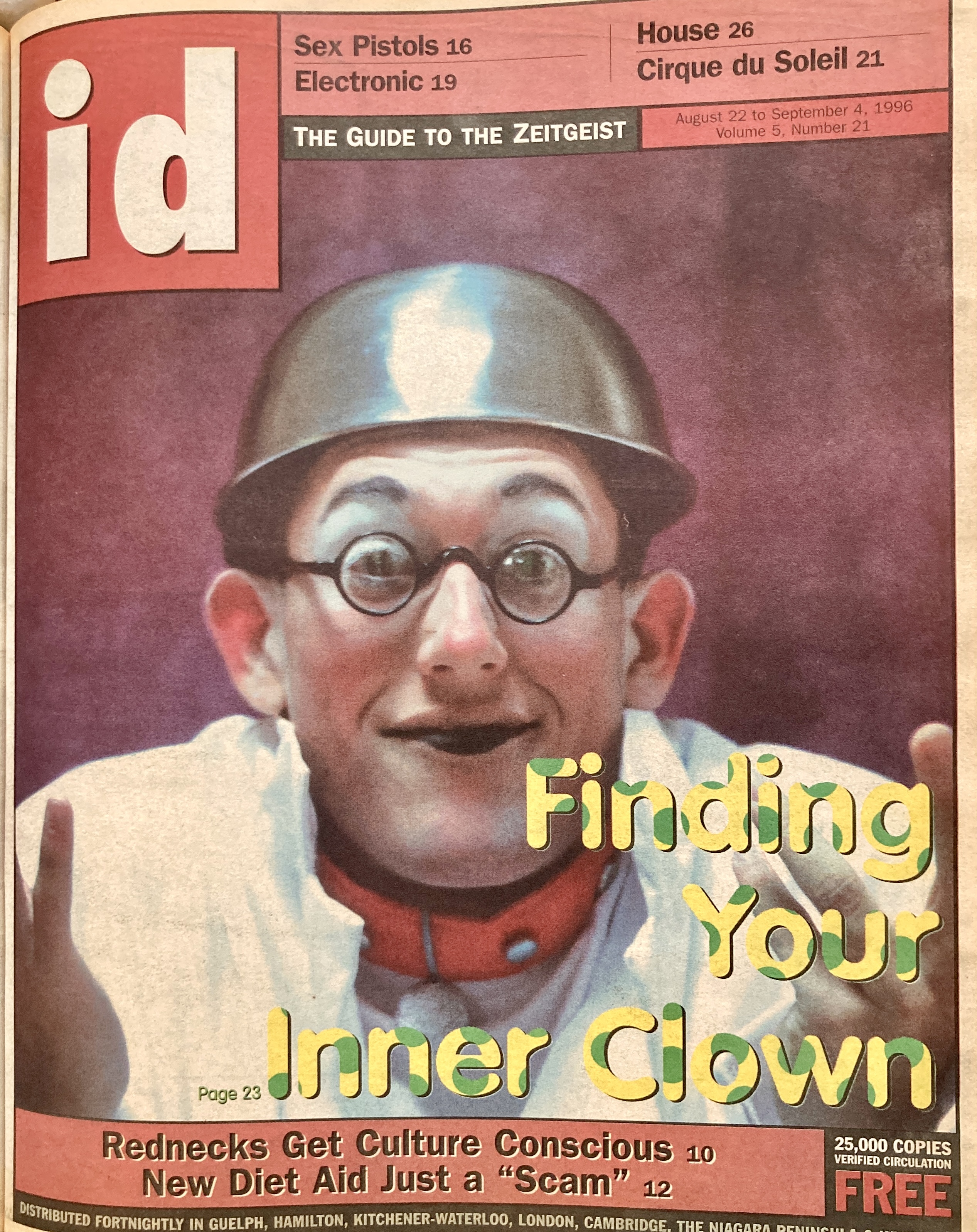
A sample of Watch magazine covers from 1994 (Toronto, Canada).
Sloan’s 1994 release, Twice Removed, was called by Chart magazine one of the “Top 50 Canadian Albums of All Time”.
In 1999 I published the first book on Mongolia’s contemporary music scene. Freshly opened up to the wider world, Mongolia’s musicians were leading the way for this youthful, new Asian democracy. By 2020, Mongolian musicians had become a global Internet sensation.
What happens when rednecks pick up a lesson or two from the world of identity politics? Mostly ridiculed by smug urbanites, or just plain ignored by the general population at large as cultural fads come and go, angry rednecks are standing tall in these conservative times.
Part Mark Twain-like satire, reverence and condescension, a cottage industry promoting the southern American redneck lifestyle is starting to resemble past struggles for cultural pride.
Just think of the gay rights movement in the 70s and 80s, which turned the derogatory word queer into a touchstone of homosexual pride.
In the 90s, dismissing rednecks as a bunch of dumb crackers can not only ensure free dental work in many an American bar, it can also be seen as an affront to white American values. But while some want to stereotype this culture as the heart and soul of white working-class American ideals, it is hard not to be disturbed by this phenomenon. Can God, beer, the American Constitution and guns weave together a stable lifestyle?
Author, radio personality and Redneck Olympics MC Bo Whaley was interviewed in a phone booth across from the bomb site at Atlanta’s Centennial Olympic park. During the interview Bo was kicked out of the phone booth by Atlanta police for talking too long. He picked up the interview from a truckstop near Dublin, Georgia.
id: What is a redneck?
Bo: A redneck to me is a lifestyle, that’s what it is. I relate rednecks to people who work hard, men of the soil. They look for the common things in life. They enjoy the outdoors, enjoy hunting and fishing. They aren’t too interested in status or setting the world on fire. They like to do their own thing. Real close to being what we call a good ole boy. They enjoy life – they work hard and they party hard.
There is nothing put on by them. They are down to earth. I really enjoy them, they are on the level. If you ask them a question they will tell you the truth. They aren’t trying to impress anybody, just trying to be themselves.
Go to the local bar and they are listening to the juke-box, smoking cigarettes and drinking beer. We can make fun of ourselves down here, we enjoy it. We laugh at ourselves. Poke a lot of fun. I’m having fun with people who live on farms, live in small towns. Like to hunt, like to fish. They drink beer. I have lived in the south for 24 years. I try to look at people and write what I see. I also wrote The Field Guide to Southern Women.
id: I heard the Redneck Olympics didn’t go down so well with the city council.
The chamber of commerce was concerned about the image. We attract a lot of industry to the town, they were afraid what was going out was a negative image of the lifestyle that is going on in Dublin.
We didn’t know it was going to catch on like it did. At the opening ceremony we were expecting maybe 250 maybe 350 people – and we had 4,000! The national and international media has got into it.
id: Are rednecks all right-wing?
On the right of the political spectrum, yeah. Happy with Newt Gingrich. I don’t think we take politics as seriously as up north. (Former U.S. president) Jimmy Carter is not very popular with the rural people here in Georgia. Well, I think when he went to Washington his values changed. I can name many, many people including me, who don’t like him. Right now I’m five minutes from the Carter Centre in Atlanta. I’ve never been to it. Not really interested in what Carter is doing.
He is trying to solve all the problems of the world. He looks at himself as more of a missionary than an ex-president. He goes to Haiti, he goes to South Africa, Bosnia. He calls these peace conferences and by-passes the established government in the United States to try to do his own thing. It’s a self-serving thing.
id: What do you think about the militia movement?
I do not agree with them. Right now I’m standing across from Olympic park where they had the bomb go off. People that I talked to have no sympathy for the militia, they say let the established investigators handle it and they don’t have any use for (the militia) at all.
id: Do you think the militias are a symbol of the frustration a lot of rednecks are feeling?
I agree. But they do a lot more talking than they do acting.
id: Why do they distrust the federal government and imagine black helicopters are helping the U.N. to set up a totalitarian state?
I think what they feel is that they know more about handling a situation than the government does and they want to do it on their own. I don’t agree with that. The government’s not perfect here nor in Canada. As long as it is the government I’m going to support it. I was not a Clinton fan but once he was elected he became my president. I have to support him until he gets out. But I don’t support everything he does.
id: Is the redneck style locked in the 70s?
The redneck symbol is more popular than it has ever been. A lot of people in offices in stuffed shirts and ties who would love to get out and live this way but they can’t do it on account of losing their jobs. They like to get in a jeep or ride on a motorcycle and say “whee” and to the heck with it. Everybody in the world needs some quiet time, time to yourself to do what you want to do.
id: Do you think rednecks are in danger of extinction in the age of the Internet?
They are on the increase. They don’t know about high-tech stuff. They haven’t even got into electric typewriter yet – they are still on manual typewriter.
id: Do they have any heroes or heroines?
They are beer people, and if they have any drug they smoke marijuana.
id: I mean heroes.
Many are country music fans, like Garth Brooks and Hank Williams Jr. They are big on country music. Female rednecks admire shows like Designing Women.
Oh lord, they love T-shirts. The T-shirts say “Opry land,” “Dollywood,” “Get your heart in America or get your ass out.” They don’t like plain T-shirts.
id: Can you give an estimate of the number of rednecks in the U.S.?
I travel more in the South Eastern states. In my hometown, in my home county, there are 37,000 people. Most of the people there, I’d say 75 per cent are working people, they either farm or work in factories. Out of those people, I’d say 20 to 25 per cent fall in the category of what I call redneck – they work hard all day and they play hard all night. Nationwide, I have no idea. I can tell you towns that have a lot of rednecks. Chattanooga, Tennessee – lot of rednecks. Columbus, Georgia, it’s a military town. In Montgomery, Alabama they work real hard at being rednecks.
id: Is there a problem with blurring rednecks with more negative elements like the Ku Klux Klan?
No, I really don’t see that. Most of the people I know can’t stand the Klan. They give country people a bad name.
id: Some guy at the Redneck Olympics had a Klan T-shirt on.
I’m not surprised by that. The main thing you are going to see them wearing if they have anything to do with a symbol of patriotism is a Confederate flag saying “God bless America” and “God bless the South.”
id: What about the rebel flag?
They do not want to give it up. There is some legislator in Atlanta who is trying to ban it, and this has to do with trying to appease a faction for their votes. But you get out into rural Georgia, rural Alabama, they want to keep that flag. To be truthful it has a lot to do with the civil rights movement.
id: That it means it’s an affront to the civil rights movement?
Yeah.
id: Are there yuppie rednecks?
I know a neuro-surgeon living in Birmingham, Alabama, I met him through his wife while I was signing books. She came up and said “I’ve got to have one of those Redneck Handbooks,” and I said “Why?” She said, “Because my husband is a neuro-surgeon and he’s from Arkansas and all day long on in his office he’s got his blue buttoned-down shirt, his navy blue suit and his spit shine shoes and driving his Mercedes. When he gets home in the afternoon he puts on his blue jeans, and denim shirt gets the pick-up truck, the dog gets in back and he starts riding in the woods.” He’s a Dr. Jekyll and Mr. Hyde type. I see a lot of that. They kind of let their hair down. It’s a release for them.
id: Do you see the redneck lifestyle as a different kind of leisure lifestyle, a more working-class leisure lifestyle?
I think so, David. They put on ragged jeans, say to the world “I am a redneck.”
What they like to do is go fishing. They will go to the coast and go deep sea fishing. Especially they like to go to stock car races. Big stock car fans. The faster that car goes the better they like it, and the more wrecks they have the better they like it.












 David South Consulting
You must be logged in to post a comment.