Tag: internet

  • Wireless Internet Culture Helping Zimbabwe Economy Recover

    Wireless Internet Culture Helping Zimbabwe Economy Recover

    By David SouthDevelopment Challenges, South-South Solutions

    SOUTH-SOUTH CASE STUDY

    Zimbabwe’s turbulent descent into hyperinflation at the beginning of the 2000s – and the food crisis it caused as prices soared and purchasing power shrank – captured the world’s attention. From refugees fleeing the country to widespread hunger and poverty, the impact of hyperinflation was stark and distressing. Since the country’s economy stabilized in 2009, various signals are showing that Zimbabwe is slowly making its way back to growth and stability.

    The scale of the hyperinflation is summed up by Zimbabwe’s eye-popping inflation rate. By December 2008, inflation was estimated at 6.5 quindecillion novemdecillion percent (or 65 followed by 107 zeros — 65 million googol) (Forbes Asia).

    One recovery strategy is emerging in Zimbabwe’s booming eating and drinking establishments. It seems the urge to socialize and network has become the source of economic vitality where so much else has been damaged.

    The proliferation of coffee shops with wi-fi (wireless internet access) (http://en.wikipedia.org/wiki/Wi-Fi) has spawned a new, connected business culture that is flexible and entrepreneurial.

    Zimbabwe’s unity government was formed in September 2008. By the beginning of 2009, the government relented on the crippling hyperinflation and allowed business to be conducted in the US dollar. This made it possible to save again and do business with greater predictability. At this time, the country had the world’s highest inflation rate and the central bank printed a 100 trillion Zimbabwe dollar note.

    The economic result of greater stability has been new shopping malls opening and a boom in new eating and drinking establishments.

    During the hyperinflation, eating out was the last thing on most people’s minds. Just surviving was the paramount daily task.

    In the capital, Harare (http://en.wikipedia.org/wiki/Harare), the shopping mall Sam Levy’s Village (http://samlevysvillage.com), in the prosperous Borrowdale area of the northern suburbs, is full of thriving coffee shops, restaurants and pubs.

    Outside of the wealthy enclaves, coffee shops have sprung up in the city’s art gallery, in sports clubs and a local supermarket chain.

    While the coffees are still expensive relative to local wages, the Zimbabwe Online Hotspots (ZOL) (http://www.zol.co.zw) in the coffee shops have proved a big attraction. Most people in Zimbabwe have unreliable or non-existent electricity or, if lucky, poor-quality phone and internet dial-up in their homes.

    ZOL Hotspots typically offer the first half hour of internet use for free. To surf longer, users must buy a voucher.

    The damage done to the economy from hyperinflation and the political crisis means the country is still on the mend. But people have now resorted to what they call “networking,” according to Bryony Rheam in the Daily Telegraph newspaper. The functioning economy is all about making deals. And coffee shops with wi-fi are the perfect place to meet with a potential business partner.

    But while the coffee shops are buzzing with people doing business, the proprietors still need to work out how to make better profits. Sales are still poor as people are mostly fixated on the wi-fi. One owner told the Telegraph: “We need to start charging people who sit here all day surfing the net.”

    It is the restaurants who seem to be enjoying the boost in incomes and better spirits after the economic troubles. Zimbabwe’s black middle class are enjoying big occasions and celebrating with friends and family in restaurants.

    “We went without for so long, that a lot of people almost see it as their right to spend money on eating out,” one patron told the Telegraph.

    More good news has come from outside investors as well: Amstel Securities NV (http://www.amstelsec.com), based in Amsterdam, Netherlands calls Zimbabwe’s economy “the final frontier market in Africa”. It believes the country has the potential to grow its GDP (gross domestic product) to US $12 billion by 2015. The International Monetary Fund says the economy jumped from US $4.4 billion in 2009 to US $9 billion now.

    In Amstel Securities’ report, it pegs the dollarization of the economy as the reason for stability: “These improvements have made Zimbabwe a much more vibrant economy with good further recovery potential.”

    And these good vibes are contagious: it has been reported that the American hamburger chain McDonald’s is revisiting the idea of setting up in Zimbabwe. McDonald’s is currently present in a handful of African countries: South Africa has 132 restaurants.

    Published: September 2010

    Resources

    Development Challenges, South-South Solutions was launched as an e-newsletter in 2006 by UNDP’s South-South Cooperation Unit (now the United Nations Office for South-South Cooperation) based in New York, USA. It led on profiling the rise of the global South as an economic powerhouse and was one of the first regular publications to champion the global South’s innovators, entrepreneurs, and pioneers. It tracked the key trends that are now so profoundly reshaping how development is seen and done. This includes the rapid take-up of mobile phones and information technology in the global South (as profiled in the first issue of magazine Southern Innovator), the move to becoming a majority urban world, a growing global innovator culture, and the plethora of solutions being developed in the global South to tackle its problems and improve living conditions and boost human development. The success of the e-newsletter led to the launch of the magazine Southern Innovator. 

    Creative Commons License

    This work is licensed under a
    Creative Commons Attribution-Noncommercial-No Derivative Works 3.0 License.

    ORCID iD: https://orcid.org/0000-0001-5311-1052.

    © David South Consulting 2023

  • Burgeoning African E-commerce Industry Full of Opportunity

    Burgeoning African E-commerce Industry Full of Opportunity

    By David SouthDevelopment Challenges, South-South Solutions

    SOUTH-SOUTH CASE STUDY

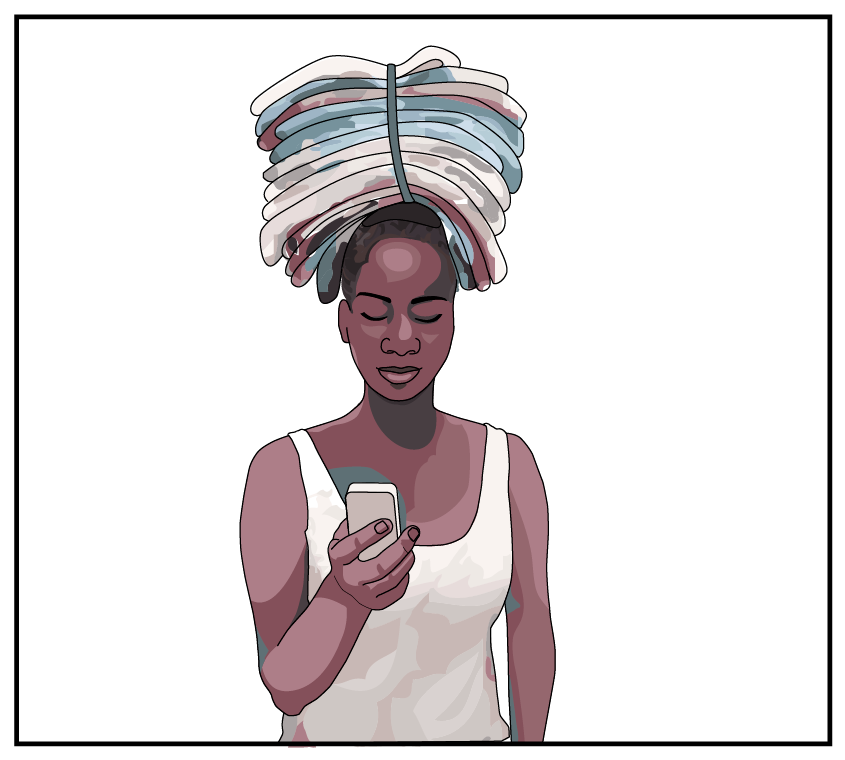
    Africa has seen huge change since 2000 in the way people access information and do business electronically. The most championed accomplishment has been the widespread take-up of mobile phones. This has given birth to countless entrepreneurs and innovators who are using  phones to help people, do business and sell goods and services.

    Not as quick to spread, mostly because of high cost and poor infrastructure, is access to the Internet. While Web access is taken for granted in many wealthy countries and is increasingly commonplace in many developing nations, Africa as a whole still suffers from poor infrastructure for access to the Internet. But this is changing by the month as  more undersea cables connect countries and bandwidth is increased (http://www.submarinecablemap.com/).

    Africa’s population can be expected to at least double from 1.1 billion to about 2.3 billion by 2050 – and most will live in urban areas (Population Reference Bureau).

    And incomes are rising. Africa is richer than India on the basis of gross national income (GNI) per capita, and a dozen African countries have a higher GNI per capita than China (Africa Rising).

    According to the McKinsey Global Institute, “The incomes of these new consuming classes are rising even faster than the number of individuals in the consuming classes. This means that many products and services are hitting take-off points at which their consumption rises swiftly and steeply. By 2025 urban consumers are likely to inject around (US) $20 trillion a year in additional spending into the world economy.”

    Research firm Jana (jana.com) – which specializes in emerging markets – studied the consumer preferences of people in Nigeria, Kenya and South Africa. They surveyed 600 consumers in each country, seeking to unearth what their preferences were when it came to using e-commerce services (https://en.wikipedia.org/wiki/E-commerce). E-commerce is the buying and selling of products and services over electronic systems such as the Internet and other computer-enabled systems. This is still a young industry in Africa and one ripe with opportunity for hardworking and innovative players. Many are starting to realize they had better move fast because this is a market that still has much up for grabs and is not – yet – dominated by mature players such as eBay or Amazon.

    The survey uncovered five trends driving e-commerce in Africa. These trends address the unique conditions present in Africa and what challenges need to be met.

    The first trend the firm identified is cash on delivery. This has become the main way people do e-commerce in Africa because of the lack of trust in the security of online payments. Cash is still king in the region. The second trend is having a proprietary logistics network. This comes in response to the poor infrastructure present in much of Africa. This has meant e-commerce companies need to take charge of the whole process of getting a good to the customer’s home. This is, of course, costly and places a big restraint on any new company in the e-commerce market.

    The third big trend is one that reflects the reality of how people communicate electronically in Africa. Mobile phones are king, and this means e-commerce needs to be mobile phone-friendly or lose out on reaching many customers. The fourth trend is related to the fact Africa is still off the logistics route for much world trade. This means e-commerce companies need to set aside space for large warehouses to store the goods so that they are on hand when the customer wants them.

    And, finally, the fifth trend is the importance of good customer service as the clincher for success in the marketplace. Word of mouth gets around if a company is not able to deliver on what is promised so it is important to have high-quality customer service to build trust, keep engaged with consumers and let them know problems are being resolved.

    South Africa has emerged as the continent’s powerhouse when it comes to e-commerce, according to Jana. Successful players in that country include Zando (http://www.zando.co.za/) an online fashion store by Rocket Internet, MIH Internet Africa’s Kalahari online store (http://www.kalahari.com/) and entertainment and consumer electronics online store Takealot.com supported by Tiger Global. Research firm World Wide Worx (http://www.worldwideworx.com/) calculated that online retail in South Africa is growing by 30 per cent a year.

    But South Africa cannot rest on its laurels: the survey found Nigeria is fast overtaking South Africa as its large population takes to the Internet. Impressively, Nigeria’s Government has pledged to expand broadband Internet access to 80 per cent of the country over the next five years.

    In East Africa, Kenya’s Rocket Internet’s service Jumia (http://www.jumia.co.ke/) is now one of the top 100 online destinations in the country.

    Jana also found there were various key areas for improvement for the e-commerce industry in Africa. One, was the importance of explaining to African consumers the basics of online shopping. Many respondents to the survey seemed confused about making purchases on the Internet and through e-commerce. They also showed low levels of understanding about payment methods and available financial products. And finally, one of the big obstacles to expanding the industry is improving delivery reliability.

    But all these problems and challenges spell opportunity for innovators who can solve them and make some money too!

    Published: July 2013

    Resources
     
    1) E-commerce: The latest news from The Guardian newspaper. Website: http://www.guardian.co.uk/technology/efinance

    2) E-commerce Expo: From 2 to 3 October 2013 in London, UK, the eCommerce Expo is the industry event for the UK and, increasingly, Europe. It ranks as one of the largest gatherings of e-commerce professionals in Europe and boasts over 180 exhibiting companies plus a comprehensive conference programme. Website: http://www.ecommerceexpo.co.uk/page.cfm/newSection=Yes

    3) Mashable e-commerce: E-commerce (or electric commerce) refers to the buying and selling of goods and services via electronic channels, primarily the Internet. Online retail is decidedly convenient due to its 24-hour availability, global reach and generally efficient customer service. Website: http://mashable.com/category/e-commerce/

    4) Actinic: An online software system for setting up an online e-commerce website. Website: actinic.co.uk/

    Development Challenges, South-South Solutions was launched as an e-newsletter in 2006 by UNDP’s South-South Cooperation Unit (now the United Nations Office for South-South Cooperation) based in New York, USA. It led on profiling the rise of the global South as an economic powerhouse and was one of the first regular publications to champion the global South’s innovators, entrepreneurs, and pioneers. It tracked the key trends that are now so profoundly reshaping how development is seen and done. This includes the rapid take-up of mobile phones and information technology in the global South (as profiled in the first issue of magazine Southern Innovator), the move to becoming a majority urban world, a growing global innovator culture, and the plethora of solutions being developed in the global South to tackle its problems and improve living conditions and boost human development. The success of the e-newsletter led to the launch of the magazine Southern Innovator.  
    Creative Commons License

    This work is licensed under a
    Creative Commons Attribution-Noncommercial-No Derivative Works 3.0 License.

    ORCID iD: https://orcid.org/0000-0001-5311-1052.

    © David South Consulting 2023

  • Popular Chinese Social Media Chase New Markets

    Popular Chinese Social Media Chase New Markets

    By David SouthDevelopment Challenges, South-South Solutions

    SOUTH-SOUTH CASE STUDY

    China has a vast and growing market for the Internet and mobile devices. Over the past decade that market has been largely confined to China –  most businesses have had enough domestic demand and opportunities inside the country to keep them busy.

    But now companies in China’s dynamic Internet and mobile sector are seeking out new markets outside the country. Both online shopping service Alibaba (alibaba.com) and Weibo (weibo.com), the Chinese version of Twitter (twitter.com), are seeking to list on the New York Stock Exchange. The excitement this news has generated shows how many people want to get a piece of the large Chinese market for technology, social networks and online shopping. It is also sending a chill through America’s Silicon Valley – home to the country’s innovative high technology sector – that they are missing out on China’s fast-growing marketplace. Many American services are banned from operating in China. Even more worrying for Silicon Valley, these home-grown Chinese companies, with the market sewn up at home, are now set to compete globally for customers using their increasingly deep pockets.

    One example is Tencent (http://www.tencent.com/en-us/index.shtml), owner of popular Chinese social messaging application (app) Weixin (weixin.qq.com), known as WeChat (wechat.com) outside China. Used on mobile phones and smartphones, Weixin has gained 300 million users in just three years, becoming the dominant social messaging service in the world’s largest smartphone market. Its has been so successful that many rivals are trying to chip away at its customer base.

    Weixin, pronounced way-shin, allows smartphone users to send messages and share news, photos, videos and web links with friends. One of its selling points is its claim to not store messages on its servers.

    Building on its success in social networking in China, it is looking to expand in other markets, including Southeast Asia, Europe and Latin America. It also wants to grow its offerings in online payment and e-commerce.

    One factor in Weixin’s success is the ability to send messages by recording a voice message rather than just typing in characters: very useful for non-Latin script users, and especially for Chinese-language users, who use thousands of characters in everyday communication.

    One ambitious forecast claims Weixin could reach 400 million users and make US $500 million revenue within a year.

    Cosmetics marketer Jenny Zhao, who uses an iPhone 5, told The New York Times: “I’m probably on Weixin six hours a day. A lot of what I do revolves around it.”

    “I use Weixin every day,” said Zhang Shoufeng, a food and drinks seller. “My friends are on it and my boss is on it. We are talking about where to eat, where to hang out and where to meet for company conferences. This is how we communicate.”

    Analysts believe Weixin has benefitted from not having to compete with banned-in-China American company Facebook (facebook.com).

    “Even if Facebook had permission, it’s probably too late,” said Wang Xiaofeng, an analyst at Forrester Research. “Weixin has all the functionality of Facebook and Twitter, and Chinese have already gotten used to it.”

    Tencent is an example of a wider trend: As Chinese companies and offerings have become stronger, wealthier and more innovative, they increasingly look to build their customer base outside China.

    Founded in November, 1998, Tencent, Inc. has grown into China’s largest and most used Internet service portal. Its most popular services include QQ (QQ Instant Messenger), WeChat, QQ.com, QQ Games, Qzone, 3g.QQ.com, SoSo, PaiPai and Tenpay, as well as Weixin.

    The company claims to put innovation at the heart of its business, with more than half of its employees devoted to research and development. The Tencent Research Institute, established in 2007 with RMB 100 million (US $16 million), calls itself “China’s first Internet research institute, with campuses in Beijing, Shanghai, and Shenzhen.” It has patents for technologies it has developed for instant messaging, e-commerce, online payment services, search, information security, and gaming.

    Tencent was driven to innovate by a fear it could quickly become irrelevant in the information technology space. Weixin is also pioneering ways to book taxis, hotels and airline flights through the service and even ways to control home appliances.

    “Chinese Internet companies are no longer behind,” said William Bao Bean, a managing director at the venture capital firm SingTel Innov8 (http://innov8.singtel.com/). “Now in some areas, they’re leading the way.”

    Published: April 2014

    Resources

    1) Weibo: Sina Weibo is a Chinese microblogging (weibo) website. Akin to a hybrid of Twitter and Facebook, it is one of the most popular sites in China, in use by well over 30 per cent of Internet users, with a market penetration similar to what Twitter has established in the USA. Website: weibo.com

    2) Laiwang: A variation on the WeChat service, its biggest competitor. Website: laiwang.com

    3) WhatsApp: WhatsApp Messenger is a cross-platform mobile messaging app which allows you to exchange messages without having to pay for SMS. Website: whatsapp.com

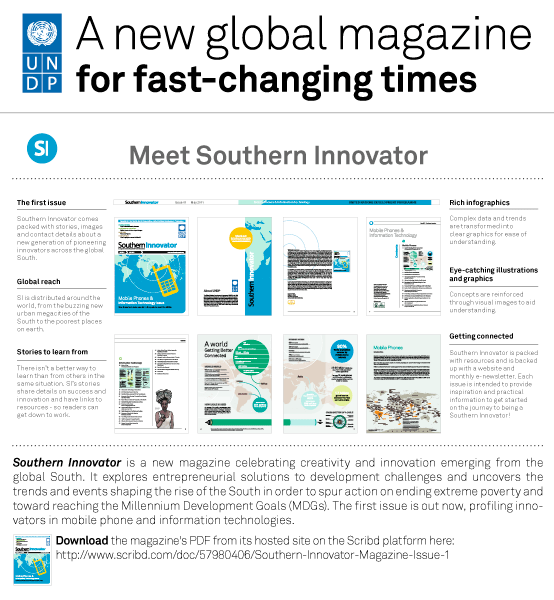
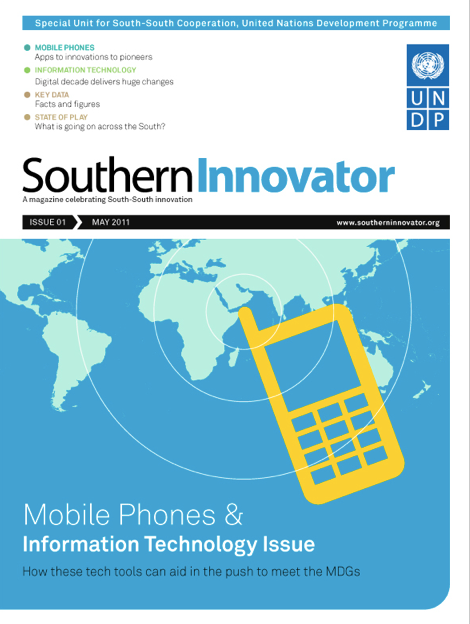
    4) Southern Innovator Issue 1: Mobile Phones and Information Technology: Pioneering and innovative ways to deploy mobile phones and information technology to tackle poverty. Website: http://www.scribd.com/doc/57980406/Southern-Innovator-Magazine-Issue-1 and here: http://tinyurl.com/q6bfnpz

    https://davidsouthconsulting.org/2022/10/20/china-consumer-market-asian-perspective-helps/

    https://davidsouthconsulting.org/2020/12/10/china-sets-sights-on-dominating-global-smartphone-market/

    https://davidsouthconsulting.org/2021/03/20/computer-gold-farming-turning-virtual-reality-into-real-profits/

    https://davidsouthconsulting.org/2021/01/26/designed-in-china-to-rival-made-in-china/

    https://davidsouthconsulting.org/2022/10/26/tackling-chinas-air-pollution-crisis-an-innovative-solution/

    https://davidsouthconsulting.org/2020/04/17/virtual-supermarket-shopping-takes-off-in-china/

    Citation

    Qianyu, Ji (2014) “Exploring the Concept of QR Code and the Benefits of Using QR Code for Companies,” Lapland University of Applied Sciences, School of Business and Culture Degree Programme in Business Information Technology, 2014.

    Development Challenges, South-South Solutions was launched as an e-newsletter in 2006 by UNDP’s South-South Cooperation Unit (now the United Nations Office for South-South Cooperation) based in New York, USA. It led on profiling the rise of the global South as an economic powerhouse and was one of the first regular publications to champion the global South’s innovators, entrepreneurs, and pioneers. It tracked the key trends that are now so profoundly reshaping how development is seen and done. This includes the rapid take-up of mobile phones and information technology in the global South (as profiled in the first issue of magazine Southern Innovator), the move to becoming a majority urban world, a growing global innovator culture, and the plethora of solutions being developed in the global South to tackle its problems and improve living conditions and boost human development. The success of the e-newsletter led to the launch of the magazine Southern Innovator.  
    Creative Commons License

    This work is licensed under a
    Creative Commons Attribution-Noncommercial-No Derivative Works 3.0 License.

    ORCID iD: https://orcid.org/0000-0001-5311-1052.

    © David South Consulting 2025

  • The BRCK: Kenyan-Developed Solution to Boost Internet Access 

    The BRCK: Kenyan-Developed Solution to Boost Internet Access 

    By David SouthDevelopment Challenges, South-South Solutions

    SOUTH-SOUTH CASE STUDY

    Using the Internet in Africa has its challenges, as anyone who has worked there knows. Issues can include weak Wi-Fi signals, slow Internet service providers, electricity outages and power surges that can damage or destroy sensitive electronic devices.

    Power surges (http://electronics.howstuffworks.com/everyday-tech/surge-protector3.htm) can occur for a variety of reasons but are usually a sudden surge in the current flowing to the wall outlet from the power mains. They are common in developing countries, and can be tragic for electronic devices.
    Most electronic devices are designed for use in developed countries where people can take the power supply, and ubiquitous Internet access, for granted. This affects the way devices are made. Designers will assume many things are available to users and build the electronic devices accordingly. But for users in Africa and across the global South, what seems easy in the developed world is fraught with frustration and wasted time.

    This is a big obstacle to economic development and places people in Africa at a disadvantage in the modern world of fast communications.

    One initiative is out to transform this experience for the better with a made-in-Africa solution that is being modified based on real-world experience and user feedback.

    The BRCK (brck.com) bills itself as “your backup generator for the Internet” and is intended to address the problems of finding a reliable Internet connection, staying online in a power blackout and saving devices from destruction when there is a power surge.

    Anyone who has tried to use a laptop computer to upload some photographs in Africa will know the frustration felt when the Wi-Fi signal drops away. The BRCK hunts around for the strongest signal and grabs it so the user can carry on working.

    Built to be robust and take knocks and bruises, it is a sleek, black plastic brick-shaped device with the letters BRCK elegantly embossed on the side.
    The BRCK can function as a hub for up to 20 devices, with a built-in Wi-Fi signal able to cover multiple rooms (so a team can work off a single Internet connection), a battery that can last eight hours, a 16-gigabyte on board memory hard drive, and software to allow for remote management  by apps on other devices such as smartphones. While it is not able to speed up an already poor connection or increase low bandwidth, it can “scavenge” around to find the strongest signal and hop to it right away. It can work with Ethernet, Wi-Fi, and 3G and 4G networks.

    If a blackout occurs, it quickly switches to the onboard battery without forcing a re-boot of the computer.

    It has been developed in Nairobi, Kenya and the first plastic prototype of the BRCK device was milled at the Fab Lab Nairobi (http://fablab.uonbi.or.ke/) using a 3D fabricator machine.

    The BRCK’s makers describe it as a tool “trying to create ubiquitous Internet” and an “enabler of the Internet of things.” The BRCK is designed around the changing way people work and access the Internet, frequently moving from place to place. People now don’t just rely on one device but have many – a mobile phone or smartphone, a laptop, a tablet, an iPod or other device.

    A Kickstarter fundraising campaign (https://www.kickstarter.com/projects/1776324009/brck-your-backup-generator-for-the-internet) gives more details on the origins of the project and offers many ways to support the different stages of development, right up to mass manufacturing of the BRCK.

    One application of the BRCK is for research. It could be deployed to gather data at a field site, then connect via the Cloud (http://en.wikipedia.org/wiki/Cloud_computing) to pass data back to a lab at a university in another country for analysis.

    The BRCK is being built by Ushahidi (ushahidi.com), a non-profit technology company that makes open source software and made its name with the crowdsourced mapping platform it built during the post-election violence in Kenya in 2008. The Ushahidi platform has been deployed around the world since in many crisis situations.

    Founded by David Kobia, Juliana Rotich and Erik Hersman, the Ushahidi team is focused on “building tools that improve the way information flows in the world.” It is about making tools to help people communicate in the most difficult places.

    BRCK comes with a visually appealing website that makes excellent use of the BRCK’s ebony good looks.

    The website boasts: “If it works in Africa, it’ll work anywhere”.

    The ongoing development of the BRCK can be followed on the website’s blog: http://www.brck.com/2014/01/they-case-for-engineering-brck-in-africa-part-1/.

    “The idea is to build a company around the product rather than just do a one-off product – and to gradually improve the product through new versions,” said BRCKs chief technology officer Reg Orton.

    “Our engineers are based in Kenya now – we are not based in China, we are not based in the (Silicon) Valley. What that means for us we are able to go out there and (be) able to see the problems directly.”

    The BRCK can be ordered online and will be available for sale soon, according to the website.

    Published: April 2014

    Resources

    1) Momax iPower Milk External Battery:  Inspired from daily life, the creative iPower Milk looks like a cute and fresh milk carton. It fulfills your daily energy need just as pure milk. iPower Milk comes in a variety of cheerful candy colors, so choose one which suits your taste. The tiny and delicate iPower Milk has 1.5A USB output, which is compatible with most digital devices, including tablets. Website: http://shop.brando.com/Momax-iPower-Milk-External-Battery-2600mAh_p09700c1595d003.html

    2) Southern Innovator Issue 1: Mobile Phones and Information Technology: Pioneering and innovative ways to deploy mobile phones and information technology to tackle poverty. Website: http://www.scribd.com/doc/57980406/Southern-Innovator-Magazine-Issue-1 and here: http://tinyurl.com/q6bfnpz
    3) iHub Nairobi: Nairobi’s Innovation Hub for the technology community is an open space for the technologists, investors, tech companies and hackers in the area. This space is a tech community facility with a focus on young entrepreneurs, web and mobile phone programmers, designers and researchers. It is part open community workspace (co-working), part vector for investors and VCs (venture capitalists) and part incubator. Website: ihub.co.ke

    4) Fab Lab Nairobi: Fablab (fabrication laboratory or “fabulous laboratory”) is a workshop with an array of computer controlled tools with the aim to make “almost anything”. Fab labs provide widespread access to modern means for invention. They began as an outreach project from MIT’s Center for Bits and Atoms (CBA). CBA assembled millions of dollars in machines for research in digital fabrication, ultimately aiming at developing programmable molecular assemblers that will be able to make almost anything. Fab labs fall between these extremes, comprising roughly fifty thousand dollars in equipment and materials that can be used today to do what will be possible with tomorrow’s personal fabricators. Website: http://fablab.uonbi.or.ke/

    https://davidsouthconsulting.org/2021/03/20/accessing-global-markets-via-design-solutions/

    https://davidsouthconsulting.org/2022/10/26/africa-to-get-own-internet-domain/

    https://davidsouthconsulting.org/2022/10/24/brazilian-solar-powered-wifi-for-poor-schools/

    https://davidsouthconsulting.org/2020/04/30/crowdsourcing-mobile-phones-to-make-the-poor-money/

    https://davidsouthconsulting.org/2020/05/01/diy-solution-charges-mobile-phones-with-batteries/

    https://davidsouthconsulting.org/2022/10/17/east-africa-to-get-its-first-dedicated-technology-city/

    https://davidsouthconsulting.org/2020/12/20/kenya-reaches-mobile-phone-banking-landmark/

    https://davidsouthconsulting.org/2022/11/23/kenyan-farmer-uses-internet-to-boost-potato-farm/

    https://davidsouthconsulting.org/2020/12/20/mobile-phones-bring-the-next-wave-of-new-ideas-from-the-south/

    https://davidsouthconsulting.org/2021/03/20/texting-for-cheaper-marketplace-food-with-sokotext/

    https://davidsouthconsulting.org/2022/10/10/wireless-internet-culture-helping-zimbabwe-economy-recover/

    Development Challenges, South-South Solutions was launched as an e-newsletter in 2006 by UNDP’s South-South Cooperation Unit (now the United Nations Office for South-South Cooperation) based in New York, USA. It led on profiling the rise of the global South as an economic powerhouse and was one of the first regular publications to champion the global South’s innovators, entrepreneurs, and pioneers. It tracked the key trends that are now so profoundly reshaping how development is seen and done. This includes the rapid take-up of mobile phones and information technology in the global South (as profiled in the first issue of magazine Southern Innovator), the move to becoming a majority urban world, a growing global innovator culture, and the plethora of solutions being developed in the global South to tackle its problems and improve living conditions and boost human development. The success of the e-newsletter led to the launch of the magazine Southern Innovator.  

    https://davidsouthconsulting.org/2021/03/05/southern-innovator-issue-1/

    Creative Commons License

    This work is licensed under a
    Creative Commons Attribution-Noncommercial-No Derivative Works 3.0 License.

    ORCID iD: https://orcid.org/0000-0001-5311-1052.

    © David South Consulting 2023